Roman Column Travel Guide
Free Guide: A 7.6-metre Roman column where Constantine may have been declared Emperor, standing in the shadow of York Minster since 1971.


A brief summary of Roman Column
A 7.6-metre Roman column where Constantine may have been declared Emperor, standing in the shadow of York Minster since 1971.
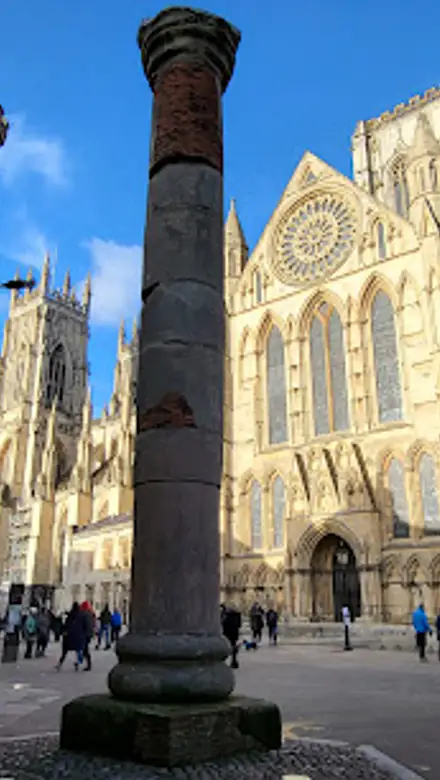
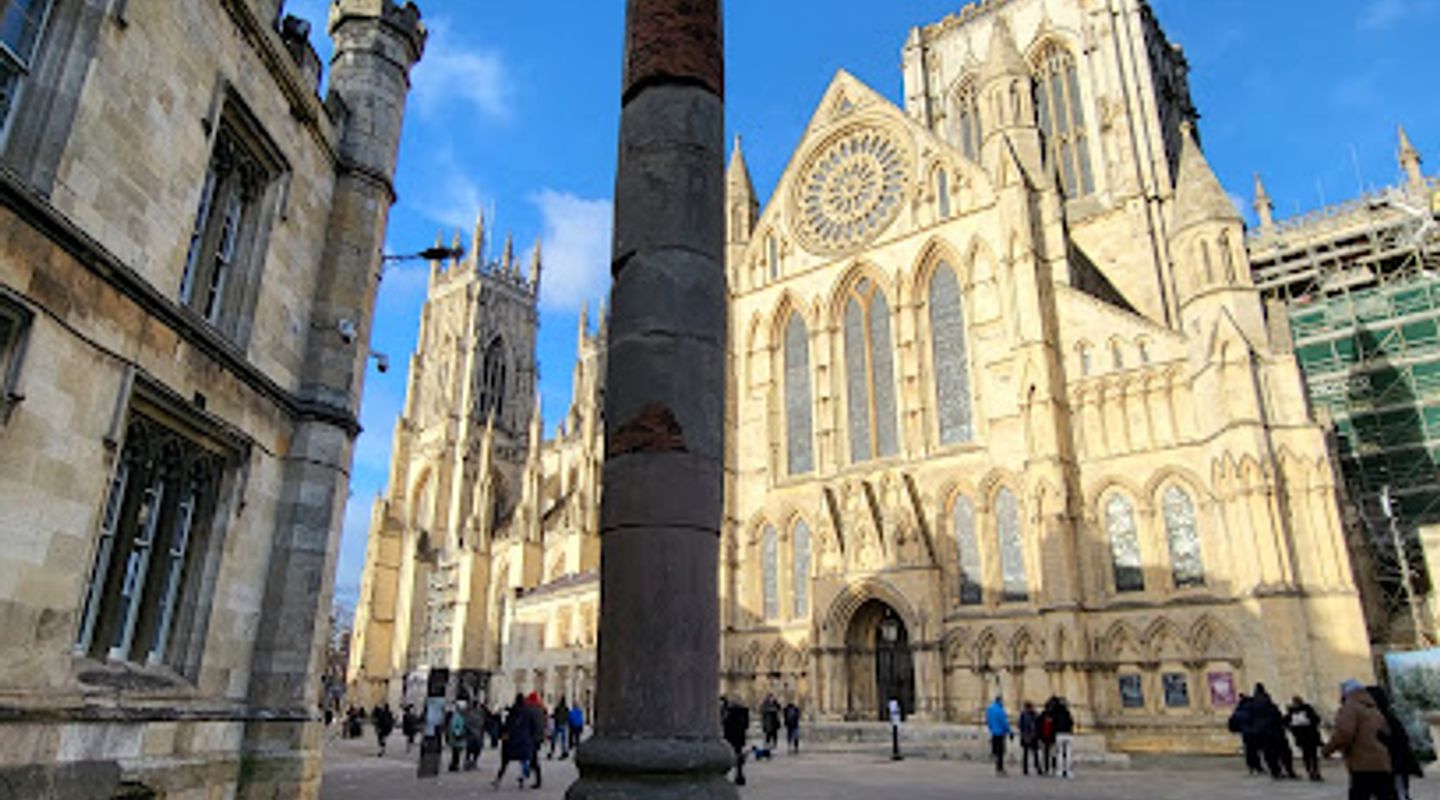
Standing in Minster Yard, this 7.6-metre grey gritstone column is one of York's most tangible links to its Roman past. Originally erected around 100 AD by the Ninth Legion and later reused by the Sixth Legion in the 4th century, the column was discovered buried beneath York Minster in 1969 and reassembled in its present location in 1971 to commemorate the 1900th anniversary of York's founding. It is believed to have stood in the headquarters building where Constantine was declared Emperor in 306 AD, making it an essential stop for anyone interested in Roman Britain.
On-site amenities
 Information boards
 Seating areas
 Restrooms
 Food options
 Drink options
Opening hours
- Every dayOpen 24 hours
Opening hours as listed on the venue’s Google Business Profile. Hours can change for services and special events, so check with the venue before you go.
- Address
- 11 Minster Yard, York YO1 7HH
Getting there
Walking from York Railway Station
Walking from The Shambles
Walking from Museum Gardens
Bus from York City Centre
Discover more about Roman Column
A Monument to Roman York's Imperial Legacy
The Roman Column stands as a remarkable survivor of York's Roman era, when the city was known as Eboracum and served as the headquarters of the Sixth Legion. Originally constructed around 100 AD by the Ninth Legion, this cylindrical column of grey gritstone was later incorporated into a grand Roman building during the 4th century. It is believed that this very structure—of which the column was once part—witnessed one of history's most pivotal moments: the declaration of Constantine as Roman Emperor in 306 AD. The sheer scale of the original building can be inferred from the column's impressive dimensions alone, standing at 7.6 metres tall, suggesting a structure of considerable architectural grandeur that would have dominated the Roman fortress.
Discovery and Resurrection: From Buried Ruin to Public Monument
For nearly two millennia, the column lay hidden beneath the foundations of York Minster, collapsed and broken. In 1969, archaeologists excavating the south transept of the Minster made the remarkable discovery, unearthing the fragmented stone sections that had been buried since the Roman period. The find was significant enough to warrant careful conservation and public display. In 1971, the Dean and Chapter of York Minster donated the column to the York Civic Trust, which undertook the painstaking work of reassembling the surviving stone sections and re-erecting them in Minster Yard. This restoration was timed deliberately to mark the 1900th anniversary of York's founding by the Romans in 71 AD, transforming an archaeological curiosity into a civic monument. The column was subsequently listed as an English Heritage Grade II listed building in 1983, securing its protection for future generations.
The Enigma of the Upside-Down Monument
One of the column's most intriguing characteristics is the persistent belief among historians and visitors alike that it stands upside down. Whether this is the result of the reassembly process or an intentional choice remains a matter of scholarly debate, but it adds an element of mystery to the monument. The column's cylindrical form and the way it sits upon its square plinth create a striking visual presence that draws photographers and history enthusiasts alike. Its placement just outside York Minster, in the heart of Minster Yard, ensures that it remains one of the most accessible and visible reminders of Roman Britain, visible to thousands of visitors each year who pass through this historic precinct.
Architectural and Historical Significance
The column represents far more than a simple decorative element; it is tangible evidence of the sophisticated Roman military and administrative infrastructure that once dominated northern Britain. The fact that it was part of a building grand enough to host imperial ceremonies speaks to York's importance within the Roman Empire. The column's survival, despite centuries of burial and the destructive forces of time, testifies to the durability of Roman engineering and craftsmanship. Its grey gritstone construction, typical of Roman work in Britain, contrasts with the medieval stonework of York Minster that now towers above it, creating a visual dialogue between two great periods of the city's history. For visitors, the column offers a direct physical connection to an era that shaped Britain's identity and left an indelible mark on York's urban landscape.
Evendo Review Centre
 Google
Guest reviews
Best time to go
Quietest: Jan, Feb & Mar · before 6am or at 10pm
Busy times are Evendo estimates for a typical year, to help you plan. Actual crowds vary with events, school holidays and the weather.
Explore Roman Column on the map
A handpicked selection of must-see spots near Roman Column, mapped for you.
Get your free copy of our complete guide to Roman Column, delivered straight to you.
Everything on this page, from opening hours and how to get there to Eve’s tips and the best time to go, in one PDF you can read offline, print or share.
Already have an account? Sign in
Your Roman Column guide is ready.
We'll send it to · Not you? Sign out

Getting your guide ready…
We are putting together a fresh copy of the Roman Column guide. This can take up to a minute.
This can take a few moments. If your browser asks, choose Allow so the download can start. You'll find the guide in your Downloads folder.
Nothing happened? Download it again
Sorry, the guide is taking longer than usual. Please try again in a minute, or get it by email instead.
Unlock the best of Roman Column
Skip-the-line tickets, guided tours with entry, and walking tours of the area, booked in a few clicks.
 Tour with entry
York Walking Tour with Audioguide on your Smartphone
from $10.65 Tour with entry
Private York Self-Guided Tour
from $11.34 Tour with entry
The Original Roman Walk: Private Guided Tour of York
from $138.70 Tour with entry
Original York Walks: Private Viking, Roman & History Experience
from $138.70

Other nearby places you may find interesting
The closest places of the same kind, if this one is not quite what you had in mind.
-
-
-
-
-


Swipe for more places
More to explore near Roman Column

 Best experiences near Roman Column
 Best hotels near Roman Column
 Best landmarks near Roman Column
 Best attractions near Roman Column
 Best shops near Roman Column
 Best restaurants near Roman Column
 Best bars near Roman Column
Do you manage this location?
Take control to get all the benefits, like improved information, better appearance, and stronger visibility across AI-powered discovery.
Explore more
Explore more of Yorkshire
Discover the timeless charm of Yorkshire, where history meets natural beauty and vibrant city life. Perfect for history buffs, nature lovers, and food enthusiasts.
Explore Yorkshire
Explore more of United Kingdom
Discover the United Kingdom: A blend of rich history, stunning landscapes, and vibrant cities, offering a unique travel experience for every visitor.
Explore United Kingdom