

Free Qarshi Travel Guide & Mobile App
Plan your Qarshi trip with Evendo. Get free guides to top attractions, restaurants, hotels, and bars. Web access or download the mobile app.


Qarshi, Uzbekistan reveals ancient Nakhshab, blue-domed mosques, Silk Road history, lively bazaars and southern Uzbek culture in Kashkadarya.
History Beneath the Modern City
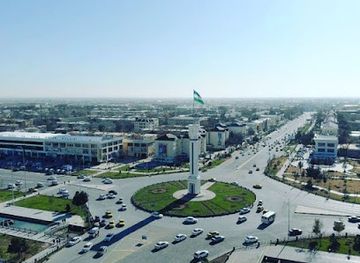
Qarshi, the capital of Uzbekistan’s Kashkadarya Region, stands in the broad plain of the Kashkadarya River in the country’s south. Known in antiquity as Nakhshab and later as Nasaf, it developed along routes linking Transoxiana with Bactria, Afghanistan and the wider Iranian world. Much of the ancient settlement lies beneath later layers of urban development, yet Qarshi’s historic mosques, bridge and archaeological surroundings still reveal the importance of this trading centre.Read more about Qarshi
Monuments and Local Character
Southern Uzbek Life
When is the best time to visit Qarshi?
Best: April–May, October · 25–31°C| Month | High (°C) | Rainfall (mm) |
|---|---|---|
| January | 9 | 33 |
| February | 11 | 29 |
| March | 17 | 23 |
| April (best) | 26 | 14 |
| May (best) | 31 | 8 |
| June | 36 | 1 |
| July | 40 | 1 |
| August | 40 | 1 |
| September | 33 | 3 |
| October (best) | 25 | 12 |
| November | 15 | 23 |
| December | 9 | 30 |
Getting to and around Qarshi
How to get there
Transportation
Best attractions in Qarshi
Qarshi’s principal sights are concentrated around the older centre and reveal the city’s long role as an oasis crossroads. Kok-Gumbaz Mosque, with its blue dome and formal brick construction, is the most recognisable monument and a useful starting point for understanding the city’s Islamic architectural heritage. Nearby, the Odina religious complex preserves historic structures and associations with Qarshi’s former educational and devotional life. Qarshi Bridge spans the Kashkadarya and offers a tangible reminder of the engineering needed to connect districts and caravan routes across the oasis. The Qarshi Regional Museum places local archaeology, crafts and history in a wider Kashkadarya context, while the central bazaar introduces the sounds and commerce of contemporary southern Uzbekistan. Outside the urban core, Erkurgan archaeological site connects modern Qarshi with ancient Nakhshab, though it should be planned as a separate outing rather than a quick city-centre stop.
-
Historical landmark
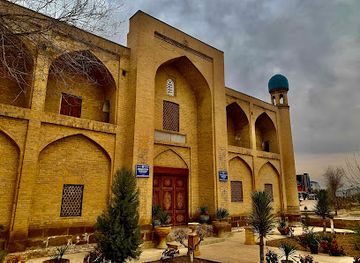
Khuzha Abdulazizkhan Madrasah
Discover the Khuzha Abdulazizkhan Madrasah, a historical landmark in Qarshi, Uzbekistan, showcasing exquisite architecture and cultural heritage.
14 min walk · 1.1 km from city centre
-
Bridge
Karshi Bridge
Discover the enchanting Karshi Bridge in Uzbekistan, a historical landmark connecting the past with breathtaking landscapes and local culture.
8 min drive · 2.8 km from city centre
-
Tourist attraction
Chaqar Mosque
Experience the beauty and tranquility of Chaqar Mosque, a serene oasis in Qarshi, Uzbekistan, perfect for cultural exploration and reflection.
15 min walk · 1.2 km from city centre
-
Tourist attraction
The Arch of Peace
Discover the Arch of Peace in Qarshi, a stunning triumphal arch symbolizing unity, surrounded by vibrant gardens and local culture.
7 min drive · 2.5 km from city centre


Best landmarks in Qarshi
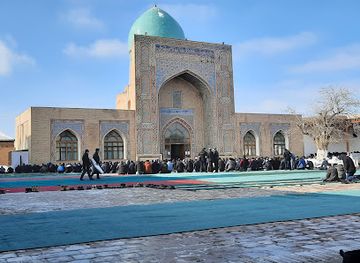
Kok-Gumbaz Mosque is Qarshi’s defining architectural landmark, its blue dome and carefully proportioned brickwork representing the city’s sixteenth-century religious and civic development under Abdullah Khan II. The Odina complex recalls the educational and devotional institutions that once formed a major part of urban life, while its surviving structures contribute to the historic centre’s sense of continuity. Qarshi Bridge, built in brick across the Kashkadarya, is a particularly practical monument: it records how water management and movement were essential to an oasis city. The Qarshi Regional Museum adds a cultural landmark rather than a single monumental façade, interpreting the region’s archaeology and traditions. Beyond the built centre, the ancient settlement of Erkurgan provides the most direct physical link to Nakhshab’s pre-Islamic past and to the long urban history of the Kashkadarya plain.
-
Park
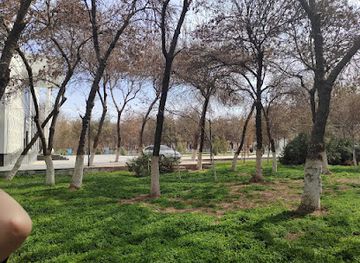
Vatanparvarlar Bog'i
Explore Vatanparvarlar Bog'i, a serene park in Qarshi, Uzbekistan, offering lush landscapes, cultural monuments, and a tranquil escape for every traveler.
5 min walk · 0.4 km from city centre
-
Mosque
Kok Gumbaz Mosque
Discover the architectural marvel of Kok Gumbaz Mosque in Qarshi, a serene sanctuary showcasing Uzbekistan's rich history and vibrant culture.
7 min walk · 0.5 km from city centre
-
Historical landmark
Qarshi markaziy soati
Discover the historical elegance of Qarshi Markaziy Soati, a stunning clock tower that embodies the rich cultural heritage of Qarshi, Uzbekistan.
8 min drive · 2.8 km from city centre
-
Historical landmark
Kurant
Explore Kurant, a historical landmark in Qarshi, Uzbekistan, and immerse yourself in the rich cultural heritage and stunning architecture of this enchanting site.
8 min drive · 2.8 km from city centre



Explore Qarshi on the map
Plan your Qarshi trip on one map. See where the top attractions, landmarks, restaurants, bars and hotels are, find what's near where you're staying, and book hotels and experiences in a few clicks.
Best hotels in Qarshi
Best restaurants in Qarshi
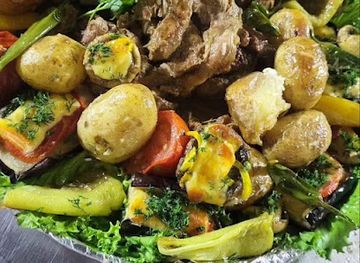
Qarshi’s food culture reflects the agriculture and hospitality of southern Uzbekistan, with rice, wheat, meat, vegetables and dairy forming the basis of everyday cooking. Plov is central to the regional table, while samsa, manti, lagman, shashlik and fresh Uzbek bread appear in cafés, family restaurants and market-side eateries. Kashkadarya is also associated with substantial home-style dishes suited to its rural hinterland, often served with salads, yoghurt and green tea. The bazaar is a useful place to encounter melons, grapes, dried fruit, nuts, spices and bread, especially when local produce is plentiful. Dining in Qarshi is generally informal: teahouses and cafés may be more characteristic than elaborate restaurants, and menus can be limited or primarily in Uzbek or Russian. Asking for local recommendations often reveals small kitchens beyond the principal commercial streets.
-
Coffee shop
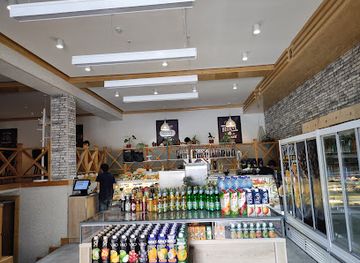
Aroma Bakery & Cafe
Experience the essence of Uzbekistan at Aroma Bakery & Cafe with delicious pastries and aromatic coffee in a cozy atmosphere.
11 min drive · 3.7 km from city centre
-
Restaurant
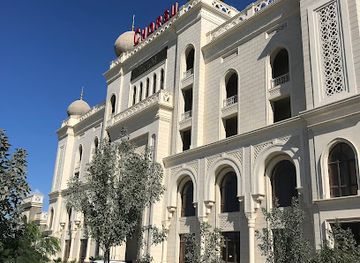
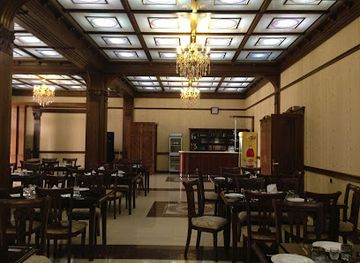
Chorsu
Experience the authentic flavors of Uzbekistan at Chorsu Restaurant in Qarshi - a true culinary delight for every traveler.
8 min drive · 2.7 km from city centre
-
Restaurant
Skazka
Experience authentic Uzbek cuisine at Skazka in Qarshi – where tradition meets flavor in every dish.
15 min drive · 5.1 km from city centre
-
Restaurant
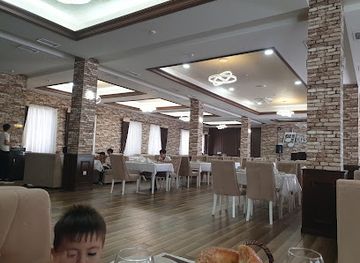
Oqsaroy Family Restaurant
Experience authentic Uzbek flavors at Oqsaroy Family Restaurant in Qarshi – where tradition meets hospitality.
6 min drive · 2.0 km from city centre
Best bars in Qarshi
Qarshi has a relatively restrained evening scene, shaped more by restaurants, teahouses, family gatherings and promenades than by a dense club culture. Hotels and larger restaurants may provide the most dependable settings for an evening meal or a drink, while local cafés offer tea, conversation and simple snacks rather than late-night entertainment. Alcohol is available in some licensed venues, but public conduct remains conservative and visitors should avoid conspicuous behaviour near mosques or family-oriented spaces. After dark, the central streets and public squares can be busier than outlying districts, particularly when temperatures fall. Cultural evenings, seasonal performances and events at local civic or educational venues may occur, but schedules are changeable; Qarshi is better suited to an unhurried evening than to a reliably programmed nightlife circuit.
-
Karaoke bar
“Narmin” karaoke bar
Experience the vibrant nightlife of Qarshi at Narmin Karaoke Bar, where music, laughter, and unforgettable memories await every visitor.
6 min drive · 1.9 km from city centre
-
Bar
Oblocka Hookah
Explore Oblocka Hookah in Qarshi for an unforgettable hookah experience in a cozy, vibrant bar atmosphere.
9 min drive · 3.1 km from city centre
-
Pub
Beer house qarshi
Discover the heart of Qarshi at Beer House Qarshi, where local flavors and a warm ambiance create unforgettable moments in Uzbekistan.
9 min drive · 3.0 km from city centre
-
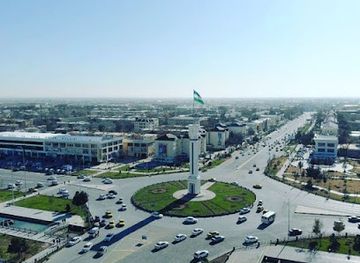
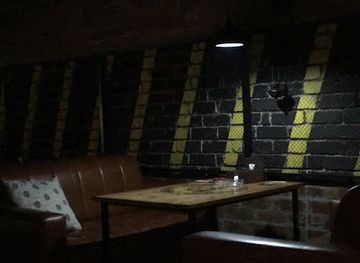
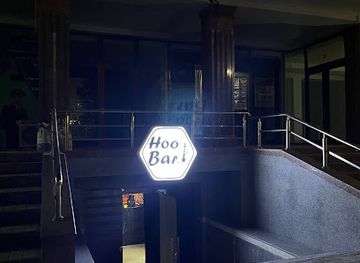
Lounge
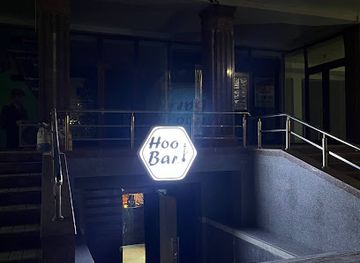
Hoobar
Discover Hoobar, Qarshi's premier lounge, where elegance meets relaxation in the heart of Qashqadaryo Region.
7 min drive · 2.3 km from city centre
Best nightclubs in Qarshi
Qarshi has a relatively restrained evening scene, shaped more by restaurants, teahouses, family gatherings and promenades than by a dense club culture. Hotels and larger restaurants may provide the most dependable settings for an evening meal or a drink, while local cafés offer tea, conversation and simple snacks rather than late-night entertainment. Alcohol is available in some licensed venues, but public conduct remains conservative and visitors should avoid conspicuous behaviour near mosques or family-oriented spaces. After dark, the central streets and public squares can be busier than outlying districts, particularly when temperatures fall. Cultural evenings, seasonal performances and events at local civic or educational venues may occur, but schedules are changeable; Qarshi is better suited to an unhurried evening than to a reliably programmed nightlife circuit.
-
Karaoke bar
“Narmin” karaoke bar
Discover the vibrant atmosphere of Narmin Karaoke Bar in Qarshi, where music and fun come together for an unforgettable night out.
6 min drive · 1.9 km from city centre
-
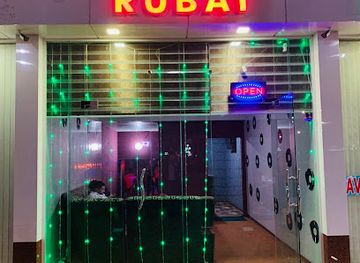
Disco club
Rubai Klub
Discover the vibrant nightlife at Rubai Klub in Qarshi, Uzbekistan, where electrifying music and dance await in a lively atmosphere.
6 min drive · 1.9 km from city centre
-
Lounge
Hoobar
Experience the vibrant atmosphere of Hoobar, Qarshi's premier lounge, offering a blend of modern design and local nightlife excitement.
7 min drive · 2.3 km from city centre
-
Club
Nigha Nightclub
Discover the electrifying nightlife at Nigha Nightclub in Qarshi, where vibrant music and a lively atmosphere create unforgettable experiences.
9 min drive · 3.1 km from city centre

Best shops in Qarshi
Shopping in Qarshi centres on the bazaar, where regional produce, bread, spices, dried fruit, nuts, household goods and everyday clothing provide a lively view of local commerce. The market is more useful for observing ordinary life and buying food gifts than for finding a carefully curated range of tourist souvenirs. Small shops and craft sellers may offer embroidered textiles, skullcaps, ceramics and other Uzbek decorative goods, although selection and quality vary. Contemporary retail is found along the main commercial streets and in modern supermarkets, which sit alongside older market traditions rather than replacing them. Bargaining may be acceptable for some goods in informal market settings, but it is best conducted with courtesy and without treating every purchase as a contest. Packaged regional produce is often easier to transport than fragile handmade pieces.
-
Discount supermarket
Marka
Explore Marka, the budget-friendly discount supermarket in Qarshi, Uzbekistan, offering local and international products for every traveler.
7 min drive · 2.4 km from city centre
-
Appliance store
MEDIAPARK Karshi
Discover the best in home appliances and electronics at MEDIAPARK Karshi, a modern shopping haven in Uzbekistan's Qashqadaryo Region.
15 min walk · 1.2 km from city centre
-
Supermarket
Marjon supermarket
Explore local flavors and vibrant goods at Marjon Supermarket in Qarshi, Uzbekistan - a must-visit for every traveler.
5 min drive · 1.8 km from city centre
-
Supermarket
Original
Explore the local supermarket in Qarshi, a vibrant hub of Uzbek culture filled with fresh produce, traditional snacks, and friendly locals.
11 min drive · 3.8 km from city centre


Get your free copy of our complete guide to Qarshi, delivered straight to you.
Everything on this page, from attractions and restaurants to essentials and local phrases, in one PDF you can read offline, print or share.
Already have an account? Sign in
Your Qarshi guide is ready.
We'll send it to · Not you? Sign out

Getting your guide ready…
We are putting together a fresh copy of the Qarshi guide. This can take up to a minute.
This can take a few moments. If your browser asks, choose Allow so the download can start. You'll find the guide in your Downloads folder.
Nothing happened? Download it again
Sorry, the guide is taking longer than usual. Please try again in a minute, or get it by email instead.
Qarshi essentials
Currency and Payment
Safety
Emergency Situations
Do's and Don'ts
Local Tips
From Eve
Local phrases worth knowing
You don't need to get them perfect. A few words go a long way, and locals appreciate the effort.
Basics
| English | Local | Say it |
|---|---|---|
| Hello | Salom | [sah-LOHM] |
| Goodbye | Xayr | [khayr] |
| Yes | Ha | [hah] |
| No | Yo'q | [yoq] |
| Please/You're welcome | Iltimos | [eel-tee-MOHS] |
| Thank you | Rahmat | [raah-MAHT] |
| Excuse me/Sorry | Kechirasiz | [keh-chee-rah-SEES] |
| How are you? | Qalaysiz? | [kah-LAI-siz] |
| Fine. And you? | Yaxshi. Siz? | [yakh-SHEE. sees] |
| Do you speak English? | Siz ingliz tilida gapirasizmi? | [sees een-gleez tee-LEE-dah gah-pee-rah-SEES-mee] |
| I don't understand | Tushunmayapman | [too-shoon-myap-MAHN] |
Eating & Drinking
| English | Local | Say it |
|---|---|---|
| I'd like to see the menu, please | Men menuni ko'rishni istayman, iltimos | [men meh-NOO-nee koh-REESH-nee ees-TAY-mahn, eel-tee-MOHS] |
| I don't eat meat | Men go'sht yemayman | [men goh-SHT yeh-MAI-mahn] |
| Cheers! | Salomat bo'lsin! | [sah-loh-MAHT bohl-SIN] |
| I would like to pay, please | To'lashni istayman, iltimos | [toh-LAHSH-nee ees-TAY-mahn, eel-tee-MOHS] |
Emergencies
| English | Local | Say it |
|---|---|---|
| Help! | Yordam! | [yohr-DAHM] |
| Go away! | Uzoqqa ket! | [oo-ZOHK-kah keht] |
| Call the Police! | Militsiyani chaqiring! | [mee-leet-see-YAH-nee chah-KEER-ing] |
| Call a doctor! | Tabibni chaqiring! | [TAH-beeb-nee chah-KEER-ing] |
| I'm lost | Men yo'lga tushdim | [men yol-gah toosh-DEEM] |
| I'm ill | Men kasalman | [men kah-SAHL-mahn] |
Shopping
| English | Local | Say it |
|---|---|---|
| I'd like to buy... | Men sotib olmoqchiman... | [men soh-TEEB ohl-MOHCH-ee-mahn] |
| I'm just looking | Men faqat ko'z qarashni istayman | [men fah-KAHT kohz kah-RAHSH-nee ees-TAY-mahn] |
| How much is it? | Bu qancha? | [boo kahn-CHAH] |
| That's too expensive | Bu juda qimmat | [boo joo-DAH keem-MAHT] |
| Can you lower the price? | Narxni pastga tushirishingiz mumkinmi? | [NAHRKH-nee pahst-GAH too-shee-REESHEEN-geez MOOM-keen-mee] |
Time & Numbers
| English | Local | Say it |
|---|---|---|
| What time is it? | Soat necha? | [SOH-aht neh-CHAH] |
| It's one o'clock | Bir soat | [beer SOH-aht] |
| Half past (10) | O'n yarim | [ohn yah-REEM] |
| Morning | Ertalab | [ehr-tah-LAHB] |
| Afternoon | Kun kechasi | [koon keh-CHAH-see] |
| Evening | Kechki | [kehch-KEE] |
| Yesterday | Kecha | [keh-CHAH] |
| Today | Bugun | [boo-GOON] |
| Tomorrow | Ertaga | [ehr-TAH-gah] |
| 1 | Bir | [beer] |
| 2 | Ikki | [EEK-kee] |
| 3 | Uch | [ooch] |
| 4 | To'rt | [tohrt] |
| 5 | Besh | [besh] |
| 6 | Olti | [ohl-tee] |
| 7 | Yetti | [yeh-tee] |
| 8 | Sakkiz | [sahk-KEEZ] |
| 9 | To'qiz | [toh-KEEZ] |
| 10 | O'n | [ohn] |
Transport & Directions
| English | Local | Say it |
|---|---|---|
| Where's a/the...? | ...qayerda? | [kah-YEHR-dah] |
| What's the address? | Manzil qayerda? | [MAHN-zeel kah-YEHR-dah] |
| Can you show me (on the map)? | Meni (xaritada) ko'rsatingiz mumkinmi? | [MEH-nee kha-ree-TAH-dah kohr-SAH-teeng-geez MOOM-keen-mee] |
| When's the next (bus)? | Keyingi (avtobus) qachon? | [keh-YEEN-gee av-toh-BOOS kah-CHOHN] |
| A ticket (to ....) | Bilet (.... ga) | [bee-LEHT .... gah] |
History of Qarshi
Nakhshab and the Ancient Oasis
Qarshi’s origins lie in the irrigated Kashkadarya oasis, where settled communities developed agriculture, craft production and trade between the Oxus region and lands to the south. The ancient city was known as Nakhshab, and the nearby archaeological site of Erkurgan preserves evidence of an important early urban centre. Nakhshab belonged to the wider cultural world of Sogdiana, whose towns connected caravan routes across Central Asia. Its prosperity depended on managing water in an otherwise dry plain, while its position gave it commercial and strategic importance. Archaeological remains from the region testify to long interaction among Iranian-speaking oasis societies, nomadic groups and the states that competed for control of Transoxiana.
Arabic Conquest and Nasaf
During the eighth century, Arab armies extended Muslim rule into Transoxiana, and the Kashkadarya region became part of the changing political and religious landscape of Central Asia. Nakhshab was also known as Nasaf, a name that remained important in Islamic geography and scholarship. Over subsequent centuries, the city passed through the influence of regional powers including the Samanids, Karakhanids and other dynasties that governed the oasis from larger Central Asian centres. The spread of Islam shaped education, law and architecture, while local Persianate and Turkic cultural traditions continued to develop alongside it. Nasaf’s position on regional routes helped sustain its role as a provincial urban centre.
Mongol Destruction and Recovery
The Mongol invasions of the early thirteenth century brought severe disruption to the towns and irrigation systems of Transoxiana. Nasaf was damaged during the campaigns associated with Chinggis Khan, and the political order that had supported its earlier prosperity collapsed. Recovery took place gradually as new rulers restored administration, trade and water management across the Kashkadarya plain. In the fourteenth century, the Chagatai ruler Kebek Khan established a palace or fortified residence in the area; the name Qarshi is commonly linked to the Mongolian term for such a palace or fortified settlement. This development helped shift the city’s identity from ancient Nasaf towards the Qarshi known today.
Timurid and Uzbek Architectural Renewal
Qarshi benefited from the political and commercial activity that accompanied Timurid and post-Timurid rule in southern Central Asia. Religious foundations, covered markets, bridges and civic buildings were constructed or renewed as the city grew around its routes and watercourses. The Kok-Gumbaz Mosque, associated with the sixteenth-century Shaybanid ruler Abdullah Khan II, is the clearest surviving expression of this period’s architectural confidence. The Odina complex and the brick bridge across the Kashkadarya likewise reflect Qarshi’s importance as a centre of worship, movement and administration. Although later rebuilding and modern urban expansion altered the historic fabric, these monuments preserve the city’s medieval and early modern identity.
Russian Rule and Imperial Frontier
In the nineteenth century, Russian expansion into Central Asia transformed the political setting of the Kashkadarya oasis. Qarshi became connected to the administrative and commercial systems of the Russian Empire and, after the revolutionary period, to the Soviet restructuring of the region. New forms of taxation, education, transport and state administration affected established patterns of urban life, while cotton cultivation and irrigation increasingly shaped the economy. The older religious institutions lost much of their former public role under Soviet policies, and many historic buildings suffered neglect or alteration. Nevertheless, Qarshi remained the principal urban centre of the southern oasis and retained its importance as a market and administrative town.
Soviet Development and Independent Uzbekistan
The twentieth century brought industrialisation, expanded irrigation and major demographic change to Qarshi. Soviet investment strengthened the city’s role in agriculture, processing and regional administration, while wartime mobilisation and population movements connected it to developments across the Uzbek republic. After Uzbekistan became independent in 1991, Qarshi continued as the capital of Kashkadarya Region and an important centre for education, commerce, energy and transport. Restoration and public presentation have given renewed attention to monuments such as Kok-Gumbaz Mosque, the Odina complex and Qarshi Bridge. Contemporary Qarshi therefore combines a modern regional city with architectural and archaeological reminders of Nakhshab, Nasaf and the old caravan routes.
Qarshi in Photos
Browse through our photo collection highlighting the charm and character of the destination.
Cities near Qarshi
The closest cities to Qarshi, if you have time for more than one stop.
-

-

-

-

-


Swipe for more cities
Explore more
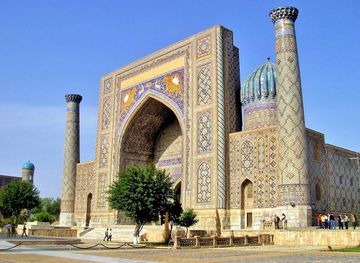
Explore more of Uzbekistan
Discover Uzbekistan: A land of ancient cities, vibrant culture, and breathtaking landscapes, where history comes alive along the legendary Silk Road.
Explore Uzbekistan