

Free Bayramaly Travel Guide & Mobile App
Plan your Bayramaly trip with Evendo. Get free guides to top attractions, restaurants, hotels, and bars. Web access or download the mobile app.


Bayramaly, Turkmenistan, offers oasis landscapes, Soviet-era resort heritage and access to the ancient ruins of nearby Merv and Mary.
Oasis Town in the Karakum
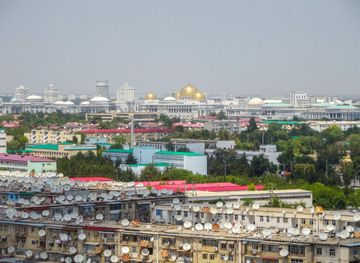
Bayramaly lies in the irrigated Murgab oasis of southeastern Turkmenistan, where cultivated fields, dusty roads and sheltering belts of trees contrast with the surrounding Karakum Desert. The town is quieter and less ceremonially grand than Ashgabat, but its location gives it a particular importance for travellers interested in the history of the Merv oasis and the landscapes of southern Turkmenistan. Bayramaly is also known for its dry climate and sanatorium tradition, which developed during the Soviet period and remains part of the town’s identity.Read more about Bayramaly
A Base for Ancient Merv
Everyday Turkmenistan
When is the best time to visit Bayramaly?
Best: April–May, October · 23–30°C| Month | High (°C) | Rainfall (mm) |
|---|---|---|
| January | 5 | 20 |
| February | 7 | 20 |
| March | 16 | 20 |
| April (best) | 23 | 15 |
| May (best) | 30 | 15 |
| June | 37 | 5 |
| July | 41 | 5 |
| August | 40 | 5 |
| September | 32 | 5 |
| October (best) | 25 | 15 |
| November | 16 | 20 |
| December | 8 | 20 |
Getting to and around Bayramaly
How to get there
Transportation
Best attractions in Bayramaly
Bayramaly’s attractions are modest but distinctive, beginning with the town’s sanatorium area, whose landscaped grounds and resort buildings reflect the Soviet tradition of climate-based health treatment. Local streets, public gardens and market areas offer glimpses of life in the Murgab oasis, where irrigated agriculture shapes the landscape beyond the built-up centre. The railway station and surrounding transport corridor reveal the town’s role in the development of modern Transcaspian communications. The major sightseeing opportunity lies outside Bayramaly in the wider Mary region: Ancient Merv spreads across a large archaeological landscape containing the remains of Erk Kala, Gyaur Kala and Sultan Kala, together with later monuments such as the mausoleum of Sultan Sanjar. Mary, the regional capital, adds museums and civic architecture, but it should be treated as a separate nearby destination rather than part of Bayramaly itself.
-
Tourist attraction
Erk Kala
Explore Erk Kala, a captivating archaeological site in Merv, Turkmenistan, where history comes alive amidst ancient ruins and breathtaking landscapes.
21 min drive · 6.9 km from city centre
-
 Archaeological site
Abdullah Khan Kala
Explore Abdullah Khan Kala, an archaeological gem in Bayramaly, Turkmenistan, showcasing ancient architecture and the rich history of the region.
6 min drive · 2.0 km from city centre

Best landmarks in Bayramaly
Bayramaly’s most characteristic built landmark is its railway station, a reminder of the Trans-Caspian Railway and the town’s emergence as a modern transport settlement in the late nineteenth century. The Bayramaly Sanatorium represents another important layer of local identity, expressing the Soviet-era belief in the therapeutic value of the town’s dry climate and resort setting. The Murgab oasis and its irrigation landscape function as a broader cultural landmark, linking the present town to centuries of agriculture around Merv. The most celebrated monuments in the surrounding region are outside Bayramaly: the mausoleum of Sultan Sanjar and the archaeological cities of Ancient Merv preserve the political and architectural history of medieval Khurasan. They should be visited as regional landmarks, not described as buildings within the town.
-
Archaeological site
Erk Kala
Explore the ancient ruins of Erk Kala in Merv, Turkmenistan, a captivating archaeological site steeped in history and natural beauty.
21 min drive · 6.9 km from city centre
-
Archaeological site
Great Kyz Kala
Explore Great Kyz Kala, an archaeological gem in Merv, Turkmenistan, and discover the rich history of this ancient fortress on the Silk Road.
13 min drive · 4.2 km from city centre
-
Archaeological site
Sultan Kala
Discover the ancient city of Sultan Kala, a UNESCO World Heritage site in Merv, Turkmenistan, rich in history and archaeological wonders.
16 min drive · 5.5 km from city centre
-
Archaeological site
Little Kyz Kala
Explore Little Kyz Kala, a captivating archaeological site in Merv, Turkmenistan, rich in history and a key stop on the ancient Silk Road.
12 min drive · 4.1 km from city centre


Explore Bayramaly on the map
Plan your Bayramaly trip on one map. See where the top attractions, landmarks, restaurants, bars and hotels are, find what's near where you're staying, and book hotels and experiences in a few clicks.
Best hotels in Bayramaly
Best restaurants in Bayramaly
Dining in Bayramaly is generally informal and locally oriented, with meals shaped by Turkmen, Central Asian and broader regional traditions. Plov, rice cooked with meat, carrots and spices, is associated with communal occasions, while shashlyk, grilled pieces of meat, is commonly served in straightforward cafés and roadside eateries. Manti, filled dumplings, soups, flatbreads and fresh salads are practical staples, and the fertile Murgab oasis supplies melons, grapes, vegetables and other produce when in season. Tea accompanies much of daily hospitality, often alongside bread and sweets. Local markets are useful places to observe the food economy and purchase fruit, nuts or baked goods, although prepared-food choices may be limited. Bayramaly should not be approached as a destination for an extensive international restaurant scene; dining is more closely tied to family cooking, modest cafés and regional ingredients.
-
Family-friendly
Näzli tagamlar
Discover the delightful family-friendly atmosphere at Näzli Tagamlar in Bayramaly, where delicious cuisine meets warm hospitality.
10 min drive · 3.2 km from city centre
-
Restaurant
Dagdan Restorany
Experience authentic Turkmen cuisine at Dagdan Restorany in Bayramaly – a culinary haven for travelers seeking rich flavors and warm hospitality.
16 min walk · 1.3 km from city centre
-
Cafe
Güneş kafe
Discover Güneş Kafe in Bayramaly: A charming spot for delicious food and relaxing moments amidst your travels.
5 min drive · 1.6 km from city centre
-
Restaurant
Gunça Kafe Bar555
Experience authentic Turkmen cuisine at Gunça Kafe Bar in Bayramaly - where flavor meets hospitality in every dish.
17 min walk · 1.4 km from city centre


Best bars in Bayramaly
Bayramaly has a restrained evening scene rather than a developed nightlife district. Social life is more likely to centre on tea houses, cafés, family restaurants and informal gatherings than on nightclubs or late-opening cocktail bars. Alcohol availability and public consumption are subject to local norms and regulations, and visitors should follow the guidance of their accommodation or local hosts. After sunset, the town’s streets and public spaces can provide a quiet view of everyday life, while evenings at a sanatorium or guesthouse may be more sociable than commercial entertainment. Mary offers a broader selection of cafés and public venues, but expectations should remain modest across the region. Cultural sensitivity is important, particularly around religious spaces, residential areas and photography after dark.
-
Restaurant
Gunça Kafe Bar555
Discover the culinary delights at Gunça Kafe Bar555, where traditional Turkmen flavors meet modern dining in a cozy atmosphere.
17 min walk · 1.4 km from city centre
-
Grocery store
Miras söwda dükany
Discover local flavors and essentials at Miras Söwda Dükany in Bayramaly, a vibrant grocery store showcasing the best of Turkmenistan's culinary treasures.
6 min walk · 0.5 km from city centre
-
Cafe
Bereket Kafe
Discover the delightful flavors and warm atmosphere at Bereket Kafe, a local gem in Bayramaly, Turkmenistan.
17 min drive · 5.6 km from city centre
-
Bar
Gala karaoke-bar
Experience the vibrant nightlife of Bayramaly at Gala Karaoke Bar, where music, fun, and great company come together for an unforgettable evening.
9 min walk · 0.7 km from city centre


Best shops in Bayramaly
Shopping in Bayramaly is centred on everyday markets, small food shops and local retail streets rather than specialist boutiques or large commercial centres. Market stalls may offer seasonal produce from the Murgab oasis, including melons, grapes and vegetables, together with nuts, dried fruit, bread and household goods. Visitors may also encounter textiles, embroidered items and practical souvenirs associated with Turkmen craft traditions, although selection and availability vary. Bargaining can be acceptable in informal market settings, while fixed-price shops are less negotiable. The experience is primarily observational and local: markets reveal how an irrigated desert region feeds itself and trades produce. More substantial museum shops, craft displays or modern retail options are more likely to be found in Mary or Ashgabat than in Bayramaly.
-
Coffee shop
Musetti coffee land
Discover the rich flavors of coffee at Musetti Coffee Land, the cozy café in Bayramaly that promises an unforgettable experience with every sip.
14 min walk · 1.1 km from city centre
-
Grocery store
Miras söwda dükany
Discover the local flavors and products at Miras Söwda Dükany, a charming grocery store in Bayramaly, Turkmenistan, perfect for tourists seeking authentic experiences.
6 min walk · 0.5 km from city centre
-
Shopping mall
DOWAMAT SÖWDA MERKEZI
Explore DOWAMAT SÖWDA MERKEZI in Bayramaly, a vibrant shopping mall blending local culture with modern retail experiences.
5 min drive · 1.5 km from city centre
-
Shopping mall
Aylar Magazin
Explore Aylar Magazin in Bayramaly, a vibrant shopping mall offering a delightful mix of local and international brands amidst a lively cultural atmosphere.
9 min drive · 3.0 km from city centre


Get your free copy of our complete guide to Bayramaly, delivered straight to you.
Everything on this page, from attractions and restaurants to essentials and local phrases, in one PDF you can read offline, print or share.
Already have an account? Sign in
Your Bayramaly guide is ready.
We'll send it to · Not you? Sign out

Getting your guide ready…
We are putting together a fresh copy of the Bayramaly guide. This can take up to a minute.
This can take a few moments. If your browser asks, choose Allow so the download can start. You'll find the guide in your Downloads folder.
Nothing happened? Download it again
Sorry, the guide is taking longer than usual. Please try again in a minute, or get it by email instead.
Bayramaly essentials
Currency and Payment
Safety
Emergency Situations
Do's and Don'ts
Local Tips
From Eve
Local phrases worth knowing
You don't need to get them perfect. A few words go a long way, and locals appreciate the effort.
Basics
| English | Local | Say it |
|---|---|---|
| Hello | Salam | [sah-lahm] |
| Goodbye | Hoşça kal | [hosh-cha kal] |
| Yes | Hawa | [ha-wah] |
| No | Ýok | [yok] |
| Please/You're welcome | Özüňiň üçin | [ozu-nee oochin] |
| Thank you | Rahmat | [rah-maht] |
| Excuse me/Sorry | Kechiras | [keh-chee-rahs] |
| How are you? | Näme ýapýarsyňyz? | [nah-meh yap-yar-sin-iz] |
| Fine. And you? | Gowy. Siz näme? | [go-wee. siz nah-meh?] |
| Do you speak English? | Siz iňlisçe gaplaşýarsyňyzmy? | [siz in-lee-scheh gap-lah-shar-sin-iz-mi] |
| I don't understand | Meniň agşamamok | [meh-neen ah-sha-ma-mok] |
Eating & Drinking
| English | Local | Say it |
|---|---|---|
| I'd like to see the menu, please | Menüni görmek islerim | [meh-noo-nee gohr-mek ees-leh-reem] |
| I don't eat meat | Men et yemem | [mehn eht yeh-mem] |
| Cheers! | Sağlyk! | [sah-ghlyk] |
| I would like to pay, please | Tölemek islerim | [toh-leh-mek ees-leh-reem] |
Emergencies
| English | Local | Say it |
|---|---|---|
| Help! | Yardam et! | [yar-dahm eht] |
| Go away! | Uzaklaş! | [oo-zahk-lash] |
| Call the Police! | Polisi çagyr! | [poh-lee-see chah-guhr] |
| Call a doctor! | Doktory çagyr | [dohk-toh-ree chah-guhr] |
| I'm lost | Men yo'luk | [mehn yol-ook] |
| I'm ill | Men agýryar | [mehn ah-ghy-ar] |
Shopping
| English | Local | Say it |
|---|---|---|
| I'd like to buy... | Satın almak isleýärisem... | [saht-n ahl-mak ees-leh-yeh-ri-sehm] |
| I'm just looking | Men dowam edýärin | [mehn doh-wahm eh-dyar-een] |
| How much is it? | Bu näçe girer? | [boo nah-cheh ghee-rehr] |
| That's too expensive | Bu aşagy bahasy | [boo ah-sha-ghy bah-ha-sy] |
| Can you lower the price? | Bahany peseltmäge mümkinmi? | [bah-ha-ny peh-selt-ma-geh moo-mkeen-mi] |
Time & Numbers
| English | Local | Say it |
|---|---|---|
| What time is it? | Näme wagty? | [nah-meh wahg-ty] |
| It's one o'clock | Bir sagat | [beer sah-ghat] |
| Half past (10) | Ona ýarym | [oh-na yar-um] |
| Morning | Ertir | [ehr-teer] |
| Afternoon | Günorta | [goon-or-ta] |
| Evening | Aşak | [ah-shak] |
| Yesterday | Düýn | [doo-yun] |
| Today | Gün | [goon] |
| Tomorrow | Ertir | [ehr-teer] |
| 1 | Bir | [beer] |
| 2 | Iki | [ee-kee] |
| 3 | Üç | [ootch] |
| 4 | Dört | [dort] |
| 5 | Bäş | [bahsh] |
| 6 | Alty | [ahl-ty] |
| 7 | Ýedi | [yeh-dee] |
| 8 | Sekiz | [seh-keez] |
| 9 | Dokuz | [doh-kooz] |
| 10 | On | [ohn] |
Transport & Directions
| English | Local | Say it |
|---|---|---|
| Where's a/the...? | ...nirede? | [nee-reh-deh] |
| What's the address? | Adres näme? | [ah-drehs nah-meh] |
| Can you show me (on the map)? | Meniň üçin (kärtada) görkezärsiňizmi? | [meh-neen oochin (kar-ta-da) gohr-keh-zar-sin-iz-mi] |
| When's the next (bus)? | Indi näme wagtda? | [in-dee nah-meh wahg-tah] |
| A ticket (to ....) | Bir bileýet (....) | [beer bee-leh-yet] |
History of Bayramaly
The Ancient Murgab Oasis
Bayramaly stands within the Murgab oasis, a landscape shaped by irrigation and settlement for thousands of years. The oasis supported Ancient Merv, one of Central Asia’s most important urban centres, whose successive cities developed along changing channels of the Murgab River. Although Bayramaly is a modern town rather than an ancient quarter of Merv, its position belongs to the same historical agricultural and commercial zone. Irrigated cultivation allowed communities to prosper amid the surrounding desert, while the oasis formed a natural corridor between Iran, Afghanistan and the wider regions of Central Asia.
Merv on the Silk Roads
From antiquity through the medieval period, Merv occupied a strategic position on long-distance routes linking east and west. The settlement passed through several major phases, including the Achaemenid-era city associated with Old Merv, the Hellenistic centre of Antiochia Margiana, and the later urban complexes of Erk Kala, Gyaur Kala and Sultan Kala. Under the Seljuk sultans in the eleventh and twelfth centuries, Merv became a major political, intellectual and commercial centre. Its scholars, merchants and craftsmen contributed to the wider cultural world of Islamic Central Asia, while its prosperity depended on the productive oasis around it.
Mongol Conquest and Decline
Merv suffered catastrophic destruction during the Mongol conquest in 1221, when the city was taken by Tolui, son of Genghis Khan. The demographic and economic shock weakened the urban system, although settlement and cultivation continued in the oasis. Later rulers attempted to revive parts of the region, but Merv never fully recovered its earlier prominence. Changes in river channels, political centres and trade routes also altered the balance of the oasis. The archaeological remains near modern Mary preserve the scale of this long transition more clearly than the built fabric of Bayramaly itself.
Russian Rule and the Trans-Caspian Railway
The modern history of Bayramaly is connected with the expansion of the Russian Empire into Transcaspia during the late nineteenth century. The Trans-Caspian Railway, constructed in stages from the 1880s, connected the oasis with Caspian ports and other settlements across the region, encouraging administration, agricultural development and the movement of goods. A railway settlement grew at Bayramaly, whose position in the Murgab agricultural zone gave it continuing practical importance. Russian imperial infrastructure introduced new transport links and administrative patterns without erasing the older oasis economy on which local life depended.
Soviet Resort and Agricultural Development
During the Soviet period, Bayramaly developed as both an agricultural town and a health-resort centre. Its dry, warm climate supported sanatorium treatment and gave the town a reputation as a destination for recuperation within the Soviet health system. At the same time, irrigation, cotton cultivation and state-managed farming reshaped the Murgab oasis, extending cultivated land while tying production to central planning. The town’s railway, public institutions and resort facilities acquired the characteristic functional architecture of the era. These layers remain visible in Bayramaly’s identity as a practical oasis settlement with a longstanding sanatorium tradition.
Bayramaly in Photos
Browse through our photo collection highlighting the charm and character of the destination.
Cities near Bayramaly
The closest cities to Bayramaly, if you have time for more than one stop.
-

-


Swipe for more cities
Explore more
Explore more of Turkmenistan
Discover Turkmenistan: A Unique Blend of Ancient Silk Road Heritage, Modern Architectural Marvels, and Stunning Natural Landscapes.
Explore Turkmenistan