

Free Maewo Island Travel Guide & Mobile App
Explore Maewo Island with free travel guides. Discover regional history, expert tips, proposed trips, and audio guides on web or mobile app.


Maewo Island in Vanuatu offers rainforest walks, waterfalls, village hospitality and living kastom along a remote, rain-rich Pacific landscape.
Read more about Maewo Island
When is the best time to visit Maewo Island?
Best: June–August · 26–27°C| Month | High (°C) | Rainfall (mm) |
|---|---|---|
| January | 29 | 250 |
| February | 29 | 230 |
| March | 29 | 210 |
| April | 28 | 190 |
| May | 28 | 170 |
| June (best) | 27 | 150 |
| July (best) | 26 | 140 |
| August (best) | 26 | 140 |
| September | 27 | 150 |
| October | 28 | 170 |
| November | 28 | 210 |
| December | 29 | 230 |
Getting to and around Maewo Island
How to get there
Transportation
Best attractions in Maewo Island
Maewo's attractions are primarily natural and community-based rather than built for mass tourism. The island's steep interior supports rainforest walks, freshwater streams and waterfalls, with local guides helping visitors reach sites that may not be signposted or maintained as formal trails. Coastal journeys reveal small bays, village shorelines, gardens and working landscapes, while clear weather can bring views towards neighbouring islands. Swimming and snorkelling should be undertaken only where local residents confirm that currents, reefs and conditions are suitable. Village visits, traditional food, storytelling, dancing and forms of water music can offer insight into Maewo's living kastom when arranged through the community. The island's gardens are also an important attraction in their own right, showing how taro, yam, manioc, banana and other crops support daily life. There are few conventional museums, ticketed monuments or organised family attractions, and that absence is central to the experience: Maewo is encountered through its environment, footpaths, settlements and relationships rather than through a packaged sightseeing circuit.
-
Tourist attraction
Naone Waterfall
Explore the breathtaking Naone Waterfall in Vanuatu, a hidden paradise perfect for nature lovers and adventure seekers.

Best landmarks in Maewo Island
Maewo's most important landmarks are geographical and cultural rather than monumental. The island's long, forested mountain ridge forms a powerful backdrop to coastal settlements and helps explain the difficulty of moving between communities. Waterfalls and fast-flowing streams are characteristic features of the interior, shaped by Maewo's exceptionally wet climate, although many are reached by local paths rather than signed roads. Traditional village spaces, churches, meeting houses and areas used for ceremony provide a more meaningful architectural record than any large colonial building. Coastal viewpoints, small bays and reef-fringed shorelines mark the island's relationship with the sea, while gardens on steep slopes demonstrate the ongoing importance of customary land and subsistence agriculture. These places are not simply scenery: they are connected to local histories, access rules and community responsibilities. Visitors should therefore approach them with a guide, seek permission where appropriate and avoid treating culturally significant spaces as unregulated photographic backdrops.
-
Tourist attraction
Naone Waterfall
Explore the breathtaking Naone Waterfall in Vanuatu, a serene oasis where nature meets tranquility, perfect for relaxation and adventure.
-
 Tour operator
Hanare Custom Village
Experience the rich cultural heritage and breathtaking beauty of Hanare Custom Village in Vanuatu, a must-visit destination for every traveler.

Explore Maewo Island on the map
Plan your trip on one map. See where the top cities, national parks and sights are, and book hotels and experiences in a few clicks.
Best hotels in Maewo Island
Best restaurants in Maewo Island
Maewo has no substantial restaurant scene, and visitors generally eat through guesthouses, homestays or arrangements made with local families. Meals draw on garden and coastal resources, commonly including root crops such as yam, taro and manioc, bananas, seasonal vegetables, coconut, fish and other locally available seafood. Preparation may involve earth ovens, grilling, boiling or cooking in coconut-based sauces, although menus vary with weather, supplies and household availability. Packaged food and drinks can be limited, so travellers should bring suitable reserve provisions from a larger Vanuatu centre without assuming that every item will be available. Sharing food is an important part of hospitality, but visitors should ask before entering gardens, taking produce or handling communal meals. In a remote island setting, dining is less about choosing between competing venues than about learning what is growing, caught or available that day.
-
Restaurant
Nonvehre Ocean View Restaurant
Experience the best of Vanuatu’s flavors with breathtaking ocean views at Nonvehre Ocean View Restaurant on Ambrym Island.
Best bars in Maewo Island
Maewo does not have a conventional nightclub district or a large commercial evening economy. Social life is centred on villages, family gatherings, church communities, locally operated kava venues where available, and occasional celebrations or cultural events. Kava is a customary drink in Vanuatu, but practices and availability vary between communities; visitors should follow local guidance rather than treating it as an attraction or expecting the same setting everywhere. Evenings may involve conversation, music, dancing or shared food, while remote accommodation can be quiet after dark. Bring a torch and avoid walking unfamiliar paths at night, particularly near streams or the coast. Alcohol may be available in limited quantities, but it is not necessary to participate in Maewo's social life, and considerate behaviour matters in small communities where visitors are readily noticed.
-
Family-friendly
The Beach Bar
Experience family-friendly dining at The Beach Bar in Vanuatu, with delicious food, stunning ocean views, and a welcoming atmosphere for all ages.
-
Restaurant
Waterfront Bar and Grill
Experience the culinary delights of Waterfront Bar and Grill in Port Vila, where breathtaking ocean views meet delicious local cuisine.
-
Restaurant
Reefers Restaurant & Rum Bar
Experience the vibrant flavors of the South Pacific at Reefers Restaurant & Rum Bar, a culinary gem in Port Vila offering fresh seafood and exquisite rum cocktails.
-
Restaurant
Cafe Vila
Discover the flavors of Vanuatu at Café Vila, where stunning ocean views meet exquisite local cuisine in a relaxed atmosphere.


Best nightclubs in Maewo Island
Maewo does not have a conventional nightclub district or a large commercial evening economy. Social life is centred on villages, family gatherings, church communities, locally operated kava venues where available, and occasional celebrations or cultural events. Kava is a customary drink in Vanuatu, but practices and availability vary between communities; visitors should follow local guidance rather than treating it as an attraction or expecting the same setting everywhere. Evenings may involve conversation, music, dancing or shared food, while remote accommodation can be quiet after dark. Bring a torch and avoid walking unfamiliar paths at night, particularly near streams or the coast. Alcohol may be available in limited quantities, but it is not necessary to participate in Maewo's social life, and considerate behaviour matters in small communities where visitors are readily noticed.
-
Bar
Fernando streets
Experience the lively bar scene of Fernando Streets in Abwatunbuliva, where vibrant nightlife and local culture come alive.
Best shops in Maewo Island
Shopping on Maewo is small-scale and practical, with no major retail centre or dependable tourist market. Visitors may find locally grown produce, prepared food, woven items or small handicrafts through villages and community contacts, but availability varies and should not be assumed. Traditional mats, baskets and other woven objects can reflect local skill and cultural knowledge; buy directly and respectfully, asking about prices, materials and whether an item is intended for sale. Garden produce such as root crops, fruit and vegetables may be available when seasonal supplies permit. Bring essential toiletries, medicines, batteries, snacks and other specialised goods from Port Vila or Luganville before travelling to the island. Souvenirs are best understood as locally made objects or food purchased through genuine community relationships, not as mass-produced retail goods.
-
Gift shop
Fung Kuei Duty Free
Explore Fung Kuei Duty Free in Port Vila for an exceptional shopping experience featuring unique gifts, luxury items, and unbeatable duty-free prices.
-
Resort hotel
Aore Island Resort
Discover unparalleled serenity and adventure at Aore Island Resort, your ultimate tropical getaway in Vanuatu's paradise.
-
Distillery
83 Islands Distillery
Discover the enchanting world of local spirits at 83 Islands Distillery, where Vanuatu's rich flavors come to life in a tropical paradise.
-
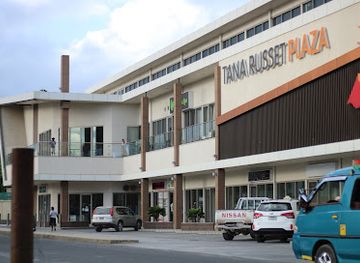
Shopping mall
Tana Russet Plaza
Discover the vibrant shopping scene at Tana Russet Plaza, Port Vila's premier mall with diverse shops and delightful dining options.


Get your free copy of our complete guide to Maewo Island, delivered straight to you.
Everything on this page, from attractions and restaurants to essentials and local phrases, in one PDF you can read offline, print or share.
Already have an account? Sign in
Your Maewo Island guide is ready.
We'll send it to · Not you? Sign out

Getting your guide ready…
We are putting together a fresh copy of the Maewo Island guide. This can take up to a minute.
This can take a few moments. If your browser asks, choose Allow so the download can start. You'll find the guide in your Downloads folder.
Nothing happened? Download it again
Sorry, the guide is taking longer than usual. Please try again in a minute, or get it by email instead.
Maewo Island essentials
Currency and Payment
Safety
Emergency Situations
Do's and Don'ts
Local Tips
From Eve
Local phrases worth knowing
You don't need to get them perfect. A few words go a long way, and locals appreciate the effort.
Basics
| English | Local | Say it |
|---|---|---|
| Hello | Halo | [ha-lo] |
| Goodbye | Tata | [ta-ta] |
| Yes | Aye | [ai] |
| No | Noh | [no] |
| Please/You're welcome | Plis | [plis] |
| Thank you | Tenkyu | [ten-kyu] |
| Excuse me/Sorry | Sori | [so-ri] |
| How are you? | Olsem wanem? | [ol-sem wan-em] |
| Fine. And you? | Oke. Yu? | [o-ke. yu?] |
| Do you speak English? | Yu save toktok Inglis? | [yu sa-ve tok-tok in-glis] |
| I don't understand | Mi no save | [mi no sa-ve] |
Eating & Drinking
| English | Local | Say it |
|---|---|---|
| I'd like to see the menu, please | Mi wantem lukim menu, plis | [mi wan-tem lu-kim me-nu, plis] |
| I don't eat meat | Mi no kaek meat | [mi no kae-k meat] |
| Cheers! | Kia ora! | [ki-a o-ra] |
| I would like to pay, please | Mi wantem pay, plis | [mi wan-tem pay, plis] |
Emergencies
| English | Local | Say it |
|---|---|---|
| Help! | Help! | [help] |
| Go away! | Go awei! | [go a-wei] |
| Call the Police! | Kolim polis! | [ko-lim po-lis] |
| Call a doctor! | Kolim dokta! | [ko-lim dok-ta] |
| I'm lost | Mi los | [mi los] |
| I'm ill | Mi sik | [mi sik] |
Shopping
| English | Local | Say it |
|---|---|---|
| I'd like to buy... | Mi wantem baem... | [mi wan-tem ba-em] |
| I'm just looking | Mi jes lukim | [mi jes lu-kim] |
| How much is it? | Hao mak? | [hao mak] |
| That's too expensive | Ite tu ekspensiv | [ite tu eks-pen-siv] |
| Can you lower the price? | Yu save lukim price? | [yu sa-ve lu-kim price] |
Time & Numbers
| English | Local | Say it |
|---|---|---|
| What time is it? | Hao taem? | [hao ta-em] |
| It's one o'clock | Ite wan o'klok | [ite wan o-klok] |
| Half past (10) | Haf pat (10) | [haf pat (ten)] |
| Morning | Mornin | [mor-nin] |
| Afternoon | Aftanun | [af-ta-nun] |
| Evening | Ivining | [i-vi-ning] |
| Yesterday | Yestede | [yes-te-de] |
| Today | Tude | [tu-de] |
| Tomorrow | Tumoro | [tu-mo-ro] |
| 1 | Wan | [wan] |
| 2 | Tu | [tu] |
| 3 | Tri | [tri] |
| 4 | Foa | [fo-a] |
| 5 | Faiv | [faiv] |
| 6 | Siks | [siks] |
| 7 | Seven | [sev-en] |
| 8 | Eit | [eit] |
| 9 | Nain | [nain] |
| 10 | Ten | [ten] |
Transport & Directions
| English | Local | Say it |
|---|---|---|
| Where's a/the...? | Wea a/the...? | [we-a a/the] |
| What's the address? | Hao nao adres? | [hao nao a-dres] |
| Can you show me (on the map)? | Yu save shoem mi (long map)? | [yu sa-ve sho-em mi (long map)] |
| When's the next (bus)? | Hao taem next (bus)? | [hao ta-em next (bus)] |
| A ticket (to ....) | Wan tiket (go ....) | [wan ti-ket (go ....)] |
History of Maewo Island
Long Settlement and Island Communities
Maewo has been inhabited for many centuries by Melanesian communities whose lives developed around gardening, fishing, forest resources and highly organised village societies. Archaeological evidence across Vanuatu points to early Austronesian settlement followed by long periods of local adaptation and exchange. On Maewo, oral histories remain especially important for explaining ancestral origins, customary land rights and relationships between communities. The island's languages, ceremonial practices and agricultural knowledge preserve elements of this long history, even as Christianity, formal education and modern administration have altered everyday life.
Traditional Authority and Kastom
Before sustained European influence, Maewo's communities were governed through customary authority, kinship, land relationships, exchange and ritual knowledge rather than a single island-wide state. Status could be expressed through ceremonies, public feasting, the distribution of valuables and the assumption of recognised grades or responsibilities. Kastom was not a static system: it varied between communities and changed as people negotiated alliances, resources and outside contacts. Contemporary Maewo still draws on these customary structures, particularly in discussions about land, ceremonies, community obligations and the appropriate reception of visitors.
Missionary Contact in the Nineteenth Century
Christian missionaries reached the islands of Vanuatu during the nineteenth century, following an earlier period of visits by traders, ships and other outsiders. On Maewo, conversion was gradual and uneven, with new churches and schools developing alongside existing customary practices rather than instantly replacing them. Mission influence introduced new forms of literacy, worship, clothing and social organisation, while island communities adapted Christianity to local circumstances. Denominational traditions remain part of village life, but customary ceremonies, oral knowledge and local languages continue to shape Maewo's cultural identity.
The Anglo-French Condominium
From 1906 until independence, the New Hebrides were administered under the unusual Anglo-French Condominium, in which British and French authorities operated parallel legal and administrative systems. Remote islands such as Maewo experienced this arrangement mainly through missions, traders, colonial officials, schools and labour networks rather than through dense urban administration. The period brought new commercial connections and imported goods, but also unequal power relations and competing authorities. Its legacy is visible in Vanuatu's dual colonial languages, institutions and complex transition towards self-government.
Independence and Rural Transformation
The New Hebrides became the independent Republic of Vanuatu in 1980. Independence placed national decision-making in the hands of a government representing widely dispersed islands and communities, including Maewo's rural population. Since then, the island has experienced expanded schooling, health and communications links, migration to larger centres and changing markets for agricultural produce. Yet transport remains challenging and many households continue to depend on gardens, fishing, community cooperation and customary land. Development on Maewo is therefore best understood as gradual and locally negotiated rather than as a wholesale break with the past.
Cyclones, Climate and Community Resilience
Maewo's exposed Pacific position and very wet climate have made severe storms, flooding, coastal damage and difficult supply connections recurring realities. Tropical cyclones can affect housing, crops, communications and transport, while changing rainfall patterns create additional pressures for gardens and freshwater management. Communities respond through local knowledge, shared labour, customary land systems and national or humanitarian support when major disasters occur. For visitors, this history explains why plans and facilities can change quickly and why environmental care, flexible itineraries and respect for local priorities are essential.
Maewo Island in Photos
Browse through our photo collection highlighting the charm and character of the destination.
Neighbouring regions of Maewo Island
The closest regions to Maewo Island, if you have time for more than one.
-

-

-

-

-


Swipe for more regions
Explore more

Explore more of Vanuatu
Discover Vanuatu, a pristine South Pacific paradise with breathtaking beaches, vibrant culture, thrilling adventures, and some of the world's best diving spots.
Explore Vanuatu