

Torba, Vanuatu Travel Guide
Explore the untouched paradise of Torba in Vanuatu, where pristine beaches, vibrant marine life, and rich cultural traditions await every traveler.
Torba, located in the northernmost province of Vanuatu, is an untouched paradise waiting to be discovered. This remote destination is perfect for those who seek tranquility and a break from the hustle and bustle of modern life. With its pristine beaches, crystal clear waters, and lush tropical forests, Torba offers a unique blend of natural beauty and cultural richness. In Torba, you will find a diverse array of marine life, making it a haven for snorkeling and diving enthusiasts. The coral reefs are teeming with colorful fish, sea turtles, and other marine creatures. The islands are also home to numerous bird species, making it a paradise for bird watchers. The local culture in Torba is deeply rooted in tradition. Visitors have the opportunity to experience authentic Melanesian culture through traditional dances, music, and ceremonies. The warm and welcoming local communities are eager to share their customs and way of life with visitors. Torba is also known for its adventurous hiking trails that lead through dense rainforests and up to volcanic peaks. These trails offer breathtaking views and the chance to explore the rich biodiversity of the islands. Whether you are an adventure seeker or someone looking to relax and unwind, Torba has something to offer everyone.

Know before you go
Hi, I'm Eve. Here are a few practical things to know before exploring Torba.
- Bring cash, as ATMs are scarce and card payments are not widely accepted.
- Respect local customs and traditions, especially during village visits.
- Pack insect repellent to protect against mosquitoes, especially during the rainy season.
- Plan your visit during the dry season (May to October) for the best weather conditions.
- Consider hiring a local guide to enhance your experience and gain deeper insights into the area's natural and cultural heritage.
Top City Travel Guides in Torba
The cities of Torba, and the easiest places to base yourself.

Explore Torba: Things to Do, Places to Eat, Hotels & More
Handpicked recommendations for top attractions, local dining, accommodations, and more

Top Attractions & Sightseeing in Torba
Top-rated picks
Best Attractions

Naiwe Beach at Blue Water
Naiwe Beach at Blue Water offers a serene escape with stunning turquoise waters and soft sandy shores, perfect for relaxation and exploration.

Torba Provine
Explore Torba Province in Vanuatu, a captivating blend of historical landmarks and stunning natural beauty, perfect for your next travel adventure.

Best landmarks in Torba
Top-rated picks
Best Landmarks

Evergreen Cascades Waterfall
Experience the breathtaking beauty and serenity of Evergreen Cascades Waterfall in Vanuatu, a must-visit destination for nature lovers and adventurers.
Tamanu on the beach
Experience the ultimate tropical getaway at Tamanu on the Beach, a luxurious resort hotel in Port Vila, Vanuatu, offering stunning views and premier amenities.

The Havannah Vanuatu
Experience the ultimate luxury at The Havannah Vanuatu, a serene resort hotel nestled in the breathtaking landscapes of Port Havannah.

Eden on the River
Experience the breathtaking beauty and tranquility of Eden on the River, a premier tourist attraction in Vanuatu's lush landscapes.

Best restaurants in Torba
Top-rated picks
Best Restaurants

The Beach Bar
Experience the perfect blend of relaxation and adventure at The Beach Bar in Vanuatu - where families create unforgettable memories by the sea.

The Stonegrill Restaurant
Experience unique stone-grilled dining with stunning ocean views at The Stonegrill Restaurant in Port Vila - a culinary delight not to be missed.

Nambawan Café
Experience local flavors at Nambawan Café in Port Vila – where stunning views meet delightful cuisine in a vibrant atmosphere.
Tamanu on the beach
Experience exquisite dining at Tamanu on the Beach in Port Vila - where tropical beauty meets culinary excellence.

Best bars in Torba
Top-rated picks
Best Bars
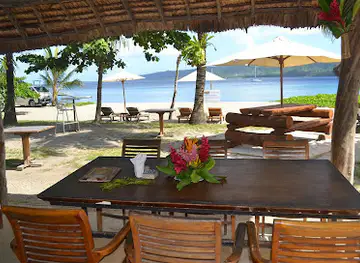
The Beach Bar
Experience the vibrant atmosphere and delicious flavors at The Beach Bar, a family-friendly destination on Vanuatu's Mele Road, perfect for tourists.

Nambawan Café
Discover the flavors of Vanuatu at Nambawan Café, a beachfront gem in Port Vila offering delicious local dishes and stunning ocean views.

Breakas Beach Resort
Experience the enchanting beauty and vibrant nightlife at Breakas Beach Resort, your ultimate tropical getaway in Vanuatu.

Waterfront Bar and Grill
Discover a vibrant culinary experience at Waterfront Bar and Grill in Port Vila, offering stunning views, delicious food, and a lively atmosphere.

Best nightclubs in Torba
Top-rated picks
Best Nightclubs
Tamanu on the beach
Experience the ultimate tropical getaway at Tamanu on the Beach, where luxury meets the breathtaking beauty of Vanuatu's coastline.

Banyan Beach Bar
Experience the vibrant atmosphere and stunning views at Banyan Beach Bar, the perfect destination for relaxation and nightlife in Port Vila.

The Retreat Seaside Sports Bar & Resort
Experience the vibrant atmosphere of The Retreat Seaside Sports Bar & Resort in Port Vila, where delicious food meets stunning ocean views.

83 Islands Distillery
Discover the authentic flavors of Vanuatu at 83 Islands Distillery, a premier destination for craft spirits and cultural experiences in Port Vila.

Best shops in Torba
Top-rated picks
Best Shops

Iririki Island Resort
Experience the ultimate tropical getaway at Iririki Island Resort, where luxury meets nature in the heart of Vanuatu.

Fung Kuei Duty Free
Experience shopping like never before at Fung Kuei Duty Free, where luxury meets local charm in the heart of Port Vila.
Aore Island Resort
Discover the serene beauty of Aore Island Resort in Vanuatu, where stunning beaches meet lush landscapes for the ultimate tropical getaway.

Aelan Chocolate Factory | ACTIV Association
Experience the magic of chocolate-making at Aelan Chocolate Factory in Port Vila, where every bite tells a story of passion and craftsmanship.

Explore Torba on the Map
A handpicked selection of must-see spots in Torba, mapped for you.
Torba Essentials
-
Torba is located in the northernmost province of Vanuatu. The primary entry point for international travelers is Bauerfield International Airport in Port Vila, the capital of Vanuatu. From Port Vila, you can take a domestic flight to Sola Airport on Vanua Lava, the administrative center of Torba Province. Flights to Sola are operated by Air Vanuatu and typically run a few times a week. Alternatively, you can take a boat from other islands, but schedules can be irregular and the journey is lengthy.
-
Transportation within Torba is limited. On the main islands, such as Vanua Lava and Gaua, you can find local trucks and boats used for transport. These services are not scheduled, so flexibility and patience are required. For shorter distances, walking is often the best option. There are no formal taxi services or rental car agencies, so arranging transport through local guesthouses or guides is advisable.
-
The official currency in Vanuatu is the Vanuatu Vatu (VUV). Credit card facilities are scarce in Torba, so it is essential to carry enough cash for your trip. ATMs are not available in most areas of Torba, so withdrawing sufficient cash in Port Vila or Luganville before you travel is recommended. Local markets and small vendors usually accept only cash.
-
Torba is generally a safe destination for tourists. Crime rates are low, but it is wise to exercise standard precautions, such as not leaving belongings unattended and avoiding isolated areas at night. There are no specific neighborhoods with high crime rates targeting tourists. Always be aware of your surroundings and respect local customs to ensure a safe and enjoyable visit.
-
In case of emergency, the local police can be reached at 111. Medical facilities in Torba are basic, with small clinics available in larger villages. For serious medical emergencies, evacuation to Port Vila or Luganville may be necessary, so having comprehensive travel insurance that covers medical evacuation is highly recommended. It's also helpful to have a basic first aid kit and any necessary medications with you.
-
Fashion: Do dress modestly, especially in villages. Avoid wearing revealing clothing. Religion: Do respect local customs and traditions. Always ask for permission before entering a village or taking photos of people. Public Transport: Do be patient as transport schedules are flexible. Don’t expect punctuality. Greetings: Do greet people with a smile and a 'hello'. A handshake is also appreciated. Eating & Drinking: Do try local dishes and accept food offerings graciously. Don't refuse hospitality, as it is considered impolite.
-
To experience Torba like a local, participate in village activities and spend time with the locals. Attend traditional events if you have the opportunity, as they provide a deep insight into the culture. Visit local markets to buy fresh produce and handmade crafts. Exploring the natural beauty of the islands, including hiking to waterfalls and snorkeling in pristine waters, will offer a genuine taste of the local lifestyle.
When is the best time to visit Torba?
Useful Local Phrases for Torba
You don't need to speak the language perfectly. Even learning a few simple words can make conversations warmer—and locals usually appreciate the effort.
— Eve

Here are the phrases I use most often in Torba. Try a few—you'll be surprised how far they go! 😊
❤️
-
- HelloHalo
[ha-lo] - GoodbyeBai
[bye] - YesYes
[yes] - NoNo
[no] - Please/You're welcomePlis
[plees] - Thank youTenkyu
[ten-kyoo] - Excuse me/SorrySori
[so-ree] - How are you?Olsem wanem?
[ol-sem wa-nen] - Fine. And you?Fain. Yu?
[fine. yoo] - Do you speak English?Yu tok Pidgin?
[yoo tok pid-gin] - I don't understandMi no save
[mee no sah-veh]
- HelloHalo
-
- I'd like to see the menu, pleaseMi laik lukim menu, plis
[mee laik loo-keem me-nu, plees] - I don't eat meatMi no kaek meat
[mee no kah-ek meet] - Cheers!Kia!
[kee-ah] - I would like to pay, pleaseMi laik mekem pe, plis
[mee laik mek-em pay, plees]
- I'd like to see the menu, pleaseMi laik lukim menu, plis
-
- Help!Help!
[help] - Go away!Go awei!
[go ah-way] - Call the Police!Kolim Polisi!
[ko-leem po-lee-see] - Call a doctor!Kolim dokta!
[ko-leem dok-ta] - I'm lostMi los
[mee los] - I'm illMi sik
[mee seek]
- Help!Help!
-
- I'd like to buy...Mi laik baem...
[mee laik bye-em] - I'm just lookingMi jast lukim
[mee jahst loo-keem] - How much is it?Hao makem?
[how ma-kem] - That's too expensiveDat i tu ekspensiv
[dat ee too eks-pen-siv] - Can you lower the price?Yu save reducem prais?
[yoo sah-veh re-doo-sem price]
- I'd like to buy...Mi laik baem...
-
- What time is it?Hao taem i?
[how time ee] - It's one o'clockI wan klok
[ee wan clock] - Half past (10)Haf pas (10)
[haf pas ten] - MorningMoring
[mor-ing] - AfternoonAftanoon
[af-ter-noon] - EveningIvening
[ee-ven-ing] - YesterdayYestedei
[yes-teh-day] - TodayTudei
[too-day] - TomorrowTumoro
[too-mo-ro] - 1Wan
[wan] - 2Tu
[too] - 3Tri
[tree] - 4Fo
[foh] - 5Faev
[five] - 6Siks
[siks] - 7Sevn
[sev-en] - 8Eit
[eight] - 9Nain
[nine] - 10Ten
[ten]
- What time is it?Hao taem i?
-
- Where's a/the...?Wea a/di...?
[weah ah/dee] - What's the address?Hao nao adres?
[how now ad-res] - Can you show me (on the map)?Yu save soem mi (long map)?
[yoo sah-veh soem mee (long map)] - When's the next (bus)?Wen i next (bus)?
[wen ee next (bus)] - A ticket (to ....)Wan tiket (go....)
[wan tee-ket (go....)]
- Where's a/the...?Wea a/di...?
History of Torba
-
Torba, located in the northernmost province of Vanuatu, has been home to indigenous communities for thousands of years. The early settlers were part of the Lapita culture, known for their distinctive pottery and seafaring skills. The traditional lifestyle of the indigenous people revolved around fishing, agriculture, and a rich tapestry of oral traditions and spiritual beliefs.
-
The first recorded European contact with Torba came in the 18th century when explorers like Captain James Cook sailed through the archipelago. The region became part of the New Hebrides, a condominium jointly administered by Britain and France from the late 19th century until Vanuatu's independence in 1980. This colonial period left a complex legacy, impacting local governance, education, and religious practices.
-
During World War II, Torba and the surrounding islands gained strategic importance due to their location in the Pacific theater. The presence of Allied forces led to the construction of military bases and airstrips, which facilitated supply routes and defense operations. The war also brought about significant social and economic changes, including increased interaction with the outside world.
-
Vanuatu gained independence from colonial rule in 1980, and Torba has since been part of the nation's journey towards self-governance and development. Efforts have been made to preserve the unique cultural heritage of the region while fostering economic growth through tourism and sustainable practices. Traditional customs remain strong, and local festivals and rituals continue to play a central role in community life.
-
Torba is renowned for its vibrant cultural festivals, which showcase the rich traditions of the region. Events like the Nalawan Festival and the Rom Dance offer visitors a glimpse into the island's music, dance, and artistic expressions. These festivals are not only a celebration of heritage but also a means of passing down knowledge and cultural values to younger generations.
-
In recent years, Torba has become a focal point for ecotourism and conservation initiatives. The province is home to diverse ecosystems, including pristine coral reefs and lush rainforests. Local communities and organizations are actively involved in protecting these natural resources, promoting sustainable tourism that benefits both the environment and the local economy. The 'Torba Tourism Plan' aims to balance development with preservation, ensuring that the unique beauty of the area remains unspoiled for future generations.
Neighbouring Regions of Torba
The closest regions to Torba, if you have time for more than one.


Your all‑in‑one travel companion app
Explore expert travel guides, compare and book tours, experiences, hotels, and more—all from the palm of your hand. Download now for seamless trip planning wherever your wanderlust takes you.


Explore More of Vanuatu

Looking beyond Torba? Discover Vanuatu for broader travel guides, local hot-spots, and regional highlights.
Explore VanuatuTorba in Photos
Browse through our photo collection highlighting the charm and character of the destination.


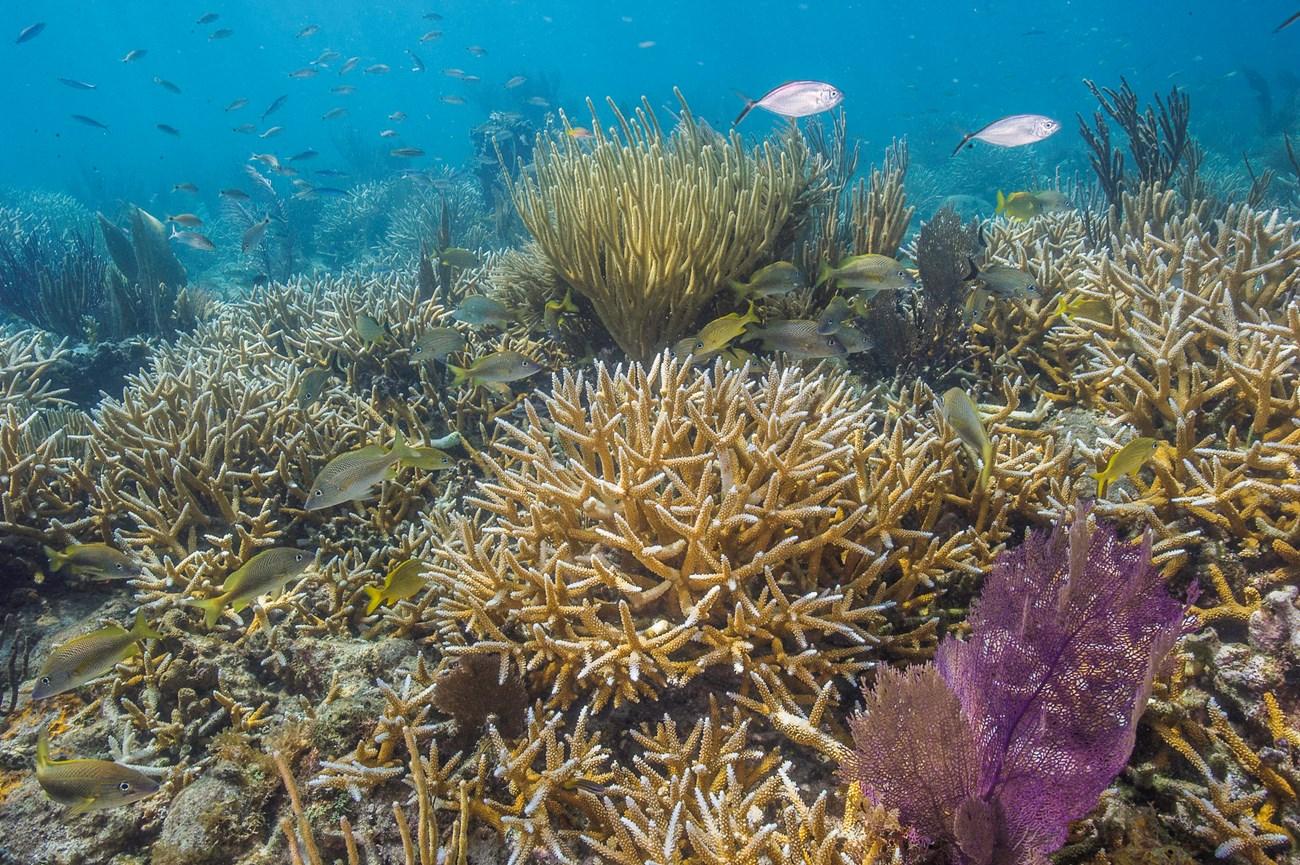


Torba: The Untouched Paradise of Vanuatu
Torba, located in the northernmost province of Vanuatu, is an untouched paradise waiting to be discovered. This remote destination is perfect for those who seek tranquility and a break from the hustle and bustle of modern life. With its pristine beaches, crystal clear waters, and lush tropical forests, Torba offers a unique blend of natural beauty and cultural richness. In Torba, you will find a diverse array of marine life, making it a haven for snorkeling and diving enthusiasts. The coral reefs are teeming with colorful fish, sea turtles, and other marine creatures. The islands are also home to numerous bird species, making it a paradise for bird watchers. The local culture in Torba is deeply rooted in tradition. Visitors have the opportunity to experience authentic Melanesian culture through traditional dances, music, and ceremonies. The warm and welcoming local communities are eager to share their customs and way of life with visitors. Torba is also known for its adventurous hiking trails that lead through dense rainforests and up to volcanic peaks. These trails offer breathtaking views and the chance to explore the rich biodiversity of the islands. Whether you are an adventure seeker or someone looking to relax and unwind, Torba has something to offer everyone.