

Free Blacksburg Travel Guide & Mobile App
Plan your Blacksburg trip with Evendo. Get free guides to top attractions, restaurants, hotels, and bars. Web access or download the mobile app.


Blacksburg, Virginia pairs Virginia Tech spirit with Appalachian scenery, a walkable downtown, farm-to-table dining and inviting arts, trails and local history.
A College Town in the Blue Ridge
Blacksburg lies in the New River Valley of south-west Virginia, where the high ridges and wooded slopes of the Blue Ridge shape both the views and the pace of daily life. Virginia Tech dominates the town physically and culturally, but Blacksburg is more than a university setting: its compact centre, independent businesses, farmers market and strong outdoor culture give it a character of its own. The town's elevation brings crisp seasons, while nearby forests, creeks and open farmland provide an immediate sense of the Appalachian landscape.Read more about Blacksburg
Heritage and Contemporary Culture
Trails, Gardens and Local Rhythms
When is the best time to visit Blacksburg?
Best: May, September–October · 20–26°C| Month | High (°C) | Rainfall (mm) |
|---|---|---|
| January | 6 | 74 |
| February | 8 | 71 |
| March | 14 | 91 |
| April | 19 | 83 |
| May (best) | 25 | 104 |
| June | 29 | 108 |
| July | 31 | 118 |
| August | 30 | 105 |
| September (best) | 26 | 94 |
| October (best) | 20 | 84 |
| November | 14 | 85 |
| December | 7 | 81 |
Getting to and around Blacksburg
How to get there
Transportation
Best attractions in Blacksburg
Blacksburg's principal attractions combine university culture, local history and Appalachian scenery. Virginia Tech's campus rewards a walk through its landscaped grounds, public art and distinctive stone buildings, while the Moss Arts Center provides exhibitions and performances in a contemporary cultural setting. The Hahn Horticulture Garden offers a quieter exploration of designed planting, seasonal colour and horticultural research. At Smithfield Plantation, an early regional estate on the university's edge, historic buildings and interpreted grounds illuminate the lives and landholding patterns of the colonial period. Downtown, the Alexander Black House provides a glimpse of nineteenth-century Blacksburg and sits close to independent shops, cafés and public spaces. For outdoor time, the Huckleberry Trail follows a former railway route towards Christiansburg, and nearby Pandapas Pond introduces visitors to forest, wetland and mountain habitats. Together these sites present a town whose attractions are closely connected to education, landscape and community history.
-
Tourist attraction
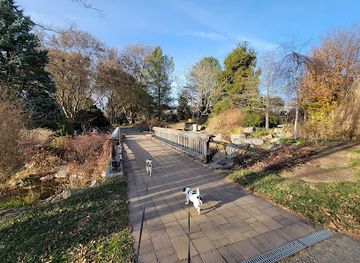
Hahn Horticulture Garden
Discover the beauty of nature at Hahn Horticulture Garden, a serene botanical garden in Blacksburg, VA, perfect for relaxation, events, and exploration.
18 min walk · 1.5 km from city centre
-
Tourist attraction
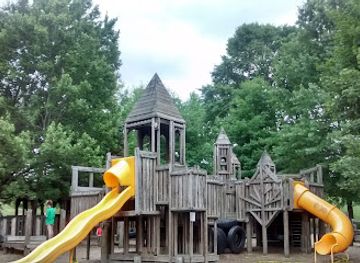
Blacksburg Municipal Park
Explore the natural beauty and vibrant community spirit at Blacksburg Municipal Park, a perfect escape for outdoor enthusiasts and families alike.
17 min walk · 1.4 km from city centre
-
Tourist attraction
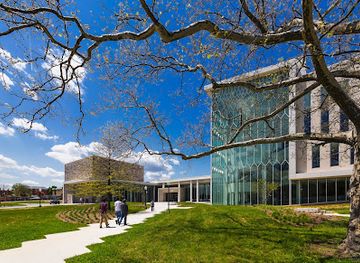
Moss Arts Center
Explore the vibrant cultural scene at the Moss Arts Center in Blacksburg, Virginia, where art meets community through dynamic performances and exhibitions.
6 min walk · 0.4 km from city centre
-
Tourist attraction
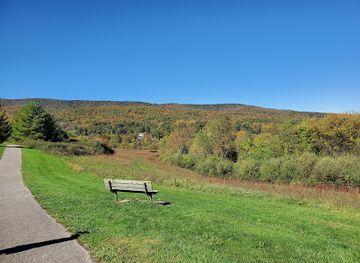
Heritage Community Park and Natural Area
Discover the beauty and tranquility of Heritage Community Park and Natural Area, a perfect escape for outdoor enthusiasts in scenic Blacksburg, Virginia.
12 min drive · 4.1 km from city centre
Best landmarks in Blacksburg
The most recognisable landmarks in Blacksburg reveal its development from a small Virginia town into a major university community. Virginia Tech's Drillfield is the campus's central open space, framed by historic academic buildings and the university's characteristic stone architecture. Burruss Hall, with its prominent clock tower, is one of the campus's defining visual markers, while the War Memorial Court and surrounding memorials express the institution's military tradition and public memory. In the town centre, the Alexander Black House is an important surviving nineteenth-century residence associated with Blacksburg's early civic history. Smithfield Plantation, on the university's western side, represents an earlier era of settlement and landholding in the New River Valley. These places differ in age and purpose, yet together they explain how local government, education, memory and regional history have shaped Blacksburg's built environment.
-
Stadium
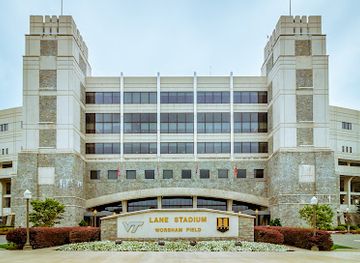
Lane Stadium
Discover Lane Stadium, a captivating college football venue in Blacksburg, Virginia, where tradition meets electrifying sporting events.
14 min walk · 1.1 km from city centre
-
 Hotel
HotelThe Inn at Virginia Tech and Skelton Conference Center
Discover the charm of Blacksburg at The Inn at Virginia Tech, where historic elegance meets modern comfort in a stunning natural setting.
18 min walk · 1.4 km from city centre
-
Pizza
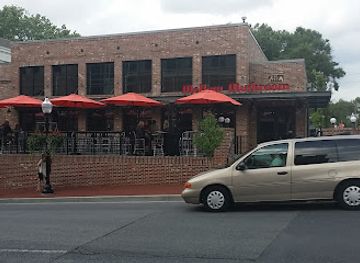
Mellow Mushroom Blacksburg
Discover Mellow Mushroom in Blacksburg, where delicious pizzas, vibrant atmospheres, and diverse menus create the ultimate dining experience for all visitors.
3 min walk · 0.2 km from city centre
-
Public university
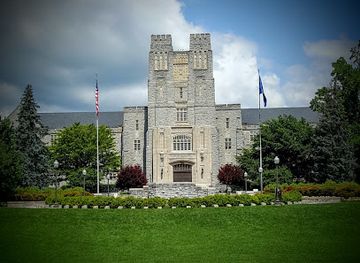
Virginia Tech
Experience the historic charm and vibrant campus life at Virginia Tech, a public university in the heart of Blacksburg, Virginia, surrounded by stunning mountain landscapes.
11 min walk · 0.8 km from city centre
Explore Blacksburg on the map
Plan your Blacksburg trip on one map. See where the top attractions, landmarks, restaurants, bars and hotels are, find what's near where you're staying, and book hotels and experiences in a few clicks.
Best hotels in Blacksburg
Best restaurants in Blacksburg
Blacksburg's dining scene reflects a university population, an agricultural hinterland and the broader food traditions of south-west Virginia. Restaurants and cafés around downtown and Main Street range from casual sandwiches, pizza and international cooking to contemporary menus that make use of regional produce when in season. Appalachian influences appear in ingredients such as corn, beans, greens, apples and locally produced meats, while nearby farms and the Blacksburg Farmers Market support a strong interest in seasonal cooking. Coffee shops and bakeries provide much of the daytime social life, and breweries and relaxed eateries extend it into the evening. Food trucks and student-oriented establishments add variety, particularly during the academic year. The area is not defined by one formal cuisine; instead, its character comes from the meeting of Southern and Appalachian traditions with international tastes brought by Virginia Tech's students, faculty and research community.
-
Mexican
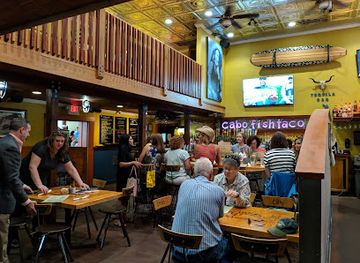
Cabo Fish Taco
Experience vibrant flavors at Cabo Fish Taco - where fresh seafood meets unique Mexican-Caribbean cuisine in downtown Blacksburg.
1 min walk · 0.1 km from city centre
-
Restaurant
Cellar Restaurant
Experience authentic Mediterranean cuisine at The Cellar Restaurant in Downtown Blacksburg – where flavor meets hospitality.
2 min walk · 0.2 km from city centre
-
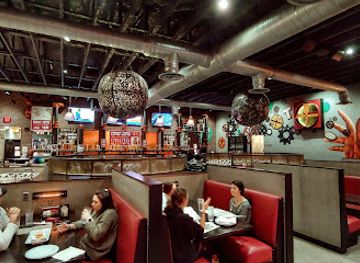
Pizza
Mellow Mushroom Blacksburg
Discover Mellow Mushroom in Blacksburg: where delicious pizza meets vibrant ambiance for an unforgettable dining experience.
3 min walk · 0.2 km from city centre
-
Sushi
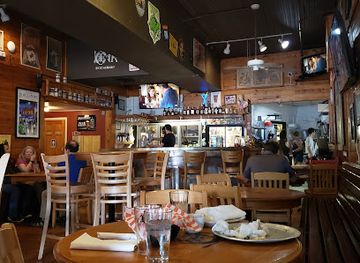
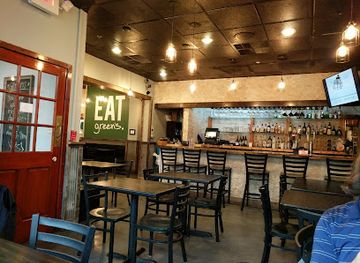
Green's Grill & Sushi Bar
Discover a culinary oasis at Green's Grill & Sushi Bar in Downtown Blacksburg—where sushi meets Mediterranean delights in a vibrant setting.
2 min walk · 0.2 km from city centre
Best bars in Blacksburg
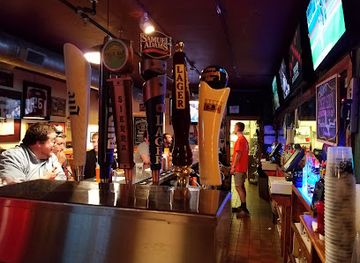
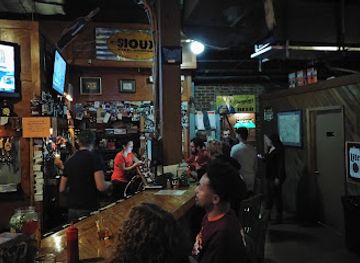
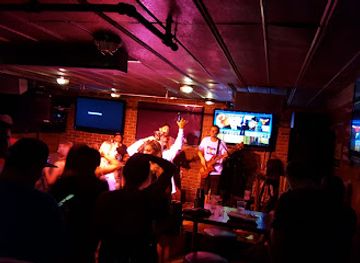
Blacksburg's evening scene is concentrated around downtown, where pubs, breweries, casual bars and live-music spaces serve a mixture of students, residents and visitors. The town is better known for social evenings and performances than for a large nightclub district. Local beer is part of the culture, with breweries such as Rising Silo Brewery connecting drinks, food and outdoor events to the surrounding agricultural landscape. The Lyric Theatre presents films, concerts and community programming, while Virginia Tech's Moss Arts Center and other campus venues bring theatre, music, dance and talks to the town. On busy university weekends, bars and restaurants become more animated, particularly around sporting events, whereas summer and academic breaks are generally quieter. Visitors should carry accepted identification where required and remember that venues, entertainment schedules and late-night transport can change with the university calendar.
-
Restaurant
PK's Bar & Grill
Experience the vibrant taste of Blacksburg at PK's Bar & Grill, where delicious food and a lively atmosphere create the perfect dining experience.
4 min walk · 0.4 km from city centre
-
Bar
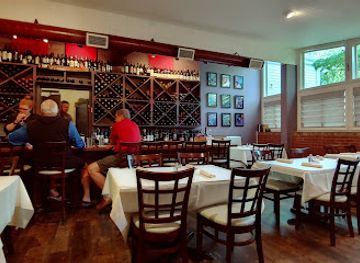
622 North Restaurant and Wine Bar
Discover the culinary excellence of 622 North Restaurant and Wine Bar in Blacksburg, VA, where delightful dishes and exquisite wines await.
9 min walk · 0.7 km from city centre
-
Pub
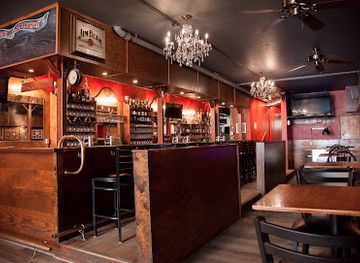
Square 5 Public House
Discover the lively atmosphere and delicious offerings at Square 5 Public House, the perfect pub for food and drink enthusiasts in Blacksburg, Virginia.
1 min walk · 0.1 km from city centre
-
Sports bar
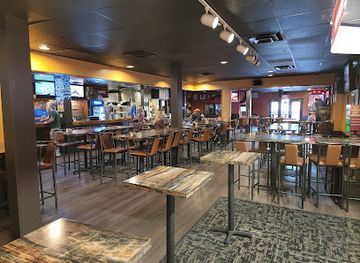
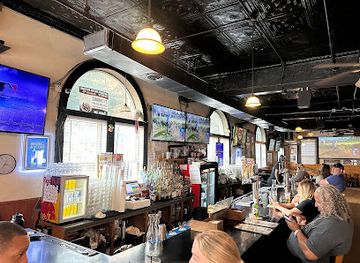
Sharkey's Wing & Rib Joint
Discover the ultimate sports bar experience at Sharkey's Wing & Rib Joint with amazing wings, ribs, and a lively atmosphere in Blacksburg, VA.
2 min walk · 0.2 km from city centre
Best nightclubs in Blacksburg
Blacksburg's evening scene is concentrated around downtown, where pubs, breweries, casual bars and live-music spaces serve a mixture of students, residents and visitors. The town is better known for social evenings and performances than for a large nightclub district. Local beer is part of the culture, with breweries such as Rising Silo Brewery connecting drinks, food and outdoor events to the surrounding agricultural landscape. The Lyric Theatre presents films, concerts and community programming, while Virginia Tech's Moss Arts Center and other campus venues bring theatre, music, dance and talks to the town. On busy university weekends, bars and restaurants become more animated, particularly around sporting events, whereas summer and academic breaks are generally quieter. Visitors should carry accepted identification where required and remember that venues, entertainment schedules and late-night transport can change with the university calendar.
-
Pub
Square 5 Public House
Discover the vibrant flavors and lively atmosphere at Square 5 Public House in Blacksburg, where great food and drinks meet local charm.
1 min walk · 0.1 km from city centre
-
Bar
Hokie House Restaurant
Discover the lively Hokie House Restaurant in Blacksburg, VA - a perfect blend of delicious food, extensive drinks, and a vibrant atmosphere.
3 min walk · 0.2 km from city centre
-
Grill
Rivermill Bar and Grill
Discover the vibrant flavors of Rivermill Bar and Grill in Blacksburg, where delicious food and a lively atmosphere create unforgettable dining experiences.
2 min walk · 0.2 km from city centre
-
Bar
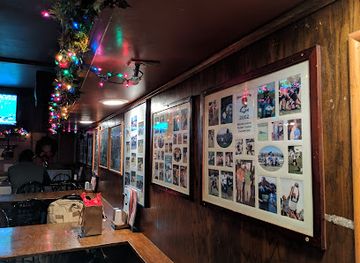
Top of the Stairs
Discover the vibrant nightlife at Top of the Stairs in Blacksburg, VA, where great food and drinks meet a lively atmosphere and entertainment.
3 min walk · 0.2 km from city centre
Best shops in Blacksburg
Shopping in Blacksburg is centred on independent businesses downtown, where small retailers, bookshops, cafés, boutiques and specialist stores serve both residents and the Virginia Tech community. The Blacksburg Farmers Market, held at Market Square, is the most distinctive place to browse regional produce, baked goods, preserves, crafts and seasonal goods, with its character changing throughout the year. Visitors may also find locally made pottery, artwork, textiles and Appalachian-inspired gifts in independent galleries and craft-oriented shops. Larger everyday retail areas lie along the approaches to town and in nearby Christiansburg, where shopping centres provide national chains and practical supplies. The local shopping experience is less about luxury retail than about meeting makers, growers and small businesses. Food products from the New River Valley, university-related items and handmade goods make more meaningful souvenirs than generic merchandise.
-
Shopping mall
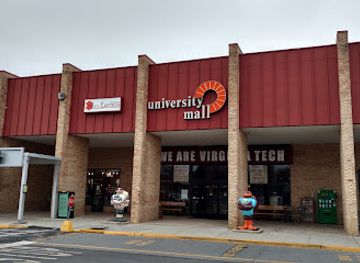
University Mall Shopping Center
Explore the University Mall Shopping Center in Blacksburg, VA - a vibrant shopping destination with diverse stores, dining, and entertainment for everyone.
5 min drive · 1.8 km from city centre
-
Gift shop
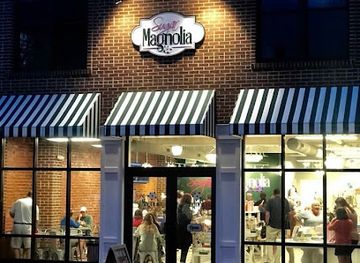
Sugar Magnolia
Explore Sugar Magnolia, a charming gift shop and ice cream parlor in downtown Blacksburg, offering unique finds and delightful treats for every visitor.
1 min walk · 0.1 km from city centre
-
Business center
First and Main
Discover the essence of shopping and entertainment at First and Main in Blacksburg, Virginia, where fun meets variety in a vibrant community hub.
6 min drive · 2.1 km from city centre
-
Shopping mall
University Crossroads
Explore vibrant shopping and dining at University Crossroads in Blacksburg, a must-visit destination for tourists seeking local flavor and culture.
5 min drive · 1.5 km from city centre
Get your free copy of our complete guide to Blacksburg, delivered straight to you.
Everything on this page, from attractions and restaurants to essentials and local phrases, in one PDF you can read offline, print or share.
Already have an account? Sign in
Your Blacksburg guide is ready.
We'll send it to · Not you? Sign out

Getting your guide ready…
We are putting together a fresh copy of the Blacksburg guide. This can take up to a minute.
This can take a few moments. If your browser asks, choose Allow so the download can start. You'll find the guide in your Downloads folder.
Nothing happened? Download it again
Sorry, the guide is taking longer than usual. Please try again in a minute, or get it by email instead.
Blacksburg essentials
Currency and Payment
Safety
Emergency Situations
Do's and Don'ts
Local Tips
From Eve
Local phrases worth knowing
You don't need to get them perfect. A few words go a long way, and locals appreciate the effort.
Basics
| English | Local | Say it |
|---|---|---|
| Hello | Howdy | [haw-dee] |
| Goodbye | See ya | [see yuh] |
| Yes | Yup | [yuhp] |
| No | Nah | [nuh] |
| Please/You're welcome | Please/No worries | [pleez/no wur-eez] |
| Thank you | Thanks | [thaynks] |
| Excuse me/Sorry | Pardon me/My bad | [par-dn mee/my bad] |
| How are you? | How y'all doin'? | [haw yahl doo-in] |
| Fine. And you? | Good. How 'bout you? | [good. how bawt yuh] |
| Do you speak English? | Y'all speak English? | [yahl speek ing-glish] |
| I don't understand | I ain't gettin' it | [i aint get-tin it] |
Eating & Drinking
| English | Local | Say it |
|---|---|---|
| I'd like to see the menu, please | Mind if I check out the menu? | [mynd if aye chek out thu menu] |
| I don't eat meat | I don't do meat | [i doant do meat] |
| Cheers! | Cheers! | [cheers] |
| I would like to pay, please | I reckon I'll settle up now, please | [i rehk-in aye-ll set-tl up now, pleez] |
Emergencies
| English | Local | Say it |
|---|---|---|
| Help! | Help! | [help] |
| Go away! | Git! | [git] |
| Call the Police! | Call the Po-lice! | [call the po-liss] |
| Call a doctor! | Call a doc! | [call a dock] |
| I'm lost | I'm all turned around | [i'm awl turn-d uh-round] |
| I'm ill | I'm feelin' poorly | [i'm feel-in poor-lee] |
Shopping
| English | Local | Say it |
|---|---|---|
| I'd like to buy... | I'm fixin' to buy... | [i'm fik-sin tuh buy] |
| I'm just looking | Just browsin' | [just brow-sin] |
| How much is it? | How much fer that? | [how much fur that] |
| That's too expensive | That's a mite pricey | [that's uh myt pry-see] |
| Can you lower the price? | Can ya do a better deal? | [can yuh doh uh bet-ter deel] |
Time & Numbers
| English | Local | Say it |
|---|---|---|
| What time is it? | What's the time? | [whats thu time] |
| It's one o'clock | It's one | [its one] |
| Half past (10) | Half past ten | [half past ten] |
| Morning | Mornin' | [mornin] |
| Afternoon | Afternoon | [afternoon] |
| Evening | Evenin' | [evenin] |
| Yesterday | Yest'day | [yest-duh] |
| Today | Today | [today] |
| Tomorrow | Tomorrah | [tom-uh-rah] |
| 1 | One | [wun] |
| 2 | Two | [too] |
| 3 | Three | [three] |
| 4 | Four | [four] |
| 5 | Five | [five] |
| 6 | Six | [six] |
| 7 | Seven | [sev-un] |
| 8 | Eight | [ayt] |
| 9 | Nine | [nine] |
| 10 | Ten | [ten] |
Transport & Directions
| English | Local | Say it |
|---|---|---|
| Where's a/the...? | Where's the...? | [wheres the] |
| What's the address? | Where's it at? | [wheres it at] |
| Can you show me (on the map)? | Can ya point it out (on the map)? | [can yuh point it out (on the map)] |
| When's the next (bus)? | When's the next bus? | [whens the next bus] |
| A ticket (to ....) | A ticket (to ....) | [uh ticket (to)] |
History of Blacksburg
Indigenous New River Valley
The Blacksburg area forms part of the wider New River Valley, a landscape long used and inhabited by Indigenous peoples, including communities associated with the Monacan and Tutelo peoples and later regional Native networks. The New River was an important natural corridor for movement, exchange and hunting. European-American settlement expanded in south-west Virginia during the eighteenth century, bringing farms, roads and changing land ownership. The area's wooded ridges and fertile valleys shaped settlement patterns for generations, while the river connected communities beyond what is now Blacksburg. Indigenous history remains an essential part of understanding the region, even though much of the town's surviving built heritage reflects later colonial and American development.
William Black and Early Settlement
The town takes its name from William Black, who owned land in the area during the late eighteenth century. Blacksburg was laid out in 1798, when the settlement was still a small courthouse and trading community surrounded by farms. Its position between the New River and the surrounding mountain ridges made it a local centre rather than a major commercial city. Early growth depended on agriculture, small-scale trade and roads linking Montgomery County communities. The town's historic core developed gradually, and buildings such as the Alexander Black House preserve traces of the nineteenth-century civic and domestic landscape that preceded the rise of Virginia's major land-grant college.
An Incorporated Mountain Town
Blacksburg was incorporated as a town in 1871, a period when railways and improved roads were reshaping commerce across Virginia. The settlement developed a more organised civic centre, with Main Street, public institutions and commercial buildings serving the surrounding countryside. A railway connection later strengthened the town's links with Christiansburg and the wider region, supporting the movement of agricultural goods, students and visitors. Much of the modern town's identity still reflects this combination of a compact historic centre and a broad rural hinterland. The arrival and growth of a permanent educational institution soon became the decisive influence on Blacksburg's economy, population and physical expansion.
From Land-Grant College to Virginia Tech
Virginia Agricultural and Mechanical College opened in Blacksburg in 1872 under Virginia's land-grant educational system. It grew from a small agricultural and technical college into Virginia Polytechnic Institute, later commonly known as Virginia Tech. The institution's mission broadened alongside the changing needs of the Commonwealth, with engineering, science, agriculture and other fields becoming central to its reputation. Its campus expanded west and south of the original town centre, creating a distinctive relationship between a municipal community and a large university. Many of Blacksburg's cultural institutions, public spaces, businesses and seasonal rhythms continue to be shaped by the university's teaching, research and student population.
Modernisation and Community Change
During the twentieth century, Blacksburg moved from a predominantly agricultural service town towards a research-oriented university community. Improved highways and regional air connections made the New River Valley more accessible, while Virginia Tech attracted students, faculty and international researchers. The town also reflected the broader changes of the American South, including the expansion of public education and the gradual diversification of civic life. Historic buildings and older commercial streets remained alongside new neighbourhoods, laboratories and cultural facilities. The preservation of the Alexander Black House and Smithfield Plantation, together with the development of arts and public-realm projects, demonstrates an ongoing effort to connect the town's colonial, educational and contemporary identities.
A Contemporary Appalachian University Town
Blacksburg today is defined by the interaction of Virginia Tech, an active local business community and the surrounding Appalachian environment. Research and technology have joined agriculture and education as important parts of the regional economy, while trails, gardens, breweries, markets and performance spaces contribute to everyday town life. The campus's architecture and traditions remain highly visible, but the wider community extends into independent restaurants, neighbourhoods and outdoor spaces beyond university grounds. Blacksburg's current identity is therefore both local and outward-looking: a small Virginia town shaped by mountain geography, a major public university and continuing cultural exchange.
Blacksburg in Photos
Browse through our photo collection highlighting the charm and character of the destination.
Cities near Blacksburg
The closest cities to Blacksburg, if you have time for more than one stop.
-

-

-

-

-


Swipe for more cities
Explore more

Explore more of Virginia
Discover Virginia: A blend of historic landmarks, natural beauty, and vibrant culture perfect for history buffs, nature lovers, and culture seekers.
Explore Virginia