

Free Roanoke Travel Guide & Mobile App
Plan your Roanoke trip with Evendo. Get free guides to top attractions, restaurants, hotels, and bars. Web access or download the mobile app.


Roanoke, Virginia combines Blue Ridge scenery, railway heritage, museums, local food and the famous Mill Mountain Star in an Appalachian city.
Mountain Setting and City Character
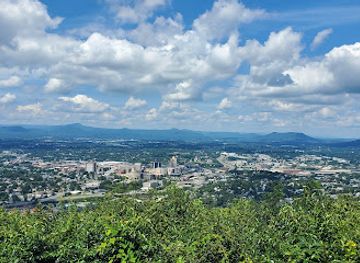
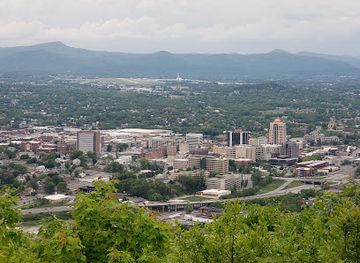
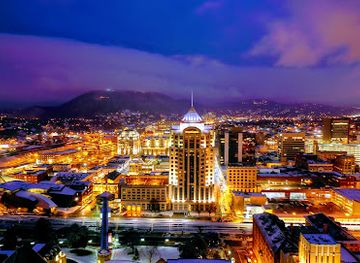
Roanoke occupies a broad valley in southwest Virginia, framed by the Blue Ridge Mountains and shaped by the railway that made it an important regional centre. The city combines an approachable downtown with historic neighbourhoods, lively arts institutions and easy access to wooded ridges, river trails and scenic roads. Its most recognisable symbol is the Roanoke Star, illuminated on Mill Mountain above the city and especially striking after dark.Read more about Roanoke
Heritage in the Urban Landscape
Neighbourhoods, Food and the Outdoors
When is the best time to visit Roanoke?
Best: May, September–October · 20–26°C| Month | High (°C) | Rainfall (mm) |
|---|---|---|
| January | 8 | 80 |
| February | 9 | 85 |
| March | 16 | 95 |
| April | 21 | 90 |
| May (best) | 26 | 95 |
| June | 29 | 100 |
| July | 31 | 105 |
| August | 30 | 100 |
| September (best) | 26 | 95 |
| October (best) | 20 | 80 |
| November | 13 | 85 |
| December | 8 | 90 |
Getting to and around Roanoke
How to get there
Transportation
Best attractions in Roanoke
Roanoke's principal attractions combine mountain views, regional history and cultural institutions. Mill Mountain Park rises directly above the city and contains the illuminated Roanoke Star, an overlook and trails through forested slopes. Downtown, the Virginia Museum of Transportation occupies a former Norfolk and Western freight station, displaying locomotives, railway equipment and vehicles that explain the city's industrial past. The Taubman Museum of Art presents changing exhibitions in a striking contemporary building, while the nearby History Museum of Western Virginia explores the wider region's communities and development. The Harrison Museum of African American Culture adds important perspectives on local heritage. Grandin Village brings independent shops, cafés and the historic Grandin Theatre, and the Roanoke River Greenway offers a more leisurely way to experience the valley landscape. Elmwood Park provides open space and a venue for outdoor events close to the central business district.
-
Cultural landmark
Mill Mountain Star
Experience breathtaking views and rich history at the iconic Mill Mountain Star in Roanoke, Virginia—your gateway to scenic beauty and cultural heritage.
7 min drive · 2.4 km from city centre
-
Cultural landmark
Mill Mountain Star
Discover the breathtaking views and cultural significance of the Mill Mountain Star, an iconic landmark in Roanoke, Virginia, illuminating the night sky.
7 min drive · 2.4 km from city centre
-
Tourist attraction
Mill Mountain Park
Discover the natural wonders of Mill Mountain Park, a serene retreat in Roanoke, Virginia, offering stunning views, diverse trails, and rich wildlife.
8 min drive · 2.5 km from city centre
-
Tourist attraction
Mill Mountain Park
Discover the beauty of Mill Mountain Park, a serene haven in Roanoke, Virginia, offering stunning views, hiking trails, and a peaceful retreat in nature.
8 min drive · 2.5 km from city centre


Best landmarks in Roanoke
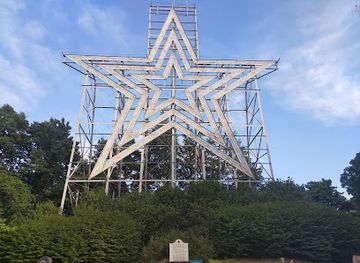
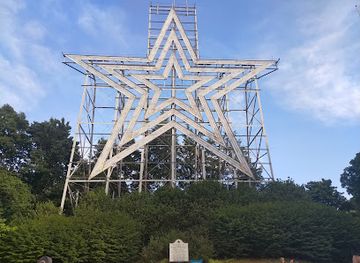
The Roanoke Star on Mill Mountain is the city's most recognisable landmark, a large illuminated structure visible across the valley and associated with Roanoke's civic identity. At ground level, the City Market Building reflects the commercial growth that followed the railway boom and remains a defining presence in the downtown streetscape. The Hotel Roanoke, developed during the city's railway era and later restored as part of a larger hospitality and conference complex, represents the importance of rail travel and regional commerce. The former Norfolk and Western freight station, now home to the Virginia Museum of Transportation, is a significant industrial reminder of the railway economy. The Taubman Museum of Art introduces a sharply contemporary architectural note, while the houses and churches of Old Southwest preserve the scale and character of an early twentieth-century residential district. Together these landmarks chart Roanoke's development from railway town to modern mountain city.
-
Cultural landmark
Mill Mountain Star
Discover the breathtaking views and vibrant history at the iconic Mill Mountain Star in Roanoke, Virginia, a cultural landmark and scenic spot.
7 min drive · 2.4 km from city centre
-
Park
Mill Mountain Park
Explore Mill Mountain Park in Roanoke, Virginia – a scenic paradise for outdoor enthusiasts and nature lovers with breathtaking views and diverse trails.
8 min drive · 2.5 km from city centre
-
Park
Elmwood Park
Discover tranquility in Elmwood Park, Roanoke's urban paradise, featuring lush landscapes, family-friendly amenities, and vibrant community events.
5 min walk · 0.4 km from city centre
-
Heritage museum
Virginia Museum of Transportation, Inc.
Discover the fascinating history of transport at the Virginia Museum of Transportation in Roanoke, a must-visit heritage museum for all ages.
6 min walk · 0.5 km from city centre
Explore Roanoke on the map
Plan your Roanoke trip on one map. See where the top attractions, landmarks, restaurants, bars and hotels are, find what's near where you're staying, and book hotels and experiences in a few clicks.
Neighbourhoods in Roanoke
-

-

-


Swipe for more neighbourhoods
Best hotels in Roanoke
Best restaurants in Roanoke
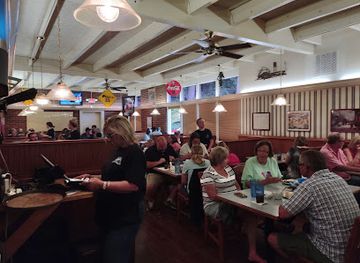
Roanoke's dining scene reflects the food traditions of the Appalachian South while drawing on the city's diverse population and growing independent business community. Menus commonly include Southern comfort food, barbecue, biscuits, fried chicken, locally inspired vegetables and seasonal ingredients, alongside burgers, international cooking and contemporary American dishes. Downtown's Market Street and the City Market area contain a concentration of restaurants, cafés and bars, while Grandin Village offers neighbourhood dining with an independent character. Breweries and casual eateries have added to the city's social food culture, and farmers' markets and regional producers connect local cooking with the agricultural valleys surrounding Roanoke. Visitors may also encounter Virginia wines, craft beer and Appalachian interpretations of familiar dishes. The strongest sense of place often comes through relaxed, locally run establishments rather than formal dining alone.
-
Steak
The Great 611 Steak Company
Experience top-notch steaks and welcoming hospitality at The Great 611 Steak Company in Roanoke, VA - a true delight for food lovers.
15 min drive · 5.1 km from city centre
-
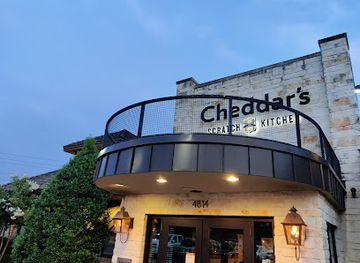
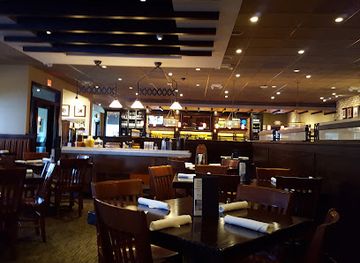
Traditional American
Cheddar's Scratch Kitchen
Discover Cheddar's Scratch Kitchen in Roanoke for delicious traditional American meals made from scratch in a cozy family-friendly atmosphere.
12 min drive · 4.0 km from city centre
-
Italian
Carrabba's Italian Grill
Experience the vibrant tastes of Italy at Carrabba's Italian Grill in Roanoke - where authentic flavors meet warm hospitality.
13 min drive · 4.2 km from city centre
-
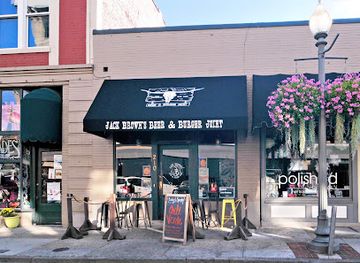
Hamburger
Jack Brown's Beer & Burger Joint Roanoke
Discover gourmet burgers and craft beers at Jack Brown's Beer & Burger Joint in Downtown Roanoke – A true American dining experience!
3 min walk · 0.2 km from city centre
Best bars in Roanoke
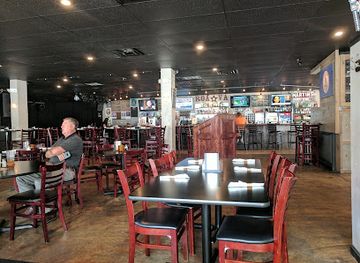
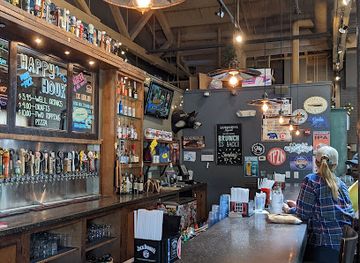
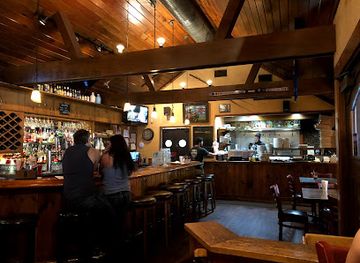
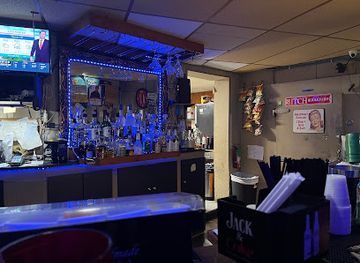
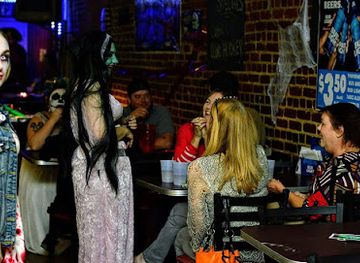
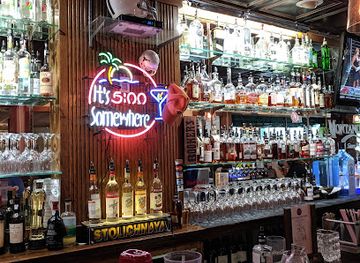
Roanoke's nightlife is centred more on neighbourhood bars, craft breweries, live music and cultural events than on a large club scene. Downtown Market Street and the surrounding central blocks offer bars, lounges and restaurants where evenings range from quiet drinks to busier social gatherings. Grandin Village has a more residential atmosphere, with the historic theatre and nearby venues contributing to its after-dark appeal. The Jefferson Center, Berglund Center and Elmwood Park host concerts, performances and touring events, while smaller venues provide live music on selected nights. Seasonal programmes and festivals can bring additional activity to the centre, and the city's railway and arts institutions sometimes offer evening events. Opening patterns vary between venues, particularly outside weekends, so checking current schedules is sensible. Normal US licensing rules apply, and identification may be requested for alcohol service.
-
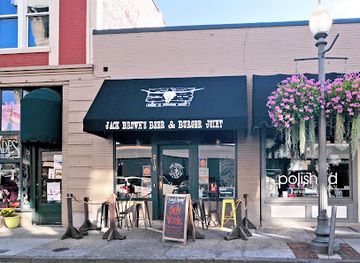
Bar
Jack Brown's Beer & Burger Joint Roanoke
Delight in mouthwatering burgers and craft beers at Jack Brown's Beer & Burger Joint, the must-visit bar and American restaurant in Roanoke.
3 min walk · 0.2 km from city centre
-
Grill
Martin's Downtown
Discover the vibrant atmosphere and delicious grill favorites at Martin's Downtown in Roanoke, VA, a culinary gem for every traveler.
2 min walk · 0.2 km from city centre
-
Grill
Wasena City Tap Room & Grill
Discover Wasena City Tap Room & Grill for a delightful dining experience featuring hearty grilled dishes and an extensive craft beer selection in Roanoke, Virginia.
5 min drive · 1.6 km from city centre
-
Pizza
Fork in the Alley
Experience the best of pizza and American cuisine at Fork in the Alley, Roanoke's vibrant sports bar and restaurant where every meal is a celebration.
7 min drive · 2.5 km from city centre
Best nightclubs in Roanoke
Roanoke's nightlife is centred more on neighbourhood bars, craft breweries, live music and cultural events than on a large club scene. Downtown Market Street and the surrounding central blocks offer bars, lounges and restaurants where evenings range from quiet drinks to busier social gatherings. Grandin Village has a more residential atmosphere, with the historic theatre and nearby venues contributing to its after-dark appeal. The Jefferson Center, Berglund Center and Elmwood Park host concerts, performances and touring events, while smaller venues provide live music on selected nights. Seasonal programmes and festivals can bring additional activity to the centre, and the city's railway and arts institutions sometimes offer evening events. Opening patterns vary between venues, particularly outside weekends, so checking current schedules is sensible. Normal US licensing rules apply, and identification may be requested for alcohol service.
-
Grill
The Watering Hole
Experience the vibrant atmosphere and delicious grilled delights at The Watering Hole, Roanoke's favorite bar and grill.
25 min drive · 8.4 km from city centre
-
Night club
The Filling Station Sports bar & Grill
Experience the best American cuisine and sports excitement at The Filling Station Sports Bar & Grill in Roanoke, VA.
7 min drive · 2.5 km from city centre
-
Grill
The Front Row
Discover the vibrant flavors and welcoming atmosphere of The Front Row, a top grill in Downtown Roanoke offering delightful dishes and signature cocktails.
8 min walk · 0.6 km from city centre
-
Lounge
213 Lux Lounge
Discover the lively atmosphere of 213 Lux Lounge, a premier destination for nightlife in Roanoke, blending cocktails, hookah, and vibrant entertainment.
4 min walk · 0.3 km from city centre
Best shops in Roanoke
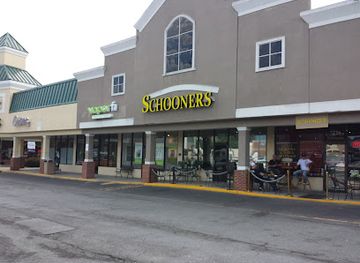
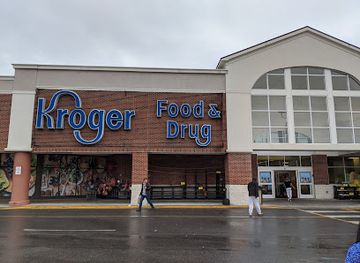
Shopping in Roanoke ranges from independent neighbourhood businesses to conventional suburban retail. Downtown's Market Street and the City Market area contain locally run shops, galleries, cafés and sellers of gifts and regional products, while Grandin Village is known for its smaller-scale boutiques, bookshops and speciality businesses. The historic districts around the centre also reward browsing for architectural salvage, antiques and locally made goods when individual shops are open. Valley View Mall provides a broad selection of mainstream retailers and services on the city's north side. Craft traditions associated with the wider Blue Ridge region appear in galleries and markets through pottery, woodwork, textiles, jewellery and food products, although stock changes seasonally. Black Dog Salvage, known for architectural salvage and design-related retail, is another distinctive local shopping stop. Farmers' markets offer a more direct connection with the farms and producers of western Virginia.
-
Shopping mall
Tanglewood
Discover the vibrant shopping experience at Tanglewood in Roanoke, Virginia, where diverse stores and delicious dining await every visitor.
17 min drive · 5.6 km from city centre
-
Antique store
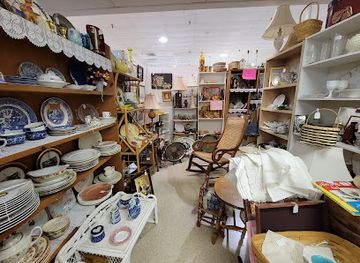
Roanoke Antique Mall
Explore Roanoke Antique Mall, a vintage paradise in Virginia filled with unique antiques and collectibles, perfect for treasure hunters and nostalgia seekers.
11 min drive · 3.5 km from city centre
-
General store
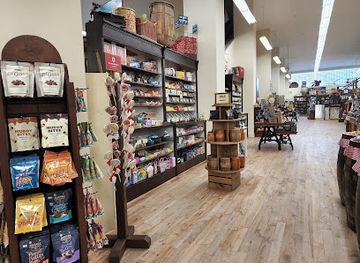
Mast General Store Roanoke
Explore the eclectic offerings of Mast General Store Roanoke, where outdoor gear meets nostalgic treats, nestled in the heart of Downtown Roanoke.
1 min walk · 0.1 km from city centre
-
Shopping mall
Townside Festival Shopping Center
Explore the Townside Festival Shopping Center in Roanoke, Virginia, for an unforgettable shopping and dining experience in a lively atmosphere.
14 min drive · 4.8 km from city centre
Get your free copy of our complete guide to Roanoke, delivered straight to you.
Everything on this page, from attractions and restaurants to essentials and local phrases, in one PDF you can read offline, print or share.
Already have an account? Sign in
Your Roanoke guide is ready.
We'll send it to · Not you? Sign out

Getting your guide ready…
We are putting together a fresh copy of the Roanoke guide. This can take up to a minute.
This can take a few moments. If your browser asks, choose Allow so the download can start. You'll find the guide in your Downloads folder.
Nothing happened? Download it again
Sorry, the guide is taking longer than usual. Please try again in a minute, or get it by email instead.
Roanoke essentials
Currency and Payment
Safety
Emergency Situations
Do's and Don'ts
Local Tips
From Eve
Local phrases worth knowing
You don't need to get them perfect. A few words go a long way, and locals appreciate the effort.
Basics
| English | Local | Say it |
|---|---|---|
| Hello | Howdy | [HOU-dee] |
| Goodbye | See ya | [SEE yuh] |
| Yes | Yup | [YUHP] |
| No | Nah | [NAH] |
| Please/You're welcome | Please/No problem | [PLEEZ/NOH PROB-lem] |
| Thank you | Thanks | [THANKS] |
| Excuse me/Sorry | Pardon me/My bad | [PAHR-dn mee/MAHY bad] |
| How are you? | How y'all doin'? | [HOU yawl DOO-in] |
| Fine. And you? | I'm good. How 'bout you? | [AHM gud. HOU 'bout yuh?] |
| Do you speak English? | Ya speak English? | [YUH speak ING-glish] |
| I don't understand | I ain't gettin' it | [AH aint GET-tin it] |
Eating & Drinking
| English | Local | Say it |
|---|---|---|
| I'd like to see the menu, please | Can I check out the menu? | [KAN eye chek out thuh MEH-nyoo] |
| I don't eat meat | No meat for me | [NOH meet fohr mee] |
| Cheers! | Cheers! | [CHEERS!] |
| I would like to pay, please | Can I settle up, please | [KAN eye SET-ul uhp, please] |
Emergencies
| English | Local | Say it |
|---|---|---|
| Help! | Help! | [HELP!] |
| Go away! | Get lost! | [GET lost!] |
| Call the Police! | Call the cops! | [CALL thuh KOPS!] |
| Call a doctor! | Get a doctor! | [GET uh DOK-tur!] |
| I'm lost | I'm turned around | [AHM turnd uh-ROUND] |
| I'm ill | I'm feelin' sick | [AHM FEEL-in sik] |
Shopping
| English | Local | Say it |
|---|---|---|
| I'd like to buy... | I wanna purchase... | [AH wahn-uh PUR-chus] |
| I'm just looking | Just browsing | [JUST BROW-sing] |
| How much is it? | How much does it cost? | [HOU much DUZ it cost?] |
| That's too expensive | That's pricey | [THATS PRY-see] |
| Can you lower the price? | Can you cut the price? | [KAN yuh CUT thuh price?] |
Time & Numbers
| English | Local | Say it |
|---|---|---|
| What time is it? | What's the time? | [WHATS thuh TIME?] |
| It's one o'clock | It's one | [ITS wun] |
| Half past (10) | Ten thirty | [TEN THUR-tee] |
| Morning | Mornin' | [MORN-in] |
| Afternoon | Afternoon | [AF-tur-NOON] |
| Evening | Evenin' | [EEV-nin] |
| Yesterday | Yest'day | [YES-t'day] |
| Today | Today | [Tuh-DAY] |
| Tomorrow | Tomorrer | [Tuh-MOR-rer] |
| 1 | One | [WUN] |
| 2 | Two | [TOO] |
| 3 | Three | [THREE] |
| 4 | Four | [FOHR] |
| 5 | Five | [FIVE] |
| 6 | Six | [SIX] |
| 7 | Seven | [SEV-en] |
| 8 | Eight | [AYT] |
| 9 | Nine | [NINE] |
| 10 | Ten | [TEN] |
Transport & Directions
| English | Local | Say it |
|---|---|---|
| Where's a/the...? | Where's the...? | [WHEREZ thuh...] |
| What's the address? | What's the location? | [WHATS thuh loh-KAY-shun] |
| Can you show me (on the map)? | Can you point it out (on the map)? | [KAN yuh POINT it out (on thuh map)?] |
| When's the next (bus)? | When's the next (bus) comin'? | [WHENS thuh NEKST (BUS) KUHM-in] |
| A ticket (to ....) | A pass (to ....) | [Uh PASS (to ....)] |
History of Roanoke
Indigenous Valley and Early Settlement
The Roanoke Valley lies within the historic homeland of Indigenous peoples, including communities connected with the wider Siouan-speaking world of the southern Appalachians. European-American settlement expanded during the eighteenth century as farms and roads developed through the valley. The name Big Lick referred to mineral springs and salt licks that attracted wildlife, and it became associated with the settlement that preceded modern Roanoke. The valley's geography was decisive: it offered fertile land, water routes and a natural corridor through the Blue Ridge, linking communities in the interior with markets farther east. Much of the later city grew over this rural landscape, although the surrounding mountains and the Roanoke River still preserve the geographical conditions that first made the area attractive for settlement.
The Town of Big Lick
The settlement of Big Lick developed as a small agricultural and trading community during the nineteenth century. Its growth accelerated after railway construction reached the valley, connecting local producers and merchants with larger markets. Big Lick was incorporated as a town in 1874, but its future changed dramatically when the Atlantic, Mississippi and Ohio Railroad became part of the Norfolk and Western system. The new railway company selected the area for major repair shops and administrative operations, bringing skilled workers, engineers and investment. Streets, businesses and housing expanded around the railway complex, transforming a modest settlement into an industrial town. The railway's decision established the economic foundation on which Roanoke would become the principal city of western Virginia.
A Railway City Emerges
In 1882, the Norfolk and Western Railway began developing its large facilities at Big Lick, and the town was renamed Roanoke in 1884. The railway shops became the city's dominant employer and helped attract workers from across the United States and from overseas. Roanoke's position at a junction of important lines made it a centre for freight, passengers and railway administration, while coal from southwestern Virginia moved through the city towards national markets. The industry shaped the urban plan, labour culture and civic identity. Commercial buildings rose downtown, neighbourhoods spread along the valley and institutions were established to serve a rapidly growing population. The surviving railway architecture and collections of the Virginia Museum of Transportation preserve this formative period.
Industry, Migration and Civic Growth
During the late nineteenth and early twentieth centuries, Roanoke developed the social complexity of an industrial city. Railway employment supported an expanding workforce, while commerce, construction and services grew around it. African American residents built institutions, businesses and cultural networks despite segregation and discriminatory laws; the Harrison Museum of African American Culture documents important aspects of this history. Churches, schools and neighbourhood organisations helped shape community life, while downtown hotels, theatres and markets reflected the city's prosperity. Roanoke also became a regional centre for healthcare, education and government. Its architecture from this era includes commercial blocks, civic buildings and residential districts that reveal how railway wealth and population growth reshaped the valley.
Modernisation and Economic Change
After the Second World War, improved roads, changing passenger habits and shifts in the railway industry altered Roanoke's economic landscape. The city remained associated with Norfolk and Western, which later became part of Norfolk Southern, but railway employment no longer dominated local life as it once had. Suburban development and the rise of automobile travel changed retail and residential patterns, while downtown experienced periods of decline and renewal. Cultural institutions, historic preservation and public investment gradually strengthened the central city. The restoration of older buildings, the development of Elmwood Park and the growth of museums and galleries reflect this transition from an industrial railway economy towards a more diversified regional centre.
A Contemporary Blue Ridge Centre
Today Roanoke functions as a cultural, medical, educational and commercial hub for the surrounding mountain region. Its railway heritage remains visible, but the city's identity also draws on outdoor recreation, the arts and neighbourhood-scale businesses. The Taubman Museum of Art, the renovated Hotel Roanoke complex, the City Market area and the Virginia Museum of Transportation form part of a civic landscape that connects historical memory with contemporary use. Trails and greenways link the built-up valley to its natural setting, while the Blue Ridge Parkway reinforces Roanoke's role as a gateway to the Appalachian landscape. The result is a city whose present character continues to be shaped by the industries, migrations and geography of its past.
Roanoke in Photos
Browse through our photo collection highlighting the charm and character of the destination.
Cities near Roanoke
The closest cities to Roanoke, if you have time for more than one stop.
-

-

-

-

-


Swipe for more cities
Explore more

Explore more of Virginia
Discover Virginia: A blend of historic landmarks, natural beauty, and vibrant culture perfect for history buffs, nature lovers, and culture seekers.
Explore Virginia