

Free Federal Way Travel Guide & Mobile App
Plan your Federal Way trip with Evendo. Get free guides to top attractions, restaurants, hotels, and bars. Web access or download the mobile app.


Federal Way, Washington blends Pacific Northwest parks, coastal trails, Pacific Bonsai Museum, family attractions and easy access to Seattle and Tacoma.
Between Seattle and Tacoma
Federal Way occupies a useful position in the South Sound, roughly midway between Seattle and Tacoma and close to the eastern shore of Puget Sound. It is a contemporary suburban city rather than a traditional historic centre, with broad arterial roads, residential neighbourhoods, commercial corridors and pockets of protected woodland. Its appeal lies in the way landscaped gardens, family attractions, sports facilities and coastal parks fit into the everyday fabric of the city.Read more about Federal Way
Gardens, Forests and the Sound
A Modern South Sound City
When is the best time to visit Federal Way?
Best: June–August · 22–25°C| Month | High (°C) | Rainfall (mm) |
|---|---|---|
| January | 9 | 150 |
| February | 10 | 120 |
| March | 13 | 130 |
| April | 16 | 100 |
| May | 19 | 70 |
| June (best) | 22 | 50 |
| July (best) | 25 | 20 |
| August (best) | 25 | 30 |
| September | 22 | 70 |
| October | 17 | 120 |
| November | 12 | 150 |
| December | 8 | 160 |
Getting to and around Federal Way
How to get there
Transportation
Best attractions in Federal Way
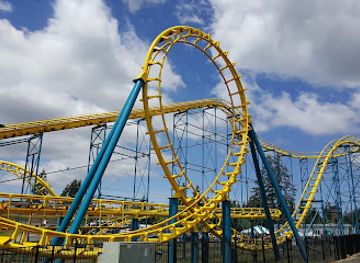
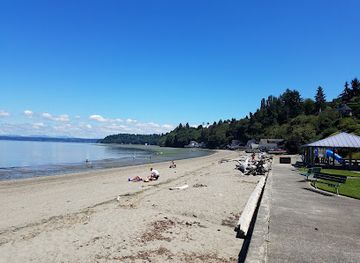
Federal Way’s attractions combine cultivated landscapes, family entertainment and access to Puget Sound. Pacific Bonsai Museum displays an internationally minded collection of bonsai trees in a wooded setting, making the visit as much about atmosphere and horticulture as miniature trees. Dash Point State Park extends along the shoreline with forest trails, a beach and opportunities to observe the changing tide, while Redondo Beach offers a pier and a more developed waterfront setting. Wild Waves Theme Park provides seasonal rides, slides and family-oriented entertainment, and Weyerhaeuser King County Aquatic Center is known for major swimming and diving facilities. PowellsWood Garden adds formal plantings, woodland paths and a quieter horticultural experience. Local parks such as Celebration Park and the BPA Trail offer space for walking and community recreation, while Federal Way’s location makes excursions to Tacoma’s museums or Seattle’s major institutions straightforward by car or regional transport.
-
Amusement park
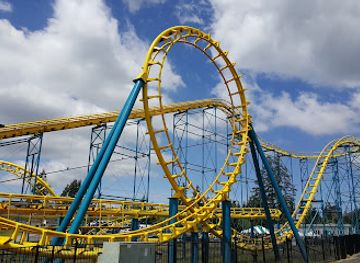
Wild Waves Theme and Water Park
Experience the ultimate family adventure at Wild Waves Theme and Water Park, where thrills meet relaxation in a stunning setting.
15 min drive · 5.0 km from city centre
-
Tourist attraction
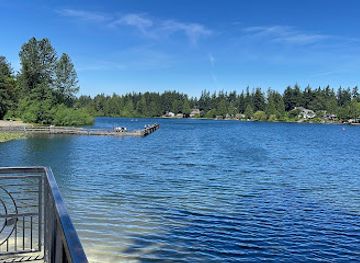
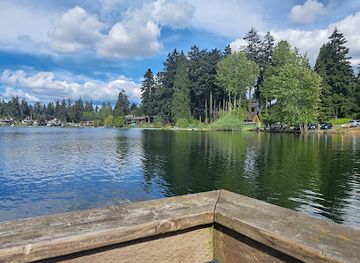
Steel Lake Park
Experience the tranquility of Steel Lake Park, a beautiful urban park in Federal Way, perfect for family outings, picnics, and outdoor activities.
13 min walk · 1.1 km from city centre
-
Tourist attraction
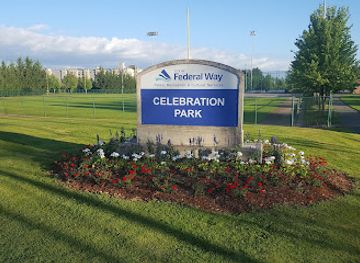
Celebration Park
Discover Celebration Park in Federal Way, a stunning city park with trails, sports facilities, and picnic areas perfect for families and nature lovers.
16 min walk · 1.3 km from city centre
-
Tourist attraction
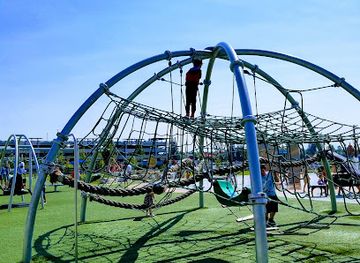
Town Square Park
Explore Town Square Park in Federal Way, WA, a vibrant city park perfect for relaxation, recreation, and community events amidst beautiful landscapes.
5 min walk · 0.4 km from city centre
Best landmarks in Federal Way
Federal Way’s notable landmarks express its modern civic and environmental identity rather than a preserved historic centre. The Pacific Bonsai Museum is distinctive for placing Japanese-inspired bonsai culture and living sculpture within a former Weyerhaeuser woodland landscape. Weyerhaeuser King County Aquatic Center is another significant civic structure, recognised as a major regional venue for competitive swimming and diving. At the coast, the Redondo Beach pier marks one of the city’s most recognisable public waterfront settings, while Dash Point’s wooded shoreline preserves a sense of the natural landscape that preceded suburban development. The Federal Way Performing Arts and Event Center represents the city’s investment in contemporary cultural infrastructure, and the Federal Way Transit Centre reflects its role as a regional transport node. Together, these places show how the city’s identity has developed through recreation, public institutions, corporate-era growth and remaining connections to Puget Sound.
-
Amusement park
Wild Waves Theme and Water Park
Experience the thrill of Wild Waves Theme and Water Park, where amusement meets water adventure in the heart of Federal Way, Washington.
15 min drive · 5.0 km from city centre
-
State park
Dash Point State Park
Explore the breathtaking landscapes, diverse ecosystems, and recreational opportunities at Dash Point State Park in Washington.
21 min drive · 7.0 km from city centre
-
City park
Steel Lake Park
Explore the serene beauty of Steel Lake Park in Federal Way, where nature meets recreation in a perfect urban escape.
13 min walk · 1.1 km from city centre
-
Museum
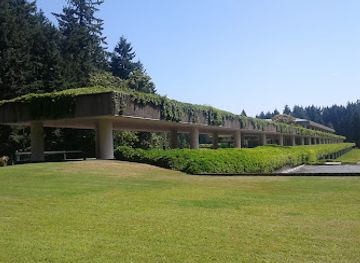
Pacific Bonsai Museum
Explore the serene beauty and artistry of bonsai at the Pacific Bonsai Museum in Federal Way, Washington, a unique destination for nature lovers and art enthusiasts.
8 min drive · 2.8 km from city centre
Explore Federal Way on the map
Plan your Federal Way trip on one map. See where the top attractions, landmarks, restaurants, bars and hotels are, find what's near where you're staying, and book hotels and experiences in a few clicks.
Best hotels in Federal Way
Best restaurants in Federal Way
Federal Way’s dining scene reflects the international population of the South Sound, with particularly strong representation along Pacific Highway South and nearby commercial corridors. Korean restaurants and grocers sit alongside Vietnamese pho shops, Filipino eateries, Mexican kitchens, Chinese and Japanese restaurants, Indian food and familiar American cafés. The area is well suited to casual meals, takeaway and family dining rather than a concentrated fine-dining quarter. Visitors may encounter Korean barbecue, noodle soups, rice dishes, grilled meats, bánh mì, tacos and Filipino specialities, while bakeries and bubble-tea shops add to the everyday food culture. Independent restaurants often occupy shopping-centre units or roadside premises, so the dining experience is spread across the city rather than centred on a pedestrian old town. Regional ingredients such as salmon and berries appear in Pacific Northwest cooking, but Federal Way’s strongest culinary signature is its broad multicultural range.
-
American
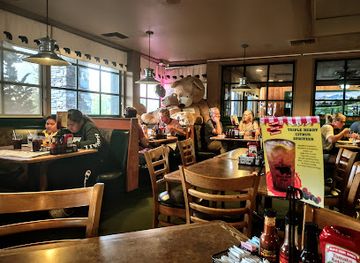
Black Bear Diner
Experience the charm of traditional American dining at Black Bear Diner in Federal Way—perfect for families and breakfast lovers alike.
6 min walk · 0.5 km from city centre
-
Steak
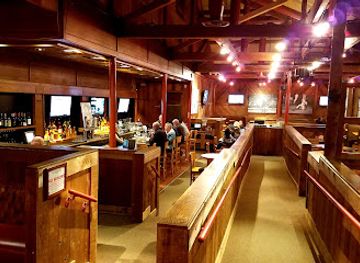
Black Angus Steakhouse
Experience exceptional steaks and warm hospitality at Black Angus Steakhouse in Federal Way—where every meal is a celebration.
10 min walk · 0.8 km from city centre
-
Steak
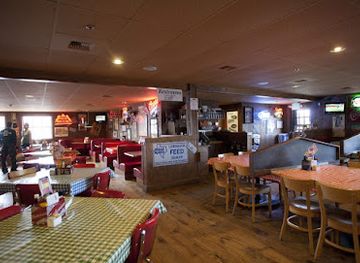
Jimmy Mac's Roadhouse
Experience unforgettable meals at Jimmy Mac's Roadhouse in Federal Way - where succulent steaks meet vibrant flavors in a family-friendly setting.
10 min drive · 3.3 km from city centre
-
Italian
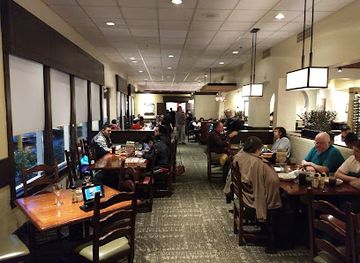
Olive Garden Italian Restaurant
Experience authentic Italian cuisine at Olive Garden in Federal Way - perfect for family gatherings or cozy dinners.
10 min drive · 3.3 km from city centre
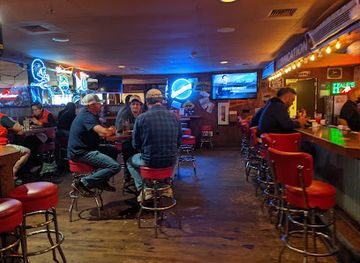
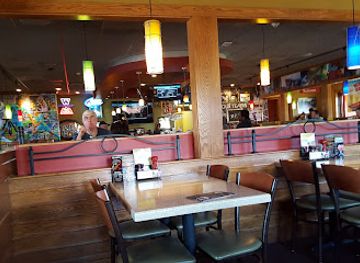
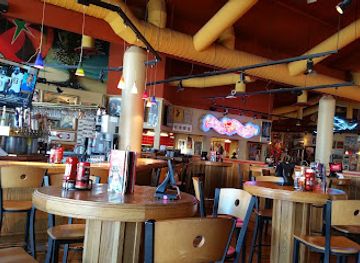
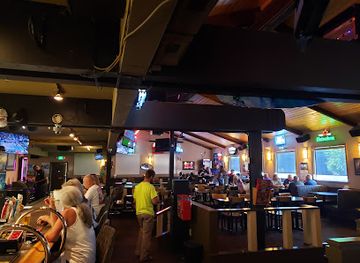
Best bars in Federal Way
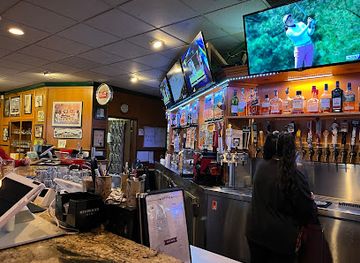
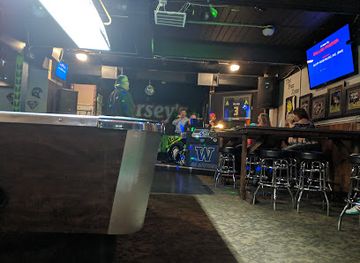
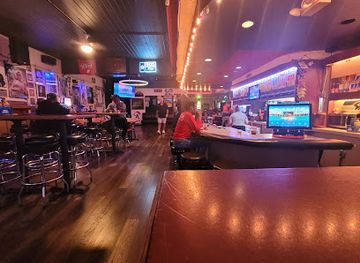
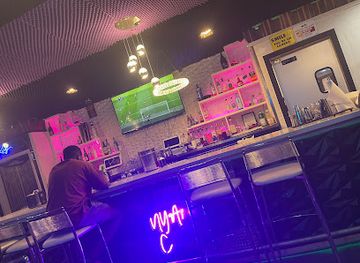
Federal Way has a modest, locally oriented evening scene rather than a dense nightlife district. Bars, lounges, karaoke venues and casual restaurants are concentrated around commercial corridors, particularly near Pacific Highway South and major shopping areas, while neighbourhood pubs provide a quieter setting for drinks and televised sport. Evening entertainment also includes performances and community events at civic and cultural venues, with larger theatre, live-music and club choices available in nearby Tacoma or Seattle. The city’s multicultural dining scene creates opportunities for late meals and social gatherings, although Federal Way is generally more residential than club-focused. Ride-hailing, designated drivers and careful planning are useful because venues are dispersed and arterial roads can be difficult to navigate on foot at night. Alcohol service and entry requirements follow Washington State law, and individual venues determine their own schedules and policies.
-
Bar
Jimmy Mac's Roadhouse
Experience the heart of American dining at Jimmy Mac's Roadhouse, where delicious steaks and barbecue create unforgettable memories.
10 min drive · 3.3 km from city centre
-
Restaurant
Applebee's Grill + Bar
Discover a family-friendly dining experience at Applebee's Grill + Bar, where classic American cuisine meets a vibrant atmosphere in Federal Way.
5 min walk · 0.4 km from city centre
-
Bar
Red Robin Gourmet Burgers and Brews
Experience the ultimate burger adventure at Red Robin Gourmet Burgers and Brews in Federal Way, where every bite is a celebration of flavor.
12 min walk · 1.0 km from city centre
-
Grill
Time Out Ale House
Discover delicious American cuisine and a welcoming atmosphere at Time Out Ale House in Federal Way, perfect for a relaxed dining experience.
9 min drive · 2.9 km from city centre
Best nightclubs in Federal Way
Federal Way has a modest, locally oriented evening scene rather than a dense nightlife district. Bars, lounges, karaoke venues and casual restaurants are concentrated around commercial corridors, particularly near Pacific Highway South and major shopping areas, while neighbourhood pubs provide a quieter setting for drinks and televised sport. Evening entertainment also includes performances and community events at civic and cultural venues, with larger theatre, live-music and club choices available in nearby Tacoma or Seattle. The city’s multicultural dining scene creates opportunities for late meals and social gatherings, although Federal Way is generally more residential than club-focused. Ride-hailing, designated drivers and careful planning are useful because venues are dispersed and arterial roads can be difficult to navigate on foot at night. Alcohol service and entry requirements follow Washington State law, and individual venues determine their own schedules and policies.
-
Pub
Scoreboard
Discover the lively atmosphere at Scoreboard, a top pub in Federal Way, WA, offering great drinks, sports, and friendly vibes for a perfect night out.
9 min walk · 0.8 km from city centre
-
Sports bar
Jersey's Sports Bar
Enjoy the ultimate sports bar experience at Jersey's Sports Bar in Federal Way, where great food, drinks, and games come together.
16 min drive · 5.4 km from city centre
-
Grill
Star Bar & Grill
Experience the best grilled dishes and a friendly atmosphere at Star Bar & Grill in Federal Way, where delicious food meets casual dining.
6 min walk · 0.5 km from city centre
-
East African
Lims Lounge & Restaurant
Experience the vibrant culture and flavors of East Africa at Lims Lounge & Restaurant in Federal Way, where every meal is a celebration.
8 min drive · 2.6 km from city centre
Best shops in Federal Way
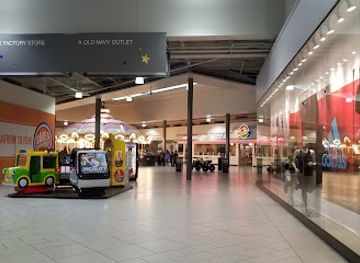
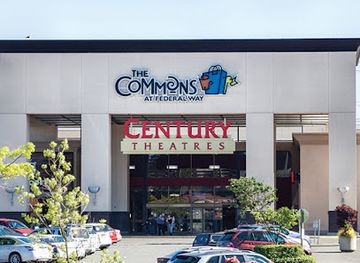
Shopping in Federal Way is centred on commercial corridors and district retail rather than a historic market square. The Commons at Federal Way is the city’s principal indoor shopping centre, while Pacific Highway South and surrounding business areas provide supermarkets, specialist food shops, cafés, salons and independent retailers. International grocery stores are especially useful for discovering Korean, Vietnamese, Filipino, Chinese and other Asian ingredients, snacks and household products that reflect the area’s diverse communities. Visitors may also find bakeries, tea shops, casual fashion and practical everyday shopping in the same roadside commercial zones. Local souvenirs are more likely to be regional food products, Pacific Northwest-inspired goods or items connected with nearby parks and gardens than traditional Federal Way handicrafts. For antiques, major department-store variety or a more concentrated independent retail atmosphere, Tacoma and Seattle offer broader choices within the wider metropolitan area.
-
Shopping mall
The Outlet Collection Seattle
Discover unbeatable deals and a wide selection of brand-name outlets at The Outlet Collection Seattle, your ultimate shopping destination in Auburn, WA.
17 min drive · 5.6 km from city centre
-
Shopping mall
The Commons At Federal Way
Discover a shopping oasis at The Commons at Federal Way, where diverse stores, dining options, and entertainment await every visitor.
7 min walk · 0.6 km from city centre
-
Korean grocery store
H Mart
Explore the diverse flavors of Asian cuisine at H Mart, your ultimate destination for fresh ingredients and culinary inspiration in Federal Way.
6 min walk · 0.5 km from city centre
-
Shopping mall
Federal Way Crossings
Experience shopping, dining, and entertainment at Federal Way Crossings - a premier mall in Washington for tourists and locals alike.
10 min drive · 3.2 km from city centre

Get your free copy of our complete guide to Federal Way, delivered straight to you.
Everything on this page, from attractions and restaurants to essentials and local phrases, in one PDF you can read offline, print or share.
Already have an account? Sign in
Your Federal Way guide is ready.
We'll send it to · Not you? Sign out

Getting your guide ready…
We are putting together a fresh copy of the Federal Way guide. This can take up to a minute.
This can take a few moments. If your browser asks, choose Allow so the download can start. You'll find the guide in your Downloads folder.
Nothing happened? Download it again
Sorry, the guide is taking longer than usual. Please try again in a minute, or get it by email instead.
Federal Way essentials
Currency and Payment
Safety
Emergency Situations
Do's and Don'ts
Local Tips
From Eve
Local phrases worth knowing
You don't need to get them perfect. A few words go a long way, and locals appreciate the effort.
Basics
| English | Local | Say it |
|---|---|---|
| Hello | Hey | [hey] |
| Goodbye | See ya | [see ya] |
| Yes | Yep | [yep] |
| No | Nah | [nah] |
| Please/You're welcome | Please/You're welcome | [please/you're welcome] |
| Thank you | Thanks | [thanks] |
| Excuse me/Sorry | Excuse me/Sorry | [excuse me/sorry] |
| How are you? | How's it going? | [how's it going] |
| Fine. And you? | Good. You? | [good. you?] |
| Do you speak English? | Speak English? | [speak english] |
| I don't understand | I don't get it | [i don't get it] |
Eating & Drinking
| English | Local | Say it |
|---|---|---|
| I'd like to see the menu, please | Can I see the menu? | [can i see the menu] |
| I don't eat meat | I'm vegetarian | [i'm vegetarian] |
| Cheers! | Cheers! | [cheers] |
| I would like to pay, please | Can I pay, please | [can i pay please] |
Emergencies
| English | Local | Say it |
|---|---|---|
| Help! | Help! | [help] |
| Go away! | Leave me alone! | [leave me alone] |
| Call the Police! | Call the cops! | [call the cops] |
| Call a doctor! | Get a doctor! | [get a doctor] |
| I'm lost | I'm lost | [i'm lost] |
| I'm ill | I'm sick | [i'm sick] |
Shopping
| English | Local | Say it |
|---|---|---|
| I'd like to buy... | I want to buy... | [i want to buy] |
| I'm just looking | Just browsing | [just browsing] |
| How much is it? | How much? | [how much] |
| That's too expensive | Too pricey | [too pricey] |
| Can you lower the price? | Can you discount? | [can you discount] |
Time & Numbers
| English | Local | Say it |
|---|---|---|
| What time is it? | What's the time? | [what's the time] |
| It's one o'clock | It's one | [it's one] |
| Half past (10) | Ten thirty | [ten thirty] |
| Morning | Morning | [morning] |
| Afternoon | Afternoon | [afternoon] |
| Evening | Evening | [evening] |
| Yesterday | Yesterday | [yesterday] |
| Today | Today | [today] |
| Tomorrow | Tomorrow | [tomorrow] |
| 1 | One | [one] |
| 2 | Two | [two] |
| 3 | Three | [three] |
| 4 | Four | [four] |
| 5 | Five | [five] |
| 6 | Six | [six] |
| 7 | Seven | [seven] |
| 8 | Eight | [eight] |
| 9 | Nine | [nine] |
| 10 | Ten | [ten] |
Transport & Directions
| English | Local | Say it |
|---|---|---|
| Where's a/the...? | Where's the...? | [where's the] |
| What's the address? | What's the address? | [what's the address] |
| Can you show me (on the map)? | Can you show me (on the map)? | [can you show me on the map] |
| When's the next (bus)? | When's the next (bus)? | [when's the next bus] |
| A ticket (to ....) | A ticket (to ....) | [a ticket to] |
History of Federal Way
Coast Salish Homelands
The Federal Way area lies within the traditional homelands of Coast Salish peoples, including communities connected with the Puyallup and Muckleshoot peoples. The forests, streams and shores of southern Puget Sound supported fishing, gathering, travel and trade long before American settlement. The Treaty of Point Elliott, signed in 1855, reshaped Indigenous land rights across the region, although its consequences and the continuing presence of Native nations remain part of Washington’s history. Place names, shoreline landscapes and surviving cultural connections provide important context for understanding the area beyond its modern suburban identity.
Settlement and Agricultural Beginnings
Non-Indigenous settlement expanded in the nineteenth century as homesteaders, farmers and small businesses moved into the wooded country between Seattle and Tacoma. The area remained comparatively rural, with roads and transport links gradually connecting scattered settlements to the larger regional centres. Timber clearing and agriculture changed the landscape, while nearby waterways and Puget Sound supported movement and commerce. The later development of highways and electric rail connections across the South Sound helped establish the corridor that would eventually become Federal Way, although urban growth came much later than in Seattle or Tacoma.
The Federal Way Name
The name Federal Way emerged during the early twentieth century through the Federal Way School District, which took its name from a national education campaign associated with the Federal Highway system. The label gradually became attached to the wider community. For much of the twentieth century, the area functioned as an unincorporated suburban district within King County, shaped by improved roads, new housing and the expanding economic influence of Seattle and Tacoma. Commercial development along Pacific Highway South gave the community a more urban character, while residential growth spread into former wooded and agricultural land.
Suburban Growth and Regional Industry
After the Second World War, Federal Way grew rapidly as housing demand increased across the central Puget Sound region. The city’s location between Seattle-Tacoma International Airport, Seattle and Tacoma encouraged commuting, retail development and the arrival of major institutions. Weyerhaeuser became an important corporate presence in the local landscape, and the company’s former campus area later became associated with the Pacific Bonsai Museum and related public spaces. Construction of schools, parks, shopping areas and civic facilities transformed the largely unincorporated district into a substantial suburban community.
Incorporation and Civic Identity
Federal Way incorporated as a city in 1990, after decades of debate about local governance and the direction of regional growth. Incorporation created a municipal structure for managing roads, parks, planning and public services as the population continued to expand. Since then, Federal Way has developed a civic identity based less on a historic downtown than on neighbourhoods, community institutions, recreation and access to the South Sound landscape. The city’s contemporary character is also shaped by immigration and cultural diversity, visible in its restaurants, shops, schools and community life.
Federal Way in Photos
Browse through our photo collection highlighting the charm and character of the destination.
Cities near Federal Way
The closest cities to Federal Way, if you have time for more than one stop.
-

-

-

-

-


Swipe for more cities
Explore more

Explore more of Washington
Explore Washington State: From the vibrant streets of Seattle to the tranquil beauty of the Olympic Peninsula, discover the diverse landscapes, culture, and adventures awaiting you.
Explore Washington