

Free Natrona County Travel Guide & Mobile App
Explore Natrona County with free travel guides. Discover regional history, expert tips, proposed trips, and audio guides on web or mobile app.


Natrona County pairs Casper's frontier and oil heritage with Casper Mountain, North Platte recreation, reservoirs and wide-open Wyoming landscapes.
Read more about Natrona County
Getting to and around Natrona County
How to get there
Transportation
Top city travel guides in Natrona County
The cities of Natrona County, and the easiest places to base yourself.

Swipe for more cities
Best attractions in Natrona County
-
Tourist attraction
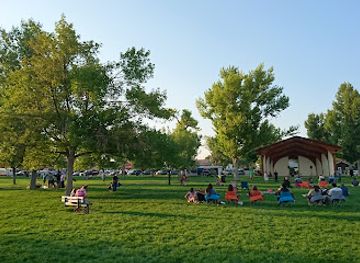
Riverton City Park
Discover the beauty and tranquility of Riverton City Park, a perfect retreat for outdoor enthusiasts and families in Wyoming.
-
Tourist attraction
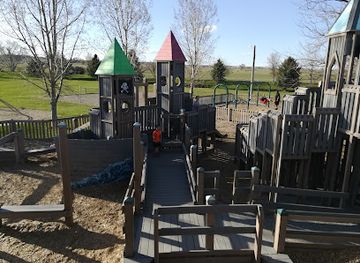
Jaycee Park
Experience the charm of Jaycee Park in Riverton, Wyoming, a perfect blend of nature, relaxation, and community spirit.
-
Tourist attraction
Wind River Heritage Center
Uncover the vibrant history and culture of Wyoming at the Wind River Heritage Center, an engaging destination for all travelers.
-
Tourist attraction
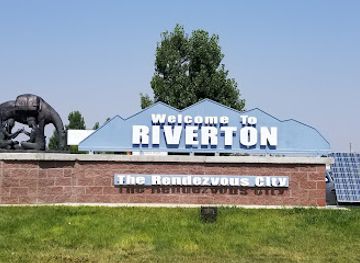
1838 Mountain Man Rendezvous Grounds
Discover the spirit of the American frontier at the 1838 Mountain Man Rendezvous Grounds in Riverton, Wyoming, where history comes to life.
Best landmarks in Natrona County
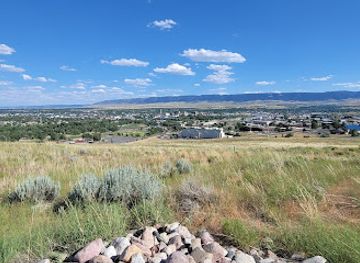
The North Platte River is Natrona County's defining geographical landmark, a corridor whose crossings shaped Indigenous travel, overland migration, military movement and Casper's later growth. Fort Caspar's reconstructed buildings and museum mark the site of the 1860s military post, while the National Historic Trails Interpretive Center occupies a prominent position overlooking the routes and river landscape. Casper Mountain forms the county's most recognisable natural backdrop, rising from the plains into forested slopes and recreation areas. Hell's Half Acre, west of Casper, is a memorable geological landmark where erosion has carved narrow ravines, clay formations and pinnacles into the High Plains. Alcova Reservoir and the cliffs of Fremont Canyon create another strong contrast, replacing open sagebrush with water and steep rock walls. Pathfinder Dam, in the county's south-western reservoir country, represents the engineering history of irrigation and water management in the North Platte basin. Together these places express the county's main themes: a river crossing, a mountain edge, an extractive and engineering past, and a landscape continually shaped by water and wind.
-
History museum
National Historic Trails Interpretive Center
Discover the rich history of America's westward expansion at the National Historic Trails Interpretive Center in Casper, Wyoming.
-
State park
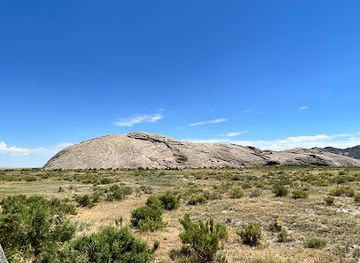
Independence Rock State Historic Site
Explore Independence Rock State Historic Site, a historic landmark showcasing pioneer inscriptions in Wyoming's stunning landscapes, perfect for outdoor enthusiasts.
-
Museum
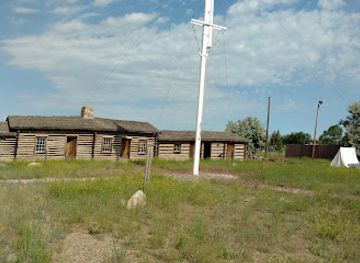
Fort Caspar Museum
Explore Fort Caspar Museum, a historical gem in Casper, Wyoming, showcasing the Old West's rich heritage through engaging exhibits and preserved artifacts.
-
Museum
The Nicolaysen Art Museum
Experience contemporary art and local culture at The Nicolaysen Art Museum in Casper, Wyoming - a must-visit destination for art enthusiasts.

Explore Natrona County on the map
Plan your trip on one map. See where the top cities, national parks and sights are, and book hotels and experiences in a few clicks.
Best hotels in Natrona County
Best restaurants in Natrona County
Casper is the county's main dining centre, with the broad American restaurant range expected of a regional Wyoming city: steakhouses, cafés, diners, breweries, bakeries and contemporary venues sit alongside practical places serving travellers and local workers. Beef is particularly prominent in a state where ranching remains important, while menus may also feature trout, bison or other Western ingredients without every dish being uniquely local. Breakfast cafés and independent coffee shops are useful for road itineraries, and spacious pubs often combine food with regional beer. Around Alcova and other recreation areas, dining and supply options are more limited and seasonal, so self-catering is sensible for camping or extended lake stays. Farmers' markets and local shops can provide Wyoming-produced meat, preserves, baked goods and craft products when operating. Visitors should distinguish Natrona County's ranching and energy-influenced food culture from dishes marketed as generic American West fare across the country.
-
Steak
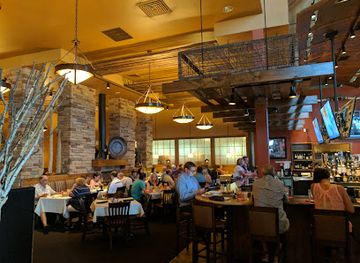
FireRock Steakhouse
Discover an unforgettable dining experience at FireRock Steakhouse in Casper, WY—home to expertly grilled steaks and a warm ambiance.
-
Breakfast
Eggington's
Discover Eggington's in Casper - where hearty breakfasts meet delightful brunches in a cozy atmosphere.
-
Breakfast
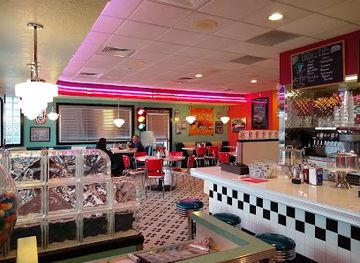
Johnny J's Diner
Experience classic American breakfasts at Johnny J's Diner in Casper, Wyoming - where every meal feels like home.
-
Italian
Olive Garden Italian Restaurant
Experience authentic Italian flavors at Olive Garden in Casper—perfect for families and food lovers seeking comfort in every bite.


Best bars in Natrona County
Casper has the county's most developed evening scene, centred on traditional pubs, bars, breweries, restaurants with late service and occasional live music rather than a large nightclub district. Downtown venues and the areas around the city's commercial and cultural institutions provide the greatest concentration, with a mix of local conversation, televised sport, regional beer and small-scale entertainment. Casper's arts calendar can also extend into evening performances and gallery events, although programmes change. Outside the city, bars and lounges are fewer and nightlife generally revolves around community pubs, dining rooms and seasonal activity near recreation areas. Alcova and other rural destinations are better suited to sunset, stargazing and campfire evenings than late-night entertainment. Opening arrangements vary by venue and season, so check locally rather than assuming metropolitan hours or a continuous nightlife circuit.
-
Steak
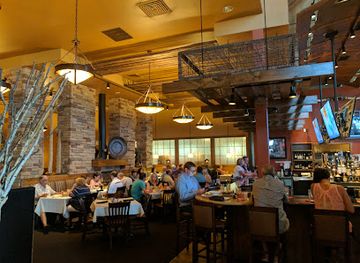
FireRock Steakhouse
Experience the best of American cuisine at FireRock Steakhouse, where expertly grilled steaks and a cozy ambiance meet in Casper, Wyoming.
-
Pub
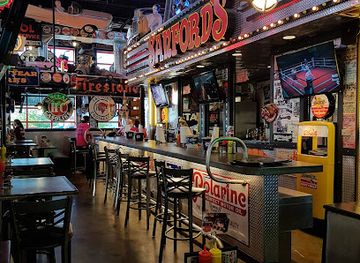
Sanford's Grub & Pub
Discover the vibrant atmosphere and delicious American cuisine at Sanford's Grub & Pub, the perfect stop for tourists in Casper, Wyoming.
-
Grill
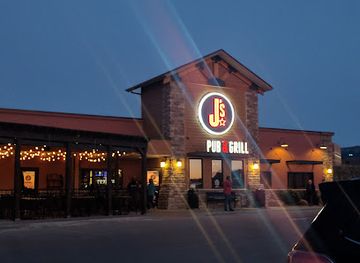
J's Pub & Grill
Discover the heart of Casper at J's Pub & Grill, where delicious food and warm hospitality meet in a cozy pub atmosphere.
-
American
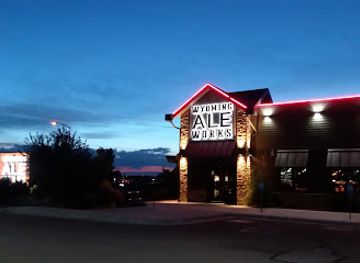
Wyoming Ale Works
Experience the taste of Wyoming at Ale Works, where American cuisine meets local craft beer in a vibrant atmosphere.
Best nightclubs in Natrona County
Casper has the county's most developed evening scene, centred on traditional pubs, bars, breweries, restaurants with late service and occasional live music rather than a large nightclub district. Downtown venues and the areas around the city's commercial and cultural institutions provide the greatest concentration, with a mix of local conversation, televised sport, regional beer and small-scale entertainment. Casper's arts calendar can also extend into evening performances and gallery events, although programmes change. Outside the city, bars and lounges are fewer and nightlife generally revolves around community pubs, dining rooms and seasonal activity near recreation areas. Alcova and other rural destinations are better suited to sunset, stargazing and campfire evenings than late-night entertainment. Opening arrangements vary by venue and season, so check locally rather than assuming metropolitan hours or a continuous nightlife circuit.
-
Night club
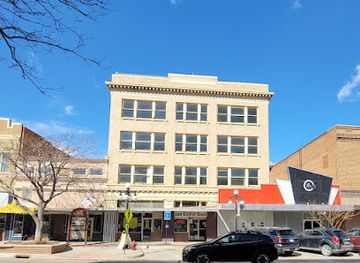
The Void
Experience the vibrant nightlife at The Void in Casper, WY, where unforgettable music and dance await every visitor.
Best shops in Natrona County
Casper offers Natrona County's most varied shopping, with a conventional commercial area, downtown independent businesses, galleries, bookshops, outdoor retailers and stores carrying Western clothing and locally relevant gifts. Visitors looking for regional products can find Wyoming-made art, photography, jewellery, leatherwork, food items and craft beverages, although stock and seasonal availability vary. Farmers' markets and community markets, when operating, are useful for produce, baked goods and small-scale crafts rather than formal souvenirs. Shops connected with outdoor recreation are practical sources of maps, clothing, fishing supplies and equipment for Casper Mountain or the reservoirs. In smaller communities and around recreation areas, retail is limited and focused on essentials, so buy fuel, food and specialist supplies in Casper before travelling into rural Natrona County. Authentic purchases are more likely to be locally made artwork, geological or landscape-themed goods and Wyoming food products than mass-produced items labelled broadly as Western.
-
Shopping mall
Hilltop Shopping Center
Explore the diverse shopping and dining experiences at Hilltop Shopping Center in Casper, Wyoming, where every visit is an adventure.
-
Shopping mall
Sunrise Shopping Center
Experience the best shopping, dining, and entertainment at Sunrise Shopping Center in Casper, Wyoming—a true retail paradise for all ages.
-
Metaphysical supply store
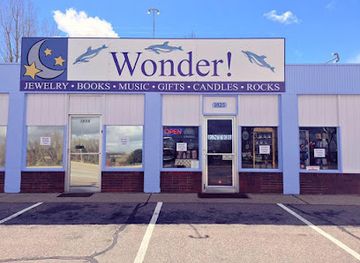
Wonder!
Explore Wonder! in Casper, Wyoming – a magical metaphysical supply store featuring unique gifts, candles, herbs, and more for the spiritually curious.
-
Gift shop
Wy Shirt & Gift
Explore the charm of Wyoming with unique gifts and souvenirs at Wy Shirt & Gift in Casper, a must-visit destination for every tourist.

Get your free copy of our complete guide to Natrona County, delivered straight to you.
Everything on this page, from attractions and restaurants to essentials and local phrases, in one PDF you can read offline, print or share.
Already have an account? Sign in
Your Natrona County guide is ready.
We'll send it to · Not you? Sign out

Getting your guide ready…
We are putting together a fresh copy of the Natrona County guide. This can take up to a minute.
This can take a few moments. If your browser asks, choose Allow so the download can start. You'll find the guide in your Downloads folder.
Nothing happened? Download it again
Sorry, the guide is taking longer than usual. Please try again in a minute, or get it by email instead.
Natrona County essentials
Currency and Payment
Safety
Emergency Situations
Do's and Don'ts
Local Tips
From Eve
Local phrases worth knowing
You don't need to get them perfect. A few words go a long way, and locals appreciate the effort.
Basics
| English | Local | Say it |
|---|---|---|
| Hello | Howdy | [Ha-dee] |
| Goodbye | See ya | [See ya] |
| Yes | Yep | [Yep] |
| No | Nope | [Nope] |
| Please/You're welcome | Sure thing | [Shur thing] |
| Thank you | Thanks a lot | [Thangs a lot] |
| Excuse me/Sorry | Pardon me | [Par-don me] |
| How are you? | How ya doin'? | [How ya doin'?] |
| Fine. And you? | Good. And you? | [Good. And you?] |
| Do you speak English? | Do ya speak English? | [Doo ya speak English?] |
| I don't understand | I ain't got it | [I ain't got it] |
Eating & Drinking
| English | Local | Say it |
|---|---|---|
| I'd like to see the menu, please | Can I see the menu? | [Can I see the menu?] |
| I don't eat meat | I don't do meat | [I don't do meat] |
| Cheers! | Cheers! | [Cheers!] |
| I would like to pay, please | Can I get the check? | [Can I get the check?] |
Emergencies
| English | Local | Say it |
|---|---|---|
| Help! | Help! | [Help!] |
| Go away! | Get lost! | [Get lost!] |
| Call the Police! | Call the cops! | [Call the cops!] |
| Call a doctor! | Get a doc! | [Get a doc!] |
| I'm lost | I’m turned around | [I’m turned around] |
| I'm ill | I ain't feelin' good | [I ain't feelin' good] |
Shopping
| English | Local | Say it |
|---|---|---|
| I'd like to buy... | I wanna buy... | [I wanna buy...] |
| I'm just looking | Just browsing | [Just browsing] |
| How much is it? | What’s the price? | [What’s the price?] |
| That's too expensive | That’s a bit pricey | [That’s a bit pricey] |
| Can you lower the price? | Can ya bring it down? | [Can ya bring it down?] |
Time & Numbers
| English | Local | Say it |
|---|---|---|
| What time is it? | What’s the time? | [What’s the time?] |
| It's one o'clock | It's one | [It's one] |
| Half past (10) | Half past ten | [Half past ten] |
| Morning | Morning | [Morning] |
| Afternoon | Afternoon | [Afternoon] |
| Evening | Evenin' | [Evenin'] |
| Yesterday | Yesterday | [Yesterday] |
| Today | Today | [Today] |
| Tomorrow | Tomorrow | [Tomorrow] |
| 1 | One | [One] |
| 2 | Two | [Two] |
| 3 | Three | [Three] |
| 4 | Four | [Four] |
| 5 | Five | [Five] |
| 6 | Six | [Six] |
| 7 | Seven | [Seven] |
| 8 | Eight | [Eight] |
| 9 | Nine | [Nine] |
| 10 | Ten | [Ten] |
Transport & Directions
| English | Local | Say it |
|---|---|---|
| Where's a/the...? | Where’s the...? | [Where’s the...?] |
| What's the address? | What’s the address? | [What’s the address?] |
| Can you show me (on the map)? | Can ya point it out? | [Can ya point it out?] |
| When's the next (bus)? | When's the next bus? | [When's the next bus?] |
| A ticket (to ....) | A ticket to... | [A ticket to...] |
History of Natrona County
Indigenous Homelands and the North Platte Corridor
Long before Euro-American settlement, the plains, river valleys and mountain margins of present-day Natrona County were used by Indigenous peoples, including ancestors of communities associated with the Northern Plains. The North Platte was an important route through an otherwise expansive landscape, providing water, game and access between the Great Plains and the Rocky Mountain interior. Later emigrant accounts often recorded this country from an outsider's perspective, but the region already had established Indigenous histories, seasonal movements and place-based knowledge. Those histories remain essential to understanding the county beyond the later narratives of forts, trails and extraction.
The Fur Trade and Early Crossings
During the early nineteenth century, fur traders and explorers travelled through central Wyoming as the Rocky Mountain fur trade connected river systems, mountain valleys and trading rendezvous. The North Platte corridor became increasingly familiar to parties moving west, although routes and crossings changed according to water, terrain and relations with Indigenous communities. These journeys helped establish geographical knowledge later used by emigrants, military expeditions and surveyors. The landscape around modern Casper therefore formed part of a wider network linking the Missouri basin with the Great Basin and the mountain country farther west.
Overland Emigration and Fort Caspar
From the 1840s, the North Platte valley carried emigrants travelling on the Oregon, California and Mormon trails. In the Casper area, the river crossing and nearby routes became strategically important points on the journey west. The United States Army established a post at the site now represented by Fort Caspar Museum during the early 1860s, partly to protect communications and traffic along the overland route. The post was short-lived, but its name survived in the later city of Casper. Trail traces, interpretive sites and river geography still reveal the demanding logistics of nineteenth-century migration.
Railways, Ranching and the Creation of Casper
The arrival of the railroad in the late nineteenth century transformed the county's settlement pattern and commercial prospects. Casper grew as a service and transport centre for ranching country, linking livestock producers and merchants with wider regional markets. Rail access also supported coal, timber, construction and the movement of people into a developing Wyoming. Although much of the county remained sparsely settled, the town's location near the North Platte gave it a durable advantage. The resulting street plan, older commercial buildings and surviving transport corridors reflect the transition from trail travel to an industrialising regional centre.
The Salt Creek Oil Boom
Petroleum discoveries at Salt Creek, north of Casper, helped change Natrona County's economic direction from the late nineteenth century onwards. Salt Creek became one of Wyoming's most important early oil fields, attracting drilling companies, workers, investment and infrastructure. Casper developed as a centre for refining, storage, equipment, finance and services connected with the industry, while nearby settlements experienced the volatility typical of boom districts. Oil brought prosperity and modern infrastructure but also exposed the county to cycles of expansion and contraction. The energy landscape remains a defining part of Natrona County's historical identity.
Casper as an Energy and Regional Service Centre
During the twentieth century, Casper consolidated its role as a centre for Wyoming's petroleum economy and for services across central and eastern parts of the state. Refineries, pipelines, rail facilities, engineering firms and suppliers linked the city to fields well beyond the county. Later energy developments, including uranium and coal elsewhere in the wider region, reinforced the importance of technical skills and extractive industries, even as employment diversified. Colleges, hospitals, museums and cultural organisations gave Casper a broader civic role. Today's county still balances energy traditions with education, tourism, outdoor recreation and ranching.
Conservation, Recreation and Heritage Interpretation
Late twentieth- and early twenty-first-century Natrona County saw growing attention to preserving trail history, geological evidence, historic structures and outdoor landscapes. The National Historic Trails Interpretive Center, Fort Caspar Museum and Tate Geological Museum present different aspects of the county's past, while Casper Mountain, the North Platte and the Alcova area support recreation. This shift has not replaced the county's working identity; rather, it has added new ways to interpret a landscape shaped by Indigenous history, migration, ranching and energy. Tourism now forms part of a more varied local economy.
Natrona County in Photos
Browse through our photo collection highlighting the charm and character of the destination.
Neighbouring regions of Natrona County
The closest regions to Natrona County, if you have time for more than one.
-

-

-
-

-


Swipe for more regions
Explore more

Explore more of Wyoming
Discover Wyoming: A Land of Unspoiled Beauty, Rich History, and Boundless Outdoor Adventures in the Heart of the American West.
Explore Wyoming