Have you ever wanted to travel back in time? Historical reenactments offer a unique opportunity to do just that—immerse yourself in the sights, sounds, and even the smells of another era.
More than just a spectator sport, reenacting allows you to actively participate in history, whether you're wielding a sword, firing a musket, or simply experiencing daily life as it was lived centuries ago. It's a chance to learn about the past in a way that textbooks can't convey, forging a deeper connection with the people and events that shaped our world.
From grand battle reenactments to intimate portrayals of civilian life, the world of historical reenacting offers something for everyone. It’s an adventure waiting to happen, a chance to step out of your modern life and into a living, breathing history book.
Step Back in Time The Allure of Reenactments
Historical reenactments are immersive travel experiences that transport you to another time and place. These events recreate specific historical moments or periods, offering a hands-on way to learn about the past. From the clash of swords in a medieval battle to the quiet hum of a colonial village, reenactments bring history to life with vivid detail.
There are several types of reenactments, each offering a unique experience. Battle reenactments are perhaps the most well-known, featuring large-scale recreations of famous military engagements. Participants don historical uniforms and use replica weapons to simulate the tactics and conditions of warfare. These events often draw large crowds and provide a dramatic glimpse into the past.
Living history events, on the other hand, focus on portraying the daily lives of people in a particular era. These reenactments often take place in historical museums or villages, where interpreters dressed in period clothing demonstrate traditional crafts, cook historical meals, and engage visitors in conversations about the past. Colonial Williamsburg and Plimoth Patuxet are excellent examples of living history museums that offer immersive experiences of early American life.
Tactical events are a different type of reenactment, typically closed to the public. These events focus on military scenarios and involve unscripted mock battles or skirmishes. Reenactors spend the entire weekend in character, living in period clothing and performing daily tasks as they would have been done in the past.
Whether you're interested in witnessing a large-scale battle or experiencing the nuances of daily life, historical reenactments offer both educational and entertaining aspects. They provide a unique opportunity to connect with history on a personal level, fostering a deeper understanding of the people and events that shaped our world.

Image Description: A wide shot of Colonial Williamsburg on a sunny afternoon in late October. The scene captures the bustling atmosphere of the living history museum, with interpreters dressed in 18th-century attire going about their daily tasks. The main subject is a group of interpreters gathered in front of the Governor's Palace, engaging in a lively discussion. One interpreter, dressed as a colonial gentleman in a powdered wig and waistcoat, gestures emphatically while speaking to the others. Another interpreter, dressed as a colonial woman in a long dress and bonnet, listens attentively. The background includes other interpreters walking along the street, some carrying baskets or tools, and horse-drawn carriages moving in the distance. The overall impression is one of historical immersion and authenticity, with the warm autumn sunlight enhancing the scene's vibrant colors. The image aims to capture the educational and entertaining aspects of living history museums.
Style Instructions: The photo should be taken with a wide-angle lens to capture the breadth of the scene, with a shallow depth of field to keep the main subjects in focus while blurring the background slightly. The lighting should be natural and warm, with a focus on capturing the golden tones of the autumn sunlight. The composition should be balanced, with the main subjects positioned in the foreground and the background providing context and depth.
Finding Your Place in History Research and Selection
If you're intrigued by the idea of participating in a historical reenactment, the first step is to find a reputable organization. Many groups exist, each with its own focus and standards. Some specialize in specific time periods or events, while others offer a broader range of historical impressions.
Start by researching local historical societies and museums. These organizations often host reenactments or can provide information about groups in your area. Online resources, such as reenactor.Net and Living History Archive, also offer directories of reenactment groups and events.
When choosing a reenactment group, consider your own interests and background. Do you have a particular fascination with a certain period of history? Perhaps you have ancestors who fought in a specific war. Researching your family history can be a great way to connect with a specific time period and find a reenactment group that aligns with your personal interests.
Once you've identified a few potential groups, take the time to learn about their mission, values, and standards. Attend one of their events as a spectator to get a feel for their style and approach. Talk to members and ask questions about their experiences.
Choosing a persona and time period that aligns with your interests is crucial for a fulfilling reenactment experience. Consider what aspects of history you find most compelling. Are you drawn to the military aspects of a particular era, or are you more interested in the daily lives of civilians? Do you prefer the grandeur of royal courts or the grit of pioneer settlements?
Ultimately, the best way to find your place in history is to explore your interests, do your research, and connect with other enthusiasts. With a little effort, you can find a reenactment group that feels like home, where you can share your passion for the past and create lasting memories.
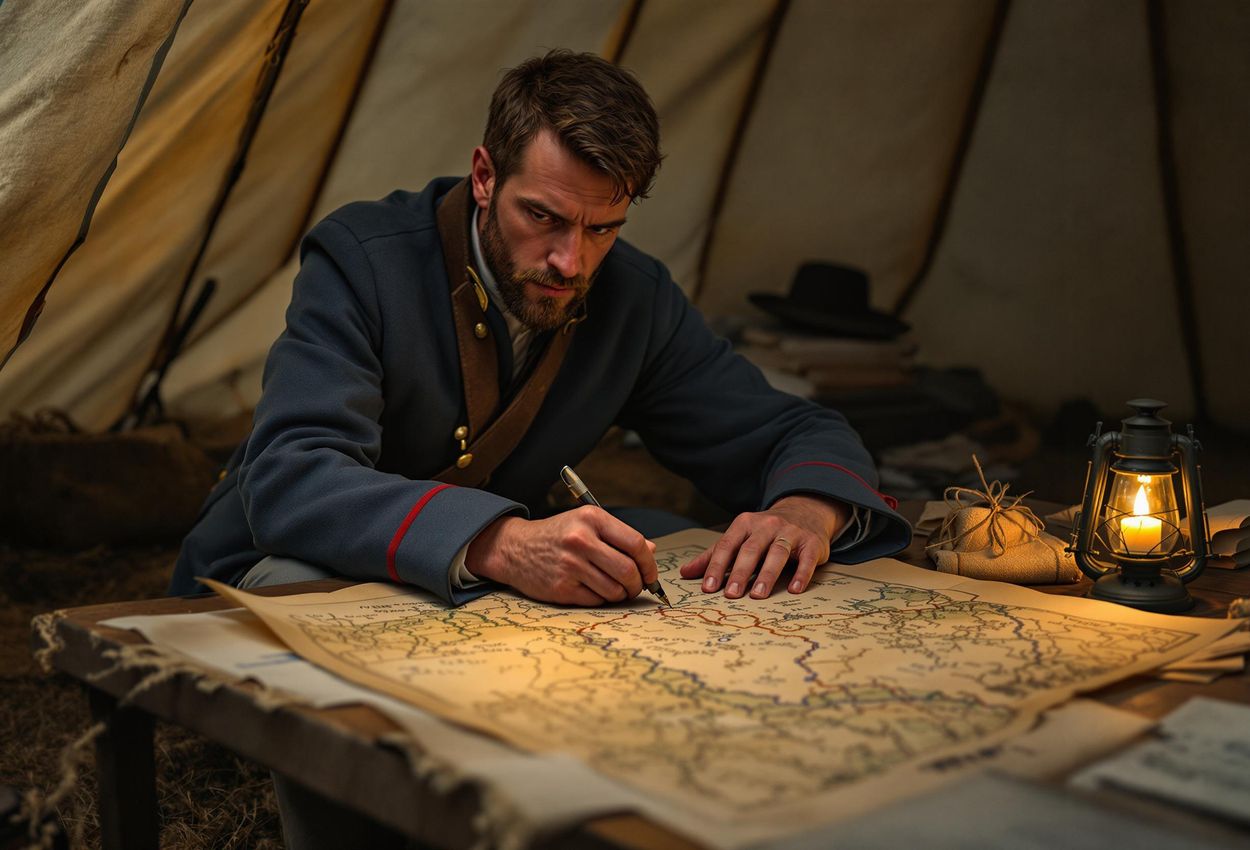
Image Description: A close-up shot of a reenactor meticulously studying a historical map inside a canvas tent at a Civil War reenactment camp. The reenactor, dressed in a Union Army uniform, is kneeling beside a wooden table, his brow furrowed in concentration as he traces a route on the map with his finger. The tent is dimly lit by a lantern hanging from the center pole, casting a warm glow on the scene. Various period-appropriate items are scattered around the table, including a compass, a quill pen, and a stack of letters tied with string. The overall impression is one of historical immersion and dedication, with the reenactor fully engrossed in his role. The image aims to capture the research and selection process involved in historical reenactments.
Style Instructions: The photo should be taken with a shallow depth of field to keep the reenactor and the map in sharp focus while blurring the background details of the tent. The lighting should be soft and warm, with a focus on capturing the glow of the lantern and the shadows it casts. The composition should be intimate and engaging, with the reenactor positioned in the center of the frame and the surrounding details adding context and depth. The date of the photo should be in late October.
Gearing Up Authentic Costumes and Equipment
Once you've chosen a reenactment group and a persona, it's time to start gearing up. This involves acquiring period-appropriate clothing, equipment, and accessories. The level of authenticity required can vary depending on the group and the type of reenactment. Some groups prioritize historical accuracy above all else, while others are more lenient.
Regardless of the specific requirements, it's important to make an effort to create an authentic impression. This not only enhances the experience for you and your fellow reenactors but also helps to educate the public about the past.
Sourcing period-appropriate clothing and gear can be a challenge. Start by researching the clothing styles and equipment used during the time period you're portraying. Look for primary sources, such as photographs, paintings, and written descriptions. Consult with experienced reenactors and ask for their recommendations.
There are several options for acquiring authentic items. Specialty stores, known as sutlers, offer a wide range of reproduction clothing and equipment. These items are often made to order and can be quite expensive. DIY options are also available for those who are skilled with a needle and thread or have access to tools and materials. Creating your own authentic items can be a rewarding experience, allowing you to customize your gear and develop a deeper understanding of the craftsmanship of the past.
Custom pins can be used to enhance authenticity. These small details can add a personal touch to your impression and demonstrate your commitment to historical accuracy.
It's important to be aware that there are different tiers of reenactors and levels of authenticity. Some reenactors strive for complete historical accuracy, while others are more focused on the social and recreational aspects of the hobby. Be respectful of the different approaches and find a level of authenticity that works for you.
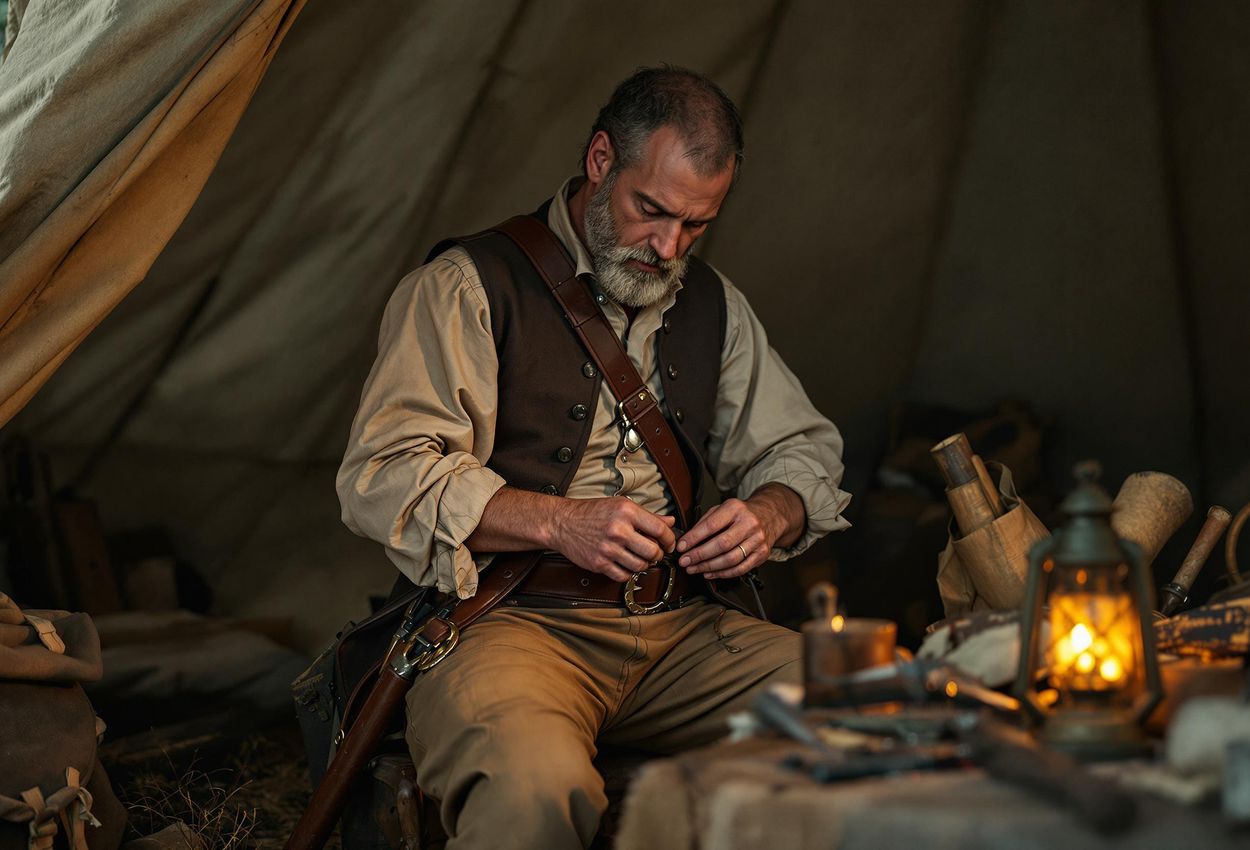
Image Description: A medium shot of a reenactor carefully adjusting the buckle on a leather belt, part of his 18th-century colonial militia uniform. The reenactor is standing in a dimly lit tent, surrounded by various pieces of period-appropriate equipment, including a musket, a powder horn, and a canvas bag. The focus is on the reenactor's hands as he works with the buckle, showcasing the attention to detail and craftsmanship involved in creating an authentic impression. The lighting is soft and warm, with a focus on capturing the texture of the leather and the fabric of the uniform. The image aims to emphasize the importance of historical accuracy in costumes and equipment.
Style Instructions: The photo should be taken with a macro lens to capture the fine details of the buckle and the leather belt. The depth of field should be shallow, with the focus on the reenactor's hands and the buckle. The lighting should be soft and warm, with a focus on capturing the texture of the materials. The composition should be balanced, with the reenactor's hands positioned in the center of the frame and the surrounding equipment adding context and depth. The date of the photo should be in late October.
Life in Character Immersion and Interaction
Once you're geared up and ready to go, it's time to experience life in character. This is where the real magic of reenacting happens, as you step into the shoes of someone from the past and live as they did.
During a reenactment event, you can expect to participate in a variety of activities, depending on the type of reenactment and the group you're with. Camp life often involves setting up tents, cooking meals over an open fire, and performing daily tasks such as washing clothes and repairing equipment. Battle reenactments involve marching, drilling, and participating in mock battles. Living history events involve demonstrating traditional crafts, engaging in conversations with visitors, and participating in historical demonstrations.
Staying in character is an important aspect of reenacting. This means speaking, acting, and interacting with others as someone from the past would have done. It can be challenging at first, but with practice, it becomes easier to immerse yourself in your persona and forget about the modern world.
Interacting with the public is another key part of reenacting. Visitors are often curious about the past and eager to learn from reenactors. Be prepared to answer questions about your persona, your clothing, and the historical period you're portraying. Share your knowledge and enthusiasm with others, and help them connect with the past in a meaningful way.
Hidden Gem: Civilian life during the reenactment period often involved a complex web of social customs and traditions. Learning about these lesser-known aspects of daily life can add depth and authenticity to your portrayal. For example, did you know that women in the 18th century used elaborate codes of conduct to communicate their intentions and desires? Or that certain foods were considered medicinal and were only consumed during times of illness?
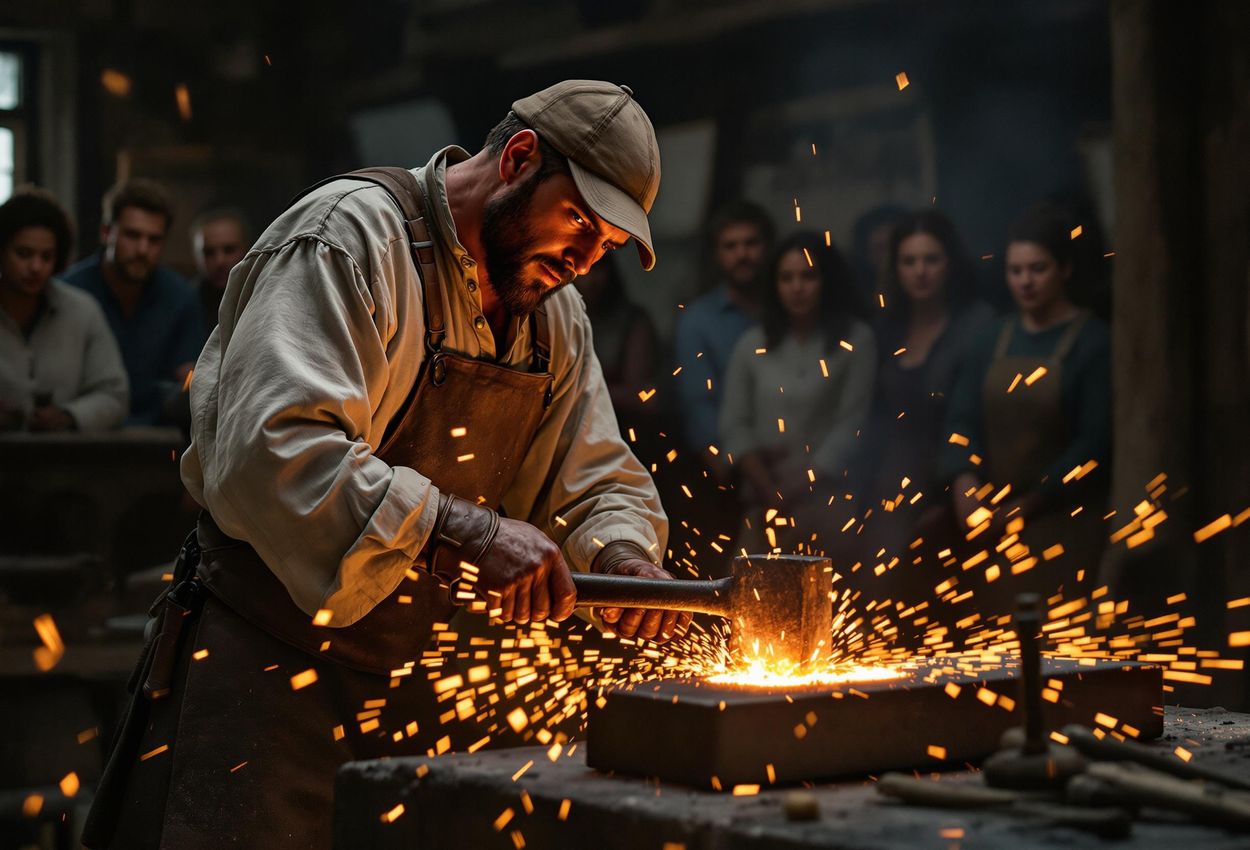
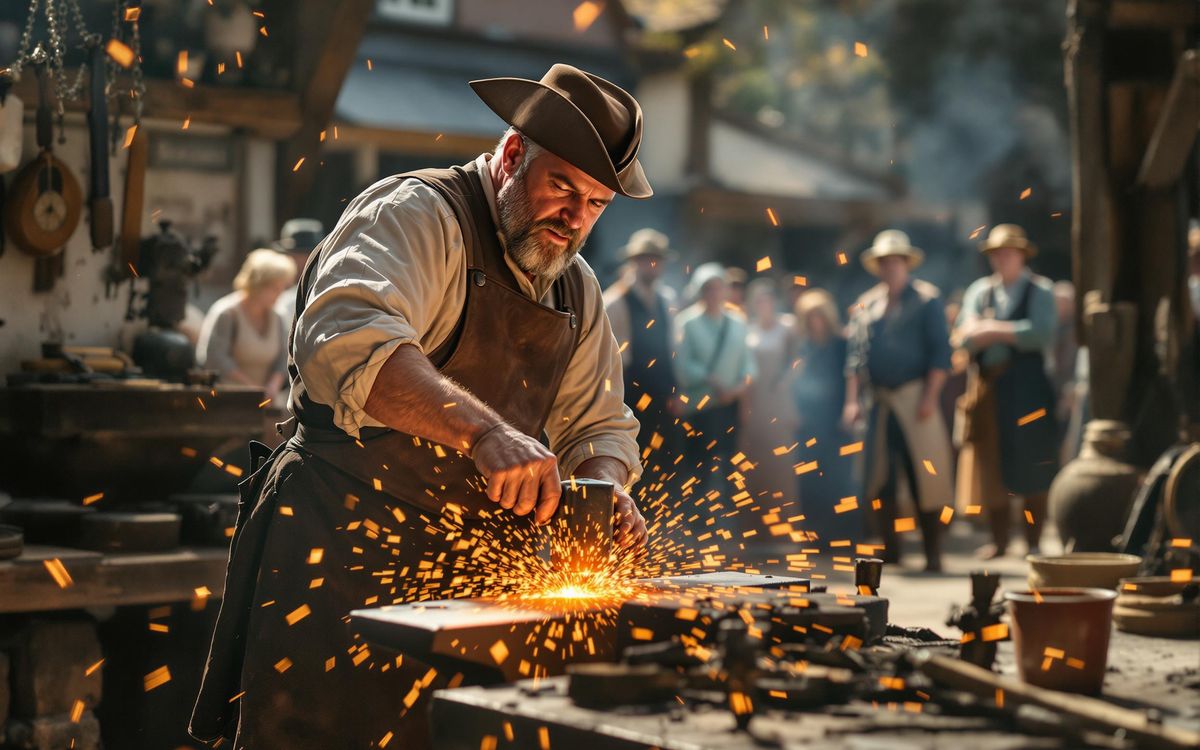
Image Description: A medium shot of a reenactor dressed as a colonial blacksmith, working at a forge during a living history event. The blacksmith is hammering a piece of red-hot metal on an anvil, sparks flying in all directions. He is wearing a leather apron and gloves, and his face is grimy with soot. In the background, visitors watch with fascination as the blacksmith demonstrates his craft. The overall impression is one of hard work and skill, with the blacksmith fully immersed in his role. The image aims to capture the immersion and interaction involved in historical reenactments.
Style Instructions: The photo should be taken with a fast shutter speed to freeze the motion of the sparks and the blacksmith's hammer. The depth of field should be shallow, with the focus on the blacksmith's face and hands. The lighting should be dramatic, with a focus on capturing the contrast between the red-hot metal and the surrounding shadows. The composition should be dynamic and engaging, with the blacksmith positioned in the center of the frame and the visitors adding context and depth. The date of the photo should be in late October.
Beyond the Battlefield Civilian Reenactments and Living History
While battle reenactments offer a thrilling glimpse into military history, civilian reenactments and living history portrayals provide a more intimate and nuanced understanding of the past. These events focus on the daily lives, crafts, and traditions of ordinary people, offering a unique perspective on history.
Civilian reenactments can take many forms. Some focus on recreating a specific historical event, such as a town meeting or a religious service. Others portray a typical day in the life of a particular community, with reenactors demonstrating traditional skills, such as spinning wool, weaving cloth, or making pottery.
Living history events often take place in historical museums or villages, where interpreters dressed in period clothing engage visitors in conversations about the past. These interactions can be incredibly informative, allowing visitors to learn about the challenges and opportunities faced by people in different eras.
Attending events like historical festivals or craft fairs can provide a glimpse into civilian life during a particular period. These events often feature demonstrations of traditional crafts, displays of historical clothing, and performances of period music and dance.
Unique Element: One specific historical craft that participants can learn is the art of quill pen making. During the 18th and 19th centuries, quill pens were the primary writing tool, and learning how to make and use them can provide a deeper appreciation for the skills and challenges faced by writers of the past. The process involves carefully selecting a feather, curing it in sand, and then shaping the nib with a special knife. Once the quill is prepared, it can be used to write with ink made from natural ingredients, such as berries or nuts.
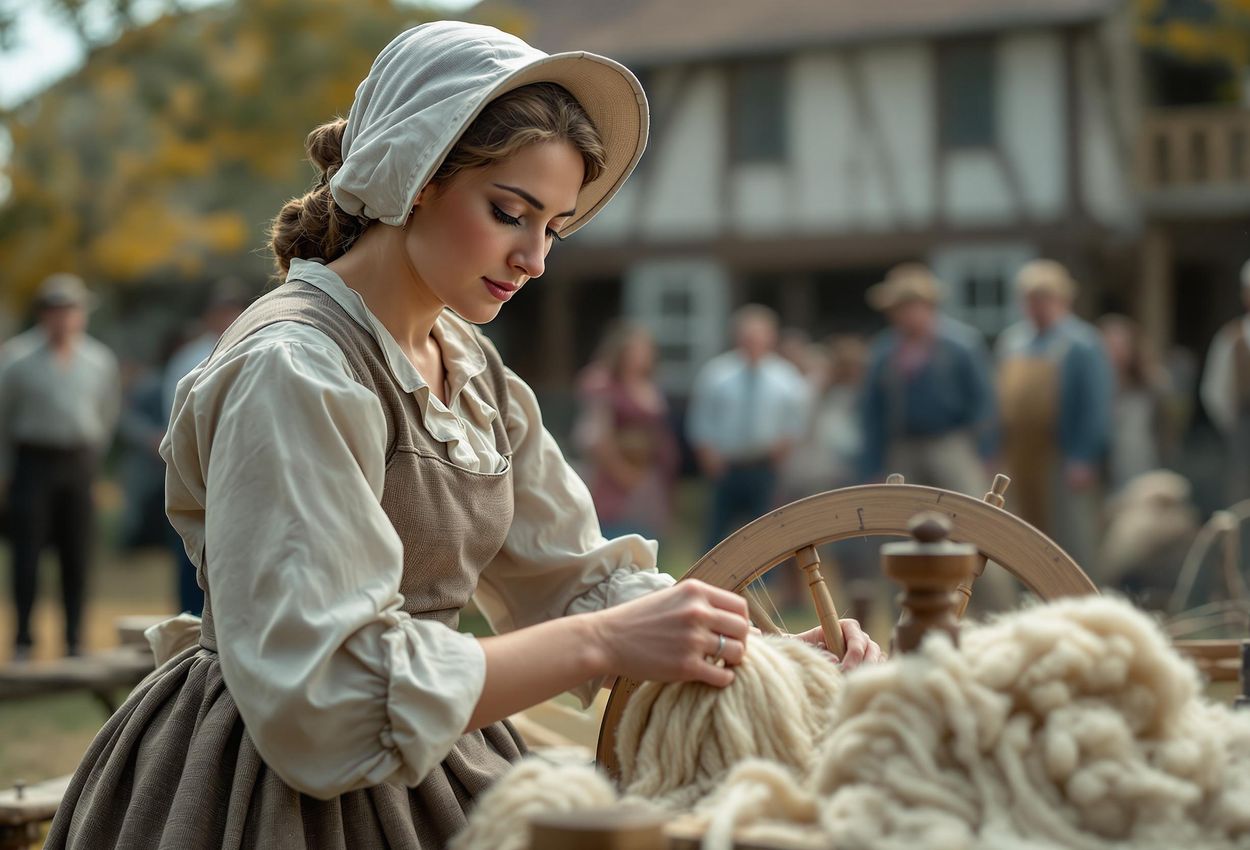
Image Description: A close-up shot of a reenactor dressed as a colonial woman, sitting at a table and demonstrating the art of spinning wool during a living history event. The woman is using a spinning wheel to transform raw wool into yarn, her hands moving with practiced ease. She is wearing a long dress and bonnet, and her face is framed by soft, natural light. In the background, visitors watch with interest as she demonstrates her craft. The overall impression is one of skill and dedication, with the woman fully immersed in her role. The image aims to highlight the opportunity to showcase daily life, crafts, and traditions in civilian reenactments.
Style Instructions: The photo should be taken with a shallow depth of field to keep the reenactor and the spinning wheel in sharp focus while blurring the background details. The lighting should be soft and natural, with a focus on capturing the texture of the wool and the fabric of the woman's dress. The composition should be balanced, with the woman positioned in the center of the frame and the visitors adding context and depth. The date of the photo should be in late October.
Whether you're interested in military history or civilian life, historical reenactments offer a unique and rewarding travel experience. They provide an opportunity to connect with the past in a personal and meaningful way, fostering a deeper understanding of the people and events that shaped our world. So why not step back in time and experience history firsthand?