Ready to ditch the predictable ball drop and dive into a New Year's Eve celeation that's truly unforgettable? From smashing plates to ward off bad luck to honoring sea goddesses, the world is imming with unique traditions just waiting to be explored.
Forget the crowded bars and generic countdowns. This year, embark on an adventure that tantalizes your senses and immerses you in a culture far removed from the ordinary. Discover five extraordinary ways to ring in the new year, each offering a distinct flavor and a story worth sharing.
Smashing Plates and Chair-Jumping into the New Year in Denmark
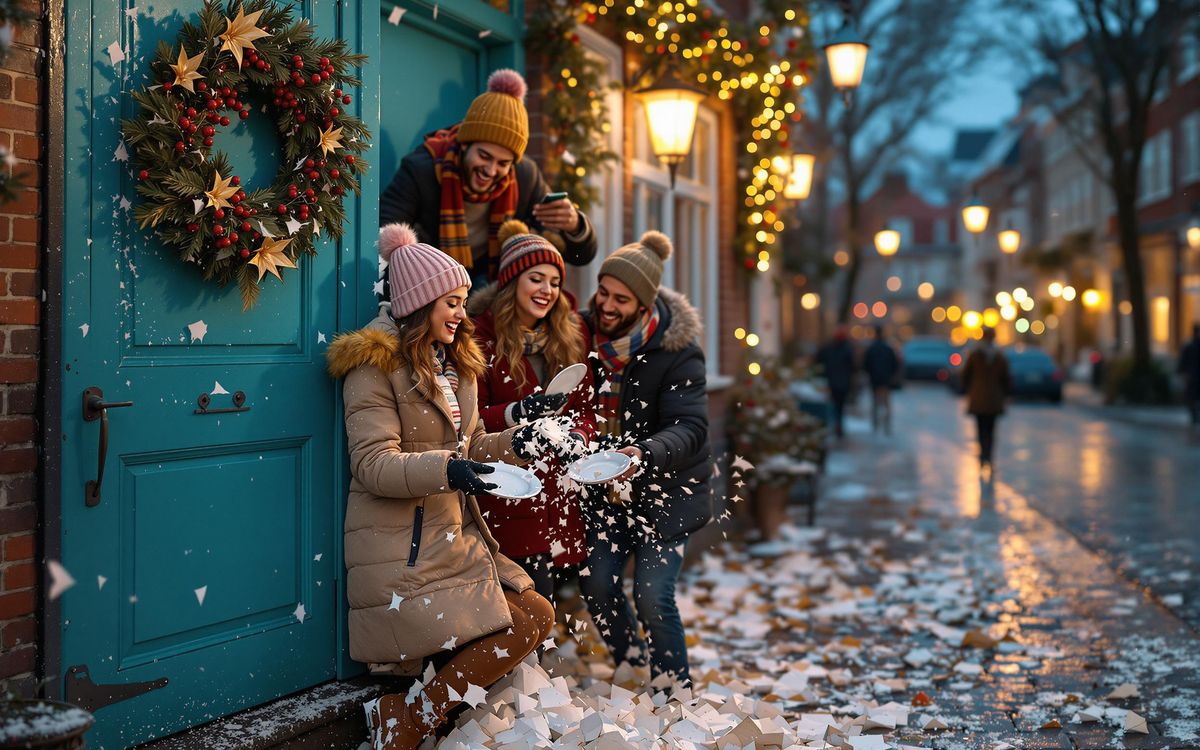
In **Denmark**, New Year's Eve is less about elegant soirees and more about cathartic chaos. One of the most distinctive traditions is the smashing of plates against the doors of friends and neighbors. Throughout the year, Danes collect old or unwanted porcelain, ready to unleash a flurry of ceramic shrapnel on December 31st. This isn't an act of vandalism, but rather a heartfelt gesture symbolizing the banishment of bad spirits and the welcoming of good fortune for the year ahead.
Imagine wandering through the cobblestone streets of **Copenhagen** or **Aarhus**, the crisp winter air filled with the anticipation of midnight. As the clock ticks closer, the sound of shattering porcelain echoes through the neighborhoods, a symphony of destruction that somehow feels incredibly joyful. The more oken dishes piled on your doorstep, the more popular and loved you are considered to be, a testament to the strong bonds of community in **Denmark**. Some families even personalize their plates with drawings or messages before sending them flying, adding a touch of whimsy to the tradition.
But the plate-smashing is only half the fun. As midnight arrives, Danes participate in another quirky custom: standing on chairs and jumping off them at the stroke of twelve. This 'leap' into January is a literal jump into the new year, a symbolic act of leaving behind the old and emacing the possibilities that lie ahead. Picture the scene: joyous shouts, laughter, and the collective feeling of hope as people of all ages take their turn leaping into the unknown.
Hidden Gem: Ask a local about a particularly memorable plate-smashing incident. You might hear tales of friendly rivalries, elaborate plate designs, or even accidental window eakages (though those are definitely frowned upon!). Some families have unique ways of personalizing their plates, turning them into mini works of art before their ceremonial shattering.

Imagine a candid street-style photograph taken in **Copenhagen** on New Year's Eve. The scene captures a group of friends, bundled in winter coats and hats, gleefully smashing plates against a ightly colored doorway. The air is filled with the sounds of shattering porcelain and laughter. The photograph encapsulates the chaotic yet joyful spirit of the Danish New Year's Eve tradition.
First Footing with a Dark-Haired Stranger in Scotland's Hogmanay
**Scotland's** Hogmanay, the Scots word for New Year's Eve, is a celeation steeped in tradition and folklore. Among the most intriguing customs is that of 'first footing,' the belief that the first person to cross a home's threshold after midnight sets the tone for the entire year.
According to lore, the ideal 'first footer' is a dark-haired male bearing gifts. This tradition is thought to originate from the times when **Scotland** was invaded by Vikings. A fair-haired man arriving at your doorstep meant trouble. A dark-haired man, on the other hand, became a symbol of luck and success. The traditional gifts include coal (to ensure a warm hearth), salt (representing sustenance), shortead (for good fortune), and whisky (for cheer). Each gift carries a symbolic weight, designed to ing prosperity and happiness to the household throughout the coming year.
Envision the atmosphere of Hogmanay celeations in **Edinburgh**, where torchlit processions wind through the historic streets, culminating in a spectacular fireworks display over **Edinburgh Castle**. Or picture a smaller Scottish town, where families gather in cozy homes, sharing stories and songs, eagerly awaiting the arrival of the 'first footer'. The communal singing of Auld Lang Syne, a poignant reminder of shared history and friendship, fills the air with a sense of unity and hope.
Hidden Gem: In some parts of **Scotland**, the 'first footer' tradition extends beyond immediate family and friends. Locals might visit multiple homes throughout the night, spreading good cheer and collecting drams of whisky along the way. Some even dress in traditional Highland attire, adding a touch of pageantry to the proceedings.

The ideal image would be a photograph capturing the moment a dark-haired man, dressed in a kilt, steps across the threshold of a traditional Scottish home just after midnight on New Year's Day. He carries a small piece of coal, a bottle of whisky, and a shortead. The family inside welcomes him with smiles and open arms, their faces illuminated by the warm glow of a fireplace. The scene evokes the warmth, hospitality, and rich cultural heritage of Hogmanay.
Bathing in the Ocean and Gifting to the Goddess Yemanjá in azil
In **azil**, New Year's Eve is a viant and spiritual affair, deeply intertwined with Afro-azilian religious traditions. One of the most captivating customs is the celeation of Yemanjá, the goddess of the sea, who is considered the mother of waters and a nurturer to everyone.
As midnight approaches, millions of azilians, dressed in white clothing symbolic of peace and spiritual purification, flock to beaches like **Copacabana** and **Ipanema**. At the stroke of twelve, they plunge into the ocean, jumping over seven waves, each wave representing a wish or a expression of gratitude for the new year.
But the ocean ritual doesn't end there. azilians offer gifts to Yemanjá, sending flowers, jewelry, and small boats adorned with candles and messages out to sea. The belief is that if the ocean accepts the offerings, the goddess has granted her blessings for the coming year. If the waves return the gifts, it's a sign that Yemanjá has not accepted them, and further offerings may be needed.
Imagine the scene on **Copacabana** beach: a sea of white clothing under a starlit sky, the rhythmic crashing of waves providing a soundtrack to the music and dancing. The air is thick with the scent of flowers and incense, and the energy is palpable as people connect with their spirituality and express their hopes for the future. The whole atmosphere is filled with music, dancing, and spiritual energy.
Hidden Gem: Delve into the history and cultural importance of Yemanjá in Afro-azilian religions like Candomblé and Umbanda. Discover the stories and legends surrounding this powerful goddess, and learn about the various rituals and offerings associated with her worship.
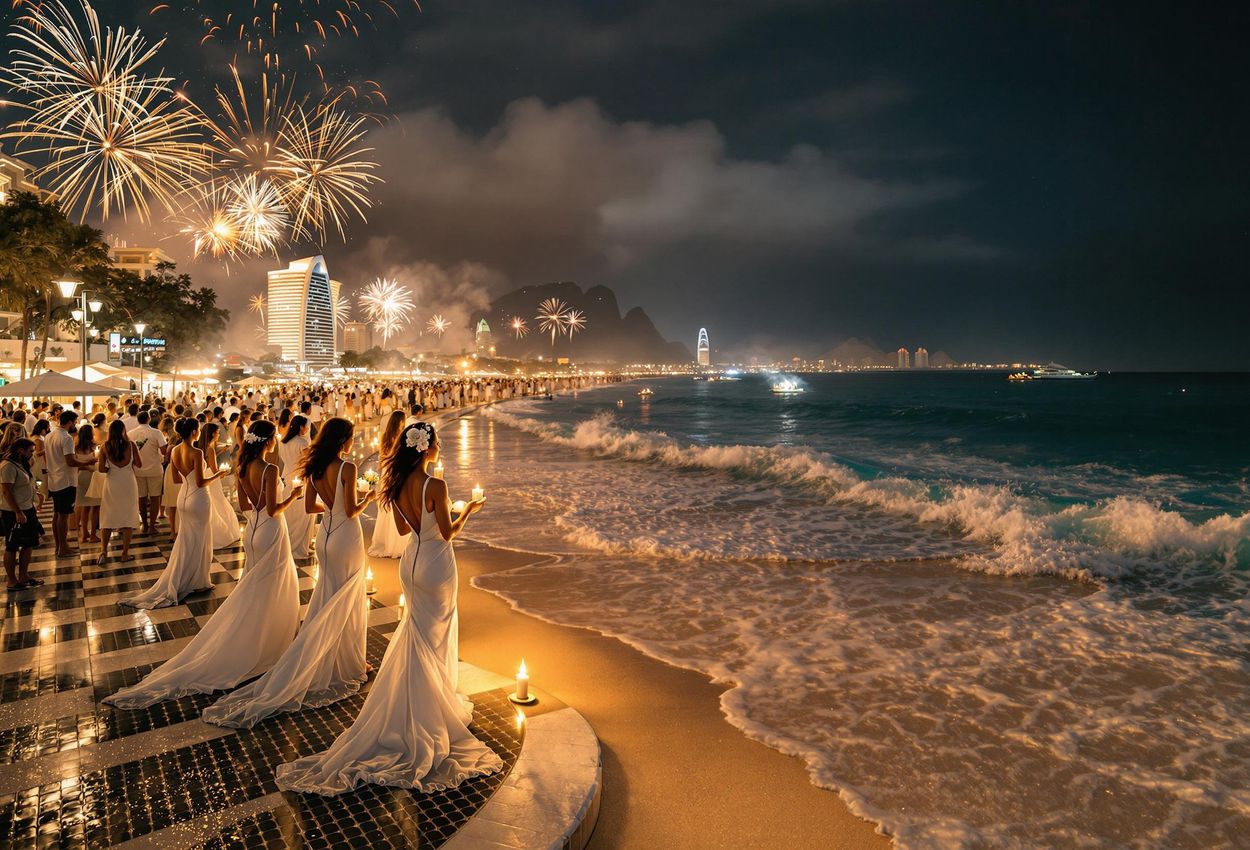
A wide-angle shot capturing the viant scene on **Copacabana** beach on New Year's Eve. Millions of people dressed in white are gathered on the sand, holding candles and flowers. In the foreground, a group of women is launching a small boat filled with offerings into the ocean. Fireworks explode in the night sky, illuminating the scene with bursts of color. The image conveys the spiritual energy and festive atmosphere of the azilian New Year's Eve celeation.
Burning Scarecrows and Effigies in Colombia and Ecuador
In **Colombia** and **Ecuador**, New Year's Eve is a time for reflection, release, and a touch of pyrotechnics. A unique tradition involves the burning of scarecrows or effigies, known as 'años viejos' (old years), symbolizing the past year, bad memories, or disliked figures.
These effigies are often crafted with meticulous detail, stuffed with straw, old clothes, and, most importantly, fireworks. The figures can represent anything from unpopular politicians to personal struggles, providing a symbolic outlet for releasing negativity and emacing a fresh start. As midnight approaches, these figures are set ablaze, creating a spectacular display of fire and light.
Picture the scene in cities like **Cali, Colombia** or **Guayaquil, Ecuador**: bonfires blazing in the streets, casting flickering shadows on the faces of onlookers. The air is filled with the smell of smoke and the sounds of crackling fireworks, as the 'años viejos' are consumed by flames. This tradition symbolizes the destruction of evil and the welcoming of good luck for the year ahead.
Hidden Gem: Seek out a story about a particularly elaborate or controversial effigy and the social commentary it represented. These creations often serve as a form of public expression, reflecting the hopes, fears, and frustrations of the community.

A dramatic photograph capturing the moment an effigy is set ablaze in the streets of **Guayaquil, Ecuador** on New Year's Eve. The effigy, representing a disliked politician, is engulfed in flames, with fireworks exploding from within. The faces of the onlookers are illuminated by the firelight, their expressions a mix of catharsis and anticipation. The image conveys the powerful symbolism and social commentary inherent in this tradition.
Ringing Bells 108 Times in Japan's Joya no Kane
In **Japan**, New Year's Eve is a time for spiritual reflection and purification. A central tradition is 'Joya no Kane,' where Buddhist temples across the country ring their bells 108 times at midnight. This solemn ceremony is rooted in Buddhist philosophy, with each ring representing one of the 108 earthly desires or sins that cause suffering.
The atmosphere at a temple in **Kyoto** or **Tokyo** during Joya no Kane is one of profound solemnity and spiritual significance. Monks, and sometimes even members of the public, take turns striking the large temple bells with a heavy wooden beam. The deep, resonant tones reverberate through the night, creating a mesmerizing and meditative experience.
Even if you can't be physically present at a temple, you can still participate in Joya no Kane by watching the ceremony on television or listening to it on the radio. Many oadcasting channels in **Japan** air this traditional event so everyone can witness the important New Year's moment.
Hidden Gem: Find a personal anecdote from someone who has participated in Joya no Kane, or delve into the specific sins each bell ring represents. Understanding the nuances of Buddhist philosophy can add depth and meaning to this already profound tradition.

A serene photograph capturing the 'Joya no Kane' ceremony at a temple in **Kyoto, Japan**. Monks in traditional robes are striking a large onze bell with a wooden beam. The air is filled with the sound of the bell's deep resonant tones. Soft lighting illuminates the scene, creating a sense of peace and tranquility. The image conveys the spiritual significance and meditative atmosphere of this ancient tradition. The date the photo is taken is December 31, 2024 at 11:50 PM.
These five unique New Year's Eve celeations offer a glimpse into the diverse and fascinating ways people around the world mark the transition from one year to the next. Whether you choose to smash plates in **Denmark**, honor Yemanjá in **azil**, or listen to the bells of Joya no Kane in **Japan**, may your New Year be filled with adventure, discovery, and unforgettable experiences.