Lalibela, a UNESCO World Heritage site nestled high in the Ethiopian mountains, transforms into a viant 'New Jerusalem' each year as pilgrims gather to celeate Ethiopian Orthodox Christmas (Gena/Ledet) on January 7th, a testament to unwavering faith and ancient traditions.
The air is thin and crisp at 8,200 feet above sea level, carrying the scent of juniper and the distant echoes of chanting. Between October and March, the landscape surrounding Lalibela is bathed in golden sunlight, making it the ideal time to witness this extraordinary spiritual event. For 43 days leading up to Christmas, devout Ethiopians observe Tsome Nebiyat, a rigorous fasting period of abstinence and prayer, cleansing their bodies and souls in preparation for the birth of Christ. As the celeation approaches, pilgrims from every corner of Ethiopia embark on journeys that test their physical and spiritual limits, drawn by the magnetic pull of Lalibela and its sacred rock-hewn churches. The landscape of mountains surrounding Lalibela only enhances its already powerful spiritual presence.
Whispers of the Zagwe Dynasty
The story of Lalibela is interwoven with the history of its remarkable rock-hewn churches, architectural marvels attributed to King Lalibela of the Zagwe dynasty in the 12th and 13th centuries. Legend tells of King Lalibela's divine vision to create a 'New Jerusalem' after Muslim conquests disrupted pilgrimages to the Holy Land. The king embarked on an ambitious project: carving eleven monolithic churches out of solid rock, a feat that defies conventional engineering even today. These churches were not constructed in the traditional sense but were created through a subtractive process, with artisans meticulously removing material to reveal the sacred spaces within.
Bete Maryam (House of Mary), possibly the oldest of these churches, stands as a testament to the enduring legacy of the Axumite kingdom. Its design reflects the influence of Axumite architectural traditions, echoing the ancient kingdom's sophisticated craftsmanship. The layout of Lalibela itself is widely accepted as a symbolic representation of Jerusalem, further solidifying its spiritual significance as a substitute for the Holy Land. Each church, with its unique design and intricate details, tells a story of faith, devotion, and the unwavering determination of a king to create a sacred space for his people.
Christmas Eve Vigil: A Night of Candles and Chants
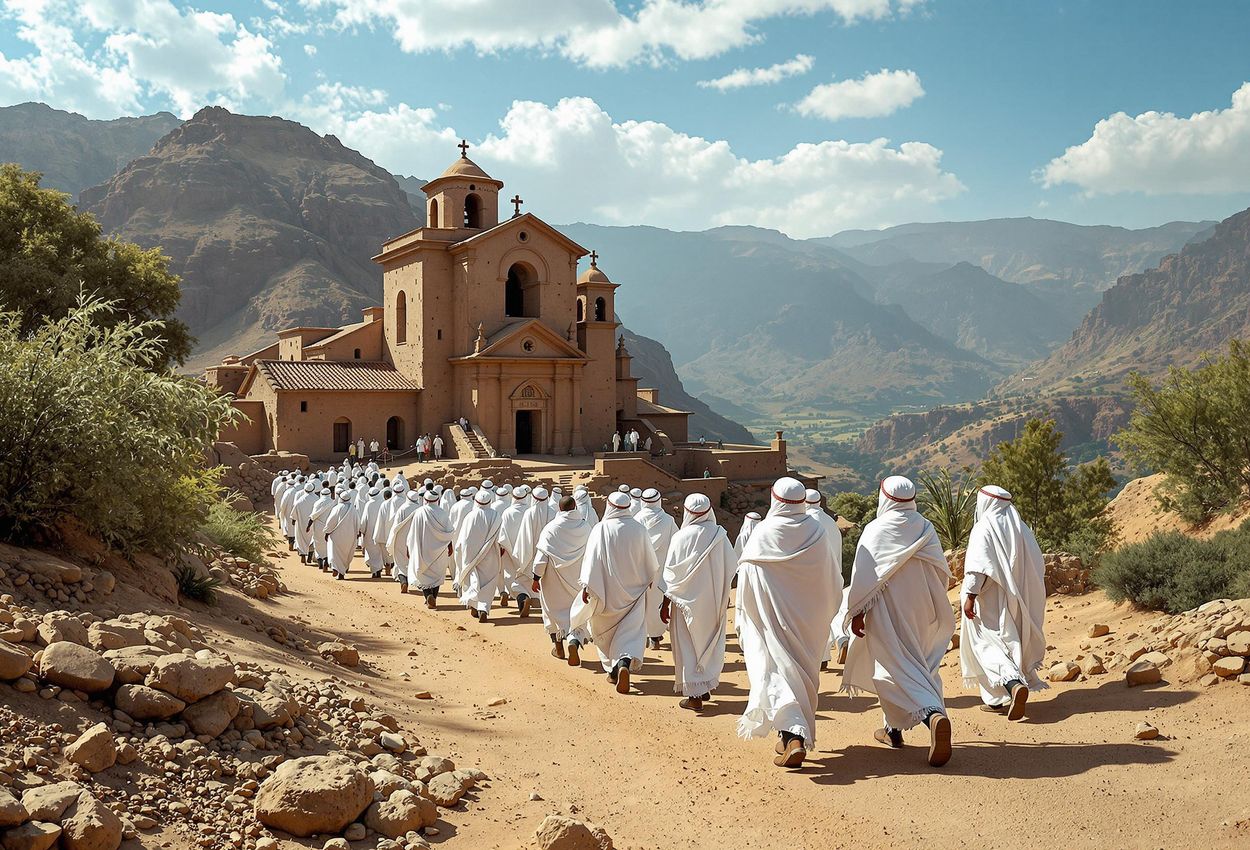
As dusk settles on January 6th, Lalibela prepares for the Christmas Eve vigil, a night of profound spiritual intensity that begins around 6:00 pm and lasts until 3:00 am on January 7th. Pilgrims, clad in traditional white garments (Netela), converge upon the churches, their faces illuminated by the soft glow of candlelight. The air is thick with the aroma of frankincense, mingling with the rhythmic sounds of chanting that reverberate through the night. A long, looping procession forms around the churches, as pilgrims, their voices blending in harmonious prayer, create a mesmerizing spectacle of devotion.
The largest of the rock-hewn churches, Bete Emanuel, becomes a focal point of the vigil. Deacons and priests, their movements graceful and deliberate, perform traditional dances, their voices rising in praise. The pilgrims, their hearts filled with reverence, clap and ululate to the beat of the drums, creating a symphony of faith that echoes through the ages. The overnight church service attracts pilgrimages to the Lalibela Churches, reinforcing its status as a sacred destination for Ethiopian Orthodox Christians.
Bete Maryam: Sunrise Mass and Ancient Rituals
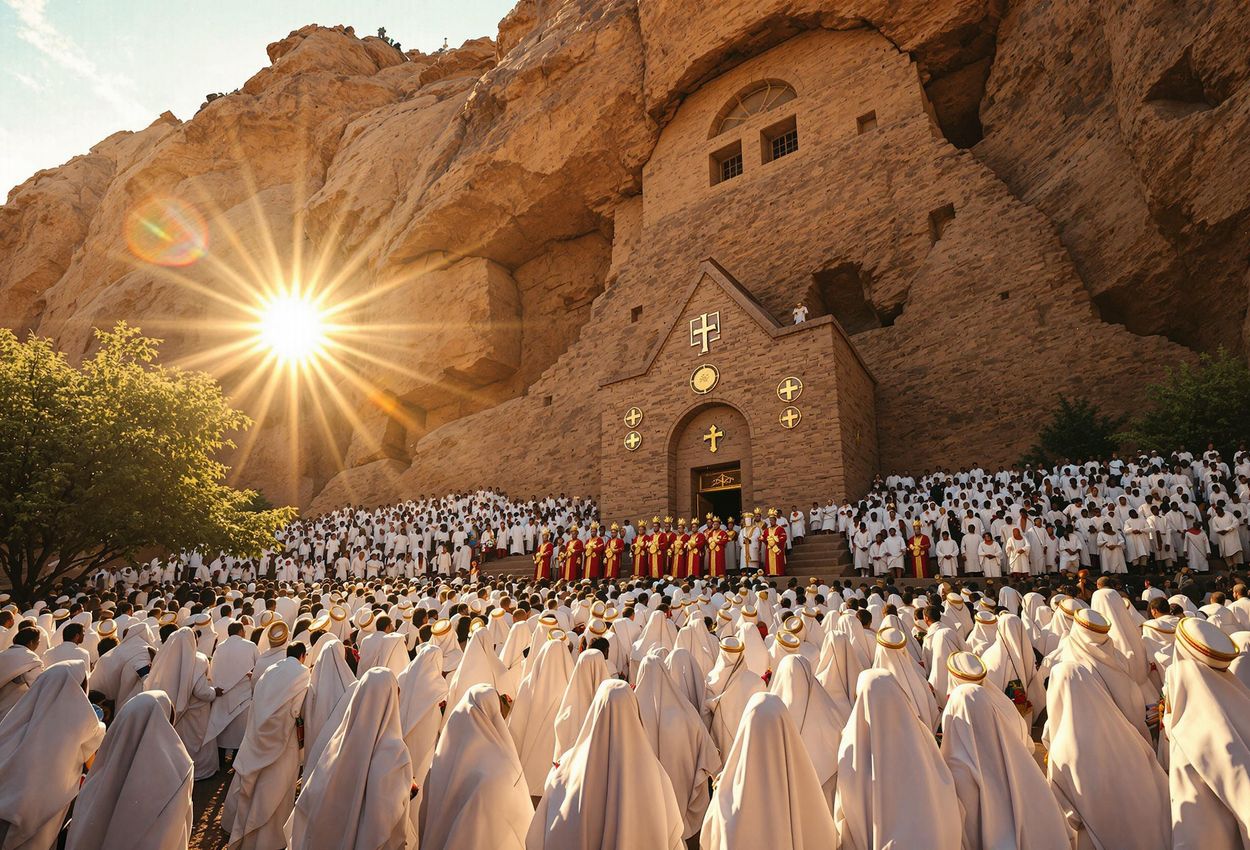
As the first rays of dawn paint the sky on Christmas Day, the faithful gather at Bete Maryam (House of Mary) for the early morning mass, a celeation of rebirth and renewal. The sunrise service at Bete Maryam is a spectacle of solemn rituals performed by priests and deacons, their every action steeped in ancient tradition. The clergy, adorned in viant vestments, process to the edge of the cliffs, their voices rising in chants that have been passed down through generations. Swaying to the beat of sistrums, they invoke blessings upon the land and its people.
The three-hour ritual culminates in the pronouncement of the start of the feasting, signaling the end of the long fast and the beginning of a time of communal celeation. Bete Maryam, the oldest church in Lalibela, dating back to the 7th century during the kingdom of Axum, serves as the epicenter of these sunrise Christmas celeations, its ancient stones resonating with the echoes of centuries of prayer and devotion.
Voices of Faith: Encounters with Priests
In the heart of Lalibela, the voices of the priests resonate with unwavering faith and a deep connection to the spiritual heritage of the rock-hewn churches. Through intimate conversations, they share their perspectives on the profound significance of Christmas and their role in preserving the traditions of Lalibela.
“We tell the people that God became human and a human became God,” one priest shares, his eyes reflecting the light of centuries of devotion. “Because of Christ, we went from being punished by God to being his children again. Christmas is the day that forgiveness was born.” Their chants, filled with ancient wisdom and unwavering belief, echo through the hallowed halls of the churches, reminding pilgrims of the transformative power of faith and the enduring message of Christmas.
Pilgrims' Stories: Journeys of Devotion
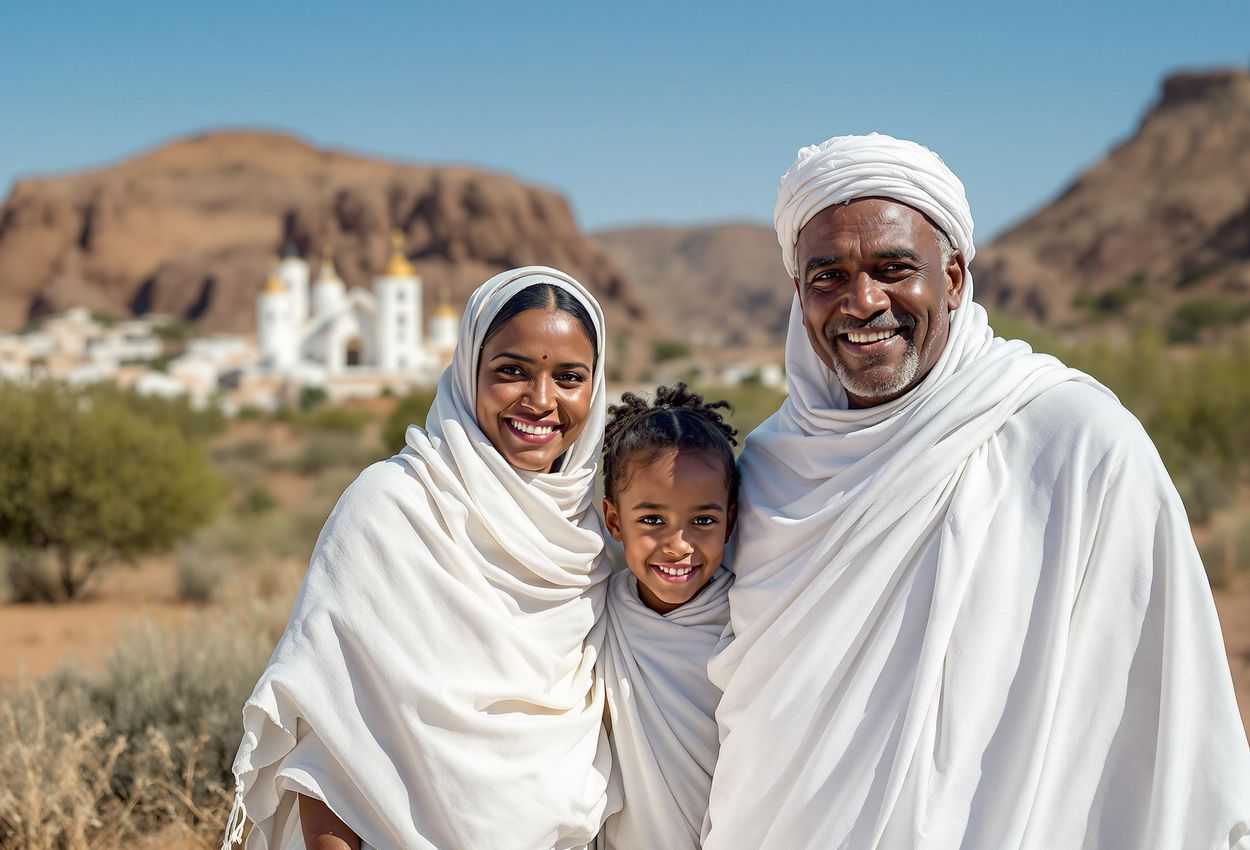
The stories of the pilgrims who journey to Lalibela for Christmas are tales of extraordinary devotion, resilience, and unwavering faith. They walk for days, sometimes weeks, fasting and robed in white, their footsteps guided by an unshakeable belief in the power of their pilgrimage. Dwalda Yigzauo, a pilgrim who traveled from a distant village, told us, “I believe God is here. I came with faith.” Her neighbor, Gateier Ababa, and his daughter recounted their arduous journey from their farms nearly 100 miles away, a three-day trek that tested their physical and spiritual limits.
When asked why they felt compelled to make such a demanding journey, despite the ability to pray anywhere, they responded with a simple yet profound conviction: to demonstrate their devotion to God and to seek His blessings in this sacred place. Their stories, etched with hardship and illuminated by faith, embody the true spirit of Ethiopian Orthodox Christmas in Lalibela.
A Feast for the Soul: eaking the Fast
The end of the 43-day fasting period is marked by a joyous and celeatory feast that follows the morning mass, a testament to the communal spirit and shared gratitude that define Ethiopian Orthodox Christmas. Families and communities gather to partake in traditional Ethiopian dishes, such as the flavorful doro wat, a spicy chicken stew prepared in advance of the big day. Served with injera, the spongy flatead that is a staple of Ethiopian cuisine, the doro wat becomes a symbol of unity and abundance.
The atmosphere is filled with laughter, music, and expressions of gratitude as pilgrims and locals alike eak their fast and share a meal together. People return home to eak their fasts and spend time with their families, reinforcing the bonds of kinship and community that are at the heart of Ethiopian culture. The feast is not merely a culinary experience but a spiritual one, nourishing both the body and the soul.
Beyond the Churches: Lalibela's Hidden Gems
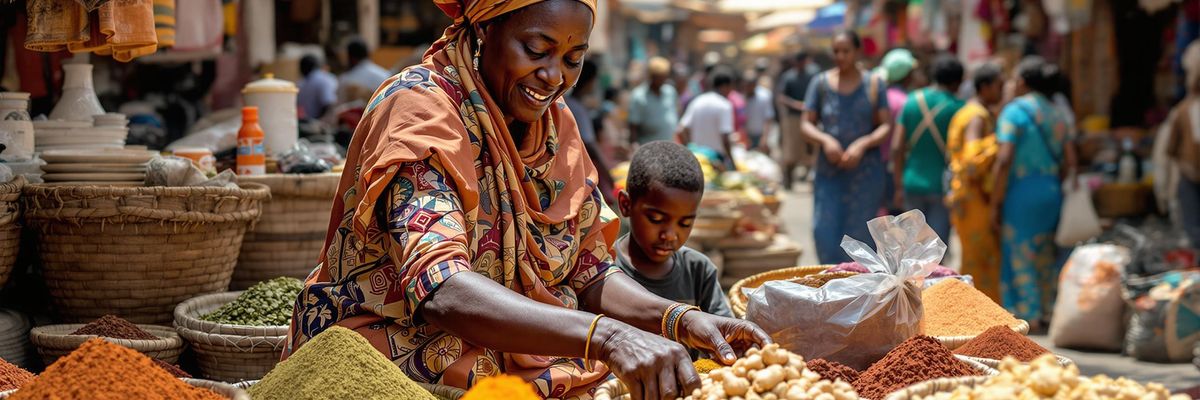
While the rock-hewn churches are the undisputed stars of Lalibela, the town offers a wealth of other attractions that provide a glimpse into its viant culture and rich history. The bustling markets, filled with colorful textiles, local crafts, and aromatic spices, offer a sensory feast for visitors. The Saturday market is particularly viant, including a livestock section.
The traditional game of Gena, similar to hockey, is played by men and boys during the Christmas season, adding a touch of festive energy to the atmosphere. Beyond the town's limits, the natural landscapes surrounding Lalibela beckon with their rugged beauty. A visit to the Asheten Monastery, perched high on a mountain peak, rewards travelers with eathtaking panoramic views. The Bilbala Stelae Field, with its ancient stone monuments, offers a glimpse into the region's pre-Christian past. For those seeking a truly hidden gem, a journey to Yemrehanna Kristos, a church built in a cave, is an unforgettable experience.

Preserving the Legacy: Conservation Efforts
The rock-hewn churches of Lalibela, testaments to human ingenuity and unwavering faith, face the constant threat of erosion and decay. Ongoing conservation and restoration efforts are crucial to protecting these sacred sites for future generations. Partnerships between the Ethiopian government, UNESCO, and international organizations are working to address the challenges of preserving such a unique and vulnerable heritage. Concerns have been raised about the impact of iron shelters on the churches, highlighting the delicate balance between protection and preservation.
Afe. Gee Yesus, the Lalibela Orthodox Church Administrator, has emphasized the importance of preserving the churches' spiritual significance while implementing modern conservation techniques. The efforts to safeguard Lalibela are a testament to the global recognition of its cultural and spiritual value.
Lalibela: A Testament to Faith and Heritage
Lalibela and its rock-hewn churches stand as a powerful testament to Ethiopian Orthodox faith, cultural heritage, and the enduring human spirit. The Ethiopian Orthodox Church claims to be among the earliest adopters of Christianity. The story of the Queen of Sheba and King Solomon, and the Ark of the Covenant further intertwines with Ethiopia's spiritual identity. The importance of preserving this sacred site for future generations cannot be overstated.
As pilgrims and visitors alike immerse themselves in the traditions and spirituality of Lalibela, they become part of a living legacy that transcends time and connects humanity to its deepest spiritual roots. Lalibela is more than just a destination; it is a transformative experience that nourishes the soul and inspires a renewed appreciation for the power of faith and the enduring beauty of cultural heritage.