

Kyoto/Osaka: Kyoto and Nara Customized Private Guided Tour
 Nara, JP
 72% of travellers recommend this

Highlights
- Explore traditional Kyoto and Nara
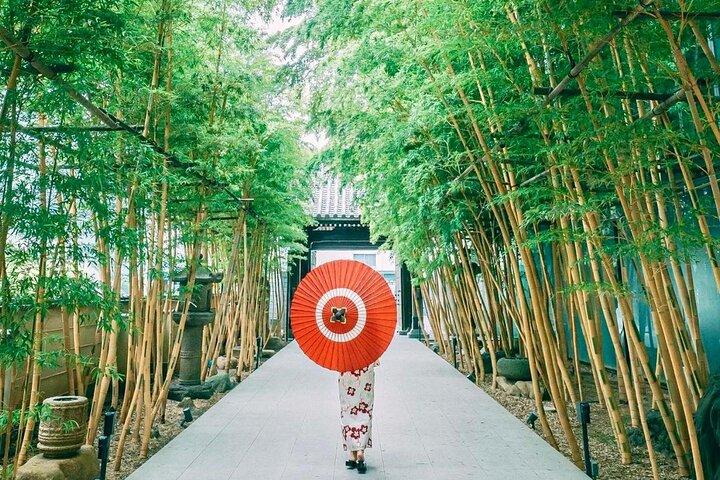
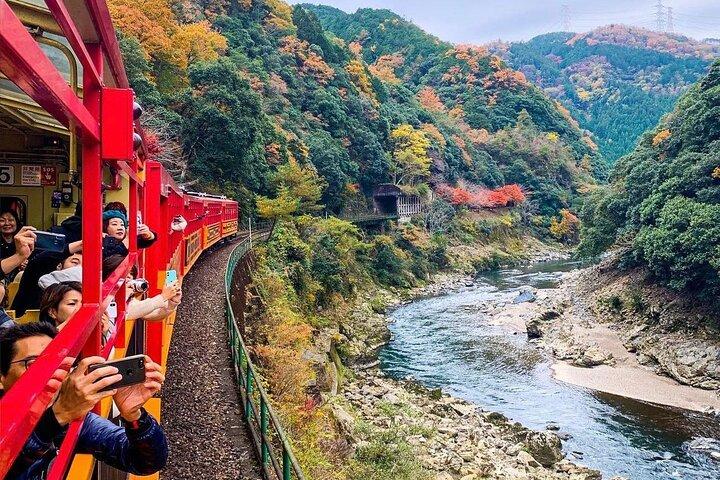
- Marvel at Kyoto's Arashiyama district
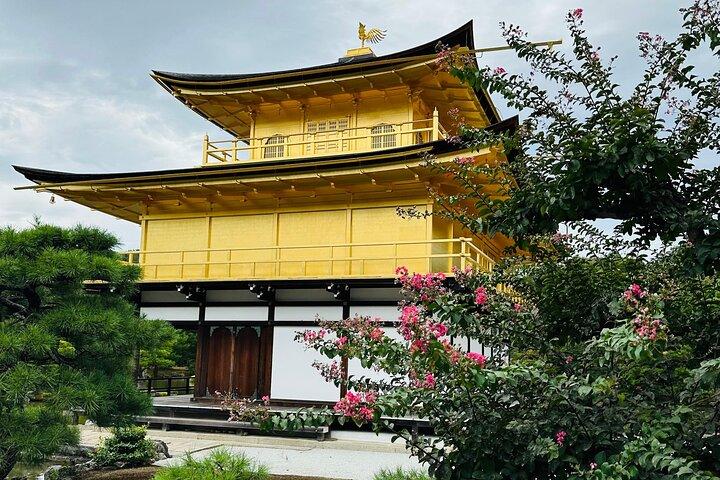
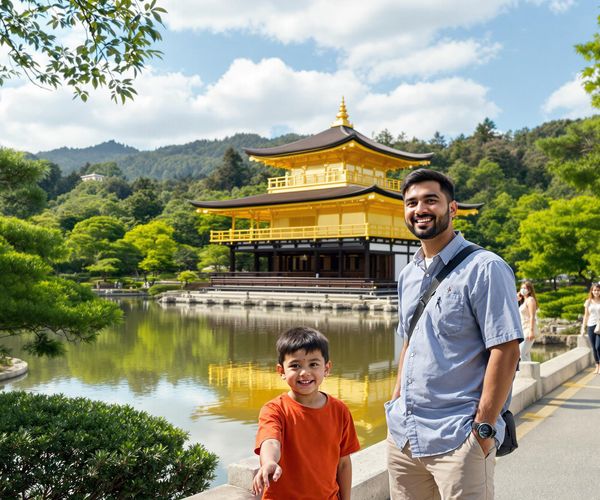
- Admire the beautiful Kinkaku-ji temple
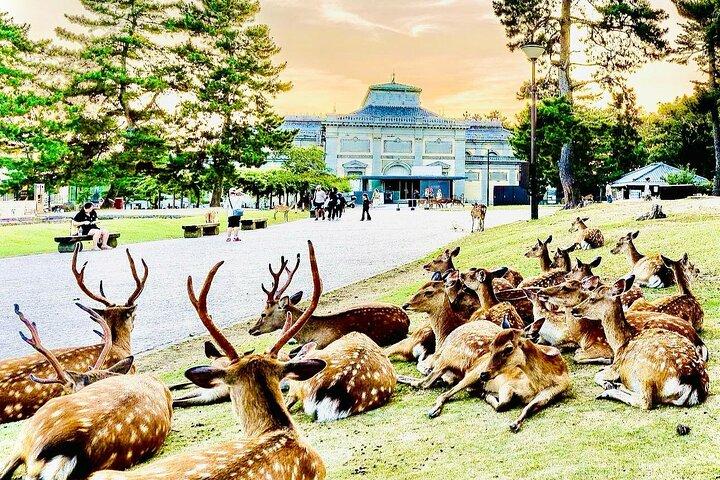
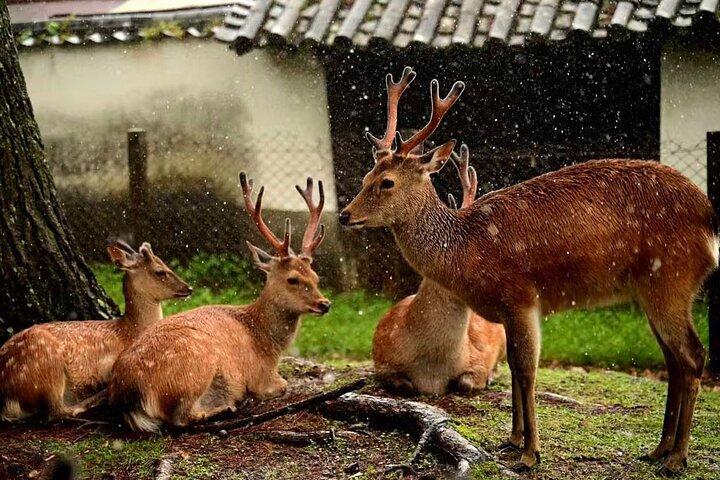
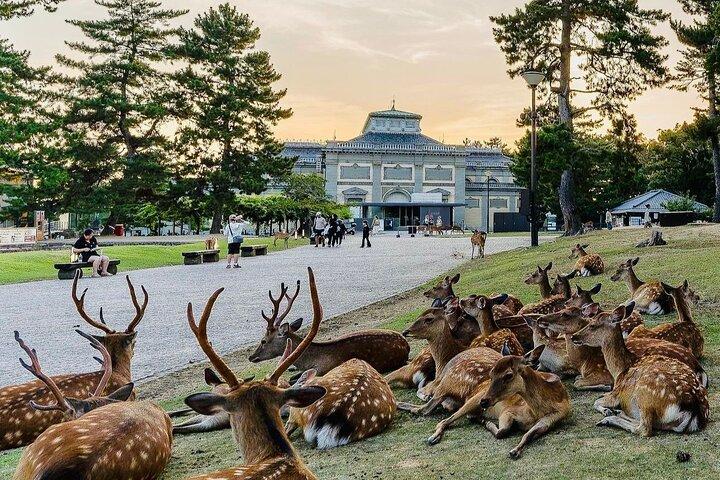
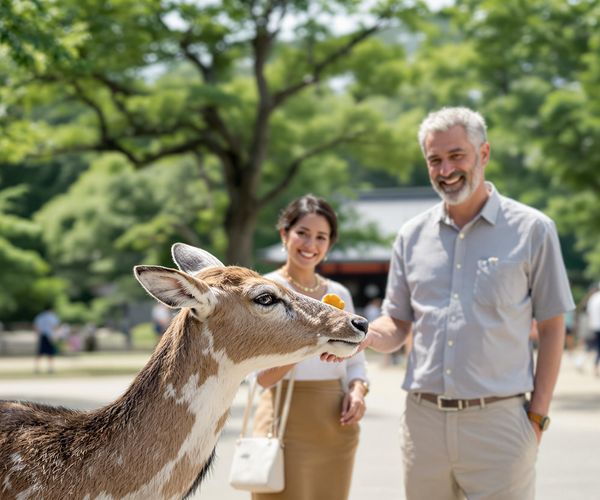
- See the wild deer of Nara Park
- Enjoy a private guided tour
-
Duration 8-10 hours
-
Private transportation included
-
Complimentary pickup available
-
Expert guide in English, Hindi, Urdu
-
Bottled water and snacks provided
-
Lunch upgrade options available
Immerse yourselves in the rich history and culture of Japan with a private guided tour of Kyoto and Nara. Wander through the picturesque Arashiyama district, marvel at the stunning Kinkaku-ji temple, and get up close with the wild deer of Nara Park. With multiple pickup points and optional lunch upgrades, this experience offers the perfect blend of tradition and luxury. Let the knowledgeable tour guide take you on a journey through these iconic Japanese destinations, all while enjoying the comfort of private transportation and complimentary snacks and water. Don't miss out on this unforgettable opportunity to explore Kyoto and Nara in style.
At a Glance
-
 Free cancellation
-
 8 hours
-
 Instant Confirmation
-
 Available in English, Urdu, Hindi
-
 Mobile voucher
-
 Private Tour
-
 Guided
-
 Family friendly

Featured Reviews

Discover the rich culture of Kyoto and Nara on a customized private guided tour, featuring iconic temples, parks, and local cuisine.
Included
-
 Complimentary pickup is available from three cities: Kyoto, Osaka, And Nara.
 -
Parking fees
-
In-vehicle air conditioning
-
Surcharges on fuel
-
Private transportation
Excluded
-
 Any special ride or cruise not included in this package
Pickup
Check if pick-up is available from your location, you will select during checkout (providers may allow other pickup locations)

What to expect
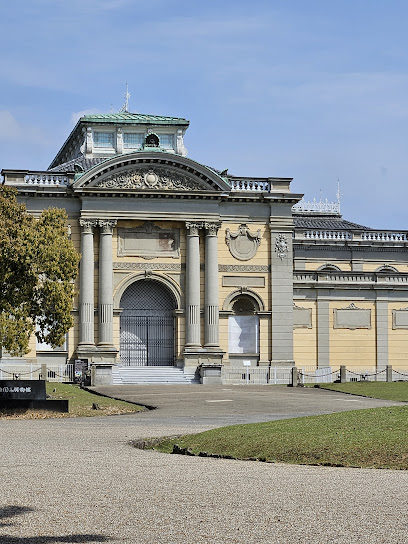
The Nara National Museum Nara Kokuritsu Hakubutsukan), located in Nara Park, is an art museum which primarily displays Japanese Buddhist art. Established in 1889, the museum retains its original building and is joined by a new wing that is connected to the original building by an underground passage. Both wings display the museum's permanent collection, which includes Buddhist statues, paintings, scrolls and ceremonial objects mainly from Japan. The new wing also houses temporary exhibitions, including an annual exhibition every autumn of treasures from Todaiji Temple. A ticket to the museum gives access to both wings, and English explanations are available throughout the museum.
60 minutes
 Admission Not Included
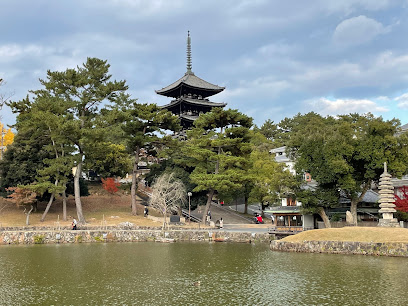
Nara Park is a beautiful place where Japan's history and nature blend seamlessly, attracting many tourists. Spanning approximately 660 hectares, the park is home to around 1,200 freely roaming deer, which visitors can feed with special deer crackers. The park features numerous historical buildings, such as the Great Buddha Hall of Todai-ji Temple, the five-story pagoda of Kofuku-ji Temple, and Kasuga Taisha Shrine, offering a wealth of sights to explore. Additionally, the park's seasonal natural beauty is captivating, with cherry blossoms in spring and vibrant autumn leaves being particularly popular. Nara Park is a unique place where history and nature harmonize, allowing visitors to fully enjoy Japan's traditional culture and beautiful landscapes. Be sure to visit and experience its charm for yourself.
60 minutes
Admission Not Included
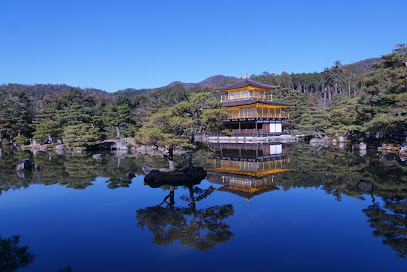
The upper two floors of the Zen temple Kinkakuji (Golden Pavilion), located in northern Kyoto, are entirely coated with gold leaf. Originally called Rokuonji, the temple served as Ashikaga Yoshimitsu's retirement residence. Following his death in 1408, the shogun left it as a Zen temple belonging to the Rinzai sect. Ashikaga Yoshimasa, the grandson of Yoshimitsu, erected Ginkakuji (Silver Pavilion) on the opposite side of the city a few decades after seeing Kinkakuji. The only remaining building from Yoshimitsu's former retirement community is Kinkakuji, an elegant temple erected overlooking a big pond Throughout its history, it has burned down multiple times, twice during the Onin War, a civil war that devastated a great deal of
60 minutes
Admission Not Included
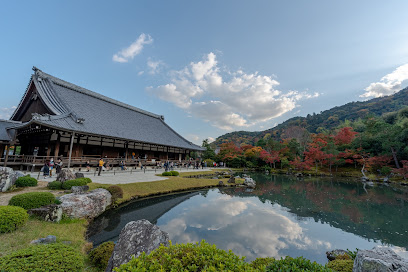
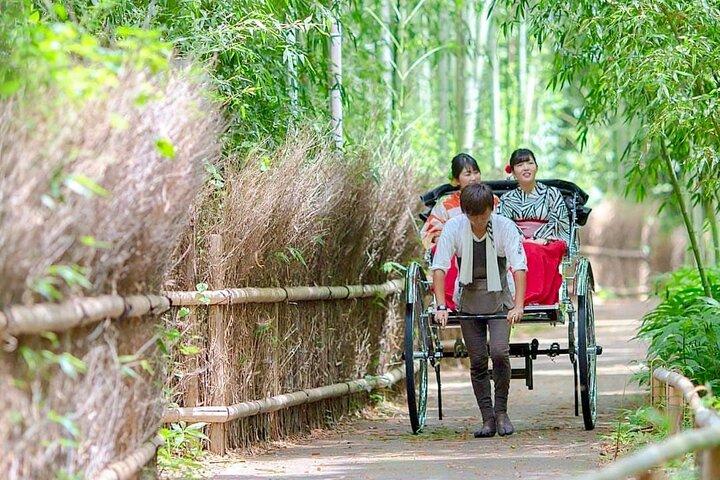
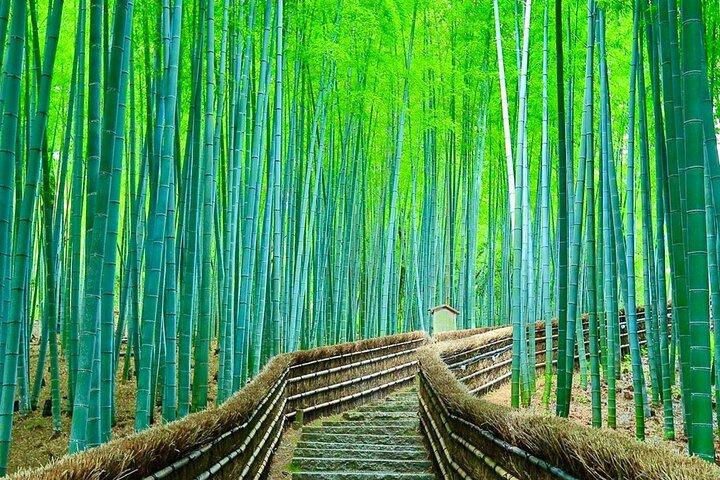
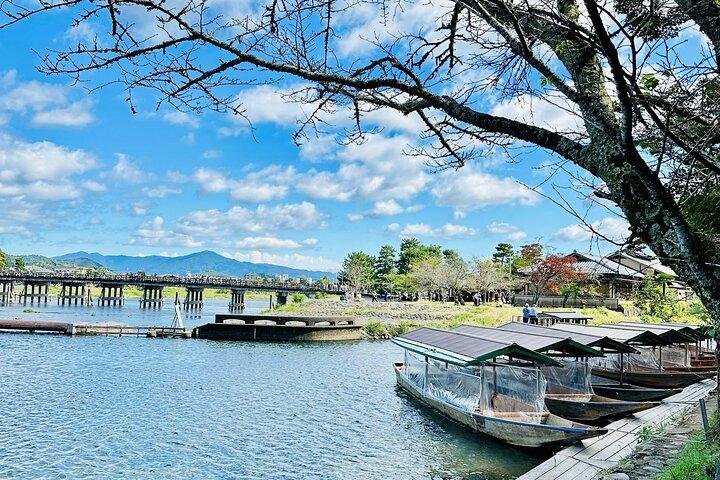
Arashiyama is the Togetsukyo Bridge, also known as the "Moon Crossing Bridge". It was most recently rebuilt in the 1930s after being created during the Heian Period (794-1185). The bridge appears especially lovely against the backdrop of the wooded slope. Adjacent to the bridge is a riverbank park dotted with scores of cherry trees. HAMMOOSE GROVES Nice walks and bicycle rides can be had along the walking routes that go through the bamboo trees. When there is a light wind and the long bamboo stalks softly move back and forth, the woods become very picturesque. Bamboo has been utilized for generations in local workshops to make a variety of goods, including mats, cups, boxes, and baskets.
60 minutes
Admission Not Included
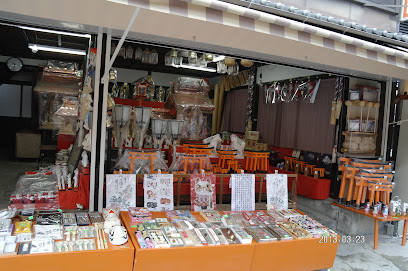
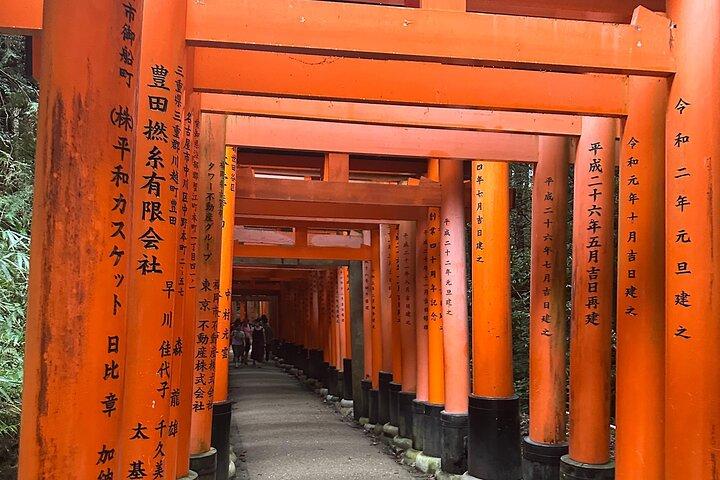
A significant Shinto shrine located in southern Kyoto is called Fushimi Inari Shrine (Fushimi Inari Taisha). It is well-known for the thousands of red torii gates that cross a system of paths that run behind the major structures. The paths lead into the forested area of the holy Mount Inari, which is located on the shrine grounds and rises to a height of 233 meters. Of the thousands of shrines devoted to Inari, the Shinto god of rice, Fushimi Inari is the most significant. Since foxes are believed to be Inari's messengers, there are numerous fox statues scattered across the shrine grounds. The history of Fushimi Inari Shrine dates back to a time before Kyoto became the capital in 794. While exploring the mountain paths is the main reason most international visitors come to Fushimi Inari Shrine,
60 minutes
Todai-ji Temple
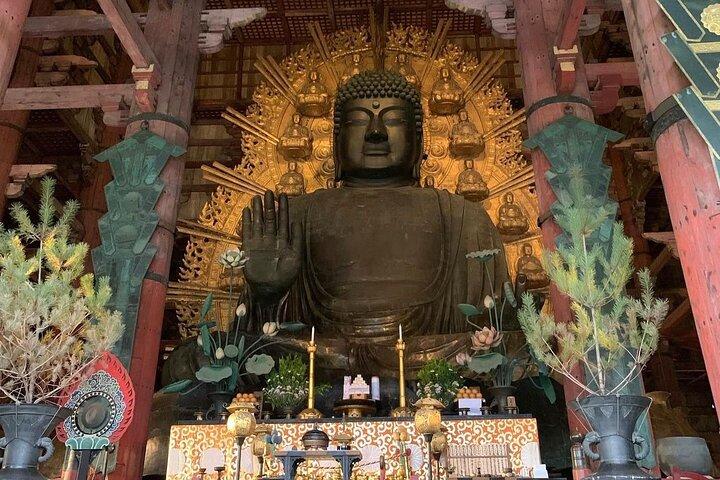
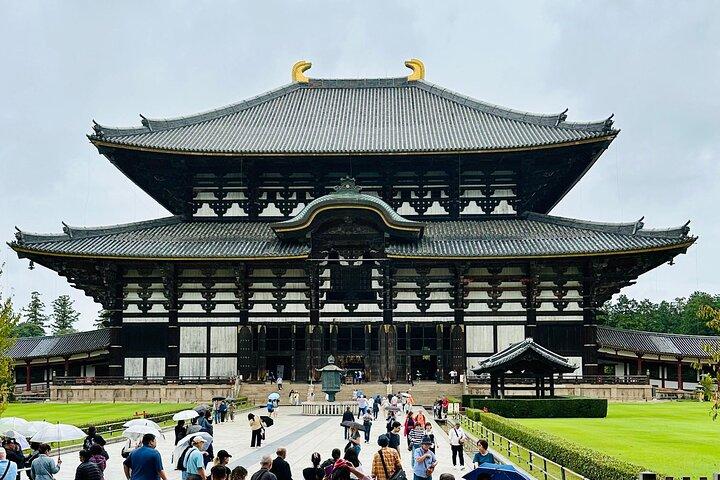
Todaiji Tōdaiji, "Great Eastern Temple") is one of Japan's most famous and historically significant temples and a landmark of Nara. The temple was constructed in 752 as the head temple of all provincial Buddhist temples of Japan and grew so powerful that the capital was moved from Nara to Nagaoka in 784 in order to lower the temple's influence on government affairs. Until recently, Todaiji's main hall, the Daibutsuden (Big Buddha Hall), held the record as the world's largest wooden building, despite the fact that the present reconstruction of 1692 is only two thirds of the original temple hall's size. The massive building houses one of Japan's largest bronze statues of Buddha (Daibutsu). The 15 meters tall, seated Buddha represents Vairocana and is flanked by two Bodhisattvas.
60 minutes
Admission Not Included
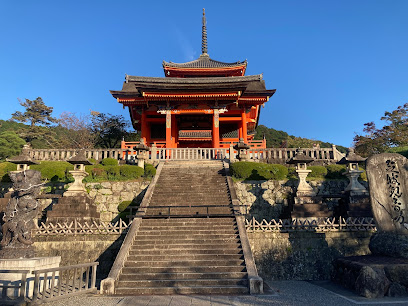
One of Japan's most well-known temples is Kiyomizudera, which translates to "Pure Water Temple". It got its name from the pristine waters of the Otowa Waterfall, which is located on the forested hillsides east of Kyoto, where it was established in 780. The temple established the Kita Hosso sect in 1965 after first being connected to the Hosso sect, one of the oldest schools of Japanese Buddhism. The temple was included as a UNESCO World Heritage Site in 1994. The most notable feature of Kiyomizudera is its wooden stage, which protrudes 13 meters over the surrounding hillside from the main hall. Visitors can enjoy a pleasant view of the many cherry and maple trees below, which burst into a sea of color, from the stage.
60 minutes
Admission Not Included
Kyoto Imperial Palace
The Kyoto Imperial Palace (Kyoto Gosho) used to be the residence of Japan's Imperial Family until 1868, when the emperor and capital were moved from Kyoto to Tokyo. It is located in the spacious Kyoto Imperial Park (Kyõto Gyoen), an attractive park in the center of the city that also encompasses the Sento Imperial Palace and a few other attractions. The current Imperial Palace was reconstructed in 1855 after it had burnt down and moved around town repeatedly over the centuries. The complex is enclosed by long walls and consists of several gates, halls and gardens. The enthronement ceremonies of Emperors Taisho and Showa were still held in the palace's main hall. Tokyo Imperial Palace is now used for enthronement ceremonies.
60 minutes
Admission Not Included
Gion
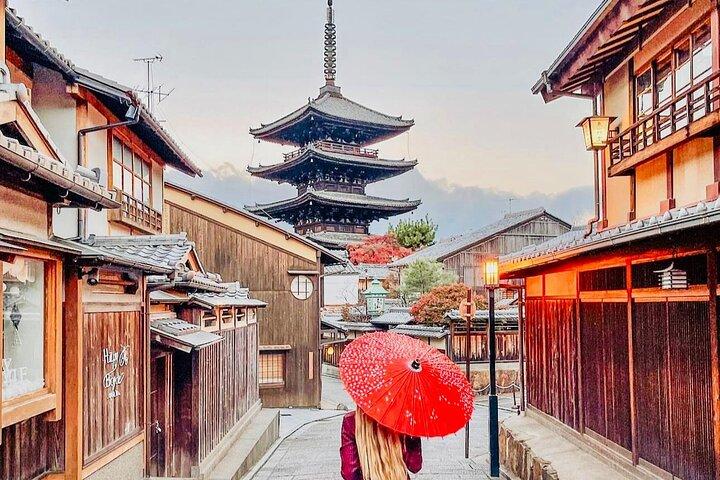
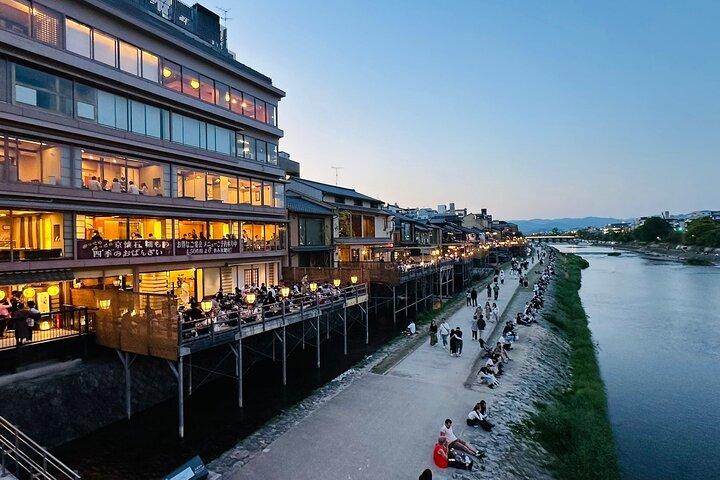
Gion, the most well-known geisha neighborhood in Kyoto, is situated along Shijo Avenue between the Kamo River to the west and Yasaka Shrine to the east. Shops, restaurants, and ochaya (teahouses) abound, offering entertainment by geiko (Kyoto's dialect for geisha) and maiko (geiko apprentices). Gion's significant concentration of classic wooden machiya merchant houses draws tourists. The homes were constructed with slender facades that are only five to six meters wide but extend up to twenty meters in from the street because property taxes were previously determined by street frontage. Hanami-koji Street, which runs from Shijo Avenue to Kenninji Temple, is the busiest section of Gion. The street and its side alleyways are lined with beautiful, lovely, and pricey places to eat.
60 minutes
Admission Not Included
The experience can be subject to change due to bad weather or unforseen circumstances. We always endeavour to give you the best possible experience.
Additional Information
-
 Public transportation options are available nearby
 -
Specialized infant seats are available
-
Suitable for all physical fitness levels
What our experts say
-
 Try the local specialties at Gion.
 -
Visit Nara Park early to see deer.
-
Consider the buffet lunch upgrade.
-
Explore Arashiyama's bamboo grove.
-
Wear comfortable shoes for walking.

More About this Experience
Introduction
Embark on a journey through the heart of Japan's rich history and culture with the Kyoto Osaka Kyoto and Nara Customized Private Guided Tour. This full-day experience promises to immerse you in the traditional beauty of Kyoto and Nara, offering a blend of iconic landmarks and hidden gems that will leave you enchanted.What to expect?
During this guided tour, you can expect to explore the picturesque Arashiyama district in Kyoto, known for its serene bamboo groves and stunning temples. Marvel at the golden splendor of the Kinkaku-ji temple before heading to Nara to encounter the friendly wild deer of Nara Park. With multiple pickup points and optional lunch upgrades available, this tour ensures a seamless and unforgettable experience.Who is this for?
This customized tour is perfect for travelers seeking an authentic and immersive experience of Japanese culture and history. Whether you are a solo adventurer, a couple on a romantic getaway, or a family looking to create lasting memories, this tour caters to a diverse range of interests and preferences. From nature lovers to history buffs, this experience is designed to captivate and inspire all who embark on it.Why book this?
Immerse yourself in the essence of Japan with this exclusive guided tour that takes you off the beaten path to discover the hidden treasures of Kyoto and Nara. Benefit from the expertise of a knowledgeable guide who will unveil the secrets of each location, providing insights and stories that bring the sites to life. With convenient pickup options, private transportation, and included entrance fees, this tour offers a hassle-free and enriching way to explore two of Japan's most iconic cities.Good to know
As you wander through the historic streets of Kyoto and Nara, be sure to keep your camera ready to capture the beauty and charm of each location. Take advantage of the complimentary snacks and bottled water provided during the tour to stay refreshed and energized throughout the day. Don't forget to wear comfortable shoes as you navigate the various sights and attractions, ensuring a pleasant and enjoyable experience from start to finish.Reviews
Travelers who have embarked on the Kyoto Osaka Kyoto and Nara Customized Private Guided Tour have raved about the personalized experience and in-depth knowledge shared by the tour guides. Many have praised the seamless organization of the tour, from pickup to drop-off, and have highlighted the convenience of having transportation and entrance fees included. Overall, reviews have been overwhelmingly positive, with visitors expressing their delight and satisfaction with the tour's itinerary and execution.Journals from our explorers at this location







This is a popular product and the date you are looking for just sold out. Next available date is
