

Free New Guinea Islands Region Travel Guide & Mobile App
Explore New Guinea Islands Region with free travel guides. Discover regional history, expert tips, proposed trips, and audio guides on web or mobile app.


Explore Papua New Guinea’s New Guinea Islands for volcanic scenery, coral reefs, wartime history and distinctive island cultures across remote tropical landscapes.
Read more about New Guinea Islands Region
When is the best time to visit New Guinea Islands Region?
Best: June–August · 29°C| Month | High (°C) | Rainfall (mm) |
|---|---|---|
| January | 30 | 250 |
| February | 30 | 230 |
| March | 30 | 250 |
| April | 30 | 260 |
| May | 30 | 270 |
| June (best) | 29 | 200 |
| July (best) | 29 | 190 |
| August (best) | 29 | 210 |
| September | 29 | 230 |
| October | 29 | 250 |
| November | 30 | 260 |
| December | 30 | 270 |
Getting to and around New Guinea Islands Region
How to get there
Transportation
Top city travel guides in New Guinea Islands Region
The cities of New Guinea Islands Region, and the easiest places to base yourself.
-

-

-


Swipe for more cities
Best attractions in New Guinea Islands Region
The region’s attractions are shaped by island geography and by the need to travel with local knowledge. In East New Britain, the Rabaul area combines volcanic scenery, wartime relics, harbour views and excursions to the Duke of York Islands, while Kokopo provides access to museums, markets and coastal communities. West New Britain is particularly associated with rainforest, diving and the reefs and islands of Kimbe Bay, where marine excursions reveal coral gardens, drop-offs and abundant tropical life. New Ireland offers a different rhythm, with Kavieng as a base for diving, surfing, fishing and boat trips, and routes south towards village landscapes and cultural traditions. Manus provides lagoons, forested islands and marine environments around Lorengau, while Bougainville combines beaches, rainforest, historical sites and locally guided journeys around Buka, Arawa and the island’s interior. Activities are often small-scale and weather-dependent, so visitors should value well-organised excursions over trying to assemble an improvised circuit.
-
Island
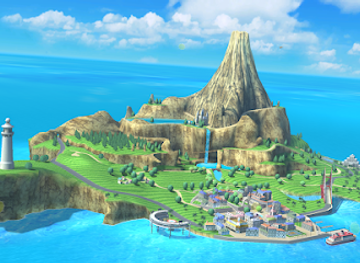
Wuhu Island
Experience the tranquil beauty of Wuhu Island in Papua New Guinea, where pristine beaches meet lush landscapes for an unforgettable escape.
-
Tourist attraction
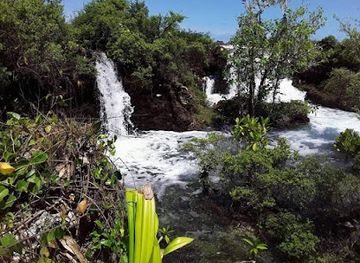
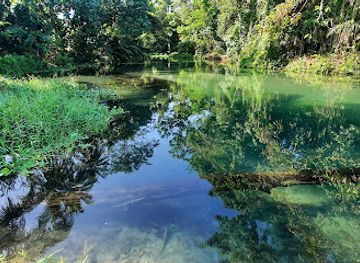
Halis Springs
Experience tranquility at Halis Springs, a hidden gem in New Ireland Province, where crystal-clear waters meet lush tropical landscapes.
-
Island
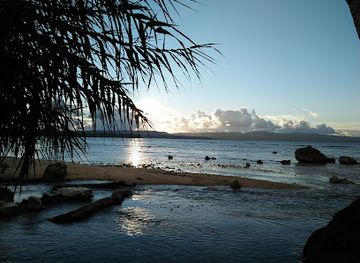
Nusa Island
Discover the untouched beauty of Nusa Island, a tranquil paradise in Papua New Guinea, perfect for relaxation, adventure, and vibrant marine life.
-
Tourist attraction
Vunela Martyrs Historical Site & WWII Japanese Tunnels
Discover the haunting history of Rabaul at the Vunela Martyrs Historical Site & WWII Japanese Tunnels, a tribute to bravery and resilience.

Best landmarks in New Guinea Islands Region
Mount Tavurvur and Mount Vulcan form the most recognisable volcanic landmarks of East New Britain, standing beside the former Rabaul township and its ash-covered landscapes. Their 1994 eruptions reshaped the area and remain central to its visual identity, although access requires attention to current volcanic advice. Rabaul’s Simpson Harbour, enclosed by volcanic ridges and former military installations, is another defining geographical and historical feature. In West New Britain, the islands and reef systems of Kimbe Bay make a natural landmark of a different kind, with clear tropical waters set against forested shores and volcanic terrain. Kavieng’s harbour and offshore islands express New Ireland’s maritime character, while the long island itself forms a distinctive coastal landscape of villages, reefs and rainforest. Bougainville’s Crown Prince Range and the forested slopes around the island’s interior provide a powerful contrast to the low coastal settlements of Buka and Arawa. Across the region, wartime tunnels, memorial sites and remnants around Rabaul are significant physical reminders of the Pacific War, but should be entered only with expert local guidance.
-
 Resort hotel
Kokopo Beach Bungalow Resort
Discover the serene beauty and vibrant culture of Kokopo Beach Bungalow Resort, your gateway to adventure in Papua New Guinea.
-
Island
New Britain
Explore New Britain, a stunning island in Papua New Guinea known for its beautiful beaches, lush rainforests, and vibrant local culture, perfect for an adventurous getaway.
-
Island
Lihir Island
Discover Lihir Island: A Tropical Paradise in Papua New Guinea with Stunning Landscapes, Rich Culture, and Vibrant Marine Life.
-
Museum
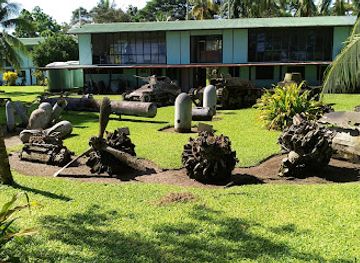
Kokopo War Museum
Explore the rich military history of Papua New Guinea at Kokopo War Museum, where artifacts and stories reveal the past.
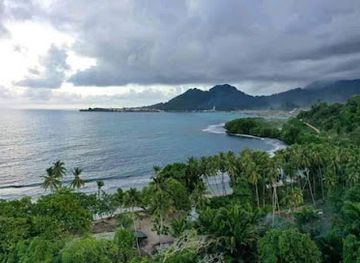
Explore New Guinea Islands Region on the map
Plan your trip on one map. See where the top cities, national parks and sights are, and book hotels and experiences in a few clicks.
Best hotels in New Guinea Islands Region
Best restaurants in New Guinea Islands Region
Dining in the New Guinea Islands Region is closely connected to village agriculture, fishing and the supplies available in each island town. Fresh fish, reef seafood, shellfish where locally permitted, coconut, taro, sweet potato, bananas, sago and greens appear in many home-style meals, while chicken, rice and imported provisions are common in hotels and town restaurants. Kokopo, Rabaul, Kimbe, Kavieng and Lorengau have the widest choice of restaurants, cafés, hotel dining rooms and informal food stalls, though opening arrangements may be limited outside peak periods. Markets are useful places to see seasonal produce and buy fruit, but visitors should take sensible care with food and drinking water. Resort kitchens and lodges often combine Papua New Guinean ingredients with Australian, Asian or international cooking, particularly in areas serving divers and anglers. In villages, meals or cooking demonstrations should be arranged through a host or guide, with prices and expectations agreed beforehand rather than assumed.
-
Island
New Guinea
Explore New Guinea: A tropical paradise with breathtaking landscapes, rich biodiversity, and vibrant indigenous cultures waiting to be discovered.
-
Cafe
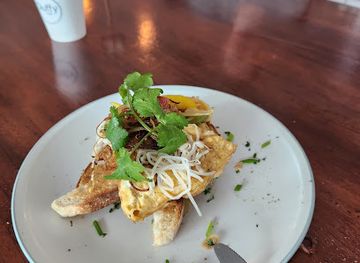
Duffy PNG Cafe Gabaka St
Discover the flavors of Papua New Guinea at Duffy PNG Cafe in Port Moresby - where local meets international in every bite.
-
Resort hotel
Rapopo Plantation Resort
Experience unparalleled beauty and comfort at Rapopo Plantation Resort – your gateway to paradise in Papua New Guinea.
-
Restaurant
Alibi Bar & Grill
Experience delightful dining at Alibi Bar & Grill in Port Moresby with local flavors and vibrant atmosphere.

Best bars in New Guinea Islands Region
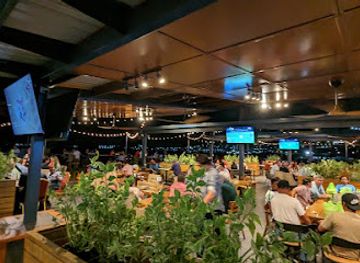
Evening life is modest and concentrated in hotel bars, restaurants, clubs attached to larger accommodation and the established town centres of Kokopo, Rabaul, Kimbe and Kavieng. Port town pubs and hotel lounges are the most dependable places for a drink, while some venues offer music or occasional dancing rather than a permanent nightclub programme. In smaller communities on Manus, New Ireland, West New Britain and Bougainville, entertainment is more likely to centre on family gatherings, community events or a lodge restaurant, and venues may close early. Visitors should use accommodation-arranged transport after dark, drink carefully and respect local expectations around public behaviour. Beer and spirits are widely available through licensed businesses, but alcohol should never be treated as the main route to cultural interaction; guided village visits, local performances and conversations arranged with consent provide more meaningful evening experiences.
-
Resort hotel
Loloata Island Resort
Discover the enchanting Loloata Island Resort, where luxury meets nature in a breathtaking island escape with stunning views and vibrant marine life.
-
Resort hotel
Rapopo Plantation Resort
Discover the tropical beauty and cultural richness of Rapopo Plantation Resort, your ideal getaway in East New Britain Province.
-
Restaurant
Alibi Bar & Grill
Discover the vibrant culinary scene at Alibi Bar & Grill in Port Moresby, where local flavors meet international cuisine in a lively atmosphere.
-
Bar
Jackson's Bar Restaurant & Gaming
Discover the vibrant dining and gaming scene at Jackson's Bar Restaurant & Gaming in Port Moresby, where local flavors meet exhilarating entertainment.
Best nightclubs in New Guinea Islands Region
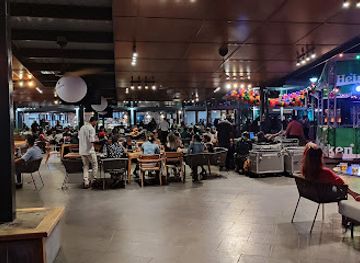
Evening life is modest and concentrated in hotel bars, restaurants, clubs attached to larger accommodation and the established town centres of Kokopo, Rabaul, Kimbe and Kavieng. Port town pubs and hotel lounges are the most dependable places for a drink, while some venues offer music or occasional dancing rather than a permanent nightclub programme. In smaller communities on Manus, New Ireland, West New Britain and Bougainville, entertainment is more likely to centre on family gatherings, community events or a lodge restaurant, and venues may close early. Visitors should use accommodation-arranged transport after dark, drink carefully and respect local expectations around public behaviour. Beer and spirits are widely available through licensed businesses, but alcohol should never be treated as the main route to cultural interaction; guided village visits, local performances and conversations arranged with consent provide more meaningful evening experiences.
-
Night club
The Gold Club
Discover the vibrant nightlife of Port Moresby at The Gold Club, where music, dance, and fun come together for an unforgettable experience.
-
Night club
Club Illusion PNG
Discover Club Illusion PNG: Port Moresby's ultimate nightlife destination for dancing, live music, and unforgettable experiences.
-
Night club
Club Regal
Vibrant nightlife awaits at Club Regal in Port Moresby, where music, drinks, and dance unite for an unforgettable experience.
-
Night club
BlackOut Night Club
Discover the vibrant nightlife at BlackOut Night Club in Port Moresby, where music, dancing, and unforgettable memories await.


Best shops in New Guinea Islands Region
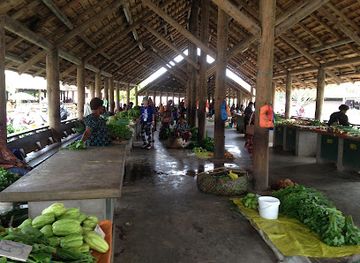
Shopping is practical and locally focused rather than centred on large retail complexes. Markets in Kokopo, Rabaul, Kavieng, Kimbe, Lorengau, Buka and other main settlements sell seasonal fruit, vegetables, cooked food and household goods, while small shops carry basic provisions and imported products. Appropriate souvenirs include locally made carvings, woven items, shell work and bilum bags, but visitors should buy only through reputable sellers and confirm that materials have been legally and ethically sourced. Malagan-inspired art and New Ireland carving can be culturally significant, so it is courteous to ask about meaning, provenance and permission before purchasing or photographing pieces. Bougainvillean and New Britain crafts vary between communities, and village-based sales may be arranged through a guide rather than found in a formal shop. Cash in kina is essential beyond larger hotels, and travellers should avoid buying archaeological objects, wartime relics, coral, protected shells or items that may have customary or cultural restrictions.
-
Shopping mall
Vision City Mega Mall
Discover a world of shopping, dining, and entertainment at Vision City Mega Mall in Port Moresby, the ultimate destination for tourists and locals.
-
Grocery store
Stop and Shop Waigani Central
Discover local flavors and fresh produce at Stop and Shop Waigani Central, your go-to grocery store in Port Moresby.
-
Supermarket
Tropicana Shopping Center RETAIL
Discover diverse shopping and dining experiences at Tropicana Shopping Center in Kokopo, East New Britain Province, a vibrant hub for locals and tourists.
-
Fresh food market
Rabaul Market
Experience the vibrant flavors and rich culture at Rabaul Market, East New Britain's bustling hub of fresh food and local crafts.
Get your free copy of our complete guide to New Guinea Islands Region, delivered straight to you.
Everything on this page, from attractions and restaurants to essentials and local phrases, in one PDF you can read offline, print or share.
Already have an account? Sign in
Your New Guinea Islands Region guide is ready.
We'll send it to · Not you? Sign out

Getting your guide ready…
We are putting together a fresh copy of the New Guinea Islands Region guide. This can take up to a minute.
This can take a few moments. If your browser asks, choose Allow so the download can start. You'll find the guide in your Downloads folder.
Nothing happened? Download it again
Sorry, the guide is taking longer than usual. Please try again in a minute, or get it by email instead.
New Guinea Islands Region essentials
Currency and Payment
Safety
Emergency Situations
Do's and Don'ts
Local Tips
From Eve
Local phrases worth knowing
You don't need to get them perfect. A few words go a long way, and locals appreciate the effort.
Basics
| English | Local | Say it |
|---|---|---|
| Hello | Kia ora | [kee-ah or-ah] |
| Goodbye | Sori | [soh-ree] |
| Yes | Ayo | [ah-yo] |
| No | Oro | [oh-roh] |
| Please/You’re welcome | Taim yu laik | [tie-m yoo like] |
| Thank you | Tenkyu | [ten-kyoo] |
| Excuse me/Sorry | Sori | [soh-ree] |
| How are you? | Yu orait? | [yoo oh-rite] |
| Fine. And you? | Orait. Na yu? | [oh-rite. nah yoo] |
| Do you speak English? | Yu tokim Inglis? | [yoo toh-kim ing-lis] |
| I don't understand | Mi no save | [mee noh sah-veh] |
Eating & Drinking
| English | Local | Say it |
|---|---|---|
| I’d like to see the menu, please | Mi laik lukim menu, plis | [mee like loo-kim meh-noo, plees] |
| I don’t eat meat | Mi no kaikai mit | [mee noh kai-kai meet] |
| Cheers! | Kia ora! | [kee-ah or-ah] |
| I would like to pay, please | Mi laik payim, plis | [mee like pay-im, plees] |
Emergencies
| English | Local | Say it |
|---|---|---|
| Help! | Help! | [help] |
| Go away! | Go we! | [go wee] |
| Call the Police! | Kolim Polisi! | [koh-lim poh-lee-see] |
| Call a doctor! | Kolim dokta! | [koh-lim dok-tah] |
| I’m lost | Mi lus | [mee loos] |
| I’m ill | Mi sik | [mee seek] |
Shopping
| English | Local | Say it |
|---|---|---|
| I’d like to buy... | Mi laik buy... | [mee like bye...] |
| I’m just looking | Mi lukim tasol | [mee loo-kim tah-sol] |
| How much is it? | Olsem hamas? | [ol-sem hah-mas] |
| That’s too expensive | Dat i tumas | [daht ee too-mas] |
| Can you lower the price? | Yu inap daunim prais? | [yoo ee-nahp down-im pryce] |
Time & Numbers
| English | Local | Say it |
|---|---|---|
| What time is it? | Wanem taim? | [wah-nem tie-m] |
| It’s one o'clock | Em i wan klok | [em ee wan klok] |
| Half past (10) | Haf past (10) | [haf pahst (10)] |
| Morning | Moning | [moh-ning] |
| Afternoon | Aftanoon | [af-tah-noon] |
| Evening | Ivin | [ee-vin] |
| Yesterday | Yestede | [yeh-steh-deh] |
| Today | Tude | [too-deh] |
| Tomorrow | Tumoro | [too-moh-roh] |
| 1 | Wan | [wahn] |
| 2 | Tu | [too] |
| 3 | Tri | [tree] |
| 4 | Foa | [foh-ah] |
| 5 | Faiv | [fahyv] |
| 6 | Siks | [siks] |
| 7 | Sev | [sev] |
| 8 | Eit | [ait] |
| 9 | Nayn | [nayn] |
| 10 | Ten | [ten] |
Transport & Directions
| English | Local | Say it |
|---|---|---|
| Where's a/the...? | Wea na/wan...? | [weh-ah nah/wahn] |
| What's the address? | Wanem adres? | [wah-nem ah-dres] |
| Can you show me (on the map)? | Yu inap showim mi (long map)? | [yoo ee-nahp show-im mee (long mahp)] |
| When's the next (bus)? | When next (bus)? | [when next (bus)] |
| A ticket (to ....) | Wan tiket (go ....) | [wahn tee-ket (go ....)] |
History of New Guinea Islands Region
Early settlement and island seafaring
The islands east of mainland New Guinea have been inhabited for many thousands of years. Communities adapted to very different environments, from volcanic slopes and rainforest to coral atolls and sheltered lagoons, developing sophisticated knowledge of seasonal winds, reefs, gardens and forest resources. Long-distance movement by canoe connected islands and helped circulate shell valuables, tools, foodstuffs and cultural ideas. Archaeological evidence at sites including those associated with the Lapita cultural horizon in the Bismarck Archipelago forms part of the wider history of Austronesian and Papuan settlement in the western Pacific.
European contact and the Bismarck Archipelago
European navigators charted parts of the island region from the sixteenth century, but sustained colonial intervention came later. Germany established control over the Bismarck Archipelago in the late nineteenth century, including New Britain and New Ireland, while other island territories followed different colonial histories. German influence is still visible in the region’s early administrative and plantation development, although colonial rule also involved coercion, labour exploitation and disruption of established societies. Missionaries, traders and recruiters became significant agents of change during this period.
Australian administration and the growth of plantations
After the First World War, Australia administered the former German territories as part of the Mandated Territory of New Guinea. Copra and later other plantation commodities became central to the colonial economy, particularly in New Britain and New Ireland. Roads, ports, missions and administrative stations expanded unevenly, often serving commercial priorities rather than the needs of dispersed island communities. Cash economies and Christianity grew alongside continuing customary authority, local exchange systems and village-based agriculture.
The Second World War in the islands
The New Guinea Islands were heavily affected by the Pacific War. Japanese forces occupied Rabaul in 1942 and developed it into a major base, while Allied bombing and later campaigns transformed the surrounding landscape. Tunnels, aircraft wrecks, coastal fortifications and military relics remain around the former Rabaul area, although they should be visited with specialist guidance because unexploded ordnance and unstable structures can present hazards. Bougainville and other islands also saw intense wartime activity, forced movement and severe pressure on local communities.
Volcanic disasters and regional transformation
Volcanism has repeatedly shaped settlement and economic life in the region. The simultaneous eruptions of Tavurvur and Vulcan near Rabaul in 1994 destroyed much of the town and led to Kokopo becoming the principal administrative centre of East New Britain. Earlier eruptions and ashfall have also affected gardens, roads and coastal communities elsewhere. These events illustrate the continuing geological forces beneath the Bismarck volcanic arc and explain the combination of fertile soils, dramatic scenery and real environmental risk found on several islands.
Bougainville conflict and political change
Bougainville’s modern history was profoundly affected by the Panguna copper mine, which opened in the 1970s and became a major source of revenue for Papua New Guinea while generating disputes over land, environmental damage and the distribution of benefits. Armed conflict began in the late 1980s and caused extensive disruption before the 2001 Bougainville Peace Agreement. A 2019 referendum recorded overwhelming support for greater autonomy and independence, but its result is subject to a political process with the national government. Travellers should approach this history with sensitivity and seek current local advice.
Contemporary island economies and conservation
Today the region combines subsistence and commercial agriculture, fisheries, small-scale enterprise, public services and a selective tourism industry. Diving, surfing, sport fishing, volcano tourism and cultural visits provide income in particular areas, while marine conservation initiatives and community-led resource management seek to protect reefs and coastal habitats. Access remains uneven, especially on Manus and in remote parts of Bougainville and New Ireland. The region’s future is closely connected to how communities balance customary land and sea rights, development, conservation and improved transport.
New Guinea Islands Region in Photos
Browse through our photo collection highlighting the charm and character of the destination.
Neighbouring regions of New Guinea Islands Region
The closest regions to New Guinea Islands Region, if you have time for more than one.
-

-

-

-

-


Swipe for more regions

