

Free Chattahoochee Valley Travel Guide & Mobile App
Explore Chattahoochee Valley with free travel guides. Discover regional history, expert tips, proposed trips, and audio guides on web or mobile app.




Explore Alabama’s Chattahoochee Valley for riverfront walks, Muscogee and military history, Southern food, and easy access to Phenix City and Columbus.
Read more about Chattahoochee Valley
When is the best time to visit Chattahoochee Valley?
Best: April–May, October · 24–29°C| Month | High (°C) | Rainfall (mm) |
|---|---|---|
| January | 14 | 100 |
| February | 17 | 106 |
| March | 21 | 115 |
| April (best) | 24 | 95 |
| May (best) | 29 | 105 |
| June | 33 | 110 |
| July | 34 | 135 |
| August | 34 | 140 |
| September | 31 | 115 |
| October (best) | 26 | 100 |
| November | 20 | 105 |
| December | 16 | 115 |
Getting to and around Chattahoochee Valley
How to get there
Transportation
Top city travel guides in Chattahoochee Valley
The cities of Chattahoochee Valley, and the easiest places to base yourself.
-

-

-

-

-


Swipe for more cities
Destinations in Chattahoochee Valley
Resorts, valleys and scenic spots worth a trip of their own.
-

-

-

-
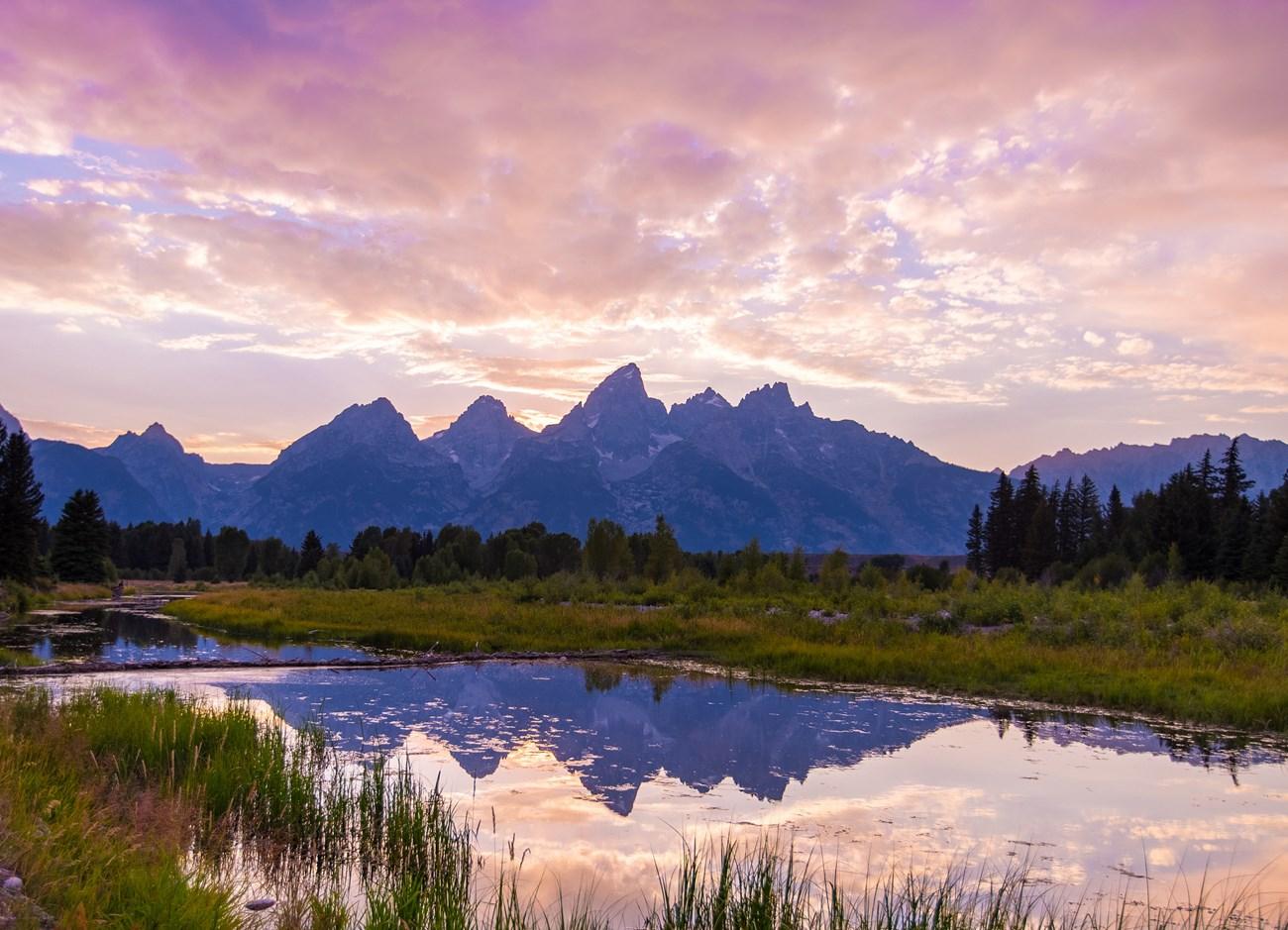 Tuskegee National Forest
 in Alabama offers pine woods, quiet trails, wildlife, fishing and nearby Tuskegee African American heritage sites.
Tuskegee National Forest
Tuskegee National Forest in Alabama offers pine woods, quiet trails, wildlife, fishing and nearby Tuskegee African American heritage sites.


Swipe for more destinations
Best attractions in Chattahoochee Valley
The Alabama Chattahoochee Valley’s attractions combine riverfront recreation, military history, local urban heritage and open countryside. In Phenix City, the Alabama section of the Chattahoochee RiverWalk provides space for walking, cycling and observing the river opposite Columbus, although visitors should distinguish it from the adjoining Georgia section. Fort Mitchell Historic Site, south of Phenix City, is the region’s most important heritage destination, bringing together archaeological remains, frontier history, a reconstructed fort setting and the Fort Mitchell National Cemetery. Rural Russell County offers opportunities for scenic driving, fishing and wildlife observation, subject to local access and seasonal conditions. Within the wider cross-border area, museums, performing-arts venues and military attractions in Columbus, Georgia can add depth to an itinerary, but they are outside Alabama. The valley is not a concentrated resort destination; its appeal lies in combining a modest river city with significant historical sites and a changing landscape of woodland, farmland and water. Visitors seeking more formal museum experiences may use the Alabama region as a base while checking current details for institutions across the state line.
-
Tourist attraction
Flat Rock Park
Discover Columbus's natural beauty at Flat Rock Park: a 250-acre haven with trails, playgrounds, a fishing lake, and scenic rock formations.
-
Tourist attraction
Chattahoochee Nature Center
Explore Georgia's natural beauty at the Chattahoochee Nature Center. Discover trails, wildlife, and educational exhibits for all ages in Roswell, GA.
-
Tourist attraction
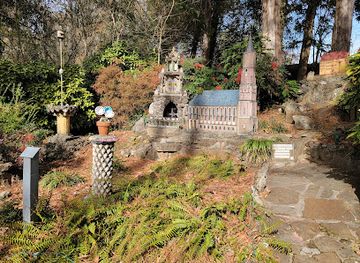
Ave Maria Grotto
Discover a miniature world of faith and architectural wonders at Ave Maria Grotto, a unique landmark in Cullman, Alabama.
-
Tourist attraction
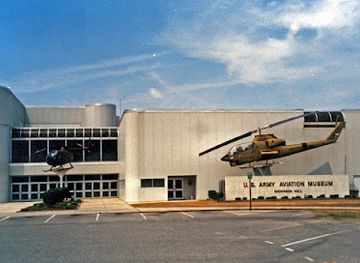
Army Aviation Museum Foundation
Explore the history of Army aviation with a vast collection of aircraft and exhibits at the U.S. Army Aviation Museum in Fort Novosel, Alabama.
Best landmarks in Chattahoochee Valley
The Chattahoochee River is the defining natural landmark of the region, forming the Alabama–Georgia boundary and giving Phenix City its distinctive relationship with Columbus. Its wooded banks, islands and changing waterline are best understood from public riverfront paths and established viewpoints rather than from hazardous informal access points. Fort Mitchell Historic Site is the principal historic landmark on the Alabama side, marking the location of an important nineteenth-century military post and interpreting the region’s Creek War, Muscogee and removal histories. Fort Mitchell National Cemetery adds a later military layer, with ordered rows of graves contrasting with the surrounding rural landscape. In Phenix City, the riverfront and bridges are visible symbols of a city whose development has always been tied to crossing, trade and neighbouring Columbus. Historic buildings and civic spaces in the wider urban area contribute to the valley’s character, though visitors should distinguish Alabama landmarks from the more numerous notable structures on the Georgia side of the river.
-
Historical landmark
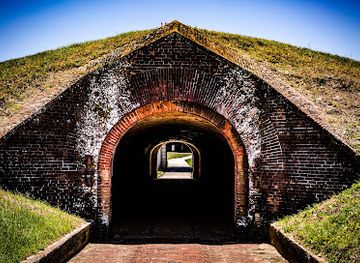
Fort Morgan State Historic Site
Explore a historic military fort on the Alabama Gulf Coast, offering history, nature, and scenic views of Mobile Bay.
-
State park
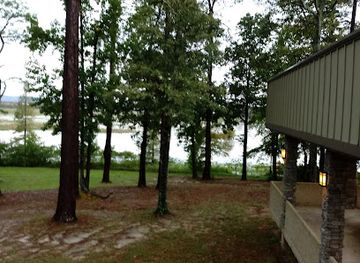
Lakepoint State Park
Discover Lakepoint State Park: Alabama's lakeside gem offering fishing, hiking, wildlife, and Southern charm on the beautiful Lake Eufaula.
-
Historical place
Etowah Indian Mounds State Historic Site
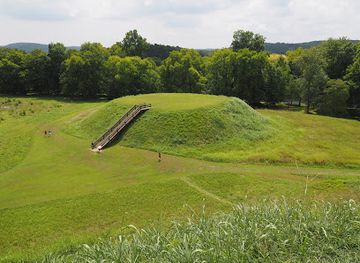
Explore ancient Native American history at Etowah Indian Mounds, Georgia's best-preserved Mississippian culture site, with mounds, trails, and a museum.
-
Historical landmark
The Columbus Museum
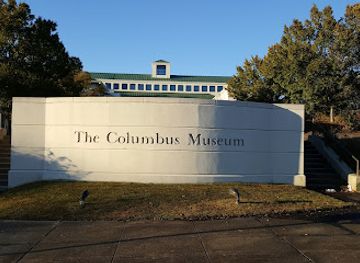
Discover American art and regional history at The Columbus Museum, a cultural treasure in the heart of Georgia. Always changing, always free!
Explore Chattahoochee Valley on the map
Plan your trip on one map. See where the top cities, national parks and sights are, and book hotels and experiences in a few clicks.
Best hotels in Chattahoochee Valley
Best restaurants in Chattahoochee Valley
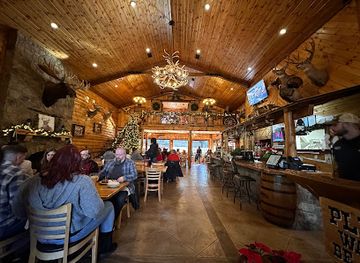
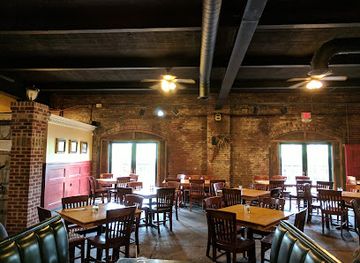
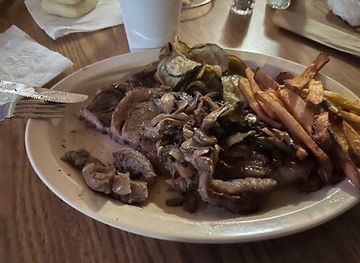
Dining in the Alabama Chattahoochee Valley reflects the broader food culture of the Southeast, with barbecue, fried catfish, burgers, fried chicken, biscuits, greens and other Southern comfort food widely represented. Phenix City’s casual restaurants and family-run eateries are practical places to look for generous portions and familiar regional cooking, while cafés and bakeries provide breakfast and lunch options. Along the wider valley, seafood and river fish appear alongside locally common pork and poultry dishes, and pecans, peaches and seasonal vegetables feature in markets and desserts when available. The area is better known for informal dining and dependable family restaurants than for a tightly defined regional cuisine. Visitors can also find nationally familiar chains around major roads, while independent establishments offer a more local sense of place. Check current opening arrangements, particularly when travelling to smaller communities or planning a meal around a historic site. Across the river, Columbus has a broader dining selection, but it belongs to Georgia rather than the Alabama region.
-
Hamburger
Rattlesnake Saloon
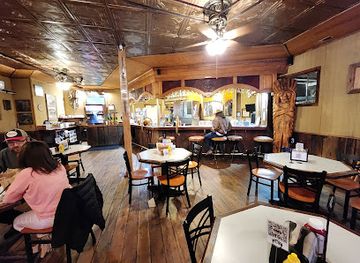
Discover the charm of Rattlesnake Saloon in Tuscumbia - where delicious hamburgers meet breathtaking natural beauty.
-
American
Supper Heroes
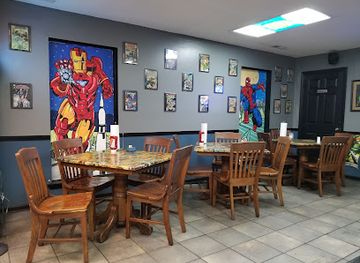
Discover Supper Heroes in Huntsville, AL – where comfort food meets creativity in a fun atmosphere perfect for families and friends.
-
Restaurant
Bama Bucks
Experience delightful dining at Bama Bucks in Sardis City - where delicious meals meet charming animal encounters.
-
American
Freight House Restaurant
Experience authentic American cuisine at Freight House Restaurant in Hartselle - where flavor meets Southern hospitality.
Best bars in Chattahoochee Valley
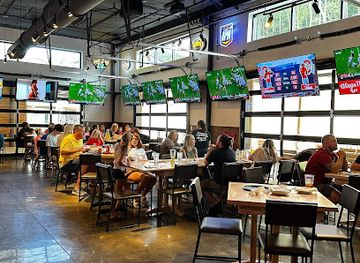
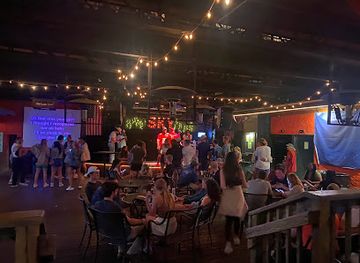
Evenings in the Alabama Chattahoochee Valley centre on restaurants, neighbourhood bars, sports-oriented venues and traditional pubs rather than a large, concentrated nightclub district. Phenix City offers the main Alabama-side choice of casual places to meet, while the adjoining Columbus area in Georgia provides a wider selection of bars, live music and late-evening entertainment. Riverfront areas can be pleasant for an early evening walk, but nightlife should not be assumed to continue late or operate uniformly through the week. Local breweries, cocktail-led venues and live performances may be available, though individual businesses and schedules change. Rural Russell County is quieter, with evening activity generally focused on dining, private gatherings and community events. Visitors should arrange a safe return across the state line, avoid driving after drinking and check transport availability before choosing a venue away from the urban centre.
-
Bar
Taco Mac Pelham
Experience the ultimate sports bar dining at Taco Mac Pelham, where delicious American cuisine meets a vibrant game day atmosphere.
-
American
Dukes Backwater Supper Club
Experience authentic Southern comfort food at Dukes Backwater Supper Club in Valley, Alabama - where hospitality meets delicious dining.
Best nightclubs in Chattahoochee Valley
Evenings in the Alabama Chattahoochee Valley centre on restaurants, neighbourhood bars, sports-oriented venues and traditional pubs rather than a large, concentrated nightclub district. Phenix City offers the main Alabama-side choice of casual places to meet, while the adjoining Columbus area in Georgia provides a wider selection of bars, live music and late-evening entertainment. Riverfront areas can be pleasant for an early evening walk, but nightlife should not be assumed to continue late or operate uniformly through the week. Local breweries, cocktail-led venues and live performances may be available, though individual businesses and schedules change. Rural Russell County is quieter, with evening activity generally focused on dining, private gatherings and community events. Visitors should arrange a safe return across the state line, avoid driving after drinking and check transport availability before choosing a venue away from the urban centre.
-
Night club
Skybar Café
Experience the vibrant nightlife at Skybar Café, Auburn's premier night club and bar offering stunning views and a lively atmosphere.
-
Karaoke bar
Sissy's Place
Experience the vibrant nightlife at Sissy's Place in Phenix City, where karaoke meets live music for an unforgettable evening.
-
Lounge
Hideaway Lounge
Experience the vibrant nightlife and cozy ambiance at Hideaway Lounge in Columbus, GA, perfect for a night out or a relaxing evening with friends.
-
Dance club
Ok Corral
Discover the energetic nightlife of Ok Corral, Huntsville’s top dance club, where music, dancing, and fun meet in a vibrant atmosphere.


Best shops in Chattahoochee Valley
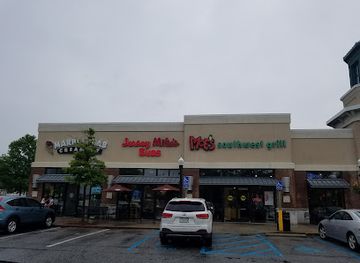
Shopping in the Alabama Chattahoochee Valley is centred on practical retail, everyday services, independent businesses and food rather than a specialised luxury district. Phenix City provides the main Alabama-side high-street and commercial options, with local shops, cafés and service businesses spread through the urban area and along major roads. Visitors looking for regional gifts can seek Alabama-made foods, sauces, preserves, pecans, books on local history and small craft items, checking provenance rather than assuming every Southern-themed product is locally produced. Farmers’ markets and seasonal produce stalls may offer vegetables, baked goods and other local products, but their locations and schedules can change. Antique and second-hand shopping is more likely to be found through individual businesses than a single dedicated quarter. Columbus, Georgia, across the river, has a broader retail offer and may be useful for additional shopping, but it is outside Alabama and should be treated as a neighbouring commercial centre rather than part of the region’s Alabama shopping landscape.
-
Shopping mall
Tiger Town Outdoor Shopping Center
Discover the vibrant shopping and dining experience at Tiger Town Outdoor Shopping Center in Opelika, Alabama, where every visit is an adventure.
-
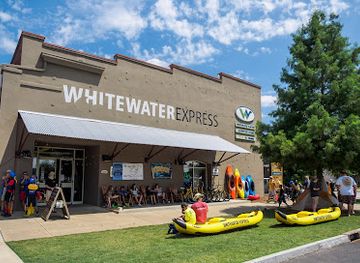
Raft trip outfitter
Whitewater Express
Discover thrilling outdoor adventures at Whitewater Express in Columbus, Georgia – your gateway to whitewater rafting, kayaking, and cycling experiences.
-
Cafe
Iron Bank Coffee Co.
Experience the rich flavors and cozy atmosphere at Iron Bank Coffee Co., Columbus's favorite spot for coffee and breakfast delights.
-
Shopping mall
Vinings Jubilee
Explore Vinings Jubilee, an upscale shopping destination in Atlanta with unique boutiques, delicious dining, and vibrant community events.
Get your free copy of our complete guide to Chattahoochee Valley, delivered straight to you.
Everything on this page, from attractions and restaurants to essentials and local phrases, in one PDF you can read offline, print or share.
Already have an account? Sign in
Your Chattahoochee Valley guide is ready.
We'll send it to · Not you? Sign out

Getting your guide ready…
We are putting together a fresh copy of the Chattahoochee Valley guide. This can take up to a minute.
This can take a few moments. If your browser asks, choose Allow so the download can start. You'll find the guide in your Downloads folder.
Nothing happened? Download it again
Sorry, the guide is taking longer than usual. Please try again in a minute, or get it by email instead.
Chattahoochee Valley essentials
Currency and Payment
Safety
Emergency Situations
Do's and Don'ts
Local Tips
From Eve
Local phrases worth knowing
You don't need to get them perfect. A few words go a long way, and locals appreciate the effort.
Basics
| English | Local | Say it |
|---|---|---|
| Hello | Howdy | [Ha-dee] |
| Goodbye | See ya | [See yah] |
| Yes | Yup | [Yup] |
| No | Naw | [Naw] |
| Please/You're welcome | Thank ya | [Than-kee yah] |
| Thank you | Thanks | [Thanks] |
| Excuse me/Sorry | Pardon me | [Par-dun mee] |
| How are you? | How ya doin'? | [How ya doin'?] |
| Fine. And you? | Good. And you? | [Good. An' you?] |
| Do you speak English? | You speakin' English? | [Yoo speakin' English?] |
| I don't understand | I ain't gettin' it | [I ain't gettin' it] |
Eating & Drinking
| English | Local | Say it |
|---|---|---|
| I'd like to see the menu, please | Can I see the menu, please? | [Can I see th' menu, please?] |
| I don't eat meat | I don't eat no meat | [I don't eat no meat] |
| Cheers! | Cheers! | [Cheers!] |
| I would like to pay, please | Can I pay now, please? | [Can I pay now, please?] |
Emergencies
| English | Local | Say it |
|---|---|---|
| Help! | Help! | [Help!] |
| Go away! | Leave me be! | [Leave me be!] |
| Call the Police! | Call the cops! | [Call th' cops!] |
| Call a doctor! | Get a doctor! | [Get a doctor!] |
| I'm lost | I’m lost | [I’m lost] |
| I'm ill | I ain't feelin' right | [I ain't feelin' right] |
Shopping
| English | Local | Say it |
|---|---|---|
| I'd like to buy... | I wanna buy... | [I wanna buy...] |
| I'm just looking | Just lookin' | [Just lookin'] |
| How much is it? | How much is this? | [How much is this?] |
| That's too expensive | That's way too high | [That's way too high] |
| Can you lower the price? | Can ya bring down the price? | [Can ya bring down th' price?] |
Time & Numbers
| English | Local | Say it |
|---|---|---|
| What time is it? | What time is it? | [What time is it?] |
| It's one o'clock | It's one o'clock | [It's one o'clock] |
| Half past (10) | Half past ten | [Half past ten] |
| Morning | Mornin' | [Mornin'] |
| Afternoon | Afternoon | [Afternoon] |
| Evening | Evenin' | [Evenin'] |
| Yesterday | Yesterday | [Yesterday] |
| Today | Today | [Today] |
| Tomorrow | Tomorrow | [Tomorrow] |
| 1 | One | [One] |
| 2 | Two | [Two] |
| 3 | Three | [Three] |
| 4 | Four | [Four] |
| 5 | Five | [Five] |
| 6 | Six | [Six] |
| 7 | Seven | [Seven] |
| 8 | Eight | [Eight] |
| 9 | Nine | [Nine] |
| 10 | Ten | [Ten] |
Transport & Directions
| English | Local | Say it |
|---|---|---|
| Where's a/the...? | Where's a...? | [Where's a...?] |
| What's the address? | What's the address? | [What's the address?] |
| Can you show me (on the map)? | Can ya show me on the map? | [Can ya show me on th' map?] |
| When's the next (bus)? | When's the next bus? | [When's th' next bus?] |
| A ticket (to ....) | A ticket to... | [A ticket to...] |
History of Chattahoochee Valley
Muscogee Homeland and River Networks
Long before Alabama and Georgia became state jurisdictions, the Chattahoochee Valley formed part of the homeland and travel landscape of the Muscogee people. The river connected settlements, hunting grounds and agricultural areas, while established trails linked the valley with other parts of the Southeast. Muscogee history remains essential to interpreting later forts, roads and treaty boundaries: the region was not an empty frontier awaiting American settlement, but a populated cultural landscape profoundly altered by United States expansion.
Fort Mitchell and the Creek War Era
Fort Mitchell was established in 1813 during the Creek War period on the Alabama side of the Chattahoochee, near an important crossing and trade route. Named for David Mitchell, a United States military commander, it became a federal post and an agency connected with relations between the government and Native communities. The site illustrates the strategic importance of the river and the coercive pressures surrounding treaties, land cessions and the eventual removal of many Muscogee people from the Southeast.
Removal, Treaties and a New Frontier
During the 1820s and 1830s, expanding settlement and federal policy transformed the Chattahoochee borderlands. Treaties reduced Muscogee control of ancestral lands, and the era of forced removal culminated in the displacement of many people to Indian Territory. New roads, ferries, farms and commercial settlements developed along the river as Alabama and Georgia consolidated their political boundaries. The resulting landscape combined agricultural expansion with enduring Native connections that are vital to the valley’s historical character.
River Commerce and the Rise of Girard
River crossings and trade encouraged settlement on the Alabama bank opposite Columbus. Girard grew as a transport and commercial community, benefiting from its position beside the Chattahoochee and from links with regional roads and railways. The river was both a resource and a boundary: it connected farms, warehouses and markets while also separating two states with closely related economies. Much of the later urban development of Phenix City grew from this nineteenth-century role as a commercial counterpart to Columbus.
Phenix City and Industrial Change
Phenix City emerged from Girard and was incorporated under its present name in the late nineteenth century. Rail transport, manufacturing, commerce and proximity to Columbus helped the Alabama city expand during the twentieth century. Its history also includes a troubled period of organised crime and political corruption in the 1940s and early 1950s, followed by a determined reform movement and state intervention. That difficult chapter remains part of the city’s modern civic identity and its story of institutional change.
Military Expansion across the Valley
The establishment and expansion of the United States Army post now known as Fort Moore, across the river in Georgia, reshaped the economy and population of the wider Chattahoochee Valley. Although the installation and National Infantry Museum are outside Alabama, their presence strengthened transport, housing, retail and service connections on the Phenix City side. The valley consequently developed as a shared regional environment in which a state boundary does not correspond neatly to everyday employment, commerce or family life.
A Contemporary River Region
Today the Alabama Chattahoochee Valley combines established communities, suburban growth, military-linked employment, outdoor recreation and renewed interest in riverfront public space. Phenix City’s riverfront improvements have made walking and cycling more visible parts of the local visitor experience, while Fort Mitchell preserves a deeper layer of frontier and Indigenous history. The region’s contemporary identity is therefore neither solely industrial nor solely rural: it is a cross-border landscape shaped by the river and by continuing connections between Alabama and Georgia.
Chattahoochee Valley in Photos
Browse through our photo collection highlighting the charm and character of the destination.
Neighbouring regions of Chattahoochee Valley
The closest regions to Chattahoochee Valley, if you have time for more than one.
-

-

-

-
-


Swipe for more regions
Explore more

Explore more of Alabama
Discover Alabama: A Southern state rich in history, culture, and natural beauty, offering unforgettable experiences from vibrant cities to serene beaches and majestic mountains.
Explore Alabama