

Free Opelika Travel Guide & Mobile App
Plan your Opelika trip with Evendo. Get free guides to top attractions, restaurants, hotels, and bars. Web access or download the mobile app.


Opelika, Alabama blends railway history, charming downtown streets, museums, local dining, arts and easy access to Auburn’s cultural attractions.
Railway Heritage and Downtown Character
Opelika is a small city in eastern Alabama’s Lee County, close to Auburn and within the wider Auburn–Opelika metropolitan area. Its identity was shaped by the railway: lines connecting Montgomery, Columbus and West Point helped establish Opelika as a commercial centre during the nineteenth century, and the old rail corridor still gives the city centre its distinctive sense of place. Downtown Opelika brings together the handsome Lee County Courthouse, preserved commercial buildings, the historic Opelika Depot and Railroad Avenue, where brick façades, independent businesses and former warehouses recall the city’s trading past.Read more about Opelika
Museums, Arts and Local Life
Parks and the Wider Landscape
When is the best time to visit Opelika?
Best: April–May, October · 26–29°C| Month | High (°C) | Rainfall (mm) |
|---|---|---|
| January | 14 | 120 |
| February | 16 | 110 |
| March | 21 | 130 |
| April (best) | 26 | 110 |
| May (best) | 29 | 100 |
| June | 33 | 110 |
| July | 34 | 140 |
| August | 34 | 130 |
| September | 31 | 110 |
| October (best) | 26 | 90 |
| November | 19 | 100 |
| December | 15 | 120 |
Getting to and around Opelika
How to get there
Transportation
Best attractions in Opelika
Opelika’s principal attractions are concentrated around its historic centre, where the Lee County Courthouse provides a civic focal point and Railroad Avenue reveals the town’s railway-built commercial character. The Opelika Depot, a surviving reminder of the city’s importance as a transport junction, helps explain why shops and warehouses developed here. At the Museum of East Alabama, displays explore local Indigenous heritage, settlement, agriculture, industry and domestic life, making it a useful first stop for understanding the region. The Opelika Center for the Performing Arts occupies a former school and hosts community-focused cultural programming in a handsome historic setting. Beyond downtown, Opelika Municipal Park and the Opelika Sportsplex offer open space, recreation and local events rather than conventional sightseeing. Independent galleries, restaurants, breweries and small businesses in reused historic buildings add a contemporary layer to exploration, while Auburn’s museums and university attractions lie nearby but outside Opelika.
-
Tourist attraction
Municipal Park
A historic Opelika park with a vintage train, covered bridge, playgrounds, and picnic spots for family fun and community events.
5 min drive · 1.5 km from city centre
-
Tourist attraction
Kreher Preserve & Nature Center
Explore nature trails, gardens, and educational programs at Auburn's Kreher Preserve & Nature Center. A perfect family-friendly destination.
30 min drive · 10 km from city centre
-
Distillery
John Emerald Distilling Company
Experience the taste of Alabama's first legal distillery since Prohibition. Tours, tastings, and handcrafted spirits await in historic downtown Opelika.
5 min walk · 0.4 km from city centre
-
Tourist attraction
Spring Villa Park
Discover history and nature at Spring Villa Park in Opelika, AL: camping, trails, historic house, and outdoor activities await!
27 min drive · 9.0 km from city centre


Best landmarks in Opelika
The Lee County Courthouse is Opelika’s principal civic landmark, anchoring the public square and expressing the city’s long role as county seat. Nearby historic commercial buildings along Railroad Avenue preserve the scale and materials of the railway-era centre, with brick façades and regularly spaced storefronts illustrating how merchants served passengers, farmers and local businesses. The Opelika Depot is an important railway landmark, representing the transport links that helped the town develop in the nineteenth century. The former school building now occupied by the Opelika Center for the Performing Arts adds a layer of educational and community history to the streetscape. The Museum of East Alabama, housed in a historic downtown building, is significant both as a museum and as part of the city’s preserved civic fabric. Together, these places show Opelika’s development from a railway and cotton-trading town into a contemporary county centre.
-
Shopping mall
Tiger Town Outdoor Shopping Center
Opelika's premier outdoor shopping destination with a wide selection of retail stores, restaurants, and entertainment options for the whole family.
12 min drive · 4.1 km from city centre
-
Dessert shop
Crumbl - Auburn
Gourmet cookies with a rotating weekly menu, offering a unique and interactive dessert experience in Opelika, Alabama.
12 min drive · 4.2 km from city centre
-
Irish pub
Irish Bred Pub
Experience Irish charm in Opelika's historic downtown: authentic cuisine, lively music, and a welcoming community atmosphere.
3 min walk · 0.3 km from city centre
-
American
Zazu Gastropub
Experience fine dining in a relaxed atmosphere at Zazu Gastropub, Opelika. Fresh ingredients, inventive flavors, and a unique ambiance await!
4 min walk · 0.3 km from city centre


Explore Opelika on the map
Plan your Opelika trip on one map. See where the top attractions, landmarks, restaurants, bars and hotels are, find what's near where you're staying, and book hotels and experiences in a few clicks.
Best hotels in Opelika
Best restaurants in Opelika
Opelika’s dining scene combines familiar Southern cooking with the more varied habits of a university-adjacent regional centre. Menus commonly draw on Alabama traditions such as fried chicken, barbecue, catfish, biscuits, greens and other seasonal produce, while downtown restaurants add burgers, sandwiches, imported cuisines and contemporary interpretations of local ingredients. The historic centre, particularly around the courthouse and Railroad Avenue, is the most convenient area for independent restaurants, cafés and relaxed daytime meals. Breweries and a local distillery contribute food-and-drink settings as well as tastings, and the wider Auburn–Opelika area offers further choice without making Opelika feel like a large restaurant city. Visitors should distinguish enduring regional dishes from generic Southern branding: local menus vary considerably, from casual counter service to polished dining in restored commercial buildings. Farmers’ markets and seasonal community events can also provide a glimpse of nearby agricultural life.
-
Fast Food
Chick-fil-A
Experience delicious chicken meals at Chick-fil-A in Opelika—where quality meets convenience for every hungry traveler.
11 min drive · 3.7 km from city centre
-
American
Cracker Barrel Old Country Store
Experience Southern comfort at Cracker Barrel Old Country Store in Opelika - where hearty meals meet nostalgic charm.
7 min drive · 2.4 km from city centre
-
Steak
LongHorn Steakhouse
Experience the best of American cuisine at LongHorn Steakhouse in Opelika - where every meal is a celebration of flavor!
11 min drive · 3.7 km from city centre
-
Italian
Olive Garden Italian Restaurant
Discover authentic Italian flavors at Olive Garden in Opelika – perfect for family dinners or casual gatherings with friends.
12 min drive · 4.0 km from city centre


Best bars in Opelika
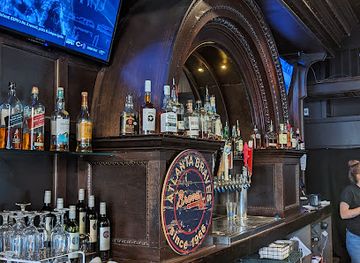
Opelika’s evening scene is centred on conversation, live events, breweries and locally owned drinking establishments rather than a dense nightclub district. Downtown venues around Railroad Avenue and the courthouse area provide settings for craft beer, cocktails, spirits tastings and relaxed evenings in adapted historic buildings. Red Clay Brewing Company and John Emerald Distilling are established names associated with Opelika’s modern drinks culture, while other venues may combine food, music or community events. The Opelika Center for the Performing Arts adds theatre and cultural programming to the after-dark calendar, and occasional downtown events bring streets and public spaces to life. Auburn’s larger student population creates a more energetic late-night scene nearby, but it should not be confused with Opelika’s quieter identity. Visitors should check current event schedules and closing arrangements, as nightlife varies by day and season and is more venue-led than district-wide.
-
Steak
LongHorn Steakhouse
Experience the rich flavors of LongHorn Steakhouse, where expertly grilled steaks and southern hospitality come together in Opelika, Alabama.
11 min drive · 3.7 km from city centre
-
Bar
Outback Steakhouse
Discover the vibrant flavors of Australia at Outback Steakhouse, where American cuisine meets Australian hospitality in a delightful dining experience.
10 min drive · 3.2 km from city centre
-
Irish pub
Irish Bred Pub
Discover the heart of Irish culture at the Irish Bred Pub in Opelika, where delicious cuisine meets vibrant entertainment.
3 min walk · 0.3 km from city centre
-
American
Zazu Gastropub
Discover Zazu Gastropub in Opelika, Alabama, where American cuisine meets a gastropub atmosphere for a unique dining experience.
4 min walk · 0.3 km from city centre


Best nightclubs in Opelika
Opelika’s evening scene is centred on conversation, live events, breweries and locally owned drinking establishments rather than a dense nightclub district. Downtown venues around Railroad Avenue and the courthouse area provide settings for craft beer, cocktails, spirits tastings and relaxed evenings in adapted historic buildings. Red Clay Brewing Company and John Emerald Distilling are established names associated with Opelika’s modern drinks culture, while other venues may combine food, music or community events. The Opelika Center for the Performing Arts adds theatre and cultural programming to the after-dark calendar, and occasional downtown events bring streets and public spaces to life. Auburn’s larger student population creates a more energetic late-night scene nearby, but it should not be confused with Opelika’s quieter identity. Visitors should check current event schedules and closing arrangements, as nightlife varies by day and season and is more venue-led than district-wide.
-
Irish pub
Irish Bred Pub
Discover the lively spirit of the Irish Bred Pub in Opelika, Alabama, where delicious food, great drinks, and a vibrant atmosphere await every visitor.
3 min walk · 0.3 km from city centre
-
Lounge
Sneak & Dawdle
Sneak & Dawdle Lounge in Opelika, AL: A lively destination for nightlife, cocktails, and socializing in a vibrant atmosphere.
6 min walk · 0.5 km from city centre
-
Bar
Rockin Robin
Discover Rockin Robin, Opelika's energetic bar, offering affordable drinks, live entertainment, and a welcoming atmosphere for tourists seeking nightlife.
19 min drive · 6.5 km from city centre
-
Cigar shop
Z&Z Cigar Co.
Experience the finest selection of cigars in a cozy lounge atmosphere at Z&Z Cigar Co. in Opelika, Alabama.
3 min walk · 0.2 km from city centre


Best shops in Opelika
Shopping in Opelika is strongest in and around the historic downtown, where independent boutiques, gift shops, galleries, antique dealers and small specialist businesses occupy former commercial buildings. Railroad Avenue and the surrounding streets offer a slower, more personal alternative to a regional mall, with restored façades and locally oriented stock shaping the experience. Visitors may find Alabama-made gifts, homewares, artwork, vintage pieces, books, clothing and food products rather than a single signature craft associated exclusively with Opelika. The city’s relationship with agriculture and Southern domestic traditions is reflected in seasonal produce, preserves and other regional goods when markets or community events are operating. Larger chain stores and everyday retail are located along the wider commercial corridors shared by Opelika and Auburn. Opening patterns vary among independent businesses, so the historic centre is best explored during its active daytime and event periods.
-
Shopping mall
Tiger Town Outdoor Shopping Center
Explore Tiger Town Outdoor Shopping Center in Opelika, AL, for an unmatched shopping and dining experience in a vibrant outdoor setting.
12 min drive · 4.1 km from city centre
-
Antique store
Angel's Antiques & Flea Mall
Explore the charm of the past at Angel's Antiques & Flea Mall, a vintage lover's paradise in Opelika, Alabama.
6 min drive · 2.0 km from city centre
-
Department store
Kohl's
Explore affordable fashion and home essentials at Kohl's in Opelika, Alabama - your ultimate shopping destination.
13 min drive · 4.5 km from city centre
-
Gift shop
Books-A-Million
Discover a world of literature, collectibles, and unique gifts at Books-A-Million in Opelika, Alabama – a haven for book lovers and explorers.
12 min drive · 4.1 km from city centre


Get your free copy of our complete guide to Opelika, delivered straight to you.
Everything on this page, from attractions and restaurants to essentials and local phrases, in one PDF you can read offline, print or share.
Already have an account? Sign in
Your Opelika guide is ready.
We'll send it to · Not you? Sign out

Getting your guide ready…
We are putting together a fresh copy of the Opelika guide. This can take up to a minute.
This can take a few moments. If your browser asks, choose Allow so the download can start. You'll find the guide in your Downloads folder.
Nothing happened? Download it again
Sorry, the guide is taking longer than usual. Please try again in a minute, or get it by email instead.
Opelika essentials
Currency and Payment
Safety
Emergency Situations
Do's and Don'ts
Local Tips
From Eve
Local phrases worth knowing
You don't need to get them perfect. A few words go a long way, and locals appreciate the effort.
Basics
| English | Local | Say it |
|---|---|---|
| Hello | Hey | [hey] |
| Goodbye | See ya | [see ya] |
| Yes | Yep | [yep] |
| No | Nah | [nah] |
| Please/You're welcome | Please | [please] |
| Thank you | Thanks | [thanks] |
| Excuse me/Sorry | Sorry | [sorry] |
| How are you? | How y'all doin'? | [how y'all doin'] |
| Fine. And you? | Fine. And you? | [fine. and you?] |
| Do you speak English? | Y'all speak English? | [y'all speak English?] |
| I don't understand | I don't get it | [I don't get it] |
Eating & Drinking
| English | Local | Say it |
|---|---|---|
| I'd like to see the menu, please | Can I see the menu? | [can I see the menu?] |
| I don't eat meat | I'm vegetarian | [I'm vegetarian] |
| Cheers! | Cheers! | [cheers!] |
| I would like to pay, please | Check, please | [check, please] |
Emergencies
| English | Local | Say it |
|---|---|---|
| Help! | Help! | [help!] |
| Go away! | Go away! | [go away!] |
| Call the Police! | Call the cops! | [call the cops!] |
| Call a doctor! | Get a doctor! | [get a doctor!] |
| I'm lost | I'm lost | [I'm lost] |
| I'm ill | I'm sick | [I'm sick] |
Shopping
| English | Local | Say it |
|---|---|---|
| I'd like to buy... | I wanna buy... | [I wanna buy...] |
| I'm just looking | Just browsing | [just browsing] |
| How much is it? | How much? | [how much?] |
| That's too expensive | That's pricey | [that's pricey] |
| Can you lower the price? | Can you do better? | [can you do better?] |
Time & Numbers
| English | Local | Say it |
|---|---|---|
| What time is it? | What time is it? | [what time is it?] |
| It's one o'clock | It's one | [it's one] |
| Half past (10) | Half past ten | [half past ten] |
| Morning | Morning | [morning] |
| Afternoon | Afternoon | [afternoon] |
| Evening | Evening | [evening] |
| Yesterday | Yesterday | [yesterday] |
| Today | Today | [today] |
| Tomorrow | Tomorrow | [tomorrow] |
| 1 | One | [one] |
| 2 | Two | [two] |
| 3 | Three | [three] |
| 4 | Four | [four] |
| 5 | Five | [five] |
| 6 | Six | [six] |
| 7 | Seven | [seven] |
| 8 | Eight | [eight] |
| 9 | Nine | [nine] |
| 10 | Ten | [ten] |
Transport & Directions
| English | Local | Say it |
|---|---|---|
| Where's a/the...? | Where's...? | [where's...?] |
| What's the address? | What's the address? | [what's the address?] |
| Can you show me (on the map)? | Can you show me (on the map)? | [can you show me (on the map)?] |
| When's the next (bus)? | When's the next bus? | [when's the next bus?] |
| A ticket (to ....) | A ticket (to ....) | [a ticket (to ....)] |
History of Opelika
Muscogee Country and Early Settlement
The Opelika area lies within the historic homeland of the Muscogee people, whose communities occupied extensive parts of what is now Alabama and Georgia before the forced removals of the nineteenth century. The name Opelika is generally associated with a Muscogee expression interpreted as referring to a large marsh or swamp, although translations of Indigenous place names can vary. Following federal removal policies and the opening of land to white settlement, farms and small communities developed in the region. Its position in east-central Alabama, between the Chattahoochee River country and the state’s interior, later made the area well suited to transport and trade.
Railways Create a Town
Opelika emerged as a town during the expansion of rail transport across the South. The Montgomery and West Point Railroad reached the area in the late 1840s, linking Opelika with markets to the west and with Columbus, Georgia, to the east. Rail connections encouraged warehouses, shops, hotels and other businesses, turning the settlement into a transportation and trading centre. Opelika was incorporated in 1854, and its growth was closely tied to the movement of cotton, farm products, passengers and manufactured goods. The railway’s influence remains visible in the alignment of downtown streets, the depot and the surviving commercial fabric along Railroad Avenue.
War, Reconstruction and County Government
The Civil War and its aftermath disrupted the economy that had developed around cotton and rail transport. As the conflict ended, Opelika became part of a region dealing with emancipation, political upheaval and the reorganisation of agriculture and commerce. In 1866, Opelika became the seat of Lee County, reinforcing its role as a governmental and commercial centre. The courthouse and surrounding public buildings helped establish the civic centre that still anchors downtown. During Reconstruction and the decades that followed, the town’s economy gradually adjusted to new labour arrangements, changing markets and the continuing importance of railway connections.
Cotton, Commerce and Industry
Through the late nineteenth and early twentieth centuries, Opelika functioned as a market town for a productive agricultural hinterland. Cotton remained important, but merchants, banks, warehouses, repair businesses and small industries gave the city a broader economic base. The railway supported regular movement between Alabama, Georgia and the Gulf-connected markets farther west. Commercial buildings erected during this era created much of the architectural character now associated with the downtown historic district. As roads and motor transport gained importance, Opelika’s role evolved from a primarily rail-dependent town into a regional centre serving surrounding farms, communities and businesses.
Preservation and Contemporary Opelika
After the Second World War, suburban expansion, changing retail patterns and the decline of passenger rail altered the traditional downtown economy, as happened in many American towns. Opelika’s historic centre nevertheless retained a substantial collection of nineteenth- and early twentieth-century buildings. Preservation efforts, local enterprise and cultural initiatives have supported the reuse of former shops and warehouses for restaurants, breweries, galleries, offices and community activities. The Museum of East Alabama and the Opelika Center for the Performing Arts help interpret and extend that civic identity. Today, Opelika combines its county-seat responsibilities and industrial connections with a carefully maintained historic core.
Opelika in Photos
Browse through our photo collection highlighting the charm and character of the destination.
Cities near Opelika
The closest cities to Opelika, if you have time for more than one stop.
-

-

-

-
-


Swipe for more cities
Explore more

Explore more of Alabama
Discover Alabama: A Southern state rich in history, culture, and natural beauty, offering unforgettable experiences from vibrant cities to serene beaches and majestic mountains.
Explore Alabama