

Free Cuyo Travel Guide & Mobile App
Explore Cuyo with free travel guides. Discover regional history, expert tips, proposed trips, and audio guides on web or mobile app.


Explore Cuyo’s Andean peaks, vineyard oases, dinosaur landscapes, sierras and wine-focused cities across Mendoza, San Juan and San Luis.
Read more about Cuyo
When is the best time to visit Cuyo?
Best: April, October–November · 22–26°C| Month | High (°C) | Rainfall (mm) |
|---|---|---|
| January | 31 | 25 |
| February | 30 | 30 |
| March | 28 | 35 |
| April (best) | 23 | 30 |
| May | 17 | 20 |
| June | 13 | 15 |
| July | 12 | 15 |
| August | 14 | 15 |
| September | 18 | 20 |
| October (best) | 22 | 25 |
| November (best) | 26 | 30 |
| December | 30 | 35 |
Getting to and around Cuyo
How to get there
Transportation
Top city travel guides in Cuyo
The cities of Cuyo, and the easiest places to base yourself.
-

-


Swipe for more cities
Destinations in Cuyo
Resorts, valleys and scenic spots worth a trip of their own.
-

-

-


Swipe for more destinations
Best attractions in Cuyo
Cuyo’s attractions are defined by contrast: irrigated wine country lies close to high Andes, dry basins and rugged sierras. Around Mendoza, visitors can tour bodegas in Maipú, Luján de Cuyo and the Uco Valley, then continue towards the mountain landscapes of the Mendoza River and Aconcagua Provincial Park. The city itself offers parks, museums and tree-lined avenues shaped by its irrigation system. San Juan’s principal draws include the fossil-rich formations of Ischigualasto Provincial Park, the mountain scenery of Calingasta Valley and the dark, elevated surroundings of El Leoncito, known for its observatories and clear skies. San Luis offers a more pastoral inland experience through Sierra de las Quijadas National Park, the Sierras de San Luis, reservoirs and the Sierra de los Comechingones near Merlo. Walking, rafting, horse riding, cycling, climbing and scenic driving are available in different districts, but conditions and distances vary considerably. The region’s museums, archaeological evidence, wine estates and protected landscapes work best as part of a planned itinerary rather than a rapid checklist of sights.
-
Tourist attraction
Parque General San Martín
Discover Mendoza's iconic Parque General San Martín: a blend of nature, history, and recreation in a stunning urban setting.
-
Tourist attraction
Portones del Parque General San Martín
Iconic neoclassical gates marking the entrance to Mendoza's Parque General San Martín, a blend of history, nature, and urban recreation.
-
Tourist attraction
Plaza San Martin
Discover Plaza San Martin in Mendoza: a historic square offering tranquility, cultural events, and a tribute to Argentina's independence hero.
-
Tourist attraction
Plaza España
Discover Mendoza's enchanting Plaza España: A vibrant tribute to Spanish heritage with stunning tilework and tranquil ambiance.


Best landmarks in Cuyo
The Andes are Cuyo’s defining natural landmark, and Mendoza’s Aconcagua Provincial Park contains the highest mountain in the Americas, a powerful presence even for visitors who do not attempt a serious climb. In the same province, the natural bridge of Puente del Inca and the historic mountain route towards Chile reflect the region’s geological and travel history. San Juan’s Ischigualasto landscape is one of its most recognisable landmarks: wind and water have carved pale, rust-coloured formations from terrain that preserves important Triassic fossil evidence. El Leoncito’s high desert setting, surrounded by broad mountain horizons, gives the province another distinctive visual identity. In San Luis, the red cliffs and eroded valleys of Sierra de las Quijadas form a dramatic protected landscape, while the granite and wooded slopes of the Sierra de los Comechingones define the approaches to Merlo. Mendoza’s tree-lined streets, open irrigation channels and spacious post-earthquake plan are also significant civic landmarks, revealing how the city adapted to water scarcity and seismic risk.
-
Historical place
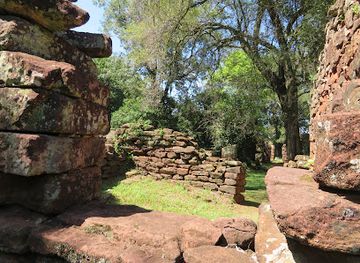
Ruins of San Ignacio Miní
Discover the historic Ruins of San Ignacio Miní, an enchanting UNESCO World Heritage site showcasing Argentina's Jesuit past amid lush tropical landscapes.
-
Tourist attraction
Portones del Parque General San Martín
Explore the lush landscapes and cultural gems of Portones del Parque General San Martín in Mendoza, Argentina, a serene urban park perfect for relaxation.
-
Park
Plaza San Martin
Discover the charm of Plaza San Martin, a vibrant park in the heart of Mendoza, where history, culture, and natural beauty converge.
-
Park
Plaza España
Discover the serene beauty of Plaza España, a green gem in Mendoza, Argentina, perfect for relaxation and cultural experiences.


Explore Cuyo on the map
Plan your trip on one map. See where the top cities, national parks and sights are, and book hotels and experiences in a few clicks.
Best hotels in Cuyo
Best restaurants in Cuyo
Dining in Cuyo combines Argentina’s national fondness for grilled meat with the produce of irrigated valleys and the region’s strong wine culture. Mendoza is the most developed centre for winery restaurants, contemporary cooking and food paired with Malbec, Bonarda and other local varieties, while rural bodegas often serve menus built around seasonal vegetables, preserved foods and regional meats. Empanadas, humita, grilled beef, goat and local breads appear across the region, although recipes and preparation vary between provinces. San Juan is associated with wine, olives and produce from its dry cultivated valleys, and San Luis brings mountain and inland traditions to restaurants and rural inns. Cafés and bakeries in the provincial capitals provide tortitas mendocinas and other regional breads and pastries. Farmers’ markets and specialist food shops are useful for discovering olive oil, dried fruit, preserves, nuts and wine, while dining hours generally follow broader Argentine patterns, with dinner beginning later than many international visitors expect.
-
Restaurant
Anna Bistró
Experience authentic French cuisine at Anna Bistró in Mendoza - where exquisite flavors meet vibrant Argentine culture.
-
Restaurant
El Asadito · Mendoza
Discover authentic Argentine cuisine at El Asadito in Mendoza - a vibrant restaurant known for its exceptional asado and warm hospitality.
-
Restaurant
Casa Vigil (El Enemigo)
Experience exquisite Argentine cuisine paired with local wines at Casa Vigil (El Enemigo), a culinary gem in Mendoza.
-
Argentinian
Estancia La Florencia
Experience authentic Argentinian cuisine at Estancia La Florencia in Mendoza - where every meal tells a story of flavor and tradition.


Best bars in Cuyo
Nightlife in Cuyo is concentrated in Mendoza, San Juan and, to a lesser extent, San Luis, rather than spread evenly across the countryside. Mendoza has the region’s broadest evening scene, ranging from wine bars and contemporary restaurants to traditional bars, live music venues and late-night cafés in the central city and surrounding districts. San Juan offers a smaller selection of restaurants, bars and music-oriented venues, with evenings often built around dining and socialising rather than large clubs. San Luis has a modest urban scene, while mountain towns such as Merlo focus on restaurants, cafés, small bars and seasonal entertainment. In vineyard areas, tastings and winery dinners are generally more important than conventional nightlife, and rural districts may become quiet after dinner. Opening arrangements and venue status change frequently, so local listings are more reliable than assuming that a particular bar or club operates year-round.
-
Bar
Chachingo Arístides
Experience the best of Mendoza's craft beer scene at Chachingo Arístides, where every sip tells a story of local traditions and flavors.
-
Beer hall
23 Ríos Craftbeer Luján de Cuyo
Discover the rich flavors of Mendoza's craft beer at 23 Ríos, a lively beer hall in Luján de Cuyo, perfect for tasting unique local brews.
-
Grill
William Brown
Discover the vibrant atmosphere of William Brown, a top Irish bar and grill in Mendoza, offering delicious food and drinks in a lively setting.
-
Bar
BEERLIN (Arístides Villanueva)
Discover Beerlin in Mendoza: A lively brewpub offering craft beers, cocktails, and New American cuisine in a vibrant atmosphere.


Best nightclubs in Cuyo
Nightlife in Cuyo is concentrated in Mendoza, San Juan and, to a lesser extent, San Luis, rather than spread evenly across the countryside. Mendoza has the region’s broadest evening scene, ranging from wine bars and contemporary restaurants to traditional bars, live music venues and late-night cafés in the central city and surrounding districts. San Juan offers a smaller selection of restaurants, bars and music-oriented venues, with evenings often built around dining and socialising rather than large clubs. San Luis has a modest urban scene, while mountain towns such as Merlo focus on restaurants, cafés, small bars and seasonal entertainment. In vineyard areas, tastings and winery dinners are generally more important than conventional nightlife, and rural districts may become quiet after dinner. Opening arrangements and venue status change frequently, so local listings are more reliable than assuming that a particular bar or club operates year-round.
-
Disco club
NIKKI CLUB
Discover the vibrant nightlife at Nikki Club, Mendoza's premier disco for an unforgettable dance experience.
-
Dance club
Wabi Fun Club
Dance the Night Away at Wabi Fun Club – Mendoza's Premier Dance Destination with an Electric Atmosphere and Unforgettable Vibes.
-
Disco club
OLIMPO
Discover the pulse of Mendoza's nightlife at OLIMPO, where vibrant music and a lively crowd create unforgettable moments.
-
Night club
Grita Silencio
Experience the vibrant nightlife of Mendoza at Grita Silencio, a premier night club offering unforgettable music and dance.



Best shops in Cuyo
Shopping in Cuyo is strongest in the provincial capitals and established wine districts. Mendoza offers central pedestrian streets, independent boutiques, bookshops, galleries and specialist retailers selling wine, olive oil, preserves, dried fruit, leather goods and regional food products. Winery shops are useful for purchasing bottles from smaller producers, although visitors should consider baggage and transport rules before buying extensively. San Juan has city-centre shops and markets focused on wine, olives, local preserves, textiles and practical regional goods, while San Luis provides a quieter mix of high-street businesses, craft outlets and produce sellers. In mountain towns such as Merlo and Calingasta, visitors may find artisan textiles, leatherwork, ceramics and locally made foods, but selection is more limited than in the capitals. Farmers’ markets and provincial craft fairs vary by season and location, so ask locally for current details. Authentic regional products are generally more rewarding purchases than generic souvenirs, especially wine, olive oil, preserves and carefully labelled artisan work.
-
 Shopping mall
Mendoza Shopping
Discover a shopper's paradise at Mendoza Shopping Mall, where local charm meets modern retail experiences in the heart of Mendoza.
-
Tourist attraction
Portones del Parque General San Martín
Explore the captivating beauty and cultural richness of Portones del Parque General San Martín, Mendoza's scenic gateway to nature and history.
-
Shopping mall
La Barraca Mall
Experience the best of shopping and dining at La Barraca Mall in Mendoza, where local charm meets international flair.
-
Supermarket
Carrefour Market
Explore the vibrant Carrefour Market in Mendoza for a wide selection of local and international grocery items, fresh produce, and unique Argentine delicacies.


Get your free copy of our complete guide to Cuyo, delivered straight to you.
Everything on this page, from attractions and restaurants to essentials and local phrases, in one PDF you can read offline, print or share.
Already have an account? Sign in
Your Cuyo guide is ready.
We'll send it to · Not you? Sign out

Getting your guide ready…
We are putting together a fresh copy of the Cuyo guide. This can take up to a minute.
This can take a few moments. If your browser asks, choose Allow so the download can start. You'll find the guide in your Downloads folder.
Nothing happened? Download it again
Sorry, the guide is taking longer than usual. Please try again in a minute, or get it by email instead.
Cuyo essentials
Currency and Payment
Safety
Emergency Situations
Do's and Don'ts
Local Tips
From Eve
Local phrases worth knowing
You don't need to get them perfect. A few words go a long way, and locals appreciate the effort.
Basics
| English | Local | Say it |
|---|---|---|
| Hello | Hola | [Ola] |
| Goodbye | Adiós | [Adiós] |
| Yes | Sí | [Si] |
| No | No | [No] |
| Please/You're welcome | Por favor/De nada | [Por favor/De nada] |
| Thank you | Gracias | [Grasias] |
| Excuse me/Sorry | Perdón | [Perdón] |
| How are you? | ¿Cómo estás? | [¿Cómo estás?] |
| Fine. And you? | Bien. ¿Y tú? | [Bien. ¿Y tú?] |
| Do you speak English? | ¿Hablas inglés? | [¿Hablas inglés?] |
| I don't understand | No entiendo | [No entiendo] |
Eating & Drinking
| English | Local | Say it |
|---|---|---|
| I'd like to see the menu, please | Me gustaría ver el menú, por favor | [Me gustaria ver el menu, por favor] |
| I don't eat meat | No como carne | [No como carne] |
| Cheers! | ¡Salud! | [¡Salud!] |
| I would like to pay, please | Me gustaría pagar, por favor | [Me gustaria pagar, por favor] |
Emergencies
| English | Local | Say it |
|---|---|---|
| Help! | ¡Ayuda! | [¡Ayuda!] |
| Go away! | ¡Vete! | [¡Vete!] |
| Call the Police! | ¡Llama a la policía! | [¡Llama a la policia!] |
| Call a doctor! | ¡Llama a un doctor! | [¡Llama a un doctor!] |
| I'm lost | Estoy perdido | [Estoy perdido] |
| I'm ill | Estoy enfermo | [Estoy enfermo] |
Shopping
| English | Local | Say it |
|---|---|---|
| I'd like to buy... | Me gustaría comprar... | [Me gustaria comprar...] |
| I'm just looking | Solo estoy mirando | [Solo estoy mirando] |
| How much is it? | ¿Cuánto cuesta? | [¿Cuánto cuesta?] |
| That's too expensive | Eso es muy caro | [Eso es muy caro] |
| Can you lower the price? | ¿Puedes bajar el precio? | [¿Puedes bajar el precio?] |
Time & Numbers
| English | Local | Say it |
|---|---|---|
| What time is it? | ¿Qué hora es? | [¿Qué hora es?] |
| It's one o'clock | Es la una | [Es la una] |
| Half past (10) | Y media (10) | [Y media (10)] |
| Morning | Mañana | [Mañana] |
| Afternoon | Tarde | [Tarde] |
| Evening | Noche | [Noche] |
| Yesterday | Ayer | [Ayer] |
| Today | Hoy | [Hoy] |
| Tomorrow | Mañana | [Mañana] |
| 1 | Uno | [Uno] |
| 2 | Dos | [Dos] |
| 3 | Tres | [Tres] |
| 4 | Cuatro | [Cuatro] |
| 5 | Cinco | [Cinco] |
| 6 | Seis | [Seis] |
| 7 | Siete | [Siete] |
| 8 | Ocho | [Ocho] |
| 9 | Nueve | [Nueve] |
| 10 | Diez | [Diez] |
Transport & Directions
| English | Local | Say it |
|---|---|---|
| Where's a/the...? | ¿Dónde está un/una...? | [¿Dónde está un/una...?] |
| What's the address? | ¿Cuál es la dirección? | [¿Cuál es la dirección?] |
| Can you show me (on the map)? | ¿Puedes mostrarme (en el mapa)? | [¿Puedes mostrarme (en el mapa)?] |
| When's the next (bus)? | ¿Cuándo es el próximo (bus)? | [¿Cuándo es el proximo (bus)?] |
| A ticket (to ....) | Un boleto (a ....) | [Un boleto (a ....)] |
History of Cuyo
Indigenous Communities and Andean Exchange
Before Spanish colonisation, Cuyo was inhabited by several Indigenous peoples, including Huarpe communities in the irrigated valleys of present-day Mendoza and San Juan, alongside groups connected to the wider Andean world. The region’s rivers, wetlands and cultivated oases supported settled communities in an otherwise dry environment. In the fifteenth century, parts of western Argentina came under Inca influence, leaving evidence of long-distance routes and high-altitude connections. Indigenous knowledge of water, plants and mountain travel continued to shape life in the region after European settlement.
Spanish Settlement and Irrigation Oases
Spanish colonial settlement developed around accessible valleys and existing water systems. Mendoza was founded in 1561, San Juan in 1562 and San Luis in 1594, establishing the principal urban centres of modern Cuyo. Colonial agriculture depended on diverting river water through channels to create productive pockets of land. Cattle, fruit, grain and later vines developed within these oases, while the surrounding plains and mountains remained sparsely settled. The resulting relationship between water engineering and urban life is still visible in the region’s canals, acequias and cultivated belts.
The Andes and the Independence Campaign
Cuyo played a decisive role in the South American wars of independence. From Mendoza, José de San Martín organised and trained the Army of the Andes before crossing the mountain range in 1817 to support the liberation of Chile. The campaign relied on local transport, muleteers, artisans, farmers and military preparations in the Mendoza area. Routes through the Andes, including passes west of the city, remain associated with this history. The region’s role in the campaign gave Mendoza a lasting place in Argentina’s national historical narrative.
Wine, Olive Cultivation and Railway Development
During the late nineteenth and early twentieth centuries, Cuyo’s economy was transformed by large-scale irrigation, European immigration, vineyards, olive groves and improved transport. Railway connections linked Mendoza and San Juan with Buenos Aires and other parts of Argentina, making it easier to move wine, fruit and agricultural products to national markets. Spanish and Italian settlers contributed viticultural knowledge and helped expand the region’s wine culture. The modern wine landscapes around Mendoza and San Juan are the result of this combination of immigrant enterprise, water infrastructure and commercial agriculture.
The 1861 Mendoza Earthquake and Urban Reconstruction
A devastating earthquake destroyed much of Mendoza in 1861, causing extensive loss of life and transforming the city’s physical development. Reconstruction moved the main urban centre to a planned area with wider streets, greater spacing and deeper attention to earthquake resilience. Later Mendoza became known for its tree-lined avenues and open drainage channels, which also support the city’s irrigation system. The event remains an important key to understanding the present city: much of Mendoza’s apparent spaciousness reflects both environmental adaptation and the consequences of seismic disaster.
Modern San Juan and Seismic Memory
San Juan was also profoundly shaped by earthquakes, particularly the major earthquake of 1944, which destroyed much of the provincial capital and led to extensive reconstruction. The rebuilt city adopted modern planning principles and reinforced construction, producing an urban environment quite different from many older Argentine cities. Beyond the capital, the province’s twentieth-century development expanded wine production, olive growing, mining and infrastructure in its arid valleys. San Juan’s contemporary identity therefore combines agricultural oases with a strong memory of rebuilding in a seismically active landscape.
From Inland Production to Wine and Nature Tourism
Late twentieth- and early twenty-first-century Cuyo saw wine become an increasingly international symbol of the region, while improved roads, visitor facilities and conservation programmes broadened tourism. Mendoza’s bodegas and vineyard districts developed structured wine tourism, San Juan promoted its geological and astronomical landscapes, and San Luis expanded access to sierras, reservoirs and protected areas. Agriculture, mining, energy and tourism continue to coexist, sometimes uneasily, in a region where water is limited. Contemporary Cuyo is consequently shaped by both productive oases and the need to manage fragile arid environments.
Cuyo in Photos
Browse through our photo collection highlighting the charm and character of the destination.
Neighbouring regions of Cuyo
The closest regions to Cuyo, if you have time for more than one.
-

-

-
-

-


Swipe for more regions
Explore more

Explore more of Argentina
Discover Argentina: From the lively streets of Buenos Aires to the breathtaking landscapes of Patagonia, experience the vibrant culture and diverse natural wonders of this South American gem.
Explore Argentina