

Free Andean Northwest Travel Guide & Mobile App
Explore Andean Northwest with free travel guides. Discover regional history, expert tips, proposed trips, and audio guides on web or mobile app.


Explore Andean Northwest Argentina for colourful valleys, salt flats, high-altitude landscapes, Indigenous heritage, colonial towns and Calchaquí wines.
Read more about Andean Northwest
When is the best time to visit Andean Northwest?
Best: April, September–October · 23–26°C| Month | High (°C) | Rainfall (mm) |
|---|---|---|
| January | 30 | 110 |
| February | 30 | 100 |
| March | 28 | 90 |
| April (best) | 24 | 80 |
| May | 19 | 70 |
| June | 17 | 60 |
| July | 16 | 50 |
| August | 18 | 40 |
| September (best) | 23 | 50 |
| October (best) | 26 | 60 |
| November | 28 | 80 |
| December | 30 | 100 |
Getting to and around Andean Northwest
How to get there
Transportation
Top city travel guides in Andean Northwest
The cities of Andean Northwest, and the easiest places to base yourself.
-

-

-


Swipe for more cities
Destinations in Andean Northwest
Resorts, valleys and scenic spots worth a trip of their own.
-

-

-

-

-

-


Swipe for more destinations
Best attractions in Andean Northwest
The Andean Northwest’s attractions are defined by landscapes as much as by monuments. In Jujuy, the Quebrada de Humahuaca combines dramatic geology with villages, churches, craft markets and the Pucará de Tilcara archaeological site. Purmamarca provides access to the Cerro de los Siete Colores, while the Salinas Grandes offer a vast high-plateau landscape reached by mountain roads. Around Salta, the Cuesta del Obispo leads towards Cachi and Los Cardones National Park, where cardón cacti punctuate the dry puna scenery. The Calchaquí valleys add historic settlements, adobe architecture, vineyards and scenic routes around Molinos, San Carlos and Cafayate. Catamarca extends the experience into more remote territory, with Fiambalá’s volcanic surroundings, high passes along the Ruta de los Seismiles and the unusual rock formations of Campo de Piedra Pómez near Antofagasta de la Sierra. Activities include hiking, birdwatching, photography, archaeological visits, wine tasting and long-distance road travel. Distances and altitude make guided excursions particularly useful for isolated areas, while the major valleys are easier to explore independently with careful planning.
-
Tourist attraction
San Bernardo's Hill
Ascend Salta's iconic Cerro San Bernardo for breathtaking panoramic views, tranquil gardens, and a touch of history. A must-see!
-
Historical place
Pucará de Tilcara
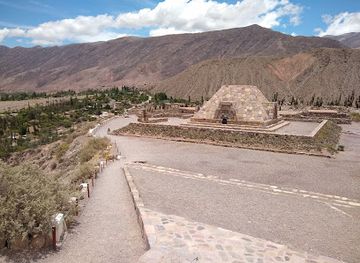
Explore the ancient ruins of Pucará de Tilcara, a pre-Inca fortress offering panoramic views of the Quebrada de Humahuaca.
-
Archaeological museum
Quilmes Ruins
Discover the ancient Quilmes civilization in Argentina's Tucumán Province, exploring impressive ruins and panoramic views in the Calchaquí Valley.
-
National park
Parque Nacional los Cardones
Explore the surreal landscapes of Los Cardones National Park, home to towering cacti and breathtaking Andean views in Salta, Argentina.



Best landmarks in Andean Northwest
The Cerro de los Siete Colores above Purmamarca is one of the region’s most recognisable natural landmarks, its layered red, ochre and violet rock forming a vivid entrance to the Quebrada de Humahuaca. Further along the valley, the Pucará de Tilcara occupies a defensible hilltop and preserves the remains of a substantial pre-Hispanic settlement, while the small church of Uquía is noted for its historic interior and paintings associated with the so-called Ángeles Arcabuceros. The Salinas Grandes create a stark geometric horizon across the puna, contrasting with the cardón-studded slopes of Los Cardones National Park near Cachi. In the Calchaquí valleys, the churches and adobe buildings of Molinos and San Carlos express the region’s colonial architecture, while the quebradas around Cafayate reveal the erosive force of wind and water. Western Catamarca contributes a different monumental scale: the high volcanic peaks and passes of the Ruta de los Seismiles and the pale, sculptural Campo de Piedra Pómez are geological landmarks rather than constructed monuments.
-
Tourist attraction
Iguazu Falls
Discover the breathtaking beauty of Iguazu Falls, a UNESCO World Heritage site where nature's power meets tranquility in Misiones Province, Argentina.
-
Historical landmark
Obelisco
Discover the iconic Obelisco in Buenos Aires, a historical landmark and cultural hub that captures the city's vibrant spirit and rich heritage.
-
National park
Iguazú National Park
Experience the breathtaking beauty of Iguazú National Park, home to magnificent waterfalls and abundant wildlife in a lush rainforest setting.
-
Tourist attraction
San Bernardo's Hill
Discover breathtaking views and natural beauty at San Bernardo's Hill, a must-visit hiking area in Salta, Argentina, perfect for nature lovers and adventure seekers.


Explore Andean Northwest on the map
Plan your trip on one map. See where the top cities, national parks and sights are, and book hotels and experiences in a few clicks.
Best hotels in Andean Northwest
Best restaurants in Andean Northwest
Food in the Andean Northwest reflects highland agriculture, colonial history and contemporary Argentine cooking. Northern-style empanadas, usually smaller and generously filled, are associated particularly with Salta and the surrounding region, while humitas, tamales and locro draw on maize, squash, beans and other ingredients long important in Andean foodways. Llama appears on some menus in Jujuy and other highland areas, alongside goat, beef, potatoes and quinoa. Salta and Jujuy offer cafés, parrillas, family dining rooms and market stalls, while village restaurants may provide a short but distinctly local menu. The Calchaquí valleys around Cafayate, Cachi and nearby settlements are noted for vineyards and wines made in dry, high-altitude conditions, especially Torrontés, with regional dishes often served as pairings. In Catamarca, goat, dried fruits, olives and wines feature in regional food culture. Meal times can be later than international visitors expect, and smaller towns may have limited options between lunch and dinner.
-
Argentinian
Doña Salta
Discover authentic Andean cuisine at Doña Salta in the heart of Salta – where every bite tells a story.
-
Restaurant
Puny - Pasta & Grill
Experience exquisite Italian cuisine at Puny - Pasta & Grill in Buenos Aires; a must-visit destination for food lovers.
-
Grill
Don Julio
Savor authentic Argentine asado at Don Julio in Palermo – where tradition meets exceptional flavor.
-
Restaurant
Peña La Vieja Estación
Discover authentic Argentine cuisine at Peña La Vieja Estación in Salta, where tradition meets flavor in a warm and inviting atmosphere.


Best bars in Andean Northwest
Evening life is concentrated in Salta city, San Salvador de Jujuy and the larger towns of the Quebrada and Calchaquí valleys. Salta has the broadest choice of traditional peñas, where regional music and dance may accompany dinner, as well as bars, cafés and venues with contemporary live music. Jujuy’s capital and towns such as Tilcara also have evening restaurants, folk-music venues and a modest bar scene, with activity often increasing during cultural festivals and holiday periods. In smaller highland settlements, the evening usually centres on a restaurant, family-run bar, peña or hotel rather than a nightclub. Cafayate adds wine bars and cellar-based tasting experiences, while rural Catamarca is generally quiet after dinner. Opening arrangements and performance schedules vary, particularly outside the main cities, so ask locally and avoid assuming that a remote village will have late-night services.
-
Gastropub
Icebar Iguazú
Icebar Iguazú: Sip cocktails in a stunning ice environment amidst breathtaking ice sculptures in Puerto Iguazú.
-
Bar
The Hole Bar - Alcatraz Speakeasy Hidden Bar
Experience the hidden charm of The Hole Bar - Alcatraz Speakeasy in Buenos Aires, where exquisite cocktails and a unique ambiance await.
-
Grill
Rith Themed Restobar
Experience the vibrant flavors of Salta at Rith Themed Restobar, a premier grill and breakfast destination offering local culinary delights.
-
Grill
Soho Bar & resto
Discover Salta's vibrant food scene at Soho Bar & Resto, the ultimate grill destination for locals and tourists alike.


Best nightclubs in Andean Northwest
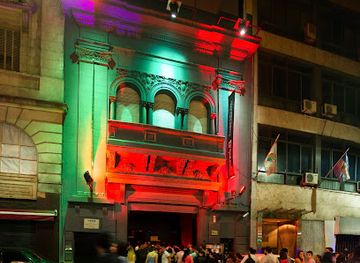
Evening life is concentrated in Salta city, San Salvador de Jujuy and the larger towns of the Quebrada and Calchaquí valleys. Salta has the broadest choice of traditional peñas, where regional music and dance may accompany dinner, as well as bars, cafés and venues with contemporary live music. Jujuy’s capital and towns such as Tilcara also have evening restaurants, folk-music venues and a modest bar scene, with activity often increasing during cultural festivals and holiday periods. In smaller highland settlements, the evening usually centres on a restaurant, family-run bar, peña or hotel rather than a nightclub. Cafayate adds wine bars and cellar-based tasting experiences, while rural Catamarca is generally quiet after dinner. Opening arrangements and performance schedules vary, particularly outside the main cities, so ask locally and avoid assuming that a remote village will have late-night services.
-
Night club
Niceto Club
Dive into the vibrant nightlife of Buenos Aires at Niceto Club, a premier destination for live music and unforgettable dance experiences.
-
Night club
Club Bahrein
Dive into the vibrant nightlife of Buenos Aires at Club Bahrein – a premier dance club where unforgettable beats and lively energy await.
-
Disco club
Terrazas del Este
Dive into the electrifying nightlife of Buenos Aires at Terrazas del Este, a premier disco club with stunning river views and unforgettable music.
-
Night club
Makena Cantina Club
Discover the pulse of Buenos Aires nightlife at Makena Cantina Club, where music and vibrant energy create unforgettable nights.


Best shops in Andean Northwest
Shopping in the Andean Northwest is strongest in market towns and historic centres rather than large retail districts. Tilcara, Purmamarca, Humahuaca and San Salvador de Jujuy offer woven textiles, ceramics, carved objects, musical instruments and clothing inspired by Andean designs, although quality and provenance vary and visitors should buy respectfully rather than treating Indigenous motifs as generic souvenirs. Salta combines craft markets and specialist food shops with conventional high-street retail, while Cafayate is a practical place to look for Calchaquí wines and regional preserves. Cachi, Molinos and villages in Catamarca have smaller selections of textiles, pottery, leatherwork, dried fruit, olives and local produce. Farmers’ markets and roadside stalls can be good places to find maize products, spices, sweets and cheeses, but cash is often useful. Check customs and airline rules before buying food, natural materials or fragile crafts, and avoid purchasing archaeological objects or anything presented as an unauthorised ancient artefact.
-
Shopping mall
Galerías Pacífico
Explore Galerías Pacífico in Buenos Aires - a blend of luxury shopping, breathtaking art, and cultural experiences in a historic setting.
-
Shopping mall
Unicenter Shopping
Explore Unicenter Shopping, Buenos Aires' premier retail and dining destination with over 300 stores and diverse entertainment options.
-
Shopping mall
Abasto de Buenos Aires
Discover the vibrant shopping, dining, and entertainment offerings at Abasto de Buenos Aires, a cultural landmark and shopping paradise.
-
Outlet mall
Distrito Arcos
Experience the best shopping and dining in Buenos Aires at Distrito Arcos, a vibrant outlet mall filled with great deals and local charm.


Get your free copy of our complete guide to Andean Northwest, delivered straight to you.
Everything on this page, from attractions and restaurants to essentials and local phrases, in one PDF you can read offline, print or share.
Already have an account? Sign in
Your Andean Northwest guide is ready.
We'll send it to · Not you? Sign out

Getting your guide ready…
We are putting together a fresh copy of the Andean Northwest guide. This can take up to a minute.
This can take a few moments. If your browser asks, choose Allow so the download can start. You'll find the guide in your Downloads folder.
Nothing happened? Download it again
Sorry, the guide is taking longer than usual. Please try again in a minute, or get it by email instead.
Andean Northwest essentials
Currency and Payment
Safety
Emergency Situations
Do's and Don'ts
Local Tips
From Eve
Local phrases worth knowing
You don't need to get them perfect. A few words go a long way, and locals appreciate the effort.
Basics
| English | Local | Say it |
|---|---|---|
| Hello | Hola | [Ola] |
| Goodbye | Adiós | [Adyos] |
| Yes | Sí | [See] |
| No | No | [No] |
| Please/You're welcome | Por favor/De nada | [Por favor/De nada] |
| Thank you | Gracias | [Grasias] |
| Excuse me/Sorry | Perdón | [Perdon] |
| How are you? | ¿Cómo estás? | [Como estas] |
| Fine. And you? | Bien. ¿Y tú? | [Bien. Y tu] |
| Do you speak English? | ¿Hablas inglés? | [Hablas ingles] |
| I don't understand | No entiendo | [No entiendo] |
Eating & Drinking
| English | Local | Say it |
|---|---|---|
| I'd like to see the menu, please | Me gustaría ver el menú, por favor | [Me gustaria ver el menu, por favor] |
| I don't eat meat | No como carne | [No como carne] |
| Cheers! | ¡Salud! | [Salud] |
| I would like to pay, please | Quisiera pagar, por favor | [Quisiera pagar, por favor] |
Emergencies
| English | Local | Say it |
|---|---|---|
| Help! | ¡Ayuda! | [Ayuda] |
| Go away! | ¡Vete! | [Vete] |
| Call the Police! | ¡Llama a la policía! | [Llama a la policia] |
| Call a doctor! | ¡Llama a un médico! | [Llama a un medico] |
| I'm lost | Estoy perdido/a | [Estoy perdido/a] |
| I'm ill | Estoy enfermo/a | [Estoy enfermo/a] |
Shopping
| English | Local | Say it |
|---|---|---|
| I'd like to buy... | Quisiera comprar... | [Quisiera comprar] |
| I'm just looking | Solo estoy mirando | [Solo estoy mirando] |
| How much is it? | ¿Cuánto cuesta? | [Cuanto cuesta] |
| That's too expensive | Eso es muy caro | [Eso es muy caro] |
| Can you lower the price? | ¿Puedes bajar el precio? | [Puedes bajar el precio] |
Time & Numbers
| English | Local | Say it |
|---|---|---|
| What time is it? | ¿Qué hora es? | [Que hora es] |
| It's one o'clock | Es la una | [Es la una] |
| Half past (10) | Y media (10) | [Y media (10)] |
| Morning | Mañana | [Mañana] |
| Afternoon | Tarde | [Tarde] |
| Evening | Noche | [Noche] |
| Yesterday | Ayer | [Ayer] |
| Today | Hoy | [Hoy] |
| Tomorrow | Mañana | [Mañana] |
| 1 | Uno | [Uno] |
| 2 | Dos | [Dos] |
| 3 | Tres | [Tres] |
| 4 | Cuatro | [Cuatro] |
| 5 | Cinco | [Cinco] |
| 6 | Seis | [Seis] |
| 7 | Siete | [Siete] |
| 8 | Ocho | [Ocho] |
| 9 | Nueve | [Nueve] |
| 10 | Diez | [Diez] |
Transport & Directions
| English | Local | Say it |
|---|---|---|
| Where's a/the...? | ¿Dónde está un/una...? | [Donde esta un/una] |
| What's the address? | ¿Cuál es la dirección? | [Cual es la direccion] |
| Can you show me (on the map)? | ¿Puedes mostrarme (en el mapa)? | [Puedes mostrarme en el mapa] |
| When's the next (bus)? | ¿Cuándo es el próximo (autobús)? | [Cuando es el proximo autobus] |
| A ticket (to ....) | Un boleto (a ....) | [Un boleto a] |
History of Andean Northwest
Early Andean Settlement and Agriculture
The high valleys and puna basins of the north-west were occupied long before the arrival of Europeans. Communities developed agriculture, herding, pottery and long-distance exchange suited to sharply different ecological zones, moving goods between low valleys and high plateaux. Irrigation and terracing supported crops such as maize and potatoes, while llamas provided transport across difficult terrain. Archaeological remains in Jujuy, Salta and Catamarca show that settlement was organised around villages, defensive sites and ceremonial practices rather than isolated habitation. This early adaptation to altitude remains visible in agricultural landscapes and local food traditions.
The Quebrada and the Inca Realm
During the fifteenth century, the Inca state extended its influence into much of the Andean Northwest, incorporating existing communities and connecting the region to the wider imperial road system. The Quebrada de Humahuaca became an important north–south corridor, linking highland settlements with areas farther south and east. Sites such as the Pucará de Tilcara contain evidence of earlier local occupation as well as later Inca influence. Administrative techniques, road building, crops and political control changed under the empire, although local communities retained their own identities and traditions.
Spanish Conquest and Colonial Valleys
Spanish conquest transformed the region from the sixteenth century onwards, bringing new political institutions, Catholicism, livestock, crops and patterns of landholding. Colonial settlements grew along routes connecting the mining centres of Upper Peru with the Río de la Plata, while Indigenous communities experienced tribute, labour demands and religious conversion. Churches and town layouts in places such as Uquía, San Carlos and Molinos preserve elements of this period, although colonial heritage should be understood alongside the survival and adaptation of Indigenous society. The north-west’s position on these long-distance routes gave it lasting commercial and cultural importance.
Independence and the Northern Wars
The Andean Northwest became a major theatre during the Argentine struggle for independence in the early nineteenth century. Royalist forces advancing from Upper Peru and patriot forces operating from the south contested the valleys and routes of present-day Jujuy and Salta. Local militias, including the gaucho forces associated with Martín Miguel de Güemes, played an important role in resisting royalist incursions and protecting the approaches to the emerging Argentine state. The conflict disrupted settlements and trade, but it also gave Salta and Jujuy a prominent place in national historical memory.
Livestock, Trade and the Rise of Regional Towns
After independence, regional economies continued to depend on agriculture, livestock, mule transport and exchange across the Andes, although political borders increasingly interrupted older commercial networks. Salta, Jujuy and Catamarca developed as administrative and trading centres, while valleys produced maize, fruit, tobacco and, later, grapes. Roads and railways gradually connected interior towns with national markets during the nineteenth and early twentieth centuries. These changes strengthened links with Buenos Aires and other Argentine provinces but also contributed to uneven development between accessible valleys and isolated highland communities.
Modern Mining, Tourism and Cultural Renewal
In the twentieth and twenty-first centuries, mining, agriculture, public infrastructure and tourism have reshaped the Andean Northwest. Borate, salt, metal and lithium extraction have become economically significant in parts of the puna, bringing investment as well as debates over water, land and community rights. Wine production expanded in the Calchaquí valleys, while heritage recognition helped place the Quebrada de Humahuaca and other landscapes on international itineraries. Contemporary regional identity is therefore connected both to older Andean traditions and to negotiations over conservation, tourism, employment and resource use.
Andean Northwest in Photos
Browse through our photo collection highlighting the charm and character of the destination.
Neighbouring regions of Andean Northwest
The closest regions to Andean Northwest, if you have time for more than one.
-

-

-

-

-


Swipe for more regions
Explore more

Explore more of Argentina
Discover Argentina: From the lively streets of Buenos Aires to the breathtaking landscapes of Patagonia, experience the vibrant culture and diverse natural wonders of this South American gem.
Explore Argentina