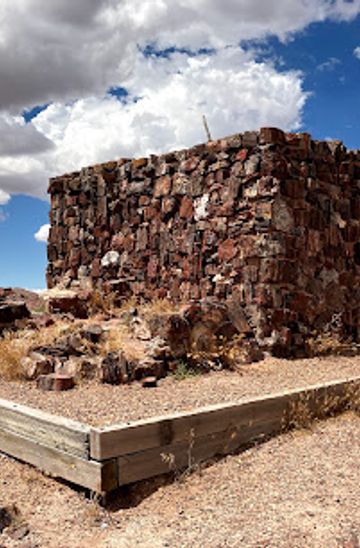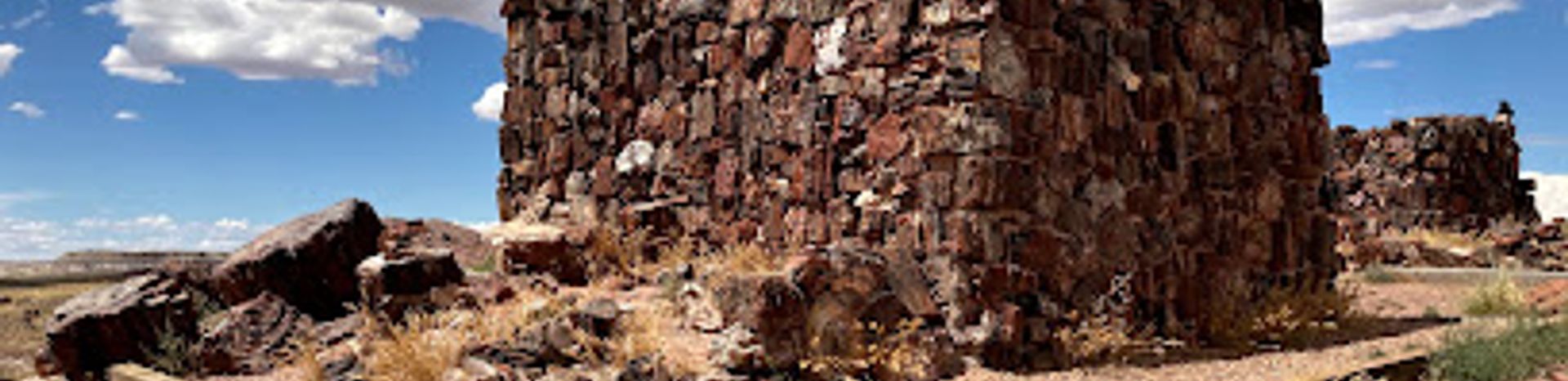
Agate House: A Pueblo of Petrified Wood
Discover Agate House in Petrified Forest National Park: A unique pueblo built of petrified wood, reconstructed to reveal ancient lives.
Agate House, located in Petrified Forest National Park, is a unique partially reconstructed Puebloan building constructed almost entirely of petrified wood around 900 AD and occupied until 1200 AD. Reconstructed in the 1930s, this eight-room structure offers a glimpse into the lives of early inhabitants of the region.
A brief summary to Agate House
- Holbrook, Arizona, 86025, US
- Monday 7 am-7:30 pm
- Tuesday 7 am-7:30 pm
- Wednesday 7 am-7:30 pm
- Thursday 7 am-7:30 pm
- Friday 7 am-7:30 pm
- Saturday 7 am-7:30 pm
- Sunday 7 am-7:30 pm

Know before you go
Hi, I'm Eve. Here are a few practical things to know before exploring Agate House.
- Bring water and wear sun protection, as the trail to Agate House offers little shade.
- Stay on the designated trail to protect the fragile environment and preserve the archaeological site.
- Allow at least 1-2 hours to hike to Agate House and explore the site.
Do you manage this location?
Take control to get all the benefits, like improved information, better appearance, and stronger visibility across AI-powered discovery. Learn more
Activate your presence
Getting There
-
Walking
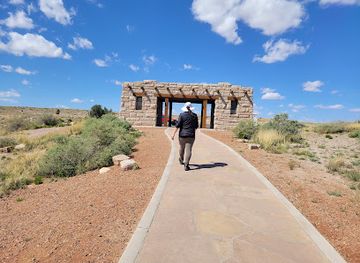
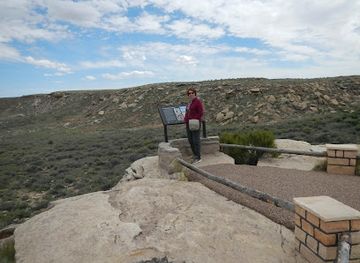
Agate House is accessed via the Agate House Trail, a 2-mile round trip hike from the Rainbow Forest Museum parking lot. From the parking lot, walk east along Petrified Forest Road over Jim Camp Wash to reach the joint Long Logs-Agate House Trailhead. Follow the trail for 0.6 miles until you reach a fork, then follow the sign to the Agate House Trail. Continue along the trail for another 0.4 miles to reach Agate House. Water, sun protection, and comfortable shoes are strongly recommended.
-
Parking
Parking for the Agate House Trail is located at the Rainbow Forest Museum parking lot. This parking lot also serves the Giant Logs Trail and the Rainbow Forest Museum. Parking is free. From the parking lot, the Agate House Trail is accessed via a 2-mile round trip hike.
Discover more about Agate House
Explore the best of what Agate House has to offer













More about Apache County
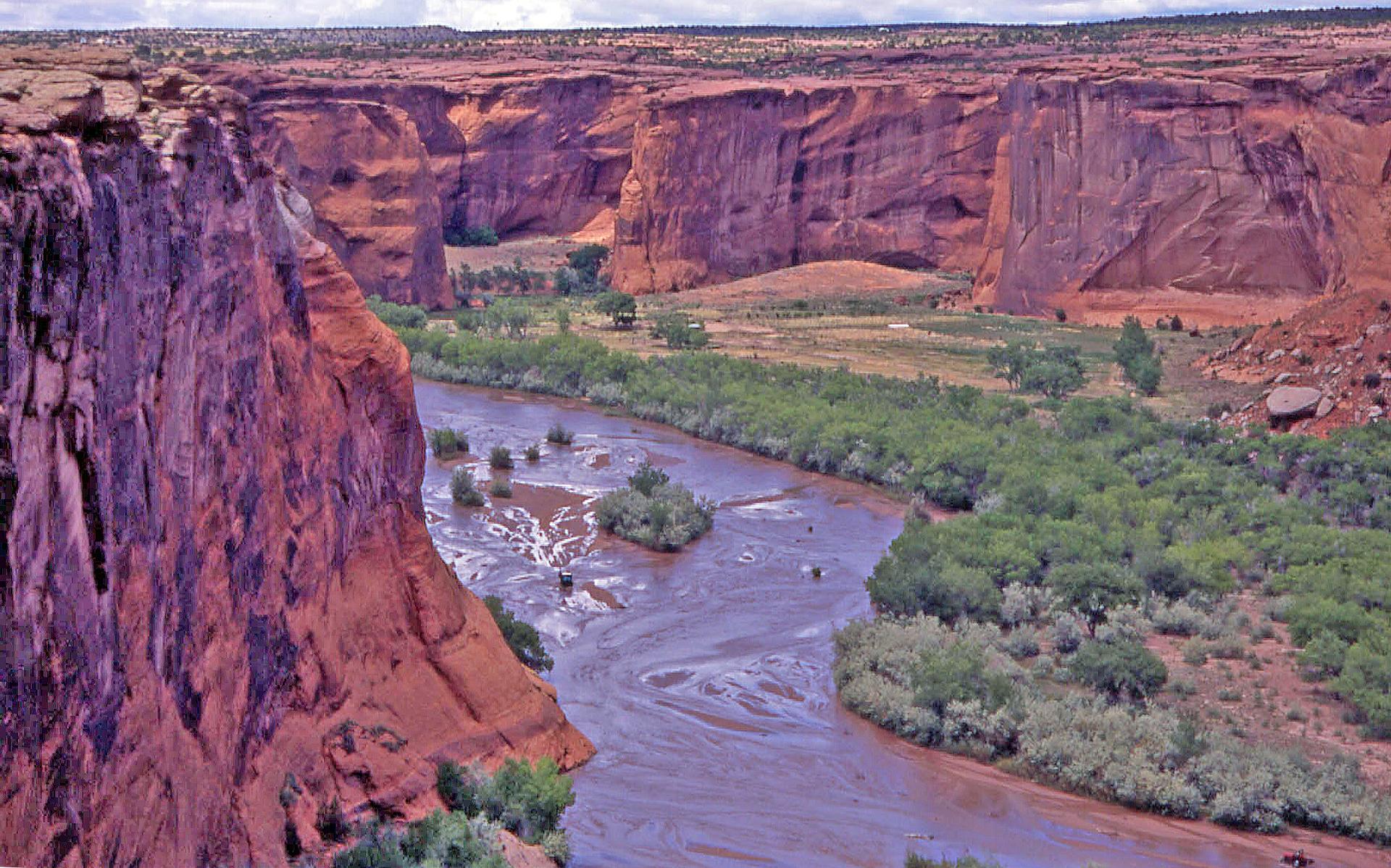
Discover the wonders of Apache County, Arizona: a land of ancient history, stunning landscapes, and rich Native American culture, perfect for outdoor adventures and cultural exploration.
Tell me more about Apache County
Your reliable pit stop in Winslow, AZ, offering fuel, food, EV charging, truck services, and a comfortable travel experience off I-40.
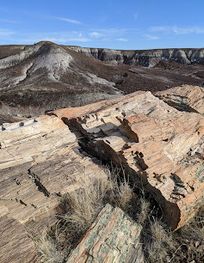
Discover a glittering landscape of ancient petrified trees at Crystal Forest, Petrified Forest National Park. An easy, unforgettable walk through time.