

Free Bisbee Travel Guide & Mobile App
Plan your Bisbee trip with Evendo. Get free guides to top attractions, restaurants, hotels, and bars. Web access or download the mobile app.


Bisbee, Arizona, pairs copper-mining history, colourful hillside streets, desert scenery, galleries and distinctive small-town culture in southeast Arizona.
A Hillside Mining Town
Bisbee occupies a steep-sided canyon in the Mule Mountains of southeast Arizona, close to the Mexican border and roughly 90 miles south-east of Tucson. Its compact historic core climbs sharply above Brewery Gulch, with colourful buildings, narrow streets, stairways and hillside homes reflecting a town shaped by copper. The terrain gives Bisbee an appearance unlike the broad-grid communities of much of the desert Southwest, while its elevation brings cooler temperatures than the surrounding low desert.Read more about Bisbee
Mining Heritage and Local Character
Art, Architecture and the High Desert
When is the best time to visit Bisbee?
Best: April–May, October · 22–27°C| Month | High (°C) | Rainfall (mm) |
|---|---|---|
| January | 11 | 20 |
| February | 14 | 21 |
| March | 18 | 19 |
| April (best) | 22 | 10 |
| May (best) | 27 | 8 |
| June | 33 | 15 |
| July | 34 | 85 |
| August | 33 | 90 |
| September | 29 | 50 |
| October (best) | 23 | 25 |
| November | 15 | 15 |
| December | 11 | 22 |
Getting to and around Bisbee
How to get there
Transportation
Best landmarks in Bisbee
Bisbee’s most significant landmarks express the power and consequences of copper mining. The Copper Queen Hotel, opened in 1902, reflects the confidence of the mining boom and remains one of the town’s most recognisable historic buildings. The Bisbee Courthouse and other civic structures around the historic centre reveal the community’s former regional importance, while the Copper Queen Library stands among the institutions created during the period of prosperity. The Queen Mine shaft and associated industrial remains connect the town directly with underground extraction, whereas the Lavender Pit represents the later shift towards large-scale open-pit methods. The Muheim Heritage House illustrates the domestic world of a prosperous mining-era family, and the closely packed buildings of Old Bisbee demonstrate how the canyon constrained urban form. Together, these places make the town’s architecture a record of labour, commerce, wealth and technological change.
-
Brewery
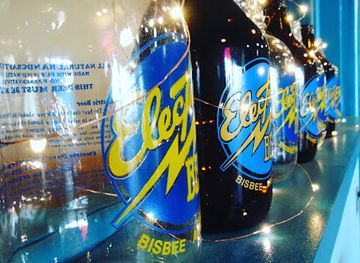
Electric Brewing and Bisbee Sodawerks
Experience Arizona's first microbrewery! Enjoy handcrafted beers, kombucha, and sodas with live music and stunning views in Bisbee's historic San Jose neighborhood.
3 min walk · 0.2 km from city centre
Explore Bisbee on the map
Plan your Bisbee trip on one map. See where the top attractions, landmarks, restaurants, bars and hotels are, find what's near where you're staying, and book hotels and experiences in a few clicks.
Best hotels in Bisbee
Best restaurants in Bisbee
Bisbee’s dining scene is concentrated largely in Old Bisbee, particularly around Main Street and Brewery Gulch, where historic buildings contain cafés, bakeries, casual eateries, bars and small restaurants. Menus reflect southeast Arizona’s proximity to Mexico as well as broader American influences, with Mexican-American dishes, chiles, beans, tortillas and other Sonoran-borderland flavours appearing alongside contemporary cooking. Breakfasts, coffee and informal lunches suit the town’s slow, walkable centre, while evening dining ranges from straightforward pub food to more individualistic independent kitchens. Food shopping is less extensive than in a large city, so visitors should not expect a major permanent market or a broad concentration of specialist retailers. The region’s ranching, desert and borderland setting informs local tastes, while the town’s arts community contributes an experimental, relaxed character to its cafés and restaurants.
-
Fast Food
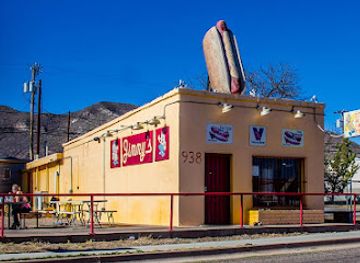
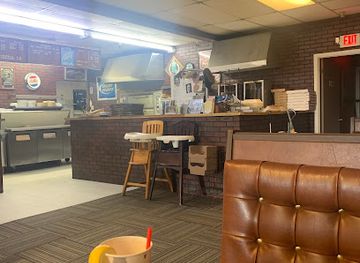
Jimmy's Hot Dog Co
Discover the best hot dogs in Bisbee at Jimmy's Hot Dog Co – where local flavor meets fast food favorites!
16 min walk · 1.3 km from city centre
-
Pizza
Pizzarama
Experience the best of Greek and Italian cuisine at Pizzarama in Bisbee – where every bite tells a delicious story.
17 min walk · 1.4 km from city centre
-
Pizza
Dylan's Pizza Bistro
Experience the best pizza in Bisbee at Dylan's Pizza Bistro—where fresh ingredients meet friendly service in a charming atmosphere.
5 min drive · 1.6 km from city centre
-
Mexican
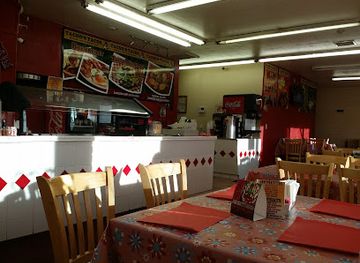
Los Tachos Restaurant
Experience authentic Mexican cuisine at Los Tachos Restaurant in Bisbee - where every bite tells a story of flavor and tradition.
16 min walk · 1.3 km from city centre
Best bars in Bisbee
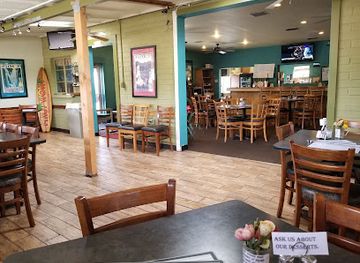
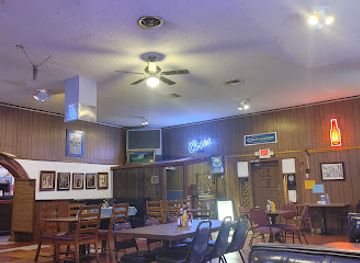
Bisbee’s evening life is intimate rather than club-oriented, with activity centred on the bars, pubs and small venues of Old Bisbee. Brewery Gulch and Main Street have long associations with drinking and entertainment, and the town’s historic interiors give evenings a distinctly local setting. The St Elmo Bar is one of the best-known longstanding venues, while other independent bars may offer live music, informal conversation, dancing or cultural events depending on the programme. Galleries, theatres and community performances can add non-alcoholic options, particularly during festivals and arts-related weekends. There is little reason to expect a large nightclub scene or late-night urban transport network, so visitors should plan their return to accommodation in advance and take care on steep, dimly lit streets after dark.
-
Pizza
Dylan's Pizza Bistro
Discover the flavors of Bisbee at Dylan's Pizza Bistro, where every slice tells a story of local passion and delicious craftsmanship.
5 min drive · 1.6 km from city centre
-
Grill
Double P Roadhouse
Experience the heart of American cuisine at Double P Roadhouse, where hearty meals and local charm meet in the vibrant town of Bisbee, Arizona.
11 min drive · 3.6 km from city centre
-
Mexican
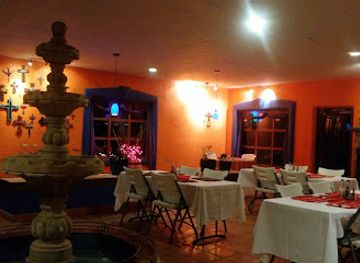
La Ramada Steakhouse & Cantina
Experience the vibrant flavors of Mexico and classic American cuisine at La Ramada Steakhouse & Cantina in Bisbee, Arizona.
6 min drive · 2.0 km from city centre
-
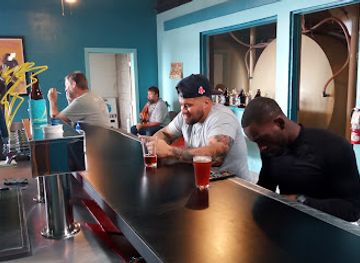
Brewery
Electric Brewing and Bisbee Sodawerks
Explore Electric Brewing and Bisbee Sodawerks for a unique craft beer experience, where local flavors meet a vibrant atmosphere in Bisbee, Arizona.
3 min walk · 0.2 km from city centre
Best nightclubs in Bisbee
Bisbee’s evening life is intimate rather than club-oriented, with activity centred on the bars, pubs and small venues of Old Bisbee. Brewery Gulch and Main Street have long associations with drinking and entertainment, and the town’s historic interiors give evenings a distinctly local setting. The St Elmo Bar is one of the best-known longstanding venues, while other independent bars may offer live music, informal conversation, dancing or cultural events depending on the programme. Galleries, theatres and community performances can add non-alcoholic options, particularly during festivals and arts-related weekends. There is little reason to expect a large nightclub scene or late-night urban transport network, so visitors should plan their return to accommodation in advance and take care on steep, dimly lit streets after dark.
-
Grill
Double P Roadhouse
Experience the heart of American cuisine at Double P Roadhouse in Bisbee, Arizona, where hearty meals meet a welcoming atmosphere.
11 min drive · 3.6 km from city centre
-
Mexican
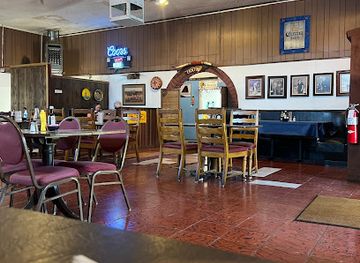
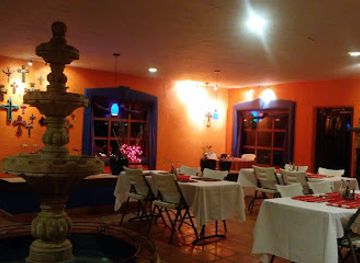
La Ramada Steakhouse & Cantina
Experience the vibrant flavors of Mexico at La Ramada Steakhouse & Cantina in Bisbee, where delicious steaks and authentic dishes await every visitor.
6 min drive · 2.0 km from city centre
Best shops in Bisbee
Shopping in Bisbee is concentrated in Old Bisbee, especially along Main Street, Brewery Gulch and nearby streets where independent galleries, studios, antique shops, bookshops and small retailers occupy former commercial buildings. Local artists sell paintings, photography, ceramics, jewellery, metalwork and other craft items, while vintage and second-hand shops reflect the town’s long association with collectors and creative residents. Visitors may also find regional food products, desert-themed gifts and mining-related objects, although genuine antiques and handmade work vary from shop to shop. The retail experience is shaped less by department stores than by browsing unusual premises and discovering small-scale businesses within the historic streetscape. Warren and Lowell offer a different perspective on the town but are less concentrated as shopping areas than Old Bisbee.
-
Dollar store
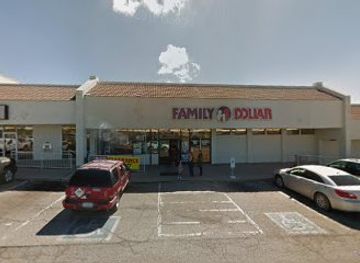
Dollar Tree
Discover unbeatable deals at Dollar Tree in Bisbee, your one-stop shop for affordable essentials, crafts, and more.
18 min walk · 1.4 km from city centre
Get your free copy of our complete guide to Bisbee, delivered straight to you.
Everything on this page, from attractions and restaurants to essentials and local phrases, in one PDF you can read offline, print or share.
Already have an account? Sign in
Your Bisbee guide is ready.
We'll send it to · Not you? Sign out

Getting your guide ready…
We are putting together a fresh copy of the Bisbee guide. This can take up to a minute.
This can take a few moments. If your browser asks, choose Allow so the download can start. You'll find the guide in your Downloads folder.
Nothing happened? Download it again
Sorry, the guide is taking longer than usual. Please try again in a minute, or get it by email instead.
Bisbee essentials
Currency and Payment
Safety
Emergency Situations
Do's and Don'ts
Local Tips
From Eve
Local phrases worth knowing
You don't need to get them perfect. A few words go a long way, and locals appreciate the effort.
Basics
| English | Local | Say it |
|---|---|---|
| Hello | Howdy | [hau-dee] |
| Goodbye | See ya later | [see yuh lay-tur] |
| Yes | Yup | [yuhp] |
| No | Nope | [nohp] |
| Please/You're welcome | Please/No problem | [pleez/noh proh-blem] |
| Thank you | Thanks | [thanks] |
| Excuse me/Sorry | Pardon me/My bad | [pahr-dn mee/my bad] |
| How are you? | Howdy | [hau-dee] |
| Fine. And you? | Fine. And you? | [fahyn. and yuh?] |
| Do you speak English? | You speak English? | [yuh speek ing-glish?] |
| I don't understand | I don't get it | [ahy dohnt get it] |
Eating & Drinking
| English | Local | Say it |
|---|---|---|
| I'd like to see the menu, please | I wanna check out the menu, please | [ahy wah-nuh chek out thee men-yoo, pleez] |
| I don't eat meat | I don't eat meat | [ahy dohnt eet meet] |
| Cheers! | Cheers! | [cheers] |
| I would like to pay, please | I wanna settle up, please | [ahy wah-nuh set-ul uhp, pleez] |
Emergencies
| English | Local | Say it |
|---|---|---|
| Help! | Help! | [help] |
| Go away! | Get lost! | [get lost] |
| Call the Police! | Call the cops! | [kawl thee cops] |
| Call a doctor! | Get me a doc! | [get mee uh dahk] |
| I'm lost | I'm lost | [ahy'm lost] |
| I'm ill | I'm sick | [ahy'm sik] |
Shopping
| English | Local | Say it |
|---|---|---|
| I'd like to buy... | I wanna buy... | [ahy wah-nuh bahy...] |
| I'm just looking | I'm just browsing | [ahym just broh-zing] |
| How much is it? | How much does it cost? | [hau much duhz it kawst?] |
| That's too expensive | That's way pricey | [thats way pry-see] |
| Can you lower the price? | Can ya make it cheaper? | [kan yuh meyk it chee-per?] |
Time & Numbers
| English | Local | Say it |
|---|---|---|
| What time is it? | What time is it? | [what tyme iz it?] |
| It's one o'clock | It's one o'clock | [its wuhn aw-klok] |
| Half past (10) | Half past (10) | [hahf past (ten)] |
| Morning | Morning | [mawr-ning] |
| Afternoon | Afternoon | [af-ter-noon] |
| Evening | Evening | [ee-ven-ing] |
| Yesterday | Yesterday | [yest-er-day] |
| Today | Today | [tuh-day] |
| Tomorrow | Tomorrow | [tuh-mor-row] |
| 1 | 1 | [wuhn] |
| 2 | 2 | [too] |
| 3 | 3 | [three] |
| 4 | 4 | [fawr] |
| 5 | 5 | [fahyv] |
| 6 | 6 | [siks] |
| 7 | 7 | [sev-uhn] |
| 8 | 8 | [eyt] |
| 9 | 9 | [nine] |
| 10 | 10 | [ten] |
Transport & Directions
| English | Local | Say it |
|---|---|---|
| Where's a/the...? | Where's the...? | [wheres thee...?] |
| What's the address? | What's the address? | [whuts thee uh-dress?] |
| Can you show me (on the map)? | Can ya show me (on the map)? | [kan yuh show mee (on thee map)?] |
| When's the next (bus)? | When's the next (bus)? | [whens thee nekst (bus)?] |
| A ticket (to ....) | A ticket (to ....) | [uh tik-it (tu ....)] |
History of Bisbee
Apache Homelands and Borderlands
Before the town developed, the Mule Mountains and surrounding valleys formed part of the wider homeland and sphere of movement of Apache peoples, including communities later identified as Chiricahua and Warm Springs Apache. The region also lay within a borderland shaped by Spanish, Mexican and United States territorial histories. Mining-era accounts often present Bisbee’s origins as a sudden discovery, but that narrative overlooks the people who already knew and used the landscape. The area became part of the United States after the Gadsden Purchase of 1854, and military activity, settlement and prospecting increased across southern Arizona during the following decades.
The Founding of Bisbee
Mineral prospecting in the Mule Mountains intensified in the late 1870s, and the Copper Queen Mine was established in 1877. The settlement that became Bisbee was named after Judge DeWitt Bisbee, an investor in the Copper Queen, and developed from about 1880 as miners, merchants and transport links gathered around the workings. The ore deposits contained copper alongside gold and silver, encouraging substantial investment. Bisbee’s confined canyon dictated its unusual street pattern and dense construction, while the arrival of the railway in the early 1880s connected the mines with wider markets and accelerated the community’s growth.
Copper Boom and Cosmopolitan Growth
During the late nineteenth and early twentieth centuries, Bisbee became a major copper producer and the commercial centre of Cochise County. Companies recruited workers from Mexico, Europe and other parts of the United States, creating a multilingual mining society with pronounced divisions of class, ethnicity and occupation. The town acquired banks, schools, churches, hotels, theatres and substantial commercial buildings, many of which survive in or near Old Bisbee. In 1902 Bisbee was incorporated as a city. Its prosperity depended on underground labour and industrial infrastructure, while company power influenced housing, employment and everyday life.
The Bisbee Deportation of 1917
On 12 July 1917, during a period of wartime labour conflict and heightened anti-radical feeling, armed men rounded up more than a thousand striking miners, suspected sympathisers and other residents in Bisbee. The prisoners were forced onto cattle cars and transported to the New Mexico desert in what became known as the Bisbee Deportation. Local authorities and mining interests justified the action as necessary to preserve order, but the episode has since been widely recognised as a major violation of civil liberties. Its memory remains central to interpretations of Bisbee’s labour history and social divisions.
Open-Pit Mining and Urban Change
As mining technology changed, large-scale surface extraction reshaped the hills around Bisbee. The Lavender Pit, begun in the 1950s near the former Lavender open-pit operation, became a visible reminder of industrial expansion and environmental transformation. Copper production remained the town’s economic foundation until the principal mining operations closed in 1975. The closure brought population loss, commercial decline and uncertainty, but much of the historic building stock remained. The survival of these streets and structures later helped support heritage conservation, tourism and a gradual cultural revival.
An Arts-Oriented Reinvention
From the late twentieth century, artists, craftspeople, writers and preservationists contributed to a new phase in Bisbee’s identity. Former commercial premises and homes in Old Bisbee gained renewed use as galleries, studios, independent shops, restaurants and accommodation, while museums interpreted the mining past for visitors. This transformation did not erase the town’s industrial and working-community history; instead, it placed that history alongside contemporary cultural activity. Bisbee today remains closely associated with copper mining, but its public character also reflects historic preservation, visual arts and the distinctive social life of a small borderland city.
Bisbee in Photos
Browse through our photo collection highlighting the charm and character of the destination.
Cities near Bisbee
The closest cities to Bisbee, if you have time for more than one stop.
-
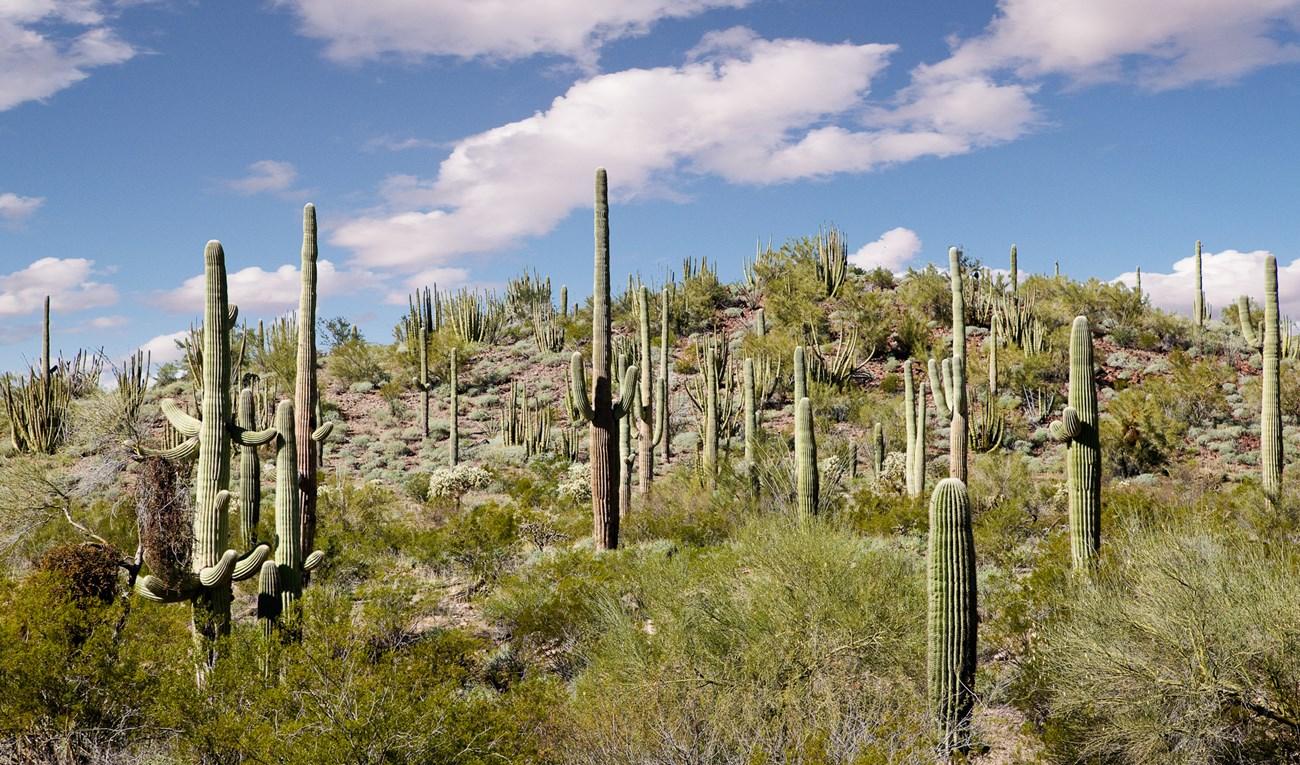 Tucson
Discover Tucson, Arizona: A desert oasis rich in cultural heritage, natural beauty, and culinary delights, perfect for explorers and food enthusiasts alike.
2 h 37 min drive · 137 km from city centre
Tucson
Discover Tucson, Arizona: A desert oasis rich in cultural heritage, natural beauty, and culinary delights, perfect for explorers and food enthusiasts alike.
2 h 37 min drive · 137 km from city centre
-
-

-

-


Swipe for more cities
Explore more

Explore more of Arizona
Discover Arizona: From the majestic Grand Canyon and red rocks of Sedona to the vibrant cities of Phoenix and Scottsdale, explore the diverse beauty and culture of the Grand Canyon State.
Explore Arizona