

Mount Magazine State Park Travel Guide - Free Web & App
Your ultimate guide to Mount Magazine State Park. Discover top landmarks, proposed trips, and local tips. Free on the web or via the Evendo companion app.


Mount Magazine State Park in Arkansas pairs the state’s highest summit with bluff views, forest trails, cabins, wildlife and outdoor adventure in the Ozarks.
Mountain Landscape
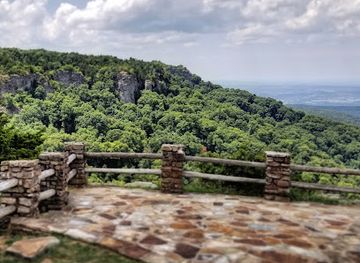
Mount Magazine State Park occupies the summit and upper slopes of Mount Magazine in western Arkansas, where the state’s highest elevation reaches 2,753 feet above sea level. The mountain is part of the Ouachita Mountains, a region of long, folded ridges, wooded valleys and exposed sandstone bluffs. Arkansas Highway 309 climbs from the surrounding countryside to the park, opening broad views towards the Petit Jean River Valley and the distant ranges. Cameron Bluff Overlook is among the most accessible places to appreciate the mountain’s scale, while Signal Hill marks the summit with a short woodland walk.Read more about Mount Magazine State Park
Outdoor Character
Park Life and Nearby Gateways
When is the best time to visit Mount Magazine State Park?
Best: May, September–October · 23–29°C| Month | High (°C) | Rainfall (mm) |
|---|---|---|
| January | 9 | 90 |
| February | 11 | 80 |
| March | 17 | 110 |
| April | 22 | 120 |
| May (best) | 27 | 130 |
| June | 31 | 100 |
| July | 33 | 90 |
| August | 33 | 90 |
| September (best) | 29 | 100 |
| October (best) | 23 | 100 |
| November | 16 | 110 |
| December | 10 | 100 |
Getting to and around Mount Magazine State Park
How to get there
Transportation
Best attractions in Mount Magazine State Park
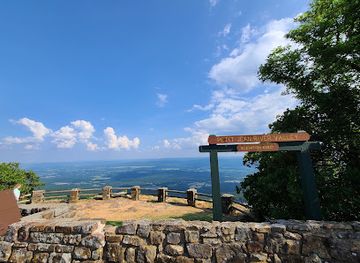
Mount Magazine’s principal attractions are concentrated around the summit and upper slopes. Cameron Bluff Overlook provides one of the park’s clearest views across the Petit Jean River Valley and the Ouachita landscape, while the short Signal Hill Trail leads to the highest point in Arkansas. A network of wooded routes offers more extended exploration, including the Mossback Ridge, Bear Hollow and Greenfield trails, each revealing different aspects of the mountain’s forest, ravines and rocky terrain. The Lodge at Mount Magazine is both a practical visitor base and a prominent scenic destination, with views from the summit area. The park is also known for its hang-gliding facilities, although participation is dependent on conditions, experience and local rules. Outside the park, Paris offers a small-town gateway experience and access to the rural communities and valleys surrounding the mountain rather than a dense collection of major tourist attractions.
-
Visitor center
Visitor Center
Begin your adventure at Mount Magazine State Park Visitor Center, your gateway to Arkansas's highest peak and its natural wonders.
-
Hiking area
High Point Trailhead
Embark on an unforgettable hiking experience from High Point Trailhead, where adventure awaits amidst the breathtaking landscapes of Mount Magazine.
-
Tourist attraction
Mount Magazine Waterfalls
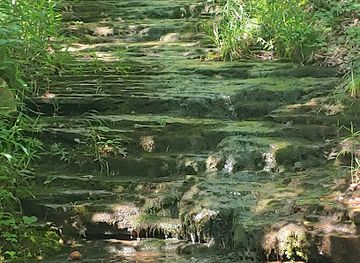
Discover the serene beauty of Mount Magazine Waterfalls, a hidden gem within Arkansas' highest state park, offering a peaceful natural escape.
Explore Mount Magazine State Park on the map
Plan your trip on one map. See where the top attractions, landmarks, restaurants and hotels are, and book hotels and experiences in a few clicks.
Best hotels in Mount Magazine State Park
Best restaurants in Mount Magazine State Park
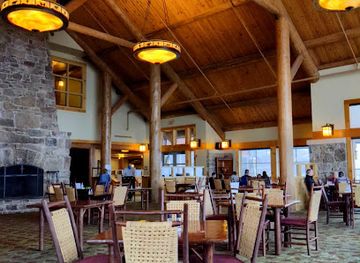
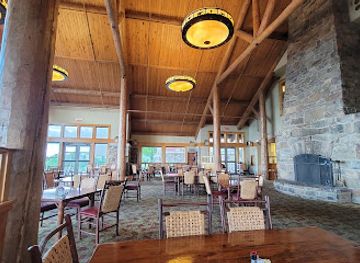
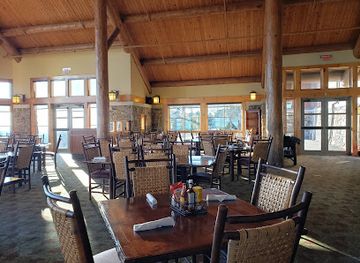
Dining within Mount Magazine State Park is centred on the Lodge at Mount Magazine, whose restaurant serves visitors staying on the summit and those making a scenic visit, subject to current operating arrangements. The choice is not comparable with that of a city or resort, so visitors planning a full day on the trails should carry suitable provisions and confirm food availability in advance. Paris and other nearby communities provide additional everyday dining, including locally oriented restaurants, cafés and small-town establishments, while larger regional centres offer a wider range. The surrounding food culture reflects western Arkansas more than a narrowly defined mountain cuisine, with familiar Southern cooking, locally sourced produce where available and hearty meals suited to rural travel. Farm shops and local food outlets may also occur around the approaches, but they should be treated as seasonal or location-specific rather than guaranteed services.
-
American
The Skycrest Restaurant
Experience exquisite American dining with breathtaking views at Skycrest Restaurant atop Mount Magazine State Park.
Best bars in Mount Magazine State Park
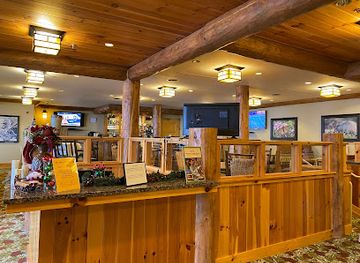
Mount Magazine has a quiet evening atmosphere rather than a dedicated nightlife scene. The lodge may provide the most convenient setting for an evening meal and conversation on the summit, while nearby towns such as Paris have traditional restaurants and local drinking establishments rather than nightclubs or a concentrated entertainment district. Evening appeal is largely tied to the dark, wooded setting, views from accommodation areas and the calm of a state park after day visitors have left. Operating arrangements can vary, particularly outside peak periods, so visitors should not assume late services on the mountain. Those seeking a broader choice of bars, live entertainment or evening venues will need to travel to larger communities beyond the immediate park area.
-
State park
Mount Magazine State Park
Discover breathtaking views and outdoor adventures at Mount Magazine State Park, Arkansas's highest peak, perfect for nature lovers and families.
-
 Lodge
LodgeMount Magazine Lodge
Experience the breathtaking beauty of Mount Magazine Lodge, where nature meets comfort in the heart of Arkansas's stunning landscapes.
-
American
The Skycrest Restaurant
Experience the best of American cuisine with breathtaking views at The Skycrest Restaurant in Mount Magazine State Park.
-
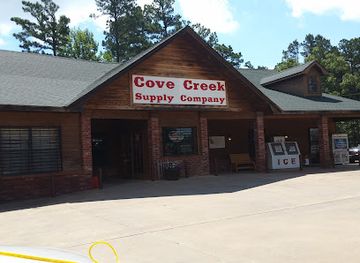
Convenience store
Cove Creek Country Store
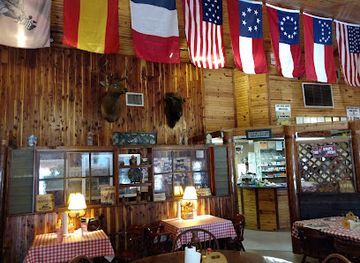
Experience the unique blend of convenience and local charm at Cove Creek Country Store in the heart of Arkansas.
Best shops in Mount Magazine State Park
Shopping at Mount Magazine is limited and practical rather than extensive. The lodge and park facilities may offer souvenirs, interpretive material or visitor essentials, subject to current arrangements, while Paris is the nearest useful place for everyday supplies, gifts and locally made items. Visitors may find regional food products, small-town retail and craft goods in communities around the mountain, although these opportunities are dispersed rather than organised along a single shopping street. Outdoor equipment and additional provisions are more reliably sourced in larger nearby towns before the ascent. Purchases associated with the area commonly reflect Arkansas and the Ouachita region through local food, handmade goods, artwork and nature-themed souvenirs, but availability varies between businesses and seasons.
-
State park
Mount Magazine State Park
Experience the breathtaking beauty and outdoor adventure at Mount Magazine State Park, Arkansas' highest peak, where nature and tranquility await.
-
Lodge
Mount Magazine Lodge
Discover the breathtaking beauty and outdoor adventures at Mount Magazine Lodge, Arkansas' highest peak, perfect for nature lovers and explorers.
-
American
The Skycrest Restaurant
Experience the flavors of American cuisine with breathtaking views at Skycrest Restaurant in Mount Magazine State Park, Arkansas.
-
Convenience store
Cove Creek Country Store
Discover Cove Creek Country Store in Arkansas: your perfect stop for convenience, tasty American food, and a welcoming atmosphere for weary travelers.
Get your free copy of our complete guide to Mount Magazine State Park, delivered straight to you.
Everything on this page, from attractions and restaurants to essentials and local phrases, in one PDF you can read offline, print or share.
Already have an account? Sign in
Your Mount Magazine State Park guide is ready.
We'll send it to · Not you? Sign out

Getting your guide ready…
We are putting together a fresh copy of the Mount Magazine State Park guide. This can take up to a minute.
This can take a few moments. If your browser asks, choose Allow so the download can start. You'll find the guide in your Downloads folder.
Nothing happened? Download it again
Sorry, the guide is taking longer than usual. Please try again in a minute, or get it by email instead.
Mount Magazine State Park essentials
Currency and Payment
Safety
Emergency Situations
Do's and Don'ts
Local Tips
From Eve
Local phrases worth knowing
You don't need to get them perfect. A few words go a long way, and locals appreciate the effort.
Basics
| English | Local | Say it |
|---|---|---|
| Hello | Howdy | [hau-dee] |
| Goodbye | See ya | [see yuh] |
| Yes | Yep | [yep] |
| No | Nah | [nah] |
| Please/You're welcome | Please/No problem | [pleez/no problem] |
| Thank you | Thanks | [thanks] |
| Excuse me/Sorry | Pardon me/My bad | [pahr-dn mee/my bad] |
| How are you? | How ya doin'? | [hau yuh doo-in] |
| Fine. And you? | Doin' alright. You? | [doo-in' aw-rite. yuh?] |
| Do you speak English? | Ya speak English? | [ya speak ing-glish] |
| I don't understand | I ain't gettin' ya | [ai-nt get-tin yuh] |
Eating & Drinking
| English | Local | Say it |
|---|---|---|
| I'd like to see the menu, please | Can I check out the menu? | [kan ai chek out the men-yoo] |
| I don't eat meat | I don't do meat | [ai doo-nt doo meet] |
| Cheers! | Cheers! | [cheers] |
| I would like to pay, please | Can I settle up, please | [kan ai set-tul up, please] |
Emergencies
| English | Local | Say it |
|---|---|---|
| Help! | Help! | [help] |
| Go away! | Get lost! | [get lost] |
| Call the Police! | Get the cops! | [get the cops] |
| Call a doctor! | Get a doc! | [get a doc] |
| I'm lost | I'm turned around | [ai-m turnd a-round] |
| I'm ill | I ain't feelin' right | [ai-nt feel-in rite] |
Shopping
| English | Local | Say it |
|---|---|---|
| I'd like to buy... | I wanna get... | [ai wan-na get] |
| I'm just looking | Just browsing | [just brow-zing] |
| How much is it? | What's the damage? | [whats the dam-ij] |
| That's too expensive | That's steep | [thats steep] |
| Can you lower the price? | Can ya knock it down? | [kan yuh nok it down] |
Time & Numbers
| English | Local | Say it |
|---|---|---|
| What time is it? | What's the time? | [whats the time] |
| It's one o'clock | It's one | [its one] |
| Half past (10) | Half ten | [half ten] |
| Morning | Mornin' | [mor-nin] |
| Afternoon | Afternoon | [after-noon] |
| Evening | Evenin' | [eve-nin] |
| Yesterday | Yest'day | [yes-t-day] |
| Today | Today | [to-day] |
| Tomorrow | Tomorrah | [to-mar-rah] |
| 1 | One | [wun] |
| 2 | Two | [too] |
| 3 | Three | [three] |
| 4 | Four | [four] |
| 5 | Five | [five] |
| 6 | Six | [six] |
| 7 | Seven | [sev-en] |
| 8 | Eight | [ate] |
| 9 | Nine | [nine] |
| 10 | Ten | [ten] |
Transport & Directions
| English | Local | Say it |
|---|---|---|
| Where's a/the...? | Where's the...? | [wheres the] |
| What's the address? | What's the addy? | [whats the add-ee] |
| Can you show me (on the map)? | Can ya point it out? | [kan yuh point it out] |
| When's the next (bus)? | When's the next (bus)? | [whens the next bus] |
| A ticket (to ....) | A ticket (to ....) | [a ticket to] |
History of Mount Magazine State Park
An Ancient Ouachita Mountain Landscape
Mount Magazine belongs to the Ouachita Mountains, whose folded ridges developed through major geological processes long before human settlement. Resistant sandstone and other folded rock layers helped create the elongated uplands and bluff-lined slopes characteristic of western Arkansas. The mountain’s elevation gives it a cooler, more exposed environment than the valleys below, while its forests and ravines reflect the influence of aspect, rainfall and changing temperatures. This geological setting explains why Mount Magazine is experienced less as an isolated peak than as a high ridge within a wider mountain system.
Indigenous Homelands and Early Settlement
The Ouachita region has long been inhabited and travelled by Indigenous peoples, including communities associated with the Caddo and later the Osage in the broader Arkansas landscape. European-American settlement expanded in the surrounding valleys during the nineteenth century, with agriculture, timber and small-scale local trade shaping the communities below the mountain. The summit environment itself remained comparatively remote, and the steep slopes and forested terrain limited intensive development. Nearby settlements such as Paris grew as agricultural and commercial centres serving the surrounding uplands and valleys.
Forestry, Roads and Recreation
Like much of the Ouachita region, Mount Magazine was affected by the changing timber economy and the construction of roads that connected upland communities with larger markets. Improved access gradually changed the mountain from a remote landscape into a recreational destination. Scenic driving, hiking, hunting and appreciation of the highland views became increasingly important uses alongside forestry and rural land management. The ascent now used by visitors follows Arkansas Highway 309, which provides access from the valley to the summit area and links Mount Magazine with the surrounding countryside.
Creation of the State Park
Mount Magazine State Park was established in the late twentieth century to protect the summit landscape and provide public access to its scenery and recreation. The park’s visitor facilities, including the Lodge at Mount Magazine, cabins, campsites, trails and overlooks, were developed as part of a planned approach to tourism and conservation. Rather than turning the mountain into a heavily urbanised resort, the park concentrates infrastructure in selected areas while retaining extensive forest and natural surroundings. Its modern identity is therefore closely tied to both landscape protection and managed outdoor recreation.
Mount Magazine State Park in Photos
Browse through our photo collection highlighting the charm and character of the destination.
Neighbouring destination travel guides
The closest destinations to Mount Magazine State Park, if you have time for more than one.
-

-

-

-

-
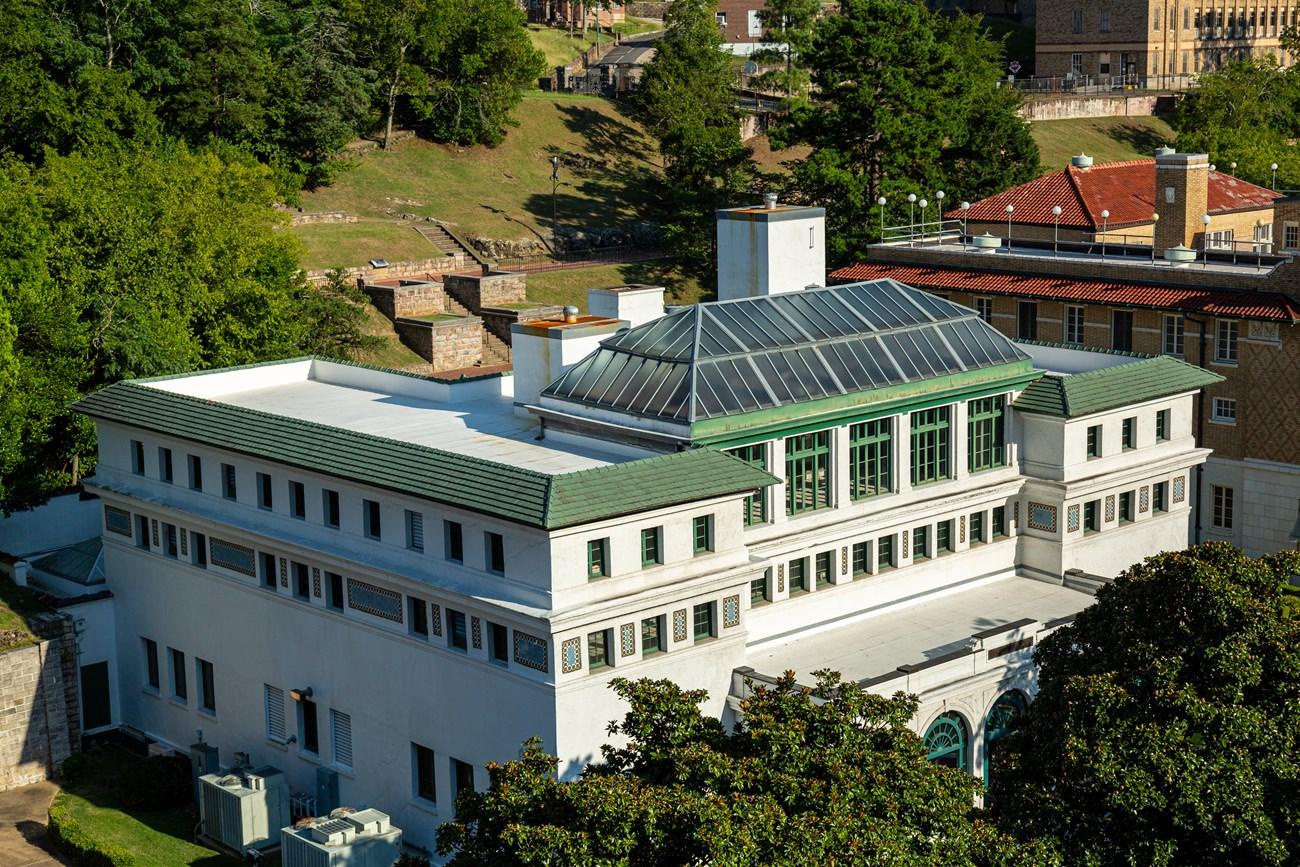 Hot Springs National Park
 in Arkansas pairs historic Bathhouse Row with thermal waters, forested Ouachita trails, scenic drives and American spa heritage.
Hot Springs National Park
Hot Springs National Park in Arkansas pairs historic Bathhouse Row with thermal waters, forested Ouachita trails, scenic drives and American spa heritage.


Swipe for more destinations
Explore more

Explore more of Arkansas Valley
Explore Arkansas Valley landscapes, frontier history, mountain parks, river towns, wildlife refuges and lake recreation across west-central Arkansas.
Explore Arkansas Valley
Explore more of Arkansas
Explore Arkansas: The Natural State with its stunning landscapes, rich history, and vibrant cultural experiences. Perfect for adventurers and culture seekers alike.
Explore Arkansas