

Natural Pool Travel Guide - Free Web & App
Your ultimate guide to Natural Pool. Discover top landmarks, proposed trips, and local tips. Free on the web or via the Evendo companion app.


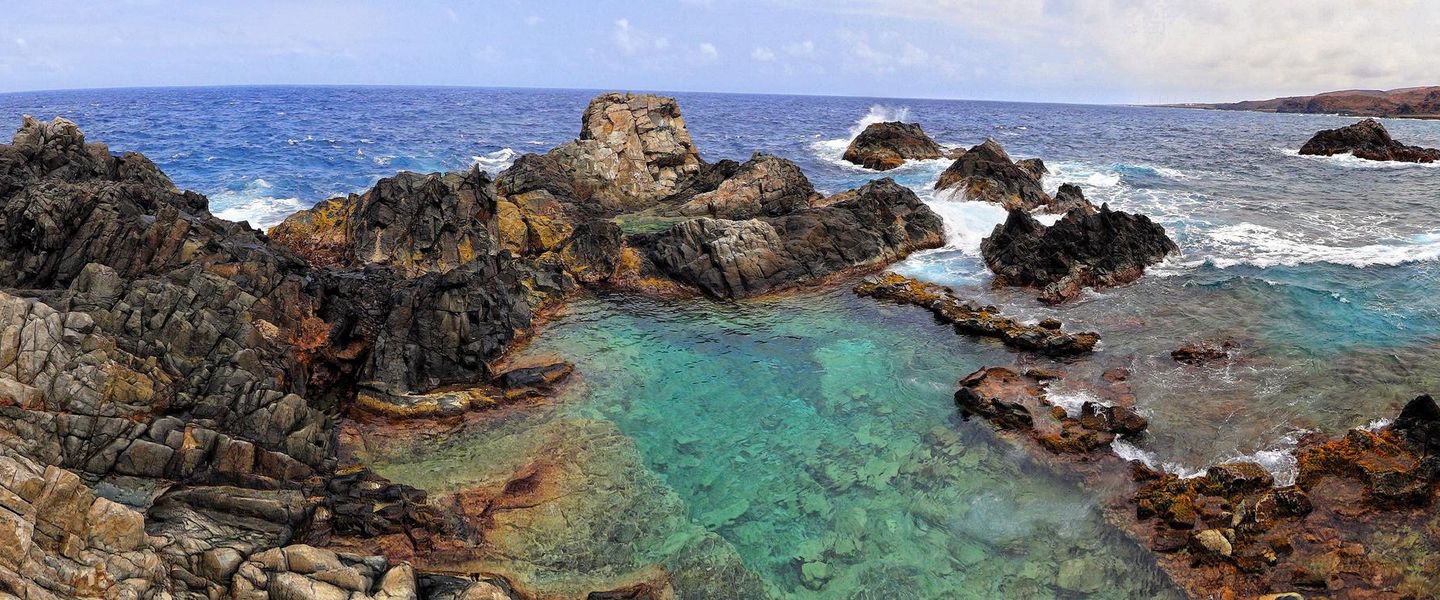


Natural Pool Aruba, or Conchi, combines a volcanic seawater cove, Arikok National Park scenery, rugged coastlines and memorable 4x4 excursions.
Landscape and Setting
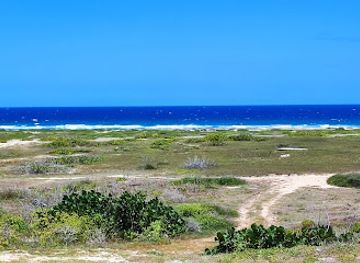
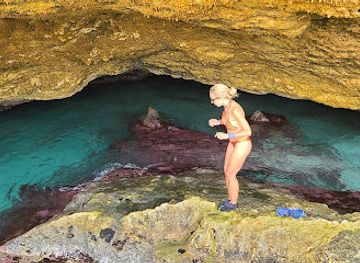
Natural Pool, commonly known as Conchi, is a compact coastal attraction within Arikok National Park on Aruba’s rugged eastern shore. A ring of dark volcanic rock shelters a seawater pool from the open Caribbean, although waves can still surge over its rim and conditions can change quickly. The setting is distinctly different from Aruba’s developed western beaches: dry hills, prickly-pear cactus, wind-shaped vegetation and pale limestone meet a coastline exposed to the Atlantic swell.Read more about Natural Pool
Visiting the Pool
Natural and Cultural Context
When is the best time to visit Natural Pool?
Best: February–April · 31°C| Month | High (°C) | Rainfall (mm) |
|---|---|---|
| January | 31 | 40 |
| February (best) | 31 | 35 |
| March (best) | 31 | 35 |
| April (best) | 31 | 30 |
| May | 32 | 30 |
| June | 32 | 30 |
| July | 32 | 30 |
| August | 32 | 30 |
| September | 32 | 30 |
| October | 32 | 30 |
| November | 31 | 35 |
| December | 31 | 40 |
Getting to and around Natural Pool
How to get there
Transportation
Best attractions in Natural Pool
Natural Pool is the principal attraction, a seawater basin enclosed by coastal volcanic rock within Arikok National Park. Around it, the park opens into a dry landscape of cactus, thorn scrub, rugged hills and exposed shorelines rather than conventional sandy beaches. Visitors commonly combine Conchi with Fontein Cave, where Indigenous rock art survives on the limestone walls, and Quadiriki Cave, a larger cavern system with naturally formed chambers and openings. Along the coast, the California and Boca Prins areas provide contrasting views of Aruba’s wave-battered eastern side, while the park’s roads and trails reveal changing mixtures of limestone, volcanic rock and arid vegetation. The exact combination depends on access conditions and the chosen excursion, and some areas require appropriate vehicles or walking preparation. The attractions are best understood as parts of one protected landscape, with geology, Indigenous heritage and coastal ecology closely connected.
-
Historical landmark
California Lighthouse
Discover Aruba's iconic California Lighthouse: panoramic views, rich history, and stunning sunsets await on the island's northern tip.
-
Tourist attraction
Baby Beach
Discover Baby Beach: Aruba's family-friendly paradise with calm waters, snorkeling, and sun-soaked relaxation near San Nicolas.
-
Beach
Mangel Halto
Discover Mangel Halto: Aruba's tranquil escape with calm waters, vibrant marine life, and picturesque mangroves for an unforgettable snorkeling experience.
-
Historical landmark
Red Anchor
A towering tribute to lost seafarers, the Red Anchor offers a glimpse into Aruba's maritime history and a stunning photo opportunity.
Best landmarks in Natural Pool
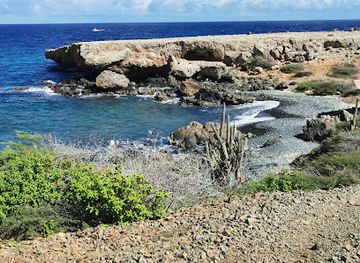
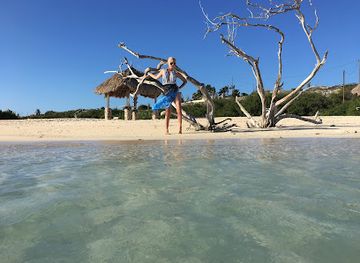
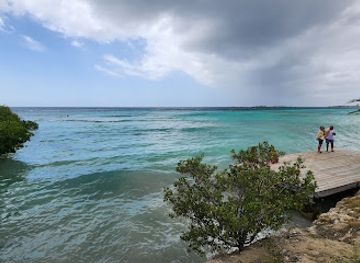
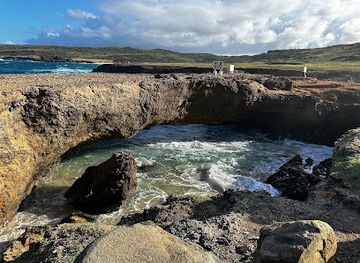
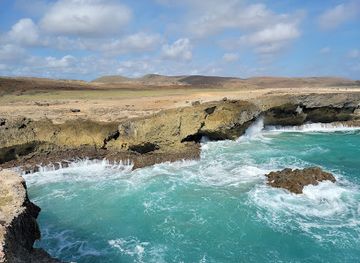
Natural Pool, or Conchi, is the defining landmark of this part of Arikok National Park: a seawater hollow protected by a rough volcanic-rock enclosure on Aruba’s exposed eastern coast. Its significance comes from the unusual meeting of a sheltered bathing basin and a powerful open sea, with the rock rim continually exposed to wave action. The wider landmark landscape includes the park’s volcanic hills and limestone formations, Fontein Cave with its Indigenous pictographs, and Quadiriki Cave, whose chambers illustrate the island’s underground geology. Coastal features such as the Boca Prins area and nearby wave-cut formations reinforce the contrast between Aruba’s developed western beaches and its windward shore. These are natural and cultural landmarks rather than monumental architecture, and their value depends on preserving the terrain, rock art, habitats and coastal character within the protected park.
-
Tourist attraction
Natural Bridge Aruba
Explore the Natural Bridge in Aruba, a stunning geological formation and historical landmark that showcases the island's natural beauty.
-
Tourist attraction
Casibari Rock Formations
Discover the stunning Casibari Rock Formations in Aruba, where nature's beauty meets breathtaking landscapes and adventure awaits.
-
National park
Arikok National Park
Explore Arikok National Park - Aruba's stunning national park featuring diverse landscapes, rich wildlife, and cultural history, perfect for eco-tourism and adventure.
-
Tourist attraction
De Palm Island
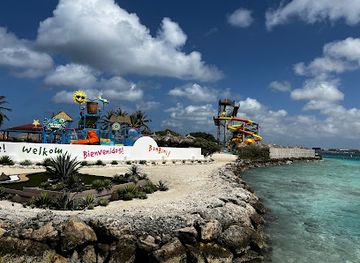
Experience the ultimate tropical getaway at De Palm Island, Aruba's premier water park and nature escape with endless fun for all ages.
Explore Natural Pool on the map
Plan your trip on one map. See where the top attractions, landmarks, restaurants and hotels are, and book hotels and experiences in a few clicks.
Best hotels in Natural Pool
Best restaurants in Natural Pool
Natural Pool has no restaurant, café or food stall, so eating is normally arranged before entering Arikok National Park or after returning to Aruba’s settled western and southern areas. Oranjestad and the resort districts around Palm Beach and Eagle Beach offer the broadest choice, while San Nicolas and other established settlements provide additional places to eat outside the attraction. Visitors can find restaurants serving Caribbean-influenced cooking, seafood, international dishes and Aruban specialities, alongside bakeries, cafés and casual takeaways. Local food traditions reflect the island’s Dutch, Caribbean and Latin American connections, with ingredients such as fresh fish, stewed meats, cheese and pan bati appearing in different forms. A packed meal may be practical for a full park outing, but it should be carried responsibly and all waste removed, as Natural Pool itself has no dining infrastructure.
-
Seafood
Flying Fishbone
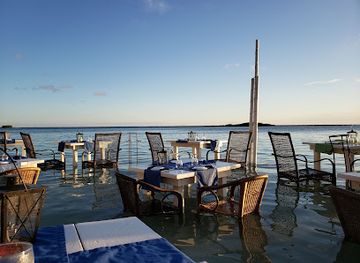
Experience exquisite seafood dining with breathtaking views at Flying Fishbone in Savaneta, Aruba.
-
Restaurant
Passions On The Beach
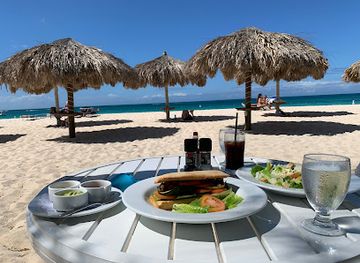
Experience exquisite seafood dining at Passions On The Beach in Aruba, where breathtaking ocean views meet culinary artistry.
-
Restaurant
Madame Janette
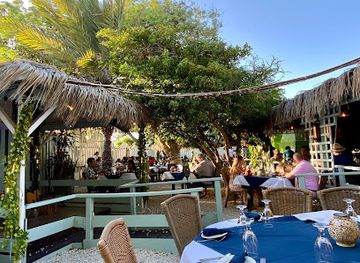
Experience the best of Caribbean cuisine at Madame Janette, where exquisite dishes meet an enchanting atmosphere in Aruba.
-
Restaurant
West Deck
Experience exquisite Caribbean cuisine with breathtaking ocean views at West Deck in Oranjestad, Aruba.
Best bars in Natural Pool
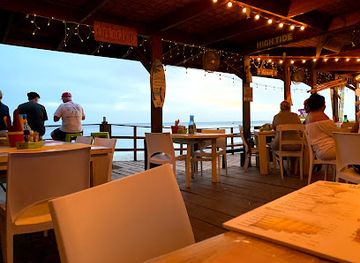
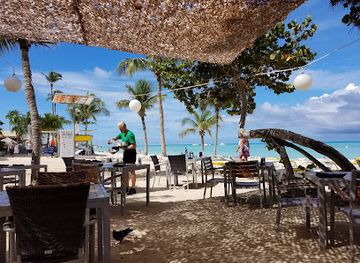
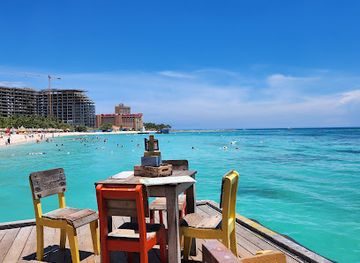
Natural Pool is a daytime nature attraction with no bar, nightclub or evening entertainment at the site. After visiting, most travellers return to the western resort corridor or Oranjestad, where the island’s established nightlife is concentrated in hotel bars, beach venues, restaurants and casual pubs. Palm Beach generally has the greatest concentration of visitor-oriented evening activity, while Oranjestad offers a more urban selection of bars and restaurants; availability and atmosphere vary by season and day of the week. San Nicolas has its own local character and occasional cultural activity, but it should not be confused with a large nightclub district. In and around Arikok National Park, evenings are quiet and rural, with darkness, wind and the sounds of the coast replacing organised entertainment.
-
Restaurant
MooMba Beach Bar & Restaurant
Experience the best of Caribbean dining at MooMba Beach Bar & Restaurant, where every meal is accompanied by stunning ocean views and a lively atmosphere.
-
Grill
Bugaloe
Experience the vibrant flavors and lively atmosphere of Bugaloe, Aruba's premier beachside grill, where every meal comes with a breathtaking ocean view.
-
Bar
Reflexions Beach Bar & Restaurant Aruba
Discover the ultimate beachside dining experience at Reflexions Beach Bar & Restaurant in Aruba, where stunning views meet delicious cuisine.
-
Bar
Surfside Beach Bar
Discover Surfside Beach Bar in Aruba, a lively beachside retreat offering delicious drinks, stunning ocean views, and a vibrant atmosphere.
Best nightclubs in Natural Pool
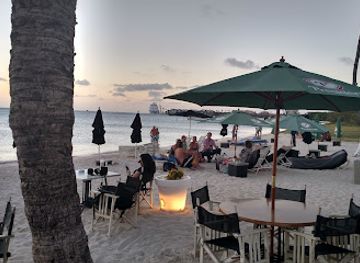
Natural Pool is a daytime nature attraction with no bar, nightclub or evening entertainment at the site. After visiting, most travellers return to the western resort corridor or Oranjestad, where the island’s established nightlife is concentrated in hotel bars, beach venues, restaurants and casual pubs. Palm Beach generally has the greatest concentration of visitor-oriented evening activity, while Oranjestad offers a more urban selection of bars and restaurants; availability and atmosphere vary by season and day of the week. San Nicolas has its own local character and occasional cultural activity, but it should not be confused with a large nightclub district. In and around Arikok National Park, evenings are quiet and rural, with darkness, wind and the sounds of the coast replacing organised entertainment.
-
Tourist attraction
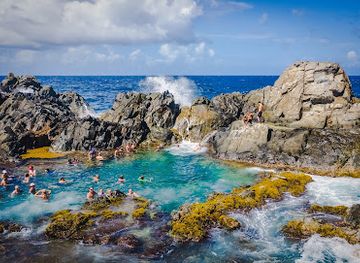
Conchi Natural Pool
Explore the serene beauty of Conchi Natural Pool, a hidden gem in Aruba, where adventure meets tranquility amidst stunning landscapes.
-
Night club
Reflexions Beach Bar & Restaurant Aruba
Experience the vibrant nightlife and delectable cuisine of Reflexions Beach Bar & Restaurant, where the Caribbean meets culinary excellence.
-
Night club
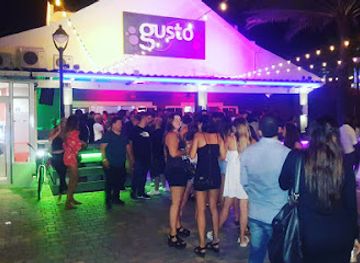
Gusto Night Club Aruba
Experience the electrifying nightlife at Gusto Night Club Aruba, the ultimate destination for dance, drinks, and unforgettable memories.
-
Disco club
Cage Night club
Discover Cage Night Club, Aruba's vibrant disco and gay night club, where inclusive nightlife and electric energy create unforgettable experiences.
Best shops in Natural Pool
There is no shopping at Natural Pool itself, and Arikok National Park should be treated as a protected natural area rather than a commercial attraction. Visitors normally buy water, snacks, sun protection and practical outdoor items before travelling from Oranjestad, the hotel districts or other established settlements. Aruba’s main visitor areas offer supermarkets, convenience shops, souvenir outlets, galleries and retailers selling island-themed goods, while Oranjestad provides the widest general shopping choice. Regional purchases may include local snacks, crafts, artwork, beachwear and practical equipment, although products vary between businesses and should not automatically be assumed to be locally made. Buying from legitimate shops and taking reusable items into the park reduces the pressure created by single-use packaging in a remote coastal environment.
-
Shopping mall
Palm Beach Plaza Mall
Explore Palm Beach Plaza Mall for a unique blend of shopping, dining, and entertainment in Aruba's vibrant atmosphere.
-
Museum
Aruba Aloe Factory Museum and Store
Explore Aruba's aloe vera heritage at the Aruba Aloe Factory Museum and Store, where culture and nature intertwine in a captivating experience.
-
Tourist attraction
Conchi Natural Pool
Explore the breathtaking Conchi Natural Pool in Santa Cruz, Aruba—a stunning natural oasis for adventure and relaxation.
-
Shopping mall
Royal Plaza Mall
Discover the ultimate shopping experience at Royal Plaza Mall in Oranjestad, Aruba, where vibrant shops and delightful dining await.
Get your free copy of our complete guide to Natural Pool, delivered straight to you.
Everything on this page, from attractions and restaurants to essentials and local phrases, in one PDF you can read offline, print or share.
Already have an account? Sign in
Your Natural Pool guide is ready.
We'll send it to · Not you? Sign out

Getting your guide ready…
We are putting together a fresh copy of the Natural Pool guide. This can take up to a minute.
This can take a few moments. If your browser asks, choose Allow so the download can start. You'll find the guide in your Downloads folder.
Nothing happened? Download it again
Sorry, the guide is taking longer than usual. Please try again in a minute, or get it by email instead.
Natural Pool essentials
Currency and Payment
Safety
Emergency Situations
Do's and Don'ts
Local Tips
From Eve
Local phrases worth knowing
You don't need to get them perfect. A few words go a long way, and locals appreciate the effort.
Basics
| English | Local | Say it |
|---|---|---|
| Hello | Bon dia | [Bon dee-ah] |
| Goodbye | Ayo | [Ah-yo] |
| Yes | Si | [See] |
| No | No | [Noh] |
| Please/You're welcome | Por fabor | [Por fah-bor] |
| Thank you | Danki | [Dahn-kee] |
| Excuse me/Sorry | Scusa | [Skoo-sah] |
| How are you? | Con ta bai? | [Kon tah bah-ee?] |
| Fine. And you? | Bon. I bo? | [Bon. Ee boh?] |
| Do you speak English? | Bo papia ingles? | [Boh pah-pee-ah een-gless?] |
| I don't understand | Mi no ta compronde | [Mee noh tah kom-prohn-day] |
Eating & Drinking
| English | Local | Say it |
|---|---|---|
| I'd like to see the menu, please | Mi kier mira e menu, por fabor | [Mee kee-er mee-rah eh meh-noo, por fah-bor] |
| I don't eat meat | Mi no come karni | [Mee noh koh-meh kar-nee] |
| Cheers! | Salud! | [Sah-lood] |
| I would like to pay, please | Mi kier paga, por fabor | [Mee kee-er pah-gah, por fah-bor] |
Emergencies
| English | Local | Say it |
|---|---|---|
| Help! | Yuda! | [Yoo-dah] |
| Go away! | Bai for di aki! | [Bah-ee fohr dee ah-kee] |
| Call the Police! | Yama polis! | [Yah-mah poh-lees] |
| Call a doctor! | Yama un dokter! | [Yah-mah oon dohk-ter] |
| I'm lost | Mi ta perdi | [Mee tah pehr-dee] |
| I'm ill | Mi ta malu | [Mee tah mah-loo] |
Shopping
| English | Local | Say it |
|---|---|---|
| I'd like to buy... | Mi kier cumpra... | [Mee kee-er koom-prah] |
| I'm just looking | Mi ta mira solamente | [Mee tah mee-rah soh-lah-men-teh] |
| How much is it? | Cuanto ta costa esaki? | [Kwan-toh tah kohs-tah eh-sah-kee?] |
| That's too expensive | Esaki ta muchu caro | [Eh-sah-kee tah moo-choo kah-roh] |
| Can you lower the price? | Bo por baha e preis? | [Boh por bah-hah eh preis?] |
Time & Numbers
| English | Local | Say it |
|---|---|---|
| What time is it? | Kuantu ora e ta? | [Kwan-too oh-rah eh tah?] |
| It's one o'clock | E ta un ora | [Eh tah oon oh-rah] |
| Half past (10) | Mita (10) | [Mee-tah (10)] |
| Morning | Madruga | [Mah-droo-gah] |
| Afternoon | Atardi | [Ah-tar-dee] |
| Evening | Anochi | [Ah-noh-chee] |
| Yesterday | Ayer | [Ah-yer] |
| Today | Awe | [Ah-weh] |
| Tomorrow | Mañana | [Mah-nyah-nah] |
| 1 | 1 | [1] |
| 2 | 2 | [2] |
| 3 | 3 | [3] |
| 4 | 4 | [4] |
| 5 | 5 | [5] |
| 6 | 6 | [6] |
| 7 | 7 | [7] |
| 8 | 8 | [8] |
| 9 | 9 | [9] |
| 10 | 10 | [10] |
Transport & Directions
| English | Local | Say it |
|---|---|---|
| Where's a/the...? | Unda ta e...? | [Oon-dah tah eh...?] |
| What's the address? | Kico ta e adres? | [Kee-koh tah eh ah-dress?] |
| Can you show me (on the map)? | Bo por mustra mi (riba e mapa)? | [Boh por moos-trah mee (ree-bah eh mah-pah)?] |
| When's the next (bus)? | Con ta e siguiente (bus)? | [Kon tah eh see-gwee-en-teh (boos)?] |
| A ticket (to ....) | Un ticket (pa ....) | [Oon tee-ket (pah ....)] |
History of Natural Pool
Volcanic Foundations and Coastal Change
Natural Pool occupies a coast shaped by Aruba’s complex geological history. The island contains older volcanic rocks as well as younger limestone formations, and along the eastern shore wave action has exploited weaknesses in the rock to create inlets, cavities and natural basins. Conchi is therefore a geological feature formed through the continuing interaction of solid coastal rock and a powerful sea, rather than a constructed bathing place. The exposed shoreline of eastern Aruba remains subject to erosion, storm swell and the gradual reshaping of its natural openings.
Indigenous Aruba
Long before European settlement, Aruba was inhabited by Indigenous peoples associated with the Caquetío, part of the wider Arawakan cultural world of the Caribbean. The most visible surviving evidence in the landscape around the modern national park is found in rock art, particularly the pictographs preserved in Fontein Cave. These sites demonstrate that Aruba’s dry interior and coast had cultural meaning as well as practical value. No specific Indigenous tradition is securely documented as being attached to Natural Pool itself, but Conchi lies within a wider cultural landscape marked by early human presence.
Colonial Land Use and Rural Life
Aruba became part of the Spanish colonial sphere after European contact and later passed under Dutch control, while its small rural communities adapted to an exceptionally dry environment. Across the island, people used limited arable land, raised animals and relied on coastal and marine resources; natural springs, caves and sheltered areas were important in a landscape with scarce freshwater. The eastern coast remained relatively remote compared with the settled western side. Its harsh terrain and exposure limited large-scale development, helping preserve the rocky setting that visitors encounter around Conchi today.
Arikok National Park and Modern Conservation
The creation of Arikok National Park established a framework for protecting a substantial part of Aruba’s interior and south-eastern coast, including Natural Pool, caves, hills, dry woodland and important habitats. Conservation management has become increasingly significant as tourism has grown and off-road excursions have made remote coastal features more accessible. Conchi is now understood not simply as a scenic bathing place but as part of a protected environment vulnerable to erosion, litter, excessive vehicle pressure and disturbance. Visitors experience the site within that modern balance between access and preservation.
Natural Pool in Photos
Browse through our photo collection highlighting the charm and character of the destination.
Cities in Natural Pool
The towns and cities of Natural Pool, and the easiest places to base yourself.
-

-

-

-

-

-


Swipe for more cities
Neighbouring destination travel guides
The closest destinations to Natural Pool, if you have time for more than one.
-

-

-

-
-


Swipe for more destinations
Explore more

Explore more of Aruba
Discover Aruba, the Caribbean's sun-drenched paradise with pristine beaches, rich culture, and warm hospitality. Your perfect getaway awaits on this happy island.
Explore Aruba