

City Centre (Canberra) Travel Guide - Free
Explore City Centre in Canberra with Evendo's free guide. Find the best shops, historic streets, restaurants, and gems on web or mobile.


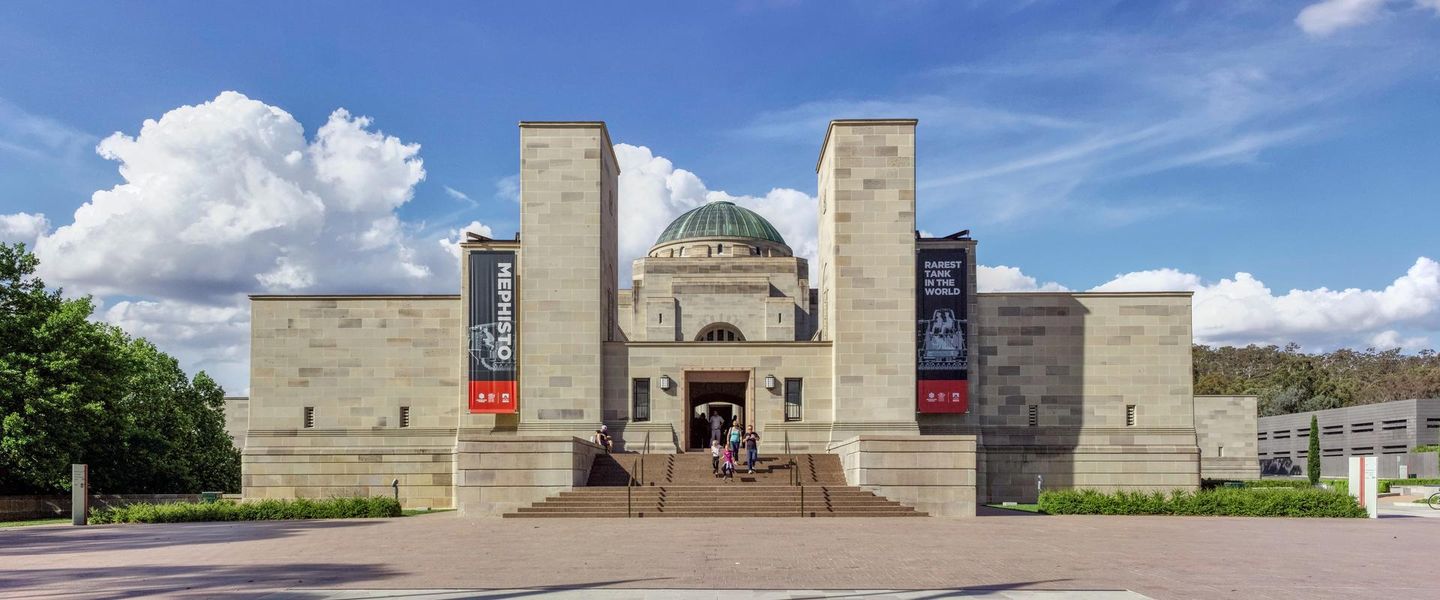


City Centre Canberra, Australia, brings Civic markets, museums, theatre and central dining together near Lake Burley Griffin and national attractions.
A Planned Capital at Street Level
Canberra's City Centre, commonly known as Civic, is the urban core of Australia's purpose-built national capital. It occupies the commercial and civic heart of the city, where broad avenues, public squares and carefully arranged government-era buildings meet a contemporary collection of shops, cafés, theatres and cultural venues. The area is more compact and walkable than Canberra's widely dispersed suburbs, making it a useful base for understanding how the capital works beyond its parliamentary precincts.Read more about City Centre
Squares, Parks and Public Buildings
Everyday Civic Culture
Explore City Centre on the map
A handpicked selection of must-see spots in City Centre, mapped for you.
Best hotels in City Centre
City Centre essentials
Getting There
Getting Around
Safety
Emergency Situations
Do's and Don'ts
Local Tips

From Eve
Local phrases worth knowing
You don't need to get them perfect. A few words go a long way, and locals appreciate the effort.
Basics
| English | Local | Say it |
|---|---|---|
| Hello | G'day | [g'day] |
| Goodbye | See ya | [see ya] |
| Yes | Yeah | [yeah] |
| No | Nah | [nah] |
| Please/You're welcome | No worries | [no worries] |
| Thank you | Cheers | [cheers] |
| Excuse me/Sorry | Sorry mate | [sorry mate] |
| How are you? | How ya going? | [how ya going] |
| Fine. And you? | Good mate. You? | [good mate. you] |
| Do you speak English? | You speak English? | [you speak english] |
| I don't understand | I'm lost mate | [I'm lost mate] |
Eating & Drinking
| English | Local | Say it |
|---|---|---|
| I'd like to see the menu, please | Can I check the menu? | [can I check the menu] |
| I don't eat meat | I'm vego | [I'm vego] |
| Cheers! | Cheers! | [cheers] |
| I would like to pay, please | Can I pay now? | [can I pay now] |
Emergencies
| English | Local | Say it |
|---|---|---|
| Help! | Help! | [help] |
| Go away! | Bugger off! | [bugger off] |
| Call the Police! | Dial 000! | [dial triple zero] |
| Call a doctor! | Get a doc! | [get a doc] |
| I'm lost | I'm bloody lost | [I'm bloody lost] |
| I'm ill | I'm crook | [I'm crook] |
Shopping
| English | Local | Say it |
|---|---|---|
| I'd like to buy... | I wanna buy... | [I wanna buy] |
| I'm just looking | Just browsing | [just browsing] |
| How much is it? | How much? | [how much] |
| That's too expensive | Too pricey | [too pricey] |
| Can you lower the price? | Can you do a deal? | [can you do a deal] |
Time & Numbers
| English | Local | Say it |
|---|---|---|
| What time is it? | What's the time? | [what's the time] |
| It's one o'clock | It's one | [it's one] |
| Half past (10) | Half ten | [half ten] |
| Morning | Mornin' | [mornin'] |
| Afternoon | Arvo | [arvo] |
| Evening | Evenin' | [evenin'] |
| Yesterday | Yesty | [yesty] |
| Today | Today | [today] |
| Tomorrow | Tomorra | [tomorra] |
| 1 | One | [one] |
| 2 | Two | [two] |
| 3 | Three | [three] |
| 4 | Four | [four] |
| 5 | Five | [five] |
| 6 | Six | [six] |
| 7 | Seven | [seven] |
| 8 | Eight | [eight] |
| 9 | Nine | [nine] |
| 10 | Ten | [ten] |
Transport & Directions
| English | Local | Say it |
|---|---|---|
| Where's a/the...? | Where's the...? | [where's the] |
| What's the address? | What's the addy? | [what's the addy] |
| Can you show me (on the map)? | Can you show me (on map)? | [can you show me on map] |
| When's the next (bus)? | When's the next (bus)? | [when's the next bus] |
| A ticket (to ....) | A ticket to .... | [a ticket to] |
History of City Centre
The Federal Capital Takes Shape
The City Centre exists because Canberra was selected as Australia's federal capital in 1908 and developed as a planned city rather than growing organically around an older town centre. Walter Burley Griffin's winning 1912 design placed a formal urban centre, known as Civic, within a larger composition of avenues, hills, government areas and the future lake. Construction of the capital began in the early twentieth century, and the central district gradually acquired the roads, public buildings and commercial functions needed by a growing federal city. Its spacious geometry remains one of the clearest local expressions of Canberra's planned origins.
Civic and the Griffin Framework
The name Civic reflects the district's intended role as Canberra's civic and commercial centre. City Hill and the surrounding road system were important elements in Griffin's conception of a grand central axis, although the city developed through successive adaptations rather than according to the original plan in every detail. London Circuit, Northbourne Avenue and nearby avenues established strong connections between Civic, the parliamentary areas and northern suburbs. As government departments, businesses and services expanded, the centre became the everyday urban counterpart to the ceremonial national institutions located across Lake Burley Griffin.
A Commercial and Cultural Centre
During the later twentieth century, Civic developed from a primarily administrative centre into a broader commercial and entertainment district. Pedestrian areas such as City Walk and Garema Place encouraged shopping, outdoor dining and public gathering, while Canberra Theatre Centre added an important performing-arts presence. The opening and subsequent expansion of Canberra Centre strengthened the area's role as the metropolitan region's principal retail destination. Nearby offices, apartments and hotels also brought more residents and visitors into the centre beyond traditional business hours, changing Civic from a daytime government quarter into a mixed-use urban district.
Contemporary Civic Canberra
In recent decades, the City Centre has continued to absorb new apartments, offices, hospitality venues and public-realm upgrades while retaining its planned avenues and civic spaces. Canberra Museum and Gallery, established in the modern city centre, gives the district a place to interpret local history and culture rather than only national political narratives. Development around City Hill, London Circuit and the eastern edge of Civic has prompted continuing discussions about density, transport and the balance between Griffin's spacious design and a more active urban core. The result is a district where planned openness and contemporary city life remain visibly interwoven.
City Centre in Photos
Browse through our photo collection highlighting the charm and character of the destination.
Neighbourhoods near City Centre
The closest neighbourhoods to City Centre, if you have time for more than one stop.
-

-

-

-

-


Swipe for more neighbourhoods
Explore more

Explore more of Canberra
Canberra blends Australia’s national museums, Parliament House, lakeside walks and bushland with thoughtful architecture and a relaxed cultural scene.
Explore Canberra