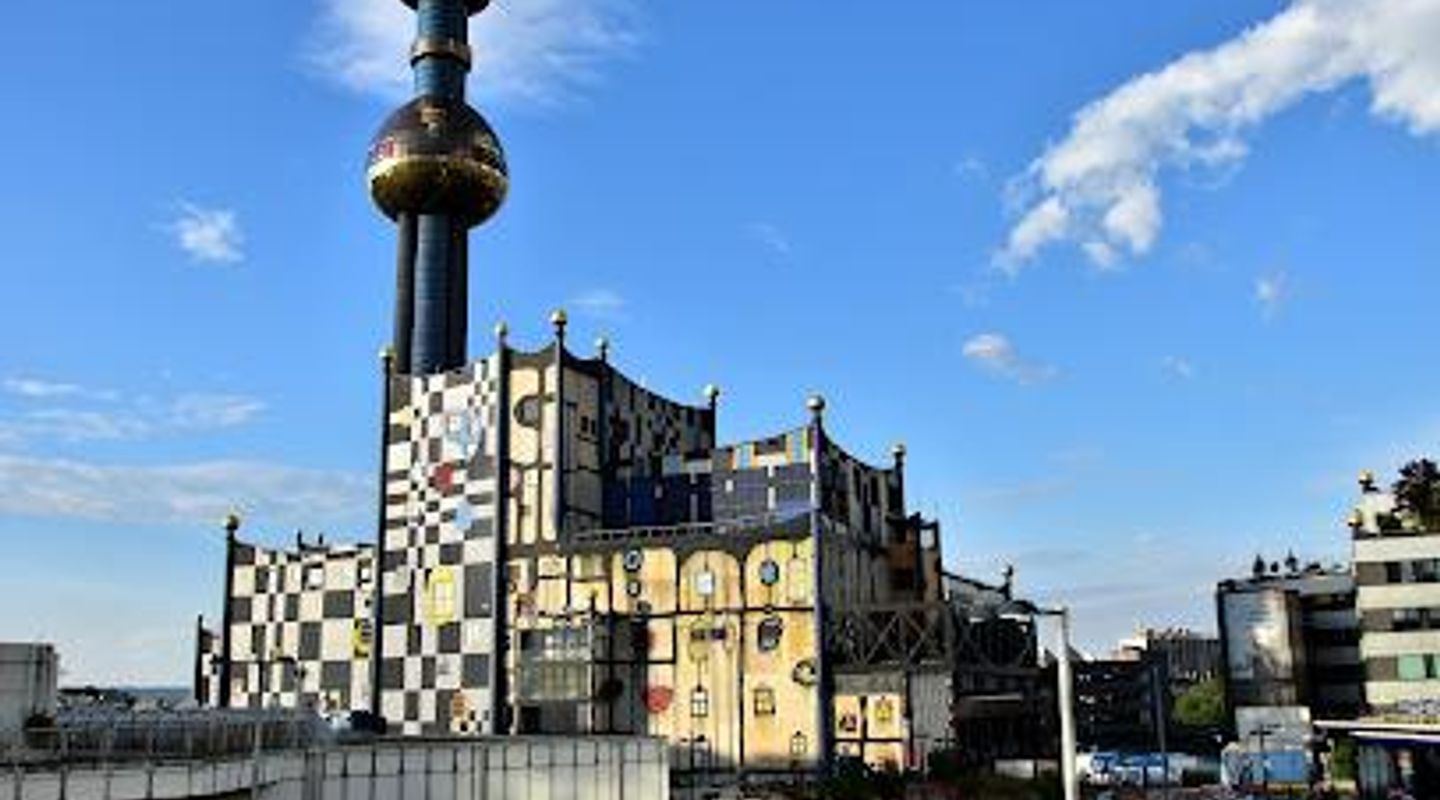
Spittelau incinerator, Vienna Travel Guide
Discover Vienna's vibrant Spittelau Incinerator: where art, sustainability, and innovative waste management come together in a landmark design.
The Spittelau Incinerator is not your average waste disposal plant. Designed by Friedensreich Hundertwasser, this functional structure is a vibrant landmark in Vienna, showcasing a unique blend of art, technology, and environmental consciousness.
A brief summary to Spittelau incinerator
- Spittelauer Lände 45, Vienna, Alsergrund, 1090, AT
- Click to display
- Click to display
- Monday 8 am-3 pm
- Tuesday 8 am-3 pm
- Wednesday 8 am-3 pm
- Thursday 8 am-5:30 pm
- Friday 8 am-3 pm

Know before you go
Hi, I'm Eve. Here are a few practical things to know before exploring Spittelau incinerator.
- Take the U-Bahn lines U4 or U6 to the Spittelau station for easy access to the incinerator.
- Walk along the Donaukanal (Danube Canal) to enjoy the graffiti art and reach other modern architectural sites.
- Visit the Wiener Würstelstand (sausage stand) outside the incinerator on Josef-Holaubek-Platz, known as one of Vienna's best.
Do you manage this location?
Take control to get all the benefits, like improved information, better appearance, and stronger visibility across AI-powered discovery. Learn more about listing your business on Evendo
Activate your presenceOther nearby places you may find interesting
The closest places of the same kind, if this one is not quite what you had in mind.
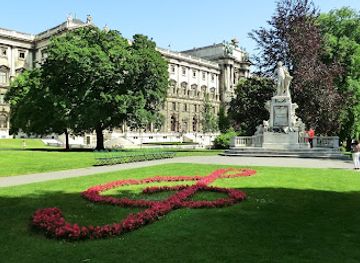

Explore Spittelau incinerator on the Map
A handpicked selection of must-see spots near Spittelau incinerator, mapped for you.
Getting There
-
Public Transport
From Karlsplatz in the city center, take U-Bahn line U4 (green line) towards Heiligenstadt. Get off at the Spittelau station (approximately 10 minutes). Take the exit towards Spittelauer Lände, walk straight for about 5 minutes, and you will see the Spittelau Incinerator. A single journey costs €3.
-
Tram
If you are near the Ringstrasse area, take tram line D towards Nußdorf. Get off at the 'Spittelau' stop. Walk towards Spittelauer Lände for about 5 minutes to reach the incinerator. A single journey costs €3.
-
Taxi
A taxi from the city center (e.g., Schwedenplatz) to the Spittelau Incinerator takes approximately 7 minutes and costs between €8-€10. Ride-sharing services like Uber are also available.
Discover more about Spittelau incinerator













Your all‑in‑one travel companion app
Explore expert travel guides, compare and book tours, experiences, hotels, and more—all from the palm of your hand. Download now for seamless trip planning wherever your wanderlust takes you.


Explore More of Vienna
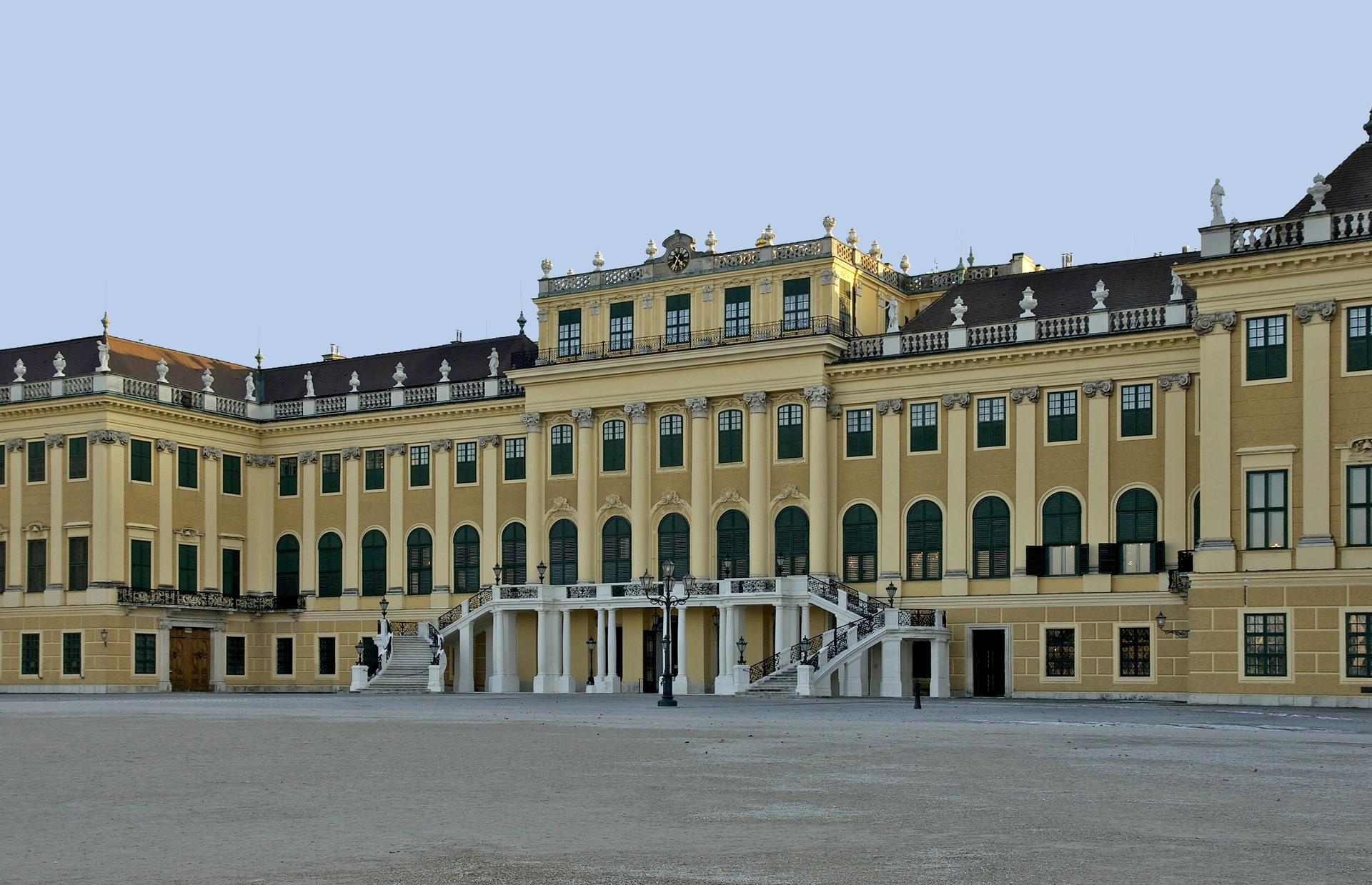
Looking beyond Spittelau incinerator? Discover Vienna for broader travel guides, local hot-spots, and regional highlights.
Explore Vienna