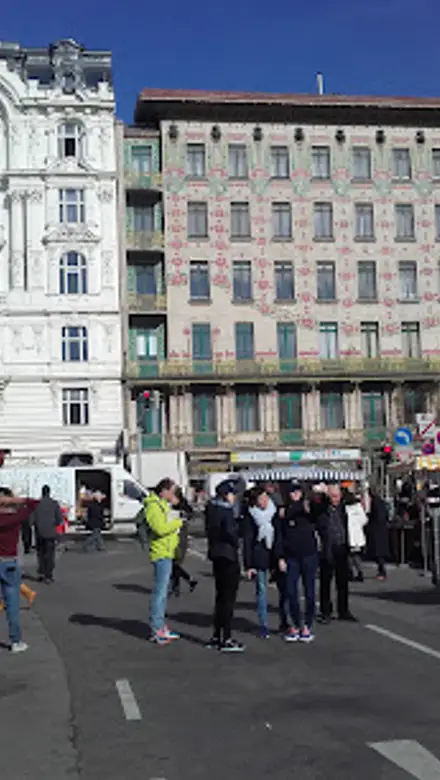
Goldenes Haus, Vienna Travel Guide
Free Guide: Admire the gilded facade of this Jugendstil masterpiece, reflecting Vienna's Secessionist art movement on the vibrant Linke Wienzeile.


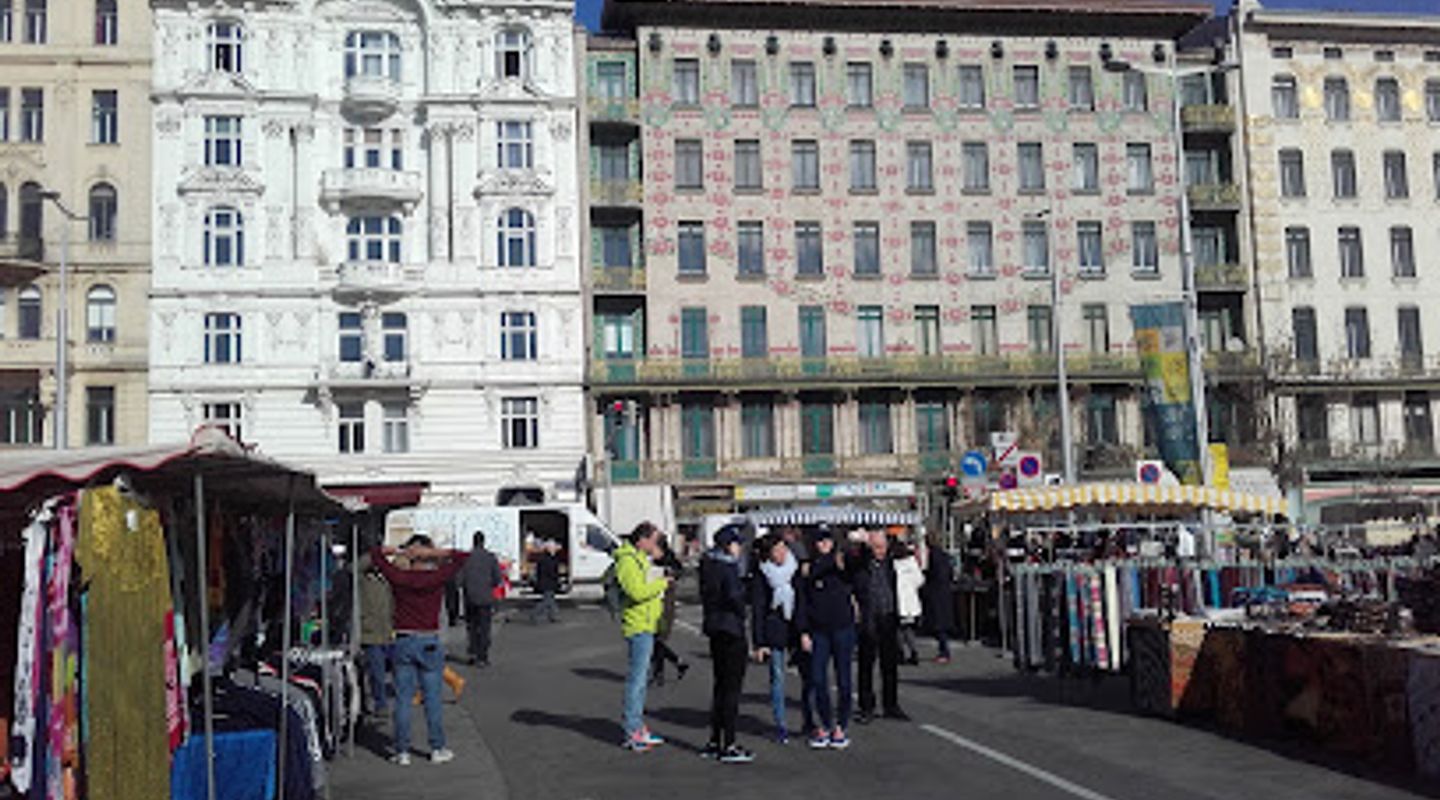
A brief summary of Goldenes Haus
Admire the gilded facade of this Jugendstil masterpiece, reflecting Vienna's Secessionist art movement on the vibrant Linke Wienzeile.
The Goldenes Haus (Golden House) is a remarkable example of Viennese Jugendstil architecture, located on Linke Wienzeile. Its ornate facade, adorned with gilded stucco medallions, reflects the artistic innovation of Vienna's Secession movement at the turn of the 20th century.
- Address
- Linken Wienzeile 38, 1060 Wien
Getting there
Walking
Public Transport
Taxi/Ride-Share
Discover more about Goldenes Haus
Overview
The Goldenes Haus, situated at Linke Wienzeile 38 in Vienna's Mariahilf district, stands as a testament to the city's rich artistic heritage and the innovative spirit of the Jugendstil movement. Also known as the House with Medallions, it is part of a trio of apartment buildings designed in the late 1890s, envisioned as part of a grand boulevard.While the specific architect of the Goldenes Haus is debated, its design aligns with the aesthetic principles of Jugendstil, the German Art Nouveau. The building's facade features a blend of ornamentation and functionality, with golden accents highlighting its architectural details. The gilded stucco medallions, created by Koloman Moser, a key member of the Vienna Secession, are particularly striking. These medallions, along with the building's overall design, exemplify the Secession's embrace of modern materials and simplified forms, while incorporating decorative elements inspired by nature and geometric patterns.The Vienna Secession was an art movement formed in 1897 by Austrian artists who sought to break free from the conservative artistic establishment. Gustav Klimt was its most famous member. The Secession's influence extended beyond painting and sculpture to encompass architecture, design, and the applied arts, with a focus on creating Gesamtkunstwerke, or total works of art, that integrated all aspects of the built environment.Located on Linke Wienzeile, the Goldenes Haus is surrounded by cafes, shops, and other architectural gems. A stroll along this historic street offers a glimpse into Vienna's artistic legacy. Nearby attractions include the Naschmarkt, Vienna's largest open-air market, and the Secession Building, showcasing the works of Gustav Klimt.
Evendo Review Centre
 Google
Guest reviews
Explore Goldenes Haus on the map
A handpicked selection of must-see spots near Goldenes Haus, mapped for you.
Get your free copy of our complete guide to Goldenes Haus, delivered straight to you.
Everything on this page, from opening hours and how to get there to Eve’s tips and the best time to go, in one PDF you can read offline, print or share.
Already have an account? Sign in
Your Goldenes Haus guide is ready.
We'll send it to · Not you? Sign out

Getting your guide ready…
We are putting together a fresh copy of the Goldenes Haus guide. This can take up to a minute.
This can take a few moments. If your browser asks, choose Allow so the download can start. You'll find the guide in your Downloads folder.
Nothing happened? Download it again
Sorry, the guide is taking longer than usual. Please try again in a minute, or get it by email instead.
Other nearby places you may find interesting
The closest places of the same kind, if this one is not quite what you had in mind.
-
-
-

-
-


Swipe for more places
More to explore near Goldenes Haus

 Best experiences near Goldenes Haus
 Best hotels near Goldenes Haus
 Best landmarks near Goldenes Haus
 Best attractions near Goldenes Haus
 Best shops near Goldenes Haus
 Best restaurants near Goldenes Haus
 Best bars near Goldenes Haus
Do you manage this location?
Take control to get all the benefits, like improved information, better appearance, and stronger visibility across AI-powered discovery.
Explore more

Explore more of Vienna
Discover Vienna: A harmonious blend of imperial grandeur, classical music heritage, and modern culture, offering unforgettable experiences at every turn.
Explore Vienna
Explore more of Austria
Discover Austria's blend of alpine landscapes, rich cultural heritage, and culinary delights, from Vienna's historic charm to Tyrol's dramatic beauty.
Explore Austria