

Free Weinviertel Travel Guide & Mobile App
Explore Weinviertel with free travel guides. Discover regional history, expert tips, proposed trips, and audio guides on web or mobile app.


Explore Weinviertel’s vineyard landscapes, cellar lanes, market towns, archaeology and Lower Austrian food culture north-east of Vienna.
Read more about Weinviertel
When is the best time to visit Weinviertel?
Best: June–August · 24–26°C| Month | High (°C) | Rainfall (mm) |
|---|---|---|
| January | 4 | 25 |
| February | 4 | 25 |
| March | 10 | 30 |
| April | 15 | 35 |
| May | 20 | 45 |
| June (best) | 24 | 55 |
| July (best) | 26 | 65 |
| August (best) | 24 | 60 |
| September | 21 | 50 |
| October | 15 | 35 |
| November | 8 | 30 |
| December | 4 | 25 |
Getting to and around Weinviertel
How to get there
Transportation
Top city travel guides in Weinviertel
The cities of Weinviertel, and the easiest places to base yourself.
-

-


Swipe for more cities
Best attractions in Weinviertel
Weinviertel’s attractions are spread through a rural landscape rather than concentrated in one city. Wine tourism is the central thread, with tastings, vineyard walks and traditional Kellergassen around Retz, Poysdorf, Falkenstein and other wine villages. Historic market towns add churches, civic squares, museums and local collections, while the MAMUZ Museum at Asparn an der Zaya combines archaeological interpretation with an outdoor park of reconstructed prehistoric buildings. The MAMUZ site at Schloss Asparn is particularly valuable for understanding the region’s long human history rather than simply viewing artefacts in isolation. The Leiser Berge Nature Park offers walking routes through low wooded hills and open farmland, with hilltop viewpoints and archaeological associations. In the east, the March-Thaya floodplain landscape provides quieter opportunities for birdwatching, cycling and nature observation. Castle ruins at Falkenstein and Staatz introduce medieval history, while Laa an der Thaya offers thermal bathing and a more relaxed town-based experience. Cycling routes connect vineyards, villages and agricultural scenery, though visitors should plan for limited services between settlements. Seasonal wine festivals and cellar openings can be rewarding, but dates and access arrangements vary, so checking locally before travelling is important.
-
Castle
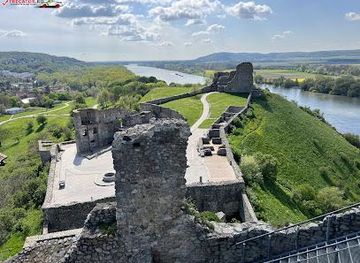
Hrad Devín
Explore the dramatic ruins of Devín Castle, a symbol of Slovak history, perched high above the Danube and Morava rivers.
-
Tourist attraction
Tierpark Stadt Haag
Discover over 700 animals from 70 species in natural settings at Tierpark Stadt Haag, a perfect family day out in beautiful Lower Austria.
-
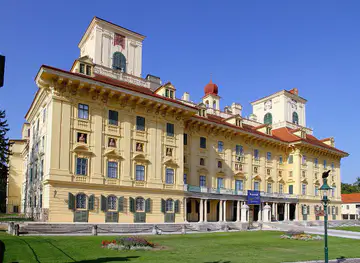
Castle
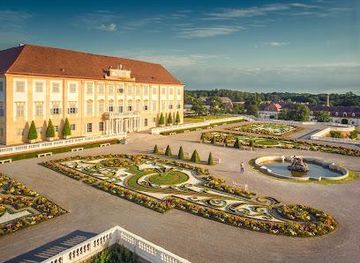
Schloss Hof
Discover the opulence of Austrian royalty at Schloss Hof, a sprawling baroque estate with magnificent gardens and a charming estate farm.
-
Museum
Römerstadt Carnuntum
Step back in time at Römerstadt Carnuntum, Austria's reconstructed Roman city, and explore ancient life along the Danube Limes.
Best landmarks in Weinviertel
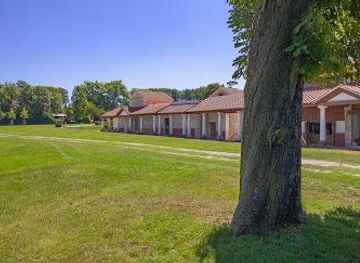
The dominant visual landmarks of Weinviertel are its vineyard slopes, loess terraces and cellar lanes. Retz’s historic main square and extensive underground wine-cellar system express the town’s long relationship with viticulture, while the town’s fortifications and churches add architectural depth. Poysdorf is marked by its wine-town identity, with cellar lanes and wine-related buildings woven into the settlement and surrounding vineyards. The ruins of Falkenstein Castle occupy a prominent limestone height and recall the defensive importance of the medieval borderland; Staatz Castle’s remains similarly rise above the surrounding countryside on a dramatic isolated rock. At Asparn an der Zaya, Schloss Asparn provides a historic setting for the MAMUZ archaeological museum and its reconstructed prehistoric settlement. The low wooded ridges of the Leiser Berge form a natural counterpoint to the open wine country, while the March and Thaya floodplains create a flatter landscape shaped by rivers and wetlands. Together these places show Weinviertel as both a cultivated wine district and a historically sensitive frontier landscape.
-
Castle
Schönbrunn Palace
Explore Vienna's imperial history at the magnificent Schönbrunn Palace, a UNESCO World Heritage site with stunning Baroque architecture and gardens.
-
Cathedral
St. Stephen's Cathedral
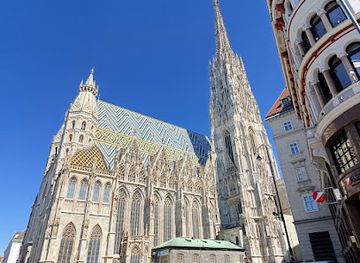
Discover Vienna's iconic Gothic cathedral: climb its towers, explore its catacombs, and marvel at its colorful, historic roof.
-
Museum
Belvedere Palace
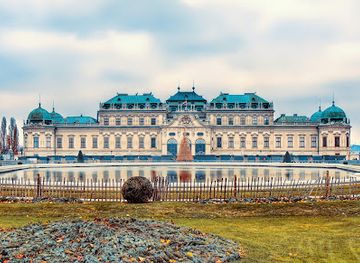
Discover Baroque architecture and world-renowned art at Vienna's Belvedere Palace, home to Gustav Klimt's "The Kiss."
-
Historical place
Hofburg
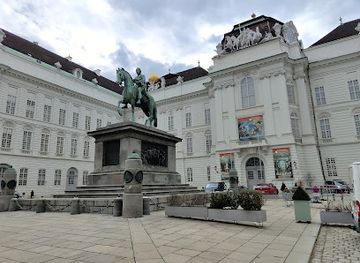
Explore the opulent world of the Habsburgs at Vienna's Hofburg Palace, a historic landmark offering museums, art, and imperial grandeur.

Explore Weinviertel on the map
Plan your trip on one map. See where the top cities, national parks and sights are, and book hotels and experiences in a few clicks.
Best hotels in Weinviertel
Best restaurants in Weinviertel
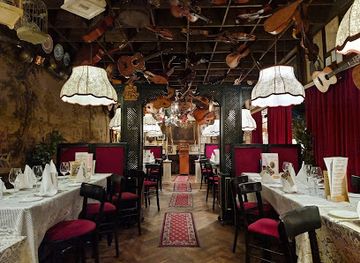
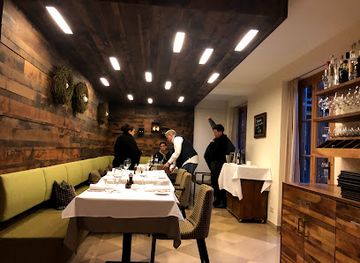
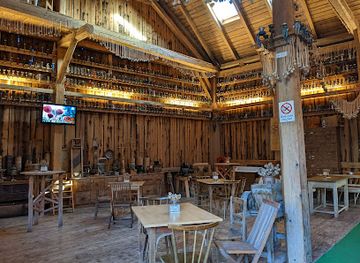
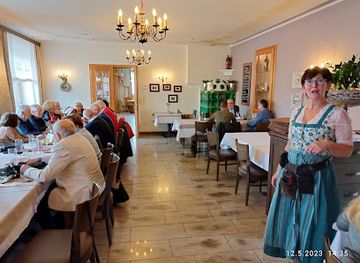
Dining in Weinviertel reflects its farming and wine-producing economy, with menus commonly built around seasonal vegetables, potatoes, bread, game, pork and regional poultry. Grüner Veltliner is the best-known local wine, and many traditional Heuriger offer simple cold plates, spreads, cheeses, cured meats and homemade cakes alongside wines from the surrounding vineyards. These establishments range from informal village rooms to more contemporary wine-focused restaurants. Market towns such as Retz, Poysdorf, Mistelbach and Hollabrunn provide the widest choice of cafés, bakeries, inns and modern Austrian cooking, while rural villages tend to have fewer venues and more limited opening patterns. Local produce is often seasonal rather than presented as a single fixed cuisine, so menus may change with the agricultural calendar. Look for regional wines by the glass, bread from local bakeries and dishes using nearby produce. A Heuriger is not necessarily open every day, and a wine tavern’s own calendar can differ from that of neighbouring businesses; advance checking is sensible, especially outside summer and harvest periods.
-
Restaurant
Marchfelderhof
Discover authentic Austrian cuisine at Marchfelderhof in Deutsch-Wagram – a culinary gem that delights every palate.
-
Restaurant
Gastwirtschaft Floh
Discover the essence of Austrian cuisine at Gastwirtschaft Floh - where tradition meets taste in a charming setting.
-
Restaurant
Mohnwirt Neuwiesinger
Experience authentic Austrian cuisine at Mohnwirt Neuwiesinger – where farm-fresh ingredients meet traditional hospitality.
-
Austrian
Hausgnost - Gasthaus an der Kreuzung
Experience authentic Austrian cuisine and warm hospitality at Hausgnost in Guntersdorf – your gateway to local flavors.
Best bars in Weinviertel
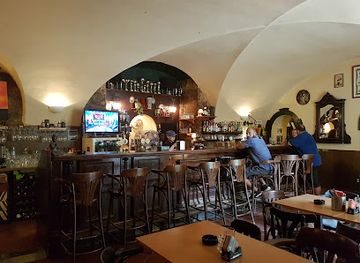
Evening life in Weinviertel is centred on wine taverns, traditional inns, cafés and small-town restaurants rather than a large nightclub scene. Heuriger provide the most characteristic setting for an evening drink, particularly when a producer is serving its own recent wines with simple food, although opening periods vary and not every village has a permanent venue. Poysdorf, Retz, Mistelbach and other larger towns offer more conventional bars and occasional live music, while Laa an der Thaya has an evening culture linked to its restaurants and thermal visitors. Seasonal wine festivals can bring outdoor music and later social activity, but they are local events rather than a constant nightlife programme. The southern Weinviertel is close enough to Vienna for a wider choice of late entertainment, but Vienna lies outside the region and requires a planned return journey. In smaller communities, evenings are generally quiet, with conversation and local food taking precedence over clubs.
-
Restaurant
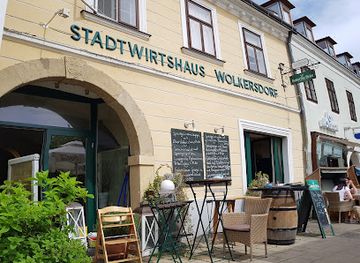
Stadtwirtshaus Wolkersdorf
Experience the best of Austrian cuisine at Stadtwirtshaus Wolkersdorf, where traditional flavors meet modern culinary artistry in a charming setting.
-
 Bar
BarYesterday - die Bar
Experience the vibrant atmosphere of Yesterday - die Bar in St. Pölten, where great drinks and friendly vibes await every visitor.
-
Restaurant
Schloßtaverne
Experience the enchanting flavors of Austria at Schloßtaverne, the perfect blend of restaurant and bar in the heart of Wolkersdorf.
-
Lounge
MOCCA LOUNGE - BAR WINGS
Experience the cozy ambiance and diverse menu at MOCCA LOUNGE - BAR WINGS, the perfect spot for breakfast, coffee, and wine in Hollabrunn.
Best nightclubs in Weinviertel
Evening life in Weinviertel is centred on wine taverns, traditional inns, cafés and small-town restaurants rather than a large nightclub scene. Heuriger provide the most characteristic setting for an evening drink, particularly when a producer is serving its own recent wines with simple food, although opening periods vary and not every village has a permanent venue. Poysdorf, Retz, Mistelbach and other larger towns offer more conventional bars and occasional live music, while Laa an der Thaya has an evening culture linked to its restaurants and thermal visitors. Seasonal wine festivals can bring outdoor music and later social activity, but they are local events rather than a constant nightlife programme. The southern Weinviertel is close enough to Vienna for a wider choice of late entertainment, but Vienna lies outside the region and requires a planned return journey. In smaller communities, evenings are generally quiet, with conversation and local food taking precedence over clubs.
-
Disco club
Cabaret Fledermaus
Dive into the heart of Vienna's nightlife at Cabaret Fledermaus, where electrifying music, captivating performances, and a vibrant atmosphere await you.
-
Night club
The Loft
Discover The Loft, Vienna's top destination for nightlife, featuring live music, vibrant dance floors, and an unforgettable atmosphere.
-
Disco club
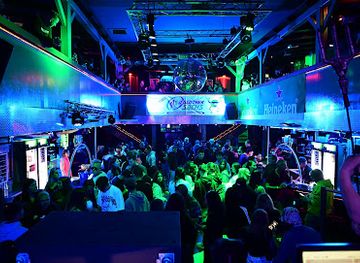
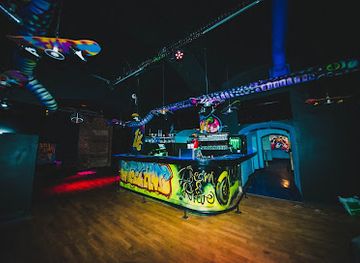
Discothek Sachs - Partylocation Wein4tel
Discover the electrifying nightlife at Discothek Sachs, Wein4tel's premier disco club with great food and an unforgettable atmosphere.
-
Night club
California Funn Club - Nachtclub in Wien
Experience the vibrant nightlife of Vienna at California Funn Club, where electrifying beats and a lively atmosphere await.


Best shops in Weinviertel
Shopping in Weinviertel is concentrated in market towns rather than large retail districts. Retz, Poysdorf, Mistelbach, Hollabrunn and Laa an der Thaya provide everyday shops, bakeries, cafés and independent businesses, with larger centres offering the broadest practical choice. The most distinctive purchases are locally produced wines, especially Grüner Veltliner, bought directly from wineries, wine shops or during cellar events. Regional oils, preserves, honey, bread, spirits and seasonal farm produce are also useful souvenirs when labelled and packaged for travel. Village festivals and farmers’ markets may offer direct sales from growers, but their dates and scale vary by municipality. Craft and gift shops connected with museums or historic attractions can provide ceramics, books and archaeological or regional-history material. Weinviertel is not primarily a luxury-shopping destination; its appeal lies in producer-led purchases, market-town browsing and food products with a clear connection to the surrounding agricultural landscape.
-
Outlet mall
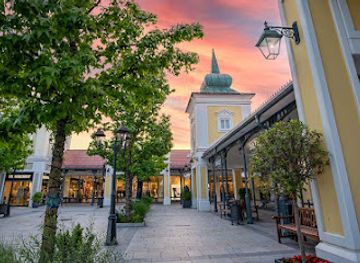
Designer Outlet Parndorf
Explore Designer Outlet Parndorf: Austria's ultimate shopping destination with top brands at unbeatable prices, perfect for fashion lovers and families alike.
-
Shopping mall
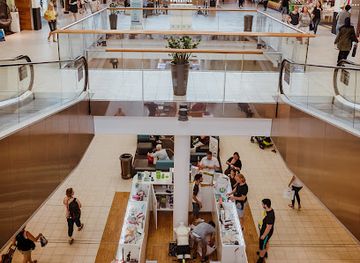
Westfield Donau Zentrum
Explore Westfield Donau Zentrum, Vienna's ultimate shopping mall with over 250 shops, diverse dining options, and exciting events in a vibrant atmosphere.
-
Outlet mall
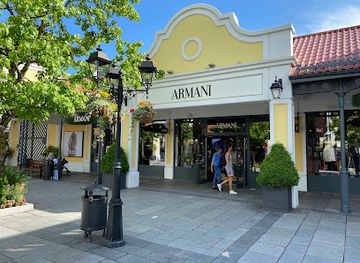
Fashion Outlet Parndorf
Discover incredible deals on designer fashion at Fashion Outlet Parndorf, Austria's premier outlet mall with over 160 stores and a vibrant shopping atmosphere.
-
Outlet mall
Designer Outlet Salzburg
Shop top brands at unbeatable prices in the scenic surroundings of Designer Outlet Salzburg, your ultimate shopping destination in Austria.
Get your free copy of our complete guide to Weinviertel, delivered straight to you.
Everything on this page, from attractions and restaurants to essentials and local phrases, in one PDF you can read offline, print or share.
Already have an account? Sign in
Your Weinviertel guide is ready.
We'll send it to · Not you? Sign out

Getting your guide ready…
We are putting together a fresh copy of the Weinviertel guide. This can take up to a minute.
This can take a few moments. If your browser asks, choose Allow so the download can start. You'll find the guide in your Downloads folder.
Nothing happened? Download it again
Sorry, the guide is taking longer than usual. Please try again in a minute, or get it by email instead.
Weinviertel essentials
Currency and Payment
Safety
Emergency Situations
Do's and Don'ts
Local Tips
From Eve
Local phrases worth knowing
You don't need to get them perfect. A few words go a long way, and locals appreciate the effort.
Basics
| English | Local | Say it |
|---|---|---|
| Hello | Grüß Gott | [Greez Got] |
| Goodbye | Auf Wiedersehen | [Owff Veederzayn] |
| Yes | Ja | [Yah] |
| No | Nein | [Nayn] |
| Please/You're welcome | Bitte | [Bitt-eh] |
| Thank you | Danke | [Dahn-kay] |
| Excuse me/Sorry | Entschuldigung | [Ent-shool-dee-goong] |
| How are you? | Wie geht's? | [Vee gates?] |
| Fine. And you? | Gut. Und dir? | [Goot. Oond deer?] |
| Do you speak English? | Sprechen Sie Englisch? | [Shprecken Zee Englisch?] |
| I don't understand | Ich verstehe nicht | [Eekh fer-shtay-eh nikht] |
Eating & Drinking
| English | Local | Say it |
|---|---|---|
| I'd like to see the menu, please | Ich hätte gerne die Speisekarte, bitte | [Eekh het-teh gair-ne dee Shpy-ze-kahr-teh, bitt-eh] |
| I don't eat meat | Ich esse kein Fleisch | [Eekh ess-eh kайн Flay-sh] |
| Cheers! | Prost! | [Prohst!] |
| I would like to pay, please | Ich möchte bezahlen, bitte | [Eekh merkh-teh beh-tsah-len, bitt-eh] |
Emergencies
| English | Local | Say it |
|---|---|---|
| Help! | Hilfe! | [Hil-feh!] |
| Go away! | Geh weg! | [Gay vek!] |
| Call the Police! | Rufen Sie die Polizei! | [Roofen Zee dee Pohl-itz-eye!] |
| Call a doctor! | Rufen Sie einen Arzt! | [Roofen Zee eye-nen Arts-t!] |
| I'm lost | Ich habe mich verlaufen | [Eekh hah-beh mikh fer-lau-fen] |
| I'm ill | Ich bin krank | [Eekh bin krank] |
Shopping
| English | Local | Say it |
|---|---|---|
| I'd like to buy... | Ich möchte kaufen... | [Eekh merkh-teh kown-fen...] |
| I'm just looking | Ich schaue nur | [Eekh shau-eh noor] |
| How much is it? | Wie viel kostet es? | [Vee feel kost-et es?] |
| That's too expensive | Das ist zu teuer | [Dahs ist tsoo toy-er] |
| Can you lower the price? | Könnten Sie den Preis senken? | [Kern-ten Zee den Pryce zen-ken?] |
Time & Numbers
| English | Local | Say it |
|---|---|---|
| What time is it? | Wie spät ist es? | [Vee shpayt ist es?] |
| It's one o'clock | Es ist ein Uhr | [Es ist ayn Oor] |
| Half past (10) | Halb (10) | [Halb (10)] |
| Morning | Morgen | [Mor-gen] |
| Afternoon | Nachmittag | [Nahkh-mit-tahg] |
| Evening | Abend | [Ah-bent] |
| Yesterday | Gestern | [Geh-stern] |
| Today | Heute | [Hoy-teh] |
| Tomorrow | Morgen | [Mor-gen] |
| 1 | Eins | [Eyns] |
| 2 | Zwei | [Ts-vai] |
| 3 | Drei | [Dry] |
| 4 | Vier | [Fear] |
| 5 | Fünf | [Fünf] |
| 6 | Sechs | [Zex] |
| 7 | Sieben | [Zee-ben] |
| 8 | Acht | [Ahkt] |
| 9 | Neun | [Noyn] |
| 10 | Zehn | [Tzayn] |
Transport & Directions
| English | Local | Say it |
|---|---|---|
| Where's a/the...? | Wo ist ein/das...? | [Vo ist ayn/dahs...?] |
| What's the address? | Was ist die Adresse? | [Vahs ist dee Ah-dress-eh?] |
| Can you show me (on the map)? | Könnten Sie mir (auf der Karte) zeigen? | [Kern-ten Zee meer (owf dare Kahr-teh) tzai-gen?] |
| When's the next (bus)? | Wann kommt der nächste (Bus)? | [Vahn kommt dare nay-sh-teh (Boos)?] |
| A ticket (to ....) | Ein Ticket (nach ....) | [Ayn Ticket (nahkh ....)] |
History of Weinviertel
Prehistoric Settlements and Ritual Landscapes
Weinviertel has some of Austria’s most important prehistoric archaeological evidence. The region’s fertile loess soils and accessible river corridors supported settled farming communities from the Neolithic period onwards. Archaeological discoveries include settlements, burial sites and circular enclosures associated with early farming societies. At Asparn an der Zaya, the MAMUZ Museum and its archaeological park present reconstructed prehistoric dwellings and demonstrate how people lived, farmed and worked materials in earlier periods. The discoveries at Stillfried, near the March, also show the long importance of this borderland as a place of settlement, exchange and cultural contact.
Roman Routes and the Amber Road
Although the principal Roman provincial centres lay beyond today’s Weinviertel, Roman routes crossed or approached the region as part of the wider network linking the Danube frontier with northern Europe. The Amber Road, an ancient trading route connecting the Baltic region with the Adriatic, passed through the broad area and helped link communities across Central Europe. Archaeological finds indicate contact between local populations and the Roman world, even where Roman-style urban settlement was limited. The region’s position between the Danube, Morava and Thaya corridors continued to give it commercial and strategic importance long after Roman rule ended.
Medieval Lords, Churches and Border Fortresses
During the Middle Ages, Weinviertel developed as a farming and wine-producing landscape of villages, market towns, churches and fortified estates. Its proximity to Bohemia and Moravia made defence an enduring concern, and castles or castle ruins at places such as Falkenstein, Staatz and Staatzberg reflect the contested character of the frontier. Noble families, ecclesiastical institutions and town authorities shaped landholding and trade, while wine cultivation expanded around suitable south-facing slopes. Many present-day village churches, town squares and elevated ruins preserve the layered settlement pattern established during this period.
Wine Culture and the Kellergassen
Wine production became one of the defining economic and cultural forces in Weinviertel. Small presses and storage cellars were often built into loess slopes outside village centres, creating the characteristic Kellergassen. These lanes allowed growers to process and mature wine in cool, stable conditions and became associated with communal work and seasonal celebrations. The tradition survived changes in landownership and agricultural organisation, and cellar lanes remain visible around towns and villages such as Poysdorf, Retz and Falkenstein. They are practical reminders of a rural economy in which wine, farming and local social life were closely connected.
War, Reconstruction and the Changing Frontier
Weinviertel’s position near the historical borders of the Habsburg lands exposed it to repeated military disruption, including the conflicts that affected Central Europe during the early modern period and the Napoleonic era. In the twentieth century, the region was again shaped by war, population movements and the political division of Europe. The nearby borders with Czechoslovakia and later the communist Eastern Bloc restricted cross-border contact for decades. Villages, fortifications and transport routes therefore acquired a modern frontier significance in addition to their older medieval role.
Mechanisation, Rural Change and the European Borderland
After the Second World War, agriculture and viticulture were transformed by mechanisation, changing landholdings and improved transport links to Vienna. Some villages lost population as employment and education became concentrated in larger towns, while wine producers increasingly invested in quality, bottling and tourism. The fall of the Iron Curtain and Austria’s entry into the European Union helped restore practical connections with neighbouring Czech and Slovak communities. Today, Weinviertel combines a modern agricultural economy with renewed interest in local wine, archaeological heritage, cycling, landscape conservation and cross-border cultural exchange.
Weinviertel in Photos
Browse through our photo collection highlighting the charm and character of the destination.
Neighbouring regions of Weinviertel
The closest regions to Weinviertel, if you have time for more than one.
-

-

-

-

-


Swipe for more regions
Explore more
Explore more of Austria
Discover Austria's blend of alpine landscapes, rich cultural heritage, and culinary delights, from Vienna's historic charm to Tyrol's dramatic beauty.
Explore Austria