

Free Absheron Peninsula Travel Guide & Mobile App
Explore Absheron Peninsula with free travel guides. Discover regional history, expert tips, proposed trips, and audio guides on web or mobile app.


Explore Azerbaijan’s Absheron Peninsula for Baku’s heritage, fire temples, village fortresses, Caspian beaches and stark coastal landscapes.
When is the best time to visit Absheron Peninsula?
Best: May–June, September · 22–28°C| Month | High (°C) | Rainfall (mm) |
|---|---|---|
| January | 6 | 22 |
| February | 7 | 20 |
| March | 11 | 21 |
| April | 16 | 23 |
| May (best) | 22 | 17 |
| June (best) | 28 | 10 |
| July | 31 | 5 |
| August | 31 | 6 |
| September (best) | 27 | 10 |
| October | 19 | 19 |
| November | 13 | 22 |
| December | 8 | 24 |
Getting to and around Absheron Peninsula
How to get there
Transportation
Top city travel guides in Absheron Peninsula
The cities of Absheron Peninsula, and the easiest places to base yourself.
-
-


Swipe for more cities
Best attractions in Absheron Peninsula
The Absheron Peninsula offers a varied group of attractions shaped by its history and geology. In Baku, the walled Old City brings together the Palace of the Shirvanshahs, the Maiden Tower, museums and historic lanes, while the surrounding capital provides galleries, theatres, parks and the Caspian waterfront. Outside the centre, the Ateshgah Fire Temple and Yanardag explain why natural flames became central to the peninsula’s cultural image. The Gala archaeological and ethnographic museum complex offers an accessible introduction to traditional Absheron village life, including domestic architecture and farming practices. Mardakan, Ramana and Nardaran provide separate excursions for visitors interested in medieval fortifications and local religious history. Along the northern and eastern shores, beaches at Bilgah, Buzovna, Shuvalan and Novkhani are used for swimming and seasonal leisure, although facilities differ considerably. Absheron National Park adds a protected coastal landscape with lagoons, semi-desert vegetation and opportunities for observing the Caspian shoreline. The attraction landscape is therefore less about one continuous resort strip than about linking urban heritage, village monuments, fire-related sites and open coastal scenery.
-
Tourist attraction
Icherisheher
Explore Icherisheher, Baku's ancient walled city: a UNESCO site with medieval architecture, vibrant culture, and centuries of history.
-
Cultural center
Heydar Aliyev Centre
Explore Baku's architectural marvel: The Heydar Aliyev Center, a cultural hub showcasing Azerbaijan's rich history and modern aspirations.
-
National park
Dənizkənarı Milli Park
Experience Baku's iconic seaside promenade: a blend of history, culture, and stunning Caspian Sea views in Dənizkənarı Milli Park.
-
Park
Highland Park
Experience Baku's beauty from above at Highland Park. Enjoy panoramic views, historical monuments, and a tranquil escape in the heart of the city.


Best landmarks in Absheron Peninsula
The Maiden Tower and the Palace of the Shirvanshahs are the defining historic landmarks of Baku’s walled Old City. The tower’s exact original function remains debated, while the palace complex illustrates the political and architectural importance of the Shirvanshah dynasty in medieval Shirvan. Beyond the capital, the Ateshgah Fire Temple at Surakhani is one of Absheron’s most recognisable sites, with a stone courtyard and cells arranged around a former fire altar. Yanardag, a naturally burning gas slope near Mammadli, provides a geological landmark as well as a cultural symbol of the peninsula. Mardakan’s paired fortress towers, Ramana Castle and Nardaran Fortress express the defensive architecture of medieval and later Absheron settlements. The limestone structures rise from a generally low, dry landscape, making their vertical forms especially prominent. Along the southern shore, Absheron National Park’s lagoons, shoreline and broad Caspian views form a natural landmark rather than a single monument. Together these places show how fire, dynastic power, village defence, oil geology and the sea have shaped the peninsula’s visual identity.
-
Historical landmark
Icherisheher
Explore Icherisheher, Baku's ancient walled city: a UNESCO site with rich history, stunning architecture, and vibrant culture. A journey through time!
-
National park
Dənizkənarı Milli Park
Experience Baku's heart at Dənizkənarı Milli Park: a blend of history, stunning Caspian Sea views, and vibrant recreation along the iconic Baku Boulevard.
-
Park
Highland Park
Experience breathtaking panoramic views of Baku's skyline and the Caspian Sea from this hilltop park, a blend of history and natural beauty.
-
Business center
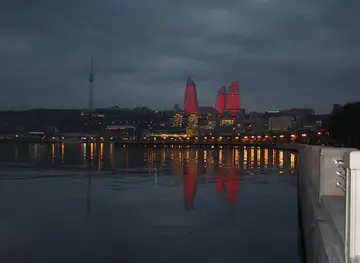
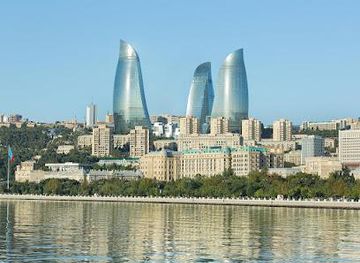
Flame Towers
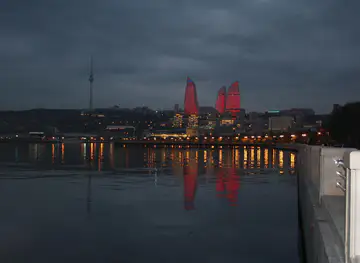
Baku's iconic trio of flame-shaped skyscrapers, symbolizing Azerbaijan's fiery history and modern ambition, with dazzling LED light shows.


Explore Absheron Peninsula on the map
Plan your trip on one map. See where the top cities, national parks and sights are, and book hotels and experiences in a few clicks.
Best hotels in Absheron Peninsula
Best restaurants in Absheron Peninsula
Dining on the peninsula ranges from Baku’s polished restaurants to informal village cafés, teahouses and roadside establishments. Azerbaijani staples include plov, dolma, qutab, kebabs, grilled fish, soups and salads rich in fresh herbs, while bread, seasonal fruit and preserves reflect the country’s wider food culture. The Caspian coast supports fish dishes, although availability and provenance vary, so menus should be read carefully rather than assuming every seafood dish is locally caught. In Baku, visitors can find regional cooking alongside restaurants influenced by Turkish, Persian, Caucasian and international cuisines. Absheron’s villages are associated with home-style meals, outdoor dining and produce adapted to a dry climate, including grapes, figs and other seasonal fruit. Tea served in armudu glasses is a common part of social dining, often accompanied by jam or sweets. Farmers’ markets and food shops are useful for buying dried fruit, nuts, spices, cheeses and confectionery, while contemporary restaurants increasingly reinterpret established Azerbaijani dishes without abandoning their regional ingredients.
-
Hotel
Fairmont Baku - Flame Towers
Luxury Baku dining with panoramic skyline views and world-class Mediterranean and European cuisine.
-
Restaurant
Dolma Restaurant
Discover Dolma Restaurant in Baku for an authentic taste of Azerbaijani cuisine amidst rich cultural heritage.
-
Restaurant
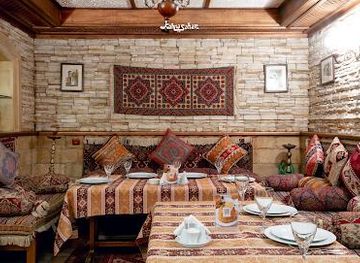
Köhnə şəhər restoranı
Authentic Azerbaijani heritage cuisine in Baku's historic Old City basement restaurant.
-
Restaurant
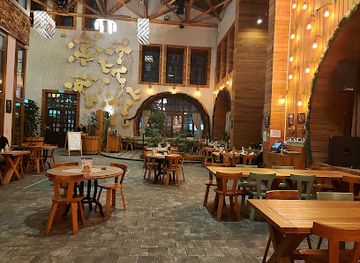
"Garden" restourant
Discover culinary delights amidst nature at The Garden Restaurant – where exquisite flavors meet serene surroundings.


Best bars in Absheron Peninsula
Nightlife is concentrated in Baku, where the central districts around the Old City and newer urban quarters contain wine bars, cocktail venues, cafés, restaurants with late evening service and live-music spaces. The city also has a selection of clubs, but the scale and opening arrangements of individual venues can change, so current local information is advisable. In the peninsula’s outer settlements, evening life is generally quieter and centres on family restaurants, tea houses, casual cafés and seasonal venues near the coast rather than a continuous nightclub scene. During warm weather, beach districts may become busier after sunset, particularly at weekends, although facilities vary between locations. Azerbaijan has a strong tea culture, and enjoying tea or a meal is not dependent on drinking alcohol. Visitors should dress appropriately for the venue, arrange reliable transport back to Baku and avoid driving after drinking.
-
Restaurant
MALACANNES - Shisha Lounge
Discover the vibrant MALACANNES - Shisha Lounge in Baku, a perfect blend of shisha, cocktails, and a lively atmosphere for every tourist.
-
Bar
360 Bar, Hilton Baku
Experience breathtaking views and exquisite cocktails at the 360 Bar, located on the 25th floor of Hilton Baku, overlooking the Caspian Sea.
-
Brewpub
Paulaner Baku
Savor the taste of Bavaria in Baku at Paulaner, a delightful brewpub offering authentic German cuisine and craft beer.
-
Bar
Latitude & Longitude Bar Lounge
Experience the vibrant atmosphere and exquisite flavors at Latitude & Longitude Bar Lounge, Baku’s premier destination for drinks and dining.



Best nightclubs in Absheron Peninsula
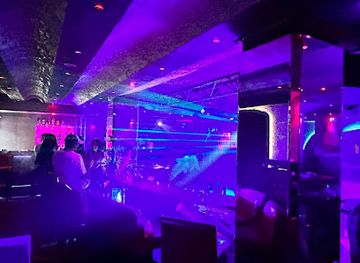
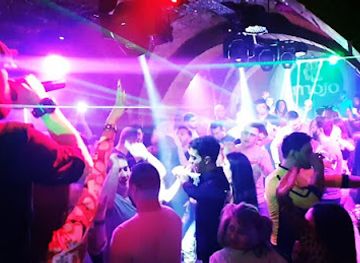
Nightlife is concentrated in Baku, where the central districts around the Old City and newer urban quarters contain wine bars, cocktail venues, cafés, restaurants with late evening service and live-music spaces. The city also has a selection of clubs, but the scale and opening arrangements of individual venues can change, so current local information is advisable. In the peninsula’s outer settlements, evening life is generally quieter and centres on family restaurants, tea houses, casual cafés and seasonal venues near the coast rather than a continuous nightclub scene. During warm weather, beach districts may become busier after sunset, particularly at weekends, although facilities vary between locations. Azerbaijan has a strong tea culture, and enjoying tea or a meal is not dependent on drinking alcohol. Visitors should dress appropriately for the venue, arrange reliable transport back to Baku and avoid driving after drinking.
-
Night club
Nightoffice
Discover Baku's nightlife at Nightoffice, a top-rated nightclub featuring electrifying music, stylish decor, and an unforgettable atmosphere.
-
Hotel
The Ritz-Carlton, Baku
Experience unparalleled luxury and breathtaking views at The Ritz-Carlton, Baku, the ultimate retreat in Azerbaijan's vibrant capital.
-
Club
MOJO club
Dive into Baku's nightlife at MOJO Club, a vibrant destination for music, dancing, and unforgettable experiences.
-
Night club
Otto
Otto Night Club in Baku: A premier destination for nightlife lovers, offering an unforgettable experience filled with music, drinks, and vibrant energy.


Best shops in Absheron Peninsula
Baku provides the peninsula’s broadest shopping choice, from modern malls and department stores to central streets, specialist food shops, bookshops and independent boutiques. The Old City contains craft and souvenir businesses selling carpets, ceramics, copperware, jewellery, textiles and decorative objects, although visitors should ask about provenance and obtain documentation for valuable carpets or antiques. Local food products make practical gifts: Azerbaijani tea, saffron, spices, dried fruit, nuts, preserves and confectionery are widely available. Outside the capital, shopping is more local and functional, with village shops, produce stalls and occasional markets rather than large retail districts. The Gala complex and other heritage sites may have craft-oriented souvenirs, but stock varies. Traditional carpets and handmade objects can be excellent purchases when bought from reputable sellers, with attention to quality, authenticity and export rules. The peninsula’s markets and food shops offer a better sense of everyday life than relying solely on airport or hotel souvenirs, while Baku’s contemporary retail scene reflects the capital’s international outlook.
-
Shopping mall
Ganjlik Mall
Discover Ganjlik Mall in Baku: A shopping paradise with top brands, diverse dining, and entertainment options for an unforgettable experience.
-
Shopping mall
Park Bulvar Mall
Explore Park Bulvar Mall, Baku’s premier shopping and entertainment destination by the Caspian Sea, featuring diverse shops and delightful dining.
-
Shopping mall
28 Mall
Explore 28 Mall in Baku: Your ultimate shopping and entertainment destination with diverse stores, dining options, and a vibrant atmosphere.
-
Shopping mall
Dəniz Mall
Explore Dəniz Mall in Baku: A premier shopping destination offering a delightful mix of shopping, dining, and entertainment experiences for all.


Get your free copy of our complete guide to Absheron Peninsula, delivered straight to you.
Everything on this page, from attractions and restaurants to essentials and local phrases, in one PDF you can read offline, print or share.
Already have an account? Sign in
Your Absheron Peninsula guide is ready.
We'll send it to · Not you? Sign out

Getting your guide ready…
We are putting together a fresh copy of the Absheron Peninsula guide. This can take up to a minute.
This can take a few moments. If your browser asks, choose Allow so the download can start. You'll find the guide in your Downloads folder.
Nothing happened? Download it again
Sorry, the guide is taking longer than usual. Please try again in a minute, or get it by email instead.
Absheron Peninsula essentials
Currency and Payment
Safety
Emergency Situations
Do's and Don'ts
Local Tips
From Eve
Local phrases worth knowing
You don't need to get them perfect. A few words go a long way, and locals appreciate the effort.
Basics
| English | Local | Say it |
|---|---|---|
| Hello | Salam | [sah-lahm] |
| Goodbye | Sağ olun | [sah-ooloon] |
| Yes | Bəli | [beh-lee] |
| No | Xeyr | [khayr] |
| Please/You're welcome | Zəhmət olmasa/Buyurun | [zeh-met ol-mah-sah/boo-yoor-un] |
| Thank you | Təşəkkür edirəm | [teh-sheh-kyoor eh-dee-rem] |
| Excuse me/Sorry | Bağışlayın | [bah-uhsh-lah-yin] |
| How are you? | Nəsəsiz? | [neh-seh-siz] |
| Fine. And you? | Yaxşı, siz? | [yak-shuh, seez] |
| Do you speak English? | İngiliscə danışırsınız? | [in-gee-lee-jeh dah-nuh-shir-sin-iz] |
| I don't understand | Mən başa düşmürəm | [men bah-shah doosh-moo-rem] |
Eating & Drinking
| English | Local | Say it |
|---|---|---|
| I'd like to see the menu, please | Menyuya baxmaq istəyirəm, zəhmət olmasa | [men-yoo-yah bahkh-maq is-teh-yeh-rem, zeh-met ol-mah-sah] |
| I don't eat meat | Mən ət yemirəm | [men eht ye-mi-rem] |
| Cheers! | Şərəf | [sha-reh-f] |
| I would like to pay, please | Ödəniş etmək istəyirəm, zəhmət olmasa | [uh-deh-neesh et-maq is-teh-yeh-rem, zeh-met ol-mah-sah] |
Emergencies
| English | Local | Say it |
|---|---|---|
| Help! | Kömək edin! | [keh-mehk eh-din] |
| Go away! | Get! | [geht] |
| Call the Police! | Polis çağırın! | [po-lees chah-gur-in] |
| Call a doctor! | Həkim çağırın! | [heh-keem chah-gur-in] |
| I'm lost | Mən itmişəm | [men it-meh-shem] |
| I'm ill | Mən xəstəyəm | [men khes-tay-em] |
Shopping
| English | Local | Say it |
|---|---|---|
| I'd like to buy... | Mən ... almaq istəyirəm | [men ... al-maq is-teh-yeh-rem] |
| I'm just looking | Mən sadəcə baxıram | [men sah-deh-jeh bah-khi-ram] |
| How much is it? | Bu nə qədərdir? | [boo neh geh-dehr-dir] |
| That's too expensive | Bu çox bahadır | [boo khokh bah-ah-dur] |
| Can you lower the price? | Qiyməti endirə bilərsiniz? | [kee-ma-teh en-dee-reh bi-lir-sin-iz] |
Time & Numbers
| English | Local | Say it |
|---|---|---|
| What time is it? | Saat neçədədir? | [sah-at neh-cheh-dah-dir] |
| It's one o'clock | Saat birdir | [sah-at beer-dir] |
| Half past (10) | Onun yarısı | [on-un yah-ri-suh] |
| Morning | Səhər | [seh-her] |
| Afternoon | Gündüz | [gun-dooz] |
| Evening | Axşam | [akh-sham] |
| Yesterday | Dünən | [doo-nen] |
| Today | Bu gün | [boo gun] |
| Tomorrow | Sabah | [sah-bah] |
| 1 | Bir | [beer] |
| 2 | İki | [ee-kee] |
| 3 | Üç | [ooch] |
| 4 | Dörd | [doerd] |
| 5 | Beş | [besh] |
| 6 | Altı | [ahl-tuh] |
| 7 | Yeddi | [yeh-dee] |
| 8 | Səkkiz | [seh-keez] |
| 9 | Doqquz | [doq-gooz] |
| 10 | On | [on] |
Transport & Directions
| English | Local | Say it |
|---|---|---|
| Where's a/the...? | Harada ... var? | [ha-ra-da ... var] |
| What's the address? | Ünvan nədir? | [oon-van neh-dir] |
| Can you show me (on the map)? | Məni (xəritədə) göstərə bilərsiniz? | [meh-nee (khe-ri-teh-deh) goos-teh-reh bi-lir-sin-iz] |
| When's the next (bus)? | Növbəti (avtobus) nə vaxtdır? | [nuhv-beh-tee (av-toh-boos) neh vahk-tahr] |
| A ticket (to ....) | Bir bilet (....) | [beer bee-let (....)] |
History of Absheron Peninsula
Early Settlements and Absheron’s Ancient Landscape
Absheron’s position on the Caspian coast, its natural springs and its deposits of oil and gas supported human settlement from antiquity. Archaeological remains across the peninsula include evidence of early rural communities, stone-working traditions and fortified habitation. The dry climate encouraged compact villages and the use of courtyards, cisterns and thick walls, while the sea connected the area to wider routes across the Caucasus and the Caspian basin. Much of the early record is fragmentary, but the peninsula’s enduring settlement pattern reflects both its strategic coastal position and its unusual geology.
Fire, Zoroastrian Traditions and Sacred Sites
Natural gas seepages and persistent flames made Absheron notable in accounts of fire worship. The peninsula became associated with Zoroastrian communities and later with Hindu and Sikh merchants who travelled through the region and supported the Ateshgah complex at Surakhani. The surviving temple was developed mainly in the seventeenth and eighteenth centuries around a courtyard with cells and a central altar. Its history should not be reduced to a single religious narrative: the site reflects the interaction of local fire traditions, pilgrimage and long-distance trade.
Medieval Shirvan and Coastal Fortifications
During the medieval period, Absheron formed part of Shirvan, a political and cultural region centred on the eastern Caucasus. Baku grew as a fortified port, while villages on the peninsula developed towers and defensive structures to protect settlements and estates. The Palace of the Shirvanshahs in Baku represents the power of the Shirvanshah dynasty, which made the city an important political centre in the fifteenth century. Mardakan, Ramana and Nardaran preserve the defensive character of the wider peninsula, even though their towers belong to different phases and had varied functions.
Safavid, Ottoman and Russian Imperial Rivalries
From the sixteenth century onwards, the Absheron coast was affected by rivalry among the Safavid state, the Ottoman Empire and, later, Russia. Control of Baku mattered because the port provided access to the Caspian Sea and because the surrounding region contained valuable oil resources. Russian expansion brought the peninsula into the Russian Empire in the early nineteenth century after the Russo-Persian wars. Imperial administration altered trade, military organisation and investment, laying foundations for the rapid transformation that followed.
The Nineteenth-Century Oil Boom
Industrial oil production changed Absheron more dramatically than almost any earlier development. From the second half of the nineteenth century, entrepreneurs, workers and engineers converged on Baku and the surrounding oilfields. Drilling, refining, railways and shipping expanded rapidly, producing enormous wealth alongside harsh labour conditions and severe environmental damage. Foreign investors and local industrial families built mansions, cultural institutions and public buildings in Baku. The peninsula’s oil landscape therefore shaped both its modern economy and the architectural contrast between village settlements and the capital’s grand stone centre.
Soviet Industrialisation and Urban Expansion
After the establishment of Soviet power in Azerbaijan, oil remained central to Absheron’s economy and to the strategic importance of Baku. State planning expanded extraction, refining, housing and transport, while the capital absorbed villages and agricultural land as its population grew. Soviet industrial infrastructure left a strong mark on the peninsula, including oil installations, apartment districts and utility networks. At the same time, traditional settlements, religious buildings and historic towers survived unevenly within a rapidly urbanising landscape.
Independent Azerbaijan and the Contemporary Peninsula
Since Azerbaijan regained independence in 1991, Baku and Absheron have experienced extensive redevelopment linked to energy revenues, international investment and population growth. The capital’s waterfront and central districts have been reshaped, while historic monuments have undergone restoration and the peninsula’s environmental pressures have become increasingly visible. Absheron National Park and heritage museums reflect efforts to preserve coastal and cultural resources. Today the peninsula combines a globally connected capital with industrial zones, expanding suburbs, old villages and protected landscapes, making its contrasts central to understanding Azerbaijan’s modern identity.
Absheron Peninsula in Photos
Browse through our photo collection highlighting the charm and character of the destination.
Neighbouring regions of Absheron Peninsula
The closest regions to Absheron Peninsula, if you have time for more than one.
-

-

-

-

-


Swipe for more regions
Explore more
Explore more of Azerbaijan
Discover Azerbaijan: A captivating blend of ancient heritage, stunning natural landscapes, and vibrant modernity at the crossroads of Europe and Asia.
Explore Azerbaijan