

Free Kura-Aras Lowland Travel Guide & Mobile App
Explore Kura-Aras Lowland with free travel guides. Discover regional history, expert tips, proposed trips, and audio guides on web or mobile app.


Explore Azerbaijan’s Kura-Aras Lowland for river plains, archaeological heritage, wildlife, farm landscapes and the quieter life of its market towns.
Read more about Kura-Aras Lowland
When is the best time to visit Kura-Aras Lowland?
Best: May, September–October · 21–28°C| Month | High (°C) | Rainfall (mm) |
|---|---|---|
| January | 7 | 20 |
| February | 10 | 19 |
| March | 14 | 25 |
| April | 21 | 30 |
| May (best) | 26 | 35 |
| June | 32 | 15 |
| July | 36 | 10 |
| August | 35 | 10 |
| September (best) | 28 | 15 |
| October (best) | 21 | 25 |
| November | 13 | 30 |
| December | 8 | 25 |
Getting to and around Kura-Aras Lowland
How to get there
Transportation
Top city travel guides in Kura-Aras Lowland
The cities of Kura-Aras Lowland, and the easiest places to base yourself.
-

-

-

-

-

-


Swipe for more cities
Destinations in Kura-Aras Lowland
Resorts, valleys and scenic spots worth a trip of their own.
-

-


Swipe for more destinations
Best attractions in Kura-Aras Lowland
The Kura-Aras Lowland’s attractions are spread across a working agricultural landscape rather than concentrated in one tourism centre. Archaeology is a major theme, with the remains of medieval Baylakan near Beylagan offering insight into the urban and trading history of the lower Aras corridor. Regional museums and town markets provide a more contemporary view of farming, irrigation and local life. Along the Kura, river scenery changes from cultivated floodplain to reed beds, wetlands and semi-arid expanses. Shirvan National Park, in the south-eastern lowland near the Caspian shore, is the principal wildlife destination, with protected dry plains and opportunities to observe gazelles and birds under managed conditions. The surrounding roads also reveal irrigation canals, cotton and grain fields, orchards and village settlements. Outdoor experiences are best suited to travellers who enjoy birdwatching, landscape photography, rural walking and slow road journeys rather than dense sightseeing itineraries. Visits to remote archaeological or natural sites should be planned with transport, water and local advice, as facilities are limited and some locations may require official permission.
-
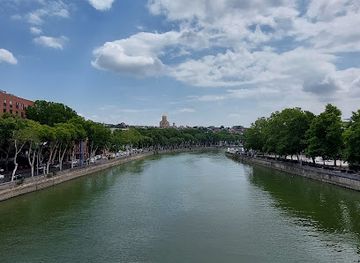
River
Kura River
Discover the Kura River: A historic waterway offering scenic cruises, cultural insights, and natural beauty in the heart of the Caucasus.
-
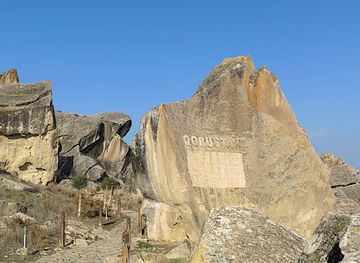
Tourist attraction
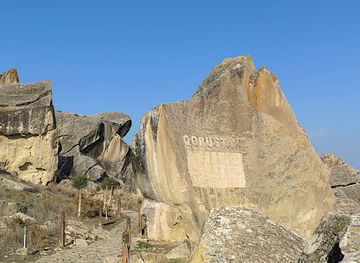
Gobustan Rock Art Cultural Landscape
Journey through time at Gobustan, where ancient rock art and mud volcanoes reveal Azerbaijan's captivating prehistoric story.
-
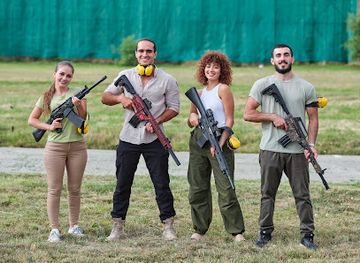
Shooting range
Gabala Shooting Club
Experience world-class shooting sports in the scenic Gabala region, with ranges for all skill levels and disciplines.
-
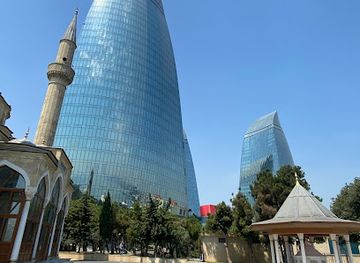
Park
Upland Park
Experience Baku's beauty from Upland Park: panoramic views, historical memorials, and a tranquil escape in the heart of the city.
Best landmarks in Kura-Aras Lowland
The Kura and Aras rivers are the lowland’s defining natural landmarks, creating broad floodplains and historic corridors that have influenced settlement, farming and frontier politics. The archaeological remains of Baylakan near Beylagan are the region’s most important visible historical landmark, preserving traces of a medieval settlement once connected to long-distance trade. The open landscapes around Sabirabad and Salyan are marked by river channels, reed beds, irrigation works and semi-desert vegetation rather than monumental architecture. Shirvan National Park provides a contrasting natural landmark on the south-eastern plain, where protected steppe and coastal habitats support gazelles and migratory birdlife. In the towns, mosques, public buildings, monuments and Soviet-era agricultural infrastructure offer additional evidence of changing political and economic systems, although they are generally modest in scale. The lowland’s significance lies in the relationship between these features: waterways, ruins, fields and transport routes forming a continuous historical landscape rather than a short list of isolated monuments.
-
Historical place
Gobustan Rock Art Cultural Landscape
Explore ancient rock art and geological wonders at Gobustan Rock Art Cultural Landscape, a UNESCO World Heritage site offering a unique glimpse into Azerbaijan's rich history and culture.
-
National park
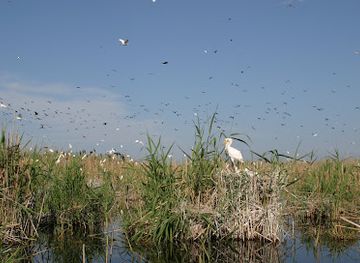
Agh Gol National Park
Discover Azerbaijan's natural beauty at Agh Gol National Park, a haven for migratory birds and diverse wildlife in a unique wetland ecosystem.
-
Tourist attraction
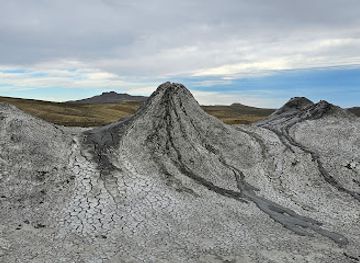
Mud volcano tourist park
Explore Azerbaijan's unique geological wonders at the Mud Volcano Tourist Park, where bubbling mud creates a surreal landscape.
-
Museum
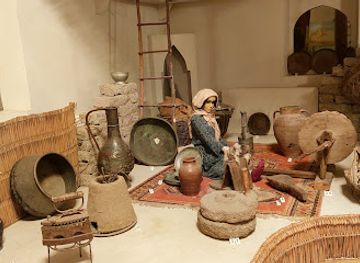
Mingəçevir Tarix muzeyi
Unearth millennia of history at the Mingachevir History Museum, showcasing artifacts from ancient settlements to the modern era in Azerbaijan's 'City of Lights'.
Explore Kura-Aras Lowland on the map
Plan your trip on one map. See where the top cities, national parks and sights are, and book hotels and experiences in a few clicks.
Best hotels in Kura-Aras Lowland
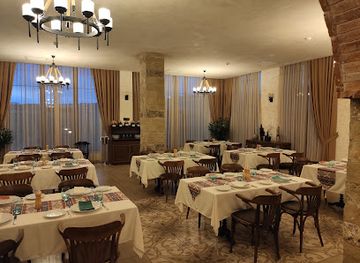
Best restaurants in Kura-Aras Lowland
Dining in the Kura-Aras Lowland is rooted in agricultural abundance and the cooking of market towns and villages. Rice dishes, plov, grilled or stewed lamb, chicken, freshwater fish, herb-filled preparations, soups and substantial breads are widely encountered, while seasonal fruit, melons, pomegranates and grapes reflect the irrigated plain. Restaurants in larger towns generally offer Azerbaijani home-style cooking, kebabs, salads and tea rather than a highly specialised destination cuisine. Roadside cafés can be useful for simple meals, although menus may be limited and opening arrangements may be informal. In rural districts, an arranged meal with a local household or guesthouse can reveal the importance of preserved produce, yoghurt, herbs and handmade dough dishes. Regional markets are valuable for observing the food economy and buying fruit, nuts, honey and dairy products, but visitors should check hygiene and storage conditions for perishable foods. Tea is commonly served after meals and during social visits.
-
Restaurant
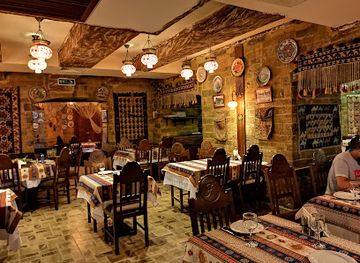
Firuze restaurant
Experience authentic Azerbaijani flavors at Firuze Restaurant in Baku – where tradition meets modern culinary excellence.
-
Restaurant
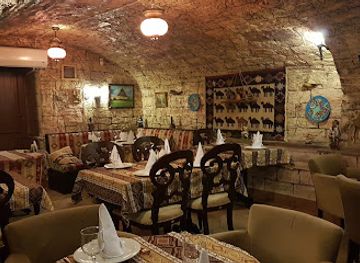
Nergiz Restaurant
Discover authentic Azerbaijani flavors at Nergiz Restaurant in Baku—where every dish tells a story.
-
Restaurant
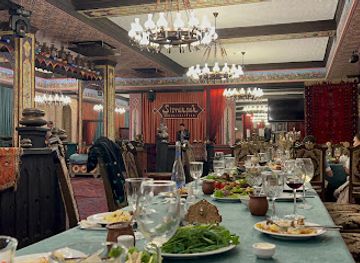
Shirvanshah Museum Restaurant
Experience authentic Azerbaijani flavors at Shirvanshah Museum Restaurant in Baku—where culinary artistry meets cultural heritage.
-
Restaurant
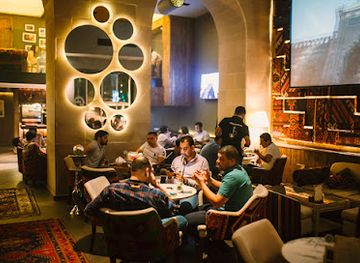
MALACANNES - Shisha Lounge
Discover MALACANNES - Shisha Lounge: A vibrant cocktail bar and hookah lounge in Baku offering unique flavors and a lively atmosphere.
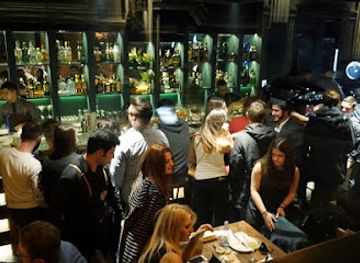
Best bars in Kura-Aras Lowland
Evening life in the Kura-Aras Lowland is generally quiet and centred on tea houses, family restaurants, cafés and traditional venues in the larger district towns. Visitors are more likely to find conversation, televised sport and tea than a concentrated nightclub scene. Some hotels and urban restaurants serve beer, wine or spirits, while alcohol availability is more limited in conservative village settings and is not central to local hospitality. Shirvan, Yevlakh, Kurdamir and other sizeable towns offer the broadest choice of evening dining, but venues and service hours can change. Rural evenings are often shaped by family gatherings, seasonal work patterns and outdoor socialising in warmer weather. Travellers seeking live music or late-night entertainment should make arrangements in advance and should not assume that a small settlement will have a dedicated entertainment district.
-
Bar
360 Bar, Hilton Baku
Experience breathtaking views and exquisite cocktails at 360 Bar, the ultimate nightlife destination in Baku, Azerbaijan.
-
Restaurant
Abqora Restaurant & Wine Club
Discover the flavors of Azerbaijan at Abqora Restaurant & Wine Club, where culinary artistry meets local tradition in a stunning setting.
-
Bar
Barfly Social Hub
Discover Baku's cocktail culture at Barfly Social Hub, where innovative drinks and a lively atmosphere create an unforgettable nightlife experience.
-
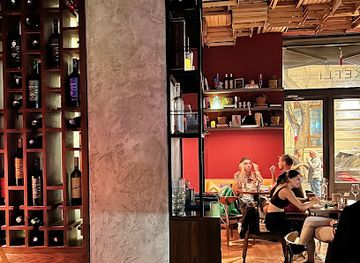
Wine bar
KEFLI Local Wine & Snacks
Experience Baku's finest selection of local wines and delightful snacks at KEFLI Local Wine & Snacks, the ultimate wine bar destination.

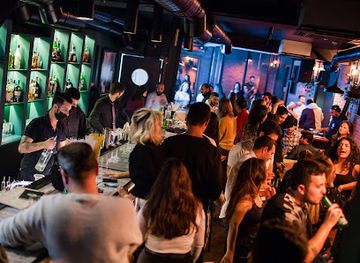
Best nightclubs in Kura-Aras Lowland
Evening life in the Kura-Aras Lowland is generally quiet and centred on tea houses, family restaurants, cafés and traditional venues in the larger district towns. Visitors are more likely to find conversation, televised sport and tea than a concentrated nightclub scene. Some hotels and urban restaurants serve beer, wine or spirits, while alcohol availability is more limited in conservative village settings and is not central to local hospitality. Shirvan, Yevlakh, Kurdamir and other sizeable towns offer the broadest choice of evening dining, but venues and service hours can change. Rural evenings are often shaped by family gatherings, seasonal work patterns and outdoor socialising in warmer weather. Travellers seeking live music or late-night entertainment should make arrangements in advance and should not assume that a small settlement will have a dedicated entertainment district.
-
Bar
Barfly Social Hub
Experience the vibrant nightlife of Baku at Barfly Social Hub, where expertly crafted cocktails and a lively atmosphere await you.
-
Club
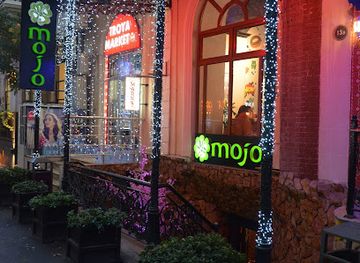
MOJO club
Dive into the vibrant nightlife of Baku at MOJO Club, where electrifying music and unforgettable moments await every night.
-
Night club
Pasifico Lounge and Dining
Experience the vibrant fusion of nightlife and culinary excellence at Pasifico Lounge and Dining in Baku, where every night is a celebration.
-
Live music bar
Le Chateau Music Bar
Discover the vibrant nightlife at Le Chateau Music Bar in Baku, where live music, great drinks, and a lively atmosphere await every visitor.


Best shops in Kura-Aras Lowland
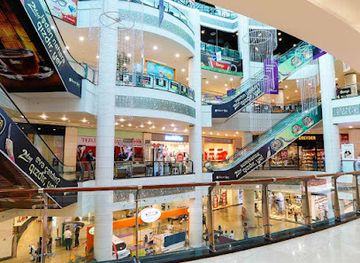
Shopping in the Kura-Aras Lowland is concentrated in district-town high streets, bazaars, covered markets and roadside produce stalls rather than large retail centres. Markets in towns such as Salyan, Sabirabad, Shirvan, Kurdamir and Beylagan are useful places to find seasonal melons, pomegranates, grapes, herbs, honey, nuts, dairy products and locally grown vegetables. Small food shops may also stock rice, dried fruit, preserves and regional sweets suitable for gifts, although travellers should check packaging and transport requirements. Traditional craft shopping is less extensive than in Azerbaijan’s principal heritage towns, but textiles, household goods, woven items and locally made food products may appear in village markets or through personal introductions. The most characteristic purchases are agricultural rather than luxury souvenirs, and prices, stock and market days can vary. Carry cash in small manat denominations and ask permission before photographing stallholders, workshops or private goods.
-
Shopping mall
Ganjlik Mall
Discover Ganjlik Mall in Baku, a shopping haven featuring top brands, diverse dining, and entertainment for a perfect day out.
-
Shopping mall
Park Bulvar Mall
Discover the best shopping, dining, and entertainment at Park Bulvar Mall, Baku's premier destination for tourists and locals alike.
-
Shopping mall
28 Mall
Discover a shopper's paradise at 28 Mall in Baku, featuring a blend of local and international brands, fine dining, and entertainment.
-
Jewelry store
Xtravaganza DM
Discover elegance and craftsmanship at Xtravaganza DM, Baku's premier jewelry destination in a vibrant shopping mall.

Get your free copy of our complete guide to Kura-Aras Lowland, delivered straight to you.
Everything on this page, from attractions and restaurants to essentials and local phrases, in one PDF you can read offline, print or share.
Already have an account? Sign in
Your Kura-Aras Lowland guide is ready.
We'll send it to · Not you? Sign out

Getting your guide ready…
We are putting together a fresh copy of the Kura-Aras Lowland guide. This can take up to a minute.
This can take a few moments. If your browser asks, choose Allow so the download can start. You'll find the guide in your Downloads folder.
Nothing happened? Download it again
Sorry, the guide is taking longer than usual. Please try again in a minute, or get it by email instead.
Kura-Aras Lowland essentials
Currency and Payment
Safety
Emergency Situations
Do's and Don'ts
Local Tips
From Eve
Local phrases worth knowing
You don't need to get them perfect. A few words go a long way, and locals appreciate the effort.
Basics
| English | Local | Say it |
|---|---|---|
| Hello | Salam | [sah-lahm] |
| Goodbye | Sağ ol | [sah-ol] |
| Yes | Bəli | [beh-lee] |
| No | Xeyr | [khayr] |
| Please/You're welcome | Zəhmət olmasa | [zeh-mat ol-mah-sah] |
| Thank you | Təşəkkür edirəm | [teh-shehk-oor eh-deer-em] |
| Excuse me/Sorry | Bağışlayın | [bah-ghish-lah-yin] |
| How are you? | Necəsiniz? | [neh-jeh-sin-iz] |
| Fine. And you? | Yaxşı. Siz? | [yah-kh-uh. siz?] |
| Do you speak English? | İngiliscə danışırsınız? | [een-ghee-lee-jah dah-nah-sheer-sin-iz] |
| I don't understand | Mən başa düşmürəm | [men bah-shah doosh-moo-rem] |
Eating & Drinking
| English | Local | Say it |
|---|---|---|
| I'd like to see the menu, please | Menyuya baxmaq istəyirəm, zəhmət olmasa | [men-yoo-yah bahkh-mahkh ees-teh-yeer-em, zeh-mat ol-mah-sah] |
| I don't eat meat | Mən ət yemirəm | [men aht yeh-meer-em] |
| Cheers! | Şərəf! | [sha-rehf] |
| I would like to pay, please | Ödəniş etmək istəyirəm, zəhmət olmasa | [uh-deh-neesh et-mak ees-teh-yeer-em, zeh-mat ol-mah-sah] |
Emergencies
| English | Local | Say it |
|---|---|---|
| Help! | Kömək edin! | [keh-mehk eh-deen] |
| Go away! | Get də! | [geht deh] |
| Call the Police! | Polis çağırın! | [poh-lees chah-guh-rin] |
| Call a doctor! | Həkim çağırın! | [heh-keem chah-guh-rin] |
| I'm lost | Mən itmişəm | [men eet-mish-em] |
| I'm ill | Mən xəstəyəm | [men khes-teh-yem] |
Shopping
| English | Local | Say it |
|---|---|---|
| I'd like to buy... | Mən ... almaq istəyirəm | [men ... ahl-mahk ees-teh-yeer-em] |
| I'm just looking | Mən sadəcə baxıram | [men sah-deh-jeh bah-khuh-ram] |
| How much is it? | Bu nə qədərdir? | [boo neh geh-dehr-deer] |
| That's too expensive | Bu çox bahadır | [boo chohk bah-hah-dur] |
| Can you lower the price? | Qiyməti endirə bilərsiniz? | [kee-mah-tee en-dee-reh bi-lir-sin-iz] |
Time & Numbers
| English | Local | Say it |
|---|---|---|
| What time is it? | Saat neçədir? | [sah-aht neh-cheh-deer] |
| It's one o'clock | Saat birdir | [sah-aht beer-deer] |
| Half past (10) | On beş dəqiqə keçib | [on behsh deh-kee-yeh keh-chib] |
| Morning | Səhər | [sah-hair] |
| Afternoon | Gündüz | [guhn-dooz] |
| Evening | Axşam | [akh-shahm] |
| Yesterday | Dünən | [duh-nehn] |
| Today | Bu gün | [boo guhn] |
| Tomorrow | Sabah | [sah-bah] |
| 1 | 1 | [bir] |
| 2 | 2 | [iki] |
| 3 | 3 | [üç] |
| 4 | 4 | [dörd] |
| 5 | 5 | [beş] |
| 6 | 6 | [altı] |
| 7 | 7 | [yeddi] |
| 8 | 8 | [səkkiz] |
| 9 | 9 | [doqquz] |
| 10 | 10 | [on] |
Transport & Directions
| English | Local | Say it |
|---|---|---|
| Where's a/the...? | Harada ... var? | [ha-rah-dah ... var?] |
| What's the address? | Ünvan nədir? | [oon-vahn neh-deer?] |
| Can you show me (on the map)? | Məni (xəritədə) göstərə bilərsiniz? | [meh-nee (khay-ree-tay-deh) goos-teh-reh bi-lir-sin-iz?] |
| When's the next (bus)? | Növbəti (avtobus) nə vaxtdır? | [nuhv-beh-tee (av-toh-boos) neh vahk-tur?] |
| A ticket (to ....) | Bir bilet (....) | [beer bee-let (....)] |
History of Kura-Aras Lowland
The Kura-Araxes Archaeological Horizon
The Kura-Araxes, or Early Transcaucasian, cultural tradition developed across parts of the South Caucasus and surrounding regions during the late fourth and third millennia BC. Its pottery, metalworking, settlement patterns and farming practices are represented in archaeological work across Azerbaijan, including the broad river plains. The name refers to the Kura and Aras river system, although the culture extended well beyond the modern lowland and was not confined to present-day Azerbaijan. Archaeological mounds and ancient settlement traces demonstrate that the fertile corridors of the plain were part of a much older network of cultivation, exchange and pastoral movement.
Ancient Arran and the River Corridors
In antiquity and the early medieval period, the central lowlands formed part of the wider historical landscape of Caucasian Albania and later Arran. River crossings and fertile floodplains connected settlements between the Caucasus, the Caspian approaches and the Iranian plateau. Political control changed repeatedly as regional powers, including Persian empires and Arab caliphates, competed for the Kura and Aras corridors. The lowland was not a single unified state, but its agricultural potential and position between larger centres made it strategically important.
Medieval Baylakan and the Aras Trade Route
Baylakan, associated with archaeological remains near modern Beylagan, was an important medieval settlement in the lower Aras region. Its position on routes linking the Caspian littoral, Arran and north-western Iran supported farming, craft production and long-distance trade. The town suffered during the upheavals and invasions that affected the region in the thirteenth century, contributing to its decline. The ruins are significant because they reveal the scale and organisation of medieval urban life in a landscape that is now largely agricultural and open.
Safavid and Iranian Frontier Landscapes
From the sixteenth century, the lowland was shaped by the rivalry between the Safavid state and the Ottoman Empire, followed by the influence of later Iranian rulers. The Kura and Aras plains were frontier spaces in which military movements, taxation, pastoral routes and agricultural settlement were closely connected. Towns and villages were periodically disrupted by warfare, while caravan routes continued to link regional markets. This history helps explain the layered cultural character of the lowland, where Azerbaijani rural traditions developed alongside wider Persianate and Caucasian influences.
Russian Rule and Agricultural Reorganisation
Following the Russo-Persian wars and the treaties of the early nineteenth century, northern Azerbaijan, including the Kura-Aras plain, became part of the Russian Empire. Imperial administration introduced new systems of taxation, land management and settlement, while existing village and pastoral economies continued. The lowland’s strategic position encouraged road and later rail development. Cotton, grain and other crops became increasingly important, although production remained dependent on the difficult management of water in an arid environment.
Soviet Irrigation and Cotton Agriculture
The Soviet period transformed the region more extensively than any earlier era. Large irrigation schemes, canals, collective farms and mechanised agriculture expanded cultivation across the semi-arid plain, particularly for cotton and grain. New settlements and industrial facilities grew around agricultural districts, while the Kura and Aras river systems became central to water management. The system brought roads, electricity and state investment but also created environmental pressures, including salinisation and disruption of natural wetlands. Many present-day field patterns and canals are legacies of this period.
The Lowland in Independent Azerbaijan
Since Azerbaijan regained independence in 1991, the Kura-Aras Lowland has remained important for agriculture, transport and food production. Collective farms were reorganised, private and family farming expanded, and cotton cultivation regained prominence alongside grain, livestock, fruit and vegetable production. The region has also faced practical challenges, including water management, soil salinity and periodic flooding. Wildlife protection, archaeological conservation and improved regional roads have gradually broadened the lowland’s relevance for visitors beyond its traditional role as an agricultural heartland.
Kura-Aras Lowland in Photos
Browse through our photo collection highlighting the charm and character of the destination.
Neighbouring regions of Kura-Aras Lowland
The closest regions to Kura-Aras Lowland, if you have time for more than one.
-

-

-

-

-


Swipe for more regions
Explore more
Explore more of Azerbaijan
Discover Azerbaijan: A captivating blend of ancient heritage, stunning natural landscapes, and vibrant modernity at the crossroads of Europe and Asia.
Explore Azerbaijan