

Free Khachmaz Travel Guide & Mobile App
Plan your Khachmaz trip with Evendo. Get free guides to top attractions, restaurants, hotels, and bars. Web access or download the mobile app.


Khachmaz, Azerbaijan, combines Caspian lowland scenery, local museums, markets and railway links with access to Nabran’s forests and beaches.
A Northern Gateway
Khachmaz stands in northern Azerbaijan on the broad Caspian lowlands, a short distance from the Russian border and within reach of the forested coast. The city is the administrative centre of Khachmaz District, whose landscape shifts from fertile agricultural land and open steppe to wooded coastal terrain around Nabran and the Samur-Yalama area. Its position on the Baku–Yalama railway and the main northbound road gives it a practical role as a regional centre rather than a conventional sightseeing city.Read more about Khachmaz
Everyday Heritage
Forests, Coast and Nearby Escapes
When is the best time to visit Khachmaz?
Best: May–June, September · 24–30°C| Month | High (°C) | Rainfall (mm) |
|---|---|---|
| January | 7 | 45 |
| February | 8 | 42 |
| March | 14 | 39 |
| April | 19 | 35 |
| May (best) | 24 | 30 |
| June (best) | 30 | 24 |
| July | 32 | 22 |
| August | 32 | 24 |
| September (best) | 27 | 31 |
| October | 21 | 38 |
| November | 14 | 44 |
| December | 9 | 45 |
Getting to and around Khachmaz
How to get there
Transportation
Best attractions in Khachmaz
Khachmaz's attractions are modest and closely connected with the life of the surrounding district. The Khachmaz History and Ethnography Museum introduces local archaeology, rural customs and the region's changing political history, making it a useful first stop before exploring the countryside. Central parks and public squares offer a relaxed setting for an evening walk, while the local market reveals the agricultural character of the Caspian lowlands through fruit, vegetables and household goods. The railway corridor is an important part of the city's modern identity and links Khachmaz with the northern borderlands. Outside the urban area, Nabran brings together woodland, seasonal leisure facilities and Caspian beaches, while Samur-Yalama National Park protects coastal forest, wetlands and steppe habitats. These latter sites belong to the wider district rather than the city itself, and are best approached as day excursions requiring independent transport planning.
-
Tourist attraction
Afurdzhi Falls
Discover the majestic Afurdzhi Falls in Quba, Azerbaijan: a breathtaking natural wonder offering serene beauty and adventurous exploration in the Caucasus Mountains.
1 h 9 min drive · 49 km from city centre
-
Tourist attraction
Nizami Park
Discover Quba's cultural heart at Nizami Park: a serene escape with monuments, museums, and lush landscapes honoring Azerbaijani heritage.
47 min drive · 27 km from city centre
-
Tourist attraction
Park Qusar
Escape to Park Qusar: Discover serene gardens, scenic trails, and a peaceful atmosphere in the heart of Anykh, Azerbaijan.
1 h 10 min drive · 50 km from city centre
-
Historical place museum
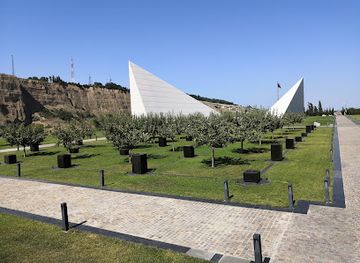
Guba Genocide Memorial Complex
A place of remembrance and education, the Guba Genocide Memorial Complex honors the victims of the 1918 genocide in Azerbaijan.
48 min drive · 28 km from city centre


Best landmarks in Khachmaz
Khachmaz's principal landmarks reflect its role as a modern regional centre rather than a city dominated by monumental historic architecture. The Khachmaz History and Ethnography Museum is the most useful cultural landmark, preserving material connected with the district's archaeology, agriculture and social history. The town's public parks, civic spaces and monuments belong largely to the twentieth- and twenty-first-century urban landscape, offering insight into Soviet planning and the public culture of contemporary Azerbaijan. The railway station and northbound railway corridor are also significant markers of Khachmaz's development as a transport centre linking Baku with Yalama and the Russian border. In the wider district, the forests and protected landscapes of Samur-Yalama National Park carry environmental rather than architectural importance, while Nabran's coastal recreation areas represent the region's newer tourism identity.
-
Historical place museum
Guba Genocide Memorial Complex
A somber memorial in Guba, Azerbaijan, commemorating the victims of the 1918 genocide and promoting peace through education and remembrance.
48 min drive · 28 km from city centre
-
Historical landmark
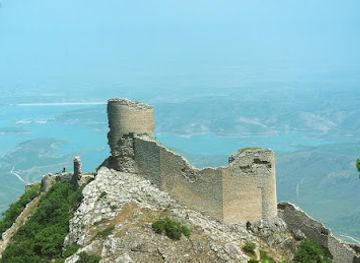
Chirag Gala
Explore the ancient ruins of Chirag Gala, a 5th-century fortress offering panoramic views of Azerbaijan's Caspian coastline and a glimpse into its rich history.
1 h 4 min drive · 44 km from city centre
-
Mosque
Haji Jafar Mosque
Discover the Haji Jafar Mosque in Quba: A historic Shia mosque showcasing Islamic architecture and the city's cultural heritage.
47 min drive · 27 km from city centre
-
Historical place
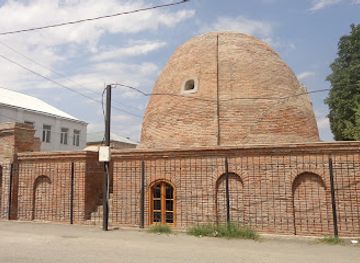
Chukhur hammam
Discover Quba's historical heart at Chukhur Hammam, an 18th-century bathhouse turned museum, filled with stories of community, culture, and resilience.
47 min drive · 27 km from city centre

Explore Khachmaz on the map
Plan your Khachmaz trip on one map. See where the top attractions, landmarks, restaurants, bars and hotels are, find what's near where you're staying, and book hotels and experiences in a few clicks.
Best hotels in Khachmaz
Best restaurants in Khachmaz
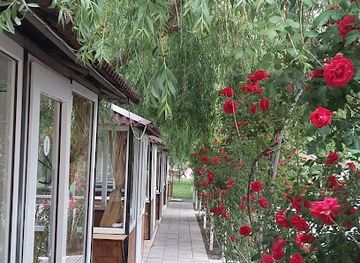
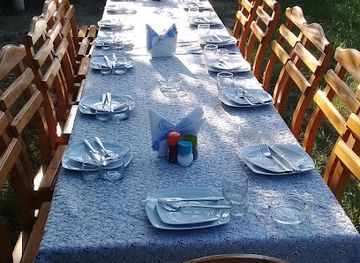
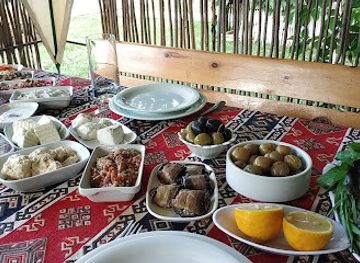
Khachmaz's dining scene is more local and practical than destination-led, centred on family restaurants, cafés, tea houses and market food rather than an extensive fine-dining sector. Azerbaijani staples such as plov, kebabs, dolma, qutab and soups appear alongside bread, fresh herbs, dairy products and seasonal fruit from the surrounding agricultural plain. Tea, often served in a small glass, is central to social hospitality, while pastries and preserves make useful market discoveries. Regional cooking reflects the wider cuisine of northern Azerbaijan, where Caspian influences meet the food traditions of inland villages and neighbouring Dagestan. The town market is a good place to see produce at its freshest, although prepared food stalls may be limited. Nabran's cafés and holiday eateries become more active in summer, when visitors head towards the coast, but their character and availability are seasonal.
-
Restaurant
Çənlibel Restoran
Experience authentic Azerbaijani cuisine at Çənlibel Restoran in Khachmaz - where tradition meets taste in a warm and welcoming setting.
9 min drive · 2.9 km from city centre
-
Restaurant
Qımıl Restoran
Discover authentic Azerbaijani flavors at Qımıl Restoran in Khachmaz – where tradition meets taste in a cozy setting.
7 min drive · 2.5 km from city centre
-
Restaurant
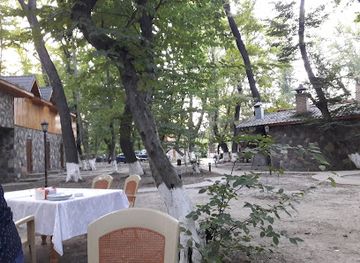
Yaşıl Bağ Restoran
Experience authentic Azerbaijani cuisine at Yaşıl Bağ Restoran in Khachmaz, where traditional flavors meet warm hospitality.
5 min drive · 1.7 km from city centre
-
Restaurant
Restoran Kənd Həyatı
Experience authentic Azerbaijani cuisine at Restoran Kənd Həyatı in Khudat – where tradition meets taste amidst breathtaking landscapes.
5 min drive · 1.8 km from city centre
Best bars in Khachmaz
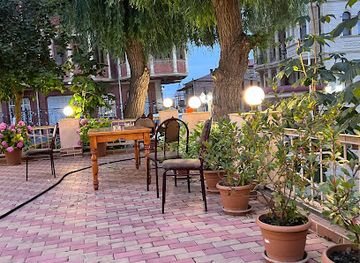
Khachmaz has a restrained evening scene shaped more by tea houses, cafés, family restaurants and informal social gatherings than by dedicated bars or nightclubs. After sunset, central public spaces and local cafés provide places to meet over tea, soft drinks and Azerbaijani food, while alcohol is available in some licensed restaurants without defining the town's nightlife. Live music and larger entertainment programmes are more likely to appear seasonally in the Caspian resort area around Nabran than in Khachmaz itself. Visitors should expect early, low-key evenings rather than a concentrated club district, particularly outside summer. Respectful dress and considerate behaviour are appropriate in family-oriented venues, and travellers heading back from coastal resorts should arrange transport rather than assume that late public connections will be operating.
-
Bar
çaynik
Discover the vibrant atmosphere of Çaynik, a lively bar in Red Village, perfect for soaking up local culture and enjoying delightful drinks.
47 min drive · 27 km from city centre
-
 Bar
BarKafe
Experience the vibrant atmosphere of Kafe, a must-visit bar in Агарагимоба, perfect for relaxing and enjoying local drinks.
23 min drive · 7.8 km from city centre
-
Bar
Qusarçay bulağı
Experience the serene beauty and local flavors at Qusarçay Bulağı, a charming bar in Azerbaijan's picturesque landscapes.
32 min drive · 12 km from city centre
-
Lounge
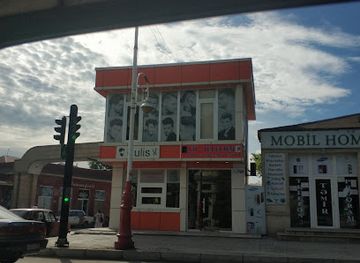
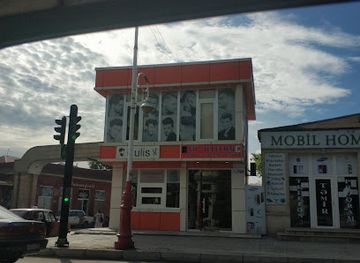
Kulis Kişi salonu
Discover the cozy charm of Kulis Kişi Salonu, a delightful lounge in Khachmaz perfect for relaxation and enjoying local flavors.
5 min walk · 0.4 km from city centre
Best nightclubs in Khachmaz
Khachmaz has a restrained evening scene shaped more by tea houses, cafés, family restaurants and informal social gatherings than by dedicated bars or nightclubs. After sunset, central public spaces and local cafés provide places to meet over tea, soft drinks and Azerbaijani food, while alcohol is available in some licensed restaurants without defining the town's nightlife. Live music and larger entertainment programmes are more likely to appear seasonally in the Caspian resort area around Nabran than in Khachmaz itself. Visitors should expect early, low-key evenings rather than a concentrated club district, particularly outside summer. Respectful dress and considerate behaviour are appropriate in family-oriented venues, and travellers heading back from coastal resorts should arrange transport rather than assume that late public connections will be operating.
-
Lounge
Kulis Kişi salonu
Discover the relaxing ambiance of Kulis Kişi Salonu in Khachmaz, the perfect lounge to unwind and socialize during your travels.
5 min walk · 0.4 km from city centre
-
Bar
Billiard club
Experience the thrill of billiards in Khachmaz's premier club, perfect for players and socializers alike.
9 min walk · 0.7 km from city centre
-
Bar
Limon Pub
Experience the vibrant atmosphere of Limon Pub in Khachmaz, where local flavors meet a lively social scene, perfect for unwinding and mingling.
6 min drive · 2.0 km from city centre
Best shops in Khachmaz
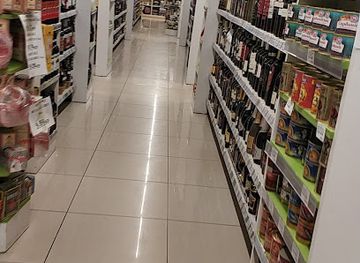
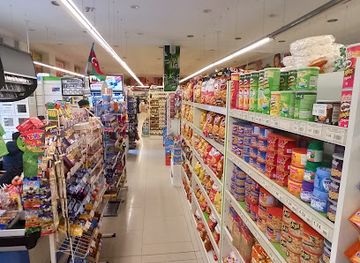
Shopping in Khachmaz is centred on the local market, food shops and small independent businesses rather than major retail complexes or luxury boutiques. The market is the place to look for seasonal fruit, vegetables, herbs, dairy products, preserves and other produce from the fertile Caspian lowlands, as well as everyday household goods. Small shops may stock Azerbaijani tea, sweets and packaged regional foods suitable for travel, while craft and souvenir choices are more limited than in Baku, Quba or Sheki. Visitors should distinguish practical local shopping from organised tourist retail: the character of Khachmaz lies in its agricultural trade and ordinary town commerce. Bargaining may be possible at informal stalls, but polite, unhurried interaction is preferable, and cash in smaller manat denominations is useful.
-
Store
Xəzər Market
Discover the vibrant Xəzər Market in Khachmaz, a shopper's paradise filled with local goods, delicious food, and a lively atmosphere.
15 min walk · 1.2 km from city centre
-
Store
Orxan Market
Discover the vibrant Orxan Market in Khachmaz, where local culture, delicious Azerbaijani cuisine, and unique crafts await every traveler.
13 min walk · 1.1 km from city centre
-
General store
Ailə Market
Explore Ailə Market in Khachmaz for a taste of local culture, unique products, and a delightful shopping experience in Azerbaijan.
13 min walk · 1.1 km from city centre
-
Clothing store
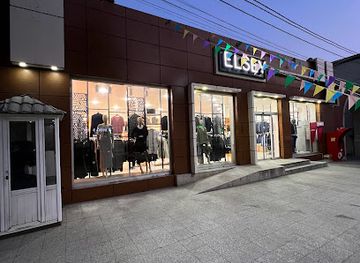
Simal moll
Discover unique fashion and local designs at Simal Moll, a premier clothing store in Khachmaz, ideal for savvy shoppers and fashion enthusiasts.
6 min drive · 1.8 km from city centre
Get your free copy of our complete guide to Khachmaz, delivered straight to you.
Everything on this page, from attractions and restaurants to essentials and local phrases, in one PDF you can read offline, print or share.
Already have an account? Sign in
Your Khachmaz guide is ready.
We'll send it to · Not you? Sign out

Getting your guide ready…
We are putting together a fresh copy of the Khachmaz guide. This can take up to a minute.
This can take a few moments. If your browser asks, choose Allow so the download can start. You'll find the guide in your Downloads folder.
Nothing happened? Download it again
Sorry, the guide is taking longer than usual. Please try again in a minute, or get it by email instead.
Khachmaz essentials
Currency and Payment
Safety
Emergency Situations
Do's and Don'ts
Local Tips
From Eve
Local phrases worth knowing
You don't need to get them perfect. A few words go a long way, and locals appreciate the effort.
Basics
| English | Local | Say it |
|---|---|---|
| Hello | Salam | [sah-lahm] |
| Goodbye | Sag olun | [sahg oh-loon] |
| Yes | Bəli | [buh-lee] |
| No | Xeyir | [kheh-yeer] |
| Please/You're welcome | Xahiş edirəm | [kha-heesh eh-dee-rehm] |
| Thank you | Təşəkkür edirəm | [tuh-shehk-koor eh-dee-rehm] |
| Excuse me/Sorry | Bağışlayın | [bah-ghish-lah-yuhn] |
| How are you? | Necəsən? | [neh-jeh-sehn] |
| Fine. And you? | Yaxşıyam. Sən? | [yahk-shuh-yahm. sehn] |
| Do you speak English? | İngilis dilində danışırsınız? | [een-gee-lees dee-leen-deh dah-nuh-sir-seh-nuz] |
| I don't understand | Anlamıram | [ahn-lah-muh-rahm] |
Eating & Drinking
| English | Local | Say it |
|---|---|---|
| I'd like to see the menu, please | Xahiş edirəm menyunu göstərin | [kha-heesh eh-dee-rehm mehn-yuh-noo gohs-teh-reen] |
| I don't eat meat | Mən ət yemirəm | [muhn aht yeh-mee-rehm] |
| Cheers! | Sağ olun! | [sahg oh-loon] |
| I would like to pay, please | Xahiş edirəm ödəmək istəyirəm | [kha-heesh eh-dee-rehm oh-deh-mehk ees-teh-yeer-ehm] |
Emergencies
| English | Local | Say it |
|---|---|---|
| Help! | Kömək! | [kuh-muhk] |
| Go away! | Uzaq get! | [oo-zahk ghet] |
| Call the Police! | Polisi çağırın! | [poh-lee-see chah-ghuh-ruhn] |
| Call a doctor! | Həkim çağırın! | [heh-keem chah-ghuh-ruhn] |
| I'm lost | Mən itirdim | [muhn ee-teer-deem] |
| I'm ill | Mən xəstəyəm | [muhn khehs-teh-yehm] |
Shopping
| English | Local | Say it |
|---|---|---|
| I'd like to buy... | Almaq istərdim... | [ahl-mahk ees-tehr-deem] |
| I'm just looking | Sadəcə baxıram | [sah-deh-jeh bah-khee-rahm] |
| How much is it? | Nə qədərdir? | [neh guh-dehr-deer] |
| That's too expensive | Çox bahadır | [choh bah-hah-deer] |
| Can you lower the price? | Qiyməti aşağı salarmısınız? | [kee-yehm-eh-tee ah-shah-uh sah-lahr-muh-suh-nuhz] |
Time & Numbers
| English | Local | Say it |
|---|---|---|
| What time is it? | Saat neçədir? | [saht neh-jeh-deer] |
| It's one o'clock | Bir saatdir | [beer sah-eht-deer] |
| Half past (10) | Onun yarısı | [oh-noon yah-ruh-suh] |
| Morning | Səhər | [seh-hehr] |
| Afternoon | Günorta | [goon-ohr-tah] |
| Evening | Axşam | [ahkh-shahm] |
| Yesterday | Dünən | [duh-nehn] |
| Today | Bu gün | [boo goon] |
| Tomorrow | Sabah | [sah-bah] |
| 1 | Bir | [beer] |
| 2 | İki | [ee-kee] |
| 3 | Üç | [ooch] |
| 4 | Dörd | [dur-d] |
| 5 | Beş | [beh-sh] |
| 6 | Altı | [ahl-tuh] |
| 7 | Yeddi | [yeh-ddee] |
| 8 | Səkkiz | [sehk-keez] |
| 9 | Doqquz | [dohk-kooz] |
| 10 | On | [ohn] |
Transport & Directions
| English | Local | Say it |
|---|---|---|
| Where's a/the...? | ... haradadır? | [hah-rah-dah-deer] |
| What's the address? | Ünvan nədir? | [oon-vahn neh-deer] |
| Can you show me (on the map)? | Mənə göstərə bilərsiz (xəritədə)? | [meh-ne gohs-teh-reh bee-lehr-seez (khuh-ree-teh-deh)] |
| When's the next (bus)? | Növbəti (avtobus) neçədədir? | [nuhvbuh-tee (ahv-toh-boos) neh-jeh-deer] |
| A ticket (to ....) | Bir biletlə (....a) | [beer bee-leht-leh (ah)] |
History of Khachmaz
Ancient Communities of the Caspian Plain
The territory around modern Khachmaz belongs to the northern Caspian lowlands, a corridor shaped by movement between the Caucasus, the Caspian shore and the lands north of the Greater Caucasus. Archaeological discoveries in the wider district point to long settlement and agricultural activity, while the region was connected with the cultural world of Caucasian Albania in antiquity. It is important not to treat the modern city as a direct continuation of one ancient urban centre: its present identity developed gradually within a wider rural and political landscape. The lowland position encouraged cultivation, seasonal movement and trade, but it also exposed communities to changing powers controlling routes along the Caspian coast.
Medieval Borderlands and Regional Trade
During the medieval and early modern periods, northern Azerbaijan formed part of a shifting frontier between Caucasian, Persian and northern Eurasian spheres. Settlements in the Khachmaz area were influenced by the political fortunes of the Shirvanshahs, later Safavid and Afsharid administrations, and the khanates that emerged in the eighteenth century. The district became associated with the Quba Khanate, whose territory covered much of north-eastern Azerbaijan. Trade and local agriculture connected villages with larger centres such as Quba, Derbent and the Caspian ports, while the region's frontier position made political authority fluid. This background explains the mixture of cultural influences visible across northern Azerbaijan today.
Russian Rule and New Transport Links
Russian imperial control expanded across northern Azerbaijan after the Russo-Persian wars and the treaties of Gulistan in 1813 and Turkmenchay in 1828. The Khachmaz area was subsequently incorporated into the administrative system of the Russian Empire, bringing new boundaries and official institutions while leaving village-based agriculture central to daily life. The railway running north from Baku towards Yalama and the Russian border later strengthened the region's connection with the capital and the wider Caucasus. These transport links encouraged the movement of people and goods through the Caspian corridor and helped lay the practical foundations for Khachmaz's later importance as a district centre.
The Soviet District Centre
Following the establishment of Soviet power in Azerbaijan, the countryside around Khachmaz was reorganised through collectivisation, state administration and planned agricultural production. Khachmaz District was established in 1930, and the settlement developed as an administrative and service centre for surrounding villages. Soviet institutions, schools, public buildings and transport infrastructure altered the town's appearance, while collective farms concentrated on crops, orchards and other forms of lowland agriculture. The period also brought profound social change: landholding patterns were transformed, literacy expanded and local life became more closely integrated with the industrial and political structures of the Azerbaijan Soviet Socialist Republic.
Independent Azerbaijan and Regional Renewal
After Azerbaijan regained independence in 1991, Khachmaz retained its role as a regional centre for agriculture, administration and northbound travel. The district's location near the Russian border and the Caspian coast gave it continuing economic significance, while coastal settlements such as Nabran developed as seasonal recreation areas. Investment in roads, public spaces and cultural facilities has contributed to the contemporary townscape, although Khachmaz remains more modest in scale than Baku or the country's major historic cities. Today, its identity combines Soviet-era urban planning, older rural traditions, Azerbaijani national culture and the natural assets of the northern Caspian landscape.
Khachmaz in Photos
Browse through our photo collection highlighting the charm and character of the destination.
Cities near Khachmaz
The closest cities to Khachmaz, if you have time for more than one stop.
-

-

-

-

-


Swipe for more cities
Explore more
Explore more of Azerbaijan
Discover Azerbaijan: A captivating blend of ancient heritage, stunning natural landscapes, and vibrant modernity at the crossroads of Europe and Asia.
Explore Azerbaijan