

Free Shamakhi Travel Guide & Mobile App
Plan your Shamakhi trip with Evendo. Get free guides to top attractions, restaurants, hotels, and bars. Web access or download the mobile app.


Shamakhi, Azerbaijan, unveils Shirvan history through mosques, mausoleums, vineyards and mountain observatories near the landscapes of the Caucasus.
Capital of Shirvan
Shamakhi lies in central Azerbaijan, on the southern foothills of the Greater Caucasus and within the historic region of Shirvan. For centuries it served as an important political, commercial and cultural centre, particularly under the Shirvanshah dynasty. Earthquakes repeatedly altered the city, yet its surviving monuments and evocative setting preserve a strong sense of its former importance. The Juma Mosque, one of Azerbaijan’s oldest Islamic religious sites, remains the principal architectural symbol of Shamakhi, while the Yeddi Gumbaz mausoleum complex recalls the later Shirvan khanate and its ruling family.Read more about Shamakhi
Heritage and Landscapes
When is the best time to visit Shamakhi?
Best: May, September–October · 21–28°C| Month | High (°C) | Rainfall (mm) |
|---|---|---|
| January | 8 | 15 |
| February | 8 | 13 |
| March | 13 | 15 |
| April | 20 | 20 |
| May (best) | 26 | 30 |
| June | 32 | 15 |
| July | 35 | 10 |
| August | 35 | 10 |
| September (best) | 28 | 15 |
| October (best) | 21 | 20 |
| November | 12 | 15 |
| December | 7 | 12 |
Getting to and around Shamakhi
How to get there
Transportation
Best attractions in Shamakhi
Shamakhi’s principal sightseeing begins at the Juma Mosque, a historic place of worship repeatedly rebuilt after earthquakes and known for its importance in the religious life of Shirvan. The Yeddi Gumbaz mausoleum complex, set amid open ground outside the busiest centre, contains the surviving domed tombs associated with the Shamakhi khans and offers a quieter encounter with the city’s eighteenth- and nineteenth-century past. The modern city itself is worth exploring for its regional market, broad streets and views towards the surrounding foothills. Beyond the urban area, the road to Pirqulu leads into wooded mountain scenery and to the Shamakhi Astrophysical Observatory, one of Azerbaijan’s notable scientific institutions. Vineyards and agricultural landscapes around the city reveal another side of Shamakhi, whose identity is tied not only to dynastic history but also to rural Shirvan and the routes linking the Caucasus with the Caspian plain.
-
Observatory
Shamakhi Astrophysical Observatory
Explore the universe at Shamakhi Astrophysical Observatory, a premier astronomical research center nestled in the scenic Caucasus Mountains of Azerbaijan.
37 min drive · 17 km from city centre
-
National park
Altiaghaj National Park
Discover Azerbaijan's Altiaghaj National Park: Hike through lush forests, spot diverse wildlife, and experience the beauty of the Greater Caucasus Mountains.
1 h 2 min drive · 42 km from city centre
-
Lake
Qaranohur
Discover Qaranohur Lake: Hike through lush forests, witness mountain views, and immerse yourself in Azerbaijan's alpine beauty.
58 min drive · 38 km from city centre
-
Farm
Alpaca Azerbaijan
Meet gentle alpacas, learn about sustainable farming, and enjoy the beauty of the Azerbaijani countryside at Alpaca Azerbaijan in Shamakhi.
17 min drive · 5.8 km from city centre


Best landmarks in Shamakhi
The Juma Mosque is Shamakhi’s defining landmark, representing the city’s long role as a religious and political centre of Shirvan; its present appearance reflects extensive rebuilding after repeated earthquakes rather than a single untouched medieval structure. Yeddi Gumbaz, or the Seven Domes mausoleum complex, is associated with the ruling family of the Shamakhi Khanate and preserves the funerary architecture of a later chapter in the city’s history. The city’s wider monumental landscape also includes surviving cemetery and religious structures connected with its former status as a capital, although many earlier buildings disappeared through seismic destruction and reconstruction. In the surrounding highlands, the Shamakhi Astrophysical Observatory provides a modern scientific landmark, linking the region’s historic association with scholarship to twentieth-century astronomical research.
-
Hotel
Shamakhi Palace Sharadil
Escape to Shamakhi Palace Sharadil: A five-star mountain resort in Azerbaijan offering luxury, tranquility, and stunning natural beauty.
34 min drive · 14 km from city centre
-
Mosque
Jummah Mosque
Explore the Jummah Mosque in Shamakhi, a historic symbol of Islamic architecture and Azerbaijani heritage dating back to the 8th century.
12 min walk · 0.9 km from city centre
-
Historical landmark
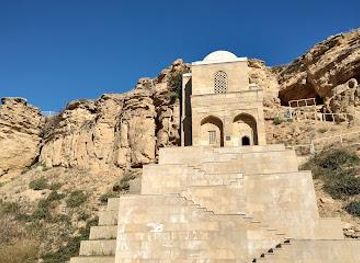
Diri Baba Mausoleum
A 15th-century architectural marvel in Azerbaijan, the Diri Baba Mausoleum is carved into a cliffside, offering a unique blend of history and mystique.
48 min drive · 28 km from city centre
-
Hotel
Shirvan Hotel & Spa
Experience modern comfort and relaxation at Shirvan Hotel & Spa, your gateway to exploring the historic city of Shamakhi and its scenic surroundings.
3 min walk · 0.3 km from city centre



Explore Shamakhi on the map
Plan your Shamakhi trip on one map. See where the top attractions, landmarks, restaurants, bars and hotels are, find what's near where you're staying, and book hotels and experiences in a few clicks.
Best hotels in Shamakhi
Best restaurants in Shamakhi
Shamakhi’s food culture belongs to the broader Azerbaijani culinary tradition, with rice dishes such as plov, grilled meats, kebabs, soups, qutab flatbreads and dolma commonly shaping local meals. Fresh herbs, yoghurt, seasonal vegetables, dried fruit and tea are prominent, while the surrounding agricultural area supports links with vineyards and orchard produce. Dining is generally informal, centred on family-run cafés, roadside restaurants and modest eateries rather than a large fine-dining scene. Visitors may encounter regional versions of Azerbaijani dishes alongside bread from local bakeries and preserves or fruit sold through markets. Tea is an important social ritual and is often served after meals or with sweets. Menus may be limited outside busy periods, so asking what has been freshly prepared can be more useful than relying on a long written selection.
-
Restaurant
Abqora Restaurant & Wine Club
Discover authentic Azerbaijani cuisine at Abqora Restaurant & Wine Club - where tradition meets contemporary flair along Baku's scenic highway.
14 min drive · 4.7 km from city centre
-
Restaurant
Sakil Göl Hotel Restoranı
Discover authentic Azerbaijani cuisine at Sakil Göl Hotel Restoranı amidst stunning landscapes in Agsu.
34 min drive · 14 km from city centre
-
Restaurant
Şamaxı otel restoran
Experience authentic Azerbaijani cuisine with stunning views at Şamaxı Hotel Restaurant in Shamakhi – a culinary delight for every traveler.
6 min drive · 1.9 km from city centre
-
Restaurant
Melham restaurant
Discover authentic Azerbaijani cuisine in the heart of Melham at Melham Restaurant - where flavors meet tradition.
18 min drive · 6.1 km from city centre


Best bars in Shamakhi
Shamakhi has a restrained evening scene rather than a concentrated nightlife district. Social life after dark is more likely to centre on tea houses, cafés, family restaurants and hotel lounges than on nightclubs or late-opening cocktail bars. Tea, conversation and televised sport are familiar elements of local evenings, while wine and other alcoholic drinks are available in suitable restaurants despite the importance of the city’s Islamic heritage. Cultural entertainment is more closely connected with Azerbaijani music, poetry and family gatherings than with a large club circuit. Streets become quiet comparatively early outside the main hospitality areas, and visitors staying beyond the centre should arrange transport in advance. Evening walks are best kept to populated, well-lit areas, particularly when travelling between the city and surrounding villages.
-
Restaurant
Abqora Restaurant & Wine Club
Discover culinary excellence at Abqora Restaurant & Wine Club, where traditional Azerbaijani flavors meet a fine selection of wines in a stunning setting.
14 min drive · 4.7 km from city centre
-
Restaurant
Şamaxı otel restoran
Experience the authentic taste of Azerbaijan at Şamaxı Hotel Restaurant, a culinary treasure in the heart of Shamakhi.
6 min drive · 1.9 km from city centre
-
Restaurant
Melham restaurant
Explore Melham Restaurant for an unforgettable dining experience filled with authentic Azerbaijani flavors and warm hospitality.
18 min drive · 6.1 km from city centre
-
Restaurant
Shama House
Experience the authentic flavors of Azerbaijani cuisine at Shama House, a culinary gem in Shamakhi known for its warm hospitality and exquisite dishes.
33 min drive · 13 km from city centre


Best nightclubs in Shamakhi
Shamakhi has a restrained evening scene rather than a concentrated nightlife district. Social life after dark is more likely to centre on tea houses, cafés, family restaurants and hotel lounges than on nightclubs or late-opening cocktail bars. Tea, conversation and televised sport are familiar elements of local evenings, while wine and other alcoholic drinks are available in suitable restaurants despite the importance of the city’s Islamic heritage. Cultural entertainment is more closely connected with Azerbaijani music, poetry and family gatherings than with a large club circuit. Streets become quiet comparatively early outside the main hospitality areas, and visitors staying beyond the centre should arrange transport in advance. Evening walks are best kept to populated, well-lit areas, particularly when travelling between the city and surrounding villages.
-
 Night club
ABUDABI PUB
Dive into the energetic nightlife at ABUDABI PUB in Muğanlı, where music, dance, and vibrant social scenes come alive.
30 min drive · 10.0 km from city centre
-
Night club
Xəyal palace
Discover the vibrant nightlife at Xəyal Palace in Shamakhi, where unforgettable experiences and energetic vibes await every visitor.
6 min walk · 0.5 km from city centre
Best shops in Shamakhi
Shopping in Shamakhi is primarily local and practical, centred on food shops, small independent stores and the central market rather than large commercial malls. Market stalls may offer seasonal fruit, vegetables, herbs, dried produce, honey and other goods from the surrounding agricultural districts. Visitors interested in regional products can look for Azerbaijani tea, sweets, preserves, wine and locally made textiles, while carpets and handicrafts are best bought from established sellers who can explain provenance and quality. Traditional goods may appear alongside ordinary household merchandise, reflecting the market’s role in daily life rather than a purpose-built tourist quarter. Prices and payment methods vary, so carrying manat and checking details before purchase is sensible. Baku generally provides a wider choice of specialist crafts and formal retail outlets.
-
Supermarket
Vip Market
Explore the vibrant flavors of Azerbaijan at Vip Market, a bustling supermarket in Shamakhi offering fresh local produce and international products.
14 min walk · 1.1 km from city centre
-
Clothing store
Bol Ticarət Mərkəzi
Explore Bol Ticarət Mərkəzi in Shamakhi for an unforgettable shopping experience featuring a blend of local fashion and friendly service.
5 min drive · 1.5 km from city centre
-
Clothing store
Prestige Shamaxi
Explore Prestige Shamaxi, where local craftsmanship meets modern fashion in the heart of Shamakhi, Azerbaijan.
7 min walk · 0.6 km from city centre
-
General store
Cambuş mall
Discover a vibrant shopping experience at Cambuş Mall in Melham, where local culture meets convenience and friendly service.
19 min drive · 6.2 km from city centre


Get your free copy of our complete guide to Shamakhi, delivered straight to you.
Everything on this page, from attractions and restaurants to essentials and local phrases, in one PDF you can read offline, print or share.
Already have an account? Sign in
Your Shamakhi guide is ready.
We'll send it to · Not you? Sign out

Getting your guide ready…
We are putting together a fresh copy of the Shamakhi guide. This can take up to a minute.
This can take a few moments. If your browser asks, choose Allow so the download can start. You'll find the guide in your Downloads folder.
Nothing happened? Download it again
Sorry, the guide is taking longer than usual. Please try again in a minute, or get it by email instead.
Shamakhi essentials
Currency and Payment
Safety
Emergency Situations
Do's and Don'ts
Local Tips
From Eve
Local phrases worth knowing
You don't need to get them perfect. A few words go a long way, and locals appreciate the effort.
Basics
| English | Local | Say it |
|---|---|---|
| Hello | Salam | [sah-lahm] |
| Goodbye | Sag ol | [sahg awl] |
| Yes | Bəli | [buh-lee] |
| No | Xeyr | [khayr] |
| Please/You're welcome | Xahiş edirəm | [khah-heesh eh-dee-rehm] |
| Thank you | Təşəkkür edirəm | [teh-shehk-koor eh-dee-rehm] |
| Excuse me/Sorry | Bağışlayın | [bah-guhsh-lah-yuhn] |
| How are you? | Necəsən? | [neh-jeh-suhn] |
| Fine. And you? | Yaxşıyam. Sən? | [yahkh-shee-yahm. sahn?] |
| Do you speak English? | İngilis dilində danışırsınız? | [een-gee-lees dee-leen-deh dah-nee-shir-suh-nuhz?] |
| I don't understand | Anlamıram | [ahn-lah-muh-rahm] |
Eating & Drinking
| English | Local | Say it |
|---|---|---|
| I'd like to see the menu, please | Zəhmət olmasa, menyunu görmək istəyirəm | [zuhm-ehht ohl-mah-sah, mehn-yuh-noo gohr-mehk ees-teh-yee-rehm] |
| I don't eat meat | Mən ət yemirəm | [muhn aht yeh-mee-rehm] |
| Cheers! | Sağ olun! | [sahg awl-oon] |
| I would like to pay, please | Zəhmət olmasa, ödəmək istəyirəm | [zuhm-ehht ohl-mah-sah, oh-deh-mehk ees-teh-yee-rehm] |
Emergencies
| English | Local | Say it |
|---|---|---|
| Help! | Kömək edin! | [kuh-muhk eh-deen!] |
| Go away! | Uzaqlaşın! | [oo-zahk-lah-shuhn!] |
| Call the Police! | Polisi çağırın! | [poh-lee-see chah-ee-ruhn!] |
| Call a doctor! | Həkim çağırın! | [heh-keem chah-ee-ruhn!] |
| I'm lost | Mən itirəm | [muhn ee-tee-rehm] |
| I'm ill | Mən xəstəyəm | [muhn khuh-stuh-yuhm] |
Shopping
| English | Local | Say it |
|---|---|---|
| I'd like to buy... | Almaq istəyirəm... | [ahl-mahk ees-teh-yee-rehm...] |
| I'm just looking | Sadəcə baxıram | [sah-deh-jeh bakh-uh-rahm] |
| How much is it? | Neçəyədir? | [neh-jeh-yeh-deer?] |
| That's too expensive | Çox bahalıdır | [choh bah-hah-luh-duhr] |
| Can you lower the price? | Qiyməti azaldıra bilərsiniz? | [kee-meh-tee ah-zahl-duh-rah bee-luhr-sih-niz?] |
Time & Numbers
| English | Local | Say it |
|---|---|---|
| What time is it? | Saat necədir? | [saht neh-jeh-deer?] |
| It's one o'clock | Saat birdir | [saht beer-deer] |
| Half past (10) | Onun yarısı | [oh-noon yah-ruh-suh] |
| Morning | Səhər | [suh-hehr] |
| Afternoon | Günortası | [goo-nohr-tah-suh] |
| Evening | Axşam | [ahkh-shahm] |
| Yesterday | Dünən | [doo-nehn] |
| Today | Bu gün | [boo goon] |
| Tomorrow | Sabah | [sah-bah] |
| 1 | Bir | [beer] |
| 2 | İki | [ee-kee] |
| 3 | Üç | [ooch] |
| 4 | Dörd | [durrd] |
| 5 | Beş | [besh] |
| 6 | Altı | [ahl-tuh] |
| 7 | Yeddi | [yehd-dee] |
| 8 | Səkkiz | [sehk-keez] |
| 9 | Doqquz | [dok-kooz] |
| 10 | On | [ohn] |
Transport & Directions
| English | Local | Say it |
|---|---|---|
| Where's a/the...? | ...haradadır? | [...hah-rah-dah-duhr?] |
| What's the address? | Ünvanı nədir? | [oon-vah-nuh neh-deer?] |
| Can you show me (on the map)? | Mənə (xəritədə) göstərə bilərsiniz? | [muh-nuh (khuh-ree-teh-duh) gohs-teh-ruh bee-luhr-sih-niz?] |
| When's the next (bus)? | Növbəti (avtobus) neçədədir? | [nuhv-beh-tee (ahv-toh-boos) neh-jeh-deer?] |
| A ticket (to ....) | Bir biletlə (....-a) | [beer bee-leht-luh (....-uh)] |
History of Shamakhi
Early Shirvan Settlement
Shamakhi developed in the historic region of Shirvan, a territory on the eastern flank of the Caucasus shaped by Iranian, Caucasian and later Turkic influences. Ancient and medieval sources identify the settlement as an important centre in the area, although the exact circumstances of its earliest foundation remain debated. Its position between the Caspian lowlands, the Caucasus passes and inland routes encouraged commerce and communication. The city’s fortunes were closely connected to the wider political history of eastern Transcaucasia, where local dynasties competed with larger Iranian and regional powers. This strategic setting explains why Shamakhi became more than a rural settlement: it grew into a courtly, commercial and religious centre whose importance endured for many centuries.
The Shirvanshah Capital
From the ninth century, Shamakhi was associated with the Shirvanshahs, the dynasty that ruled Shirvan for several centuries. It became one of the dynasty’s principal capitals and a centre of administration, trade, scholarship and Islamic culture. Merchants travelling between the Caspian coast, the Caucasus and territories to the south passed through the region, while the city’s courts supported poets, theologians and craftsmen. Shamakhi’s position brought prosperity but also exposed it to warfare and powerful earthquakes. The city was damaged repeatedly, and political power eventually shifted westwards within Shirvan. Even so, the Shirvanshah period remains central to Shamakhi’s identity, linking its mosques, burial monuments and literary associations to one of medieval Azerbaijan’s most significant states.
Earthquakes and Imperial Rivalries
Shamakhi’s history was repeatedly disrupted by natural disasters and struggles among regional powers. Major earthquakes, including destructive events recorded in the seventeenth and eighteenth centuries, damaged buildings and caused substantial loss of life. The city also experienced the changing authority of Safavid Iran, Ottoman forces and local rulers as control of the South Caucasus shifted. These upheavals affected trade and administration but did not erase Shamakhi’s importance as a regional centre. Reconstruction often followed disaster, producing layers of rebuilding rather than a single, intact historic architectural style. The recurring earthquakes are an essential part of understanding why so few early structures survive and why later monuments carry such significance in the modern city.
The Khanate of Shamakhi
In the eighteenth century, Shamakhi became the centre of the semi-independent Shamakhi Khanate, one of several political entities that emerged in the Caucasus during a period of weakened central authority. The khanate governed a territory connected to the commercial routes of Shirvan and maintained relationships, sometimes confrontational, with neighbouring khanates and larger empires. The Yeddi Gumbaz mausoleum complex is associated with the ruling family of the later Shamakhi khans and provides a tangible link to this period. Political instability, warfare and further earthquakes limited the city’s long-term recovery, while Baku was gaining importance on the Caspian coast. The changing balance eventually brought Shamakhi into the expanding Russian imperial sphere.
Russian Rule and the Move to Baku
Following the Russo-Persian conflicts of the early nineteenth century, Shamakhi was incorporated into the Russian Empire under the Treaty of Gulistan in 1813. It became an administrative centre within the new imperial arrangements, but its position was weakened by repeated earthquakes, especially the devastating earthquake of 1859. After that disaster, the administrative capital of the guberniya was transferred from Shamakhi to Baku, whose harbour and commercial prospects were increasingly important. The move altered the city’s political status and accelerated Baku’s rise, while Shamakhi retained regional religious, agricultural and cultural roles. Later reconstruction, including work on the Juma Mosque, reflects both the persistence of local traditions and the changing administrative landscape of the Caucasus.
Modern Shamakhi and Cultural Renewal
During the twentieth century, Shamakhi developed as a regional centre within Soviet Azerbaijan and later the independent Republic of Azerbaijan. Agriculture, viticulture and local administration shaped much of its economy, while roads connected the city more closely with Baku and the interior. The surrounding mountains also acquired scientific importance through the establishment of the Shamakhi Astrophysical Observatory near Pirqulu in the Soviet period. Since independence, restoration and cultural tourism have renewed attention to the Juma Mosque, Yeddi Gumbaz and the wider heritage of Shirvan. Contemporary Shamakhi remains smaller and quieter than Baku, but its historical reputation, religious monuments, vineyards and access to mountain landscapes continue to define its place in Azerbaijan.
Shamakhi in Photos
Browse through our photo collection highlighting the charm and character of the destination.
Cities near Shamakhi
The closest cities to Shamakhi, if you have time for more than one stop.
-

-

-

-

-


Swipe for more cities
Explore more
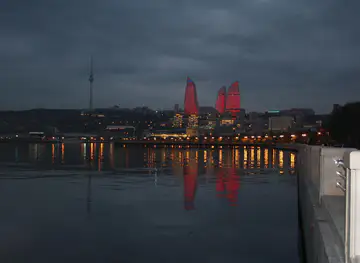
Explore more of Azerbaijan
Discover Azerbaijan: A captivating blend of ancient heritage, stunning natural landscapes, and vibrant modernity at the crossroads of Europe and Asia.
Explore Azerbaijan