

Free Sheki Travel Guide & Mobile App
Plan your Sheki trip with Evendo. Get free guides to top attractions, restaurants, hotels, and bars. Web access or download the mobile app.


Sheki, Azerbaijan, pairs a UNESCO-listed historic centre with the Khan’s Palace, Caucasian scenery, silk traditions and distinctive local cuisine.
A Historic Mountain Town
Sheki lies on the southern slopes of the Greater Caucasus in north-western Azerbaijan, where wooded ridges rise behind a town of tiled roofs, stone lanes and elaborate façades. Its historic centre, together with the Khan’s Palace, was inscribed on the UNESCO World Heritage List in 2019, recognising a distinctive urban heritage shaped by trade, craftsmanship and the region’s khanates. The town’s setting is part of its appeal: mountain air, orchards and forested valleys surround streets that remain considerably more intimate than those of Baku.Read more about Sheki
Palaces, Crafts and Caravanserais
Life Between Town and Mountains
When is the best time to visit Sheki?
Best: May–June, September · 24–29°C| Month | High (°C) | Rainfall (mm) |
|---|---|---|
| January | 6 | 30 |
| February | 7 | 30 |
| March | 12 | 30 |
| April | 19 | 30 |
| May (best) | 24 | 30 |
| June (best) | 29 | 20 |
| July | 33 | 20 |
| August | 32 | 20 |
| September (best) | 26 | 20 |
| October | 20 | 20 |
| November | 14 | 30 |
| December | 9 | 30 |
Getting to and around Sheki
How to get there
Transportation
Best attractions in Sheki
Sheki’s principal attractions are concentrated in and around its UNESCO-listed historic centre. The Khan’s Palace commands attention with painted chambers and intricate shebeke screens, in which coloured glass is held within interlocking wooden lattice without conventional nails or glue. The Upper and Lower Caravanserais reveal the town’s former role in long-distance commerce, with courtyards and arcaded façades built for merchants, animals and merchandise. The Regional History Museum offers further context for Sheki’s khanate, crafts and social history, while the town’s mosques, narrow lanes and traditional houses reward unhurried exploration. A short excursion to Kish brings the Church of Kish and a quieter village setting, while the surrounding foothills provide landscapes of forests, orchards and mountain roads. Small workshops, sweet shops and tea houses add a living dimension to the architectural heritage, showing how Sheki’s historic identity continues through food and craftsmanship.
-
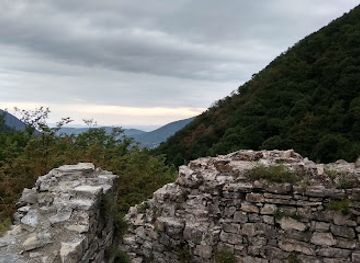
Fortress
Galarsan-Gorarsan Fortress
Discover the Galarsan-Gorarsan Fortress in Sheki: a medieval marvel with breathtaking views and a defiant history along the ancient Silk Road.
28 min drive · 9.3 km from city centre
-
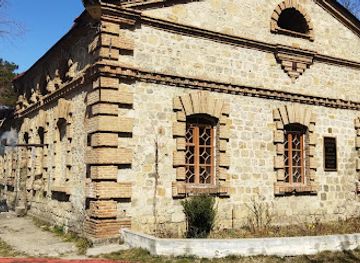
Museum
Winter Palace - House of Sheki Khan's
Discover the Winter Palace in Sheki, Azerbaijan: a historical gem showcasing unique architecture & the rich cultural heritage of the Sheki Khanate.
6 min drive · 2.0 km from city centre
-
Artistic handicrafts
Shebeke Workshop
Discover the ancient Azerbaijani art of Shebeke in Sheki, where intricate stained glass mosaics are crafted without glue or nails, a Silk Road legacy.
8 min drive · 2.5 km from city centre

Best landmarks in Sheki
The Khan’s Palace is Sheki’s defining architectural landmark, built in 1797 for Muhammad Husayn Khan Mushtaq and distinguished by painted interiors, elaborate ornament and remarkable shebeke windows. The Upper and Lower Caravanserais are substantial reminders of the town’s merchant economy, their arcaded courtyards designed to accommodate travellers and goods along Caucasian trade routes. Sheki’s historic mosques, including the Friday Mosque complex, express the religious and civic life of the former khanate, while traditional houses and tiled roofs preserve the scale of the old town. Outside the centre, the Church of Kish offers a different architectural and historical perspective within the region’s layered religious landscape. Together these landmarks show how courtly power, commerce, faith and skilled craftsmanship shaped Sheki’s distinctive urban form.
-
 Hotel
HotelMarxal Resort & Spa
Experience luxurious comfort amidst the Caucasus Mountains at Marxal Resort & Spa, Sheki, Azerbaijan. A perfect blend of relaxation and cultural exploration.
19 min drive · 6.5 km from city centre
-
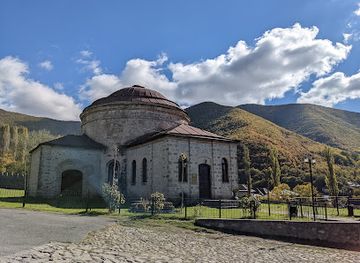
Historical place
Shaki Castle
Explore Shaki Castle, a historic Azerbaijani fortress with stunning architecture, intricate designs, and a rich cultural legacy from the Silk Road era.
8 min drive · 2.6 km from city centre
-
Hotel
Karvansaray
Experience the grandeur of the Silk Road at Sheki's Karvansaray, a historic trading post and architectural marvel.
6 min drive · 2.2 km from city centre
-
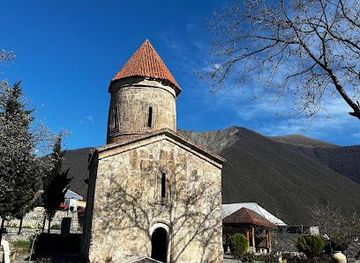
Historical landmark
Kish Albanian Temple
Explore the ancient Kish Albanian Temple, a cradle of Christianity in the Caucasus, showcasing unique architecture and a rich history.
20 min drive · 6.6 km from city centre
Explore Sheki on the map
Plan your Sheki trip on one map. See where the top attractions, landmarks, restaurants, bars and hotels are, find what's near where you're staying, and book hotels and experiences in a few clicks.
Best hotels in Sheki
Best restaurants in Sheki
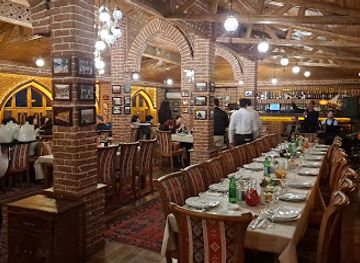
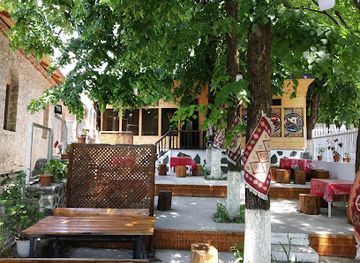
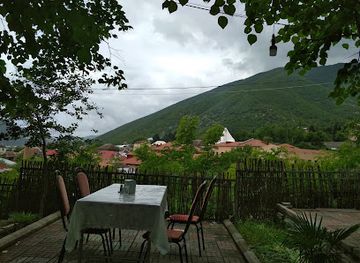
Sheki’s food culture is closely tied to Azerbaijani home cooking, mountain produce and the town’s long trading history. Piti, a slow-cooked stew of meat, chickpeas and vegetables traditionally prepared in an individual earthenware pot, is one of the area’s best-known specialities. Sheki halva is equally distinctive: a rich, layered sweet made with rice-flour sheets, nuts, spices and syrup, widely sold by local confectioners. Restaurants and informal eateries in the historic centre serve kebabs, soups, rice dishes, pastries and tea, while family-run establishments often provide a more traditional setting than contemporary dining rooms. Markets and small food shops offer fruit, preserves, nuts and regional products, reflecting the fertile foothills around the town. Menus and service styles vary, so meals are often leisurely and communal rather than structured around rapid courses.
-
Restaurant
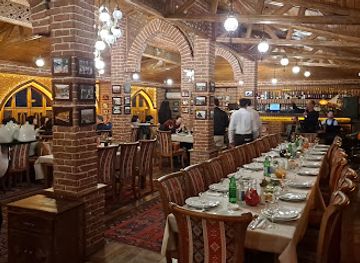
VIP Karvan Restaurant
Discover the rich flavors and vibrant atmosphere at VIP Karvan Restaurant, where traditional Azerbaijani cuisine meets lively entertainment.
7 min walk · 0.6 km from city centre
-
Restaurant
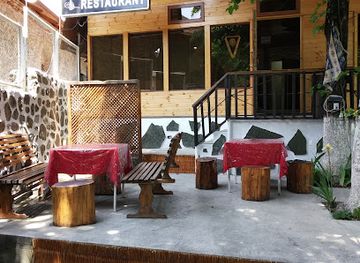
Sultan House Restaurant
Experience the essence of Azerbaijani cuisine at Sultan House Restaurant in Sheki - where every meal tells a story.
6 min drive · 2.1 km from city centre
-
Restaurant
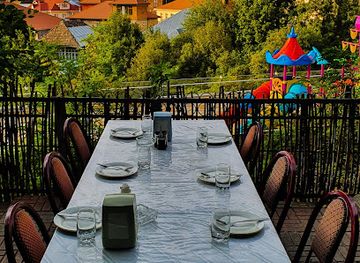
Restoran Qaqarin
Experience authentic Azerbaijani cuisine at Restoran Qaqarin in Sheki – where tradition meets taste in every dish.
7 min drive · 2.3 km from city centre
-
Restaurant
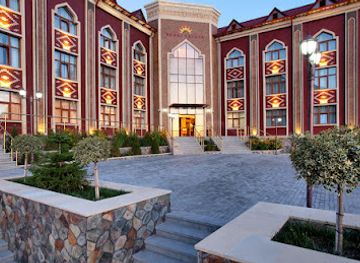
Sheki Palace Hotel
Discover luxury and authentic Azerbaijani cuisine at Sheki Palace Hotel - your gateway to cultural exploration in beautiful Sheki.
7 min drive · 2.3 km from city centre
Best bars in Sheki
Sheki has a restrained evening scene rather than a large club culture. After sunset, social life is more likely to centre on tea houses, cafés, hotel restaurants and relaxed local eateries than on purpose-built nightclubs. Visitors can spend the evening around the historic centre, where illuminated façades, quiet lanes and caravanserai courtyards create an atmospheric setting for conversation, although opening patterns vary and late-night options are limited compared with Baku. Some restaurants serve local beer, wine and spirits, but drinking is not the defining feature of the town’s nightlife. Cultural evenings, family gatherings and traditional music may be encountered through local hospitality venues or organised events, while the surrounding mountains make early starts more appealing than very late nights. Respectful, low-key behaviour is appropriate around residential streets and religious buildings.
-
Restaurant
VIP Karvan Restaurant
Experience the vibrant atmosphere and delicious Azerbaijani cuisine at VIP Karvan Restaurant in Sheki, a perfect blend of local flavors and entertainment.
7 min walk · 0.6 km from city centre
-
Restaurant
Sultan House Restaurant
Experience authentic Azerbaijani cuisine at Sultan House Restaurant in Sheki, where traditional flavors meet warm hospitality.
6 min drive · 2.1 km from city centre
-
Restaurant
Restoran Qaqarin
Discover the authentic taste of Azerbaijani cuisine at Restoran Qaqarin, a culinary gem in Sheki, offering a delightful dining experience.
7 min drive · 2.3 km from city centre
-
Hotel
Sheki Park
Experience comfort and culture in Sheki Park, a serene hotel in the heart of Azerbaijan's natural beauty and rich heritage.
23 min drive · 7.6 km from city centre
Best nightclubs in Sheki
Sheki has a restrained evening scene rather than a large club culture. After sunset, social life is more likely to centre on tea houses, cafés, hotel restaurants and relaxed local eateries than on purpose-built nightclubs. Visitors can spend the evening around the historic centre, where illuminated façades, quiet lanes and caravanserai courtyards create an atmospheric setting for conversation, although opening patterns vary and late-night options are limited compared with Baku. Some restaurants serve local beer, wine and spirits, but drinking is not the defining feature of the town’s nightlife. Cultural evenings, family gatherings and traditional music may be encountered through local hospitality venues or organised events, while the surrounding mountains make early starts more appealing than very late nights. Respectful, low-key behaviour is appropriate around residential streets and religious buildings.
-
Restaurant
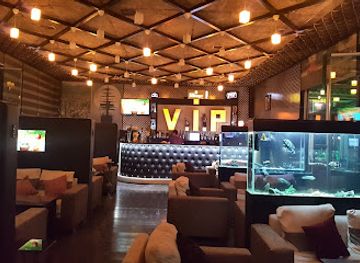
VIP Karvan Restaurant
Discover the lively ambiance and delicious Azerbaijani cuisine at VIP Karvan Restaurant in Sheki, perfect for dining and entertainment.
7 min walk · 0.6 km from city centre
-
Restaurant
Elit Restoran & Pub
Discover Elit Restoran & Pub in Sheki: A vibrant restaurant and karaoke bar blending delicious cuisine with lively entertainment for an unforgettable experience.
5 min walk · 0.4 km from city centre
-
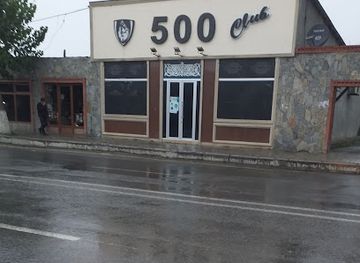
Night club
CLUB500
Discover the pulsating nightlife of Sheki at CLUB500, a premier night club blending music, cocktails, and an unforgettable atmosphere.
5 min drive · 1.6 km from city centre

Best shops in Sheki
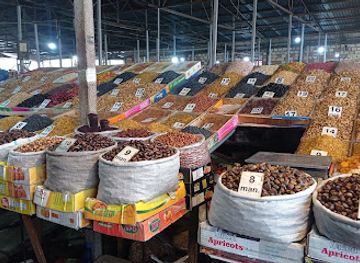
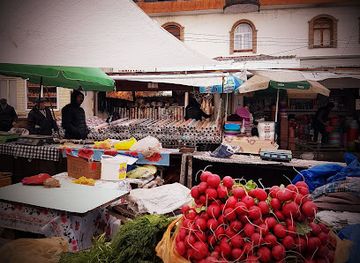
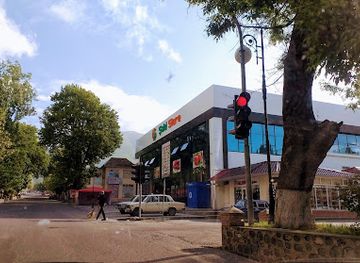
Shopping in Sheki is centred on craft traditions, local food and small independent businesses rather than large modern retail districts. In and around the historic centre, visitors may find silk goods, scarves, carpets, copperware, woodwork and decorative objects reflecting the town’s long association with artisan production. Shebeke-inspired items can evoke the palace’s lattice artistry, although smaller souvenirs should not be confused with the painstaking original technique. Sweet shops are especially important for purchasing Sheki halva, while markets and food stores offer nuts, dried fruit, preserves, honey and other regional products. The caravanserais and surrounding old streets provide the most distinctive setting for browsing, but stock and quality vary between sellers. Visitors should ask about materials and handmade techniques when buying craftwork and pack food products according to customs requirements for their onward journey.
-
Supermarket
Sheki Bazarstore
Discover the vibrant shopping experience at Sheki Bazarstore, where local flavors meet modern convenience in Sheki, Azerbaijan.
13 min walk · 1.1 km from city centre
-
Supermarket
Təzə Bazar
Explore Təzə Bazar in Sheki for a delightful taste of local produce, traditional snacks, and the vibrant culture of Azerbaijan.
13 min walk · 1.0 km from city centre
-
Supermarket
Şəki Store
Discover the vibrant flavors of Sheki at Şəki Store, your go-to supermarket for local and international delights in Azerbaijan.
10 min walk · 0.8 km from city centre
-
Shopping mall
Şəki İpək mağazası
Discover the beauty of Azerbaijani silk at Şəki İpək mağazası, where tradition meets elegance in every exquisite piece.
6 min drive · 2.1 km from city centre
Get your free copy of our complete guide to Sheki, delivered straight to you.
Everything on this page, from attractions and restaurants to essentials and local phrases, in one PDF you can read offline, print or share.
Already have an account? Sign in
Your Sheki guide is ready.
We'll send it to · Not you? Sign out

Getting your guide ready…
We are putting together a fresh copy of the Sheki guide. This can take up to a minute.
This can take a few moments. If your browser asks, choose Allow so the download can start. You'll find the guide in your Downloads folder.
Nothing happened? Download it again
Sorry, the guide is taking longer than usual. Please try again in a minute, or get it by email instead.
Sheki essentials
Currency and Payment
Safety
Emergency Situations
Do's and Don'ts
Local Tips
From Eve
Local phrases worth knowing
You don't need to get them perfect. A few words go a long way, and locals appreciate the effort.
Basics
| English | Local | Say it |
|---|---|---|
| Hello | Salam | [sä-läm] |
| Goodbye | Sağ ol | [sä ol] |
| Yes | Bəli | [bə-li] |
| No | Xeyr | [xeyr] |
| Please/You're welcome | Xahiş edirəm | [xä-hi-sh e-di-räm] |
| Thank you | Təşəkkür edirəm | [tə-ʃək-kür e-di-räm] |
| Excuse me/Sorry | Bağışlayın | [ba-ɣɯʃ-lä-jɯn] |
| How are you? | Necəsən? | [nɛ-d͡ʒɛ-sɛn] |
| Fine. And you? | Yaxşıyam. Sən? | [jäx-ʃɯ-jam sɛn] |
| Do you speak English? | İngilis dili biliyirsən? | [iŋ-gi-lis di-li bi-li-jir-sɛn] |
| I don't understand | Anlamıram | [an-la-mi-ram] |
Eating & Drinking
| English | Local | Say it |
|---|---|---|
| I'd like to see the menu, please | Xahiş edirəm menyunu göstərə bilərsən? | [xä-hi-sh e-di-räm mɛ-nü-nu gös-tə-rə bi-lər-sɛn] |
| I don't eat meat | Mən ət yemirəm | [mən ət jɛ-mi-rəm] |
| Cheers! | Sağ ol! | [sä ol] |
| I would like to pay, please | Ödəmək istəyirəm, xahiş edirəm | [ö-də-mək is-tə-yi-rəm xä-hi-sh e-di-räm] |
Emergencies
| English | Local | Say it |
|---|---|---|
| Help! | Kömək! | [kœ-mæk] |
| Go away! | Get! | [gɛt] |
| Call the Police! | Polisi çağırın! | [po-li-si ʧä-ɣɯ-rin] |
| Call a doctor! | Həkim çağırın! | [hɯ-kim ʧä-ɣɯ-rin] |
| I'm lost | Mən itirdim | [mən i-tir-dim] |
| I'm ill | Mən xəstəyəm | [mən xɯs-tə-jəm] |
Shopping
| English | Local | Say it |
|---|---|---|
| I'd like to buy... | Almaq istəyirəm... | [äl-maɣ is-tə-yi-rəm] |
| I'm just looking | Sadəcə baxıram | [sa-dɛ-d͡ʒä bä-xɯ-räm] |
| How much is it? | Bu neçəyədir? | [bu nɛ-ʧɛ-yə-dir] |
| That's too expensive | Çox bahadır | [ʧox ba-ha-dɯr] |
| Can you lower the price? | Qiyməti endirə bilərsən? | [qi-y-mə-ti ɛn-di-rə bi-lər-sɛn] |
Time & Numbers
| English | Local | Say it |
|---|---|---|
| What time is it? | Saat necədir? | [sä-at nɛ-d͡ʒɛ-dir] |
| It's one o'clock | Bir saatdir | [bir sä-at-dir] |
| Half past (10) | Onun yarısı | [o-nun ja-ri-sɯ] |
| Morning | Səhər | [sɛ-hær] |
| Afternoon | Gündüz | [gyn-dyz] |
| Evening | Axşam | [äx-ʃäm] |
| Yesterday | Dünən | [dyn-ən] |
| Today | Bu gün | [bu gyn] |
| Tomorrow | Sabah | [sä-bah] |
| 1 | Bir | [bir] |
| 2 | İki | [i-ki] |
| 3 | Üç | [üd͡ʒ] |
| 4 | Dörd | [dœrd] |
| 5 | Beş | [bɛʃ] |
| 6 | Altı | [äl-tɯ] |
| 7 | Yeddi | [jɛd-di] |
| 8 | Səkkiz | [sɛk-kiz] |
| 9 | Doqquz | [doʔ-quz] |
| 10 | On | [on] |
Transport & Directions
| English | Local | Say it |
|---|---|---|
| Where's a/the...? | ...harada? | [ha-ra-da] |
| What's the address? | Ünvan nədir? | [ünd-vän nɛ-dir] |
| Can you show me (on the map)? | Mənə göstərə bilərsən (xəritədə)? | [mə-nə gös-tə-rə bi-lər-sɛn (xə-ri-tə-də)] |
| When's the next (bus)? | Növbəti (avtobus) neçədədir? | [nœv-bæ-ti (av-to-bus) nɛ-ʧə-dir] |
| A ticket (to ....) | Bir bilet (....-ə) | [bir bi-let (....-ə)] |
History of Sheki
Ancient Settlements in the Caucasus
The area around present-day Sheki has been inhabited since antiquity, benefiting from fertile foothills, watercourses and routes crossing the southern Caucasus. It was associated with the historic region of Shaki, whose position between the Caspian lowlands and mountain passes made it vulnerable to changing imperial frontiers. Ancient and medieval sources connect the region with Caucasian Albania, a kingdom in the eastern Caucasus, although the exact development of the modern town is difficult to reconstruct from surviving evidence. Archaeological remains and the continued importance of nearby villages show that settlement here was shaped by agriculture, local craft production and movement through the mountain corridor long before Sheki became the centre of an independent khanate.
Medieval Trade and Islamic Rule
During the medieval period, Shaki developed within the shifting political world of the Caucasus, coming under the influence of regional Muslim dynasties and larger powers including the Safavid state. Its location connected local producers with routes running towards Shirvan, Georgia and the lands beyond the Caucasus mountains. Silk cultivation and textile work became increasingly important, while Islamic institutions, markets and caravan routes helped shape the town’s social geography. The nearby village of Kish preserves one of the region’s oldest religious sites, the Church of Kish, whose history reflects the complex Christian and Islamic cultural landscape of northern Azerbaijan rather than a single, uninterrupted tradition.
The Sheki Khanate Emerges
The political fragmentation of the eighteenth-century Caucasus allowed the Khanate of Sheki to emerge as a significant local power. Its ruler, Haji Chalabi Khan, established the khanate in the 1740s after challenging outside authority, and the town became an important seat of regional government. The settlement was also affected by destructive flooding, after which the centre was moved from the earlier low-lying location of Nukha towards safer ground. This rebuilding helped create the urban fabric visible today, including the palace complex, commercial buildings and religious architecture associated with the khanate’s court and merchant community.
Silk, Merchants and Palace Culture
In the later eighteenth century, Sheki prospered through silk production, sericulture and trade. Merchants travelling across the Caucasus used its caravanserais as secure places to store goods and lodge, while local workshops produced textiles, carpets, metalwork and other forms of skilled craft. The Khan’s Palace was constructed in 1797 for Muhammad Husayn Khan Mushtaq and served as a royal residence rather than a vast imperial complex. Its painted interiors and shebeke windows express the refined relationship between architecture, artisan skills and courtly culture that developed in Sheki. The palace and caravanserais remain the clearest architectural evidence of this commercial period.
Russian Annexation and Imperial Change
The Treaty of Gulistan in 1813 transferred Sheki and other territories in the eastern Caucasus to the Russian Empire after the Russo-Persian War. The khanate was subsequently incorporated into the imperial administrative system, and the town became known increasingly as Nukha in official usage. Russian rule altered political institutions, taxation and commercial connections, while Sheki’s established silk economy continued to support local prosperity. New administrative relationships linked the town more closely with the wider Transcaucasus, even as its historic streets, religious buildings and merchant architecture retained the imprint of the khanate.
From Soviet Town to World Heritage City
Following the upheavals of the early twentieth century, Sheki became part of the Azerbaijan Soviet Socialist Republic and later the independent Republic of Azerbaijan. Soviet economic planning changed patterns of production and public life, but the historic centre survived with much of its traditional street layout and built heritage intact. After independence, restoration and heritage work placed greater emphasis on the town’s khanate-era architecture, craft traditions and role in the silk routes. In 2019, the Historic Centre of Sheki with the Khan’s Palace was inscribed by UNESCO, giving international recognition to the relationship between its palace, caravanserais, neighbourhoods and mountainous setting.
Sheki in Photos
Browse through our photo collection highlighting the charm and character of the destination.
Cities near Sheki
The closest cities to Sheki, if you have time for more than one stop.
-

-

-

-

-


Swipe for more cities
Explore more
Explore more of Azerbaijan
Discover Azerbaijan: A captivating blend of ancient heritage, stunning natural landscapes, and vibrant modernity at the crossroads of Europe and Asia.
Explore Azerbaijan