

Free Chobe District Travel Guide & Mobile App
Explore Chobe District with free travel guides. Discover regional history, expert tips, proposed trips, and audio guides on web or mobile app.


Explore Chobe District in Botswana for elephant-rich river safaris, Chobe National Park, Savuti landscapes and easy access to regional gateways.
Read more about Chobe District
When is the best time to visit Chobe District?
Best: June–August · 23–27°C| Month | High (°C) | Rainfall (mm) |
|---|---|---|
| January | 32 | 100 |
| February | 32 | 90 |
| March | 31 | 80 |
| April | 29 | 60 |
| May | 26 | 20 |
| June (best) | 23 | 5 |
| July (best) | 24 | 5 |
| August (best) | 27 | 5 |
| September | 30 | 20 |
| October | 33 | 40 |
| November | 34 | 60 |
| December | 34 | 80 |
Getting to and around Chobe District
How to get there
Transportation
Top city travel guides in Chobe District
The cities of Chobe District, and the easiest places to base yourself.

Swipe for more cities
Destinations in Chobe District
Resorts, valleys and scenic spots worth a trip of their own.
-

-


Swipe for more destinations
Best attractions in Chobe District
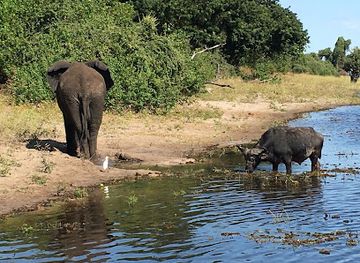
Chobe National Park is the district's central attraction, but its appeal lies in the variety of ways to experience it. In Kasane's riverfront sector, guided boat cruises reveal hippos, crocodiles, waterbirds and elephants approaching the Chobe River, while open-sided safari vehicles explore woodland, floodplain and grassland. The park's far-flung Savuti area offers a more remote safari setting, with seasonal channels, open plains and a reputation for predator sightings; Linyanti is still more secluded and is generally reached through specialist camps or extended safari arrangements. Around Kasane, the Kasane Forest Reserve provides a contrasting woodland environment, and the Chobe River corridor supports birdwatching, photography and fishing activities where permitted. Community and craft experiences add a human dimension to the wildlife focus, while nearby border towns provide insight into the district's regional connections. Victoria Falls is a major excursion from Kasane but lies outside Botswana, in Zimbabwe, and should be treated as a separate destination with its own entry requirements.
-
National park
Chobe National Park
Discover Botswana's wildlife paradise: Chobe National Park, home to massive elephant herds and diverse ecosystems, a must-visit safari destination.
-
Tourist attraction
Sedudu Gate
Enter the wild heart of Botswana through Sedudu Gate, your starting point for exploring the breathtaking Chobe National Park.
-
Outdoor activity organiser
Kalahari Tours
Experience unforgettable Chobe National Park safaris with expert guides, customized tours, and affordable prices in Kasane, Botswana.
-
Ecological park
CARACAL
Discover Botswana's wildlife and support conservation at CARACAL Ecological Park in Kasane. An educational and unforgettable experience awaits!

Best landmarks in Chobe District
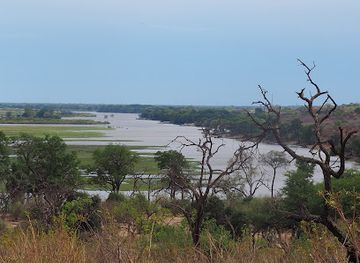
The Chobe River is the district's defining natural landmark, forming a broad, wildlife-rich waterway beside Kasane and giving the town its distinctive relationship with floodplain, woodland and international borders. Chobe National Park is the region's major protected landscape and an important landmark in Botswana's conservation history, particularly its riverfront sector and the distinctive Savuti channel and marsh system farther south-west. Kasane's position near the Kazungula transport junction is another significant geographical marker: the surrounding borderlands connect Botswana with Namibia, Zambia and Zimbabwe, although the actual international boundaries and crossing points are subject to official controls. The Kazungula Bridge, across the Zambezi River in the wider border area, is a contemporary piece of regional infrastructure rather than a park attraction. Within the town, the small Baobab Prison Tree is a recognised local historical feature, associated with the colonial period and the use of a large baobab as a holding place, although its interpretation should be approached with the wider history of colonial administration in mind.
-
 Lodge
LodgeChobe Safari Lodge
Experience Botswana's wildlife at Chobe Safari Lodge, your gateway to Chobe National Park and unforgettable riverfront adventures.
-
Non-profit organization
Mokolodi Nature Reserve
Experience Botswana's wildlife and conservation efforts at Mokolodi Nature Reserve, a short drive from Gaborone. Game drives, rhino tracking, and more!
-
National park
Chobe National Park
Discover Botswana's first national park, a biodiverse haven with massive elephant herds, diverse wildlife, and stunning riverfront vistas.
-
Lodge
Cresta Mowana Safari Resort and Spa
Experience luxury in the heart of the African wilderness at Cresta Mowana Safari Resort & Spa, where the Chobe River meets untamed beauty.
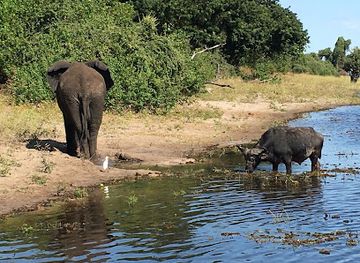
Explore Chobe District on the map
Plan your trip on one map. See where the top cities, national parks and sights are, and book hotels and experiences in a few clicks.
Best hotels in Chobe District
Best restaurants in Chobe District
Dining in Chobe District is concentrated in Kasane's lodges, hotels, guesthouses and independent restaurants, with menus shaped by Botswana's wider food culture and the expectations of an international safari clientele. Visitors may encounter seswaa, a slow-cooked shredded meat dish, bogobe porridge, grilled meats, seasonal vegetables and locally familiar stews, alongside salads, pasta and other practical lodge fare. Game meat may appear on some menus, but its availability and sourcing vary, so it should not be assumed to represent every local meal. Breakfasts and packed lunches are important on early drives, while riverside and lodge dining often emphasises simple, well-organised meals suited to safari schedules. Kasane's shops and small food outlets are useful for snacks, drinks and supplies, although choices become much more limited in remote Savuti and Linyanti camps. Ask operators about dietary requirements in advance, particularly when staying far from town.
-
Lodge
Chobe Safari Lodge
Experience luxury amidst nature at Chobe Safari Lodge – your perfect retreat near Chobe National Park.
-
National park
Chobe National Park
Explore Chobe National Park - A Wildlife Paradise in Botswana Offering Unforgettable Safari Adventures Amidst Stunning Natural Beauty.
-
Lodge
Cresta Mowana Safari Resort and Spa
Discover unparalleled luxury at Cresta Mowana Safari Resort & Spa—your gateway to Botswana's majestic wildlife along the Chobe River.
-
Restaurant
Chobe Marina Lodge
Experience luxury and adventure at Chobe Marina Lodge - your gateway to Botswana's stunning wildlife and tranquil river views.
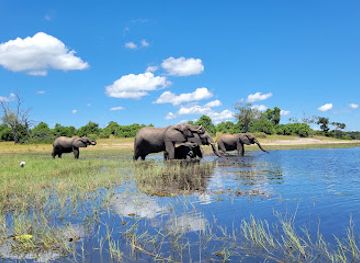
Best bars in Chobe District
Evening life in Chobe District is centred on lodge bars, hotel restaurants and relaxed venues in Kasane rather than a large nightclub scene. After a game drive, visitors commonly gather for a drink, informal conversation and views of the river or surrounding woodland, while some lodges arrange low-key cultural performances or fireside socialising when conditions and regulations allow. Kasane has a modest selection of bars and restaurants serving residents, safari guests and cross-border travellers, but opening arrangements can vary and should not be assumed to follow city nightlife hours. Remote camps in Savuti and Linyanti offer an even quieter evening experience, usually focused on dinner, wildlife sounds and stargazing. Drink responsibly, especially before early drives, and follow lodge rules about moving around after dark because wildlife may pass close to accommodation.
-
Lodge
Chobe Safari Lodge
Discover the beauty of Botswana at Chobe Safari Lodge, your luxurious base for wildlife adventures in Chobe National Park.
-
National park
Chobe National Park
Explore Chobe National Park, Botswana's wildlife haven, where elephants roam and breathtaking landscapes await every traveler.
-
Bar
Chobe Marina Lodge
Experience the ultimate blend of luxury and adventure at Chobe Marina Lodge, where nature's beauty meets exceptional hospitality.
-
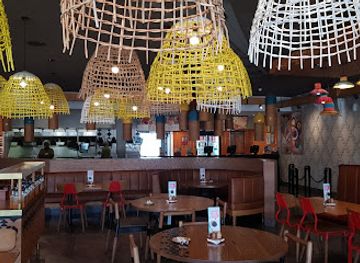
Chicken
Nando's Kasane
Discover the vibrant flavors of Nando's Kasane, specializing in flame-grilled peri-peri chicken and diverse family-friendly dishes.
Best nightclubs in Chobe District
Evening life in Chobe District is centred on lodge bars, hotel restaurants and relaxed venues in Kasane rather than a large nightclub scene. After a game drive, visitors commonly gather for a drink, informal conversation and views of the river or surrounding woodland, while some lodges arrange low-key cultural performances or fireside socialising when conditions and regulations allow. Kasane has a modest selection of bars and restaurants serving residents, safari guests and cross-border travellers, but opening arrangements can vary and should not be assumed to follow city nightlife hours. Remote camps in Savuti and Linyanti offer an even quieter evening experience, usually focused on dinner, wildlife sounds and stargazing. Drink responsibly, especially before early drives, and follow lodge rules about moving around after dark because wildlife may pass close to accommodation.
-
Bar
Chobe Marina Lodge
Discover luxury and adventure at Chobe Marina Lodge, your gateway to the wonders of Botswana's wildlife and breathtaking river views.
-
Hotel
Chobe Game Lodge
Experience luxury and wildlife like never before at Chobe Game Lodge, nestled in the heart of Chobe National Park, Botswana.
-
Hotel
The Old House
Experience the charm of Botswana at The Old House in Kasane, your gateway to adventure and relaxation amidst stunning natural beauty.
-
Lodge
The Big 5 Chobe Lodge
Discover the beauty of Botswana's wildlife at The Big 5 Chobe Lodge, your gateway to the Chobe National Park experience.
Best shops in Chobe District
Shopping in Chobe District is primarily practical and craft-oriented, with the greatest choice in Kasane. Souvenir outlets, lodge shops, craft centres and market-style stalls offer carved wooden objects, woven goods, baskets, textiles, jewellery and wildlife-themed artworks, while food shops provide drinks, snacks and supplies for road journeys. Quality and provenance vary, so visitors should ask whether an item was made locally and avoid products made from restricted wildlife materials or protected species. Kasane is also a useful place to buy Botswana-related gifts before travelling into remote safari areas, where retail options may be limited to lodge boutiques. Pandamatenga and smaller settlements have a more local, everyday shopping character rather than a concentrated tourist retail scene. Bargaining may be possible in some informal settings, but it should be polite and proportionate; fixed-price shops and established craft outlets generally make their terms clear.
-
Lodge
Chobe Safari Lodge
Experience the breathtaking beauty and wildlife of Botswana at Chobe Safari Lodge, your perfect safari getaway.
-
National park
Chobe National Park
Explore the breathtaking beauty of Chobe National Park, Botswana's wildlife paradise with diverse ecosystems and unforgettable safari experiences.
-
Lodge
Chobe Marina Lodge
Experience the ultimate blend of luxury and adventure at Chobe Marina Lodge, your gateway to Botswana's breathtaking wildlife and natural beauty.
-
Supermarket
SPAR Kasane
Discover the essence of Botswana at SPAR Kasane, your ultimate supermarket for local flavors and fresh produce.

Get your free copy of our complete guide to Chobe District, delivered straight to you.
Everything on this page, from attractions and restaurants to essentials and local phrases, in one PDF you can read offline, print or share.
Already have an account? Sign in
Your Chobe District guide is ready.
We'll send it to · Not you? Sign out

Getting your guide ready…
We are putting together a fresh copy of the Chobe District guide. This can take up to a minute.
This can take a few moments. If your browser asks, choose Allow so the download can start. You'll find the guide in your Downloads folder.
Nothing happened? Download it again
Sorry, the guide is taking longer than usual. Please try again in a minute, or get it by email instead.
Chobe District essentials
Currency and Payment
Safety
Emergency Situations
Do's and Don'ts
Local Tips
From Eve
Local phrases worth knowing
You don't need to get them perfect. A few words go a long way, and locals appreciate the effort.
Basics
| English | Local | Say it |
|---|---|---|
| Hello | Dumela | [Doo-meh-lah] |
| Goodbye | Tsamaya sentle | [Tsah-mah-yah sen-tleh] |
| Yes | Ee | [Eh] |
| No | Aowa | [Ah-oh-wah] |
| Please/You're welcome | O kae | [Oh kai] |
| Thank you | Ke a leboga | [Kay ah leh-boh-gah] |
| Excuse me/Sorry | Ntshwarele | [Nts-hwah-reh-leh] |
| How are you? | O kae? | [Oh kai?] |
| Fine. And you? | Ke teng. Wena? | [Kay teng. Weh-nah?] |
| Do you speak English? | A o bua Seagana? | [Ah oh boo-ah Seh-gah-nah?] |
| I don't understand | Ke sitwa go utlwa | [Kay sit-wah go oot-lwah] |
Eating & Drinking
| English | Local | Say it |
|---|---|---|
| I'd like to see the menu, please | Ke batla go bona lenaneo, o kae | [Kay ba-tlah go boh-nah leh-nah-eh-no, oh kai] |
| I don't eat meat | Ke sitwa go ja nama | [Kay sit-wah go jah nah-mah] |
| Cheers! | Tlhokomelo! | [Tlhok-oh-meh-lo] |
| I would like to pay, please | Ke batla go lefa, o kae | [Kay ba-tlah go leh-fah, oh kai] |
Emergencies
| English | Local | Say it |
|---|---|---|
| Help! | Thuso! | [Too-so] |
| Go away! | Tlhola! | [Tlh-oh-lah] |
| Call the Police! | Calla mapolesa! | [Kah-lah mah-po-leh-sah] |
| Call a doctor! | Calla ngaka! | [Kah-lah ngah-kah] |
| I'm lost | Ke a sitwa | [Kay ah sit-wah] |
| I'm ill | Ke a bolawa | [Kay ah boh-lah-wah] |
Shopping
| English | Local | Say it |
|---|---|---|
| I'd like to buy... | Ke batla go reka... | [Kay ba-tlah go reh-kah] |
| I'm just looking | Ke le mo go bonang | [Kay leh mo go boh-nah] |
| How much is it? | Ke bokae? | [Kay boh-kai?] |
| That's too expensive | Seo se a tsenwa | [Seh-oh seh ah tseh-nwah] |
| Can you lower the price? | A o ka fokotsa theko? | [Ah oh kah fo-koh-tsah teh-koh?] |
Time & Numbers
| English | Local | Say it |
|---|---|---|
| What time is it? | Ke nako eng? | [Kay nah-koh eng?] |
| It's one o'clock | Ke ngwaga ya borai | [Kay ng-wah-gah yah boh-rai] |
| Half past (10) | Mafelo a borai | [Mah-feh-loh ah boh-rai] |
| Morning | Mma | [Mah] |
| Afternoon | Motšehare | [Mot-seh-hah-reh] |
| Evening | Mantsiboa | [Mahn-tsee-boh-ah] |
| Yesterday | Maabane | [Mah-ah-bah-neh] |
| Today | Borai | [Boh-rai] |
| Tomorrow | Kamoso | [Kah-moh-soh] |
| 1 | Ngwaga e le nngwe | [Ng-wah-gah eh leh n-nye] |
| 2 | Ngwaga e le pedi | [Ng-wah-gah eh leh peh-dee] |
| 3 | Ngwaga e le tharo | [Ng-wah-gah eh leh tah-roh] |
| 4 | Ngwaga e le nne | [Ng-wah-gah eh leh neh] |
| 5 | Ngwaga e le tlhano | [Ng-wah-gah eh leh tl-hah-noh] |
| 6 | Ngwaga e le tshego | [Ng-wah-gah eh leh tsheh-go] |
| 7 | Ngwaga e le supa | [Ng-wah-gah eh leh soo-pah] |
| 8 | Ngwaga e le borai | [Ng-wah-gah eh leh boh-rai] |
| 9 | Ngwaga e le borai | [Ng-wah-gah eh leh bo-roh] |
| 10 | Ngwaga e le lesome | [Ng-wah-gah eh leh leh-so-meh] |
Transport & Directions
| English | Local | Say it |
|---|---|---|
| Where's a/the...? | Ke kae ...? | [Kay kai ...?] |
| What's the address? | Ke ngwaga eng? | [Kay ng-wah-gah eng?] |
| Can you show me (on the map)? | A o ka mpontsha (mo mapeng)? | [Ah oh kah mpon-tsah (mo mah-peh-ng)?] |
| When's the next (bus)? | Nako ya borai e kae? | [Nah-koh yah boh-rai eh kai?] |
| A ticket (to ....) | Tiket (go ....) | [Tee-ket (go ....)] |
History of Chobe District
Early Peoples and the Northern Waterways
The Chobe and Linyanti waterways have long supported human movement, fishing, hunting and seasonal settlement. San communities have deep historical connections with the wider northern Botswana landscape, while later migrations and political developments brought other communities into the region. Archaeological evidence across northern Botswana points to long patterns of interaction between people, animals and seasonal water sources, although the district's historical record is less monumental than that of southern Africa's great stone-built centres. The enduring importance of rivers and floodplains remains visible in contemporary settlement, livelihoods and travel routes.
Nineteenth-Century Trade and Regional Politics
During the nineteenth century, the Chobe-Zambezi area was affected by long-distance trade, shifting African political alliances and the expansion of commercial and military networks from neighbouring regions. The river corridors connected communities across what are now Botswana, Namibia, Zambia and Zimbabwe, rather than functioning as isolated national frontiers. Competition over land, cattle, trade and political authority shaped the movement of people through the area. These cross-border connections help explain why the district still has a distinctly international character despite its remote setting.
The Bechuanaland Protectorate
Britain administered Bechuanaland as a protectorate from 1885 until Botswana became independent in 1966. The north-east was governed within a colonial framework that did not erase existing communities or regional links, but introduced new administrative boundaries and transport priorities. The Chobe River later became part of an international boundary landscape involving several territories, while Kasane developed as an administrative and commercial centre. Colonial-era mapping and administration helped establish the territorial framework within which modern Chobe District operates.
Conservation and the Creation of Chobe National Park
Wildlife conservation became increasingly important in northern Botswana during the twentieth century, partly in response to hunting pressure and concern for large animal populations. Chobe National Park was formally established in 1967, shortly after independence, as Botswana's first national park. Its protection of riverfront, woodland and seasonal wetland habitats created the foundation for the safari economy around Kasane. The park's management also reflects an ongoing national effort to balance wildlife conservation, local interests, tourism and the practical challenges of policing a large border region.
Kasane and the Rise of Safari Tourism
From the late twentieth century, improved roads, air connections and safari infrastructure made Kasane one of northern Botswana's principal tourism centres. River cruises and guided drives in Chobe National Park became complementary products, encouraging visitors to stay rather than simply pass through. Tourism brought new employment and commercial opportunities, while also increasing pressure to manage water, waste, vehicle numbers and human-wildlife encounters responsibly. The district's modern identity is therefore closely tied to the development of conservation-based travel.
Cross-Border Transport and the Kazungula Corridor
Chobe District sits beside one of southern Africa's most consequential cross-border corridors. The Kazungula area links Botswana with Zambia, Namibia and Zimbabwe through road, bridge and ferry infrastructure, while Kasane serves visitors moving between national parks and regional attractions. The Kazungula Bridge, opened in the early 2020s, strengthened the road connection between Botswana and Zambia and reduced reliance on older crossing arrangements. Its significance extends beyond tourism, supporting trade and reinforcing the district's role as a regional transport junction.
Contemporary Conservation and Community Tourism
Today, Chobe's future is shaped by the need to conserve elephants, predators, river habitats and migratory wildlife while ensuring that neighbouring communities benefit from tourism. Community-based enterprises, cultural visits, craft production and local employment complement private lodges and national-park operations. The district also faces wider pressures, including climate variability, human-wildlife conflict and the management of shared ecosystems that cross national borders. Visitors encounter a landscape whose history is still unfolding through conservation policy, regional cooperation and changing tourism patterns.
Chobe District in Photos
Browse through our photo collection highlighting the charm and character of the destination.
Neighbouring regions of Chobe District
The closest regions to Chobe District, if you have time for more than one.
-

-

-
-

-


Swipe for more regions
Explore more
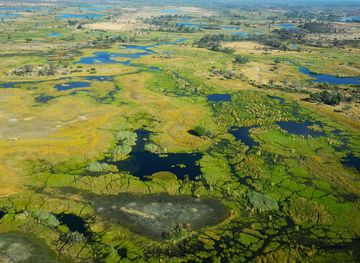
Explore more of Botswana
Explore Botswana: A land of stunning contrasts, rich wildlife, and cultural heritage. Discover the Okavango Delta, Kalahari Desert, and immerse in sustainable tourism.
Explore Botswana