

Free Chapada dos Veadeiros Travel Guide & Mobile App
Explore Chapada dos Veadeiros with free travel guides. Discover regional history, expert tips, proposed trips, and audio guides on web or mobile app.


Chapada dos Veadeiros pairs Goiás’s ancient Cerrado plateaus with waterfalls, canyon trails, Kalunga culture and clear-sky adventures.
Read more about Chapada dos Veadeiros
When is the best time to visit Chapada dos Veadeiros?
Best: July–September · 22–26°C| Month | High (°C) | Rainfall (mm) |
|---|---|---|
| January | 28 | 250 |
| February | 27 | 230 |
| March | 27 | 200 |
| April | 27 | 150 |
| May | 25 | 100 |
| June | 23 | 50 |
| July (best) | 22 | 30 |
| August (best) | 23 | 30 |
| September (best) | 26 | 60 |
| October | 27 | 120 |
| November | 28 | 170 |
| December | 28 | 210 |
Getting to and around Chapada dos Veadeiros
How to get there
Transportation
Destinations in Chapada dos Veadeiros
Resorts, valleys and scenic spots worth a trip of their own.

Swipe for more destinations
Best attractions in Chapada dos Veadeiros
Chapada dos Veadeiros offers a concentration of outdoor attractions shaped by water, rock and Cerrado vegetation. Chapada dos Veadeiros National Park, reached most commonly from São Jorge, has marked walks to the Saltos do Rio Preto, river canyons, natural pools and viewpoints, with access and trail arrangements subject to park regulations. Around Alto Paraíso, private reserves and rural properties provide additional waterfall walks, including the Almécegas and São Bento areas, while the Vale da Lua presents rounded, channelled rock beside the São Miguel River. Cavalcante is the main base for exploring falls in and around the Kalunga territory, including Santa Bárbara, where community guidance and local access rules are particularly important. The area also suits birdwatching, landscape photography, star-gazing and multi-day hiking, although shade, water and mobile coverage are not guaranteed. Smaller towns and countryside roads reveal a slower agricultural landscape, and a guide can add geological, botanical and cultural interpretation that is difficult to obtain from trail signs alone.
-
Tourist attraction
Vale da Lua
Discover Vale da Lua in Alto Paraíso de Goiás: Swim in emerald pools amidst ancient, moon-like rock formations in Brazil's stunning Chapada dos Veadeiros.
-
Tourist attraction
Cachoeira Dos Cristais
Discover crystal-clear waterfalls and tranquil pools in Goiás, perfect for a refreshing escape into nature's beauty.
-
Tourist attraction
Enchanted Well Waterfall
Discover the magic of Cachoeira Poço Encantado in Teresina de Goiás: a breathtaking waterfall with crystal-clear waters and serene natural beauty.
-
Tourist attraction
Cachoeira Almécegas I
Discover the stunning 45-meter Cachoeira Almécegas I in Alto Paraíso de Goiás, offering majestic views and refreshing natural pools in a breathtaking setting.


Best landmarks in Chapada dos Veadeiros
Chapada dos Veadeiros National Park is the region’s defining protected landmark, representing the conservation of a high Cerrado plateau cut by the Preto River and its tributaries. Within the park, the Saltos do Rio Preto form one of the most recognisable combinations of waterfall, river valley and elevated viewpoint. The Vale da Lua, near Alto Paraíso, is a striking geological landmark where water has sculpted pale rock into channels and rounded formations. Around Cavalcante, Santa Bárbara Waterfall is notable for its clear pool and for its position within the Kalunga cultural landscape, making its significance both natural and social. The plateau horizons, quartzite outcrops and open skies are themselves central geographic landmarks, while the settlements of Alto Paraíso and São Jorge express the region’s modern identity as gateways to protected landscapes. These places should be understood within their environmental and community settings, not treated as scenery detached from local management and history.
-
 National park
Parque Nacional da Chapada dos Veadeiros
Discover Brazil's ancient plateau: canyons, waterfalls, and unique beauty in Chapada dos Veadeiros National Park, a UNESCO World Heritage site.
-
National park
Chapada dos Guimarães National Park
Discover dramatic cliffs, stunning waterfalls, and diverse wildlife in Brazil's Chapada dos Guimarães National Park, a haven for nature lovers and adventurers.
-
Tourist attraction
Vale da Lua
Explore Vale da Lua in Goiás, Brazil: an ancient, otherworldly landscape sculpted by the São Miguel River, offering unique beauty and tranquility.
-
Tourist attraction
Park entrance
Discover breathtaking waterfalls, ancient rock formations, and diverse wildlife at the entrance to Brazil's Chapada dos Veadeiros National Park.


Explore Chapada dos Veadeiros on the map
Plan your trip on one map. See where the top cities, national parks and sights are, and book hotels and experiences in a few clicks.
Best hotels in Chapada dos Veadeiros
Best restaurants in Chapada dos Veadeiros
Dining in Chapada dos Veadeiros reflects Goiás cooking and the edible diversity of the Cerrado rather than a single narrowly defined regional cuisine. Restaurants, cafés and simple eateries in Alto Paraíso and São Jorge commonly use cassava, maize, beans, local herbs and seasonal produce, while pequi and baru appear in some savoury dishes, sweets and drinks. Fresh juices, handmade breads and vegetarian food are widely encountered in tourist centres, alongside Brazilian staples and meals suited to hikers. In Cavalcante and nearby communities, food can also reflect the agricultural traditions of the surrounding countryside and Kalunga territory, but visitors should book or arrange community meals rather than assume informal access. Rural inns and small restaurants offer a more relaxed setting, while the larger towns provide the broadest choice. Markets and local producers are useful places to look for nuts, preserves, honey and Cerrado products, though availability changes with the season.
-
Restaurant
Vendinha 1961
Experience authentic Brazilian flavors at Vendinha 1961 in Alto Paraíso de Goiás - where every bite tells a story.
-
Restaurant
Santo Cerrado Risoteria e Café
Experience authentic Brazilian cuisine at Santo Cerrado Risoteria e Café, where every dish tells a story and every sip delights your senses.
-
Snack bar
Lanchonete Portugal
Discover Lanchonete Portugal: A cozy snack bar in São João d'Aliança serving authentic Brazilian snacks amidst stunning rural landscapes.
-
Restaurant
Zu's Bistro culinária italiana.
Experience the true flavors of Italy at Zu's Bistro in Alto Paraíso de Goiás - where every dish tells a story.


Best bars in Chapada dos Veadeiros
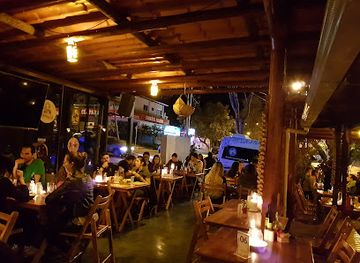
Evenings in Chapada dos Veadeiros are generally modest and social rather than centred on a large nightclub scene. Alto Paraíso has the broadest choice of restaurants, cafés, bars and occasional live-music settings, while São Jorge’s compact centre is suited to informal drinks and conversation after a day on the trails. Cavalcante has a smaller evening circuit, with local bars and restaurants providing the main options. Some establishments serve Brazilian beer, regional fruit drinks and cocktails, and the area’s clear skies make outdoor stargazing a natural alternative to late-night entertainment. Opening arrangements can be seasonal and quieter outside holiday periods, so visitors should not assume that every venue operates late. Drinking is not necessary to experience local culture, and early starts are often worthwhile for waterfalls and exposed trails.
-
Bar
Vendinha 1961
Discover the vibrant flavors and lively atmosphere of Vendinha 1961, a Brazilian bar and restaurant in Alto Paraíso de Goiás, perfect for tourists.
-
Restaurant
Santo Cerrado Risoteria e Café
Discover the flavors of Brazil at Santo Cerrado Risoteria e Café, a delightful dining experience in Alto Paraíso de Goiás, known for its exquisite risottos and cozy ambiance.
-
Restaurant
Zu's Bistro culinária italiana.
Discover the authentic taste of Italy at Zu's Bistro in Alto Paraíso de Goiás, where every dish is a celebration of culinary excellence.
-
Tourist attraction
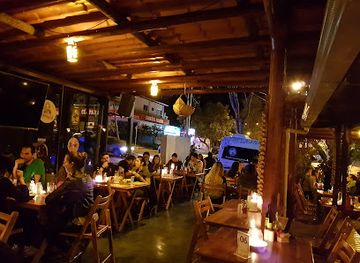
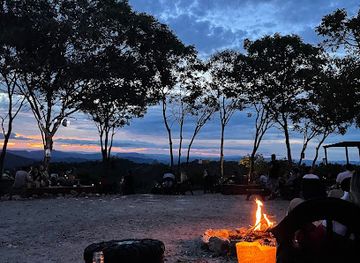
Bar do Mirante
Experience stunning sunset views and handcrafted cocktails at Bar do Mirante, São Jorge's premier cocktail bar and tourist attraction.


Best nightclubs in Chapada dos Veadeiros
Evenings in Chapada dos Veadeiros are generally modest and social rather than centred on a large nightclub scene. Alto Paraíso has the broadest choice of restaurants, cafés, bars and occasional live-music settings, while São Jorge’s compact centre is suited to informal drinks and conversation after a day on the trails. Cavalcante has a smaller evening circuit, with local bars and restaurants providing the main options. Some establishments serve Brazilian beer, regional fruit drinks and cocktails, and the area’s clear skies make outdoor stargazing a natural alternative to late-night entertainment. Opening arrangements can be seasonal and quieter outside holiday periods, so visitors should not assume that every venue operates late. Drinking is not necessary to experience local culture, and early starts are often worthwhile for waterfalls and exposed trails.
-
Bar
Vendinha 1961
Experience the vibrant flavors of Brazil at Vendinha 1961, a bar and restaurant in Alto Paraíso de Goiás known for its delicious pastelaria and welcoming atmosphere.
-
Tourist attraction
Bar do Mirante
Experience breathtaking sunsets and exquisite cocktails at Bar do Mirante, the jewel of Chapada dos Veadeiros, perfect for unforgettable moments.
-
Bar
ALQUIMIA Culinária - Arte - Tabacaria
Experience the perfect blend of art and culinary excellence at ALQUIMIA Culinária, a unique bar and restaurant in Alto Paraíso de Goiás.
-
Cocktail bar
Gastrobar Área 51
Discover the vibrant flavors of Gastrobar Área 51, where innovative cocktails meet gourmet cuisine in the heart of Alto Paraíso de Goiás.


Best shops in Chapada dos Veadeiros
Shopping in Chapada dos Veadeiros is concentrated in the small centres of Alto Paraíso, São Jorge and Cavalcante rather than in large retail complexes. Independent shops and market stalls offer practical outdoor items, locally made clothing, jewellery, ceramics, artwork, crystals and souvenirs inspired by the Cerrado, although visitors should avoid purchasing rocks, plants or wildlife products whose origin or legality is unclear. Food products are often more meaningful purchases: baru nuts, honey, preserves, sweets, flours and other seasonal ingredients may be available through local producers. Alto Paraíso has the widest selection of galleries, craft shops and wellness-oriented goods, São Jorge has a compact village shopping scene linked to park visitors, and Cavalcante provides access to products and crafts connected with the surrounding countryside and Kalunga communities. Ask before photographing or bargaining with individual makers, and favour transparent, community-supporting sales.
-
National park
Parque Nacional da Chapada dos Veadeiros
Explore the stunning landscapes and rich biodiversity of Parque Nacional da Chapada dos Veadeiros, a UNESCO World Heritage site in Brazil.
-
Novelty store
Capim de Cheiro
Explore Capim de Cheiro in Alto Paraíso de Goiás for unique aromatherapy, glassware, and handcrafted souvenirs that embody the spirit of Goiás.
-
Souvenir store
Loja Cheiro de Mato Chapada dos Veadeiros
Discover the vibrant essence of Chapada dos Veadeiros at Loja Cheiro de Mato, your go-to souvenir and beachwear store.
-
Clothing store
Loja Caliandra Moda Íntima e Sex Shop
Explore Loja Caliandra in Alto Paraíso de Goiás for quality intimate wear and adult products in a welcoming atmosphere.


Get your free copy of our complete guide to Chapada dos Veadeiros, delivered straight to you.
Everything on this page, from attractions and restaurants to essentials and local phrases, in one PDF you can read offline, print or share.
Already have an account? Sign in
Your Chapada dos Veadeiros guide is ready.
We'll send it to · Not you? Sign out

Getting your guide ready…
We are putting together a fresh copy of the Chapada dos Veadeiros guide. This can take up to a minute.
This can take a few moments. If your browser asks, choose Allow so the download can start. You'll find the guide in your Downloads folder.
Nothing happened? Download it again
Sorry, the guide is taking longer than usual. Please try again in a minute, or get it by email instead.
Chapada dos Veadeiros essentials
Currency and Payment
Safety
Emergency Situations
Do's and Don'ts
Local Tips
From Eve
Local phrases worth knowing
You don't need to get them perfect. A few words go a long way, and locals appreciate the effort.
Basics
| English | Local | Say it |
|---|---|---|
| Hello | Oi | [oy] |
| Goodbye | Tchau | [chow] |
| Yes | Sim | [seem] |
| No | Não | [now] |
| Please/You're welcome | Por favor | [por fah-vor] |
| Thank you | Obrigado/Obrigada | [oh-bree-gah-do/oh-bree-gah-dah] |
| Excuse me/Sorry | Desculpe | [des-kool-peh] |
| How are you? | Como você está? | [koh-moh vo-seh es-tah] |
| Fine. And you? | Bem. E você? | [beng. ee vo-seh] |
| Do you speak English? | Você fala inglês? | [vo-seh fah-lah een-glays] |
| I don't understand | Eu não entendo | [ay-oo now en-ten-do] |
Eating & Drinking
| English | Local | Say it |
|---|---|---|
| I'd like to see the menu, please | Gostaria de ver o cardápio, por favor | [goh-stah-ree-ah jeh veh-o kar-dah-pyo, por fah-vor] |
| I don't eat meat | Eu não como carne | [ay-oo now koh-moh kar-nee] |
| Cheers! | Saúde! | [sah-oo-jee] |
| I would like to pay, please | Gostaria de pagar, por favor | [goh-stah-ree-ah jeh pah-gar, por fah-vor] |
Emergencies
| English | Local | Say it |
|---|---|---|
| Help! | Socorro! | [soh-koh-roo] |
| Go away! | Vá embora! | [vah em-boh-rah] |
| Call the Police! | Chame a polícia! | [sha-mee ah poh-lee-sia] |
| Call a doctor! | Chame um médico! | [sha-mee oom meh-jee-co] |
| I'm lost | Estou perdido | [es-toh per-jee-do] |
| I'm ill | Estou doente | [es-toh do-ehn-chee] |
Shopping
| English | Local | Say it |
|---|---|---|
| I'd like to buy... | Gostaria de comprar... | [goh-stah-ree-ah jeh kom-prahr] |
| I'm just looking | Estou só olhando | [es-toh soh oh-lyan-do] |
| How much is it? | Quanto custa? | [kwan-toh koos-tah] |
| That's too expensive | Isso é caro demais | [ee-so eh kah-roo deh-my] |
| Can you lower the price? | Você pode abaixar o preço? | [vo-seh poh-jee ah-bah-ee-shar o preh-so] |
Time & Numbers
| English | Local | Say it |
|---|---|---|
| What time is it? | Que horas são? | [kee oh-ras sow] |
| It's one o'clock | É uma hora | [eh oo-mah oh-rah] |
| Half past (10) | Dez e meia | [dehz ee may-ah] |
| Morning | Manhã | [man-yah] |
| Afternoon | Tarde | [tar-jee] |
| Evening | Noite | [noy-chee] |
| Yesterday | Ontem | [on-tem] |
| Today | Hoje | [oh-zhee] |
| Tomorrow | Amanhã | [ah-mah-nyah] |
| 1 | Um | [oom] |
| 2 | Dois | [doyz] |
| 3 | Três | [trays] |
| 4 | Quatro | [kwah-tro] |
| 5 | Cinco | [seen-co] |
| 6 | Seis | [says] |
| 7 | Sete | [seh-chee] |
| 8 | Oito | [oy-toh] |
| 9 | Nove | [noh-vee] |
| 10 | Dez | [dehz] |
Transport & Directions
| English | Local | Say it |
|---|---|---|
| Where's a/the...? | Onde fica um/a...? | [on-jee fee-kah oom/ah] |
| What's the address? | Qual é o endereço? | [kwow eh oo en-deh-reh-so] |
| Can you show me (on the map)? | Você pode me mostrar (no mapa)? | [vo-seh poh-jee mee mos-trar (no mah-pah)] |
| When's the next (bus)? | Quando é o próximo (ônibus)? | [kwan-do eh oo proh-see-mo (oh-nee-bus)] |
| A ticket (to ....) | Um bilhete (para ...) | [oom bee-lye-chee (pah-rah ...)] |
History of Chapada dos Veadeiros
Indigenous Landscapes Before Colonial Settlement
The chapada has long been occupied and travelled by Indigenous peoples, whose knowledge of water sources, seasonal landscapes and native plants predates Portuguese settlement by many centuries. Archaeological evidence in central Goiás includes traces of ancient human presence, although the region’s surviving cultural landscapes cannot be reduced to a single archaeological narrative. Indigenous knowledge remains part of the wider historical context of the Cerrado, including the use of native foods and medicinal plants. Visitors should understand that the apparent wilderness of the plateau is a lived and historically used environment rather than an uninhabited space.
Colonial Gold Mining in the Eighteenth Century
Portuguese expeditions and gold seekers entered the interior of Goiás during the eighteenth century, bringing mining camps, forced labour and new routes through landscapes that had previously been controlled by Indigenous societies. Cavalcante developed in connection with this colonial mining economy in the mid-eighteenth century, and the search for gold shaped settlement patterns across the wider chapada. Mining declined when easily accessible deposits became less profitable, but the period left a legacy of rural communities, roads and place names. It also formed part of the violent history from which Afro-Brazilian communities in the region emerged.
Formation of the Kalunga Communities
People who escaped enslavement and their descendants established settlements in the difficult terrain around the Paranã Valley and the chapada. Over generations, these communities became known as Kalunga and developed strong social, agricultural and cultural ties to the landscape. Kalunga territory extends across parts of present-day Cavalcante, Teresina de Goiás and Monte Alegre de Goiás, with recognised community areas and distinct local histories. The territory is not simply a tourist attraction: it is a living cultural space. Visits to waterfalls and villages should therefore be organised with local permission, guides and respect for community decisions.
Livestock, Farming and Interior Goiás
After the decline of colonial mining, cattle raising and small-scale agriculture became important to the economy of the chapada and surrounding Goiás countryside. Rural production adapted to the Cerrado’s seasonal climate, while towns remained geographically separated by long roads and rugged terrain. Native products such as pequi and baru continued to feature in local foodways alongside cassava, maize and other crops. This agricultural history remains visible in working landscapes outside protected areas and helps explain why the region’s contemporary economy combines farming with conservation and nature-based tourism.
Creation of Chapada dos Veadeiros National Park
The federal government established Chapada dos Veadeiros National Park in 1961, initially under a different name and with a strong emphasis on protecting the headwaters and ecosystems of the high plateau. Its boundaries and conservation arrangements changed over time as scientific understanding and environmental policy developed. The park protects Cerrado environments, river valleys and important waterfalls, while also regulating access to some of the region’s most visited trails. Its creation marked a major shift from a landscape valued chiefly for extraction and rural use towards one in which ecological conservation became a central public purpose.
UNESCO Recognition and the Growth of Ecotourism
In 2001, Chapada dos Veadeiros National Park was inscribed on the UNESCO World Heritage List together with Emas National Park, both recognised for the ecological importance of Brazil’s Cerrado. The designation strengthened the region’s international profile, although it does not apply automatically to every town, private reserve or waterfall in the broader chapada. Since the late twentieth century, Alto Paraíso, São Jorge and Cavalcante have developed guiding, accommodation and food services around outdoor travel. Conservation remains dependent on controlled visitation, fire management and the participation of local and traditional communities.
Chapada dos Veadeiros in Photos
Browse through our photo collection highlighting the charm and character of the destination.
Neighbouring regions of Chapada dos Veadeiros
The closest regions to Chapada dos Veadeiros, if you have time for more than one.
-

-

-

-

-


Swipe for more regions
Explore more

Explore more of Brazil
Discover Brazil: a land of samba, stunning landscapes, and rich history. From the Amazon to Rio, explore diverse cultures, world-class cuisine, and vibrant festivals.
Explore Brazil