

Free Anegada Travel Guide & Mobile App
Plan your Anegada trip with Evendo. Get free guides to top attractions, restaurants, hotels, and bars. Web access or download the mobile app.


Anegada, British Virgin Islands, offers coral beaches, flamingo ponds, lobster dinners, reef adventures and quiet Caribbean landscapes beyond sailing crowds.
A Different British Virgin Islands
Anegada is the northernmost and most geologically distinctive island in the British Virgin Islands. Unlike the volcanic peaks of Tortola, Virgin Gorda and Jost Van Dyke, it is a low coral and limestone island, with broad horizons, salt ponds and beaches that extend towards the Atlantic. Its small population is concentrated around Setting Point and the central settlement, while much of the island remains open scrubland, sand and coastal wetland. The absence of steep hills gives Anegada a spacious, unhurried character that feels markedly different from the busier sailing centres.Read more about Anegada
Reefs, Wildlife and Open Water
Island Life and Local Flavours
When is the best time to visit Anegada?
Best: June–August · 32°C| Month | High (°C) | Rainfall (mm) |
|---|---|---|
| January | 30 | 55 |
| February | 30 | 44 |
| March | 30 | 33 |
| April | 31 | 25 |
| May | 31 | 16 |
| June (best) | 32 | 7 |
| July (best) | 32 | 7 |
| August (best) | 32 | 9 |
| September | 32 | 13 |
| October | 31 | 29 |
| November | 31 | 48 |
| December | 30 | 62 |
Getting to and around Anegada
How to get there
Transportation
Best attractions in Anegada
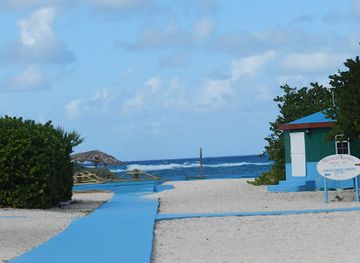
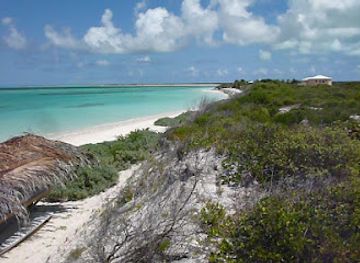
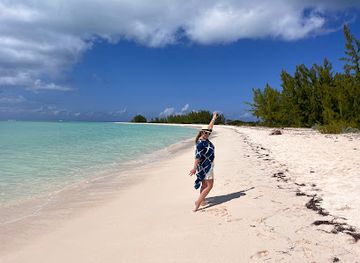
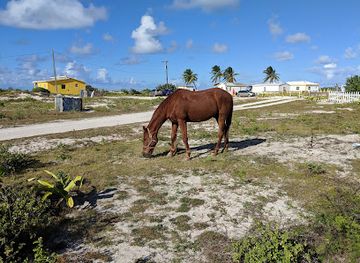
Anegada's principal attractions are its open coastal landscapes and the marine world surrounding them. Flamingo Pond, near the island's interior, is a protected wetland where West Indian flamingos can often be observed from suitable viewpoints, while the salt ponds reveal the island's unusual low-lying geology. Loblolly Bay combines pale sand, reef access and a quieter Atlantic shoreline, and Cow Wreck Bay is known for its broad beach and clear shallows. Around West End, Anegada Reef and Horseshoe Reef create opportunities for guided snorkelling, diving and boating, although conditions and access vary. The island's roads are attractions in themselves, passing scrub, ponds, grazing animals and remote beaches with little urban development. At Setting Point, local seafood restaurants and working boats provide a glimpse of contemporary island life, while sunset views across the western shoreline bring the day to a slow close.
-
Tourist attraction
Jack Bay Point
Discover Anegada's serene Jack Bay Point: pristine beaches, crystal waters, and tranquil beauty in the British Virgin Islands.
6 min drive · 2.0 km from city centre
-
Zoo
Anegada Rock Iguana Headstart Facility
Discover conservation in action at the Anegada Rock Iguana Headstart Facility, dedicated to protecting this unique, endangered species.
18 min walk · 1.4 km from city centre
-
Tourist attraction
Loblolly High Point
Discover breathtaking panoramic views and serene landscapes at Loblolly High Point, a must-visit attraction in Anegada, British Virgin Islands.
8 min drive · 2.5 km from city centre
-
Tourist attraction
Pomato Point
Escape to Pomato Point in Anegada for tranquil beaches, delicious local cuisine, and stunning sunset views in the British Virgin Islands.
22 min drive · 7.5 km from city centre

Best landmarks in Anegada
Anegada's landmarks are primarily maritime and environmental rather than monumental. The West End lighthouse marks the island's exposed western coast and recalls the continuing importance of navigation around reefs and shoals. Anegada Reef and Horseshoe Reef are defining natural landmarks, extending the island's presence far beyond its visible shoreline and explaining its long association with shipwrecks and seafaring. Flamingo Pond is both a wildlife refuge and a reminder of the island's salt-producing wetlands, while the low, pale landscape itself contrasts sharply with the mountainous islands elsewhere in the British Virgin Islands. Setting Point, with its boats, jetties and small businesses, is the most recognisable centre of community life. Nearby bays such as Loblolly and Cow Wreck are valued not for grand architecture but for the relationship between beach, reef, wind and local coastal traditions.
-
 Hotel
HotelAnegada Beach Club
Experience beachfront luxury and island adventures at Anegada Beach Club, your gateway to the unspoiled beauty of Anegada in the British Virgin Islands.
17 min drive · 5.6 km from city centre
-
Restaurant
Cow Wreck
Discover the flavors of the British Virgin Islands at Cow Wreck, where local cuisine meets stunning island views, promising a memorable dining experience.
23 min drive · 7.8 km from city centre
-
Hotel
Anegada Reef Hotel
Escape to Anegada Reef Hotel: Pristine beaches, vibrant reefs, and tranquil island vibes await in the British Virgin Islands.
17 min drive · 5.7 km from city centre
-
Restaurant
The Wonky Dog
Anegada's Wonky Dog: Fresh seafood, stunning views, and a lively atmosphere combine for an unforgettable waterfront dining experience.
18 min drive · 6.0 km from city centre
Explore Anegada on the map
Plan your Anegada trip on one map. See where the top attractions, landmarks, restaurants, bars and hotels are, find what's near where you're staying, and book hotels and experiences in a few clicks.
Best hotels in Anegada
Best restaurants in Anegada
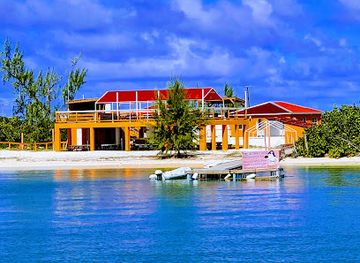
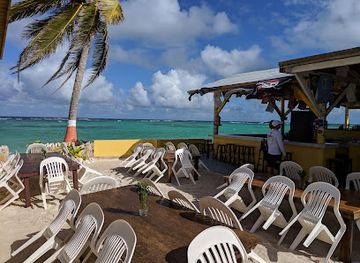
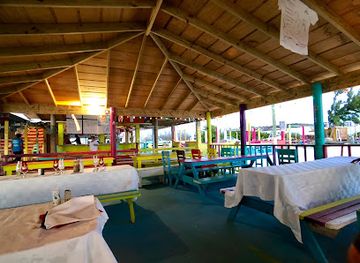
Anegada's food culture is rooted in the sea. Spiny lobster is the island's best-known speciality and appears on menus during the permitted season, alongside fresh fish, conch, shrimp and other Caribbean seafood. Local kitchens also draw on rice, peas, plantain, vegetables, johnnycakes and other familiar West Indian accompaniments, with recipes and seasoning varying between cooks. Restaurants and beach eateries are concentrated around Setting Point and the principal bays, where meals may be served in informal open-air settings close to the water. Breakfasts, grilled fish, rum drinks and simple lunches suit the island's outdoor pace, while locally caught seafood gives dinner a strong sense of place. Supply lines are limited compared with Tortola, so menus can change with catches, weather and deliveries; asking about the day's fresh dishes is part of eating well on Anegada.
-
Restaurant
Cow Wreck
Discover Cow Wreck in the British Virgin Islands: where exquisite dining meets breathtaking ocean views.
23 min drive · 7.8 km from city centre
-
Restaurant
Potters Bar and Lobster House
Experience authentic Caribbean cuisine at Potters Bar and Lobster House – where fresh seafood meets breathtaking views in the British Virgin Islands.
17 min drive · 5.7 km from city centre
-
Restaurant
The Wonky Dog
Experience authentic Caribbean cuisine at The Wonky Dog in Anegada - where delicious food meets breathtaking views.
18 min drive · 6.0 km from city centre
-
Grill
Big Bamboo Beach Bar & Restaurant
Experience the essence of Caribbean cuisine at Big Bamboo Beach Bar & Restaurant—where stunning views meet delicious grilled delights.
6 min drive · 2.0 km from city centre
Best bars in Anegada
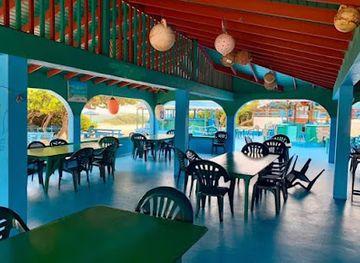
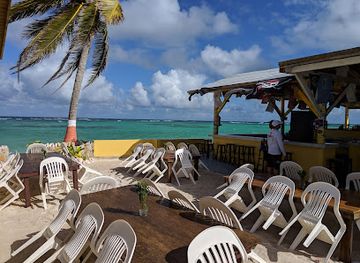
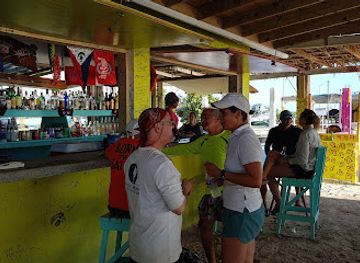
Anegada does not have a major club district or a late-night entertainment economy. Evenings centre on relaxed beach bars, restaurant terraces and small local gatherings, with music, rum-based drinks and conversation often taking place near Setting Point or the better-known bays. The atmosphere is informal rather than heavily programmed, and nightlife depends on the season, visiting boats and community events. Visitors may find occasional live music or dancing at local venues, but opening arrangements are not comparable with Road Town or larger Caribbean resorts. The island's most characteristic evening activity is quieter: watching the sunset, listening to the water, stargazing away from strong urban lighting or sharing a meal after a day on the reef. Respect for residential areas and limited late transport is important when returning after dark.
-
Hotel
Anegada Beach Club
Experience the ultimate tropical escape at Anegada Beach Club, where pristine beaches meet adventure in the stunning British Virgin Islands.
17 min drive · 5.6 km from city centre
-
Restaurant
Cow Wreck
Discover the flavors of the Caribbean at Cow Wreck, a beachfront restaurant in the British Virgin Islands, offering fresh seafood and stunning views.
23 min drive · 7.8 km from city centre
-
Hotel
Anegada Reef Hotel
Discover the serene beauty and vibrant adventures at Anegada Reef Hotel, a perfect tropical retreat in the British Virgin Islands.
17 min drive · 5.7 km from city centre
-
Restaurant
Potters Bar and Lobster House
Experience the best of Caribbean cuisine with fresh seafood and a vibrant atmosphere at Potters Bar and Lobster House in the British Virgin Islands.
17 min drive · 5.7 km from city centre
Best nightclubs in Anegada
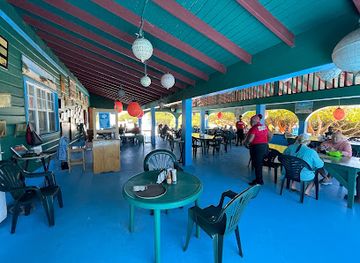
Anegada does not have a major club district or a late-night entertainment economy. Evenings centre on relaxed beach bars, restaurant terraces and small local gatherings, with music, rum-based drinks and conversation often taking place near Setting Point or the better-known bays. The atmosphere is informal rather than heavily programmed, and nightlife depends on the season, visiting boats and community events. Visitors may find occasional live music or dancing at local venues, but opening arrangements are not comparable with Road Town or larger Caribbean resorts. The island's most characteristic evening activity is quieter: watching the sunset, listening to the water, stargazing away from strong urban lighting or sharing a meal after a day on the reef. Respect for residential areas and limited late transport is important when returning after dark.
-
Hotel
Anegada Beach Club
Discover the serene beauty of Anegada Beach Club, a tropical haven in the British Virgin Islands, perfect for relaxation and adventure alike.
17 min drive · 5.6 km from city centre
-
Restaurant
Cow Wreck
Experience the culinary delights of Cow Wreck, a vibrant restaurant in the British Virgin Islands, where fresh seafood meets breathtaking ocean views.
23 min drive · 7.8 km from city centre
-
Grill
Big Bamboo Beach Bar & Restaurant
Experience the tropical charm of Big Bamboo Beach Bar & Restaurant in Anegada, where delicious grilled dishes meet stunning beachfront views.
6 min drive · 2.0 km from city centre
-
Grill
Tipsy by Ann, Anegada BVI
Discover the flavors of the Caribbean at Tipsy by Ann in Anegada BVI, where delightful cuisine meets breathtaking ocean views.
23 min drive · 7.6 km from city centre

Best shops in Anegada
Shopping on Anegada is limited and local in character rather than centred on malls or extensive retail streets. Small shops and businesses around Setting Point provide basic provisions, drinks, beach necessities and practical supplies, while restaurants and activity providers often offer locally themed souvenirs or craft items. Visitors may find Caribbean artwork, handmade products, T-shirts, shell-inspired keepsakes and food-related gifts, although selection varies and should not be confused with the larger retail choice available on Tortola. Local seafood is part of the island's working economy, but transporting fresh or protected marine products requires attention to regulations and airline or ferry restrictions. The most meaningful purchases tend to come from independent makers and small businesses, where spending supports the community that maintains Anegada's fishing, hospitality and maritime traditions.
-
Restaurant
Cow Wreck
Discover the flavors of the Caribbean at Cow Wreck, a stunning beachfront restaurant in the British Virgin Islands, where fresh seafood meets breathtaking views.
23 min drive · 7.8 km from city centre
-
Restaurant
The Wonky Dog
Discover the vibrant flavors of the British Virgin Islands at The Wonky Dog, a beachfront restaurant offering fresh seafood and tropical delights.
18 min drive · 6.0 km from city centre
-
Tourist attraction
Setting Point
Explore the serene beauty of Setting Point in the British Virgin Islands, featuring stunning harbors and tranquil settings for an unforgettable getaway.
17 min drive · 5.6 km from city centre
-
Caribbean
Flash Of Beauty
Experience the authentic flavors of the Caribbean at Flash of Beauty, where local ingredients meet culinary creativity in a vibrant atmosphere.
8 min drive · 2.5 km from city centre
Get your free copy of our complete guide to Anegada, delivered straight to you.
Everything on this page, from attractions and restaurants to essentials and local phrases, in one PDF you can read offline, print or share.
Already have an account? Sign in
Your Anegada guide is ready.
We'll send it to · Not you? Sign out

Getting your guide ready…
We are putting together a fresh copy of the Anegada guide. This can take up to a minute.
This can take a few moments. If your browser asks, choose Allow so the download can start. You'll find the guide in your Downloads folder.
Nothing happened? Download it again
Sorry, the guide is taking longer than usual. Please try again in a minute, or get it by email instead.
Anegada essentials
Currency and Payment
Safety
Emergency Situations
Do's and Don'ts
Local Tips
From Eve
Local phrases worth knowing
You don't need to get them perfect. A few words go a long way, and locals appreciate the effort.
Basics
| English | Local | Say it |
|---|---|---|
| Hello | Good day | [gud dey] |
| Goodbye | Good night | [gud nait] |
| Yes | Yeah | [yeh] |
| No | Nah | [na] |
| Please/You're welcome | Pleasure | [pleh-zhur] |
| Thank you | Thank you | [thangk yu] |
| Excuse me/Sorry | Pardon | [pahr-dn] |
| How are you? | How yuh doin? | [haw yuh doin] |
| Fine. And you? | Irie. An yuh? | [eye-ree. an yuh] |
| Do you speak English? | Yuh speak English? | [yuh speak ing-glish] |
| I don't understand | Ah doh understan | [ah doh un-der-stan] |
Eating & Drinking
| English | Local | Say it |
|---|---|---|
| I'd like to see the menu, please | Lemme see de menu, please | [lem-mi see dee menu, pleez] |
| I don't eat meat | Ah doh eat meat | [ah doh eet meet] |
| Cheers! | Cheers! | [cheers] |
| I would like to pay, please | Lemme pay, please | [lem-mi pay, pleez] |
Emergencies
| English | Local | Say it |
|---|---|---|
| Help! | Help! | [help] |
| Go away! | Gwan weh! | [gwan way] |
| Call the Police! | Call de Police! | [call dee police] |
| Call a doctor! | Call ah doctor! | [call ah doc-tor] |
| I'm lost | Ah lost | [ah lost] |
| I'm ill | Ah sick | [ah sik] |
Shopping
| English | Local | Say it |
|---|---|---|
| I'd like to buy... | I want to buy... | [ah want tuh buy] |
| I'm just looking | Ah jus lookin | [ah jus look-in] |
| How much is it? | How much dis cost? | [how much dis cost] |
| That's too expensive | Dat too dear | [dat too deer] |
| Can you lower the price? | Can yuh drop de price? | [can yuh drop dee price] |
Time & Numbers
| English | Local | Say it |
|---|---|---|
| What time is it? | Wha time it be? | [wha time it bee] |
| It's one o'clock | It one o'clock | [it one o'clock] |
| Half past (10) | Half ten | [half ten] |
| Morning | Mahnin | [mahn-in] |
| Afternoon | Aftanoon | [af-ta-noon] |
| Evening | Evenin | [eve-nin] |
| Yesterday | Yestadeh | [yes-ta-deh] |
| Today | Today | [today] |
| Tomorrow | Tomorrow | [tomorrow] |
| 1 | One | [wun] |
| 2 | Two | [tuu] |
| 3 | Tree | [tree] |
| 4 | Fo' | [fo] |
| 5 | Five | [fai-v] |
| 6 | Six | [siks] |
| 7 | Seven | [sev-en] |
| 8 | Eight | [ayt] |
| 9 | Nine | [nine] |
| 10 | Ten | [ten] |
Transport & Directions
| English | Local | Say it |
|---|---|---|
| Where's a/the...? | Weh de ... deh? | [weh dee ... deh] |
| What's the address? | Wha de address be? | [wha dee address bee] |
| Can you show me (on the map)? | Yuh cud show me (pan de map)? | [yuh kud show me (pan dee map)] |
| When's the next (bus)? | When de nex (bus) deh? | [when dee neks (bus) deh] |
| A ticket (to ....) | A tiket (tu ...) | [a tik-et (to)] |
History of Anegada
Indigenous Caribbean Connections
Long before European administration, Anegada formed part of the wider maritime world of the Caribbean's Indigenous peoples. Archaeological evidence across the Virgin Islands indicates movement between islands for fishing, gathering and exchange, although Anegada's low, exposed terrain and limited freshwater made permanent settlement more constrained than on larger volcanic islands. Its reefs, shoals and sheltered anchorages nevertheless made the island significant to people who travelled by canoe through the archipelago. The surviving landscape of salt ponds, beaches and marine channels helps explain why Anegada's history has always been more closely connected with the sea than with dense inland development.
European Navigation and Maritime Risk
European navigators entered the Virgin Islands during the age of Atlantic expansion, and Anegada became known for the hazards surrounding it. The island's low profile could be difficult to see from offshore, while Anegada Reef, Horseshoe Reef and shifting channels threatened vessels approaching from the east and north. Shipwrecks became a recurring part of local history, leaving archaeological traces and stories associated with the surrounding waters. Rather than developing as a major colonial town, Anegada remained a sparsely settled outpost whose importance lay in its position, natural resources and relationship with regional shipping routes.
British Administration in the Virgin Islands
The British consolidated control over the British Virgin Islands during the seventeenth century, and Anegada was subsequently governed within the territory's colonial framework. Its distance from Tortola and its lack of a deep natural harbour limited large-scale plantation development. Small communities relied instead on fishing, salt gathering, livestock and the practical use of coastal resources. The island's ponds could provide salt in dry conditions, while its reefs offered fish and shellfish. This economic pattern produced a dispersed settlement landscape rather than the port-centred urban form found in Road Town.
Fishing, Wrecks and Island Community
During the nineteenth and early twentieth centuries, Anegada's residents continued to make a living from fishing, seafaring, livestock and small-scale cultivation. The reefs remained both an economic resource and a danger to shipping, and accounts of wrecks became woven into the island's cultural memory. Maritime knowledge was essential: local people understood channels, tides, anchorages and weather patterns that were difficult for visiting vessels to read. The lighthouse at West End belongs to the period when improved navigation became increasingly important, although it did not remove the reef's significance from the island's identity.
Anegada in the Modern British Virgin Islands
In the twentieth century, improved links with Tortola and the growth of recreational sailing gradually brought more visitors to Anegada. Tourism developed on a small scale around beaches, fishing, diving, wildlife and local food rather than through dense resort construction. The island remained part of the British Virgin Islands, a British Overseas Territory, while retaining a strong local community and a landscape shaped by conservation concerns. Today, the protection of wetlands, reefs and bird habitat sits alongside visitor activities, and Anegada's historical character is still visible in its modest settlements, maritime traditions and reliance on the surrounding sea.
Anegada in Photos
Browse through our photo collection highlighting the charm and character of the destination.
Cities near Anegada
The closest cities to Anegada, if you have time for more than one stop.
-

-

-

-

-


Swipe for more cities
Explore more
Explore more of British Virgin Islands
Discover the British Virgin Islands: Pristine beaches, vibrant marine life, and a rich cultural heritage await in this Caribbean paradise.
Explore British Virgin Islands