

Free Road Town Travel Guide & Mobile App
Plan your Road Town trip with Evendo. Get free guides to top attractions, restaurants, hotels, and bars. Web access or download the mobile app.


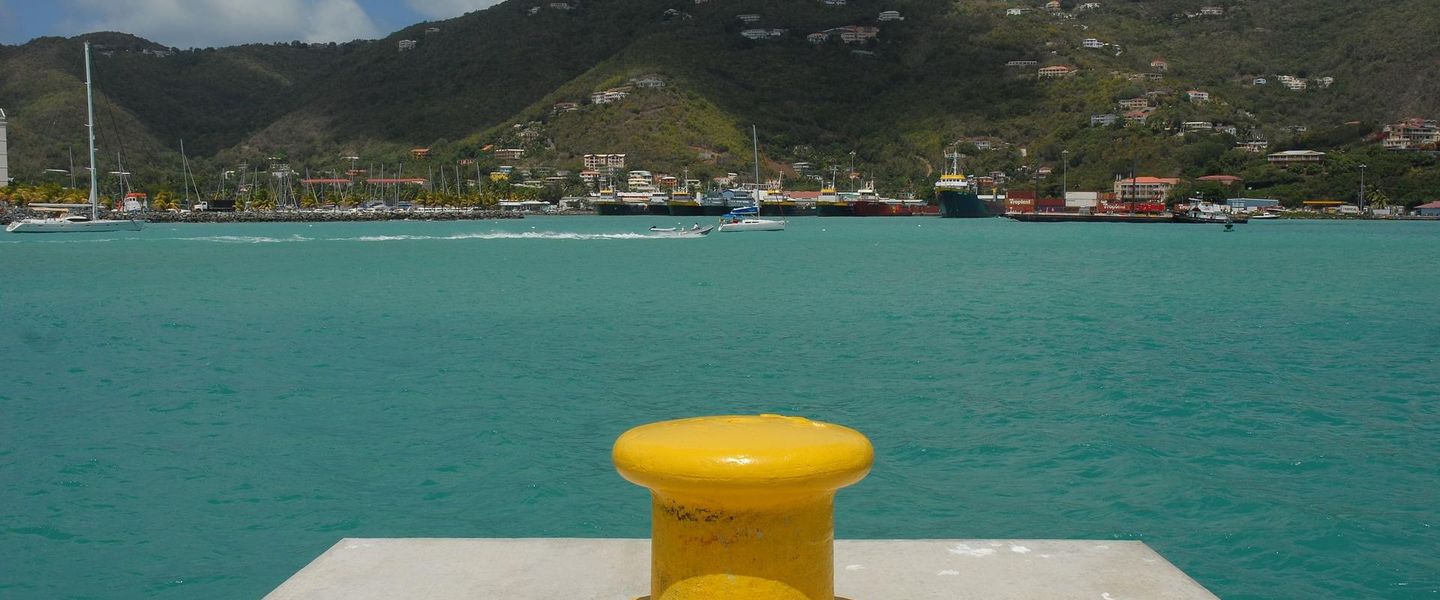


Road Town, British Virgin Islands, pairs harbour views with Caribbean history, sailing, local food, island culture and access to Tortola's landscapes.
A Harbour Shaped by the Sea
Road Town occupies a sheltered bay on the southern coast of Tortola, the largest island in the British Virgin Islands. The capital is compact, hilly and closely tied to the water: ferries arrive at its waterfront, yachts gather in the harbour and steep green slopes rise behind the commercial centre. Its streets combine Caribbean façades, government buildings, churches, small shops and maritime businesses, while the surrounding hills open towards neighbouring islands and the open Atlantic.Read more about Road Town
History in the City Centre
Island Life and Outdoor Horizons
When is the best time to visit Road Town?
Best: February, April–May · 28–29°C| Month | High (°C) | Rainfall (mm) |
|---|---|---|
| January | 28 | 43 |
| February (best) | 28 | 34 |
| March | 28 | 34 |
| April (best) | 28 | 24 |
| May (best) | 29 | 24 |
| June | 29 | 24 |
| July | 30 | 24 |
| August | 30 | 24 |
| September | 30 | 24 |
| October | 29 | 34 |
| November | 29 | 34 |
| December | 29 | 43 |
Getting to and around Road Town
How to get there
Transportation
Best attractions in Road Town
Road Town's attractions are concentrated within a walkable central area, beginning with Main Street, where older buildings, small businesses and civic institutions reveal the capital's colonial-era framework. The BVI National Museum introduces the islands' archaeological, maritime and social history, while HM Prison Museum offers a more focused glimpse into the administration of the former colonial town. At the waterfront, ferry facilities and marinas provide a lively view of the British Virgin Islands' continuing relationship with sailing. Crafts Alive Village adds a local arts and shopping dimension, with stalls selling handmade goods and island-inspired work. The J. R. O'Neal Botanic Gardens, just beyond the busiest streets, contain tropical plantings and shaded paths suited to a slower visit. Road Town also functions as a starting point for organised boat trips and excursions to Tortola's beaches and the neighbouring islands, though those experiences lie outside the central city.
-
National park
J.R. O'Neal Botanical Gardens
Discover a serene escape in Road Town's lush J.R. O'Neal Botanical Gardens, showcasing the British Virgin Islands' diverse plant life and conservation efforts.
2 min walk · 0.2 km from city centre
-
Shopping Centre
Tortola Pier Park
Experience vibrant Caribbean culture, shopping, and dining at Tortola Pier Park in Road Town, British Virgin Islands.
10 min walk · 0.8 km from city centre
-
Tourist attraction
Folk Museum
Discover the vibrant history and culture of the British Virgin Islands at the Folk Museum in Road Town, Tortola.
10 min walk · 0.8 km from city centre


Best landmarks in Road Town
Road Town's landmarks express its roles as a colonial settlement, a government centre and a maritime capital. The BVI National Museum occupies an older building on Main Street and preserves objects connected with the islands' Indigenous, colonial and seafaring past. HM Prison Museum, also in the historic centre, recalls the institutions of colonial administration and offers a tangible counterpoint to the town's commercial waterfront. St George's Anglican Church is an important religious and architectural presence, while the Methodist church reflects the long-standing importance of Christian congregations in local community life. Government buildings and the surrounding civic streets underline Road Town's status as the capital of a British Overseas Territory. Around the harbour, ferry terminals, marinas and the developed waterfront are modern landmarks of a town whose contemporary identity remains inseparable from inter-island movement, sailing and ocean trade.
-
Park and Garden
Cyril B. Romney Tortola Pier Park
Experience the vibrant culture and stunning waterfront views at Cyril B. Romney Tortola Pier Park in Road Town, British Virgin Islands.
10 min walk · 0.8 km from city centre
-
Boat Hire Service
The Moorings: BVI (Tortola)
Explore the breathtaking British Virgin Islands with The Moorings, your top choice for boat hire and sailing adventures.
8 min walk · 0.6 km from city centre
-
Restaurant
Pusser's
Discover Pusser's in Road Town, the perfect blend of Caribbean cuisine, vibrant atmosphere, and stunning waterfront views in the British Virgin Islands.
10 min walk · 0.8 km from city centre
-
 Hotel
Maria's By The Sea Hotel & Restaurant
Experience boutique charm in Road Town: seaside dining, harbor views, and easy access to Tortola's attractions and business center.
10 min walk · 0.8 km from city centre


Explore Road Town on the map
Plan your Road Town trip on one map. See where the top attractions, landmarks, restaurants, bars and hotels are, find what's near where you're staying, and book hotels and experiences in a few clicks.
Best hotels in Road Town
Best restaurants in Road Town
Road Town's dining scene reflects the British Virgin Islands' maritime setting and Caribbean heritage. Seafood is central, with fish, conch and lobster appearing alongside rice, peas, plantains and other island staples when in season. Local cooking also includes fungi and fish, a traditional BVI combination in which cornmeal-based fungi accompanies seasoned fish, as well as Caribbean-influenced roti, stewed meats and grilled dishes. Restaurants and casual eateries cluster around Main Street, the waterfront and Wickham's Cay, ranging from straightforward lunch counters to more polished establishments serving international food for residents, sailors and visitors. Cafés are useful for breakfast and daytime refreshment, while bars often serve small plates and seafood in relaxed harbour settings. Food markets and grocery shops provide another way to encounter local ingredients, although Road Town's culinary identity is best understood through its mixture of home-style Caribbean cooking, fresh catches and international influences.
-
Restaurant
Pusser's
Experience authentic Caribbean cuisine at Pusser's in Road Town - where flavor meets stunning waterfront views.
10 min walk · 0.8 km from city centre
-
Restaurant
Maria's By The Sea Hotel & Restaurant
Experience exceptional dining and serene accommodations at Maria's By The Sea in the heart of the British Virgin Islands.
10 min walk · 0.8 km from city centre
-
Grill
The Watering Hole
Experience the best of Caribbean grilling at The Watering Hole in Road Town - where flavor meets island hospitality!
8 min walk · 0.6 km from city centre
-
Restaurant
Bamboushay Restaurant & Lounge
Experience exquisite Caribbean cuisine with stunning waterfront views at Bamboushay Restaurant & Lounge in Road Town.
10 min walk · 0.8 km from city centre


Best bars in Road Town
Road Town's evenings are sociable but relatively low-key rather than dominated by large nightclubs. Waterfront bars, venues around Wickham's Cay and establishments attached to marinas attract residents, sailors and visitors for rum drinks, beer, casual conversation and views across the harbour. Live music and occasional dancing become more prominent during festivals, regattas and other seasonal events, while some restaurants develop a livelier atmosphere after dinner. The town is also a practical base for evening sailing or organised boat trips, and local entertainment may include Caribbean music and community celebrations rather than formal club nights. Nightlife is more dispersed and quieter than in a major resort centre, with activity varying by season and day of the week. Visitors heading beyond central Road Town will find additional beach bars and waterfront venues elsewhere on Tortola, but those are separate journeys rather than part of the capital's compact centre.
-
Restaurant
Pusser's
Experience the vibrant flavors and lively atmosphere of Pusser's, your go-to restaurant and pub in the heart of the British Virgin Islands.
10 min walk · 0.8 km from city centre
-
Grill
The Watering Hole
Experience the vibrant flavors and friendly ambiance at The Watering Hole, the premier grill in Road Town, Tortola, British Virgin Islands.
8 min walk · 0.6 km from city centre
-
Bar
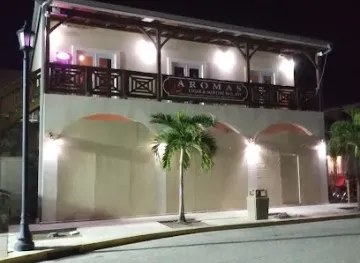
Aromas Cigar & Martini Bar, BVI
Experience the ultimate blend of luxury and relaxation at Aromas Cigar & Martini Bar in Road Town, BVI – the perfect spot for cocktails and cigars.
9 min walk · 0.7 km from city centre
-
Bar
Tropix Cocktail Bar
Experience the vibrant nightlife at Tropix Cocktail Bar, where refreshing cocktails and stunning tropical views await you in Road Town.
10 min walk · 0.8 km from city centre


Best nightclubs in Road Town
Road Town's evenings are sociable but relatively low-key rather than dominated by large nightclubs. Waterfront bars, venues around Wickham's Cay and establishments attached to marinas attract residents, sailors and visitors for rum drinks, beer, casual conversation and views across the harbour. Live music and occasional dancing become more prominent during festivals, regattas and other seasonal events, while some restaurants develop a livelier atmosphere after dinner. The town is also a practical base for evening sailing or organised boat trips, and local entertainment may include Caribbean music and community celebrations rather than formal club nights. Nightlife is more dispersed and quieter than in a major resort centre, with activity varying by season and day of the week. Visitors heading beyond central Road Town will find additional beach bars and waterfront venues elsewhere on Tortola, but those are separate journeys rather than part of the capital's compact centre.
-
Bar
Aromas Cigar & Martini Bar, BVI
Discover the elegance of Aromas Cigar & Martini Bar in the British Virgin Islands – where premium cigars and crafted martinis meet sophistication.
9 min walk · 0.7 km from city centre
-
Bar
Tropix Cocktail Bar
Experience the vibrant atmosphere and refreshing cocktails at Tropix Cocktail Bar in Road Town, British Virgin Islands, your paradise getaway.
10 min walk · 0.8 km from city centre
-
Lounge
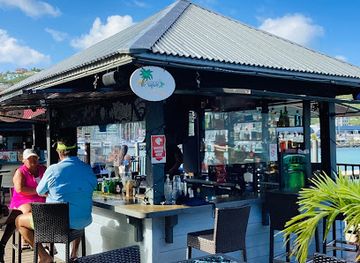
Coconut Lounge
Discover the vibrant atmosphere of Coconut Lounge in Road Town, Tortola - your perfect spot for relaxation and tropical drinks amidst Caribbean charm.
10 min walk · 0.8 km from city centre
-
Bar
Lounge45 Sports Bar & Restaurant
Experience the vibrant atmosphere of Lounge45 Sports Bar & Restaurant, where Caribbean flavors meet sports entertainment in Road Town.
8 min walk · 0.6 km from city centre
Best shops in Road Town
Shopping in Road Town combines practical island retail with crafts, gifts and marine-oriented goods. Main Street is the traditional centre for smaller shops, galleries, jewellers and businesses selling souvenirs, clothing and locally inspired products. Crafts Alive Village provides a more concentrated setting for handmade items, including artwork, carvings, textiles and other gifts made or sold by local artisans, although the origin and production of individual items can vary. Wickham's Cay and Tortola Pier Park add contemporary shops, cafés and visitor services near the harbour and cruise facilities. Common purchases include BVI-themed art, rum, hot sauces, spices, jewellery and nautical souvenirs, while supermarkets offer imported groceries alongside some regional products. Prices and stock can reflect the islands' transport costs, and smaller retailers may have variable opening hours, especially outside the main visitor periods.
-
Souvenir Shop
Crafts Alive Village
Explore Crafts Alive Village for unique souvenirs and custom creations with breathtaking ocean views in the British Virgin Islands.
10 min walk · 0.8 km from city centre
-
Shopping Centre
Varieties & Electronics
Explore Varieties & Electronics in Road Town for a unique shopping experience blending clothing and home appliances in the British Virgin Islands.
4 min walk · 0.3 km from city centre
-
Clothing Shop
GOODFELLAS
Explore Goodfellas in Road Town for a unique shopping experience filled with island-inspired fashion and friendly service.
9 min walk · 0.7 km from city centre
-
Jewellery Store
Little Switzerland
Explore the luxury of Little Switzerland in Road Town, British Virgin Islands—your destination for exquisite jewelry and watches.
8 min walk · 0.7 km from city centre


Get your free copy of our complete guide to Road Town, delivered straight to you.
Everything on this page, from attractions and restaurants to essentials and local phrases, in one PDF you can read offline, print or share.
Already have an account? Sign in
Your Road Town guide is ready.
We'll send it to · Not you? Sign out

Getting your guide ready…
We are putting together a fresh copy of the Road Town guide. This can take up to a minute.
This can take a few moments. If your browser asks, choose Allow so the download can start. You'll find the guide in your Downloads folder.
Nothing happened? Download it again
Sorry, the guide is taking longer than usual. Please try again in a minute, or get it by email instead.
Road Town essentials
Currency and Payment
Safety
Emergency Situations
Do's and Don'ts
Local Tips
From Eve
Local phrases worth knowing
You don't need to get them perfect. A few words go a long way, and locals appreciate the effort.
Basics
| English | Local | Say it |
|---|---|---|
| Hello | Good day | [gud dey] |
| Goodbye | Goodbye | [gud-bai] |
| Yes | Yeah | [yeh] |
| No | No | [no] |
| Please/You're welcome | Please | [pliiz] |
| Thank you | Thank you | [tenk yu] |
| Excuse me/Sorry | Excuse me | [ek-kyus mi] |
| How are you? | How you doin? | [hau yu doin] |
| Fine. And you? | I dey aight. An yu? | [ai dey ait. an yu] |
| Do you speak English? | Yu speek Inglish? | [yu spik inglish] |
| I don't understand | Mi no sabi | [mi no sa-bi] |
Eating & Drinking
| English | Local | Say it |
|---|---|---|
| I'd like to see the menu, please | Mi wan si di menu, pliiz | [mi wan si di men-yu, pliiz] |
| I don't eat meat | Mi no et meat | [mi no et meet] |
| Cheers! | Cheers! | [cheers] |
| I would like to pay, please | Mi wud laik fi pay, pliiz | [mi wud laik fi pay, pliiz] |
Emergencies
| English | Local | Say it |
|---|---|---|
| Help! | Help! | [help] |
| Go away! | Go weh! | [go weh] |
| Call the Police! | Kol di Polis! | [kol di po-lis] |
| Call a doctor! | Kol a dokta! | [kol a dok-ta] |
| I'm lost | Mi loss | [mi los] |
| I'm ill | Mi siik | [mi sik] |
Shopping
| English | Local | Say it |
|---|---|---|
| I'd like to buy... | Mi wan fi buy... | [mi wan fi buy...] |
| I'm just looking | Mi jus a luk | [mi jus a luk] |
| How much is it? | How much dis dey? | [hau mach dis dey] |
| That's too expensive | Dat tuu praisi | [dat tuu prei-si] |
| Can you lower the price? | Yu kyan lowa di prais? | [yu kyan lo-wa di preis] |
Time & Numbers
| English | Local | Say it |
|---|---|---|
| What time is it? | Weh tym it dey? | [weh ta-im it dey] |
| It's one o'clock | It a wan a klok | [it a wan a klok] |
| Half past (10) | Aaf past (10) | [aaf past (10)] |
| Morning | Mawnin | [mawnin] |
| Afternoon | Aftanun | [af-ta-nun] |
| Evening | Ivinin | [iv-in-in] |
| Yesterday | Yistade | [yi-sta-de] |
| Today | Tudeh | [tu-deh] |
| Tomorrow | Tomara | [to-ma-ra] |
| 1 | Wan | [wan] |
| 2 | Tu | [tu] |
| 3 | Chrii | [krai] |
| 4 | Fo | [fo] |
| 5 | Fav | [fav] |
| 6 | Siks | [siks] |
| 7 | Seven | [se-ven] |
| 8 | Eit | [eit] |
| 9 | Nain | [nain] |
| 10 | Ten | [ten] |
Transport & Directions
| English | Local | Say it |
|---|---|---|
| Where's a/the...? | Weh di...? | [weh di] |
| What's the address? | Weh di adres? | [weh di ad-res] |
| Can you show me (on the map)? | Yu kyan show mi (pan di map)? | [yu kyan sho mi (pan di map)] |
| When's the next (bus)? | When di neks (bus)? | [when di neks (bus)] |
| A ticket (to ....) | A tiket (to ....) | [a ti-ket (to ....)] |
History of Road Town
Indigenous Settlement and Island Networks
Long before European colonisation, the islands of the Virgin Islands archipelago were visited and settled by Indigenous Caribbean peoples. Archaeological evidence records earlier Saladoid communities and later Taíno-associated cultural traditions, whose lives were connected to fishing, farming, seafaring and exchange between islands. The sheltered bays of Tortola formed part of a wider regional maritime network rather than an isolated settlement system. Although most visible buildings in Road Town belong to the colonial and modern periods, the city's coastal position reflects a much older pattern of movement through the eastern Caribbean. European arrival brought disease, violence, enslavement and profound disruption to these communities, leaving the later history of Tortola shaped by colonial settlement rather than by the continuation of its pre-European societies.
Dutch Settlement and British Control
European settlement on Tortola developed during the seventeenth century, when Dutch colonists established a presence in the British Virgin Islands before England asserted control in 1672. The natural harbour that became Road Town provided a useful anchorage and administrative focus, while the island's interior was gradually cleared for cultivation. British authority linked Tortola to the wider Leeward Islands colonial system, although the territory remained smaller and less heavily developed than many nearby plantation islands. Roads, churches, estates and port activity expanded unevenly around the island's difficult terrain. The capital's later identity as a harbour town therefore grew from both its sheltered maritime position and its role in the administration of a scattered island territory.
Plantations, Enslavement and Colonial Society
During the eighteenth and early nineteenth centuries, Tortola's economy depended on small plantations producing crops including cotton and sugar, with enslaved Africans providing much of the labour. Road Town served as a port and commercial centre for an island society divided by colonial power, plantation ownership and enslavement. The landscape of hills and limited fertile land constrained large-scale agriculture, but estates, coastal shipping and trade connected Tortola to neighbouring islands. Churches and public buildings that emerged during the colonial period formed part of the social framework imposed by British rule, while African cultural knowledge, family networks and religious practices profoundly shaped the society that developed beyond that official structure.
Emancipation and Economic Change
Slavery was abolished in the British Virgin Islands in 1834, with the apprenticeship system ending in 1838. Emancipation transformed labour relations and weakened the plantation economy, which was already vulnerable to limited agricultural resources and competition from larger Caribbean colonies. Many formerly enslaved people established independent livelihoods through farming, fishing, maritime work and small-scale trade, while Road Town retained its importance as the territory's administrative and commercial centre. The nineteenth century brought economic difficulties, migration and population change, but also the gradual consolidation of local institutions and religious communities. Buildings and older streets in the capital preserve fragments of this period, when the town's life was tied less to plantation wealth than to the everyday survival and enterprise of island residents.
Modern Territory and Maritime Capital
The British Virgin Islands remained a British territory while developing a more locally administered political system, and Road Town became the centre of government, commerce and public life. In the twentieth century, improved communications, aviation and maritime connections helped reduce the islands' isolation. Tourism expanded from the later twentieth century, encouraged by Tortola's beaches, sailing waters and proximity to the United States Virgin Islands, while financial services became another important part of the territory's economy. Road Town consequently grew beyond its historic harbour role, with offices, marinas, ferry facilities and modern commercial areas around the older centre. Its present character reflects this layered development: a small Caribbean capital shaped simultaneously by colonial history, local society, international business and yachting.
Road Town in Photos
Browse through our photo collection highlighting the charm and character of the destination.
Cities near Road Town
The closest cities to Road Town, if you have time for more than one stop.
-

-

-

-

-


Swipe for more cities
Explore more
Explore more of British Virgin Islands
Discover the British Virgin Islands: Pristine beaches, vibrant marine life, and a rich cultural heritage await in this Caribbean paradise.
Explore British Virgin Islands