

Free Long Beach Travel Guide & Mobile App
Plan your Long Beach trip with Evendo. Get free guides to top attractions, restaurants, hotels, and bars. Web access or download the mobile app.


Long Beach, California blends Pacific beaches, a working harbour, art museums, historic districts and lively waterfront culture for memorable city breaks.
Harbour, Beaches and Urban Character
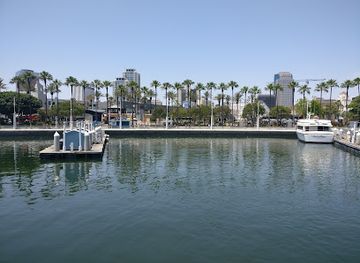
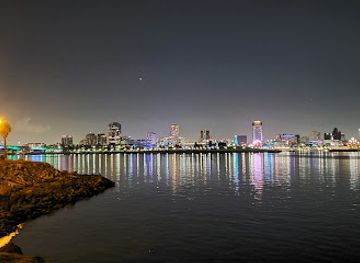
Long Beach stretches along the southern California coast, combining a working port, broad Pacific beaches and a surprisingly varied urban landscape. Its waterfront is shaped by the Port of Long Beach, one of the busiest container ports in the United States, yet the city’s public shoreline has a more leisurely rhythm: palm-lined promenades, sandy beaches, marinas and views across the water towards the Palos Verdes Peninsula. The Queen Mary, permanently moored in the harbour, is one of the city’s most recognisable sights and a reminder of Long Beach’s earlier role in transatlantic travel.Read more about Long Beach
Neighbourhoods, Art and Architecture
A Coastal Base for Southern California
When is the best time to visit Long Beach?
Best: June–July, September · 24–26°C| Month | High (°C) | Rainfall (mm) |
|---|---|---|
| January | 18 | 56 |
| February | 19 | 61 |
| March | 20 | 51 |
| April | 21 | 20 |
| May | 22 | 8 |
| June (best) | 24 | 3 |
| July (best) | 26 | 1 |
| August | 27 | 1 |
| September (best) | 26 | 6 |
| October | 24 | 15 |
| November | 21 | 35 |
| December | 18 | 46 |
Getting to and around Long Beach
How to get there
Transportation
Best attractions in Long Beach
Long Beach’s principal attractions reveal several sides of the city. The Queen Mary, permanently moored near the waterfront, offers a close look at a famous ocean liner and its maritime history, while the nearby Aquarium of the Pacific introduces visitors to marine habitats of the Pacific Ocean through galleries and living displays. Shoreline Aquatic Park and Rainbow Lagoon provide open views across the harbour, with paths extending towards the beach and marina. The Museum of Latin American Art presents modern and contemporary work in a dedicated cultural setting, and Rancho Los Cerritos Historic Site places the city’s urban landscape within its earlier rancho history. In Belmont Shore, a walk along Second Street can be combined with the sand and coastal scenery of Long Beach Peninsula. Naples adds a quieter change of pace, with canals, pedestrian bridges and waterside homes that contrast with the industrial scale visible elsewhere on the bay.
-
Aquarium
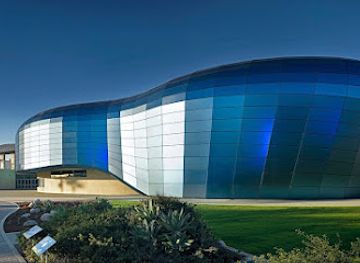
Aquarium of the Pacific
Explore the vibrant marine world at the Aquarium of the Pacific, an engaging destination in Long Beach, California, perfect for families and ocean lovers alike.
10 min drive · 3.4 km from city centre
-
Aquarium
Aquarium of the Pacific
Explore the wonders of the ocean at the Aquarium of the Pacific in Long Beach, featuring diverse marine life and interactive exhibits for all ages.
10 min drive · 3.4 km from city centre
-
Tourist attraction
The Queen Mary
Explore the grandeur of The Queen Mary, a historic ocean liner transformed into a captivating hotel and tourist attraction in Long Beach, California.
11 min drive · 3.7 km from city centre
-
Tourist attraction
The Queen Mary
Discover The Queen Mary, a historic ocean liner in Long Beach, offering a unique blend of maritime history, luxury accommodations, and breathtaking views.
11 min drive · 3.7 km from city centre


Best landmarks in Long Beach
The Queen Mary is Long Beach’s defining maritime landmark, its 1930s ocean-liner form recalling the era of transatlantic passenger travel and the city’s close relationship with the sea. The Villa Riviera, a 1929 Art Deco skyscraper on Ocean Boulevard, remains one of the most recognisable buildings in the skyline. The historic Long Beach Main Post Office and the WPA-era civic architecture associated with the city’s post-earthquake rebuilding reflect the design confidence of the early twentieth century. Rancho Los Cerritos Historic Site preserves an adobe residence and grounds linked to the region’s Mexican rancho period, while the Bembridge House offers an example of ornate Victorian domestic architecture. The Long Beach Municipal Auditorium no longer survives, but its former waterfront setting and the city’s preserved neighbourhoods, including Bluff Park and California Heights, help explain the architectural layers between the shore, downtown and inland Long Beach.
-
Aquarium
Aquarium of the Pacific
Explore the wonders of marine life at the Aquarium of the Pacific, where adventure meets education in Long Beach, California.
10 min drive · 3.4 km from city centre
-
Historical landmark
The Queen Mary
Explore the historic Queen Mary in Long Beach, a captivating floating hotel and attraction offering rich maritime history, fine dining, and stunning views.
11 min drive · 3.7 km from city centre
-
Tourist attraction
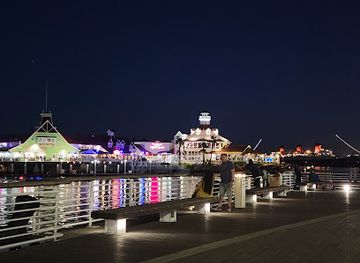
Shoreline Village
Experience the vibrant charm of Shoreline Village, a waterfront destination in Long Beach with shopping, dining, and family-friendly fun.
9 min drive · 3.0 km from city centre
-
Outlet mall
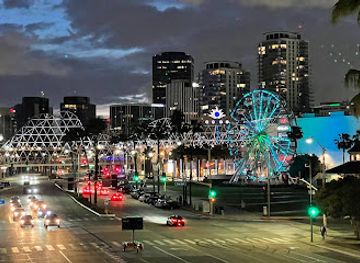
The Pike Outlets
Discover unbeatable deals and a vibrant atmosphere at The Pike Outlets in Long Beach, the ultimate shopping destination along the California coast.
9 min drive · 3.0 km from city centre
Explore Long Beach on the map
Plan your Long Beach trip on one map. See where the top attractions, landmarks, restaurants, bars and hotels are, find what's near where you're staying, and book hotels and experiences in a few clicks.
Neighbourhoods in Long Beach
-

-

-

-


Swipe for more neighbourhoods
Best hotels in Long Beach
Best restaurants in Long Beach
Long Beach’s dining scene reflects its coastal location and the city’s long history of migration. Mexican food is deeply established, with taquerias, family-run restaurants and regional specialities found across the city, while Cambodian cuisine is an important part of local food culture, particularly around the Anaheim Street corridor and Cambodia Town. Seafood appears in casual restaurants and waterfront settings, though the city’s dining identity is broader than its shoreline. Belmont Shore and Retro Row offer dense clusters of cafés, bakeries, bars and independent restaurants, while Downtown and the East Village Arts District provide a mix of international food, contemporary Californian cooking and relaxed all-day dining. Farmers’ markets and specialist food shops add seasonal produce and prepared foods, and the city’s multicultural communities make it possible to move from familiar Mexican dishes to Southeast Asian, Caribbean, Mediterranean and other cuisines within a short distance.
-
New American
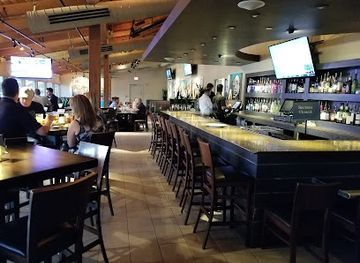
Yard House
Experience vibrant New American cuisine and an extensive beer selection at Yard House in Long Beach's picturesque Shoreline Village.
9 min drive · 3.0 km from city centre
-
Mexican
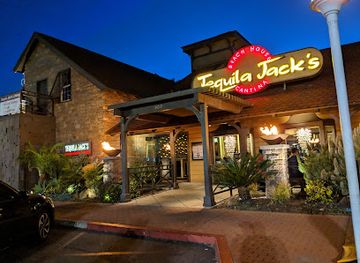
Tequila Jack's Restaurant & Cantina
Indulge in authentic Mexican flavors and refreshing cocktails at Tequila Jack's Restaurant & Cantina with stunning waterfront views in Long Beach.
9 min drive · 3.0 km from city centre
-
Seafood
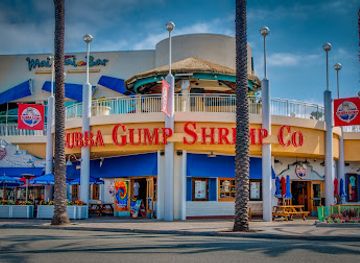
Bubba Gump Shrimp Co.
Experience coastal charm at Bubba Gump Shrimp Co., where delicious seafood meets unforgettable views in Long Beach.
10 min drive · 3.2 km from city centre
-
Seafood
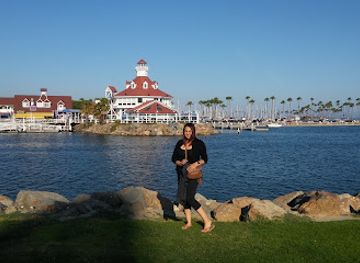
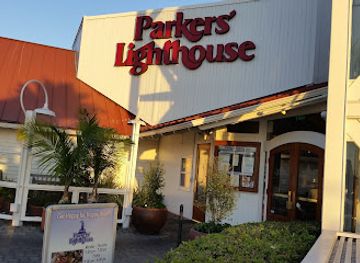
Parkers' Lighthouse
Discover Parkers' Lighthouse - A Seafood Paradise with Stunning Views in Long Beach
10 min drive · 3.2 km from city centre
Best bars in Long Beach
Long Beach has an approachable evening scene spread across several districts rather than concentrated in one club quarter. Downtown and the East Village Arts District contain cocktail bars, beer-focused venues, casual pubs, live music rooms and performance spaces, while Retro Row along Fourth Street is known for independent bars, restaurants and a more characterful evening atmosphere. Belmont Shore offers social drinking and dining along Second Street, with activity varying by venue and day of the week. The city’s LGBTQ+ nightlife has a visible presence, especially in areas around Downtown and Broadway. Evening entertainment also includes concerts, theatre, arts events and performances at venues such as the Long Beach Convention Center and the Carpenter Performing Arts Center. Visitors should check current venue policies and local transport options, particularly when returning from the waterfront or nightlife districts late at night.
-
Bar
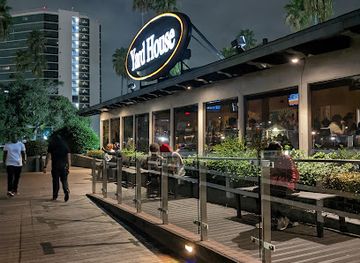
Yard House
Experience the vibrant flavors and lively atmosphere of Yard House in Long Beach, CA, where great food meets an extensive selection of craft beers.
9 min drive · 3.0 km from city centre
-
Bar
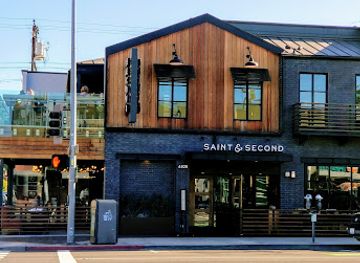
Saint & Second
Experience a culinary delight at Saint & Second, where New American cuisine meets a lively bar atmosphere in Long Beach, California.
11 min drive · 3.6 km from city centre
-
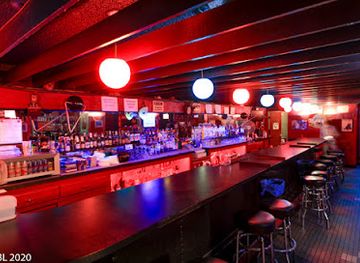
Bar
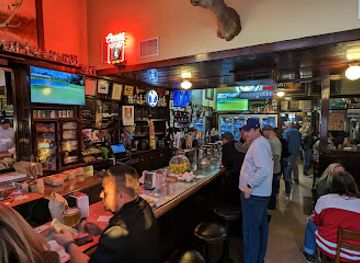
Joe Jost's
Experience the vibrant atmosphere and local flavors at Joe Jost's, a historic bar and restaurant in Long Beach, California.
11 min walk · 0.9 km from city centre
-
Bar
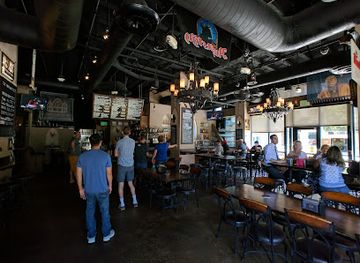
Congregation Brewery & Cocina - Long Beach
Experience the perfect blend of craft beer and delicious cuisine at Congregation Brewery & Cocina in Long Beach, where every meal is a celebration.
7 min drive · 2.4 km from city centre
Best nightclubs in Long Beach
Long Beach has an approachable evening scene spread across several districts rather than concentrated in one club quarter. Downtown and the East Village Arts District contain cocktail bars, beer-focused venues, casual pubs, live music rooms and performance spaces, while Retro Row along Fourth Street is known for independent bars, restaurants and a more characterful evening atmosphere. Belmont Shore offers social drinking and dining along Second Street, with activity varying by venue and day of the week. The city’s LGBTQ+ nightlife has a visible presence, especially in areas around Downtown and Broadway. Evening entertainment also includes concerts, theatre, arts events and performances at venues such as the Long Beach Convention Center and the Carpenter Performing Arts Center. Visitors should check current venue policies and local transport options, particularly when returning from the waterfront or nightlife districts late at night.
-
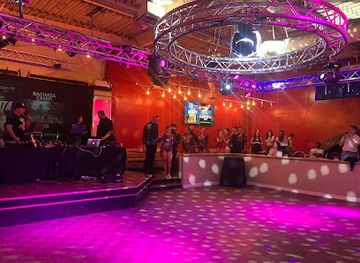
Night club
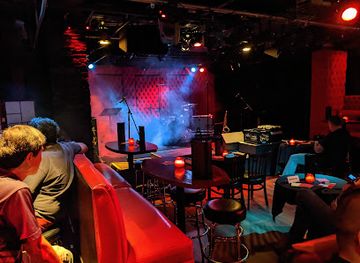
Harvelle's Long Beach
Uncover the vibrant nightlife at Harvelle's Long Beach, where live music and craft cocktails create unforgettable evenings in Downtown.
7 min drive · 2.4 km from city centre
-
Night club
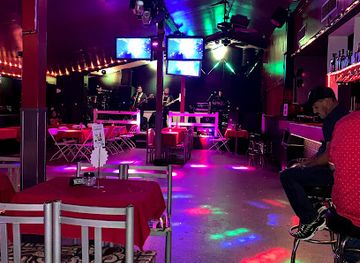
los potros nightclub
Experience the vibrant nightlife of Long Beach at Los Potros Nightclub, a top destination for live music and dancing with an affordable price.
13 min walk · 1.0 km from city centre
-
Night club
PCH Club
Discover the ultimate nightlife experience at PCH Club in Long Beach, California, where great food meets electrifying music in a vibrant atmosphere.
16 min drive · 5.2 km from city centre
-
Bar
Que Sera
Discover Que Sera, a vibrant Long Beach bar known for its eclectic music, creative cocktails, and lively themed nights that promise endless fun.
7 min walk · 0.6 km from city centre
Best shops in Long Beach
Long Beach shopping ranges from independent neighbourhood streets to specialist retail districts. Belmont Shore’s Second Street is the best-known concentration of boutiques, surf and beachwear shops, cafés and everyday retailers near the ocean, while Retro Row along Fourth Street is associated with vintage clothing, second-hand furniture, records and independent businesses. Downtown and the East Village Arts District provide galleries, design shops and smaller creative enterprises, with the exact retail mix changing over time. Local markets offer produce, prepared food and handmade goods, and antiques and vintage finds are particularly suited to browsing rather than hurried shopping. Visitors looking for souvenirs may find Long Beach-related art, maritime items and locally made products, while the city’s Cambodian, Mexican and other immigrant communities give some commercial corridors distinctive food shops and specialist goods. Shopping is generally more neighbourhood-based than centred on a single enclosed mall.
-
Shopping mall
Shoreline Village
Experience the charm of Shoreline Village – a premier shopping destination in Long Beach, CA, with stunning waterfront views and diverse dining options.
9 min drive · 3.0 km from city centre
-
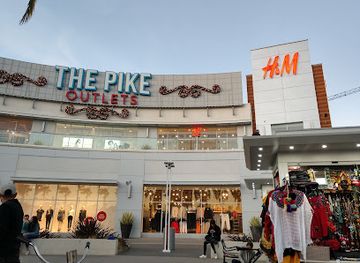
Outlet mall
The Pike Outlets
Discover shopping bliss at The Pike Outlets in Long Beach, California, where unique finds meet breathtaking waterfront views.
9 min drive · 3.0 km from city centre
-
Shopping mall
Marina Pacifica
Experience the charm of Marina Pacifica, a premier shopping destination with exquisite dining and stunning waterfront views in Long Beach, California.
16 min drive · 5.4 km from city centre
-
Shopping mall
City Place Shopping Center
Shop, dine, and unwind at City Place Shopping Center, the heart of retail and culinary delights in Long Beach, California.
7 min drive · 2.2 km from city centre

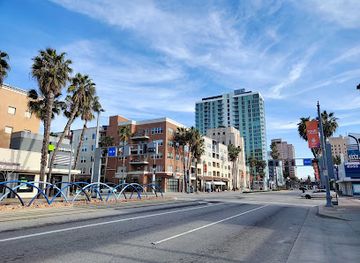
Get your free copy of our complete guide to Long Beach, delivered straight to you.
Everything on this page, from attractions and restaurants to essentials and local phrases, in one PDF you can read offline, print or share.
Already have an account? Sign in
Your Long Beach guide is ready.
We'll send it to · Not you? Sign out

Getting your guide ready…
We are putting together a fresh copy of the Long Beach guide. This can take up to a minute.
This can take a few moments. If your browser asks, choose Allow so the download can start. You'll find the guide in your Downloads folder.
Nothing happened? Download it again
Sorry, the guide is taking longer than usual. Please try again in a minute, or get it by email instead.
Long Beach essentials
Currency and Payment
Safety
Emergency Situations
Do's and Don'ts
Local Tips
From Eve
Local phrases worth knowing
You don't need to get them perfect. A few words go a long way, and locals appreciate the effort.
Basics
| English | Local | Say it |
|---|---|---|
| Hello | What's up | [wats up] |
| Goodbye | Later | [lay-ter] |
| Yes | Yeah | [yeah] |
| No | Nah | [nah] |
| Please/You're welcome | Please/No problem | [pleez/no prob-lem] |
| Thank you | Thanks | [thanks] |
| Excuse me/Sorry | My bad | [my bad] |
| How are you? | How you doin'? | [how you doin'] |
| Fine. And you? | Chillin'. You? | [chil-lin'. you?] |
| Do you speak English? | You speak English? | [you speak english?] |
| I don't understand | I don't get it | [i don't get it] |
Eating & Drinking
| English | Local | Say it |
|---|---|---|
| I'd like to see the menu, please | Can I check out the menu? | [can i check out the menu?] |
| I don't eat meat | I'm vegetarian | [i'm veg-e-tair-ee-an] |
| Cheers! | Cheers! | [cheers!] |
| I would like to pay, please | Can I settle up, please | [can i set-tle up, please] |
Emergencies
| English | Local | Say it |
|---|---|---|
| Help! | Help! | [help!] |
| Go away! | Get lost! | [get lost!] |
| Call the Police! | Call the cops! | [call the cops!] |
| Call a doctor! | Get a doctor! | [get a doctor!] |
| I'm lost | I'm lost | [i'm lost] |
| I'm ill | I'm sick | [i'm sick] |
Shopping
| English | Local | Say it |
|---|---|---|
| I'd like to buy... | I wanna cop... | [i wanna cop...] |
| I'm just looking | Just browsing | [just brows-ing] |
| How much is it? | How much? | [how much?] |
| That's too expensive | That's steep | [that's steep] |
| Can you lower the price? | Can you hook it up? | [can you hook it up?] |
Time & Numbers
| English | Local | Say it |
|---|---|---|
| What time is it? | What time is it? | [what time is it?] |
| It's one o'clock | It's one | [it's one] |
| Half past (10) | Ten thirty | [ten thir-ty] |
| Morning | Morning | [morning] |
| Afternoon | Afternoon | [af-ter-noon] |
| Evening | Evening | [even-ing] |
| Yesterday | Yesterday | [yes-ter-day] |
| Today | Today | [to-day] |
| Tomorrow | Tomorrow | [to-mor-row] |
| 1 | One | [one] |
| 2 | Two | [two] |
| 3 | Three | [three] |
| 4 | Four | [four] |
| 5 | Five | [five] |
| 6 | Six | [six] |
| 7 | Seven | [seven] |
| 8 | Eight | [eight] |
| 9 | Nine | [nine] |
| 10 | Ten | [ten] |
Transport & Directions
| English | Local | Say it |
|---|---|---|
| Where's a/the...? | Where's the...? | [where's the...?] |
| What's the address? | What's the addy? | [what's the addy?] |
| Can you show me (on the map)? | Can you show me? | [can you show me?] |
| When's the next (bus)? | When's the next (bus)? | [when's the next (bus)?] |
| A ticket (to ....) | A ticket (to ....) | [a ticket (to ....)] |
History of Long Beach
Tongva Homeland and Early Settlement
Long Beach lies within the traditional homeland of the Tongva, an Indigenous people whose villages, trade networks and relationship with the coastal wetlands predate the modern city by centuries. Spanish expeditions reached the region in the late eighteenth century, and the land later became part of Rancho Los Cerritos, a large Mexican-era cattle ranch granted to Juan Temple in 1844. The rancho’s adobe residence, now preserved as Rancho Los Cerritos Historic Site in present-day Long Beach, provides a tangible connection to the period when the area was shaped by ranching, grazing and regional commerce rather than dense urban development.
From Rancho to Resort Town
After California joined the United States, the rancho lands were divided and sold, helping set the stage for a planned settlement on the coast. Long Beach was incorporated in 1888 and promoted as a seaside resort, with its shore, mild climate and pleasure facilities attracting visitors from the developing Los Angeles region. The arrival of the Pacific Electric railway in the early twentieth century strengthened this connection, bringing day-trippers and encouraging residential growth. Early civic buildings, neighbourhoods and the expanding beachfront reflected Long Beach’s transition from rural ranch country to a coastal town with ambitions beyond seasonal tourism.
Oil, Industry and the Growing Port
The discovery of oil at Signal Hill in 1921 transformed Long Beach and nearby communities, bringing investment, workers and rapid urban expansion. Petroleum wealth helped finance civic improvements, while the city’s location on San Pedro Bay supported the development of a major harbour. The Port of Long Beach was established in 1911 and grew into a crucial centre for trade, shipbuilding and industry. Together, oil and maritime commerce changed the city’s economy and physical character, linking its residential and resort districts to the industrial waterfront that remains central to Long Beach’s identity.
Earthquake and Civic Reconstruction
The Long Beach earthquake of 10 March 1933 caused extensive damage, particularly to schools and other masonry buildings, and killed more than 100 people across the affected region. The disaster prompted stronger construction standards in California and influenced the design of public buildings throughout the state. Long Beach rebuilt during the Depression, with federal relief programmes contributing to new civic and educational structures. The period also left a distinctive architectural legacy, including public buildings and schools associated with the streamlined Moderne style, while the city’s experience helped shape modern approaches to earthquake-conscious construction.
War, Migration and Modern Long Beach
During the Second World War, Long Beach became an important centre for shipbuilding and naval activity, drawing workers from across the United States and accelerating demographic change. The former Long Beach Naval Shipyard operated for much of the post-war era before closing in 1997, while the port continued to expand as container shipping reshaped global trade. Later decades brought redevelopment along the waterfront, restoration of historic neighbourhoods and the growth of cultural institutions such as the Aquarium of the Pacific and the Museum of Latin American Art. Contemporary Long Beach reflects these overlapping histories of Indigenous presence, migration, industry, leisure and port commerce.
Long Beach in Photos
Browse through our photo collection highlighting the charm and character of the destination.
Cities near Long Beach
The closest cities to Long Beach, if you have time for more than one stop.
-

-

-

-

-


Swipe for more cities
Explore more
Explore more of California
Discover California: A land of diverse landscapes, iconic cities, and endless adventures, from sun-soaked beaches to towering redwoods and vibrant cultural experiences.
Explore California