

Free Littoral Travel Guide & Mobile App
Explore Littoral with free travel guides. Discover regional history, expert tips, proposed trips, and audio guides on web or mobile app.


Explore Littoral, Cameroon’s coastal gateway, from Douala’s port culture and cuisine to rainforest reserves, river landscapes and waterfalls.
Read more about Littoral
When is the best time to visit Littoral?
Best: December–February · 30–31°C| Month | High (°C) | Rainfall (mm) |
|---|---|---|
| January (best) | 30 | 30 |
| February (best) | 31 | 40 |
| March | 31 | 60 |
| April | 31 | 90 |
| May | 31 | 110 |
| June | 30 | 130 |
| July | 29 | 160 |
| August | 29 | 170 |
| September | 29 | 190 |
| October | 30 | 210 |
| November | 30 | 110 |
| December (best) | 30 | 60 |
Getting to and around Littoral
How to get there
Transportation
Best attractions in Littoral
Littoral’s attractions range from Douala’s urban museums, markets, galleries and riverfront districts to forest, river and waterfall landscapes beyond the city. The Maritime Museum offers context on coastal peoples, seafaring and the history of the Wouri estuary, while Douala’s cultural venues and neighbourhood food scene reveal the region’s contemporary character. Around Edéa, the Sanaga River and its associated industrial history provide a different perspective on Cameroon’s development. The Douala–Edéa wildlife area protects forest and wetland habitats, though access and wildlife viewing require local planning rather than the expectations of a highly serviced safari park. The Lake Ossa Wildlife Reserve, near Dizangué, is known for its linked lakes, wooded shores and opportunities for guided boat-based exploration. In the Moungo, the agricultural landscapes around Nkongsamba and Melong lead towards forested volcanic country and Ekom-Nkam Falls, where water drops through a heavily vegetated gorge. Visitors should distinguish between attractions accessible by normal urban transport and those requiring a vehicle, guide, sturdy footwear and flexibility in wet weather.
-
Tourist attraction
Parcours Vita
Discover Parcours Vita, an urban park in Douala that harmonizes nature and fitness for a rejuvenating experience.
-
Stadium
Japoma Stadium
Discover the architectural marvel of Japoma Stadium in Douala, a premier destination for sports enthusiasts and a symbol of modern Cameroon.
-
Catholic church
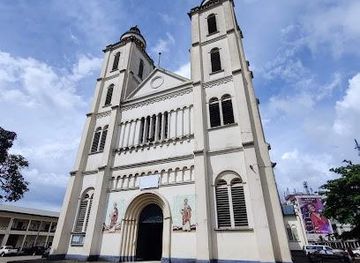
Cathedral of St Peter and Paul Bonadibong
Discover the breathtaking beauty and spiritual serenity of the Cathedral of St Peter and Paul Bonadibong in Douala, a must-see landmark for every traveler.
-
Park
Rond point Makepe
Discover the beauty of nature at Rond Point Makepe, a serene park in the heart of Douala offering relaxation and cultural experiences.


Best landmarks in Littoral
The Wouri River and its estuary are Littoral’s defining natural and historical landmarks, shaping Douala’s port, commerce and Sawa cultural identity. Within the city, the Pagoda of Douala, also known as the La Pagode building, is a prominent colonial-era architectural remnant associated with the coastal trading history of the Duala. The Maritime Museum provides a more interpretive connection to the waterways and communities that made the estuary important. Edéa’s Sanaga River and dam represent a major chapter in Cameroon’s industrial and energy history, while the broad river landscape remains visually central to the town’s setting. Lake Ossa’s linked waters and forested margins form one of Littoral’s most distinctive natural landmarks. In the Moungo, Ekom-Nkam Falls is a powerful geographical feature as well as a visitor attraction, with its forested gorge and high cascade. The port, bridges, markets and older urban buildings of Douala are less monumental than a castle or cathedral, but together they express the infrastructure and commercial geography that have made the region Cameroon’s principal gateway.
-
Historical landmark
Rond-Point Deido
Experience the vibrant heart of Douala at Rond-Point Deido, a historical landmark where culture, commerce, and community converge.
-
Park
Parcours Vita
Escape to Douala's Parcours Vita: Nature, fitness, and community blend in this urban oasis. Open daily, a green haven for all to enjoy!
-
Resort hotel
HOTEL AKWA PALACE DOUALA
Experience Douala's charm from the elegant Hôtel Akwa Palace, offering comfort, convenience, and a prime location in the heart of the city.
-
Restaurant
Maison H
Douala's premier destination for artisanal pastries, gourmet ice cream, and delightful dining in a modern and inviting atmosphere.


Explore Littoral on the map
Plan your trip on one map. See where the top cities, national parks and sights are, and book hotels and experiences in a few clicks.
Best hotels in Littoral
Best restaurants in Littoral
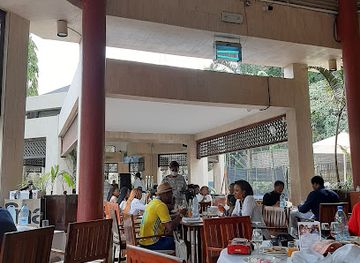
Littoral’s food reflects the Wouri estuary, river fisheries, plantation country and Douala’s role as a national commercial crossroads. Fish and prawns feature prominently in coastal cooking, while plantain, cassava, cocoyams, rice and sauces based on tomatoes, spices or palm oil are common foundations of meals. Dishes associated with the wider Cameroonian kitchen, including ndolé and grilled or stewed fish preparations, are widely available in Douala, although their traditions extend beyond Littoral and should not be treated as the property of one region. Urban dining ranges from informal grills, market stalls and cafés to hotel restaurants and contemporary establishments serving regional and international food. Outside Douala, meals are often simpler and seasonal, with agricultural produce from the Moungo and Sanaga areas appearing in local markets. Bottled drinks are easy to find in towns, while visitors should use treated or sealed water. A good approach is to combine reputable city restaurants with busy local eateries where food turnover is high.
-
Restaurant
Maison H
Experience the rich flavors of Cameroon at Maison H, Douala's premier dining destination offering diverse culinary delights.
-
Restaurant
Black&White Douala
Experience the vibrant nightlife of Douala at Black&White - where great food meets exceptional entertainment in a lively atmosphere.
-
Restaurant
Tchopetyamo
Discover Tchopetyamo in Douala - A delightful fusion of local flavors and international cuisine awaits you.
-
Restaurant
Le Safoutier Restaurant
Discover exquisite dining at Le Safoutier Restaurant in Yaoundé – where local flavors meet international cuisine in an elegant setting.


Best bars in Littoral
Douala has Littoral’s broadest evening scene, with neighbourhood bars, music venues, lounges, hotel establishments and restaurants that stay active after dark. Makossa, bikutsi, contemporary Cameroonian music and imported styles may all be heard, although venues and programmes change frequently. The city’s nightlife is dispersed rather than confined to one universally recognised district, so ask a trusted local contact or accommodation provider about current options and arrange secure transport home. In Edéa, Nkongsamba, Melong and smaller towns, evenings are more likely to centre on beer gardens, cafés, food stalls, local music and conversation than on large clubs. Rural nightlife is seasonal and community-based, with fewer late services and limited transport after dark. Alcohol is not necessary to experience the region’s evening culture, and visitors should remain aware of traffic, personal security and drink hygiene wherever they go.
-
Lounge
Opiom
Discover Opiom, Douala's stylish lounge offering innovative cocktails and a vibrant atmosphere for the ultimate nightlife experience.
-
Lounge
Black&White Douala
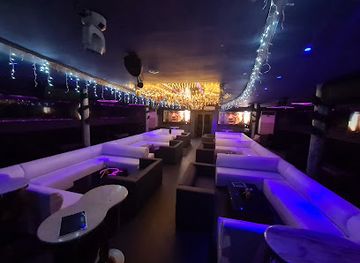
Discover the lively Black&White Douala, a lounge offering DJ services, delicious cuisine, and a vibrant social atmosphere in the heart of the city.
-
Bar
One Rooftop
Discover the vibrant nightlife at One Rooftop in Douala, where exquisite cocktails and breathtaking views create unforgettable experiences.
-
Bar
Stardust
Discover Douala's nightlife at Stardust, a lively bar offering exquisite cocktails and an unforgettable atmosphere that captures the essence of local culture.


Best nightclubs in Littoral
Douala has Littoral’s broadest evening scene, with neighbourhood bars, music venues, lounges, hotel establishments and restaurants that stay active after dark. Makossa, bikutsi, contemporary Cameroonian music and imported styles may all be heard, although venues and programmes change frequently. The city’s nightlife is dispersed rather than confined to one universally recognised district, so ask a trusted local contact or accommodation provider about current options and arrange secure transport home. In Edéa, Nkongsamba, Melong and smaller towns, evenings are more likely to centre on beer gardens, cafés, food stalls, local music and conversation than on large clubs. Rural nightlife is seasonal and community-based, with fewer late services and limited transport after dark. Alcohol is not necessary to experience the region’s evening culture, and visitors should remain aware of traffic, personal security and drink hygiene wherever they go.
-
Disco club
YAPAKI PRESTIGE
Discover the vibrant nightlife of Douala at YAPAKI PRESTIGE, where music, dance, and culture collide in an unforgettable experience.
-
Lounge
L'olympia Lounge
Discover the vibrant atmosphere of L'olympia Lounge in Douala, where great music and delicious drinks create unforgettable experiences.
-
Lounge
Mermo NightLife
Dive into Douala's nightlife at Mermo NightLife, a stylish lounge with drinks, dancing, and unforgettable local music experiences.
-
Disco club
Byblos Nightclub
Dive into Douala's nightlife at Byblos Nightclub, where electrifying music and a vibrant atmosphere create unforgettable nights.



Best shops in Littoral
Douala offers Littoral’s widest range of shopping, from large supermarkets and modern retail outlets to busy markets, independent clothing shops, phone retailers, bookshops, fabric sellers and craft stalls. Central markets are useful for observing the city’s commercial life and buying spices, dried foods, household goods and locally made items, but visitors should compare prices and keep belongings secure. Handcrafted woodwork, woven goods, jewellery, paintings and textiles can be found through markets, galleries and specialist craft sellers, with quality and provenance varying considerably. Food products such as coffee, spices, palm-derived goods, cocoa-related items and packaged regional produce make practical souvenirs when properly labelled and sealed. In Edéa, Nkongsamba, Melong and smaller towns, shopping is more strongly tied to fresh produce, plantains, cassava, fruit, fish and everyday necessities than to dedicated tourist retail. Carrying small cash notes is useful, and bargaining should remain courteous rather than confrontational.
-
Shopping mall
Douala Grand Mall
Discover Douala Grand Mall: A shopping paradise and dining hub in the heart of Cameroon, featuring local and international brands.
-
Shopping mall
China Mall Ndokoti
Experience the vibrant local shopping culture at China Mall Ndokoti, where a diverse range of products awaits in the heart of Douala.
-
Hotel
Best Western Plus Soaho Douala Airport
Discover modern comfort and local charm at Best Western Plus Soaho Douala Airport, your ideal stay near Douala's vibrant attractions.
-
Electronics store
Prince fashion
Explore the latest in electronics at Prince Fashion, Douala's go-to destination for cutting-edge gadgets and appliances.


Get your free copy of our complete guide to Littoral, delivered straight to you.
Everything on this page, from attractions and restaurants to essentials and local phrases, in one PDF you can read offline, print or share.
Already have an account? Sign in
Your Littoral guide is ready.
We'll send it to · Not you? Sign out

Getting your guide ready…
We are putting together a fresh copy of the Littoral guide. This can take up to a minute.
This can take a few moments. If your browser asks, choose Allow so the download can start. You'll find the guide in your Downloads folder.
Nothing happened? Download it again
Sorry, the guide is taking longer than usual. Please try again in a minute, or get it by email instead.
Littoral essentials
Currency and Payment
Safety
Emergency Situations
Do's and Don'ts
Local Tips
From Eve
Local phrases worth knowing
You don't need to get them perfect. A few words go a long way, and locals appreciate the effort.
Basics
| English | Local | Say it |
|---|---|---|
| Hello | Mbolo | [m-bo-lo] |
| Goodbye | Sango | [san-go] |
| Yes | Ee | [eh] |
| No | Ayi | [ah-yee] |
| Please/You're welcome | S'il vous plaît | [seel voo pleh] |
| Thank you | Meri | [meh-ree] |
| Excuse me/Sorry | Pardon | [par-don] |
| How are you? | Nanga def? | [nan-ga def] |
| Fine. And you? | Naka se? | [nah-ka seh] |
| Do you speak English? | Ete na wo te English? | [eh-teh nah wo teh in-glish] |
| I don't understand | Mi nyam awa | [mee nyam ah-wah] |
Eating & Drinking
| English | Local | Say it |
|---|---|---|
| I'd like to see the menu, please | Mèngou m'wo tîka, s'il vous plaît | [men-goo m'wo ti-ka, seel voo pleh] |
| I don't eat meat | Mi nyam boe | [mee nyam bo-eh] |
| Cheers! | A la santé! | [ah lah san-teh] |
| I would like to pay, please | Mèngou m'wo tîka, s'il vous plaît | [men-goo m'wo ti-ka, seel voo pleh] |
Emergencies
| English | Local | Say it |
|---|---|---|
| Help! | Ndi? | [n-dee] |
| Go away! | Kè yè! | [keh yeh] |
| Call the Police! | Ndi Pòlice! | [n-dee po-lees] |
| Call a doctor! | Ndi dòctor! | [n-dee doc-tor] |
| I'm lost | Mi nyam tè | [mee nyam teh] |
| I'm ill | Mi nyam sâl | [mee nyam sal] |
Shopping
| English | Local | Say it |
|---|---|---|
| I'd like to buy... | Mèngou m'wo vèndè... | [men-goo m'wo ven-deh] |
| I'm just looking | Mi wàa sâl | [mee wah sal] |
| How much is it? | Kìtè wàa? | [kee-teh wah] |
| That's too expensive | Mèngè sò wa mèlè | [men-geh so wah meh-leh] |
| Can you lower the price? | Wèngè m'wo bôkè kè? | [wen-geh m'wo bo-keh keh] |
Time & Numbers
| English | Local | Say it |
|---|---|---|
| What time is it? | Kìtè wàa? | [kee-teh wah] |
| It's one o'clock | Wàa di kè | [wah dee keh] |
| Half past (10) | Mèngé tîka | [men-geh ti-ka] |
| Morning | Nôk | [noh-k] |
| Afternoon | Nôk èkè | [noh-k eh-keh] |
| Evening | Nôk tîka | [noh-k ti-ka] |
| Yesterday | Nôk kè | [noh-k keh] |
| Today | Nôk mè | [noh-k meh] |
| Tomorrow | Nôk yè | [noh-k yeh] |
| 1 | Yè | [yeh] |
| 2 | Dô | [doh] |
| 3 | Tê | [teh] |
| 4 | Nè | [neh] |
| 5 | Né | [neh] |
| 6 | Sè | [seh] |
| 7 | Sèd | [sed] |
| 8 | Huit | [weet] |
| 9 | Nèf | [neff] |
| 10 | Dè | [deh] |
Transport & Directions
| English | Local | Say it |
|---|---|---|
| Where's a/the...? | Wèngè yé... | [wen-geh yeh] |
| What's the address? | Kìtè yé sô? | [kee-teh yeh so] |
| Can you show me (on the map)? | Wèngè m'wo vèndè mi? | [wen-geh m'wo ven-deh mee] |
| When's the next (bus)? | Kìtè wàa pèsè? | [kee-teh wah peh-seh] |
| A ticket (to ....) | Yè kè | [yeh keh] |
History of Littoral
Early Sawa and Riverine Societies
The Wouri estuary, Sanaga basin and coastal waterways supported long-established communities whose livelihoods included fishing, farming, craft production and regional exchange. Douala and neighbouring river settlements became important centres among Sawa-speaking peoples, particularly the Duala, through their control of canoe routes and commercial relationships along the coast. These networks connected the estuary with inland communities before European colonial rule, and their legacy remains visible in cultural institutions, chiefly traditions, river-based geography and the continuing importance of the Wouri to regional identity.
European Trade and the 1884 Treaties
European merchants had traded along the Cameroon coast before German annexation, exchanging goods through coastal brokers and river ports. In 1884, treaties signed with Duala leaders were used by Germany to establish colonial authority over Kamerun. The Wouri estuary became the centre of German administration and commerce, with Douala developing as a port and administrative settlement. Colonial rule transformed landholding, labour and trade, while also imposing new political structures on coastal societies. Several surviving buildings and the layout of older parts of Douala provide partial reminders of this period.
Plantations, Railways and Colonial Infrastructure
German and later French administrations expanded plantation agriculture and transport infrastructure across Littoral. The fertile Moungo corridor became associated with banana, oil-palm and other commercial crops, while roads and railways linked Douala with inland production zones. The railway towards Nkongsamba strengthened the region’s role as an agricultural export corridor, although colonial development relied heavily on coerced or unequal labour systems. Industrial and transport projects also laid foundations for Littoral’s modern economic importance, connecting port facilities to plantations, markets and settlements in the interior.
The French Mandate and Urban Expansion
After the First World War, the former German colony was divided between French and British mandates, with most of present-day Littoral administered by France. Douala expanded as a port, commercial centre and transport hub, while French authorities reshaped education, taxation, land administration and labour. The Moungo and Sanaga-Maritime areas remained important for agriculture and extraction. These decades also saw the growth of an urban population drawn from many parts of Cameroon, helping establish Douala as the country’s most significant meeting point for commerce, migration and political debate.
Nationalism, the UPC and Independence
Littoral played an important part in the political struggles surrounding decolonisation. The Union des Populations du Cameroun, or UPC, attracted support among workers, traders and other groups demanding a more independent political future, while colonial authorities responded with repression. Douala was a centre of political mobilisation, and rural areas of the wider Littoral region were affected by the conflict and security measures of the 1950s. Cameroon became independent in 1960, but the violence and political divisions of the late colonial period left a lasting mark on the country and its principal economic region.
The Sanaga River and Edéa’s Industrial Transformation
The Sanaga River became central to post-independence industrial development through hydroelectric and aluminium-related projects around Edéa. The Edéa dam, developed in the colonial and early post-colonial period, helped supply electricity for industry and urban growth, contributing to Cameroon’s modern economic infrastructure. The project also altered river environments and local livelihoods, illustrating the broader tension between national development, industrial ambition and the protection of forest and wetland ecosystems. Edéa’s position today reflects both this industrial history and its location within a major river landscape.
Douala as Cameroon’s Economic Gateway
Since independence, Douala has consolidated its position as Cameroon’s leading port, commercial centre and industrial city. Its harbour, roads, rail connections, markets and financial institutions serve much of the national economy and provide links with neighbouring countries in the CEMAC region. Rapid growth has brought new districts, housing pressure, traffic and environmental challenges, particularly around waterways and low-lying areas. At the same time, Douala has become an influential centre for music, visual arts, fashion, food and entrepreneurship, giving contemporary Littoral a strongly urban and outward-looking identity.
Littoral in Photos
Browse through our photo collection highlighting the charm and character of the destination.
Neighbouring regions of Littoral
The closest regions to Littoral, if you have time for more than one.
-

-
-

-

-


Swipe for more regions
Explore more

Explore more of Cameroon
Discover Cameroon: A Land of Diverse Landscapes, Rich Cultural Heritage, and Unforgettable Adventures in the Heart of Africa.
Explore Cameroon