

Free Grassfield Region Travel Guide & Mobile App
Explore Grassfield Region with free travel guides. Discover regional history, expert tips, proposed trips, and audio guides on web or mobile app.


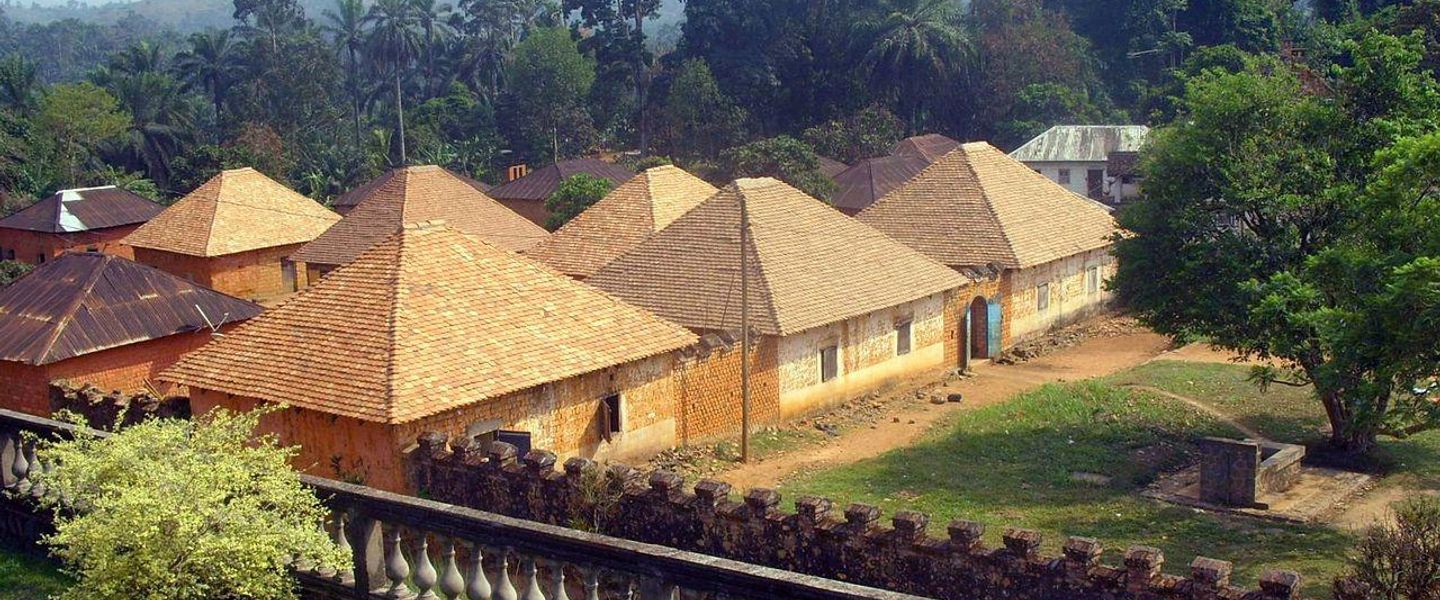


Explore Cameroon’s Grassfield highlands for royal palaces, crater lakes, mountain scenery, craft traditions and culturally rich towns.
Read more about Grassfield Region
When is the best time to visit Grassfield Region?
Best: December–February · 25–26°C| Month | High (°C) | Rainfall (mm) |
|---|---|---|
| January (best) | 25 | 10 |
| February (best) | 26 | 15 |
| March | 28 | 40 |
| April | 29 | 80 |
| May | 29 | 150 |
| June | 29 | 200 |
| July | 28 | 250 |
| August | 28 | 250 |
| September | 27 | 200 |
| October | 27 | 100 |
| November | 26 | 60 |
| December (best) | 26 | 20 |
Getting to and around Grassfield Region
How to get there
Transportation
Top city travel guides in Grassfield Region
The cities of Grassfield Region, and the easiest places to base yourself.
-
-

-

-

-
-


Swipe for more cities
Destinations in Grassfield Region
Resorts, valleys and scenic spots worth a trip of their own.
-

-

-

-

-
-


Swipe for more destinations
Best attractions in Grassfield Region
Grassfield attractions range from royal compounds and museums to crater lakes, forest reserves and highland viewpoints. Foumban’s royal palace and museum introduce the history and artistic traditions of the Bamum kingdom, while Bafut and Mankon provide important insights into the political culture of the Northwest. Chiefdoms such as Bandjoun and Babungo are associated with distinctive architecture, sculpture, beadwork and ceremonial heritage, although access should be arranged locally. For landscape experiences, the Bamenda escarpment, Mount Oku, Lake Oku and the Kilum-Ijim forest offer walking, birdwatching and broad upland views; the latter areas require careful planning and current local advice. Menchum Falls is a major natural feature in the Northwest, but access can be affected by security and road conditions. Around Dschang and Bafoussam, cultivated volcanic slopes, valleys and rural communities provide a quieter complement to urban markets and museums. The attraction landscape is therefore cultural as much as scenic: it is shaped by living royal institutions, farming, craft production and high-altitude ecology rather than by a dense concentration of conventional tourist facilities.
-
Museum
National Museum
Discover the rich heritage and vibrant culture of Cameroon at the National Museum in Yaoundé, a treasure trove of history and art.
-
Cultural landmark
Cameroon Reunification Monument
Discover the Cameroon Reunification Monument, a striking symbol of unity and history in Yaoundé, showcasing the rich cultural heritage of Cameroon.
-
Cultural landmark
Ayos Centre
Discover Foumban's artistic soul at Ayos Centre: a vibrant hub of culture, traditions, and creative expression in the heart of Cameroon.
-
Tourist attraction
Ekom Nkam Waterfalls
Discover the breathtaking beauty of Ekom Nkam Waterfalls in Nkongsamba, Cameroon, a must-visit destination for nature lovers and adventure seekers alike.


Best landmarks in Grassfield Region
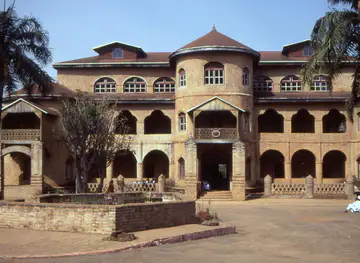
The most recognisable cultural landmark is the Bamum Royal Palace in Foumban, an imposing centre of royal authority whose museum collections help explain the kingdom’s history, court art and written tradition. In the Northwest, the Bafut Palace complex preserves the memory of a long-established kingdom through its royal setting, ceremonial spaces and associated sacred landscape. The palace traditions of Mankon and Bandjoun likewise express the political and artistic history of Grassfields societies, with carved architecture and compound layouts that differ from ordinary civic buildings. The Bamenda escarpment is the region’s defining natural landmark, marking a dramatic transition between elevated plateaux and lower country. Mount Oku and Lake Oku form another important highland pairing, associated with volcanic terrain, rare habitats and the cultural landscape of Oku communities. Menchum Falls, where access is feasible, is a powerful geographical landmark in the Northwest. These places carry meaning beyond their appearance: they represent royal legitimacy, community memory, ecological significance and the relationship between highland settlement and the surrounding terrain.
-
Restaurant
Bois Sainte Anastasie
Escape to Bois Sainte Anastasie in Yaoundé: A serene park and restaurant offering a refreshing blend of nature and Cameroonian cuisine.
-
Cultural landmark
Cameroon Reunification Monument
Discover the Reunification Monument in Yaoundé, a symbol of Cameroon's united history and cultural heritage, located on Boulevard de la Réunification.
-
Apartment complex
Ayos Centre
Immerse yourself in the vibrant art scene of Foumban at Ayos Centre, a dynamic hub for local artists and cultural experiences.
-
National park
Waza National Park
Discover Cameroon's Waza National Park: a biodiverse savanna with elephants, lions, giraffes, and abundant birdlife in a protected UNESCO biosphere.


Explore Grassfield Region on the map
Plan your trip on one map. See where the top cities, national parks and sights are, and book hotels and experiences in a few clicks.
Best hotels in Grassfield Region
Best restaurants in Grassfield Region
Dining in the Grassfields reflects Cameroon’s wider culinary culture while drawing strongly on highland crops, local markets and community traditions. In Bafoussam, Bamenda, Foumban and Dschang, visitors will find cafés, grills, family-run restaurants and hotel dining rooms serving rice, plantain, beans, vegetables, grilled meat and fish, alongside regional dishes such as achu and corn fufu with richly seasoned sauces. Ndolé is also widely available nationally, while local preparation and accompanying ingredients vary between communities. Market stalls are useful for fruit, roasted maize, groundnuts, doughnuts and simple meals, though visitors should choose busy, clean-looking vendors and drink treated or bottled water. The cooler highland climate suits coffee and a range of vegetables, potatoes and beans, while palm-based dishes and plantains connect the uplands with Cameroon’s broader food traditions. In rural areas, restaurant choice may be limited, so arrange meals with accommodation or guides when travelling to chiefdoms, forests and crater-lake areas.
-
Restaurant
Le Safoutier Restaurant
Discover exquisite dining at Le Safoutier Restaurant in Yaoundé's Hilton Hotel—where local flavors meet international elegance.
-
Restaurant
Boukarou Lounge
Discover the vibrant flavors of Cameroon at Boukarou Lounge - where local meets global in an unforgettable dining experience.
-
Restaurant
Saga Africa Restaurant - Akwa, Douala
Experience the vibrant culinary fusion at Saga Africa Restaurant in Douala – where African flavors meet European elegance.
-
Restaurant
Restaurant "Le Colisée", Yaoundé
Discover the vibrant flavors of Yaoundé at Restaurant Le Colisée – your destination for pizza, sundaes, and fine wines.


Best bars in Grassfield Region
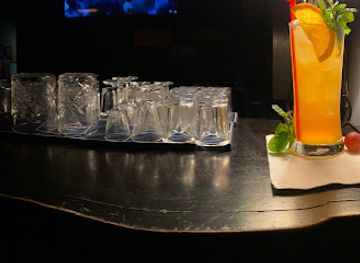
Evening life is concentrated in Bamenda, Bafoussam, Dschang and Foumban, with the largest towns offering hotel bars, cafés, informal drinking places, live music and occasional dance venues. Local and national beer brands are widely available, while soft drinks, coffee and non-alcoholic refreshments provide alternatives. Traditional pubs and neighbourhood bars are generally more important than a dedicated nightclub circuit, particularly outside the main urban centres. Dschang’s student population contributes to a more youthful evening atmosphere during university terms, although venues and operating conditions can change. In Bamenda and other parts of the Northwest, security conditions may restrict movement or close businesses at short notice; visitors should follow local advice and return to accommodation before dark when recommended. Rural Grassfield nightlife is usually centred on family visits, community events, restaurants and occasional music rather than formal entertainment districts.
-
Bar
One Rooftop
Discover the chic and vibrant atmosphere of One Rooftop, Douala's premier bar and lounge offering stunning views and unforgettable nightlife.
-
Disco club
Le Penalty Lounge
Discover the heart of Yaoundé's nightlife at Le Penalty Lounge, the premier disco club and lounge for music lovers and night owls.
-
Bar
Bubble Bar
Experience the vibrant nightlife at Bubble Bar, Douala's go-to destination for cocktails, music, and unforgettable memories.
-
Restaurant
Bambou Lounge
Experience the lively ambiance and diverse menu at Bambou Lounge, the perfect dining spot in Yaoundé for tourists looking for a memorable night out.



Best nightclubs in Grassfield Region
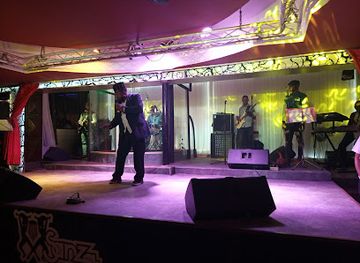
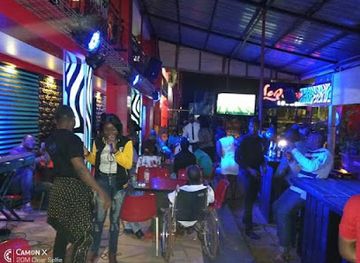
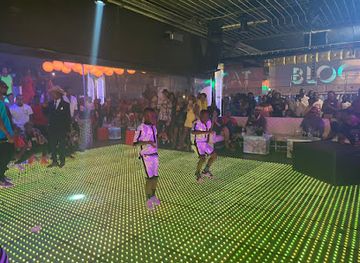
Evening life is concentrated in Bamenda, Bafoussam, Dschang and Foumban, with the largest towns offering hotel bars, cafés, informal drinking places, live music and occasional dance venues. Local and national beer brands are widely available, while soft drinks, coffee and non-alcoholic refreshments provide alternatives. Traditional pubs and neighbourhood bars are generally more important than a dedicated nightclub circuit, particularly outside the main urban centres. Dschang’s student population contributes to a more youthful evening atmosphere during university terms, although venues and operating conditions can change. In Bamenda and other parts of the Northwest, security conditions may restrict movement or close businesses at short notice; visitors should follow local advice and return to accommodation before dark when recommended. Rural Grassfield nightlife is usually centred on family visits, community events, restaurants and occasional music rather than formal entertainment districts.
-
Night club
Sanza Night Club, Yaoundé
Discover the vibrant nightlife at Sanza Night Club in Yaoundé, where music and dance create unforgettable memories.
-
Disco club
Le Penalty Lounge
Discover the heart of Yaoundé's nightlife at Le Penalty Lounge, a vibrant disco club and lounge offering music, dancing, and unforgettable experiences.
-
Disco club
Katios Night Club Yaoundé
Experience the electrifying nightlife of Yaoundé at Katios Night Club, where vibrant music and a lively crowd await you every night.
-
Night club
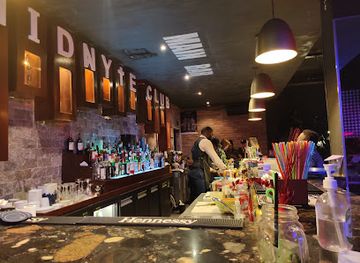
MIDNYTE CLUB
Dive into Douala's nightlife at MIDNYTE CLUB, a premier destination for dancing, drinks, and unforgettable experiences.
Best shops in Grassfield Region
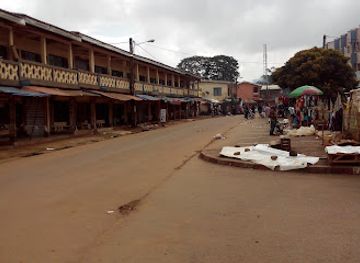
Shopping in the Grassfields is strongest in the markets and commercial streets of Bafoussam, Bamenda, Foumban and Dschang, where visitors can buy food, clothing, household goods and locally made crafts. Foumban is particularly associated with Bamum artistic traditions, including carved objects, metalwork, beadwork, textiles and decorative pieces, although buyers should ask about materials, provenance and appropriate prices. Chiefdom areas and craft workshops may offer masks, stools, pottery, woven articles and jewellery, but some objects have ceremonial or cultural significance and are not ordinary souvenirs. Highland markets are practical places to find coffee, spices, beans, potatoes, plantains and seasonal produce, while small galleries and craft sellers offer more considered purchases. Bargaining is common in informal markets but should remain courteous; fixed prices are more likely in established shops and galleries. Keep receipts for valuable purchases and check Cameroon’s export rules before attempting to take antiques, historic-looking objects or wildlife products out of the country.
-
Shopping mall
Douala Grand Mall
Experience luxury shopping and local culture at Douala Grand Mall, the premier shopping destination in Douala, Cameroon.
-
Supermarket
Carrefour Market EKIE
Experience the vibrant culture and diverse flavors of Cameroon at Carrefour Market EKIE, your go-to shopping destination in Yaoundé.
-
Market
Bamenda Main Market
Bamenda Main Market: Experience the vibrant culture and local flavors of Cameroon in this bustling marketplace.
-
Market
Marché d'Etoudi
Experience the vibrant heart of Yaoundé at Marché d'Etoudi, where local culture and flavors come alive in a bustling market setting.



Get your free copy of our complete guide to Grassfield Region, delivered straight to you.
Everything on this page, from attractions and restaurants to essentials and local phrases, in one PDF you can read offline, print or share.
Already have an account? Sign in
Your Grassfield Region guide is ready.
We'll send it to · Not you? Sign out

Getting your guide ready…
We are putting together a fresh copy of the Grassfield Region guide. This can take up to a minute.
This can take a few moments. If your browser asks, choose Allow so the download can start. You'll find the guide in your Downloads folder.
Nothing happened? Download it again
Sorry, the guide is taking longer than usual. Please try again in a minute, or get it by email instead.
Grassfield Region essentials
Currency and Payment
Safety
Emergency Situations
Do's and Don'ts
Local Tips
From Eve
Local phrases worth knowing
You don't need to get them perfect. A few words go a long way, and locals appreciate the effort.
Basics
| English | Local | Say it |
|---|---|---|
| Hello | Nka | [N-kah] |
| Goodbye | Nda | [N-dah] |
| Yes | Ee | [Eh] |
| No | A’a | [Ah-ah] |
| Please/You're welcome | Mfung | [M-foong] |
| Thank you | Medase | [Meh-dah-seh] |
| Excuse me/Sorry | Ntang | [N-tahng] |
| How are you? | Nda a fɔ? | [N-dah ah faw?] |
| Fine. And you? | A fɔ. Na wo? | [Ah faw. Nah woh?] |
| Do you speak English? | A fɔŋ English? | [Ah fong English?] |
| I don't understand | Mɛ nni adzi | [Meh nnee ah-dzee] |
Eating & Drinking
| English | Local | Say it |
|---|---|---|
| I'd like to see the menu, please | Mɛ pɛ sɛ me nɔ menu, mfung | [Meh peh seh meh naw menu, m-foong] |
| I don't eat meat | Mɛ nni adzi nku | [Meh nnee ah-dzee nkoo] |
| Cheers! | Nyi nyi! | [Nyee nyee] |
| I would like to pay, please | Mɛ pɛ sɛ me tɔ, mfung | [Meh peh seh meh taw, m-foong] |
Emergencies
| English | Local | Say it |
|---|---|---|
| Help! | Mɛ nsa! | [Meh n-sah] |
| Go away! | Kɔ n'ani! | [Kaw nah-nee] |
| Call the Police! | Frɛ ɔman no! | [Freh oh-mahn noh] |
| Call a doctor! | Frɛ dɔkita! | [Freh doh-kee-tah] |
| I'm lost | Mɛ yɛ n'ahɔhoɔ | [Meh yeh nah-ho-ho] |
| I'm ill | Mɛ yɛ yare | [Meh yeh yah-reh] |
Shopping
| English | Local | Say it |
|---|---|---|
| I'd like to buy... | Mɛ pɛ sɛ me tɔ... | [Meh peh seh meh taw...] |
| I'm just looking | Mɛ nni sɔtɔ | [Meh nnee saw-taw] |
| How much is it? | Eyi yɛ dɛn? | [Eh-yee yee den?] |
| That's too expensive | Eyi yɛ dɛn kɛse | [Eh-yee yee den keh-seh] |
| Can you lower the price? | Wobɛ tɔ abatoɔ no ase? | [Woh-beh taw ah-bah-toh noh ah-seh?] |
Time & Numbers
| English | Local | Say it |
|---|---|---|
| What time is it? | Dɛn na ɛyɛ? | [Den nah eh-yee?] |
| It's one o'clock | Ɛyɛ dɔkita baako | [Eh-yee daw-kee-tah bah-koh] |
| Half past (10) | Akwan abien (10) | [Ah-kwan ah-bee-ehn (ten)] |
| Morning | Anɔpa | [Ah-noh-pah] |
| Afternoon | Awia | [Ah-wee-ah] |
| Evening | Anadwo | [Ah-nah-dwoh] |
| Yesterday | Ɔkyena | [Oh-cheh-nah] |
| Today | Ɛnnɛ | [Eh-neh] |
| Tomorrow | Ɛbɛyɛ | [Eh-bey-yeh] |
| 1 | Baako | [Bah-koh] |
| 2 | Mmienu | [Mmee-eh-noo] |
| 3 | Mmienu | [Mmee-eh-noo] |
| 4 | Nan | [Nah-n] |
| 5 | Num | [Noom] |
| 6 | Nsia | [Nsee-ah] |
| 7 | Nsia | [Nsee-ah] |
| 8 | Nwɔtwe | [Nwah-tweh] |
| 9 | Nkyɛ | [N-cheh] |
| 10 | Dɔkita | [Doh-kee-tah] |
Transport & Directions
| English | Local | Say it |
|---|---|---|
| Where's a/the...? | Ɔhe na ...? | [Oh-heh nah ...?] |
| What's the address? | Dɛn na ɔman no? | [Den nah oh-mahn noh?] |
| Can you show me (on the map)? | Wobɛ da me ho adi (wɔ ɔmap)? | [Woh-beh dah meh ho ah-dee (woh oh-map)?] |
| When's the next (bus)? | Ɛberɛ bɛn na (bɔs) no bɛba? | [Eh-beh-reh behn nah (baws) noh beh-bah?] |
| A ticket (to ....) | Kɔkɔtɔ (kɔ ...) | [Koh-koh-taw (koh ...)] |
History of Grassfield Region
Early settlement and Grassfields archaeology
The western Cameroon highlands have been settled and farmed for many centuries, with archaeological evidence revealing long traditions of pottery, ironworking, agriculture and exchange. The Grassfields was not a single ancient kingdom but a culturally connected zone in which communities developed different political systems, languages and artistic styles. Dense settlement was supported by fertile volcanic and upland soils, while forests, ridges and valleys helped shape local economies. Archaeology remains important in interpreting the region’s deep past, although many oral histories preserved by royal courts and communities are equally significant sources of historical knowledge.
Formation of the highland kingdoms
From the late second millennium onwards, numerous centralised kingdoms and chiefdoms emerged across the Grassfields. Political authority was expressed through royal compounds, councils, ritual institutions, hereditary offices and networks of dependent communities. The Bamum kingdom around Foumban became especially prominent, while Bafut, Mankon, Bandjoun, Babungo, Kom and other polities developed distinctive traditions. Palace architecture, carved posts, masks, beadwork and ceremonial objects were not merely decorative: they represented lineage, rank, spiritual authority and relationships between rulers, ancestors and the wider community.
Bamum statecraft and the reign of Ibrahim Njoya
The Bamum kingdom, centred on Foumban, reached a notable intellectual and artistic flowering under Sultan Ibrahim Njoya, who ruled from the late nineteenth century into the early twentieth century. Njoya is associated with administrative reforms, court arts and the development of the Bamum script, as well as with efforts to record and organise knowledge within the kingdom. The royal palace and museum in Foumban preserve aspects of this legacy. His reign also unfolded during a period of expanding European intervention, which increasingly constrained the autonomy of established Cameroonian states.
German and British colonial rule
Germany established colonial control over Kamerun in the late nineteenth century, reaching into the western highlands through military expeditions, treaties and administrative pressure. After Germany’s defeat in the First World War, the territory was divided under League of Nations mandates. The western highlands were largely administered as part of British Cameroons, while the area around the western French-administered territory followed a different colonial path. Roads, mission stations, schools and cash-crop systems expanded, but colonial rule also disrupted existing political structures and imposed new forms of taxation and authority.
Mission education, commerce and urban growth
Christian missions played a major role in education, healthcare and social change across the highlands during the twentieth century. Bamenda, Bafoussam, Dschang and other towns developed as administrative, commercial and educational centres, linking rural producers with wider markets. Coffee, tea, food crops and livestock contributed to changing regional economies, while craft production remained important within royal and community settings. The resulting towns combine colonial-era institutional buildings, modern commercial streets, churches, mosques, schools and rapidly expanding neighbourhoods.
The independence settlement and Anglophone–Francophone divisions
Cameroon became independent in 1960, while the southern part of British Cameroons joined the new federation with the former French-administered territory in 1961. The Grassfields consequently developed within two different administrative and linguistic environments: the Northwest became part of the Anglophone sphere, while the West followed the Francophone system. These divisions remain visible in education, law, public administration and everyday language, although movement, trade and family connections cross the regional boundary. They are essential context for understanding the area’s modern political geography.
Contemporary conflict and changing travel conditions
Since 2016, political grievances and armed conflict in the Anglophone Northwest and Southwest have created serious insecurity, displacement and disruption to transport, education and commerce. Conditions vary sharply by locality and can change quickly, so visitors need current, location-specific advice before travelling in the Northwest. The West Region has generally had a different security environment, but routes connecting the two regions still require care. This recent history is part of the region’s present reality and should be approached with respect rather than treated as a backdrop to tourism.
Grassfield Region in Photos
Browse through our photo collection highlighting the charm and character of the destination.
Neighbouring regions of Grassfield Region
The closest regions to Grassfield Region, if you have time for more than one.
-

-

-

-

-


Swipe for more regions
Explore more

Explore more of Cameroon
Discover Cameroon: A Land of Diverse Landscapes, Rich Cultural Heritage, and Unforgettable Adventures in the Heart of Africa.
Explore Cameroon