

Free Coastal Region Travel Guide & Mobile App
Explore Coastal Region with free travel guides. Discover regional history, expert tips, proposed trips, and audio guides on web or mobile app.


Explore Cameroon’s Littoral Region through Douala’s port culture, Sawa cuisine, rainforest waterways, wetlands and the green Moungo highlands.
Read more about Coastal Region
When is the best time to visit Coastal Region?
Best: January–March · 30–31°C| Month | High (°C) | Rainfall (mm) |
|---|---|---|
| January (best) | 30 | 35 |
| February (best) | 31 | 45 |
| March (best) | 31 | 55 |
| April | 32 | 65 |
| May | 31 | 75 |
| June | 31 | 85 |
| July | 31 | 95 |
| August | 30 | 105 |
| September | 30 | 115 |
| October | 30 | 125 |
| November | 31 | 135 |
| December | 30 | 145 |
Getting to and around Coastal Region
How to get there
Transportation
Top city travel guides in Coastal Region
The cities of Coastal Region, and the easiest places to base yourself.
-

-

-

-

-

-


Swipe for more cities
Destinations in Coastal Region
Resorts, valleys and scenic spots worth a trip of their own.
-

-

-

-

-

-


Swipe for more destinations
Best attractions in Coastal Region
The Littoral Region’s attractions range from Douala’s urban culture to wetlands, rivers and forested uplands. In Douala, visitors can explore the Bonanjo district, local museums and galleries, the Wouri waterfront, markets and public artworks such as La Nouvelle Liberté. The city is also a useful base for understanding Sawa history and contemporary Cameroonian music and visual arts. Around Edéa, the Sanaga River, the Douala-Edéa wildlife landscape and nearby Lake Ossa introduce a markedly greener environment, with opportunities for guided boat trips and nature observation. The lake’s reserve protects forest and wetland habitats, while coastal and estuarine districts around Mouanko are associated with fishing, mangroves and river travel. West of Douala, the Moungo corridor provides a different experience of plantations, volcanic scenery and rural settlements around Nkongsamba and Melong. The Ekom-Nkam waterfalls are among the region’s best-known natural sights, although access should be arranged locally and may be affected by rain. These attractions are dispersed, and their appeal lies less in a single resort centre than in the contrast between a major port city, Sanaga waterways, protected habitats and the hill country towards the western edge of the region.
-
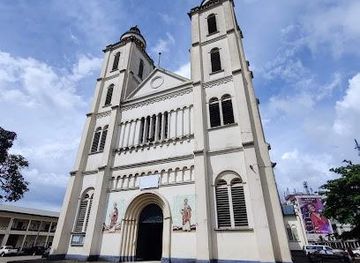
Catholic church
Cathedral of St Peter and Paul Bonadibong
Discover the architectural splendor and spiritual serenity of the Cathedral of St Peter and Paul Bonadibong, a must-see attraction in Douala.
-
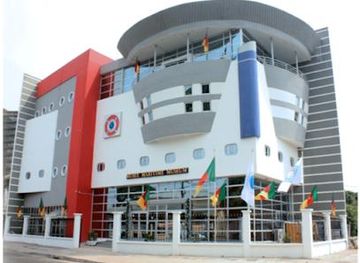
Museum
Maritime Museum Of Douala
Explore the Maritime Museum of Douala, where the rich maritime heritage of Cameroon unfolds through captivating exhibits and historical artifacts.
-
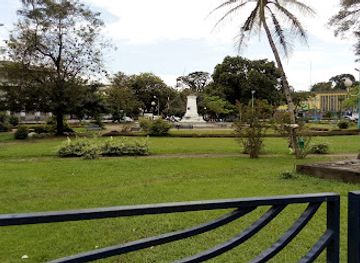
Park
Parc Bonanjo
Explore the natural beauty and tranquility of Parc Bonanjo in Douala, a perfect retreat for nature lovers and city explorers alike.
-
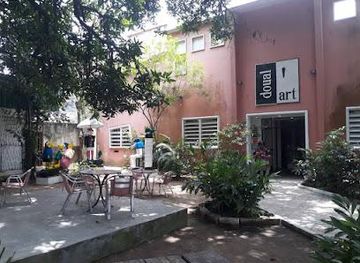
Museum
Doual'art
Explore Doual'art, a vibrant cultural center in Douala showcasing contemporary art and local creativity in a dynamic environment.
Best landmarks in Coastal Region
The Wouri River and its broad estuary are the Littoral’s defining geographical landmarks, shaping Douala’s history as a port and continuing to influence its skyline, traffic and commerce. Within the city, Bonanjo’s colonial-era administrative buildings and avenues provide a visible reminder of the German and French periods, while La Nouvelle Liberté has become one of Douala’s most recognisable public artworks and civic symbols. The Sanaga River near Edéa is both a natural landmark and an industrial one, associated with the region’s hydroelectric history and the development of aluminium production. Lake Ossa, set among forest and wetland habitats near Dizangué, represents the ecological side of the region’s identity. In the west, the Ekom-Nkam waterfalls cut through the green Moungo landscape and are visually distinctive during the wetter season, although access conditions vary. The mangrove channels and low-lying coastal environments around Mouanko are less monumental than a city sculpture or waterfall, but they are historically important landscapes where fishing, tidal movement and biodiversity remain closely connected.
-
Restaurant
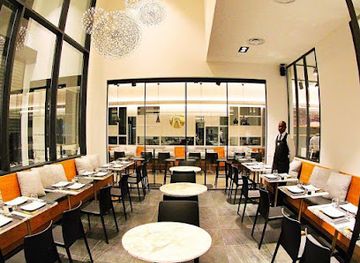
Maison H
Experience European-style dining in Douala at Maison H, a restaurant known for its pastries, ice cream, and inviting atmosphere.
-
Museum
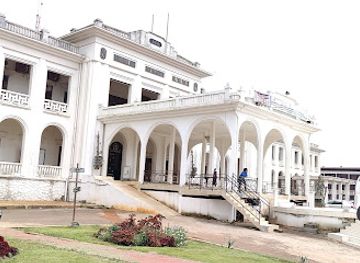
National Museum
Discover Cameroon's rich history and cultural heritage at the National Museum in Yaoundé, a treasure trove of art, artifacts, and stories.
-
Restaurant
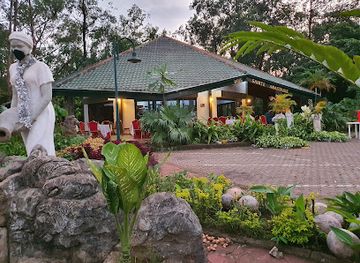
Bois Sainte Anastasie
Escape the city bustle at Bois Sainte Anastasie, Yaoundé's serene urban park with lush greenery, art, and tranquil river views.
-
Cultural landmark
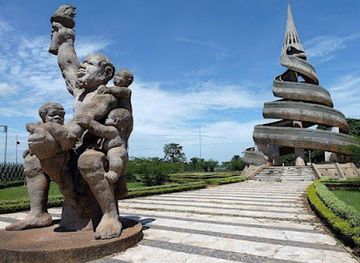
Cameroon Reunification Monument
Discover Cameroon's symbol of unity: The Reunification Monument in Yaoundé, a landmark of history, culture, and national pride.

Explore Coastal Region on the map
Plan your trip on one map. See where the top cities, national parks and sights are, and book hotels and experiences in a few clicks.
Best hotels in Coastal Region
Best restaurants in Coastal Region
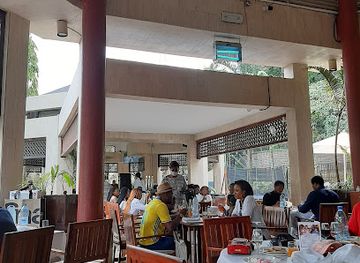
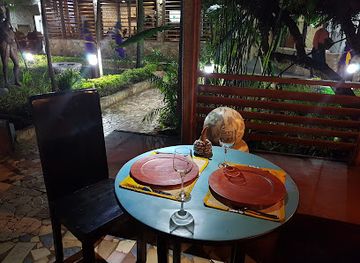
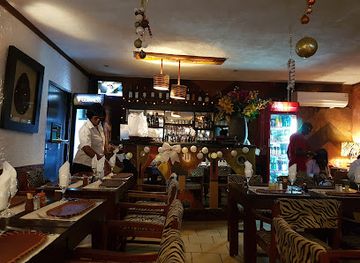
Dining in the Littoral Region is strongly shaped by the Wouri estuary, Sawa food traditions and produce from the forest and agricultural interior. Douala has the widest choice, from informal eateries and market stalls to polished restaurants serving Cameroonian, African and international food. Regional dishes commonly encountered include ndolé, made with bitterleaf and groundnut, mbongo tchobi, a dark spiced fish preparation, grilled fish, prawns, plantain, cassava and rice-based meals. Freshwater fish from river and lake districts complements seafood from the coast, while pepper sauces and leafy vegetable dishes are frequent features of local cooking. Markets and roadside vendors can be rewarding but require sensible attention to cleanliness, cooking temperature and drinking water. In Nkongsamba, Melong, Edéa and other smaller centres, dining is more likely to centre on modest restaurants, cafés and family-run establishments than on formal culinary venues. Ask locally about seasonal produce, and remember that dishes and ingredients vary between Sawa coastal communities, the Sanaga basin and the Moungo’s agricultural highlands.
-
Restaurant
Maison H
Experience the best of Douala's culinary scene at Maison H, where local flavors meet international cuisine in a stunning atmosphere.
-
Restaurant
Le Safoutier Restaurant
Experience exquisite dining at Le Safoutier Restaurant in Yaoundé's Hilton Hotel - where local flavors meet international culinary excellence.
-
Restaurant
Boukarou Lounge
Discover the rich flavors of Cameroon at Boukarou Lounge in Yaoundé – where tradition meets modern cuisine.
-
Restaurant
Saga Africa Restaurant - Akwa, Douala
Experience a fusion of African and European flavors at Saga Africa Restaurant in Akwa, Douala – a must-visit culinary destination!
Best bars in Coastal Region
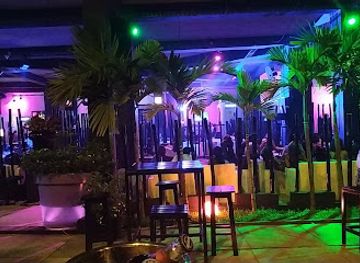
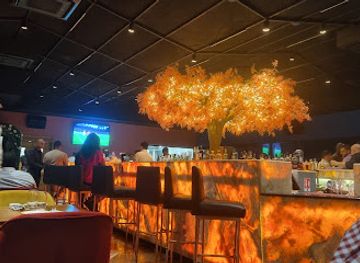
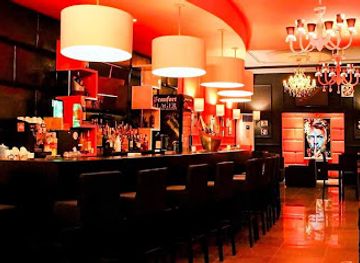
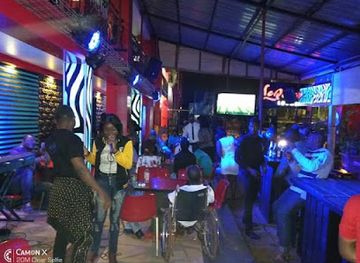
Douala has the Littoral Region’s most extensive evening scene, with neighbourhood bars, beer gardens, lounges, live-music venues and restaurants that stay active later than establishments in smaller towns. Bonanjo and central districts offer more formal settings, while nightlife elsewhere is often closely tied to local neighbourhoods and social venues rather than a single concentrated entertainment quarter. Music is an important part of the city’s cultural life, encompassing contemporary Cameroonian styles as well as international sounds, though programmes and opening arrangements change frequently. In Edéa, Nkongsamba, Melong and rural communities, evenings are more commonly spent in cafés, modest bars, restaurants or community venues, with a quieter rhythm than in Douala. Travellers should use trusted transport after dark, keep valuables discreet and confirm the location of any event locally. Alcohol is widely available, but it is not necessary to drink in order to engage with the region’s food, music and social life.
-
Lounge
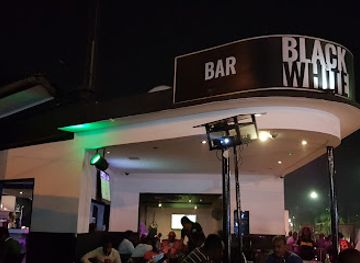
Black&White Douala
Discover the lively ambiance and delicious cuisine at Black&White Douala, where dining meets entertainment in the heart of the city.
-
Lounge
Black & White Sensation (Bastos)
Discover elegance and vibrant nightlife at Black & White Sensation, the premier lounge in Quartier Bastos, Yaoundé.
-
Bar
One Rooftop
Experience luxury and breathtaking views at One Rooftop, Douala's premier bar and lounge offering exquisite dining and vibrant nightlife.
-
Bar
Stardust
Discover Douala's nightlife at Stardust, a stylish bar offering exquisite cocktails and a lively atmosphere for an unforgettable evening.
Best nightclubs in Coastal Region
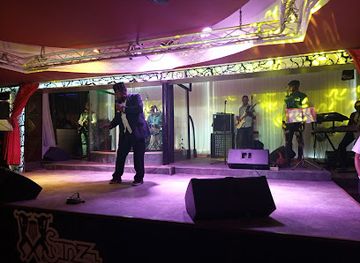
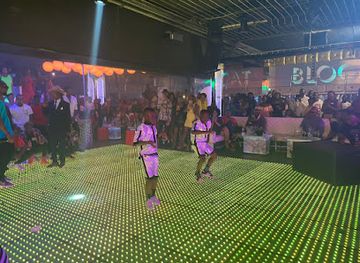
Douala has the Littoral Region’s most extensive evening scene, with neighbourhood bars, beer gardens, lounges, live-music venues and restaurants that stay active later than establishments in smaller towns. Bonanjo and central districts offer more formal settings, while nightlife elsewhere is often closely tied to local neighbourhoods and social venues rather than a single concentrated entertainment quarter. Music is an important part of the city’s cultural life, encompassing contemporary Cameroonian styles as well as international sounds, though programmes and opening arrangements change frequently. In Edéa, Nkongsamba, Melong and rural communities, evenings are more commonly spent in cafés, modest bars, restaurants or community venues, with a quieter rhythm than in Douala. Travellers should use trusted transport after dark, keep valuables discreet and confirm the location of any event locally. Alcohol is widely available, but it is not necessary to drink in order to engage with the region’s food, music and social life.
-
Night club
Sanza Night Club, Yaoundé
Experience the vibrant nightlife of Yaoundé at Sanza Night Club, where music, dance, and culture come together for an unforgettable evening.
-
Disco club
Le Penalty Lounge
Discover the vibrant nightlife at Le Penalty Lounge, a premier disco club and lounge in Yaoundé, blending music and social fun into an unforgettable experience.
-
Disco club
Katios Night Club Yaoundé
Discover the electrifying nightlife of Yaoundé at Katios Night Club, where vibrant music and an energetic crowd create unforgettable moments.
-
Disco club
Byblos Nightclub
Discover Douala's nightlife at Byblos Nightclub—where music, dance, and vibrant energy come together for an unforgettable experience.

Best shops in Coastal Region
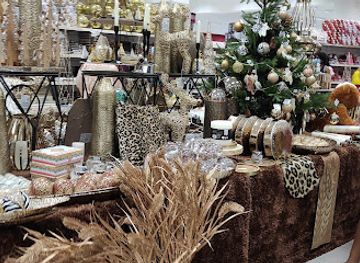
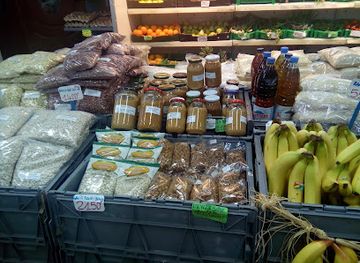
Douala is the Littoral Region’s main shopping centre, combining formal retail, independent businesses, craft outlets and large open markets. Traditional markets are useful for fabrics, household goods, fresh produce, spices and everyday observations of urban life, while the Bonanjo area and central districts provide galleries, boutiques and more curated local products. The Marché des Fleurs is associated with plants and decorative goods, although visitors should verify current arrangements before making a special journey. Handcrafted objects, woven items, carved pieces and colourful textiles can make appropriate souvenirs when bought from responsible sellers and with attention to customs rules. In Edéa, Nkongsamba, Melong and smaller market towns, shopping is more practical and locally focused, with fruit, plantain, cassava, spices, fish and agricultural products reflecting the surrounding countryside. Regional food products and fabrics are often more distinctive purchases than generic imported souvenirs. Bargain politely where prices are not fixed, carry small notes for market transactions and keep bags secure in crowded commercial areas.
-
Shopping mall
Douala Grand Mall
Explore the Douala Grand Mall, the largest shopping destination in Central Africa, where vibrant culture meets modern retail.
-
Hotel
ONOMO Hotel Douala
Discover the perfect blend of modern luxury and local charm at ONOMO Hotel Douala, a premier hotel located in the heart of Cameroon’s bustling city.
-
Shopping mall
ORCA Yaoundé
Experience the vibrant shopping scene at ORCA Yaoundé, where local culture meets modern retail therapy in the heart of Cameroon.
-
Shopping mall
ÉCOMARCHÉ CAVE DU WOURI
Écomarché Cave du Wouri - Your ultimate shopping and dining destination in Douala, where local culture meets modern retail.


Get your free copy of our complete guide to Coastal Region, delivered straight to you.
Everything on this page, from attractions and restaurants to essentials and local phrases, in one PDF you can read offline, print or share.
Already have an account? Sign in
Your Coastal Region guide is ready.
We'll send it to · Not you? Sign out

Getting your guide ready…
We are putting together a fresh copy of the Coastal Region guide. This can take up to a minute.
This can take a few moments. If your browser asks, choose Allow so the download can start. You'll find the guide in your Downloads folder.
Nothing happened? Download it again
Sorry, the guide is taking longer than usual. Please try again in a minute, or get it by email instead.
Coastal Region essentials
Currency and Payment
Safety
Emergency Situations
Do's and Don'ts
Local Tips
From Eve
Local phrases worth knowing
You don't need to get them perfect. A few words go a long way, and locals appreciate the effort.
Basics
| English | Local | Say it |
|---|---|---|
| Hello | Hi | [Hai] |
| Goodbye | See ya | [Si ya] |
| Yes | Yeah | [Yea] |
| No | Nah | [Nah] |
| Please/You're welcome | No problem | [No prob-lem] |
| Thank you | Thanks | [Thangs] |
| Excuse me/Sorry | Sorry | [Sor-ree] |
| How are you? | How you doin'? | [How yu doin'?] |
| Fine. And you? | Good. And you? | [Gud. An yu?] |
| Do you speak English? | You speak English? | [Yu speak Ing-lish?] |
| I don't understand | I don't get it | [I don't get it] |
Eating & Drinking
| English | Local | Say it |
|---|---|---|
| I'd like to see the menu, please | Can I see the menu? | [Can I si the menu?] |
| I don't eat meat | I don't eat meat | [I don't eat meat] |
| Cheers! | Cheers! | [Cheers!] |
| I would like to pay, please | Can I get the check? | [Can I get the chek?] |
Emergencies
| English | Local | Say it |
|---|---|---|
| Help! | Help! | [Help!] |
| Go away! | Get lost! | [Get lost!] |
| Call the Police! | Call the cops! | [Call the cops!] |
| Call a doctor! | Get a doctor! | [Get a doc-tor!] |
| I'm lost | I'm lost | [I'm lost] |
| I'm ill | I'm not feeling well | [I'm not feel-ing wel] |
Shopping
| English | Local | Say it |
|---|---|---|
| I'd like to buy... | I want to buy... | [I want to bai...] |
| I'm just looking | Just browsing | [Just brow-sing] |
| How much is it? | What’s the price? | [What's the prais?] |
| That's too expensive | That's too pricey | [That's too prai-cy] |
| Can you lower the price? | Can you make it cheaper? | [Can you make it cheeper?] |
Time & Numbers
| English | Local | Say it |
|---|---|---|
| What time is it? | What time? | [What taim?] |
| It's one o'clock | It's one | [It's wun] |
| Half past (10) | Half past ten | [Half past ten] |
| Morning | Morning | [Mor-ning] |
| Afternoon | Afternoon | [Af-ter-noon] |
| Evening | Evening | [Eve-ning] |
| Yesterday | Yesterday | [Yes-ter-day] |
| Today | Today | [To-day] |
| Tomorrow | Tomorrow | [To-mor-row] |
| 1 | One | [Wun] |
| 2 | Two | [Too] |
| 3 | Three | [Three] |
| 4 | Four | [For] |
| 5 | Five | [Fyv] |
| 6 | Six | [Siks] |
| 7 | Seven | [Sev-en] |
| 8 | Eight | [Ayt] |
| 9 | Nine | [Nyn] |
| 10 | Ten | [Ten] |
Transport & Directions
| English | Local | Say it |
|---|---|---|
| Where's a/the...? | Where's the...? | [Where's the...?] |
| What's the address? | What's the address? | [What's the ad-dress?] |
| Can you show me (on the map)? | Can you show me on the map? | [Can you sho me on the map?] |
| When's the next (bus)? | When's the next bus? | [When's the next bus?] |
| A ticket (to ....) | A ticket to... | [A tik-it to...] |
History of Coastal Region
Early Coastal Settlement and Sawa Communities
The estuaries and waterways of the Littoral have long supported fishing, farming and river trade. Douala and neighbouring coastal settlements became associated with Duala and other Sawa communities whose livelihoods were linked to the Wouri estuary and Atlantic commerce. Local political authorities controlled access to trade routes and negotiated with visiting merchants well before European colonial rule. Canoe transport, mangrove environments and the exchange of fish, food crops and forest products shaped settlement patterns that remain visible in the region’s coastal culture.
Atlantic Trade and the Growth of Douala
From the early modern period, European merchants sought access to the rivers and markets of the Cameroon coast. Trade in commodities, including palm products and other goods from the interior, strengthened the position of settlements around the Wouri estuary. The commercial importance of the area brought wealth and political pressure, while also linking local communities to the wider Atlantic economy. Douala’s later development as a port city grew from this earlier role as a point of contact between inland producers, coastal authorities and overseas traders.
German Colonial Rule, 1884–1916
In 1884, German agreements with coastal rulers helped establish the colony of Kamerun, with Douala becoming its principal administrative and commercial centre. German rule introduced new systems of taxation, land control and forced labour, while roads, plantations and port infrastructure were developed to serve colonial interests. The physical imprint of this period survives in parts of central Douala, although much of the colonial city has been transformed by later expansion. During the First World War, German forces were defeated in Cameroon by Allied troops, bringing the colonial administration to an end.
The Mandate Era and Transport Infrastructure
After the First World War, Cameroon was divided between French and British mandates, with the Littoral falling under French administration. Douala expanded as the main port and commercial centre of French Cameroun, while rail and road connections strengthened links with the interior. The railway towards Yaoundé and the plantations and trading routes of the Moungo helped integrate the region into a wider colonial economy. These developments accelerated migration to Douala and laid foundations for the city’s modern role as Cameroon’s principal business and transport hub.
Nationalism, the UPC and the Struggle for Independence
The Littoral was an important setting for the political mobilisation that accompanied the end of colonial rule. The Union of the Peoples of Cameroon, or UPC, demanded independence and opposed the continuation of French influence. Douala became a major centre of political organisation, protest and labour activity, while conflict also affected rural districts and transport routes. The repression of nationalist movements left a lasting mark on Cameroon’s political history. French Cameroun achieved independence in 1960, and the region continued to play a central role in national public life.
Edéa, Hydroelectric Power and Industrialisation
The Sanaga River near Edéa became central to Cameroon’s post-war industrial development. A hydroelectric scheme was developed there during the colonial period and expanded in the years after independence, providing power for urban growth and industry. Aluminium production at Edéa became one of the best-known examples of this industrial strategy. The project brought employment, infrastructure and national economic importance, but it also illustrates the environmental and social consequences of large-scale development in river and forest regions.
Douala as Modern Cameroon’s Commercial Gateway
Since independence, Douala has grown into Cameroon’s largest commercial and urban centre, driven by the port, manufacturing, finance, wholesale trade and migration from many parts of the country. Its rapid expansion has created a city of sharp contrasts, combining historic districts and cultural institutions with dense neighbourhoods, major roads and extensive informal commerce. The port and the Wouri crossings remain vital to national supply chains, while the city’s music, visual arts, cuisine and media contribute to contemporary Cameroonian culture.
Coastal Region in Photos
Browse through our photo collection highlighting the charm and character of the destination.
Neighbouring regions of Coastal Region
The closest regions to Coastal Region, if you have time for more than one.
-

-

-

-

-


Swipe for more regions
Explore more

Explore more of Cameroon
Discover Cameroon: A Land of Diverse Landscapes, Rich Cultural Heritage, and Unforgettable Adventures in the Heart of Africa.
Explore Cameroon