

Free Saguenay–Lac-Saint-Jean Travel Guide & Mobile App
Explore Saguenay–Lac-Saint-Jean with free travel guides. Discover regional history, expert tips, proposed trips, and audio guides on web or mobile app.


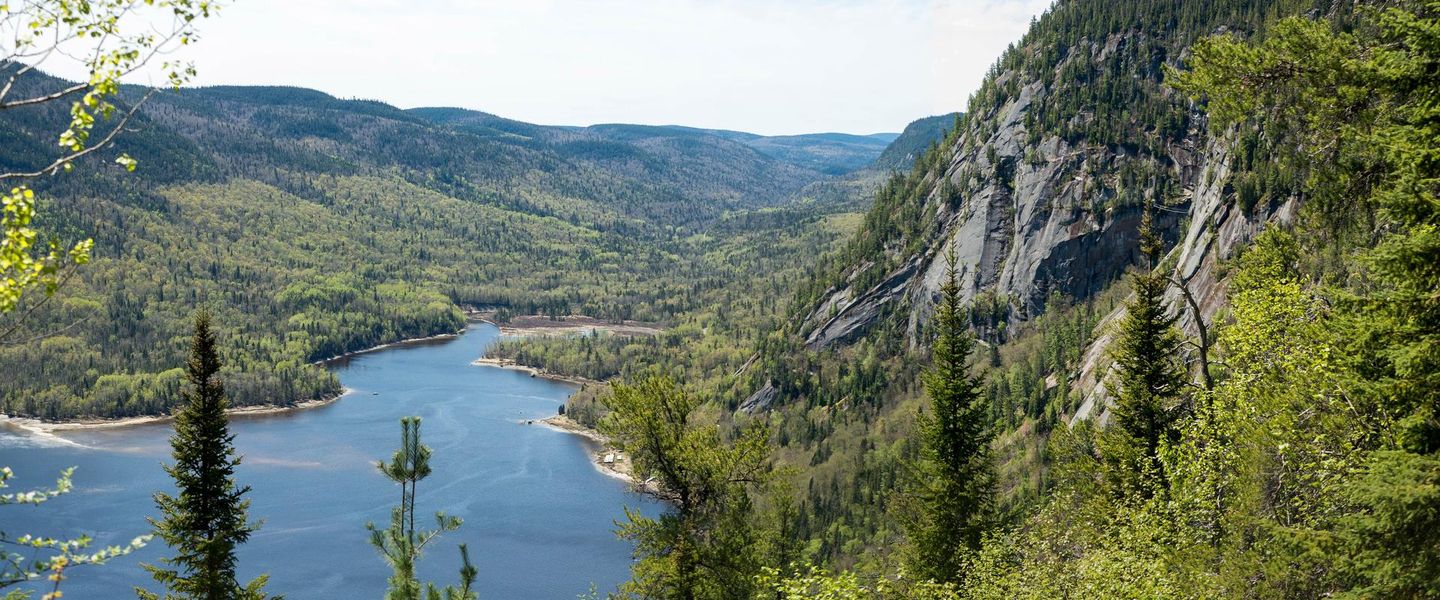


Explore Saguenay–Lac-Saint-Jean for fjord cruises, boreal forests, Lac Saint-Jean beaches, historic villages and distinctive Quebec cuisine.
Read more about Saguenay–Lac-Saint-Jean
When is the best time to visit Saguenay–Lac-Saint-Jean?
Best: June–August · 23–26°C| Month | High (°C) | Rainfall (mm) |
|---|---|---|
| January | -10 | 50 |
| February | -7 | 45 |
| March | 1 | 50 |
| April | 11 | 55 |
| May | 18 | 65 |
| June (best) | 23 | 85 |
| July (best) | 26 | 90 |
| August (best) | 24 | 85 |
| September | 18 | 80 |
| October | 10 | 75 |
| November | 3 | 60 |
| December | -4 | 55 |
Getting to and around Saguenay–Lac-Saint-Jean
How to get there
Transportation
Top city travel guides in Saguenay–Lac-Saint-Jean
The cities of Saguenay–Lac-Saint-Jean, and the easiest places to base yourself.

Swipe for more cities
Best attractions in Saguenay–Lac-Saint-Jean
Saguenay–Lac-Saint-Jean's attractions are defined by the meeting of water, boreal forest and industrial history. Saguenay Fjord National Park offers hiking, sea kayaking, camping and viewpoints along the steep-sided fjord, while boat excursions provide a different perspective on its wooded shores. Parc national des Monts-Valin leads into a higher mountain environment with marked trails, winter activities and broad northern views. Around Lac Saint-Jean, Parc national de la Pointe-Taillon combines sandy shoreline, wetlands, cycling and accessible lakeside recreation. The Véloroute des Bleuets links many communities around the lake for a long-distance cycling experience. Cultural attractions include La Pulperie de Chicoutimi, the former industrial complex that interprets regional pulp and paper history, and the preserved company village of Val-Jalbert near Chambord. At the Zoo sauvage de Saint-Félicien, visitors encounter northern wildlife and ecosystems through an attraction focused on boreal environments. Smaller museums, galleries, farm visits, beaches and heritage churches add variety, but the region is best experienced through a combination of developed sites and outdoor landscapes rather than through a single concentrated sightseeing circuit.
-
Basilica
Sanctuaire Sainte-Anne-de-Beaupré
Experience the spiritual serenity and architectural beauty of the Sanctuaire Sainte-Anne-de-Beaupré, a must-visit basilica in Quebec.
-
National park
Parc national de la Jacques-Cartier
Discover the majestic beauty of Parc national de la Jacques-Cartier, a haven for outdoor lovers and a perfect escape into nature's tranquility.
-
Tourist attraction
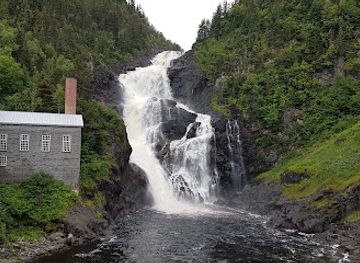
Val-Jalbert Historical Village
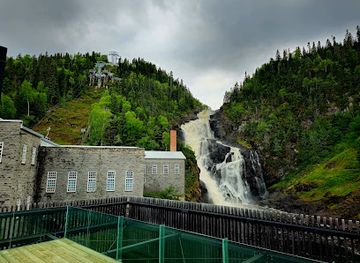
Experience the rich history and stunning beauty of Val-Jalbert Historical Village, a preserved gem in Quebec showcasing life from the past.
-
Hotel
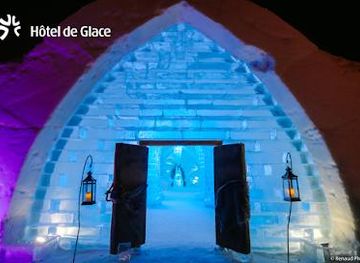
Hôtel de Glace
Experience the magic of winter at Hôtel de Glace, a stunning ice hotel in Quebec featuring unique accommodations and breathtaking ice sculptures.


Best landmarks in Saguenay–Lac-Saint-Jean
The Saguenay Fjord is the region's defining natural landmark, its deep glacial valley creating steep forested walls and a powerful visual axis between Saguenay and the St Lawrence. The rocky uplands of the Monts-Valin form another distinctive geographical feature, with elevated plateaux and northern forest that look markedly different from the lowlands around Lac Saint-Jean. At the lake, the broad sandy shores of Pointe-Taillon provide a gentle contrast to the fjord's confined waterway. Val-Jalbert's preserved mill village is one of the region's most evocative historic places, showing how a pulp mill once organised housing, work and community life. In Saguenay, the former industrial complex of La Pulperie de Chicoutimi records the city's timber and pulp economy, while Arvida's planned streets and surviving industrial setting represent twentieth-century aluminium production and hydroelectric development. Churches, civic buildings and older commercial streets in the region's established towns complete a landmark landscape rooted in settlement, resource industries and northern geography.
-
Zoo
Zoo Sauvage de Saint-Felicien
Discover the beauty of wildlife at Zoo Sauvage de Saint-Félicien, a family-friendly destination featuring diverse species and immersive experiences.
-
Historical landmark
Val-Jalbert Historical Village
Explore Val-Jalbert Historical Village, a captivating journey through Quebec's rich heritage and stunning natural beauty, perfect for history enthusiasts and nature lovers alike.
-
 National park
Saguenay Fjord National Park
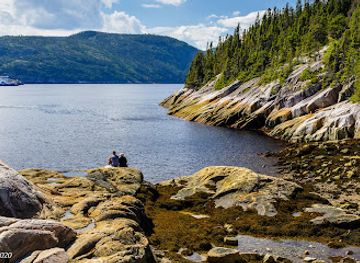
Explore Saguenay Fjord National Park: a stunning natural gem in Quebec offering hiking, boating, and unforgettable landscapes.
-
National park
Saguenay-St-Lawrence Marine Park
Discover the stunning Saguenay-St-Lawrence Marine Park, where breathtaking landscapes meet abundant wildlife for an unforgettable adventure in nature.
Explore Saguenay–Lac-Saint-Jean on the map
Plan your trip on one map. See where the top cities, national parks and sights are, and book hotels and experiences in a few clicks.
Best hotels in Saguenay–Lac-Saint-Jean
Best restaurants in Saguenay–Lac-Saint-Jean
Dining in Saguenay–Lac-Saint-Jean reflects Quebec's rural, forested and lakeside character. Tourtière, a seasoned meat pie associated with the region, is widely served alongside other Québécois comfort food, while blueberries from the Lac Saint-Jean area appear in baking, desserts, preserves and seasonal drinks. Local cheeses, apples, honey, freshwater fish, game and maple products are prominent in farm shops, markets and contemporary kitchens. Saguenay and the larger towns offer bistros, cafés, bakeries and restaurants interpreting regional produce in modern ways; outside the urban centres, country inns, casse-croûtes and family-run establishments are more typical. Around the lake, summer markets and roadside producers provide opportunities to buy fruit, cheese and baked goods directly, although seasonal availability varies. Craft beer, cider and Quebec wines may accompany meals, but the strongest regional distinction comes from the relationship between food and the surrounding agricultural and forest economies.
-
Restaurant
Hôtel Le Montagnais Saguenay
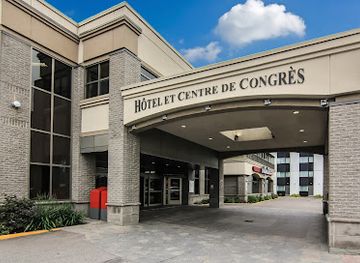
Discover luxury and adventure at Hôtel Le Montagnais Saguenay in Chicoutimi—where comfort meets excitement amidst Quebec's stunning landscapes.
-
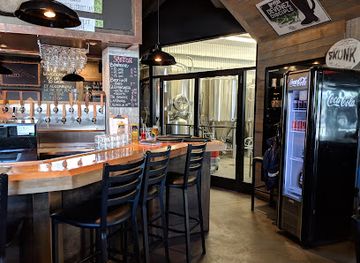
Brewpub
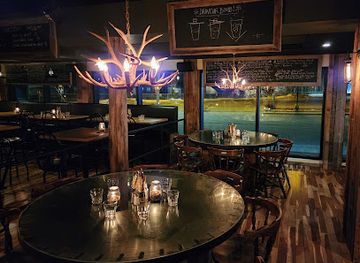
La Voie Maltée - Brasserie Artisanale (Chicoutimi)
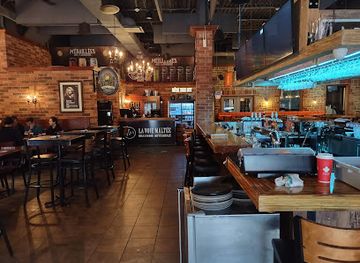
Discover La Voie Maltée, Chicoutimi's artisan brewpub offering exquisite craft beers and delicious local cuisine in a cozy atmosphere.
-
Restaurant
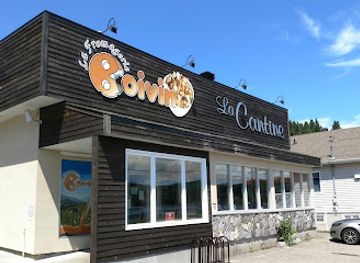
Cantine Boivin
Experience authentic local flavors at Cantine Boivin in La Baie – where delicious food meets warm hospitality.
-
Gastropub
Le Draveur - Cookerie Bar
Discover the unique flavors of Quebec at Le Draveur - where local ingredients meet culinary creativity in an inviting gastropub setting.
Best bars in Saguenay–Lac-Saint-Jean
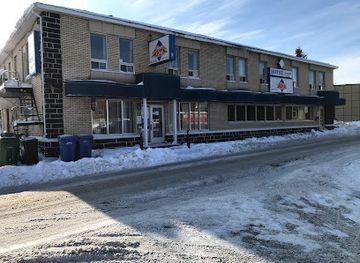
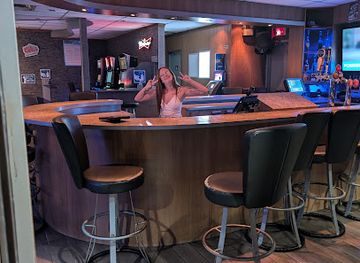
Evening life in Saguenay–Lac-Saint-Jean is concentrated in Saguenay and the region's larger towns rather than spread across a continuous nightlife district. Saguenay offers the broadest choice of pubs, cafés, restaurants, live-music venues and cultural performances, with activity particularly noticeable around central Chicoutimi, Jonquière and La Baie. Alma, Roberval and Saint-Félicien provide a smaller selection of bars, hotel lounges and casual evening venues. In rural communities, historic inns, local pubs and restaurants are more characteristic than nightclubs, and summer events can bring additional activity to lakeside areas. Visitors should expect earlier closing patterns and longer distances between venues than in Montreal or Quebec City. Breweries and taprooms provide a relaxed way to sample Quebec beer, while theatre, concerts and seasonal cultural programming offer alternatives to drinking-centred nightlife.
-
Bar
Hôtel Le Montagnais Saguenay
Experience a blend of luxury, relaxation, and fun at Hôtel Le Montagnais Saguenay, your all-in-one destination in Chicoutimi, Quebec.
-
Brewpub
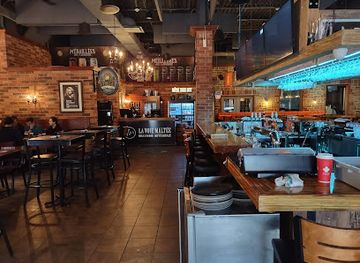
La Voie Maltée - Brasserie Artisanale (Chicoutimi)
Discover the authentic taste of Chicoutimi at La Voie Maltée, a premier brewpub serving artisanal beers and delicious local cuisine.
-
Brewpub
HopEra - Microbrasserie & Pizzeria
Discover the vibrant brewpub culture at HopEra, where craft beer meets gourmet pizza in the heart of Jonquière.
-
National park
Parc national de la Pointe-Taillon
Explore the breathtaking landscapes and outdoor adventures at Parc national de la Pointe-Taillon, a gem in Quebec's natural paradise.
Best nightclubs in Saguenay–Lac-Saint-Jean
Evening life in Saguenay–Lac-Saint-Jean is concentrated in Saguenay and the region's larger towns rather than spread across a continuous nightlife district. Saguenay offers the broadest choice of pubs, cafés, restaurants, live-music venues and cultural performances, with activity particularly noticeable around central Chicoutimi, Jonquière and La Baie. Alma, Roberval and Saint-Félicien provide a smaller selection of bars, hotel lounges and casual evening venues. In rural communities, historic inns, local pubs and restaurants are more characteristic than nightclubs, and summer events can bring additional activity to lakeside areas. Visitors should expect earlier closing patterns and longer distances between venues than in Montreal or Quebec City. Breweries and taprooms provide a relaxed way to sample Quebec beer, while theatre, concerts and seasonal cultural programming offer alternatives to drinking-centred nightlife.
-
Bar
Bar Pitons
Experience the lively ambiance of Bar Pitons in Saguenay, where good drinks meet exceptional live music in a cozy setting.
-
Night club
Bar Terrasse Ste-Anne
Discover Chicoutimi's nightlife at Bar Terrasse Ste-Anne, where music, dance, and a vibrant atmosphere come together for an unforgettable experience.
-
Night club
Hippo Club
Discover the vibrant nightlife at Hippo Club, a premier night club and bar in Jonquière, Quebec, perfect for dancing and socializing.
-
Beer hall
Bar Benjy
Discover Chicoutimi's vibrant nightlife at Bar Benjy, where great drinks and a lively atmosphere await every visitor.
Best shops in Saguenay–Lac-Saint-Jean
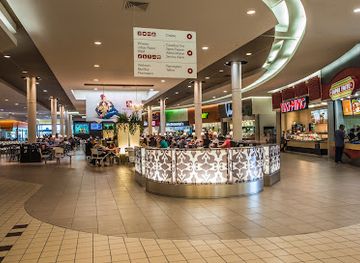
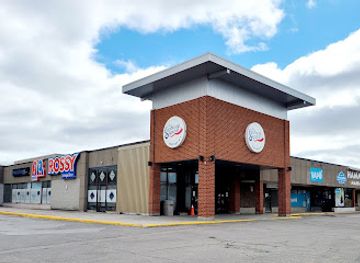
Shopping is dispersed among Saguenay's urban centres, Lac Saint-Jean market towns and rural producers rather than concentrated in one major retail district. Saguenay provides the widest choice of bookshops, independent boutiques, galleries, cafés and practical shopping, while Alma, Roberval, Saint-Félicien and smaller communities combine ordinary high-street services with locally oriented businesses. Farmers' markets and seasonal farm stands are good places to look for Lac Saint-Jean blueberries, preserves, honey, maple products, cheese, cider and baked goods. Craft shops and galleries may feature pottery, woodwork, textiles, jewellery and work by Quebec artists, although stock and opening patterns vary outside the summer season. Heritage sites often offer books and locally themed gifts connected with the fjord, forestry or Indigenous and regional history. Visitors should buy food products from authorised sellers, especially when travelling onward, and remember that remote communities may have limited retail hours and fewer opportunities for last-minute purchases.
-
Shopping mall
Place du Royaume
Experience the best of shopping and dining at Place du Royaume, Chicoutimi's premier shopping mall with diverse offerings and a vibrant atmosphere.
-
Shopping mall
Place du Saguenay
Discover the vibrant shopping experience at Place du Saguenay, where fashion, dining, and community come together in Chicoutimi.
-
Shopping mall
Faubourg Sagamie
Discover shopping, dining, and entertainment at Faubourg Sagamie, the premier shopping destination in Jonquière, Quebec.
-
Shopping mall
Carrefour Jeannois
Discover Carrefour Jeannois, your ultimate shopping destination in Roberval, Quebec, featuring diverse stores and a vibrant atmosphere.

Get your free copy of our complete guide to Saguenay–Lac-Saint-Jean, delivered straight to you.
Everything on this page, from attractions and restaurants to essentials and local phrases, in one PDF you can read offline, print or share.
Already have an account? Sign in
Your Saguenay–Lac-Saint-Jean guide is ready.
We'll send it to · Not you? Sign out

Getting your guide ready…
We are putting together a fresh copy of the Saguenay–Lac-Saint-Jean guide. This can take up to a minute.
This can take a few moments. If your browser asks, choose Allow so the download can start. You'll find the guide in your Downloads folder.
Nothing happened? Download it again
Sorry, the guide is taking longer than usual. Please try again in a minute, or get it by email instead.
Saguenay–Lac-Saint-Jean essentials
Currency and Payment
Safety
Emergency Situations
Do's and Don'ts
Local Tips
From Eve
Local phrases worth knowing
You don't need to get them perfect. A few words go a long way, and locals appreciate the effort.
Basics
| English | Local | Say it |
|---|---|---|
| Hello | Salut | [sah-loo] |
| Goodbye | Au revoir | [oh ruh-vwar] |
| Yes | Oui | [wee] |
| No | Non | [noh] |
| Please/You're welcome | S'il vous plaît / De rien | [seel voo pleh / duh ree-ehn] |
| Thank you | Merci | [mehr-see] |
| Excuse me/Sorry | Excusez-moi / Désolé | [ehk-skew-zay mwah / day-zoh-lay] |
| How are you? | Comment ça va? | [koh-mahn sah vah] |
| Fine. And you? | Bien. Et vous? | [byehn. eh voo] |
| Do you speak English? | Parlez-vous anglais? | [par-lay voo ahn-glay] |
| I don't understand | Je ne comprends pas | [zhuh nuh kohm-prahn pah] |
Eating & Drinking
| English | Local | Say it |
|---|---|---|
| I'd like to see the menu, please | Je voudrais voir le menu, s'il vous plaît | [zhuh voo-dray vwah le muh-nu, seel voo pleh] |
| I don't eat meat | Je ne mange pas de viande | [zhuh nuh mahnj pah duh vyahnd] |
| Cheers! | Santé! | [sahn-tay] |
| I would like to pay, please | Je voudrais payer, s'il vous plaît | [zhuh voo-dray pay-ay, seel voo pleh] |
Emergencies
| English | Local | Say it |
|---|---|---|
| Help! | Au secours! | [oh suh-coor] |
| Go away! | Va-t'en! | [vah-tahn] |
| Call the Police! | Appelez la police! | [ah-peh-lay lah poh-lees] |
| Call a doctor! | Appelez un médecin! | [ah-peh-lay uhn may-deh-sin] |
| I'm lost | Je suis perdu | [zhuh swee pehr-due] |
| I'm ill | Je suis malade | [zhuh swee mah-lahd] |
Shopping
| English | Local | Say it |
|---|---|---|
| I'd like to buy... | Je voudrais acheter... | [zhuh voo-dray ah-sheh-tay] |
| I'm just looking | Je regarde juste | [zhuh ruh-gard zhoost] |
| How much is it? | C'est combien? | [say kohm-byen] |
| That's too expensive | C'est trop cher | [say troh shair] |
| Can you lower the price? | Pouvez-vous baisser le prix? | [poo-vay voo beh-say le pree] |
Time & Numbers
| English | Local | Say it |
|---|---|---|
| What time is it? | Quelle heure est-il? | [kel uhr eh-teel] |
| It's one o'clock | Il est une heure | [eel eh oon uhr] |
| Half past (10) | Dix heures et demie | [dees uhr eh duh-mee] |
| Morning | Matin | [mah-tan] |
| Afternoon | Après-midi | [ah-preh mee-dee] |
| Evening | Soir | [swahr] |
| Yesterday | Hier | [ee-air] |
| Today | Aujourd'hui | [oh-zhoor-dwee] |
| Tomorrow | Demain | [duh-man] |
| 1 | Un | [uhn] |
| 2 | Deux | [duh] |
| 3 | Trois | [twah] |
| 4 | Quatre | [katr] |
| 5 | Cinq | [sank] |
| 6 | Six | [sees] |
| 7 | Sept | [set] |
| 8 | Huit | [weet] |
| 9 | Neuf | [nuhf] |
| 10 | Dix | [dees] |
Transport & Directions
| English | Local | Say it |
|---|---|---|
| Where's a/the...? | Où est un/la...? | [oo eh uhn/lah] |
| What's the address? | Quelle est l'adresse? | [kel eh la-dress] |
| Can you show me (on the map)? | Pouvez-vous me montrer (sur la carte)? | [poo-vay voo muh mon-tray (sur lah kart)] |
| When's the next (bus)? | Quand est le prochain (autobus)? | [kahn eh le pro-shen (oh-toh-boos)] |
| A ticket (to ....) | Un billet (pour ....) | [uhn bee-yay (poor)] |
History of Saguenay–Lac-Saint-Jean
Indigenous territories and early trade
The Saguenay and Lac Saint-Jean basin has been occupied and travelled by Indigenous peoples for thousands of years. The Innu, whose traditional territory extends across much of the region and the surrounding north, used river and lake networks for seasonal travel, hunting, fishing and exchange. European traders entered an established Indigenous commercial world rather than an empty landscape. The Saguenay River became known to French visitors through the early sixteenth-century voyages associated with Jacques Cartier, but sustained colonial settlement came much later. Contemporary Innu communities and organisations remain part of the region's living cultural and political landscape.
Fur trade and the Domaine du Roi
Under French rule, the Saguenay and Lac Saint-Jean country formed part of the Domaine du Roi, a vast territory administered for the Crown and closely connected with the fur trade. Trading posts and travel routes linked the interior to the St Lawrence, while settlement remained limited compared with the older agricultural parishes downstream. After the British conquest, the Hudson's Bay Company continued to operate in the area. This long period of controlled access helped preserve the region's forested character and delayed large-scale farming and colonisation until the nineteenth century.
Nineteenth-century settlement and colonisation
Permanent French-Canadian settlement expanded rapidly during the nineteenth century, especially along the Saguenay River and around Lac Saint-Jean. Clergy, agricultural societies and colonisation promoters encouraged families to clear land, establish parishes and create new communities. Chicoutimi, founded as a trading and settlement centre, grew in importance, while Roberval, Alma and other lakeside towns developed as transport and administrative hubs. The new settlements brought farms, sawmills, churches and roads, but also displaced Indigenous patterns of land use and tied the region increasingly to commercial resource extraction.
Timber, pulp and paper
Forestry became the economic foundation of the region from the late nineteenth century onwards. The immense coniferous forests supplied sawmills and pulp mills, and the navigable Saguenay provided a route for moving materials and finished products. Industrial growth accelerated around Chicoutimi, Jonquière and the lake communities, producing company towns, workers' neighbourhoods and transport infrastructure. La Pulperie de Chicoutimi preserves the memory of this transformation, while the former model village of Val-Jalbert illustrates how a pulp mill could shape an entire community before its closure left the settlement largely abandoned.
Hydroelectric power and industrial expansion
The region's rivers and changing elevation offered major opportunities for hydroelectricity. Power generation supported the growth of pulp and paper and helped attract energy-intensive industries, including aluminium production in the Saguenay valley. The area around Arvida, now part of Saguenay, became an important example of planned industrial urbanism in the twentieth century. Dams, reservoirs, transmission lines and industrial plants altered the landscape and employment structure, while also making the region closely connected to Quebec's wider resource economy.
War production and the aluminium city of Arvida
During the Second World War, Arvida's aluminium works became strategically important to Canadian industry and Allied production. The town had been planned around the demands of the aluminium plant, with housing, services and public buildings laid out in a carefully organised urban form. Wartime expansion brought workers and intensified industrial activity across the Saguenay valley. Arvida's surviving streetscape and industrial legacy show how a remote northern settlement could become a nationally significant manufacturing centre through the combination of hydroelectric power, engineering and global demand.
Modern regional identity and diversification
From the late twentieth century, Saguenay–Lac-Saint-Jean faced the pressures affecting many resource-based regions: industrial restructuring, automation, population change and environmental debate. At the same time, tourism, higher education, culture, agriculture and outdoor recreation became increasingly important. National parks, the fjord, heritage sites and cycling routes now complement forestry and manufacturing rather than simply replacing them. The region's contemporary identity is therefore layered, combining Indigenous presence, francophone society, industrial memory, working forests, lake communities and a growing interest in sustainable access to its natural landscapes.
Saguenay–Lac-Saint-Jean in Photos
Browse through our photo collection highlighting the charm and character of the destination.
Neighbouring regions of Saguenay–Lac-Saint-Jean
The closest regions to Saguenay–Lac-Saint-Jean, if you have time for more than one.
-

-

-

-

-


Swipe for more regions
Explore more
Explore more of Canada
Discover Canada's breathtaking landscapes, diverse cities, and rich cultural heritage. A must-visit destination for outdoor adventures and vibrant urban experiences.
Explore Canada