

Free Quebec Travel Guide & Mobile App
Explore Quebec with free travel guides. Discover regional history, expert tips, proposed trips, and audio guides on web or mobile app.


Explore Quebec for French-Canadian culture, historic cities, maple country, dramatic rivers, forests, fjords and four-season outdoor travel.
Read more about Quebec
When is the best time to visit Quebec?
Best: June–August · 23–26°C| Month | High (°C) | Rainfall (mm) |
|---|---|---|
| January | -7 | 70 |
| February | -5 | 60 |
| March | 2 | 70 |
| April | 10 | 80 |
| May | 18 | 90 |
| June (best) | 23 | 100 |
| July (best) | 26 | 110 |
| August (best) | 25 | 100 |
| September | 20 | 90 |
| October | 13 | 80 |
| November | 3 | 80 |
| December | -4 | 70 |
Getting to and around Quebec
How to get there
Transportation
Top city travel guides in Quebec
The cities of Quebec, and the easiest places to base yourself.
-

-

-

-

-

-


Swipe for more cities
Destinations in Quebec
Resorts, valleys and scenic spots worth a trip of their own.
-

-

-

-

-


Swipe for more destinations
Best attractions in Quebec
Quebec's attractions range from major urban museums, galleries, concert halls and public markets in Montreal and Quebec City to historic districts, churches, riverside settlements and industrial heritage along the St Lawrence. Quebec City’s fortified historic core and Montreal’s old riverfront quarter provide the province’s most concentrated architectural experiences, while Trois-Rivières and smaller towns offer museums and traces of manufacturing, religious and trading history. Outdoor attractions dominate beyond the cities: Mont-Tremblant National Park and the Laurentian resorts provide hiking, canoeing and winter sports; Charlevoix combines mountain scenery with river overlooks; and Saguenay–St Lawrence Marine Park is known for marine wildlife and whale-watching waters. The Gaspé Peninsula brings together Percé, coastal landscapes and national-park hiking, while the Eastern Townships and Lanaudière offer lakes, cycling, farms and forest recreation. Along the Côte-Nord, visitors encounter broad maritime landscapes and access to more remote parks and wildlife areas. Seasonal festivals, Indigenous cultural experiences and food-producing regions add depth, but distances and opening seasons vary considerably.
-
Tourist attraction
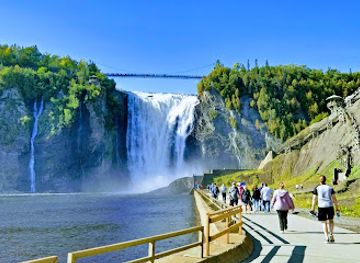
Montmorency Falls
Experience the breathtaking beauty of Montmorency Falls, a stunning natural wonder near Quebec City, offering adventure and picturesque views year-round.
-
 Hotel
HotelFairmont Le Château Frontenac
Discover the enchanting Fairmont Le Château Frontenac, a historical landmark hotel that offers luxury and breathtaking views in the heart of Quebec City.
-
Aquarium
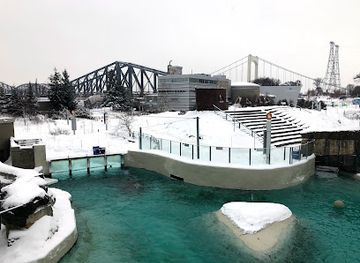
Aquarium of Quebec
Explore the fascinating underwater world at the Aquarium of Quebec, where marine life and conservation come to life in an interactive setting.
-
Plains of Abraham
Discover the historic Plains of Abraham: a beautiful park in Quebec City filled with rich history, stunning views, and vibrant cultural events.
Best landmarks in Quebec
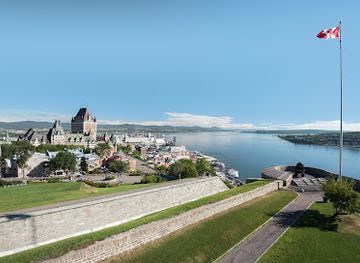
Quebec City's fortified Old Quebec is the province's most recognisable historic landmark, with stone gates, defensive walls, the Château Frontenac silhouette and the Dufferin Terrace overlooking the St Lawrence. Montreal's landmarks include the basilica of Notre-Dame, the old port district, Mount Royal and the city's surviving nineteenth-century streetscapes, while the Lachine Canal represents the engineering and industrial history of the island. The Richelieu Valley and St Lawrence corridor contain historic churches, seigneurial-era settlements and canals that reveal the long pattern of French colonial occupation. Further east, Percé Rock is an internationally recognised natural landmark rising from the Gaspé coast, and the Saguenay Fjord creates one of the province's most distinctive geological landscapes. Charlevoix's steep river-facing terrain, the north shore's wide estuarine horizons and the Laurentian mountain lakes provide important geographical landmarks rather than single monuments. In northern Quebec, vast boreal landscapes and subarctic shorelines are themselves defining features, though their remoteness demands careful planning.
-
Tourist attraction
Montmorency Falls
Discover the breathtaking Montmorency Falls, a stunning natural wonder near Quebec City, Canada, offering breathtaking views and thrilling adventures for all.
-
Hotel
Fairmont Le Château Frontenac
Explore the timeless elegance of Fairmont Le Château Frontenac, a historic hotel and iconic landmark in the heart of Quebec City.
-
Park
Plains of Abraham
Discover the historical significance and natural beauty of the Plains of Abraham, a breathtaking park in Quebec City, perfect for adventure and relaxation.
-
Fortress
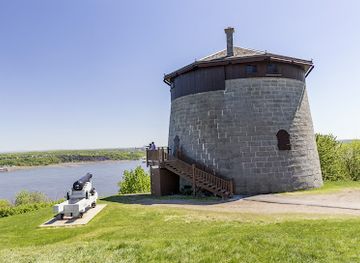
The Citadelle of Québec
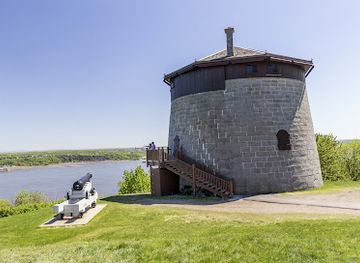
Explore the Citadelle of Québec, a historic fortress and active military base with stunning views and engaging exhibits in the heart of Québec City.
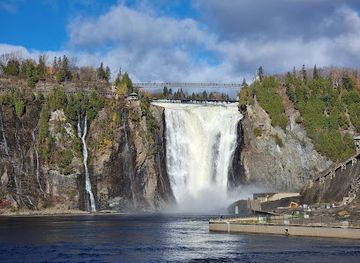
Explore Quebec on the map
Plan your trip on one map. See where the top cities, national parks and sights are, and book hotels and experiences in a few clicks.
Best hotels in Quebec
Best restaurants in Quebec
Quebec's dining culture is rooted in French culinary technique, North American ingredients and the produce of a large agricultural and maritime province. Montreal is the principal centre for contemporary restaurants, bakeries, cafés, public markets and cuisines brought by successive immigrant communities, while Quebec City combines modern dining with traditional restaurants and historic inns. Across the province, look for Québec cheeses, maple products, apples, berries, mushrooms, cider, craft beer and regional wines. Poutine, tourtière, pea soup, cretons and sugar-pie belong to the broader Québécois repertoire, though recipes and presentation vary between households and establishments. The St Lawrence, Gaspé Peninsula and Côte-Nord contribute seafood, including lobster and crab in appropriate seasons, while rural inns and village restaurants often emphasise local meat, game, preserves and baked goods. Farmers' markets and roadside producers are especially useful for tasting seasonal specialities beyond the main cities.
-
Québécois restaurant
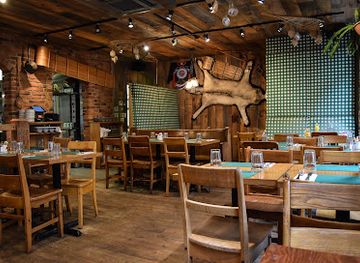
Restaurant La Buche
Savor the rich flavors of traditional Quebec cuisine at Restaurant La Buche in the heart of historic Quebec City.
-
Fine Dining
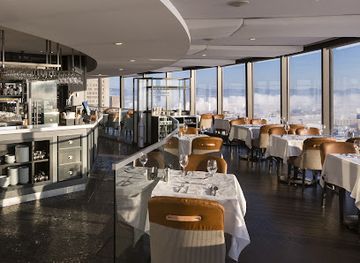
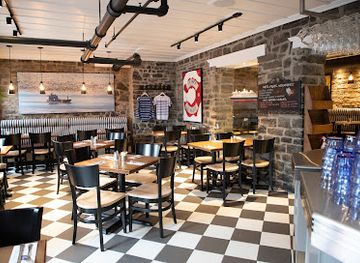
Ciel! Bistro-bar
Experience exquisite cuisine and breathtaking views at Ciel! Bistro-bar in Québec City - where fine dining meets stunning cityscapes.
-
Restaurant
Cochon Dingue Champlain
Discover the heart of French cuisine at Cochon Dingue Champlain in Quebec City—where local flavors meet culinary excellence.
-
Restaurant
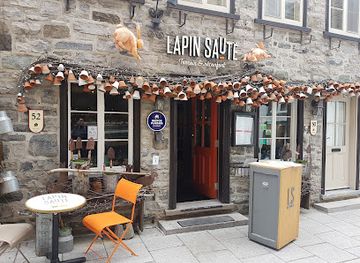
Le Lapin Sauté
Discover authentic French cuisine at Le Lapin Sauté, where every dish tells a story of Quebec's rich culinary heritage.
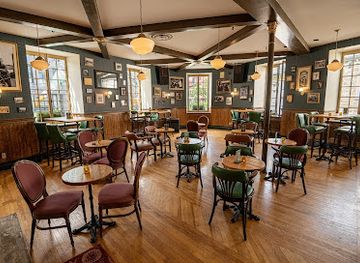
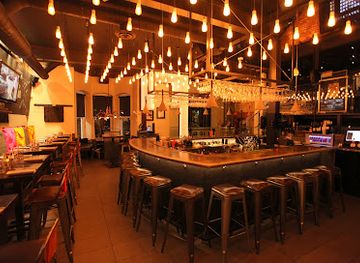
Best bars in Quebec
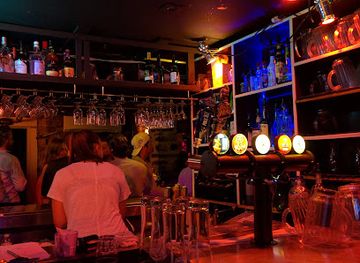
Evening life in Quebec varies sharply between Montreal's dense urban neighbourhoods, Quebec City's historic and student-oriented districts, and the quieter towns and rural regions. Montreal has the province's broadest choice of cocktail bars, breweries, live-music rooms, comedy venues, late-night restaurants and clubs, with nightlife spread across several neighbourhoods rather than confined to one area. Quebec City combines bars and restaurants around the historic centre with venues serving university and local crowds. In the Eastern Townships, Laurentians, Charlevoix and Gaspésie, evenings more often centre on pubs, microbreweries, hotel bars, restaurants, seasonal festivals and occasional live music. Distilleries and cider producers are found in several agricultural areas, but tastings and transport require planning. Winter resorts can be lively at weekends, while remote communities generally have a small-scale social scene rather than a major nightclub culture.
-
Bar
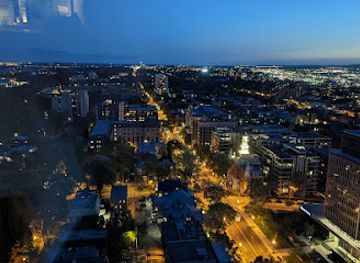
Ciel! Bistro-bar
Discover the exquisite flavors and stunning views at Ciel! Bistro-bar in Québec City, where fine dining meets casual elegance.
-
Pub
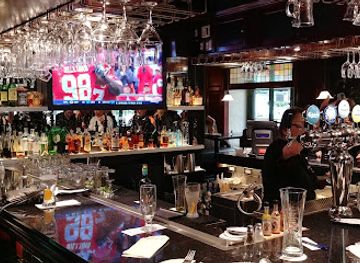
D'Orsay
Discover the vibrant flavors of Québec at D'Orsay, a charming pub and restaurant with a menu brimming with local delicacies and refreshing cocktails.
-
Irish pub
Pub St-Patrick
Discover the vibrant atmosphere and authentic Irish cuisine at Pub St-Patrick, a must-visit pub in the heart of Québec City.
-
Restaurant
L'Atelier
Indulge in exquisite cuisine and handcrafted cocktails at L'Atelier, a culinary gem in the heart of Québec City.
Best nightclubs in Quebec
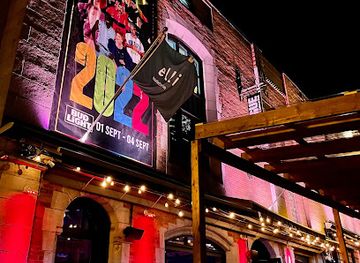
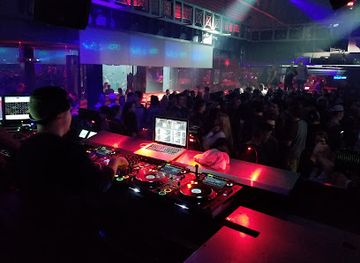
Evening life in Quebec varies sharply between Montreal's dense urban neighbourhoods, Quebec City's historic and student-oriented districts, and the quieter towns and rural regions. Montreal has the province's broadest choice of cocktail bars, breweries, live-music rooms, comedy venues, late-night restaurants and clubs, with nightlife spread across several neighbourhoods rather than confined to one area. Quebec City combines bars and restaurants around the historic centre with venues serving university and local crowds. In the Eastern Townships, Laurentians, Charlevoix and Gaspésie, evenings more often centre on pubs, microbreweries, hotel bars, restaurants, seasonal festivals and occasional live music. Distilleries and cider producers are found in several agricultural areas, but tastings and transport require planning. Winter resorts can be lively at weekends, while remote communities generally have a small-scale social scene rather than a major nightclub culture.
-
Club
Le Drague Cabaret Club
Discover the lively atmosphere and captivating performances at Le Drague Cabaret Club, a must-visit nightlife hotspot in Québec City.
-
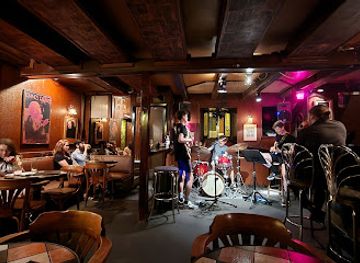
Bar
Bar Ste-Angèle
Discover the enchanting vibes of jazz at Bar Ste-Angèle, a premier nightlife destination in Quebec City, perfect for music lovers and nightlife enthusiasts.
-
Bar
Dagobert
Discover the pulsating nightlife of Dagobert, a hotspot in Quebec City known for its vibrant music, lively dance floor, and unforgettable weekends.
-
Bar
La Piazz
Experience the vibrant nightlife of Quebec City at La Piazz, where live music and great company create unforgettable memories.
Best shops in Quebec
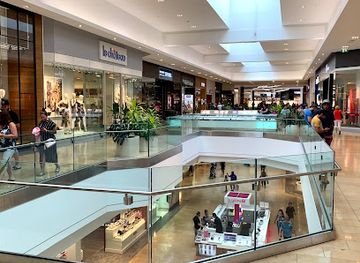
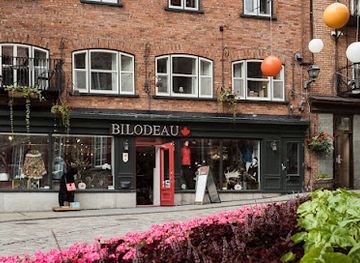
Montreal offers Quebec's widest range of shopping, from independent boutiques and design studios to major department stores, bookshops, galleries and food halls. Historic streets and neighbourhood commercial avenues give the city a more local character than a single enclosed shopping centre, while Quebec City combines established retail with artisan shops and galleries in and around the old centre. Outside the main cities, market towns and village high streets are better known for practical shopping, antiques, pottery, textiles, books, local art and farm products than for luxury retail. Look for maple syrup, preserves, cider, cheese, chocolate, smoked foods and berry products at public markets, producers and specialist shops; packaging rules may affect what can be taken across international borders. The Eastern Townships, Charlevoix, Laurentians and Gaspésie also have craft studios and small galleries, often with seasonal opening patterns. Indigenous-made art and goods should be bought from reputable artists, galleries or community-run outlets with clear provenance.
-
Shopping mall
Galeries de la Capitale
Explore Galeries de la Capitale: Quebec City's ultimate shopping, dining, and entertainment destination for all ages.
-
Shopping mall
Quartier Petit Champlain
Explore Quartier Petit Champlain, a historic shopping district in Québec City filled with unique boutiques, delightful cafes, and stunning architecture.
-
Shopping mall
Place Ste-Foy
Discover the ultimate shopping experience at Place Ste-Foy, Québec City’s premier destination for fashion, dining, and entertainment.
-
Shopping mall
Place Ste-Foy
Explore Place Ste-Foy, a top shopping destination in Québec City, featuring a diverse range of stores and delicious dining options for everyone.

Get your free copy of our complete guide to Quebec, delivered straight to you.
Everything on this page, from attractions and restaurants to essentials and local phrases, in one PDF you can read offline, print or share.
Already have an account? Sign in
Your Quebec guide is ready.
We'll send it to · Not you? Sign out

Getting your guide ready…
We are putting together a fresh copy of the Quebec guide. This can take up to a minute.
This can take a few moments. If your browser asks, choose Allow so the download can start. You'll find the guide in your Downloads folder.
Nothing happened? Download it again
Sorry, the guide is taking longer than usual. Please try again in a minute, or get it by email instead.
Quebec essentials
Currency and Payment
Safety
Emergency Situations
Do's and Don'ts
Local Tips
From Eve
Local phrases worth knowing
You don't need to get them perfect. A few words go a long way, and locals appreciate the effort.
Basics
| English | Local | Say it |
|---|---|---|
| Hello | Salut | [sah-lu] |
| Goodbye | Au revoir | [oh ruh-vwahr] |
| Yes | Oui | [wee] |
| No | Non | [noh] |
| Please/You're welcome | S'il vous plaît/De rien | [seel voo pleh/deh ree-ehn] |
| Thank you | Merci | [mehr-see] |
| Excuse me/Sorry | Excusez-moi/Désolé | [ehk-skew-zay mwah/deh-zoh-lay] |
| How are you? | Comment ça va? | [koh-mahn sah vah] |
| Fine. And you? | Bien. Et toi? | [byehn. eh twa] |
| Do you speak English? | Parles-tu anglais? | [parl tu ahn-glay] |
| I don't understand | Je ne comprends pas | [zhuh nuh kom-prahn pah] |
Eating & Drinking
| English | Local | Say it |
|---|---|---|
| I'd like to see the menu, please | J'aimerais voir le menu, s'il vous plaît | [zhem-ray vwar luh meh-nu, seel voo pleh] |
| I don't eat meat | Je ne mange pas de viande | [zhuh nuh mahnj pah deh vyahnd] |
| Cheers! | Santé! | [sahn-tay] |
| I would like to pay, please | Je voudrais payer, s'il vous plaît | [zhuh voo-dray pay-ay, seel voo pleh] |
Emergencies
| English | Local | Say it |
|---|---|---|
| Help! | Au secours! | [oh suh-koor] |
| Go away! | Va-t'en! | [vah-tahn] |
| Call the Police! | Appelez la police! | [ah-peh-lay lah poh-lees] |
| Call a doctor! | Appelez un docteur! | [ah-peh-lay uhn doh-teur] |
| I'm lost | Je suis perdu | [zhuh swee pair-doo] |
| I'm ill | Je suis malade | [zhuh swee mah-lahd] |
Shopping
| English | Local | Say it |
|---|---|---|
| I'd like to buy... | J'aimerais acheter... | [zhem-ray ah-sheh-tay] |
| I'm just looking | Je regarde juste | [zhuh reh-gard zhuhst] |
| How much is it? | C'est combien? | [seh kohm-byen] |
| That's too expensive | C'est trop cher | [seh troh shair] |
| Can you lower the price? | Pouvez-vous baisser le prix? | [poo-vay voo beh-say luh pree] |
Time & Numbers
| English | Local | Say it |
|---|---|---|
| What time is it? | Quelle heure est-il? | [kel uhr eh-teel] |
| It's one o'clock | Il est une heure | [eel eh tun uhr] |
| Half past (10) | Dix et demi | [dees eh duh-mee] |
| Morning | Matin | [mah-tahn] |
| Afternoon | Après-midi | [ah-preh mee-dee] |
| Evening | Soir | [swahr] |
| Yesterday | Hier | [ee-ehr] |
| Today | Aujourd'hui | [oh-zhoor-dwee] |
| Tomorrow | Demain | [duh-mahn] |
| 1 | Un | [uhn] |
| 2 | Deux | [duh] |
| 3 | Trois | [trwah] |
| 4 | Quatre | [katr] |
| 5 | Cinq | [sank] |
| 6 | Six | [sees] |
| 7 | Sept | [set] |
| 8 | Huit | [weet] |
| 9 | Neuf | [nuhf] |
| 10 | Dix | [dees] |
Transport & Directions
| English | Local | Say it |
|---|---|---|
| Where's a/the...? | Où est un/une...? | [oo eh uhn/oon] |
| What's the address? | Quelle est l'adresse? | [kel eh la-dress] |
| Can you show me (on the map)? | Pouvez-vous me montrer (sur la carte)? | [poo-vay voo muh mohn-tray (sur lah kart)] |
| When's the next (bus)? | Quand est le prochain (autobus)? | [kahn eh luh pro-shen (oh-toh-boos)] |
| A ticket (to ....) | Un billet (pour....) | [uhn bee-yay (poor....)] |
History of Quebec
Indigenous Peoples and Ancient Cultural Landscapes
Long before French settlement, the territory now called Quebec was home to diverse Indigenous nations, including the Cree, Innu, Inuit, Anishinaabe, Atikamekw, Huron-Wendat, Abenaki, Mi'kmaq and Kanien'kehá:ka, among others. Their histories include seasonal movement, agriculture, fishing, trade networks and sophisticated relationships with rivers, forests and northern environments. Archaeological evidence and living communities demonstrate that these are not only subjects of the distant past. Indigenous languages, governance, art, land-based practices and contemporary cultural institutions remain important throughout the province.
New France and the St Lawrence Settlements
French exploration and settlement expanded along the St Lawrence during the seventeenth century. Quebec City, founded in 1608 by Samuel de Champlain, became the administrative and military centre of New France, while Montreal developed as a trading and religious settlement. Seigneuries, Catholic institutions and river transport shaped the inhabited corridor, and the fur trade connected French settlements with Indigenous trading partners across the interior. Homes, churches, fortifications and the distinctive pattern of long narrow riverfront farms still reflect this colonial period in parts of the province.
The British Conquest and the Quebec Act
Britain conquered New France during the Seven Years' War, including the decisive battle on the Plains of Abraham at Quebec in 1759 and the fall of Montreal the following year. The 1763 Treaty of Paris transferred the colony to Britain, but the Quebec Act of 1774 allowed French civil law and protected the Roman Catholic faith, helping preserve a distinct French-speaking society. During the American Revolution, Quebec was also invaded by American forces in 1775, though the attack on Quebec City failed.
Confederation, Industry and Railway Expansion
Quebec joined the Canadian Confederation in 1867, retaining provincial responsibility for education, civil law and many cultural institutions. The nineteenth and early twentieth centuries brought canals, railways, timber exploitation, pulp and paper, mining, shipbuilding and manufacturing. Montreal became a major commercial centre, while cities such as Trois-Rivières and Shawinigan were shaped by paper and hydroelectric development. Industrial growth also transformed waterways and working communities, leaving a substantial architectural and social legacy.
The Quiet Revolution
From the 1960s, Quebec underwent the Quiet Revolution, a broad transformation in which the provincial state assumed a larger role in education, healthcare, economic development and cultural policy. Secularisation reduced the institutional power of the Catholic Church, and modern national consciousness grew among French-speaking Québécois. The period produced major reforms, new cultural institutions and debates over Quebec's political future. The Parti Québécois formed a provincial government in 1976, and referendums on sovereignty were held in 1980 and 1995.
Language, Identity and Contemporary Quebec
Since the late twentieth century, language legislation and public policy have reinforced French as Quebec's official language, particularly in education, government and commercial life. At the same time, immigration has made Montreal and other urban areas increasingly diverse, adding new languages, cuisines and cultural forms to Quebec society. Relations between the provincial government, Indigenous nations and northern communities remain significant, especially where resource development, autonomy, environmental protection and land rights intersect.
Quebec in Photos
Browse through our photo collection highlighting the charm and character of the destination.
Neighbouring regions of Quebec
The closest regions to Quebec, if you have time for more than one.
-

-

-

-

-


Swipe for more regions
Explore more
Explore more of Canada
Discover Canada's breathtaking landscapes, diverse cities, and rich cultural heritage. A must-visit destination for outdoor adventures and vibrant urban experiences.
Explore Canada