

Entertainment District (Toronto) Travel Guide - Free
Explore Entertainment District in Toronto with Evendo's free guide. Find the best shops, historic streets, restaurants, and gems on web or mobile.


Entertainment District Toronto blends Broadway-style theatres, TIFF cinema, major stadiums, the CN Tower, restaurants and late-night city energy in downtown Toronto.
Theatre, Film and the Downtown Stage
Toronto's Entertainment District occupies a compact downtown area where King Street West, Adelaide Street West, Front Street and major north–south avenues converge. Its identity is shaped by performance: the Princess of Wales Theatre, Royal Alexandra Theatre and CAA Ed Mirvish Theatre form one of Canada's most important theatre clusters, while TIFF Bell Lightbox anchors the neighbourhood's film culture. The district is not an historic quarter in the conventional sense; it is a built-up urban landscape whose theatres, studios, sports venues and restaurants serve both residents and visitors.Read more about Entertainment District
Landmarks in a Vertical City
From Matinee to Midnight
Best attractions in Entertainment District
The Entertainment District's attractions are concentrated within a walkable, event-focused area. TIFF Bell Lightbox presents films and exhibitions throughout the year, while the Princess of Wales Theatre and Royal Alexandra Theatre host major stage productions on King Street West. Near Front Street, the Metro Toronto Convention Centre contributes a substantial exhibition and events complex, and Rogers Centre offers tours and scheduled sporting and entertainment events beneath its retractable roof. Ripley's Aquarium of Canada provides an indoor aquatic attraction beside the CN Tower, whose observation levels rise just beyond the district's railway edge. Roundhouse Park adds outdoor space, restored railway equipment and a quieter route towards the waterfront. The area's appeal comes from moving between these venues rather than from a single historic street: a visitor may combine a film screening with a theatre façade walk, an aquarium visit, public art and the changing skyline around Bremner Boulevard.
-
Aquarium
Ripley's Aquarium of Canada
Explore the vibrant marine life and captivating exhibits at Ripley's Aquarium of Canada, a must-visit attraction in Toronto for all ages.
9 min walk · 0.8 km from neighbourhood centre
-
Tourist attraction
Museum of Illusions Toronto
Discover the enchanting world of optical illusions at the Museum of Illusions Toronto, where perception meets imagination in an unforgettable experience.
5 min drive · 1.6 km from neighbourhood centre


Best landmarks in Entertainment District
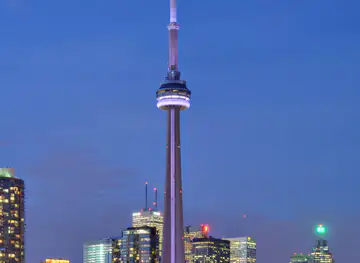
The Entertainment District is defined by a group of large, recognisable structures rather than one historic civic centre. The Royal Alexandra Theatre, opened in 1907, and the Princess of Wales Theatre represent the area's long association with professional theatre and give King Street West its strongest architectural identity. The Metro Toronto Convention Centre occupies a major portion of the southern district, while Rogers Centre is distinguished by its retractable roof and its role in Toronto's modern sports history. The CN Tower rises beside the railway corridor as the city's most recognisable vertical landmark, and Ripley's Aquarium occupies the base-level visitor zone nearby. Roundhouse Park preserves railway buildings and rolling stock, linking the contemporary events precinct to the industrial and transport landscape that preceded it. Together these places illustrate the district's transition from railway-side commercial land to a dense cultural and entertainment centre.
-
Tourist attraction
CN Tower
Experience breathtaking views and culinary delights at Toronto's iconic CN Tower, a must-visit destination for every traveler.
9 min walk · 0.7 km from neighbourhood centre
-
 Aquarium
Ripley's Aquarium of Canada
Explore the captivating underwater world at Ripley's Aquarium of Canada, home to over 20,000 aquatic species and stunning marine exhibits.
9 min walk · 0.8 km from neighbourhood centre
-
Tourist attraction
Toronto Sign
Discover the Toronto Sign: A vibrant emblem of unity and culture in the heart of Nathan Phillips Square, perfect for memorable photos and experiences.
7 min walk · 0.6 km from neighbourhood centre
-
Park
Roundhouse Park
Discover Roundhouse Park in Toronto, a historical gem blending green spaces, railway heritage, and family-friendly activities in the heart of the city.
11 min walk · 0.9 km from neighbourhood centre


Explore Entertainment District on the map
A handpicked selection of must-see spots in Entertainment District, mapped for you.
Best hotels in Entertainment District
Best restaurants in Entertainment District
Dining in the Entertainment District is shaped by theatre-goers, sports crowds, convention visitors, office workers and tourists, so the range runs from quick meals and cafés to polished restaurants and late-night venues. King Street West and the streets around John Street, Wellington Street West and Front Street contain the greatest concentration, with menus spanning Canadian, Italian, Asian, contemporary North American and international styles. Restaurants close to the theatres are accustomed to pre-show dining, while the blocks around Rogers Centre, Scotiabank Arena and the convention centre become especially busy when events let out. TIFF Bell Lightbox adds cafés and nearby casual options suited to screenings, and the district's hotels contribute further dining rooms and bars. The area is convenient rather than a traditional food quarter: reservations and generous timing are sensible before a performance, and choices can be more limited or crowded during major games, concerts and conventions.
-
Thai
PAI
Experience authentic Thai cuisine at PAI in Toronto – where every dish tells a story!
1 min walk · 0.1 km from neighbourhood centre
-
Californian
KŌST
Experience exceptional Californian cuisine with breathtaking views at KŌST, Toronto's premier rooftop restaurant.
6 min walk · 0.5 km from neighbourhood centre
-
Middle Eastern
Byblos Downtown
Experience authentic Middle Eastern flavors at Byblos Downtown in Toronto - where fine dining meets cultural richness.
2 min walk · 0.2 km from neighbourhood centre
-
Restaurant
Elephant & Castle
Discover a lively dining experience at Elephant & Castle in Toronto – where British charm meets Canadian cuisine.
3 min walk · 0.2 km from neighbourhood centre


Best bars in Entertainment District
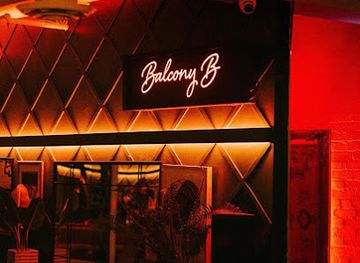
Nightlife in the Entertainment District is closely connected to its theatres, cinemas, sports venues and the wider King West corridor. Before and after performances, visitors find cocktail bars, pubs, hotel lounges and casual drinking spots around King Street West, John Street and Adelaide Street West, while the blocks nearer Front Street fill with event crowds after games and concerts. The area also has late-night restaurants and larger venues aimed at dancing and socialising, although the character changes from one block to the next and overlaps with neighbouring King West. On quieter evenings, the district can feel more like a dining and theatre zone than a club quarter. Visitors should expect queues, door policies, age identification requirements and changing entertainment schedules, and should use licensed transport or public transport connections sensibly when leaving after the last performance or event.
-
Grill
Loose Moose / Antler Room
Experience the best of American cuisine and craft beers at The Loose Moose, a lively gastropub in the heart of Toronto.
7 min walk · 0.6 km from neighbourhood centre
-
Pub
Town Crier
Discover the vibrant atmosphere and delicious European cuisine at Town Crier, a must-visit pub in the heart of Toronto.
2 min walk · 0.1 km from neighbourhood centre
-
Gastropub
Bar Hop Brewco
Experience the best of Toronto's craft beer culture at Bar Hop Brewco, a lively gastropub with exceptional food and a welcoming atmosphere.
4 min walk · 0.4 km from neighbourhood centre
-
Gastropub
Bar Hop
Discover the vibrant flavors of Bar Hop, Toronto's top gastropub known for its exquisite food and extensive drink selection.
6 min walk · 0.5 km from neighbourhood centre


Best nightclubs in Entertainment District
Nightlife in the Entertainment District is closely connected to its theatres, cinemas, sports venues and the wider King West corridor. Before and after performances, visitors find cocktail bars, pubs, hotel lounges and casual drinking spots around King Street West, John Street and Adelaide Street West, while the blocks nearer Front Street fill with event crowds after games and concerts. The area also has late-night restaurants and larger venues aimed at dancing and socialising, although the character changes from one block to the next and overlaps with neighbouring King West. On quieter evenings, the district can feel more like a dining and theatre zone than a club quarter. Visitors should expect queues, door policies, age identification requirements and changing entertainment schedules, and should use licensed transport or public transport connections sensibly when leaving after the last performance or event.
-
Bar
The Fifth Social Club
Discover The Fifth Social Club in Toronto - an upscale bar and lounge offering vibrant nightlife, expertly crafted cocktails, and unforgettable themed events.
1 min walk · 0.1 km from neighbourhood centre
-
Night club
Isabelle's
Discover the ultimate nightlife experience at Isabelle's in Toronto, where cocktails, dancing, and good vibes come together.
11 min walk · 0.9 km from neighbourhood centre
-
Lounge
Parlour
Experience the vibrant nightlife at Parlour, Toronto's chic lounge offering exquisite cocktails and a lively atmosphere in the heart of the city.
1 min walk · 0.1 km from neighbourhood centre
-
Night club
Momentos Toronto
Dive into the energetic nightlife of Momentos Toronto, a premier night club known for its vibrant atmosphere, great music, and unforgettable experiences in the heart of the city.
2 min walk · 0.1 km from neighbourhood centre



Best shops in Entertainment District
Shopping in the Entertainment District is primarily practical, visitor-oriented and linked to events rather than concentrated in a traditional market street. King Street West and the blocks around John Street offer fashion, beauty, convenience and lifestyle retailers alongside restaurants and theatre-related businesses, while the large hotels and convention facilities contain additional small-scale retail services. Visitors may find souvenirs, film-related merchandise and sports apparel around major attractions and venues, though stock and opening arrangements vary. The district is also well placed for a short walk to the PATH underground network and the larger retail concentration around Toronto's downtown core, but those areas should be understood as nearby rather than part of the Entertainment District itself. Roundhouse Park and the railway lands are better suited to an architectural and public-space walk than to browsing independent craft shops, making the neighbourhood's commercial character distinctly event-led and urban.
-
Shopping mall
CF Toronto Eaton Centre
Discover the CF Toronto Eaton Centre, a premier shopping destination featuring diverse stores and dining options in the heart of Toronto's vibrant downtown.
11 min walk · 0.9 km from neighbourhood centre
-
Gift shop
Blue Banana Market
Explore Blue Banana Market in Toronto for unique gifts and souvenirs that capture the spirit of Canada's vibrant culture and artistry.
17 min walk · 1.3 km from neighbourhood centre
-
Souvenir store
Spacing Store
Explore the heart of Toronto through unique souvenirs at the Spacing Store, a local gem celebrating creativity and community spirit.
5 min walk · 0.4 km from neighbourhood centre
-
Gift shop
Labour of Love
Discover unique gifts and local treasures at Labour of Love, a charming gift shop in the heart of Toronto, perfect for any occasion.
7 min drive · 2.3 km from neighbourhood centre


Entertainment District essentials
Getting There
Getting Around
Safety
Emergency Situations
Do's and Don'ts
Local Tips

From Eve
Local phrases worth knowing
You don't need to get them perfect. A few words go a long way, and locals appreciate the effort.
Basics
| English | Local | Say it |
|---|---|---|
| Hello | Hey | [Hey] |
| Goodbye | See ya | [See ya] |
| Yes | Yeah | [Yeah] |
| No | Nah | [Nah] |
| Please/You're welcome | Please/No worries | [Please/No worries] |
| Thank you | Thanks | [Thanks] |
| Excuse me/Sorry | Sorry | [Sorry] |
| How are you? | How's it going? | [How's it going?] |
| Fine. And you? | Good. You? | [Good. You?] |
| Do you speak English? | You speak English? | [You speak English?] |
| I don't understand | I don't get it | [I don't get it] |
Eating & Drinking
| English | Local | Say it |
|---|---|---|
| I'd like to see the menu, please | Can I see the menu? | [Can I see the menu?] |
| I don't eat meat | I'm vegetarian | [I'm vegetarian] |
| Cheers! | Cheers! | [Cheers!] |
| I would like to pay, please | Can I pay, please | [Can I pay, please] |
Emergencies
| English | Local | Say it |
|---|---|---|
| Help! | Help! | [Help!] |
| Go away! | Get lost! | [Get lost!] |
| Call the Police! | Call the cops! | [Call the cops!] |
| Call a doctor! | Get a doctor! | [Get a doctor!] |
| I'm lost | I'm lost | [I'm lost] |
| I'm ill | I'm sick | [I'm sick] |
Shopping
| English | Local | Say it |
|---|---|---|
| I'd like to buy... | I want to buy... | [I want to buy...] |
| I'm just looking | Just looking | [Just looking] |
| How much is it? | How much? | [How much?] |
| That's too expensive | Too pricey | [Too pricey] |
| Can you lower the price? | Can you do a deal? | [Can you do a deal?] |
Time & Numbers
| English | Local | Say it |
|---|---|---|
| What time is it? | What's the time? | [What's the time?] |
| It's one o'clock | It's one | [It's one] |
| Half past (10) | Half ten | [Half ten] |
| Morning | Morning | [Morning] |
| Afternoon | Afternoon | [Afternoon] |
| Evening | Evening | [Evening] |
| Yesterday | Yesterday | [Yesterday] |
| Today | Today | [Today] |
| Tomorrow | Tomorrow | [Tomorrow] |
| 1 | One | [One] |
| 2 | Two | [Two] |
| 3 | Three | [Three] |
| 4 | Four | [Four] |
| 5 | Five | [Five] |
| 6 | Six | [Six] |
| 7 | Seven | [Seven] |
| 8 | Eight | [Eight] |
| 9 | Nine | [Nine] |
| 10 | Ten | [Ten] |
Transport & Directions
| English | Local | Say it |
|---|---|---|
| Where's a/the...? | Where's...? | [Where's...?] |
| What's the address? | What's the address? | [What's the address?] |
| Can you show me (on the map)? | Can you show me (on the map)? | [Can you show me (on the map)?] |
| When's the next (bus)? | When's the next (bus)? | [When's the next (bus)?] |
| A ticket (to ....) | A ticket (to ....) | [A ticket (to ....)] |
History of Entertainment District
Railway Lands and Industrial Origins
The area now known as Toronto's Entertainment District developed beside the railway corridor and industrial lands south of King Street West. Rail lines, warehouses, factories and freight infrastructure helped shape the downtown edge during the nineteenth and twentieth centuries, while Front Street served as an important route towards the city's railway stations and waterfront. Much of the land was functional rather than residential, and the large blocks created by transport infrastructure later provided room for theatres, exhibition halls and major sports buildings. The neighbourhood's modern identity consequently grew from redevelopment of commercial and industrial land rather than from a single historic village or civic square.
The Rise of Toronto Theatre
Theatre gradually became the district's defining cultural industry during the twentieth century, particularly along King Street West. The Royal Alexandra Theatre opened in 1907, and the Princess of Wales Theatre, developed by Ed and David Mirvish, opened in 1993. The CAA Ed Mirvish Theatre, formerly the Canon and Pantages theatres, lies just east of the commonly recognised district and forms part of the wider King Street theatre corridor. Together these stages helped establish Toronto as a major destination for large-scale musicals and touring productions, bringing restaurants, hotels and evening foot traffic to streets that had previously been dominated by offices, warehouses and transport uses.
Convention and Stadium Redevelopment
Late twentieth-century redevelopment transformed the southern part of the area into a large-scale events precinct. The Metro Toronto Convention Centre opened in 1984 and expanded with a north building in 1997, creating extensive meeting and exhibition space beside the railway corridor. The SkyDome, now Rogers Centre, opened in 1989 as a retractable-roof stadium, while the arena now called Scotiabank Arena opened nearby in 1999. These projects changed the district's scale and daily rhythm, tying local businesses to conventions, baseball, basketball, hockey, concerts and other scheduled events.
Film Culture and Contemporary Downtown Life
The neighbourhood's cultural role broadened with the development of TIFF Bell Lightbox, which opened in 2010 as the permanent home of the Toronto International Film Festival. Its cinemas, galleries and public programming strengthened the connection between the Entertainment District and Toronto's international film culture beyond the annual festival period. At the same time, the former industrial and railway lands around the district were reshaped by office towers, hotels, residential development and public spaces such as Roundhouse Park. The result is a dense, event-led neighbourhood whose historic theatre tradition now operates alongside film, sport, conventions, tourism and high-rise downtown life.
Entertainment District in Photos
Browse through our photo collection highlighting the charm and character of the destination.
Neighbourhoods near Entertainment District
The closest neighbourhoods to Entertainment District, if you have time for more than one stop.
-
-

-

-

-


Swipe for more neighbourhoods
Explore more

Explore more of Toronto
Toronto blends waterfront views, multicultural cuisine, world-class museums and distinctive neighbourhoods with Canadian history and lively urban culture.
Explore Toronto