

La Candelaria (Medellín) Travel Guide - Free
Explore La Candelaria in Medellín with Evendo's free guide. Find the best shops, historic streets, restaurants, and gems on web or mobile.


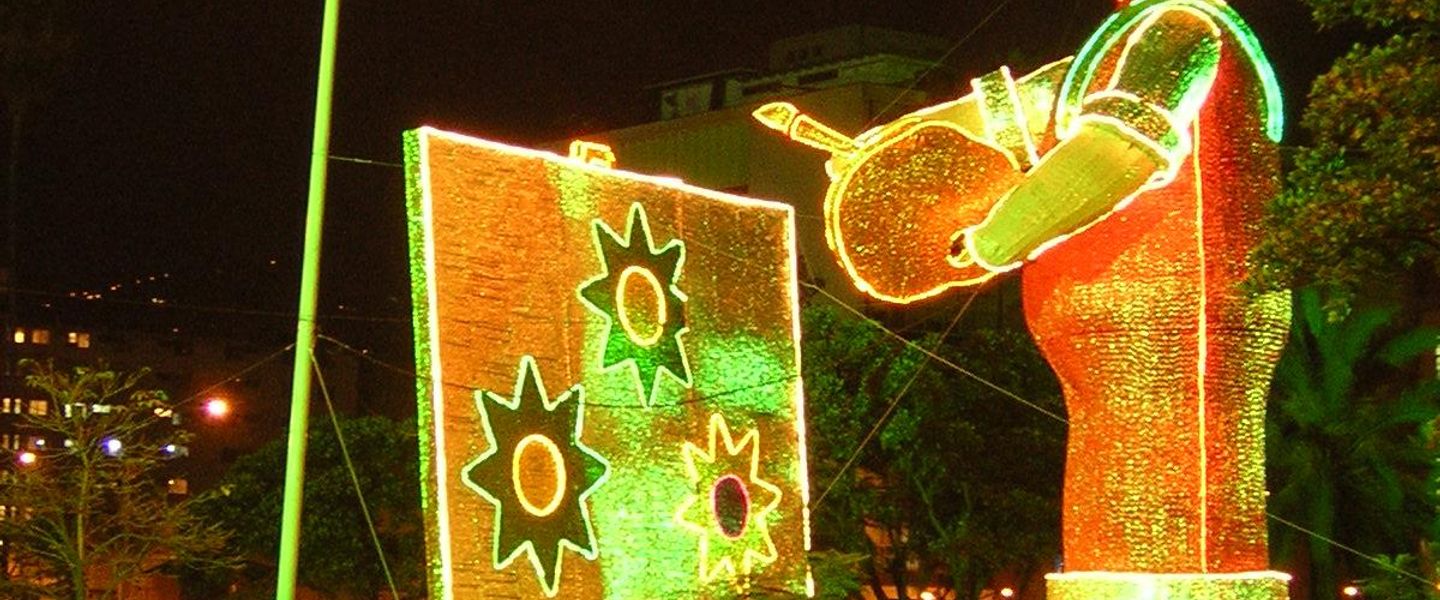


La Candelaria, Medellín’s historic centre, brings together Botero sculptures, museums, churches, markets, Metro links and lively streets in Colombia.
City Centre and Historic Character
La Candelaria is Medellín’s traditional centre, a dense urban district where major civic buildings, churches, museums, transport interchanges and commercial streets occupy the valley floor. Its best-known public spaces include Plaza Botero and Parque Berrío, while the pedestrianised stretch of Carrera 52, commonly known as Junín, provides a busy route through shops, cafés and long-established city-centre businesses. The area is more functional and intense than Medellín’s residential hillside districts, with office workers, students, traders, worshippers and visitors sharing its streets throughout the day.Read more about La Candelaria
Art, Architecture and Public Life
The neighbourhood’s cultural identity is anchored by the Museo de Antioquia, whose collection is closely associated with Medellín-born artist Fernando Botero, and by the surrounding open-air display of his monumental bronze figures. Nearby, the Palacio de la Cultura Rafael Uribe Uribe adds a distinctive Gothic Revival silhouette to the centre, while the Metropolitan Cathedral of Medellín and the Iglesia de la Veracruz represent different layers of the city’s religious and architectural history. Historic façades survive alongside modern commercial blocks, street vendors, banks and transport infrastructure, producing a visually uneven but revealing urban landscape.Everyday Medellín
La Candelaria is also a place for observing ordinary city life: morning cafés, fruit sellers, bookshops, informal commerce, bus corridors and the constant movement around Metro stations. After dark, some streets remain active with restaurants, theatres and bars, while others become quieter and require greater attention to personal belongings and surroundings. Visitors who explore on foot can connect museums and plazas with the commercial energy of Junín, but should allow time for pauses rather than treating the neighbourhood solely as a collection of monuments.Explore La Candelaria on the map
A handpicked selection of must-see spots in La Candelaria, mapped for you.
Best hotels in La Candelaria
La Candelaria essentials
Getting There
Getting Around
Safety
Emergency Situations
Do's and Don'ts
Local Tips

From Eve
Local phrases worth knowing
You don't need to get them perfect. A few words go a long way, and locals appreciate the effort.
Basics
| English | Local | Say it |
|---|---|---|
| Hello | Hola | [oh-lah] |
| Goodbye | Adiós | [ah-dee-ohs] |
| Yes | Sí | [see] |
| No | No | [noh] |
| Please/You're welcome | Por favor/De nada | [por fah-vor/de nah-dah] |
| Thank you | Gracias | [grah-see-ahs] |
| Excuse me/Sorry | Perdón/Lo siento | [pair-dohn/loh see-ehn-toh] |
| How are you? | ¿Cómo estás? | [koh-moh ehs-tahs] |
| Fine. And you? | Bien. ¿Y tú? | [byen. ee too] |
| Do you speak English? | ¿Hablas inglés? | [ah-blahs een-glehs] |
| I don't understand | No entiendo | [noh ehn-tee-ehn-doh] |
Eating & Drinking
| English | Local | Say it |
|---|---|---|
| I'd like to see the menu, please | Me gustaría ver el menú, por favor | [may goos-tah-ree-ah vehr ehl meh-noo, por fah-vor] |
| I don't eat meat | Yo no como carne | [yoh noh koh-moh kahr-neh] |
| Cheers! | ¡Salud! | [sah-lood] |
| I would like to pay, please | Me gustaría pagar, por favor | [may goos-tah-ree-ah pah-gahr, por fah-vor] |
Emergencies
| English | Local | Say it |
|---|---|---|
| Help! | ¡Ayuda! | [ah-yoo-dah] |
| Go away! | ¡Vete! | [veh-teh] |
| Call the Police! | ¡Llama a la Policía! | [yah-mah ah lah poh-lee-see-ah] |
| Call a doctor! | ¡Llama a un médico! | [yah-mah ah oon meh-dee-koh] |
| I'm lost | Estoy perdido | [ehs-toy pair-dee-doh] |
| I'm ill | Estoy enfermo | [ehs-toy ehn-fehr-moh] |
Shopping
| English | Local | Say it |
|---|---|---|
| I'd like to buy... | Me gustaría comprar... | [may goos-tah-ree-ah kohm-prahr] |
| I'm just looking | Solo estoy mirando | [soh-loh ehs-toy mee-rahn-doh] |
| How much is it? | ¿Cuánto cuesta? | [kwan-toh kwehs-tah] |
| That's too expensive | Esto es demasiado caro | [ehs-toh ehs deh-mah-syah-doh kah-roh] |
| Can you lower the price? | ¿Puedes bajar el precio? | [pweh-dehs bah-hahr ehl pree-syoh] |
Time & Numbers
| English | Local | Say it |
|---|---|---|
| What time is it? | ¿Qué hora es? | [keh oh-rah ehs] |
| It's one o'clock | Es la una | [ehs lah oo-nah] |
| Half past (10) | Media hora (10) | [meh-dee-ah oh-rah (dheez)] |
| Morning | Mañana | [mah-nyah-nah] |
| Afternoon | Tarde | [tahr-deh] |
| Evening | Noche | [noh-cheh] |
| Yesterday | Ayer | [ah-yehr] |
| Today | Hoy | [oy] |
| Tomorrow | Mañana | [mah-nyah-nah] |
| 1 | Uno | [oo-noh] |
| 2 | Dos | [dohs] |
| 3 | Tres | [trehs] |
| 4 | Cuatro | [kwah-troh] |
| 5 | Cinco | [seen-koh] |
| 6 | Seis | [says] |
| 7 | Siete | [syeh-teh] |
| 8 | Ocho | [oh-choh] |
| 9 | Nueve | [nweh-veh] |
| 10 | Diez | [dyehs] |
Transport & Directions
| English | Local | Say it |
|---|---|---|
| Where's a/the...? | ¿Dónde está...? | [dohn-deh ehs-tah] |
| What's the address? | ¿Cuál es la dirección? | [kwal ehs lah dee-rehk-syohn] |
| Can you show me (on the map)? | ¿Puedes mostrarme (en el mapa)? | [pweh-dehs mohs-trar-meh (ehn ehl mah-pah)] |
| When's the next (bus)? | ¿Cuándo es el próximo (autobús)? | [kwan-doh ehs ehl proh-ksee-moh (ow-toh-boos)] |
| A ticket (to ...) | Un boleto (a ...) | [oon boh-leh-toh (ah ...)] |
History of La Candelaria
The Settlement Beside the Medellín River
La Candelaria developed around the historic centre of Medellín, whose origins are associated with the settlement of Villa de Nuestra Señora de la Candelaria de Medellín, founded in 1675 in the Aburrá Valley. The early town grew around a central square, later known as Parque Berrío, with religious institutions, modest homes and commercial activity forming the main urban structure. The area’s name derives from the city’s original dedication rather than from a separate modern settlement. Its position on the valley floor, close to the river and routes leading into the surrounding mountains, helped establish it as the civic and commercial heart of the developing city.
Plazas, Churches and Commercial Growth
During the nineteenth and early twentieth centuries, the central district gained the institutions and public spaces that still define its identity. Parque Berrío became a principal meeting place, while churches including the Iglesia de la Veracruz and the Metropolitan Cathedral marked the area’s religious importance. Shops, banks, markets, offices and hotels followed the growth of Medellín’s commercial economy, and the traditional Junín corridor emerged as one of the city centre’s important streets for retail and social life. The expansion of tramways and later motor traffic connected the centre more closely with surrounding parts of the valley, although it also altered the scale and texture of older streets.
Modernisation and the Changing Centre
Twentieth-century redevelopment brought taller commercial buildings, bus routes and major civic works to La Candelaria, often replacing or altering older structures. The district remained Medellín’s principal administrative and commercial centre even as new business areas developed elsewhere in the city. Cultural institutions helped preserve a civic role for the area, notably the Museo de Antioquia and the Palacio de la Cultura Rafael Uribe Uribe. The arrival of the Medellín Metro in 1995 strengthened the centre’s regional accessibility through stations including Parque Berrío, San Antonio and Alpujarra, while also reinforcing the importance of the central transport corridor.
Public Art and Contemporary Renewal
From the late twentieth century onwards, investment in museums, public spaces and pedestrian areas reshaped parts of La Candelaria’s visitor identity. The creation of Plaza Botero in 2002, with a substantial group of sculptures donated by Fernando Botero, placed art at the centre of the district’s public realm and created a strong connection between the artist and his birthplace. Alongside these cultural projects, the neighbourhood has continued to experience the pressures common to historic city centres: intense commerce, informal street activity, traffic, changing land values and uneven redevelopment. Its contemporary character therefore combines heritage conservation and cultural tourism with the everyday functions of Medellín’s downtown.
La Candelaria in Photos
Browse through our photo collection highlighting the charm and character of the destination.
Neighbourhoods near La Candelaria
The closest neighbourhoods to La Candelaria, if you have time for more than one stop.
-
-

-


Swipe for more neighbourhoods
Explore more

Explore more of Medellín
Medellín blends mountain scenery, Metrocable views, Botero art, innovative public spaces and Antioquian culture in Colombia’s Andean heart.
Explore Medellín