

Free Middlesex County Travel Guide & Mobile App
Explore Middlesex County with free travel guides. Discover regional history, expert tips, proposed trips, and audio guides on web or mobile app.





Middlesex County, Connecticut, combines Connecticut River scenery, Long Island Sound beaches, historic villages, brownstone heritage and cultural towns.
Read more about Middlesex County
When is the best time to visit Middlesex County?
Best: June, August–September · 23–27°C| Month | High (°C) | Rainfall (mm) |
|---|---|---|
| January | 4 | 87 |
| February | 5 | 82 |
| March | 8 | 107 |
| April | 13 | 107 |
| May | 20 | 103 |
| June (best) | 25 | 103 |
| July | 28 | 106 |
| August (best) | 27 | 111 |
| September (best) | 23 | 102 |
| October | 16 | 100 |
| November | 11 | 107 |
| December | 5 | 106 |
Getting to and around Middlesex County
How to get there
Transportation
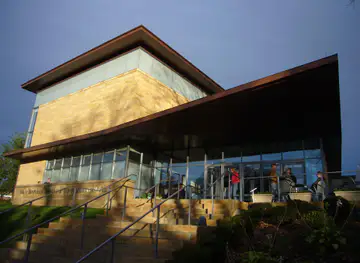
Top city travel guides in Middlesex County
The cities of Middlesex County, and the easiest places to base yourself.
-

-
-


Swipe for more cities
Destinations in Middlesex County
Resorts, valleys and scenic spots worth a trip of their own.
-

-

-

-

-


Swipe for more destinations
Best attractions in Middlesex County
Middlesex County's attractions are distributed across river towns, inland hills and the Long Island Sound shoreline. Middletown offers museums, galleries, historic architecture and the cultural programme associated with Wesleyan University, while nearby Portland interprets the county's brownstone-quarrying past. Along the Connecticut River, Essex, Chester and Deep River combine preserved streets with maritime museums, river views, boat excursions and independent cultural venues. East Haddam is anchored by the Goodspeed Opera House and Gillette Castle State Park, whose wooded grounds and eccentric stone architecture provide a distinctive day out. The shoreline communities of Old Saybrook, Westbrook and Clinton add beaches, marinas, tidal wetlands and seasonal activities, with the Connecticut River Museum in Essex offering a focused introduction to the lower river's natural and human history. Hiking, cycling, kayaking, birdwatching and scenic driving are important parts of the visitor experience, particularly around state parks and conservation areas. Rather than a single large attraction zone, the county offers a sequence of manageable stops linked by the river, historic roads and the coast.
-
State park
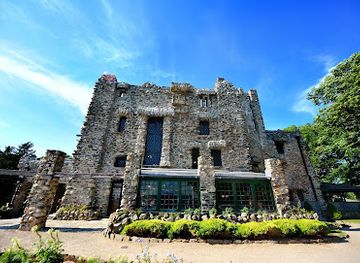
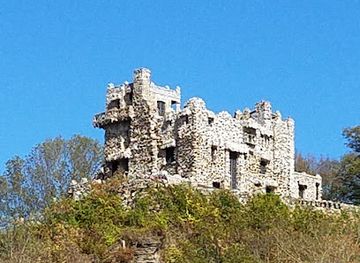
Gillette Castle State Park
Explore the eccentric castle and scenic grounds of Sherlock Holmes' portrayer, William Gillette, overlooking the Connecticut River.
-
Tourist attraction
Essex Steam Train & Riverboat
Experience the charm of Connecticut with scenic train rides and riverboat cruises at the Essex Steam Train & Riverboat, a perfect family-friendly attraction.
-
State park
Devil's Hopyard State Park
Explore the serene beauty of Devil's Hopyard State Park, a perfect destination for nature lovers and outdoor enthusiasts in Connecticut.
-
Tourist attraction
Connecticut River Museum
Discover the maritime history and natural beauty of the Connecticut River at the Connecticut River Museum, a must-visit destination for every traveler.


Best landmarks in Middlesex County
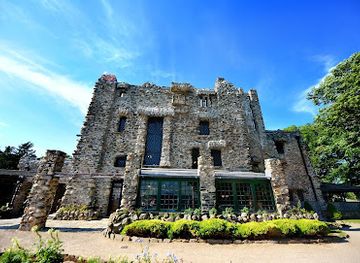
The Connecticut River is Middlesex County's most important natural landmark, shaping settlements, views and transport from Middletown to Old Saybrook. At its mouth, Saybrook Point and the surrounding shoreline mark the meeting of river and Long Island Sound, while the lower valley's marshes and tidal channels reveal the area's continuing dependence on water. Gillette Castle in East Haddam is one of the county's most recognisable buildings: actor William Gillette's early twentieth-century stone residence is notable for its theatrical appearance, handcrafted details and commanding woodland setting. The Goodspeed Opera House, on the East Haddam riverbank, is an important Victorian theatre landmark. In Essex, the historic village centre and waterfront express the county's maritime past, while Portland's abandoned and working quarry landscapes preserve the visual legacy of brownstone extraction. Middletown's Main Street and civic buildings represent the county's urban and industrial development. Together these places show how geology, river commerce, performance, architecture and coastal geography have shaped the region's identity.
-
State park
Gillette Castle State Park
Explore the enchanting Gillette Castle State Park, a historic treasure in Connecticut with stunning architecture, scenic trails, and breathtaking views.
-
Historical place museum
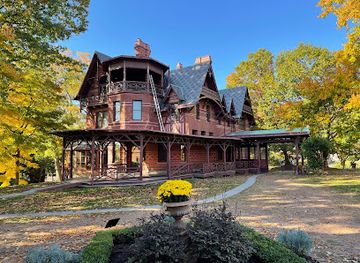
The Mark Twain House & Museum
Explore the historic Mark Twain House & Museum in Hartford, CT, and uncover the life and legacy of America's beloved author.
-
Rail museum
Essex Steam Train & Riverboat
Explore the historic Essex Steam Train & Riverboat for a unique journey through Connecticut's scenic landscapes and rich rail heritage.
-
State park
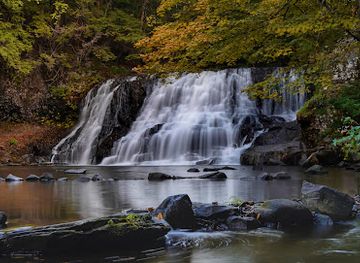
Wadsworth Falls State Park
Discover the scenic beauty and outdoor adventure at Wadsworth Falls State Park in Middletown, Connecticut, a perfect nature retreat for tourists.
Explore Middlesex County on the map
Plan your trip on one map. See where the top cities, national parks and sights are, and book hotels and experiences in a few clicks.
Best hotels in Middlesex County
Best restaurants in Middlesex County
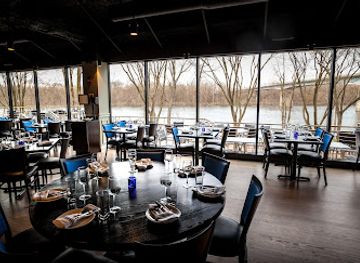
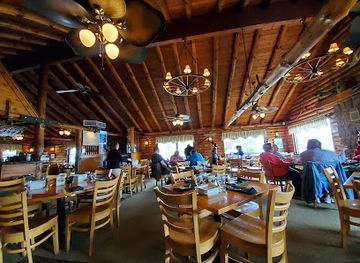
Dining in Middlesex County reflects its position between river valley, farmland and Long Island Sound. Seafood is prominent in coastal and river towns, with oysters, clams, lobster and finfish appearing alongside broader New England staples. Middletown has the county's most varied restaurant scene, including independent cafés, international cooking, bakeries and contemporary dining near its central streets and university district. Essex, Old Saybrook, Chester and Clinton offer waterfront restaurants, traditional inns, cafés and seasonal eating places, while inland communities provide farm stands, country restaurants and establishments built around locally sourced produce. Portland and the surrounding valley contribute agricultural products, maple goods and craft beverages to the regional table. Farmers' markets and direct-sales stalls are useful for discovering fruit, vegetables, baked goods, preserves and artisanal products, although their schedules vary by season. Tipping follows United States practice, and reservations are sensible for popular restaurants and theatre evenings during summer and autumn.
-
American
The Mill on the River
Discover exquisite American cuisine at The Mill on the River in South Windsor—where fine dining meets stunning riverside views.
-
American
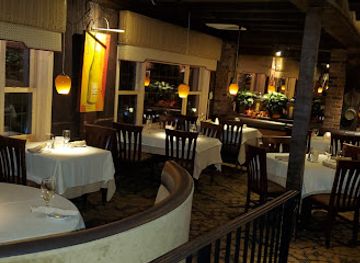
The Griswold Inn
Discover The Griswold Inn - A historic American inn blending traditional cuisine with charming accommodations in beautiful Essex Village.
-
Restaurant
River: A Waterfront Restaurant and Bar
Discover River: A Waterfront Restaurant and Bar - where exquisite cuisine meets stunning riverside views in Wethersfield.
-
American
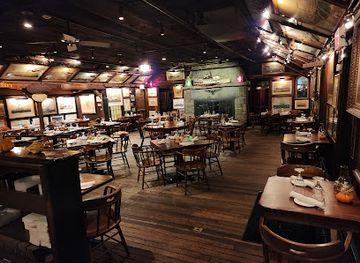
The Log Cabin Restaurant
Experience delicious American cuisine at The Log Cabin Restaurant in Clinton, CT - where cozy ambiance meets flavorful dishes.
Best bars in Middlesex County
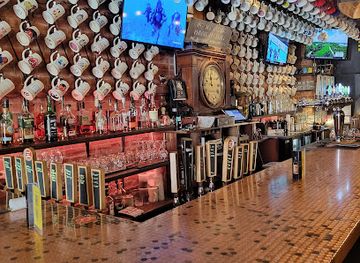
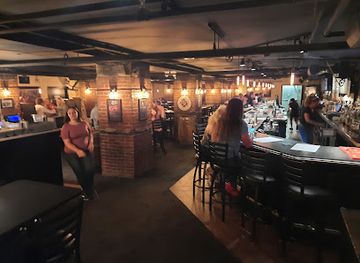
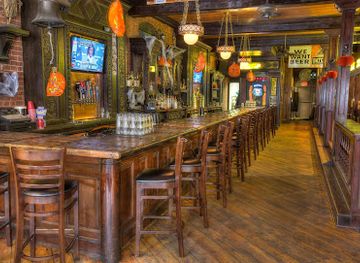
Middlesex County's evening life is centred more on pubs, restaurants, breweries, live music and theatre than on a large nightclub scene. Middletown has the broadest choice of bars and late dining, with activity concentrated around its central commercial streets and the area near Wesleyan University. Old Saybrook, Essex, Chester and Clinton provide quieter evenings in historic inns, waterfront restaurants, taverns and occasional music venues, while the shoreline is livelier during the summer season. A performance at the Goodspeed Opera House in East Haddam or at another local theatre can form the centrepiece of an evening, followed by dinner rather than clubbing. Drinking-age and licensing rules are those of Connecticut, and rural locations may have limited late-night transport, so arrange a safe return before heading out. Check current performance and venue information because schedules and operating patterns change seasonally.
-
American
The Griswold Inn
Discover the historic charm and exquisite American cuisine at The Griswold Inn in Essex, Connecticut, where tradition meets comfort.
-
Brewpub
Eli Cannons Tap Room
Discover the vibrant atmosphere and local flavors at Eli Cannons Tap Room, Middletown's go-to brewpub for craft beer and delicious food.
-
Gastropub
Celtic Cavern
Discover Celtic Cavern, a lively gastropub in Middletown, CT, offering a delicious menu of gourmet dishes and a vibrant atmosphere for all diners.
-
American
The Log Cabin Restaurant
Discover the cozy ambiance and delicious American cuisine at The Log Cabin Restaurant in Clinton, CT.


Best nightclubs in Middlesex County
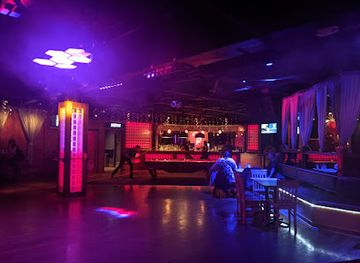
Middlesex County's evening life is centred more on pubs, restaurants, breweries, live music and theatre than on a large nightclub scene. Middletown has the broadest choice of bars and late dining, with activity concentrated around its central commercial streets and the area near Wesleyan University. Old Saybrook, Essex, Chester and Clinton provide quieter evenings in historic inns, waterfront restaurants, taverns and occasional music venues, while the shoreline is livelier during the summer season. A performance at the Goodspeed Opera House in East Haddam or at another local theatre can form the centrepiece of an evening, followed by dinner rather than clubbing. Drinking-age and licensing rules are those of Connecticut, and rural locations may have limited late-night transport, so arrange a safe return before heading out. Check current performance and venue information because schedules and operating patterns change seasonally.
-
Bar
The Lady
Discover the vibrant nightlife and delicious cuisine at The Lady, Hartford's premier bar and restaurant for an unforgettable experience.
-
Night club
Club Vandome
Experience the vibrant nightlife of New Haven at Club Vandome - a premier destination for dancing, music, and unforgettable memories.
-
Night club
Shrine Nightclub
Discover the vibrant nightlife at Shrine Nightclub, where electrifying beats and stunning visuals create an unforgettable experience in Mashantucket, CT.
-
Night club
Vibz Uptown
Experience the vibrant nightlife at Vibz Uptown, Hartford's premier night club and bar, where great music and lively atmosphere await.


Best shops in Middlesex County
Shopping in Middlesex County is strongest in independent high streets, historic village centres, waterfront districts and seasonal markets rather than large luxury malls. Middletown offers the broadest selection of everyday retail, books, cafés, galleries and independent businesses, while Essex is known for browsing in a preserved maritime setting. Chester, Clinton, Old Saybrook and Westbrook provide smaller concentrations of antiques, art, gifts, clothing and homewares, often combined with restaurants and harbour walks. Farm stands and farmers' markets are useful for Connecticut produce, baked goods, maple products, preserves, flowers and locally made foods, with availability varying through the year. Portland is the natural place to look for reminders of the county's brownstone and quarry heritage, although visitors should distinguish locally produced goods from generic souvenirs. Independent galleries and craft shops may carry ceramics, jewellery, textiles, paintings and woodwork by regional makers. Shopping hours and market dates can be seasonal, so rural and shoreline itineraries should be checked before setting out.
-
Outlet mall
Clinton Premium Outlets
Discover incredible savings and a unique shopping experience at Clinton Premium Outlets, where brand-name stores meet unbeatable prices.
-
Jewelry store
Eve's Addiction
Discover exquisite jewelry at Eve's Addiction in Old Saybrook, where craftsmanship meets luxury in every stunning piece.
-
Outlet mall
Westbrook Outlets
Discover unbeatable deals at Westbrook Outlets, Connecticut's top shopping destination with an array of brand-name stores and unique local finds.
-
Shopping mall
The Shops at Cromwell Square
Explore The Shops at Cromwell Square: A vibrant shopping destination with diverse retailers and delicious dining options in Cromwell, CT.


Get your free copy of our complete guide to Middlesex County, delivered straight to you.
Everything on this page, from attractions and restaurants to essentials and local phrases, in one PDF you can read offline, print or share.
Already have an account? Sign in
Your Middlesex County guide is ready.
We'll send it to · Not you? Sign out

Getting your guide ready…
We are putting together a fresh copy of the Middlesex County guide. This can take up to a minute.
This can take a few moments. If your browser asks, choose Allow so the download can start. You'll find the guide in your Downloads folder.
Nothing happened? Download it again
Sorry, the guide is taking longer than usual. Please try again in a minute, or get it by email instead.
Middlesex County essentials
Currency and Payment
Safety
Emergency Situations
Do's and Don'ts
Local Tips
From Eve
Local phrases worth knowing
You don't need to get them perfect. A few words go a long way, and locals appreciate the effort.
Basics
| English | Local | Say it |
|---|---|---|
| Hello | Hi | [hai] |
| Goodbye | See you later | [si yu ley-ter] |
| Yes | Yeah | [yeh] |
| No | Nope | [nohp] |
| Please/You're welcome | You got it | [yu gaht it] |
| Thank you | Thanks | [thangs] |
| Excuse me/Sorry | Sorry 'bout that | [sor-ree bout that] |
| How are you? | How's it going? | [how's it go-in?] |
| Fine. And you? | Good. And you? | [gud. an' yu?] |
| Do you speak English? | Do you speak English? | [do yu speek ing-glish?] |
| I don't understand | I don’t get it | [ai dont get it] |
Eating & Drinking
| English | Local | Say it |
|---|---|---|
| I'd like to see the menu, please | Can I see the menu? | [kan ai si the men-yu?] |
| I don't eat meat | I’m a vegetarian | [aim a veh-juh-teh-ree-an] |
| Cheers! | Cheers! | [cheerz] |
| I would like to pay, please | Can I get the check? | [kan ai get the chek?] |
Emergencies
| English | Local | Say it |
|---|---|---|
| Help! | Help! | [help] |
| Go away! | Leave me alone! | [leev me a-lone] |
| Call the Police! | Call the cops! | [kol the kops] |
| Call a doctor! | Get a doctor! | [get a dok-tor] |
| I'm lost | I’m lost | [aim lost] |
| I'm ill | I’m not feeling well | [aim not feeling wel] |
Shopping
| English | Local | Say it |
|---|---|---|
| I'd like to buy... | I want to buy... | [ai want to bai...] |
| I'm just looking | Just browsing | [just brow-zing] |
| How much is it? | What's the price? | [wats the prys?] |
| That's too expensive | That's a bit pricey | [thats a bit prai-see] |
| Can you lower the price? | Can you bring down the price? | [kan yu bring down the prys?] |
Time & Numbers
| English | Local | Say it |
|---|---|---|
| What time is it? | What time is it? | [wot taim is it?] |
| It's one o'clock | It's one o'clock | [its wun o'clok] |
| Half past (10) | Half past ten | [haf past ten] |
| Morning | Morning | [mor-ning] |
| Afternoon | Afternoon | [af-ter-noon] |
| Evening | Evening | [eev-ning] |
| Yesterday | Yesterday | [yes-ter-day] |
| Today | Today | [to-day] |
| Tomorrow | Tomorrow | [to-mor-row] |
| 1 | One | [wun] |
| 2 | Two | [too] |
| 3 | Three | [three] |
| 4 | Four | [for] |
| 5 | Five | [fiv] |
| 6 | Six | [siks] |
| 7 | Seven | [sev-en] |
| 8 | Eight | [ait] |
| 9 | Nine | [nain] |
| 10 | Ten | [ten] |
Transport & Directions
| English | Local | Say it |
|---|---|---|
| Where's a/the...? | Where's the...? | [wheres the...?] |
| What's the address? | What's the address? | [wats the ad-dress?] |
| Can you show me (on the map)? | Can you show me on the map? | [kan yu sho me on the map?] |
| When's the next (bus)? | When's the next bus? | [wenz the nekst bus?] |
| A ticket (to ....) | A ticket to ... | [a tiket to ...] |
History of Middlesex County
Wangunk Homeland and Indigenous River Life
Before European settlement, the Connecticut River valley and surrounding forests were home to Indigenous communities, including the Wangunk, whose territory centred on the lower and middle river. The river supported travel, fishing and seasonal food gathering, while upland forests and wetlands provided additional resources. European expansion, disease, land transactions and conflict profoundly disrupted Indigenous life during the seventeenth century. The geography that shaped later colonial towns was therefore already a long-established cultural landscape rather than an empty wilderness.
Colonial Settlement along the Connecticut River
English settlement expanded through the seventeenth century, with Middletown established on the river in the 1650s and communities such as Haddam, Saybrook and Lyme developing around farms, ferries, maritime access and local government. The river was the principal corridor for movement and trade, while Long Island Sound connected the settlements to coastal New England. Surviving houses, churches, burial grounds and town layouts preserve aspects of this colonial period, although the original Indigenous population had already been displaced and marginalised.
River Commerce, Shipbuilding and Maritime Trade
During the eighteenth and nineteenth centuries, the Connecticut River and the county's coastal inlets supported shipbuilding, fishing, timber transport and regional trade. Essex, Deep River and Chester grew as river ports and commercial communities, while Old Saybrook occupied an important position at the river mouth. Vessels carried agricultural produce, lumber and manufactured goods, linking local businesses with larger Atlantic markets. Maritime prosperity shaped the compact streetscapes, warehouses, wharves and merchant houses that remain prominent in several lower-valley towns.
Middletown Industry and the Rise of Manufacturing
Middletown developed from a river port into a major industrial centre, with manufacturing, metalworking and other industries benefiting from water access, roads and later railways. The city became an important economic focus for central Connecticut, drawing workers and supporting banks, civic buildings and commercial streets. Industrial development also changed the riverfront and surrounding communities, tying the county more closely to the wider manufacturing economy of New England. Several historic buildings and neighbourhoods reflect this transition from mercantile town to industrial city.
Portland Brownstone and the Built Environment
Quarrying became one of Portland's defining industries during the nineteenth century. Its warm red-brown sandstone, commonly called Portland brownstone, was extracted from extensive quarries and shipped along the Connecticut River and the coast. The material was used for churches, civic buildings and fashionable urban homes in Connecticut, New York and elsewhere. Quarrying declined as building tastes and materials changed, but the quarry landscape and local stone heritage remain central to Portland's identity and to the county's industrial history.
Railways, Steam Navigation and Changing Connections
The arrival of railways in the nineteenth century altered the county's relationship with the river and coast. Rail connections strengthened Middletown and shoreline towns, accelerated the movement of goods and passengers, and helped end the relative isolation of smaller communities. Steam navigation continued to serve the Connecticut River, while rail travel encouraged new patterns of commuting and seasonal tourism. Modern roads now dominate regional travel, but railway stations, old rights-of-way and historic waterfronts reveal how transport once organised the county's economy.
Twentieth-Century Preservation and Cultural Renewal
After the decline of some traditional industries, parts of Middlesex County turned increasingly towards education, heritage, arts, recreation and carefully managed coastal and river tourism. Wesleyan University helped strengthen Middletown's cultural profile, while historic preservation protected village centres and maritime buildings in places such as Essex and Chester. Theatre, museums, state parks and restored waterfronts now sit alongside working communities rather than replacing them entirely. The county's contemporary character is consequently shaped by both inherited industry and newer cultural and environmental priorities.
Middlesex County in Photos
Browse through our photo collection highlighting the charm and character of the destination.
Neighbouring regions of Middlesex County
The closest regions to Middlesex County, if you have time for more than one.
-

-

-

-
-


Swipe for more regions
Explore more

Explore more of Connecticut
Discover Connecticut: A blend of charming coastal towns, rich history, and scenic landscapes, perfect for nature lovers, history buffs, and cultural enthusiasts.
Explore Connecticut