
Jens Bangs Stonehouse, Aalborg Travel Guide
Aalborg’s grand Dutch Renaissance mansion, where a wealthy merchant’s 17th‑century ambitions still dominate the old town’s skyline in carved stone and gables.
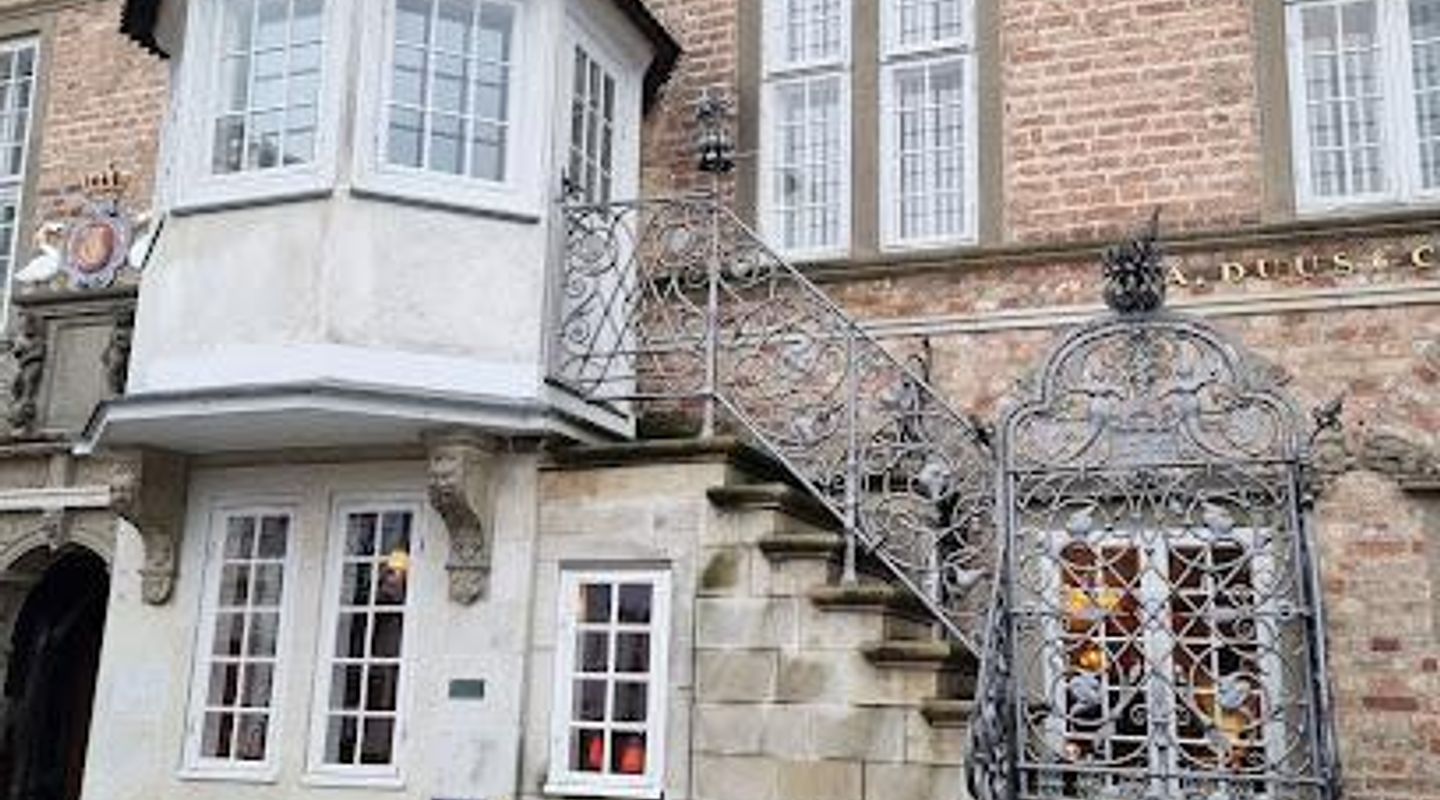
Jens Bang’s Stone House (Jens Bangs Stenhus) is Aalborg’s most striking Renaissance mansion, a richly ornamented Dutch Renaissance landmark from 1624 on Østerågade in the historic center. Built by wealthy merchant Jens Bang to showcase his status, its sculpted gables, carved stone figures and tall windows still dominate the square. Today, the building houses a historic pharmacy and offices, while its façade and stories of ambition, rivalry and war make it an essential stop on any walk through old Aalborg.
A brief summary to Jens Bangs Stonehouse
- Jens Bangs Stenhus, Østerågade 9, 2 tv, Aalborg, Aalborg Centrum, 9000, DK
- Click to display
- Duration: 0.5 to 1.5 hours
- Free
-
 Mixed
Mixed
- Mobile reception: 5 out of 5
- Monday 10 am-5:30 pm
- Tuesday 10 am-5:30 pm
- Wednesday 10 am-5:30 pm
- Thursday 10 am-5:30 pm
- Friday 10 am-7 pm
- Saturday 11 am-1 pm

Know before you go
Hi, I'm Eve. Here are a few practical things to know before exploring Jens Bangs Stonehouse.
- Plan 15–30 minutes just to enjoy the façade; walk slowly from different angles along Østerågade and the square to appreciate the full height and intricate stone details.
- Bring a camera with a wide‑angle lens or use panorama mode; the building is tall and the street relatively narrow, making it tricky to capture in a single frame.
- Combine your visit with a stroll through Aalborg’s old town; this house works best as part of a broader walk linking historic streets, churches and the waterfront.
- Look for the pharmacy signage and related details at street level; they hint at the building’s long life as both a grand residence and a working chemist’s shop.
- Visit in soft morning or late‑afternoon light when shadows help bring out the three‑dimensional carvings and warm tones of the stonework.
Do you manage this location?
Take control to get all the benefits, like improved information, better appearance, and stronger visibility across AI-powered discovery. Learn more about listing your business on Evendo
Activate your presenceOther nearby places you may find interesting
The closest places of the same kind, if this one is not quite what you had in mind.
Explore Jens Bangs Stonehouse on the Map
A handpicked selection of must-see spots near Jens Bangs Stonehouse, mapped for you.
Unlock the Best of Jens Bangs Stonehouse
Buy tickets
-
No tickets available
Book tours with entry


Getting There
-
On foot from central Aalborg
From most hotels and attractions in Aalborg Centrum, Jens Bang’s Stone House is an easy walk of about 5–15 minutes through level, paved streets. The historic center is compact and largely pedestrian‑friendly, with some cobblestones near the square. This option is free and suitable for most visitors, though those using wheelchairs or strollers may prefer the smoother pavements on the main shopping streets rather than the narrowest alleys.
-
Local bus within Aalborg
Several city bus lines stop within a short walking distance of Østerågade and the nearby Nytorv area, with typical journey times of 5–20 minutes from residential districts and outer neighborhoods. Single tickets on Aalborg city buses usually cost in the range of 22–30 DKK for an adult, purchased from ticket machines or via local transport apps. Buses run frequently during the day on weekdays, with reduced frequency in evenings and on weekends.
-
By bicycle in Aalborg
Aalborg is well suited to cycling, and Jens Bang’s Stone House sits close to several marked cycle routes leading into the old town. From inner suburbs you can expect 10–25 minutes of mostly flat riding. Many visitors use hotel bikes or short‑term rentals, which typically cost around 80–150 DKK per day depending on the provider. Bicycle parking is available near shopping streets and squares, though you may need to walk the last short stretch through pedestrian areas.
-
Taxi from Aalborg Airport
From Aalborg Airport to the city center, including the area around Jens Bang’s Stone House, a taxi ride typically takes 15–20 minutes depending on traffic. Fares generally fall in the range of 180–260 DKK for the whole car, with supplements possible in late evening or for larger vehicles. Taxis set passengers down on nearby streets, from where it is a brief walk through the compact center to the house.
For the on-the-go comforts that matter to you
-
 Restrooms
-
 Drink Options
-
 Drinking Water
-
 Food Options
-
 Seating Areas
-
 Trash Bins
-
 Information Boards
Discover more about Jens Bangs Stonehouse
A merchant’s ambition carved in stone
Jens Bang’s Stone House rises above Østerågade like a statement in masonry, its tall gables and dense stone ornamentation announcing the ambitions of the man who built it. Completed in 1624, this was the home and business premises of Jens Bang, a self‑made merchant who rose to become one of Aalborg’s most prosperous traders. He chose a prime corner on the busy market square and commissioned a residence so large and elaborate that it rivalled royal projects of the same era.Bang’s personality has become part of the building’s legend. Known as gifted, forceful and often quarrelsome, he never entered city government, preferring to wield influence through trade rather than politics. Local stories paint him as a man determined to outshine the town’s elite, and his house – with its almost ostentatious scale – is usually taken as his answer to those who doubted him.Dutch Renaissance flourishes in northern Jutland
Architecturally, the house is a textbook example of Dutch Renaissance style transplanted to Denmark. The façade stacks four main floors beneath three steep crow‑stepped gables, each packed with niches, scrolls and finials that animate the roofline. The stonework is richly carved: sandstone frames wrap tall, irregularly spaced windows; angels, grotesque faces and auricular Baroque details perch above arches and ledges, giving the building a slightly theatrical character.At street level, you can still sense the original commercial purpose. Wide arched openings once led into trading booths and storage rooms that connected Bang directly to Aalborg’s bustling port economy. Above, the first‑floor windows are conspicuously large, signalling the grand reception rooms where Bang would have negotiated deals and entertained allies beneath heavy beams and panelled ceilings.Surviving war, occupation and changing times
The Stone House has witnessed some of the most turbulent chapters in Danish history. During the Thirty Years’ War, occupying troops seized the residence, forcing Bang to flee the city for several years. Later, in the Torstenson War, foreign forces again took over Aalborg and left the building battered, a reminder that even the grandest private homes were not beyond the reach of conflict.Bang died without direct heirs, and for a time the property was divided among relatives. Its next major chapter began in the 1670s, when a pharmacist established the Swan Pharmacy within its walls. Over the centuries, the pharmacy became almost as famous as the house itself, filling rooms with jars, scales and wooden cabinets and connecting the opulent merchant’s residence to the everyday life of townspeople seeking remedies.Details to look for on the façade
Standing beneath the gables, you can spend a long time tracing the building’s stories in stone. Look up to find winged cherubs and grimacing gargoyles peering out from window heads and cornices, a mix of sacred and playful imagery typical of the period. The asymmetrical arrangement of windows hints at the interior room layout rather than any modern obsession with perfect symmetry.Along the ground floor, imagine the original five arched portals that once punctuated the façade, allowing goods to flow directly in and out. Some sculpted figures that now crown upper‑floor windows may have started life above these doorways, greeting customers and signalling wealth. Even the downpipes and corner details carry decorative touches, rewarding anyone who pauses for a closer look instead of just a quick photo.Experiencing the house in modern Aalborg
Today, Jens Bang’s Stone House anchors one edge of Aalborg’s old town, its weathered masonry contrasting with shopfronts and cafés around the square. Inside, parts of the building continue to serve pharmacy‑related functions and offices, while the exterior remains the main attraction for casual visitors exploring on foot. Guided walks often pause here to unpack the tales of Bang’s fortune, feuds and philanthropy, weaving the house into the broader narrative of Aalborg’s rise as a trading city.Even without entering, the building invites a moment of stillness. Step back to take in the full façade framed by the narrow street, then move closer to inspect individual carvings and stone colours. In the soft, often changeable North Jutland light, the intricate surfaces shift mood throughout the day, reminding you that this is not just a relic but a working, lived‑in landmark that has adapted to four centuries of change while keeping its unmistakable silhouette.












Your all‑in‑one travel companion app
Explore expert travel guides, compare and book tours, experiences, hotels, and more—all from the palm of your hand. Download now for seamless trip planning wherever your wanderlust takes you.


Explore More of Aalborg
Looking beyond Jens Bangs Stonehouse? Discover Aalborg for broader travel guides, local hot-spots, and regional highlights.
Explore Aalborg
Denmark’s first musical fountain, where Aalborg’s historic customs house meets a lively waterfront square and jets dance to Handel’s “Water Music.”
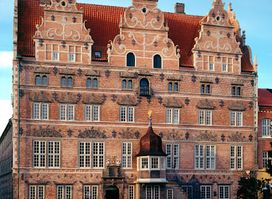
Step into a creaking attic above Jens Bang’s Stone House and explore centuries of pharmacy history in Aalborg’s atmospheric Apotekersamlingen.
