

Urania Observatory, Aalborg Travel Guide
Free Guide: A small hilltop observatory in Aalborg, home to Denmark’s largest public refractor and intimate winter-night encounters with the northern sky.


A brief summary of Urania Observatory
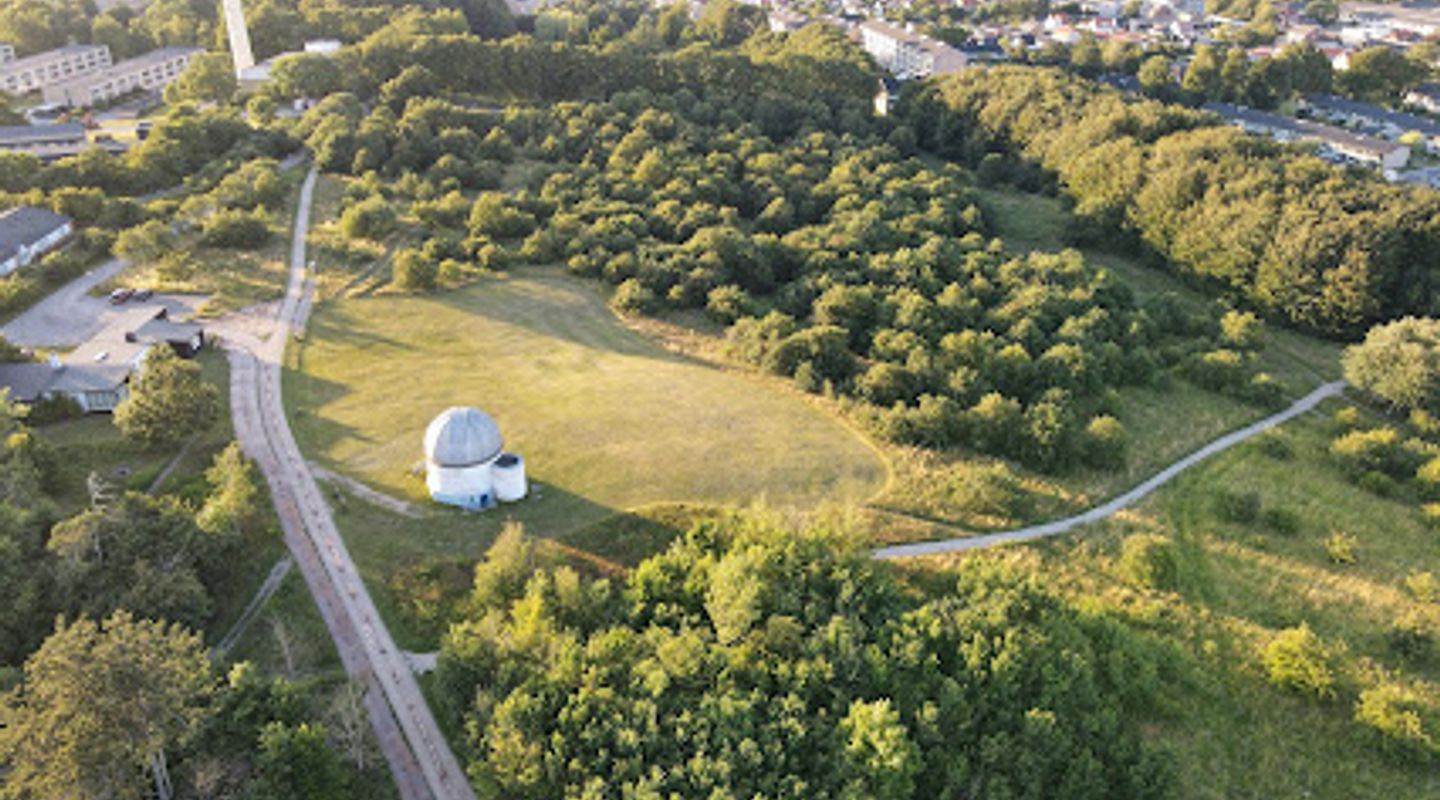
A small hilltop observatory in Aalborg, home to Denmark’s largest public refractor and intimate winter-night encounters with the northern sky.
Perched on a low hill in eastern Aalborg, Urania Observatory is a compact but characterful window into the night sky. Inaugurated in 1988 and run by local enthusiasts, it houses Denmark’s largest publicly accessible refracting telescope, alongside historic instruments dating back to the late 19th century. On select evenings from autumn to spring, its dome opens to let visitors explore the Moon, planets and deep-sky objects above northern Jutland.
On-site amenities
 Restrooms
 Seating areas
 Information boards
- Address
- Borgmester Jørgensens Vej 13, 9000 Aalborg
- Website
Getting there
City bus from central Aalborg
Taxi from central Aalborg
Bicycle from central Aalborg
Discover more about Urania Observatory
A Hilltop Gateway to Aalborg’s Night Sky
Urania Observatory sits on Borgmester Jørgensens Vej, slightly elevated above the surrounding neighbourhoods of Aalborg’s eastern side. From the outside, it is modest in scale: a low, functional building crowned by a rotating dome, with grassy slopes tumbling away on three sides. The hill lifts you just enough above street level that, on clear evenings, the sky feels noticeably wider and less affected by city lights.The atmosphere here is quietly focused rather than grand. You step into a small, purpose-built world where everything revolves around astronomy and the patient art of looking up. It feels more like a well-loved club house than a formal museum, which makes it especially approachable for first-time stargazers.
Denmark’s Largest Public Refractor
The observatory’s centrepiece is the Urania refractor, the largest lens telescope in Denmark that is regularly accessible to the public. Installed when the observatory opened in 1988, this long, gleaming tube dominates the observing room, mounted on a sturdy equatorial mount that allows smooth tracking of objects across the sky.Unlike compact modern reflectors, a large refractor has a classic, almost romantic look: brass-toned fittings, long focal length and a dignified presence that recalls the golden age of observatories. Through it, you can expect crisp views of the Moon’s craters, Jupiter’s cloud bands and moons, and the rings of Saturn when conditions cooperate, as well as brighter star clusters and double stars.
Echoes of Earlier Astronomical Traditions
Although Urania itself dates from the late 20th century, it also preserves a small collection of earlier instruments and archival material, with roots back to around 1890. Historical telescopes, old eyepieces, mechanical devices and black-and-white astrophotographs hint at how patient and laborious sky-watching once was, long before digital sensors and smartphone apps.These objects underscore how strongly amateur astronomy has been woven into Danish scientific culture. Urania stands in a lineage that runs from early optical experiments through to contemporary citizen science, with Aalborg’s enthusiasts helping to keep that tradition alive.
Seasonal Nights and Nordic Skies
The observatory mainly opens during the darker months, typically from September to May, when the long Nordic nights offer generous observing windows and twilight does not overwhelm the stars. This means visits often involve stepping out into crisp air, watching your breath mist as your eyes slowly adapt to the dark.On clear winter evenings, constellations feel sharper and nearer. If conditions are right, you might glimpse the Milky Way stretching faintly over the city’s glow, or pick out the Orion Nebula and the Pleiades through the big refractor. Cloudy nights are part of the reality here, but even then there is plenty to learn indoors about celestial mechanics, the planets and how telescopes work.
A Friendly Home for Curiosity
Urania is operated by local astronomy enthusiasts, and that shapes the experience. Explanations tend to be direct, practical and grounded in hands-on observing. Demonstrations might include how to align a telescope, how to read a star chart for northern latitudes, or what to look for in the sky later in the evening.Visits are usually structured but informal, making the observatory well suited to families, school groups, and curious adults seeking a focused, educational outing rather than an all-day attraction. Within an hour or two you can tour the equipment, enjoy a sky session if the weather permits, and leave with a clearer sense of the universe above Aalborg.
Planning Your Evening Visit
Because Urania is a small facility with limited opening hours, it works best as a planned stop on an autumn or winter evening. Dress warmly, as you will spend time in the dome where temperatures follow the outdoor air to protect the optics. The walk up the hill is gentle but can be dark and slightly uneven underfoot, so practical shoes are advisable.The observatory’s compact size and focused purpose mean you will not find a full science centre or extensive exhibits here. Instead, Urania offers something more intimate: the chance to handle real instruments, to look through a serious telescope, and to connect briefly but memorably with the night sky that arches over northern Denmark.
Evendo Review Centre
 Google
Guest reviews
Best time to go
Quietest: May, Jun & Jul · before 4pm
Busy times are Evendo estimates for a typical year, to help you plan. Actual crowds vary with events, school holidays and the weather.
Explore Urania Observatory on the map
A handpicked selection of must-see spots near Urania Observatory, mapped for you.
Get your free copy of our complete guide to Urania Observatory, delivered straight to you.
Everything on this page, from opening hours and how to get there to Eve’s tips and the best time to go, in one PDF you can read offline, print or share.
Already have an account? Sign in
Your Urania Observatory guide is ready.
We'll send it to · Not you? Sign out

Getting your guide ready…
We are putting together a fresh copy of the Urania Observatory guide. This can take up to a minute.
This can take a few moments. If your browser asks, choose Allow so the download can start. You'll find the guide in your Downloads folder.
Nothing happened? Download it again
Sorry, the guide is taking longer than usual. Please try again in a minute, or get it by email instead.
Other nearby places you may find interesting
The closest places of the same kind, if this one is not quite what you had in mind.
-
Gråbrødrekloster Museum Step three metres beneath Aalborg’s busiest shopping street into an in situ medieval monastery, where ruins, burials and artefacts reveal the city’s deep past.
-
Defence and Garrison Museum Denmark's comprehensive military heritage museum where 10,000 m² of exhibits bring defense history to life.
-
Limfjordsbanen Step into Aalborg’s living railway depot, where vintage locomotives, wooden carriages and nostalgic excursions keep Denmark’s rail heritage rolling along real tracks.
-
The interior of Inés A transformative social design installation where architecture and human interaction become one artistic experience.
-
Aalborg Miniby A lovingly crafted miniature Aalborg around 1900, where tiny brick houses, lost streets and volunteer craftsmanship bring the city’s history to life in open air.
Swipe for more places
More to explore near Urania Observatory

 Best experiences near Urania Observatory
 Best hotels near Urania Observatory
 Best landmarks near Urania Observatory
 Best attractions near Urania Observatory
 Best shops near Urania Observatory
 Best restaurants near Urania Observatory
 Best bars near Urania Observatory
Do you manage this location?
Take control to get all the benefits, like improved information, better appearance, and stronger visibility across AI-powered discovery.
Explore more

Explore more of Aalborg
Discover Aalborg, Denmark's northern gem, where medieval charm meets modern vibrancy. Enjoy rich history, cultural landmarks, and a lively culinary scene.
Explore Aalborg
Explore more of Denmark
Discover Denmark: A perfect blend of history, modern design, and the cozy concept of hygge. Explore vibrant cities, serene landscapes, and world-class cuisine.
Explore Denmark
