

Badehuse ved Vestre Strandvej Travel Guide
Free Guide: Iconic, colour-washed beach huts lining Ærøskøbing’s Vesterstrand, where a century of island bath culture meets shallow emerald water and unforgettable sunsets.


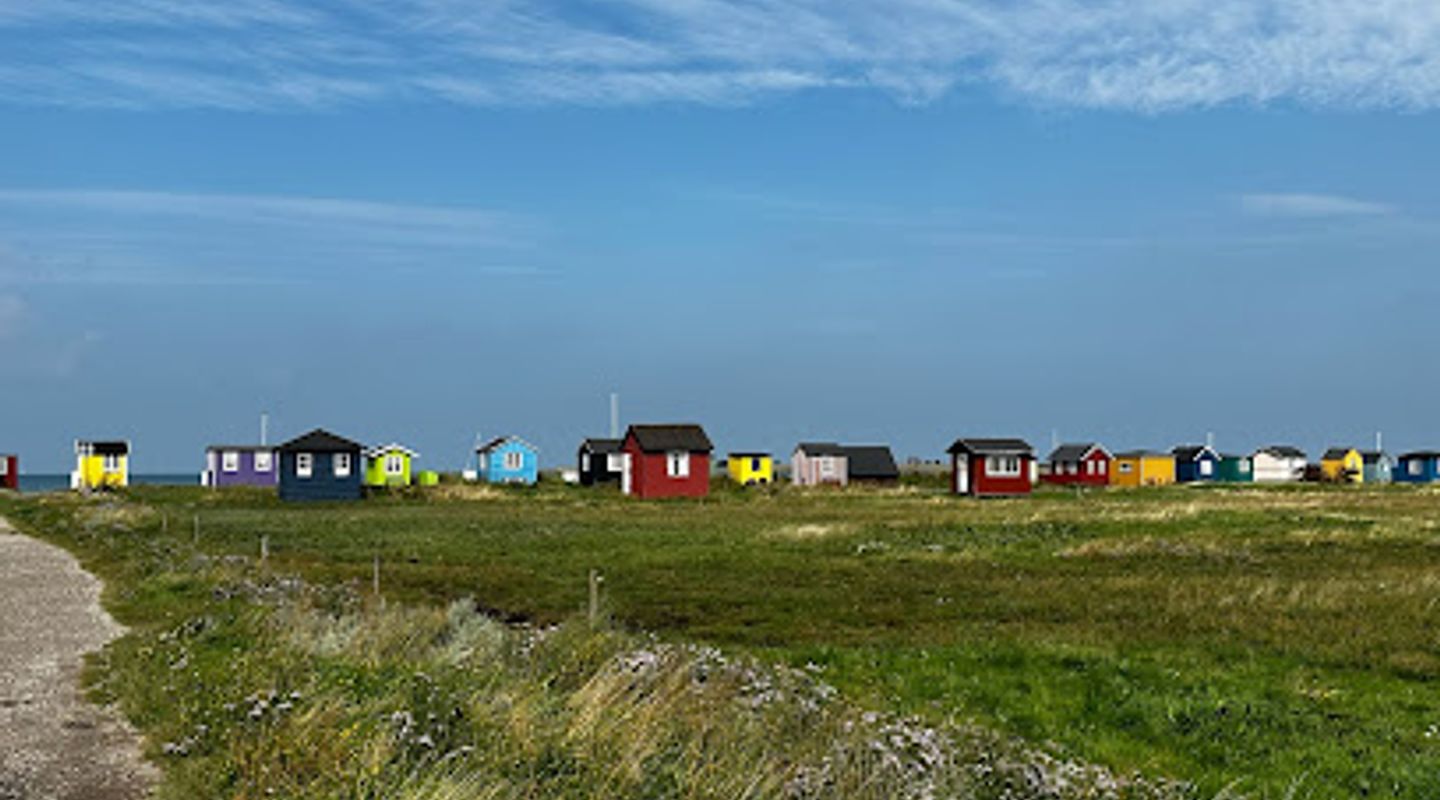
A brief summary of Badehuse ved Vestre Strandvej
Iconic, colour-washed beach huts lining Ærøskøbing’s Vesterstrand, where a century of island bath culture meets shallow emerald water and unforgettable sunsets.
Strung out along Ærøskøbing’s Vesterstrand, the colourful bath houses of Vestre Strandvej form one of Ærø’s most iconic seaside scenes. These small, privately owned wooden huts sit right on the sand, framed by shallow emerald water and wide West Baltic skies. Built from the 1920s and now protected as cultural heritage, they embody classic Danish beach culture and are perfect for slow strolls, photography, and sunset swims just outside Ærøskøbing’s historic centre.
On-site amenities
 Restrooms
 Drink options
 Drinking water
 Food options
 Seating areas
 Sheltered areas
 Picnic areas
 Trash bins
 Information boards
- Address
- Vestre Strandvej 1, 2, 5970, 5970 Ærøskøbing
Getting there
Walk from Ærøskøbing centre
Bicycle from Ærøskøbing and nearby stays
Bus from other parts of Ærø
Ferry plus local transfer
Discover more about Badehuse ved Vestre Strandvej
Seaside cottages that define Ærø’s shoreline
Along Vesterstrand just north-west of Ærøskøbing, more than seventy small, wooden beach huts stand in a neat, irregular ribbon between dune grass and the shallow Baltic Sea. Painted in soft pastels and bold primary colours, they give the entire bay its instantly recognisable look. Each hut belongs to a local family, used as a simple base for changing, brewing coffee on a camping stove, or sheltering from a breeze between dips in the sea.The huts are deliberately modest. Most are only a few square metres in size, little more than a single room with a tiny veranda facing the water. Their proportions, colours and spacing are tightly regulated so the ensemble keeps its harmonious, almost toy-like appearance. Together with the sandy beach and low, rolling coastline, they have become a defining image of Ærø and a frequent backdrop for wedding photos, postcards and calendars.
A century of island bath culture
The first bath houses here were built in the 1920s, when sea bathing became fashionable among the Danish middle class and coastal resorts developed all around the country. On Ærø, people set up their own tiny cabins right on the sand so they could change in privacy and spend entire days by the water. Over the decades, these huts weathered storms, shifting fashions and even plans in the 1960s to remove them because they stood so close to the shoreline.Instead of disappearing, the huts were gradually recognised as an important part of local heritage. Today they are listed as worthy of preservation and protected by strict rules: no extensions, no extra storeys, and no installation of electricity or running water. Everything must remain essentially as it was. Ownership of the structures is private, but the plots beneath are leased in perpetuity from the municipality or a local foundation, ensuring the line of huts stays intact for future generations.
A living landscape shaped by sea and sand
The idyllic setting hides a more complex coastal story. When the earliest huts were built, the waterline was around thirty metres further out than it is now, and ongoing erosion has slowly eaten into the beach. To slow this process and protect both the huts and the bathing strand, stone groynes were constructed south of the area in the 1990s to trap drifting sand and build up a wider foreshore.Even with these defences, rising sea levels and storm surges remain a concern. On blustery days you can watch waves driving in from the bay while seabirds wheel overhead and kitesurfers skim across the shallows off Urehoved. The constant interplay between human-made structures and shifting nature makes the bath houses a useful case study in coastal management as well as a picturesque place to sit and watch the weather move across the South Funen Archipelago.
Experiencing Vesterstrand through the day
During long summer afternoons, Vesterstrand is all about simple pleasures: children playing in the gentle, shallow water; families laying out towels in front of “their” hut; swimmers using the jetty to reach slightly deeper water. The beach’s orientation makes it especially appealing later in the day, when the sun drops towards the horizon and the huts are backlit in warm, golden light.As evening approaches, locals often wander down with picnic baskets or small grills, turning the sand into an informal outdoor dining room. The low skyline means there is nothing to block the view of the sunset, which can turn the sea glassy and the huts into silhouettes. Even outside peak season, the boardwalk-like strip between huts and sea is inviting for a contemplative walk, accompanied by the sound of waves and the creak of rigging from Ærøskøbing’s harbour in the distance.
Photography, quiet moments and local etiquette
For photographers, the bath houses offer strong lines, repeating shapes and a palette that shifts with the weather—from vivid colour blocks under blue skies to soft pastels in mist or overcast light. Each hut is slightly different, with its own shade, door style and sometimes a name painted above the entrance, making it easy to find unique compositions. Early morning and late evening are particularly rewarding for both soft light and fewer people in the frame.Although the huts look almost like public cabins, they are private property, and local custom is to admire them from the outside only. Sitting on the sand in front of a hut or using the shared strand is welcomed, but entering, rearranging furniture or climbing onto verandas is not. Respecting this boundary helps keep relations friendly and ensures this fragile, deeply loved stretch of coast remains both lived-in and welcoming to visitors for years to come.
Evendo Review Centre
 Google
Guest reviews
Best time to go
Quietest: Jan, Feb & Mar · before 7am or from 10pm
Busy times are Evendo estimates for a typical year, to help you plan. Actual crowds vary with events, school holidays and the weather.
Explore Badehuse ved Vestre Strandvej on the map
A handpicked selection of must-see spots near Badehuse ved Vestre Strandvej, mapped for you.
Get your free copy of our complete guide to Badehuse ved Vestre Strandvej, delivered straight to you.
Everything on this page, from opening hours and how to get there to Eve’s tips and the best time to go, in one PDF you can read offline, print or share.
Already have an account? Sign in
Your Badehuse ved Vestre Strandvej guide is ready.
We'll send it to · Not you? Sign out

Getting your guide ready…
We are putting together a fresh copy of the Badehuse ved Vestre Strandvej guide. This can take up to a minute.
This can take a few moments. If your browser asks, choose Allow so the download can start. You'll find the guide in your Downloads folder.
Nothing happened? Download it again
Sorry, the guide is taking longer than usual. Please try again in a minute, or get it by email instead.
Other nearby places you may find interesting
The closest places of the same kind, if this one is not quite what you had in mind.
-
Ærøskøbing Bymuseum • Ærø Museum Island history, seafaring tales and borderland politics unfold inside Ærøskøbing’s 18th‑century sheriff’s house and its tranquil historic garden.
-
Hammerich House • Aero Museum A crooked red cottage of antiques and art where sculptor Gunnar Hammerich’s lovingly preserved rooms bring Ærøskøbing’s early 20th-century home life vividly to life.
-
Ærø Museum Step into Ærøskøbing’s 1775 bailiff’s house, where maritime tales, island traditions and a tranquil 1920s market garden bring Ærø’s history vividly to life.
-
Marstal Søfartsmuseum A harbour-side maze of ship models, full-scale interiors and sea stories tracing Marstal’s rise from island port to major Danish maritime town.
-
Skjoldnaes Lighthouse Granite tower on Ærø’s far northwestern tip, Skjoldnæs Lighthouse blends big‑sky sea views, Ice Age geology and quiet legend into one wild, windwashed headland.
Swipe for more places
More to explore near Badehuse ved Vestre Strandvej
-
 Best experiences near Badehuse ved Vestre Strandvej
-
 Best hotels near Badehuse ved Vestre Strandvej
-
 Best landmarks near Badehuse ved Vestre Strandvej
-
 Best attractions near Badehuse ved Vestre Strandvej
-
 Best shops near Badehuse ved Vestre Strandvej
-
 Best restaurants near Badehuse ved Vestre Strandvej
-
 Best bars near Badehuse ved Vestre Strandvej







Do you manage this location?
Take control to get all the benefits, like improved information, better appearance, and stronger visibility across AI-powered discovery.
Explore more
Explore more of Aero
Discover the tranquil beauty of Ærø, Denmark's charming island paradise with historic towns, scenic landscapes, and rich maritime heritage.
Explore Aero
Explore more of Denmark
Discover Denmark: A perfect blend of history, modern design, and the cozy concept of hygge. Explore vibrant cities, serene landscapes, and world-class cuisine.
Explore Denmark
