Hald Slot Travel Guide
Free Guide: Moody medieval ruins, sweeping lake views and 800 years of castle history meet at Hald Slot, a compact fortress site folded into the scenic De Fem Halder landscape.


A brief summary of Hald Slot
Moody medieval ruins, sweeping lake views and 800 years of castle history meet at Hald Slot, a compact fortress site folded into the scenic De Fem Halder landscape.
Hald Slot is a moody medieval castle ruin perched on a peninsula in Hald Sø, just south of Viborg. Once the powerful fortress of bishop Jørgen Friis in the turbulent years before the Reformation, today it is part of the De Fem Halder landscape, where 800 years of Danish castle history unfold within walking distance. Grassy ramparts, a striking tower with lake views and wooded trails make this a rewarding stop for history lovers, walkers and photographers alike, day or evening, all year round.
On-site amenities
 Restrooms
 Seating areas
 Picnic areas
 Trash bins
 Information boards
 Visitor centre
Opening hours
- Every dayOpen 24 hours
Opening hours as listed on the venue’s Google Business Profile. Hours can change for services and special events, so check with the venue before you go.
- Address
- Jørgen Friis' Hald, 8800 Viborg
Getting there
Car from Viborg city centre
Bike from Viborg
Regional bus plus walk
Discover more about Hald Slot
A lakeside stronghold in the heart of Jutland
Hald Slot sits on a low, grassy headland jutting into Hald Sø, one of Jutland’s most scenic lakes. What you see today is a rugged brick ruin surrounded by earthworks, moat traces and open water, a fragment of a once-formidable stronghold. The site forms part of the cultural landscape known as De Fem Halder, five successive castle and manor sites clustered along the lakeshore, each representing a different chapter in Danish power and architecture over some 800 years.The ruin itself belongs to the so‑called Third Hald, also known as Bispens Hald or Jørgen Friis’ Hald, after the last Catholic bishop of Viborg. Built around 1528, on the eve of the Lutheran Reformation, it was conceived as a modern fortress in unsettled times, strategically placed with natural water defences on three sides and high views over the surrounding countryside.
From bishop’s fortress to atmospheric ruin
In its prime, Hald Slot was a compact yet imposing complex. Thick walls, towers and ramparts enclosed the bishop’s residence, storerooms and garrison within a defended island-like platform. The castle symbolised both ecclesiastical authority and royal politics at a time when alliances shifted quickly and artillery was reshaping warfare.The Reformation brought sweeping changes, and the castle’s role gradually faded as power structures and residences moved elsewhere. Over centuries, demolition, reuse of bricks and the slow work of weather reduced the stronghold to the evocative fragments you see today. Yet the surviving tower, foundations and ramparts still clearly outline the castle’s footprint, inviting you to reconstruct its former might in your imagination.
Exploring walls, tunnels and tower views
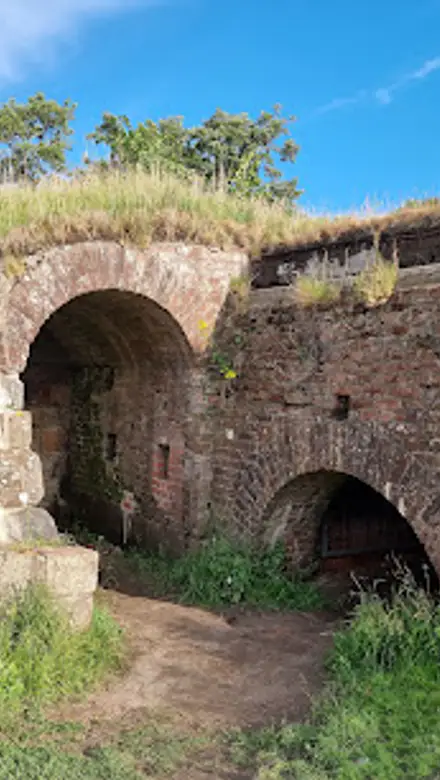
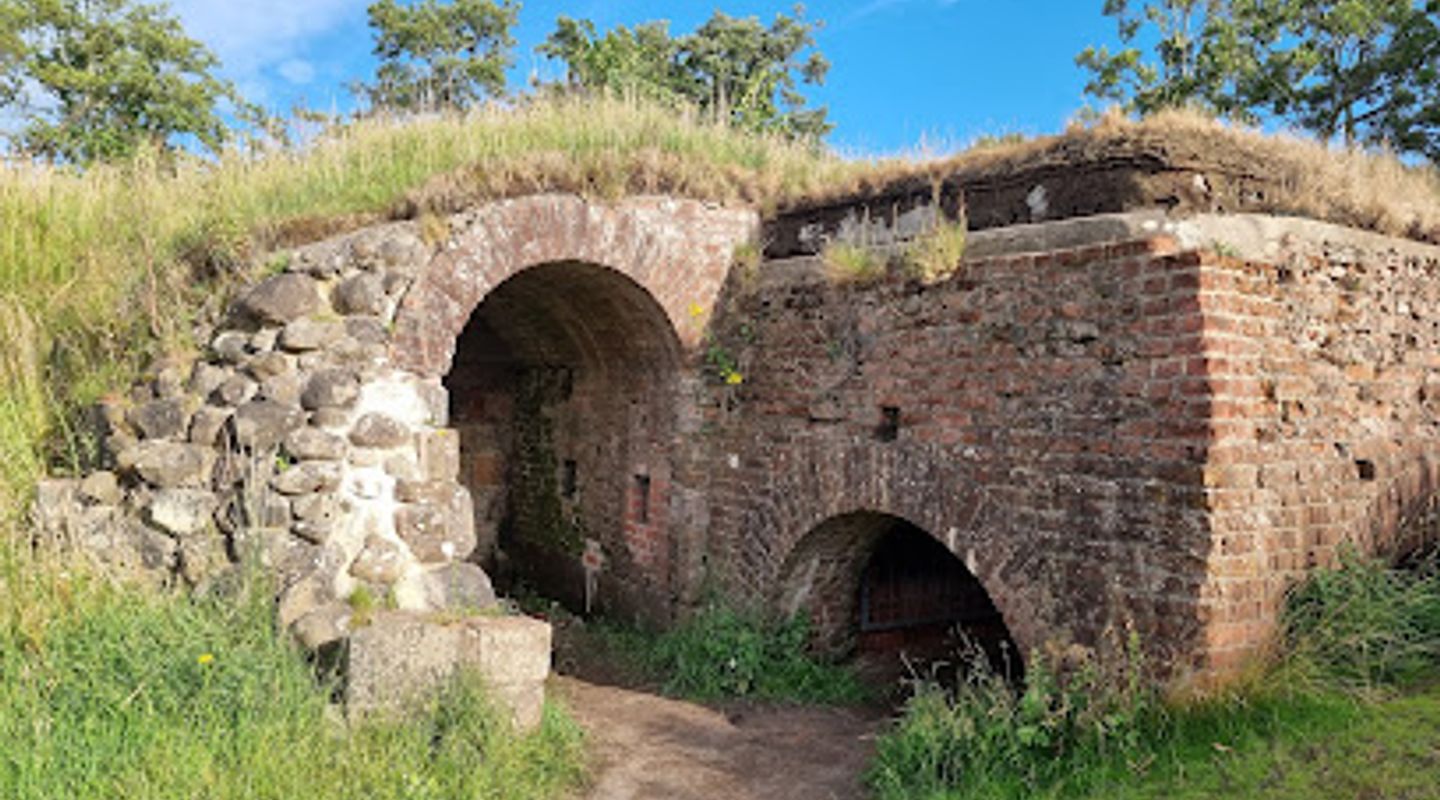
A visit here is as much about movement as about static ruins. Paths lead you across grassy embankments and into the core of the former fortress, where low walls and brickwork emerge from the soil. In places, you can duck beneath surviving tunnel-like passages and peer through openings cut for defence and observation, each framing a different glimpse of water, reeds or forest.One highlight is climbing the restored tower structure, which offers a sweeping view across Hald Sø and the wooded hills that cradle the lake. From the top, the geometry of the earthworks becomes clearer: the curves of the moat, the line of the causeway and the relation between castle hill and surrounding landscape. At ground level, children tend to turn ramparts into natural playgrounds, while photographers linger over textures of brick, lichen and shifting light.
De Fem Halder and layers of landscape
Hald Slot does not stand alone. Within a short walk lie the traces of four other Hald sites: earlier fortifications, manors and the later Hald Hovedgård estate. Together they chart how Danish noble residences evolved from simple defensive mounds to stately country houses, all within one coherent landscape. Informal information points and exhibitions nearby help make sense of these layers, though much of the appeal lies in simply following the paths and letting the terrain tell its own story.The setting around Hald Sø is a draw in its own right. Steep, wooded slopes drop to mirror-bright water, especially beautiful in autumn when beech trees blaze gold and copper. In summer, the open meadows hum with insects and birdsong, and the long northern light gives the ruin an almost theatrical glow well into the evening.
Practical visit, seasons and atmosphere
As an unfenced outdoor ruin, Hald Slot is freely accessible year-round, from misty winter mornings with frost on the ramparts to warm evenings when the lake lies flat and still. Good footwear is useful: paths can be muddy, and some slopes and steps are uneven, which may be challenging for visitors with limited mobility. There are simple picnic spots and resting places in the wider De Fem Halder area, making it easy to turn a short stop into a half‑day outing.Most travellers spend a couple of hours here, combining a slow exploration of the ruin with a lakeside walk or a loop that links several of the Hald sites. Whether you come for medieval history, a leg-stretch in classic Danish nature or a set of atmospheric photos, Hald Slot offers a compact yet richly layered glimpse into the country’s past, framed by one of Midtjylland’s most appealing landscapes.
Evendo Review Centre
 Google
Guest reviews
Best time to go
Quietest: Jan, Feb & Dec · before 8am
Busy times are Evendo estimates for a typical year, to help you plan. Actual crowds vary with events, school holidays and the weather.
Explore Hald Slot on the map
A handpicked selection of must-see spots near Hald Slot, mapped for you.
Get your free copy of our complete guide to Hald Slot, delivered straight to you.
Everything on this page, from opening hours and how to get there to Eve’s tips and the best time to go, in one PDF you can read offline, print or share.
Already have an account? Sign in
Your Hald Slot guide is ready.
We'll send it to · Not you? Sign out

Getting your guide ready…
We are putting together a fresh copy of the Hald Slot guide. This can take up to a minute.
This can take a few moments. If your browser asks, choose Allow so the download can start. You'll find the guide in your Downloads folder.
Nothing happened? Download it again
Sorry, the guide is taking longer than usual. Please try again in a minute, or get it by email instead.
Other nearby places you may find interesting
The closest places of the same kind, if this one is not quite what you had in mind.
-
-
-
-
-


Swipe for more places
More to explore near Hald Slot

 Best experiences near Hald Slot
 Best hotels near Hald Slot
 Best landmarks near Hald Slot
 Best attractions near Hald Slot
 Best shops near Hald Slot
 Best restaurants near Hald Slot
 Best bars near Hald Slot
Do you manage this location?
Take control to get all the benefits, like improved information, better appearance, and stronger visibility across AI-powered discovery.
Explore more

Explore more of Central Jutland
Explore Central Jutland in Denmark: A perfect blend of natural beauty, cultural heritage, and family-friendly attractions.
Explore Central Jutland
Explore more of Denmark
Discover Denmark: A perfect blend of history, modern design, and the cozy concept of hygge. Explore vibrant cities, serene landscapes, and world-class cuisine.
Explore Denmark