

Højriis Castle Travel Guide
Free Guide: A moated 19th‑century manor on Mors where Historicist towers, tranquil parkland and seasonal theatrical mysteries bring centuries of Danish aristocratic life to vivid life.


A brief summary of Højriis Castle
A moated 19th‑century manor on Mors where Historicist towers, tranquil parkland and seasonal theatrical mysteries bring centuries of Danish aristocratic life to vivid life.
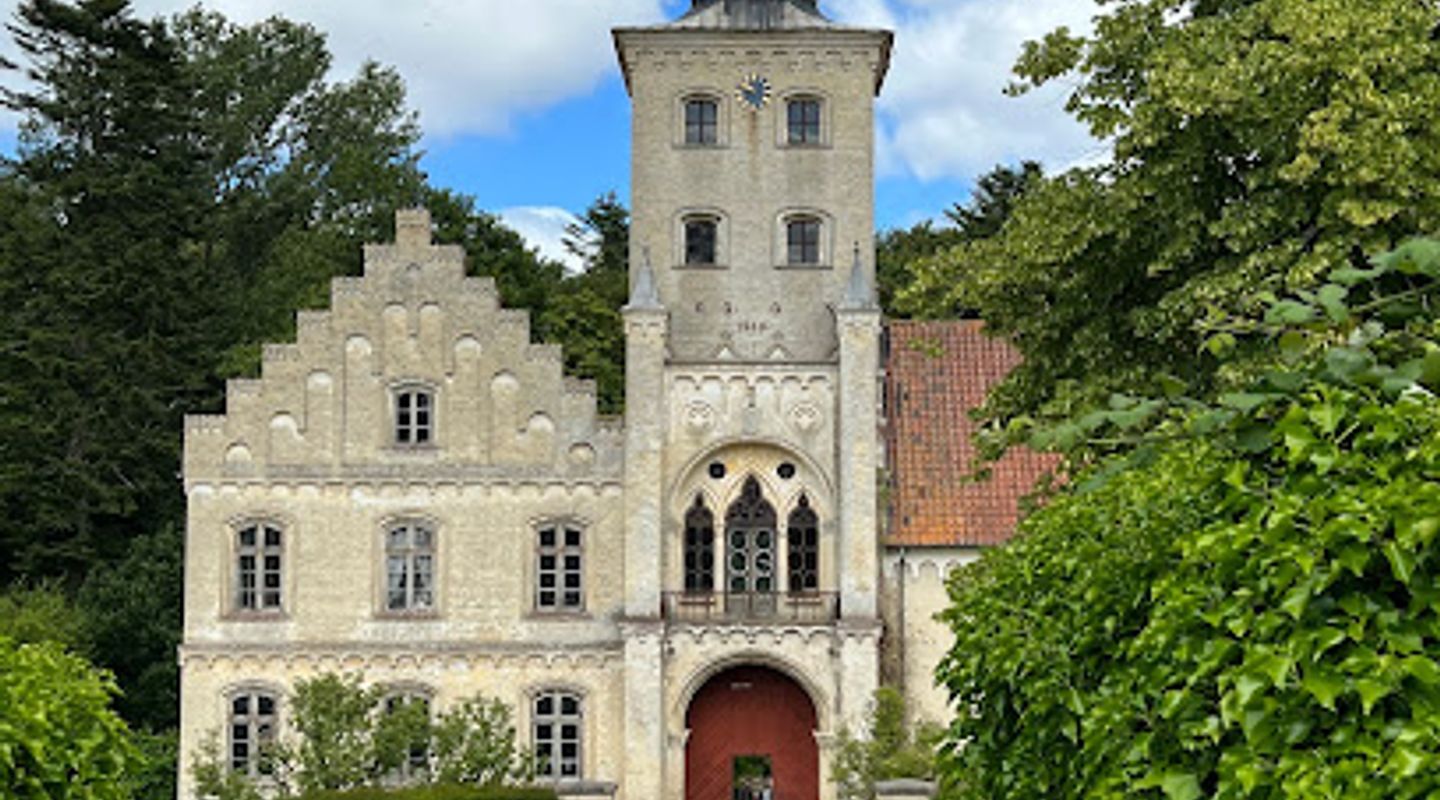
Set amid the soft landscapes of Mors and close to the Limfjord, Højriis Castle is a moated 19th‑century manor house with roots reaching back to the early 1400s. The red‑brick Historicist castle forms a romantic three‑winged ensemble with tower, courtyards and lawns, framed by an atmospheric park that includes one of Denmark’s most beautiful weeping beeches. Today it opens seasonally for immersive theatrical mystery events that turn the historic rooms into a playful, story‑driven world.
On-site amenities
 Restrooms
 Drink options
 Food options
 Seating areas
 Sheltered areas
 Trash bins
 Information boards
- Address
- Højrisvej 3, 7900 Nykøbing Mors
- Phone
- Website
Getting there
Car from Nykøbing Mors and wider Mors
Regional bus plus short taxi from Nykøbing Mors
Cycling from Nykøbing Mors
Discover more about Højriis Castle
Moated manor on an island in the Limfjord
Højriis Castle sits quietly in the countryside near Sallingsund, a few kilometres south of Nykøbing on the island of Mors in north‑west Denmark. Surrounded by fields, sheltering trees and the shimmering waters of the nearby Limfjord, the castle appears almost dreamlike as you approach along the long avenue and glimpse its towers reflected in the encircling moat.Although its romantic silhouette feels timeless, the present castle is a relatively young expression of a very long story. The estate’s history reaches back to the early 15th century, when it was an important manor in the region. Over the centuries the property changed hands many times, mirroring the shifting fortunes of Danish nobility and the agricultural landscape around the Limfjord.
From medieval estate to Historicist showpiece
The buildings you see today largely date from the second half of the 1800s, when Højriis was reshaped in the Historicist style that swept Danish architecture at the time. The first major stage was completed in 1859, when architect Hans Jørgen Holm designed the north‑west wing and the distinctive tower that now anchors the ensemble. A second architect, August Klein, added the north‑east and south‑west wings in 1876, completing the three‑winged plan around the main courtyard.Red brick, stepped gables, bay windows and small decorative turrets borrow freely from earlier periods, creating a picturesque, storybook profile rather than a strict reconstruction of any one era. The surrounding moat underlines the impression of an aristocratic refuge set apart from the everyday world, even though its defensive role has long since disappeared.
Years of decline and careful revival
Like many Danish manor houses, Højriis fell on hard times in the 20th century. Changing economics and upkeep costs meant that the main building deteriorated, eventually standing empty and weather‑worn for years. For a long period it was an elegant but fading landmark, more ghost story than grand residence.That trajectory began to change when new private owners took over in the 1990s and initiated a gradual restoration. Brickwork was stabilised, roofs repaired and interiors carefully revived, always with an eye to preserving original details where possible. The process is ongoing, and part of the castle’s character today lies in this sense of a place still being gently brought back to life rather than polished into perfection.
Parkland, rare beech tree and Limfjord light
Beyond the moat, the estate opens into an inviting park that softens the formal architecture. Lawns slope gently towards groups of old trees, and paths curve between shrubberies and flower beds designed to frame views of the castle and its water. One particular highlight is a striking weeping beech, often described as among the most beautiful of its kind in Denmark, with long branches that trail towards the grass like a natural green pavilion.The wider setting adds another layer of appeal. The island of Mors is known for its varied landscapes and the special light over the Limfjord, and from the castle park you sense that coastal atmosphere even without direct sea views. On still days, the reflection of clouds in the moat and the calls of birds from nearby fields make the estate feel surprisingly secluded.
Immersive mysteries inside historic rooms
During the main summer season the castle periodically opens for themed experiences that transform its interiors into a living stage. Costumed actors move through the halls and chambers, improvising scenes that gradually reveal a fictional mystery linked to the house and its imagined residents. Visitors are invited to eavesdrop, read scattered letters, examine objects and piece together clues as they wander at their own pace.This format allows you to explore richly furnished rooms while also feeling part of a unfolding story. Grand halls, intimate parlours and bedrooms are all used as backdrops, and the interplay between scripted drama and the genuine historic setting gives the visit an unusually playful tone. Families, in particular, find the combination of light suspense and gentle humour an engaging way to connect with the building’s atmosphere.
Planning a visit to this seasonal castle
Højriis Castle functions primarily as a private estate, so public access is generally limited to a defined season from late spring through summer, often with specific date ranges for each year’s mystery concept. On open days the programme is typically organised so that you can arrive within set hours and spend several unhurried hours exploring both the interiors and the surrounding park.Facilities tend to focus on the essentials: simple places to sit, basic refreshments and clear information about the current storyline and practicalities. The atmosphere remains informal and relaxed, with plenty of space outdoors for children to run off energy between scenes inside. Allow enough time not only to follow the mystery but also to linger by the moat, appreciate the craftsmanship of the 19th‑century architecture and enjoy the quieter corners of the grounds once the dramatic moments have passed.
Evendo Review Centre
 Google
Guest reviews
Best time to go
Quietest: Jan, Feb & Mar · before 7am or from 9pm
Busy times are Evendo estimates for a typical year, to help you plan. Actual crowds vary with events, school holidays and the weather.
Explore Højriis Castle on the map
A handpicked selection of must-see spots near Højriis Castle, mapped for you.
Get your free copy of our complete guide to Højriis Castle, delivered straight to you.
Everything on this page, from opening hours and how to get there to Eve’s tips and the best time to go, in one PDF you can read offline, print or share.
Already have an account? Sign in
Your Højriis Castle guide is ready.
We'll send it to · Not you? Sign out

Getting your guide ready…
We are putting together a fresh copy of the Højriis Castle guide. This can take up to a minute.
This can take a few moments. If your browser asks, choose Allow so the download can start. You'll find the guide in your Downloads folder.
Nothing happened? Download it again
Sorry, the guide is taking longer than usual. Please try again in a minute, or get it by email instead.
Other nearby places you may find interesting
The closest places of the same kind, if this one is not quite what you had in mind.
-
Abbey Mill Historic Abbey Mill on Mossø’s shore, where Denmark’s longest wooden building meets bird-rich wetlands, gentle trails and a tranquil corner of the Gudenå River.
-
Clausholm Castle A moated Baroque manor near Hadsten, where painted ceilings, royal love stories and terraced gardens bring Denmark’s aristocratic past vividly to life.
-
Slotsholmen Tranquil green islet at Silkeborg’s origins, where a vanished riverside castle meets calm water views, quiet lawns and a gentle sense of early local history.
-
The Manor House of Hald An 18th-century manor fronting centuries-old ruins, deep forest and Hald Lake, where writers find seclusion and visitors wander through Danish history in nature.
-
Marselisborg Castle Royal retreat above Aarhus Bay, where sculpture-filled gardens, a rose-scented park and quiet ceremony surround Denmark’s Jutland summer palace.
Swipe for more places
More to explore near Højriis Castle

 Best experiences near Højriis Castle
 Best hotels near Højriis Castle
 Best landmarks near Højriis Castle
 Best attractions near Højriis Castle
 Best shops near Højriis Castle
 Best restaurants near Højriis Castle
 Best bars near Højriis Castle
Do you manage this location?
Take control to get all the benefits, like improved information, better appearance, and stronger visibility across AI-powered discovery.
Explore more

Explore more of Central Jutland
Explore Central Jutland in Denmark: A perfect blend of natural beauty, cultural heritage, and family-friendly attractions.
Explore Central Jutland
Explore more of Denmark
Discover Denmark: A perfect blend of history, modern design, and the cozy concept of hygge. Explore vibrant cities, serene landscapes, and world-class cuisine.
Explore Denmark
