

Kongenshus Mindepark Travel Guide
Free Guide: Vast purple heath, big skies and hundreds of memorial stones combine at Kongenshus Mindepark to tell the story of Denmark’s moorland and the farmers who transformed it.


A brief summary of Kongenshus Mindepark
Vast purple heath, big skies and hundreds of memorial stones combine at Kongenshus Mindepark to tell the story of Denmark’s moorland and the farmers who transformed it.
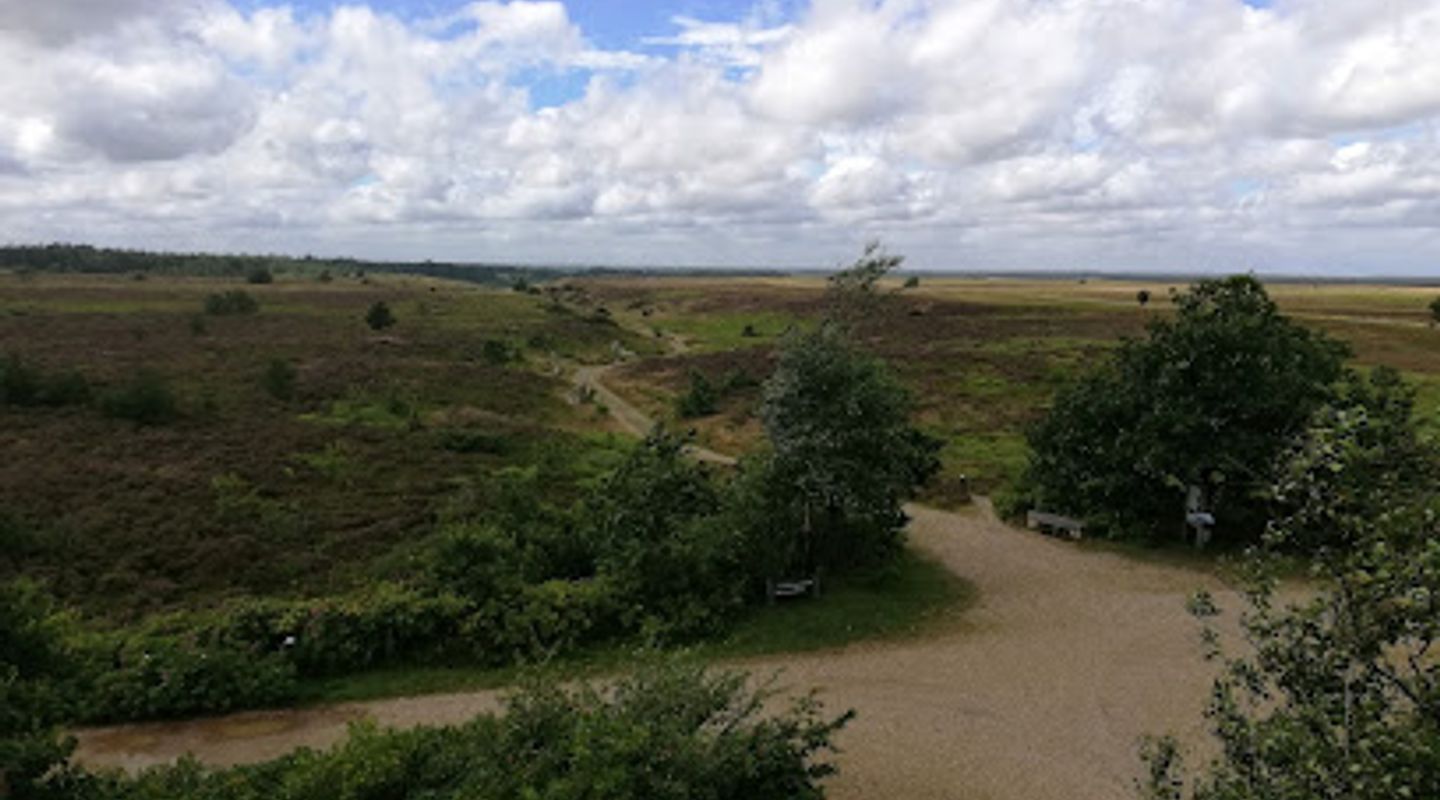
Kongenshus Mindepark, west of Viborg in central Jutland, is one of Denmark’s largest remaining heath landscapes and a moving memorial to the farmers who transformed the moorlands. Open, wind-brushed heather stretches to the horizon, punctuated by more than 300 commemorative stones, an observation tower, and a modern nature centre that explores the area’s natural and cultural history. It is an evocative place for quiet walks, big skies, and a powerful sense of Danish heritage.
On-site amenities
 Restrooms
 Food options
 Seating areas
 Picnic areas
 Trash bins
 Information boards
 Visitor centre
 Drink options
Opening hours
- Every dayOpen 24 hours
Opening hours as listed on the venue’s Google Business Profile. Hours can change for services and special events, so check with the venue before you go.
- Address
- Vestre Skivevej 142, 8800 Viborg
- Phone
- Website
Getting there
Car
Bus
Taxi
Cycling
Discover more about Kongenshus Mindepark
A sweeping heath where history meets horizon
Kongenshus Mindepark unfolds as a vast heathland plateau, one of Denmark’s largest continuous moors, with low heather and tough grasses rippling under the wind. Standing here, you feel the landscape open in every direction, almost treeless, with big skies and long sightlines that are rare in a small, densely cultivated country. In late summer the heather turns purple and the air carries dry, resinous scents that define this corner of Jutland.The park lies along Vestre Skivevej west of Viborg and forms the heart of the protected Kongenshus Heath. Created to preserve a disappearing landscape, it deliberately keeps the moor open through active management so the heath does not slowly turn into forest. The result is a semi-wild environment that still feels authentic, shaped by centuries of grazing and human struggle with poor sandy soils.
Memorial stones to the tamers of the heath
At the core of the park is its memorial function. From the mid‑1800s, farmers and smallholders worked these barren moors, draining, ploughing and planting in response to a national call to reclaim uncultivated land after Denmark’s territorial losses. Kongenshus Mindepark, inaugurated in the 1950s, honours that effort and the people who undertook it.Along a dedicated memorial stretch you pass hundreds of stones, each carved with the name of a heath farmer, a farm, or a local pioneer of land reclamation. Walking this line of boulders is like reading a stone archive of rural Denmark: short inscriptions, simple dates and place names that collectively tell a story of persistence and quiet ambition. The modest materials and weathered surfaces fit the austere heathland around them.
Nature centre, observation tower and learning moments
The modern nature centre, beside Kongenshus Kro and Hotel, turns the surrounding moor into an open-air classroom. Inside, exhibitions explain how the heath formed, how it was used, and why it is protected today. Simple interactive elements introduce the plants and wildlife that survive in the nutrient-poor soils, from heather and crowberry to insects and ground‑nesting birds.An observation tower nearby lifts you above the low vegetation, providing a panoramic view that helps make sense of the scale: the patchwork of heath, small plantations and fields, and the gentle undulations of the Jutland landscape. It is an excellent spot for orientation before choosing a walking route, and for appreciating how little stands between you and the weather here.
Walking in a living cultural landscape
Several waymarked trails lead from the nature centre and memorial area out across the moor. Underfoot, paths can be sandy, springy with heather roots or slightly damp in hollows, but gradients are generally gentle. This makes the park suitable for unhurried family walks, nature photography, and quiet reflection rather than demanding hiking.The experience shifts with the seasons. In spring, birdsong carries across the open land; in high summer, heat shimmers over the heather; in autumn and winter, the heath turns muted brown and grey, with a stark beauty under low clouds or frost. Even on busier days there is enough space to find your own patch of solitude if you wander a little beyond the main viewpoints and picnic spots.
A protected fragment of Denmark’s wild past
Kongenshus Mindepark is also a conservation story. The heath has been formally protected since the mid‑20th century to safeguard both its ecology and its role in Danish identity. Controlled grazing, cutting and other interventions keep shrubs and trees from taking over, maintaining habitat for specialist plants and animals.Moving through the park, you sense how thin the line is between cultivated Denmark and its former wilderness. On one horizon you see distant fields and shelterbelts; on the other, only moorland, sky and weather. That contrast is exactly what the memorial park preserves: not just a tribute in stone, but a living landscape that lets you imagine how much of Jutland once looked and felt like this.
Evendo Review Centre
 Google
Guest reviews
Best time to go
Quietest: Jan, Feb & Dec · before 7am or at 8pm or at 9pm
Busy times are Evendo estimates for a typical year, to help you plan. Actual crowds vary with events, school holidays and the weather.
Explore Kongenshus Mindepark on the map
A handpicked selection of must-see spots near Kongenshus Mindepark, mapped for you.
Get your free copy of our complete guide to Kongenshus Mindepark, delivered straight to you.
Everything on this page, from opening hours and how to get there to Eve’s tips and the best time to go, in one PDF you can read offline, print or share.
Already have an account? Sign in
Your Kongenshus Mindepark guide is ready.
We'll send it to · Not you? Sign out

Getting your guide ready…
We are putting together a fresh copy of the Kongenshus Mindepark guide. This can take up to a minute.
This can take a few moments. If your browser asks, choose Allow so the download can start. You'll find the guide in your Downloads folder.
Nothing happened? Download it again
Sorry, the guide is taking longer than usual. Please try again in a minute, or get it by email instead.
Other nearby places you may find interesting
The closest places of the same kind, if this one is not quite what you had in mind.
-
-
-
-
-


Swipe for more places
More to explore near Kongenshus Mindepark

 Best experiences near Kongenshus Mindepark

 Best hotels near Kongenshus Mindepark

 Best landmarks near Kongenshus Mindepark

 Best attractions near Kongenshus Mindepark

 Best shops near Kongenshus Mindepark

 Best restaurants near Kongenshus Mindepark

 Best bars near Kongenshus Mindepark
Do you manage this location?
Take control to get all the benefits, like improved information, better appearance, and stronger visibility across AI-powered discovery.
Explore more

Explore more of Central Jutland
Explore Central Jutland in Denmark: A perfect blend of natural beauty, cultural heritage, and family-friendly attractions.
Explore Central Jutland
Explore more of Denmark
Discover Denmark: A perfect blend of history, modern design, and the cozy concept of hygge. Explore vibrant cities, serene landscapes, and world-class cuisine.
Explore Denmark
